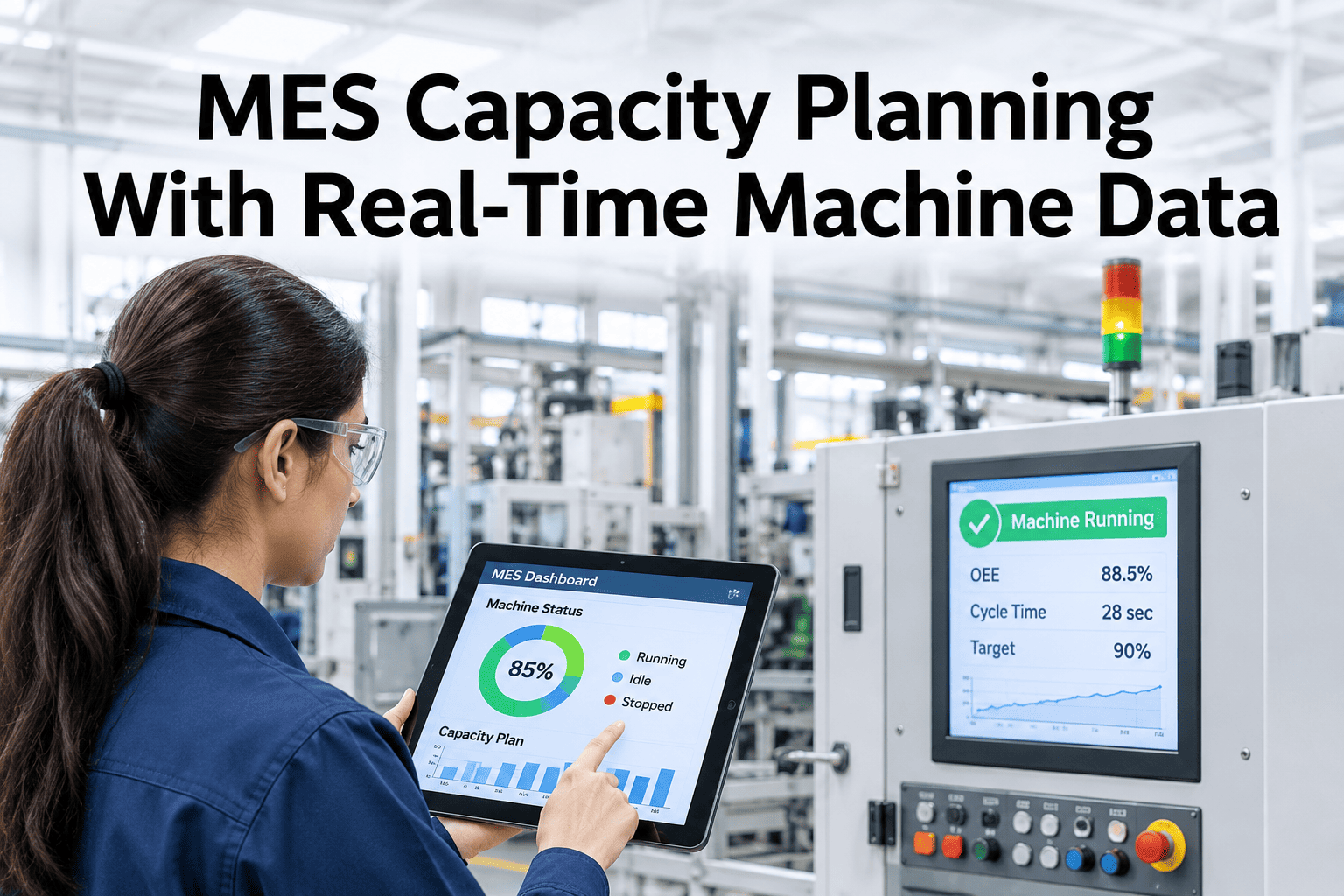
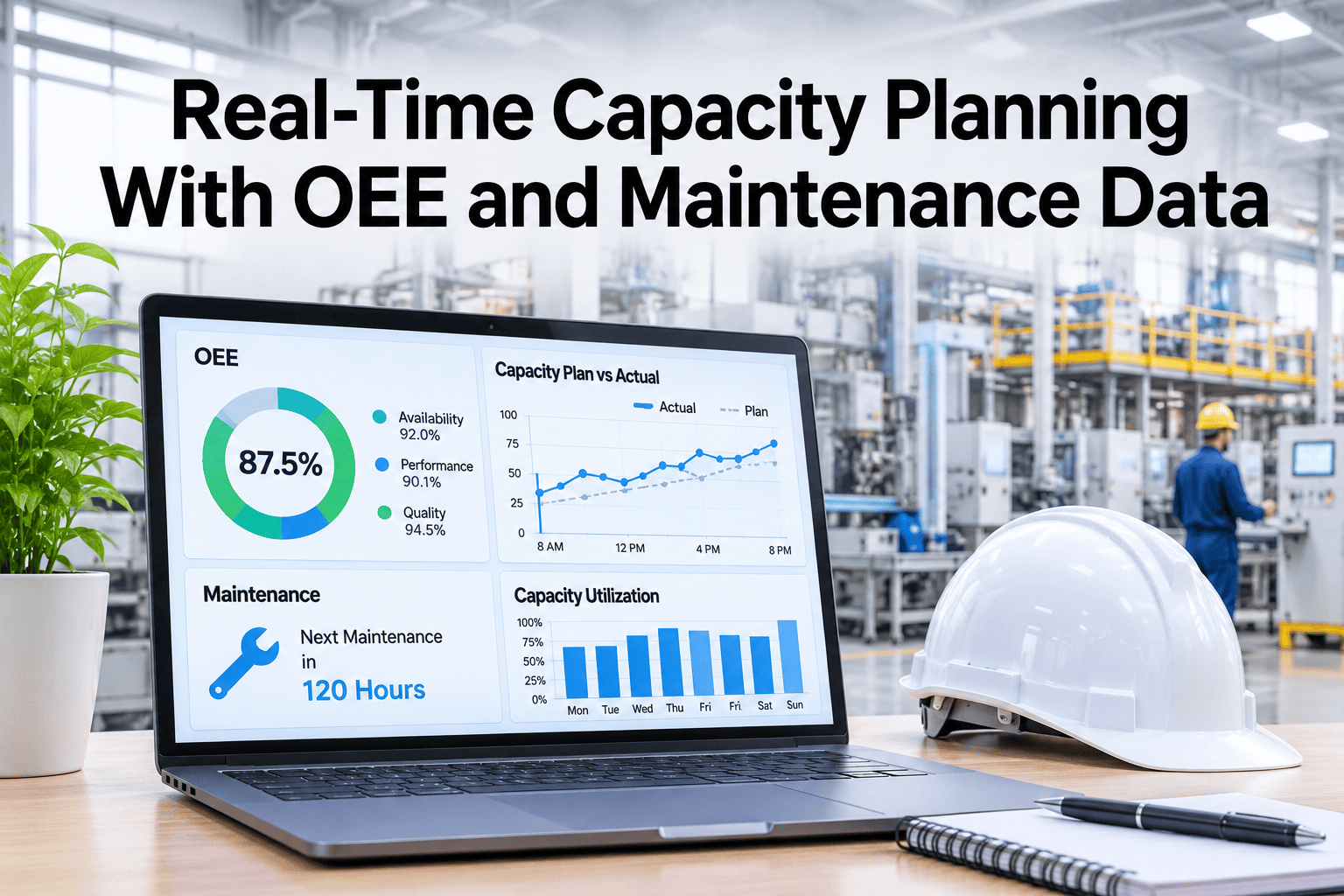
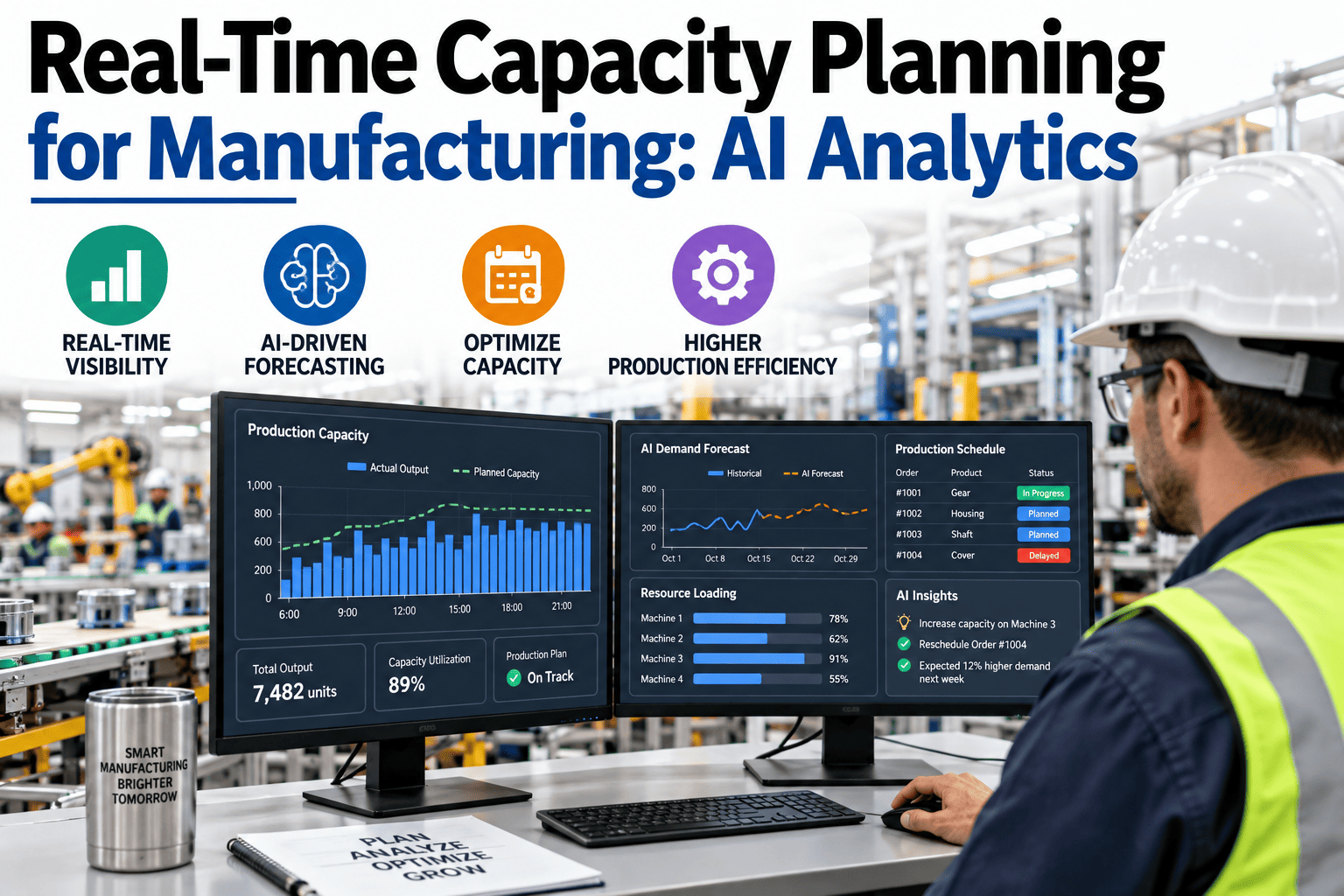
A capacity plan built from rated machine speeds and a theoretical calendar tells you what a line could produce in an ideal world — not what it will actually deliver this week. iFactory, an on-premise AI platform with MES and OEE analytics built in, builds capacity plans from actual machine performance, live downtime, and real maintenance windows. Production planners who want schedules grounded in what machines actually do can request a demo with our team.
MES Capacity Planning · Real-Time Machine Data, 2026
Rated Speed Is a Design Number. Your Schedule Needs the Real One.
iFactory AI builds capacity plans from actual machine performance, current downtime patterns, and scheduled maintenance windows, not a theoretical best case.
Rated capacity plan
100%
assumes no downtime, no changeovers, no maintenance
Real-time capacity plan
71%
reflects actual downtime, constraints, and maintenance windows
Why rated capacity misleads
The Gap Between a Spec Sheet and the Shop Floor
A machine's rated speed is a design parameter, not a production commitment — actual output depends on changeover time, micro-stops, scheduled maintenance, and the specific product mix currently running. A capacity plan built purely from rated speeds systematically overcommits, which shows up as missed delivery dates that get blamed on execution when the plan itself was never achievable.
What real-time data adds
Three Inputs That Change a Capacity Number
Actual machine performance
Recent effective speed and availability for this specific machine and product combination.
Current downtime pattern
Whether a machine is trending toward more or less unplanned stoppage than its historical baseline.
Scheduled maintenance windows
Planned PM and inspection time that will genuinely remove capacity from the schedule.
What this changes for a planner
Four Questions a Real-Time Plan Can Actually Answer
| Question | Rated-capacity plan | Real-time plan |
|---|
| Can we hit this delivery date? | Yes, in theory | Yes or no, based on actual recent performance |
| Which line should take this order? | Whichever has rated speed available | Whichever actually has achievable capacity available |
| Does the PM window conflict with the order? | Not accounted for | Flagged directly against the proposed schedule |
| How confident is this commitment? | No way to express uncertainty | Grounded in recent, verifiable performance data |
See How Your Current Capacity Plan Compares to Real Performance
Share your current capacity planning method and recent machine performance data, and iFactory AI will show the gap between planned and actual capacity.
Keeping the plan current
A Capacity Plan That Updates, Not One Built Once a Quarter
Machine performance drifts — a line that ran reliably last quarter can develop a new bottleneck this month. A capacity plan built from live data refreshes automatically as new performance data accumulates, rather than becoming stale the moment conditions change after a one-time planning exercise.
Where planners push back
Common Objections to Real-Time Capacity Planning
1
"Our data isn't clean enough"
Most plants have more usable machine data than they assume — the gap is usually integration, not data quality.
2
"Planners already know their lines"
Tribal knowledge is valuable but doesn't scale across shifts, new hires, or new product mixes the way data does.
3
"Sales needs a number today"
A confident real-time number is more defensible than a rated-speed guess that later proves wrong.
Expert review
What a Production Planner Checks First
A real-time capacity plan earns trust when the gap between planned and actual output actually shrinks, which is the only honest measure of whether the plan is grounded in reality.
Verdict
Strong when maintenance windows are treated as hard constraints in the plan, not an afterthought layered on top.
Watch for
A plan that still defaults to rated speed for any machine without enough recent performance history yet.
Do next
Compare your last quarter's planned versus actual output on your highest-volume line and quantify the real gap.
Frequently asked questions
What Production Planners Ask About Real-Time Capacity Planning
How much does actual capacity typically differ from rated capacity?
The gap varies significantly by industry, product mix, and equipment age, which is exactly why a plan grounded in your own recent performance data is more useful than a generic industry assumption.
See the gap on your own lines.
What machine data do we need connected for this to work?
Run rate, downtime events, and scheduled maintenance windows are the core inputs — most plants already generate this data through existing PLCs and CMMS systems, so connecting it is usually the first step rather than installing new sensors.
Ask support about your current data sources.
Does this replace our planners' judgment entirely?
No — it gives planners a more accurate starting number to work from, but decisions about order sequencing, customer priority, and exceptions still require human judgment the system doesn't have full context for.
Discuss how this fits your planning process.
How often does the capacity number actually update?
Update frequency depends on how current the underlying machine data is — lines with continuous data feeds can refresh capacity estimates much more often than those relying on periodic manual reporting.
Ask support about update frequency for your lines.
Can this help decide which line should take a new order?
Yes — comparing real achievable capacity across candidate lines for a given product is one of the more direct uses, surfacing which line genuinely has room versus which only looks available on a rated-speed basis.
Talk through order assignment for your lines.
Plan against what machines actually do
Build Capacity Plans From Real Performance, Not Rated Speed
Book a demo to see how iFactory AI grounds your production schedule in actual machine data.