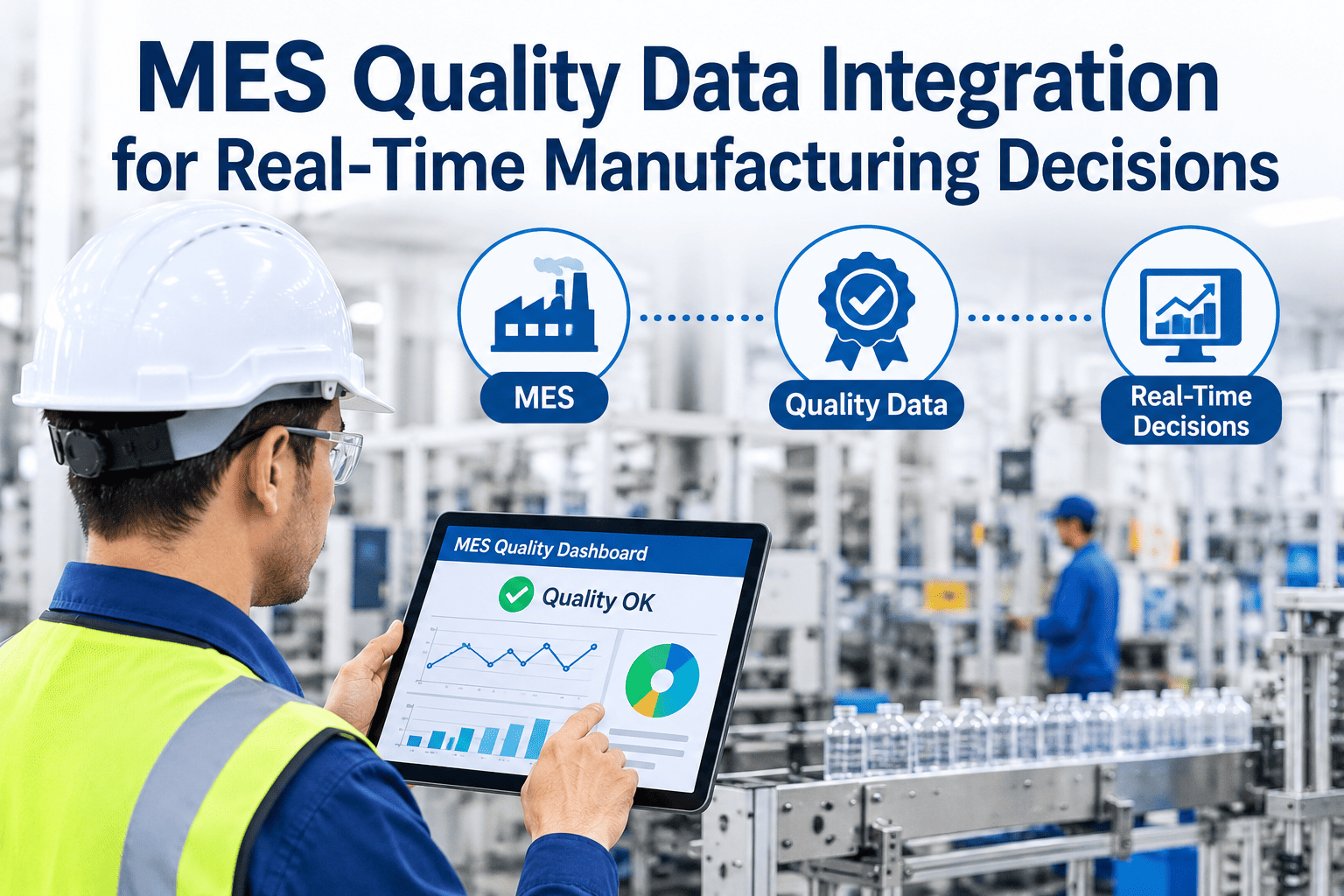
MES Quality Data Integration for Real-Time Manufacturing Decisions

By James Smith on November 13, 2026

mes-quality-data-integration-real-time

A quality result that arrives an hour after the batch finished tells you what went wrong, not what to do differently right now. iFactory, an on-premise AI platform with MES and automated analytics reporting built in, connects quality results directly to the production conditions that produced them, in real time. Manufacturing quality and operations teams who want this connected view on their own lines can request a demo with our team.

MES Quality Data Integration · Real-Time, 2026

A Quality Result Means Nothing Without the Production Conditions That Produced It

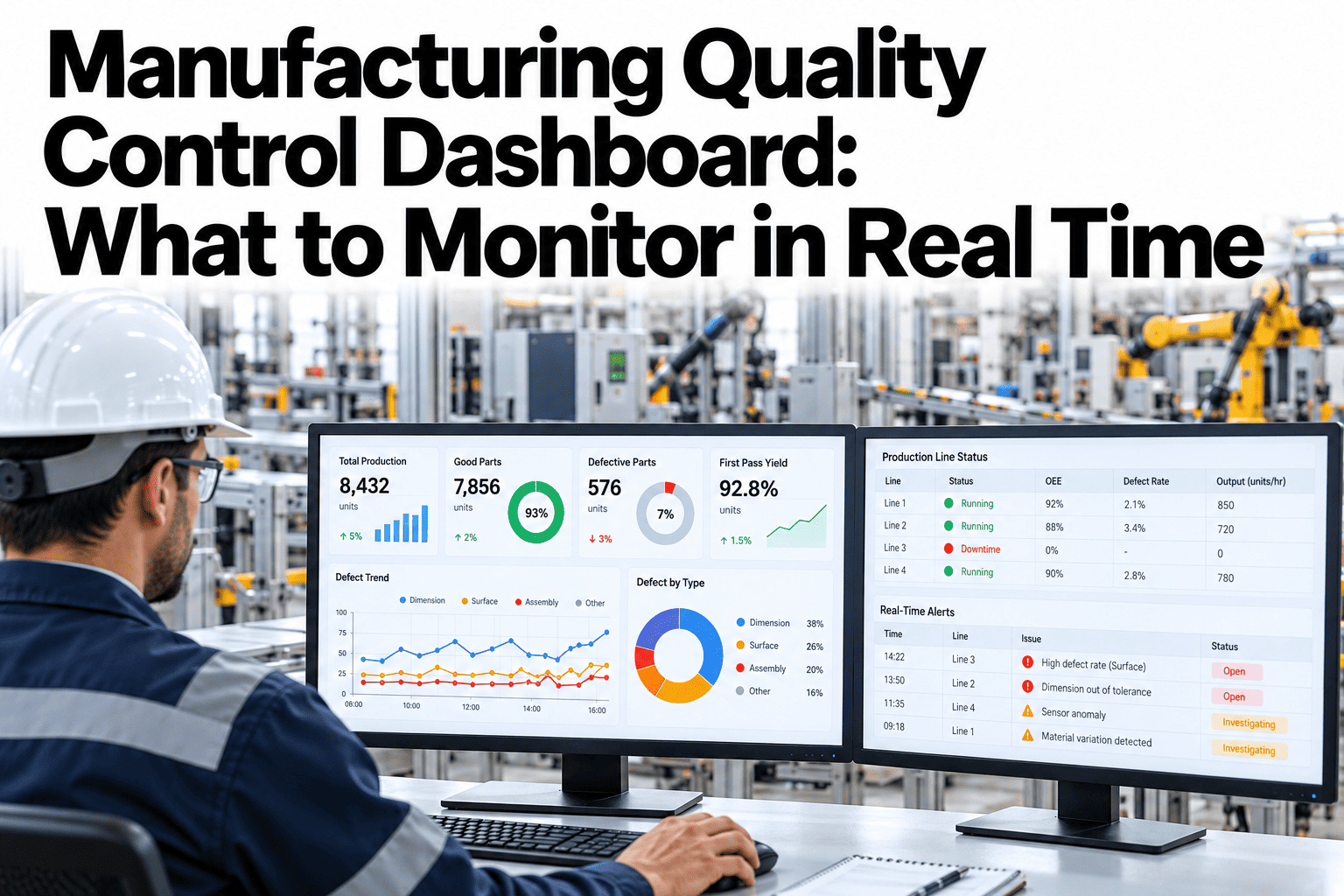
iFactory AI links every quality reading to the exact process conditions at that moment, so a defect response starts with the actual cause, not a disconnected lab number.

Why disconnected systems fail

Quality Data and Process Data Usually Live in Different Systems

A lab information system logs a result. A historian logs the process parameters. A production schedule logs what was running when. Without a direct link between all three, tracing a defect back to its cause means manually cross-referencing timestamps across systems that were never designed to talk to each other — a process that takes hours and depends on someone remembering to check.

What real-time integration enables

Four Capabilities That Require the Connection

Immediate defect response
A failed check is matched instantly to the line, shift, and process state that produced it.
Process monitoring with context
A parameter drift is evaluated against the actual quality outcome it's associated with, not in isolation.
Traceability on demand
Any finished unit's full production and quality history is retrievable without a manual cross-reference exercise.
Predictive quality modeling
A model linking process and outcome data can only be built once the two are reliably connected.
What the integration actually connects

Three Data Sources, One Timeline

SourceWhat it contributes
Quality/lab systemTest results, defect classifications, pass/fail decisions
Process historianTemperature, pressure, speed, and other parameter readings over time
MES production recordWhat product, recipe, operator, and shift were active at that moment

See How Connected Your Quality and Process Data Already Are

Share your current quality and process data systems, and iFactory AI will show what a real-time connection would surface that your current cross-referencing process misses.

Disconnected vs connected

What Changes When the Link Is Live

Disconnected systems
Defect investigation starts with a manual timestamp cross-reference
Process monitoring happens without quality context
Traceability requests take hours to assemble
Real-time connection
A failed check arrives already linked to its production conditions
A parameter drift is evaluated against real quality outcomes
A full traceability record is retrievable on demand
What makes the integration reliable

Timestamp Accuracy Is the Whole Game

A link between quality and process data is only as good as the timestamp alignment underneath it — a few minutes of clock drift between a lab system and a process historian can mean a quality result gets matched to the wrong production window entirely. Most integration projects spend real effort validating that clocks and logging intervals are actually synchronized before trusting the connected data.

Expert review

What a Manufacturing Quality Director Checks First

Quality data integration earns trust when the connection is validated for timestamp accuracy, not just technically wired up between systems.
Verdict
Strong when a defect investigation can genuinely start from the connected record instead of defaulting back to manual cross-referencing.
Watch for
Systems wired together without confirming their clocks and logging intervals actually align closely enough to trust.
Do next
Pull your last defect investigation and time how long it took to manually cross-reference quality and process data across your current systems.
Frequently asked questions

What Manufacturing Teams Ask About Quality Data Integration

What systems typically need to be connected for this to work?
The quality or lab information system, the process historian, and the MES production record are the three core sources — connecting all three gives a complete picture rather than a partial one. Discuss which of your systems need connecting.
How accurate does timestamp alignment actually need to be?
It depends on process speed — a fast continuous line needs tighter alignment than a slower batch process, since a few minutes of drift matters more when conditions change quickly. Ask support about alignment requirements for your line speed.
Can this work with legacy systems that don't have modern APIs?
Many legacy systems can still be connected through database-level integration or middleware, though the specific approach depends on what each system exposes. Discuss your current legacy system landscape.
Does this require replacing our existing quality or historian systems?
No — the goal is typically to connect existing systems rather than replace them, since the value comes from linking data that already exists, not from consolidating onto a single new platform. Ask support how this works alongside your current systems.
How long does a typical integration project take?
Timeline depends heavily on how many systems are involved and how much timestamp validation work is needed, so it varies plant to plant rather than following a fixed schedule. Discuss a realistic timeline for your systems.
Connect the result to the conditions that produced it

Link Quality Data to Production Context in Real Time

Book a demo to see how iFactory AI connects your quality and process data for faster, better-informed decisions.

Share This Story, Choose Your Platform!