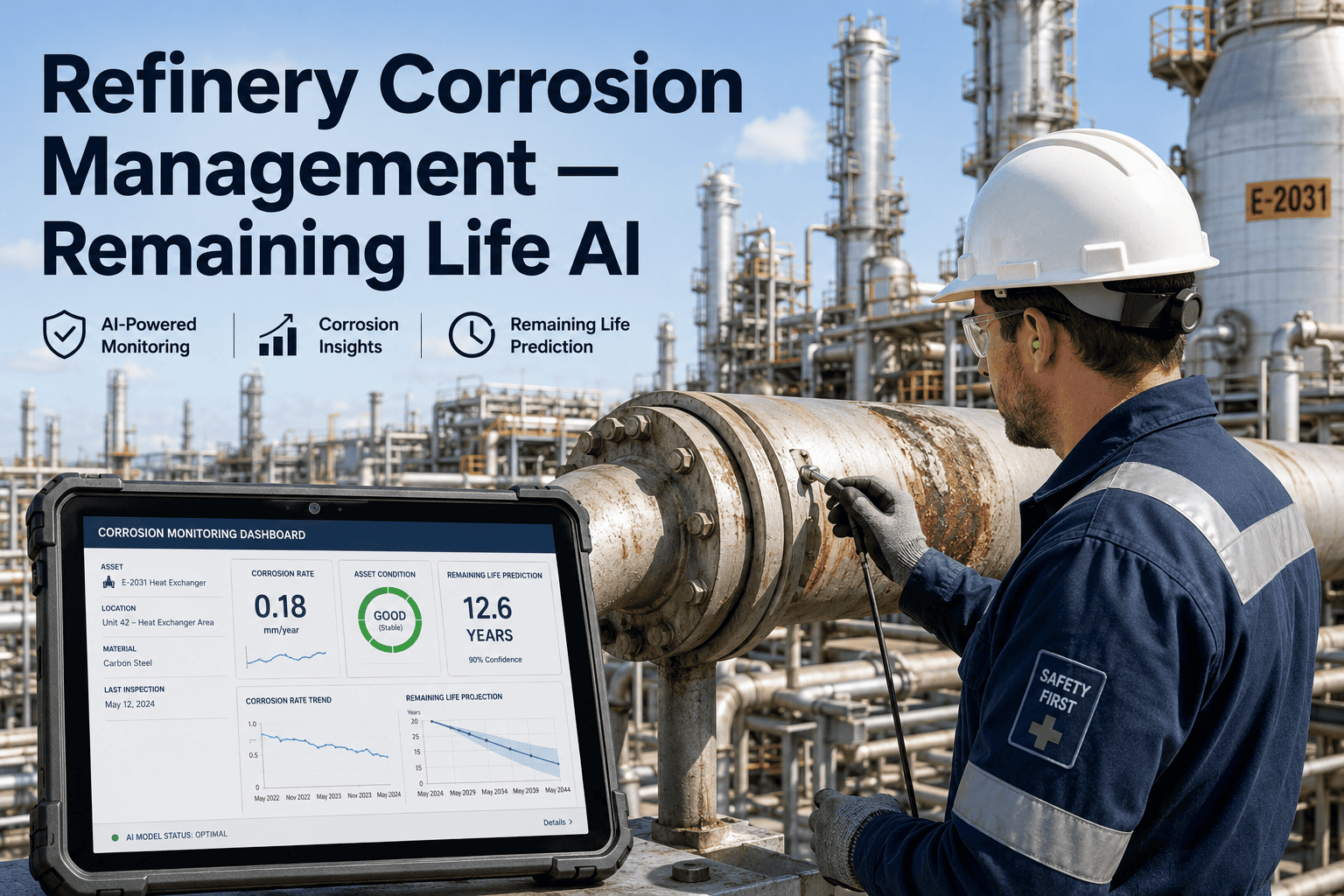
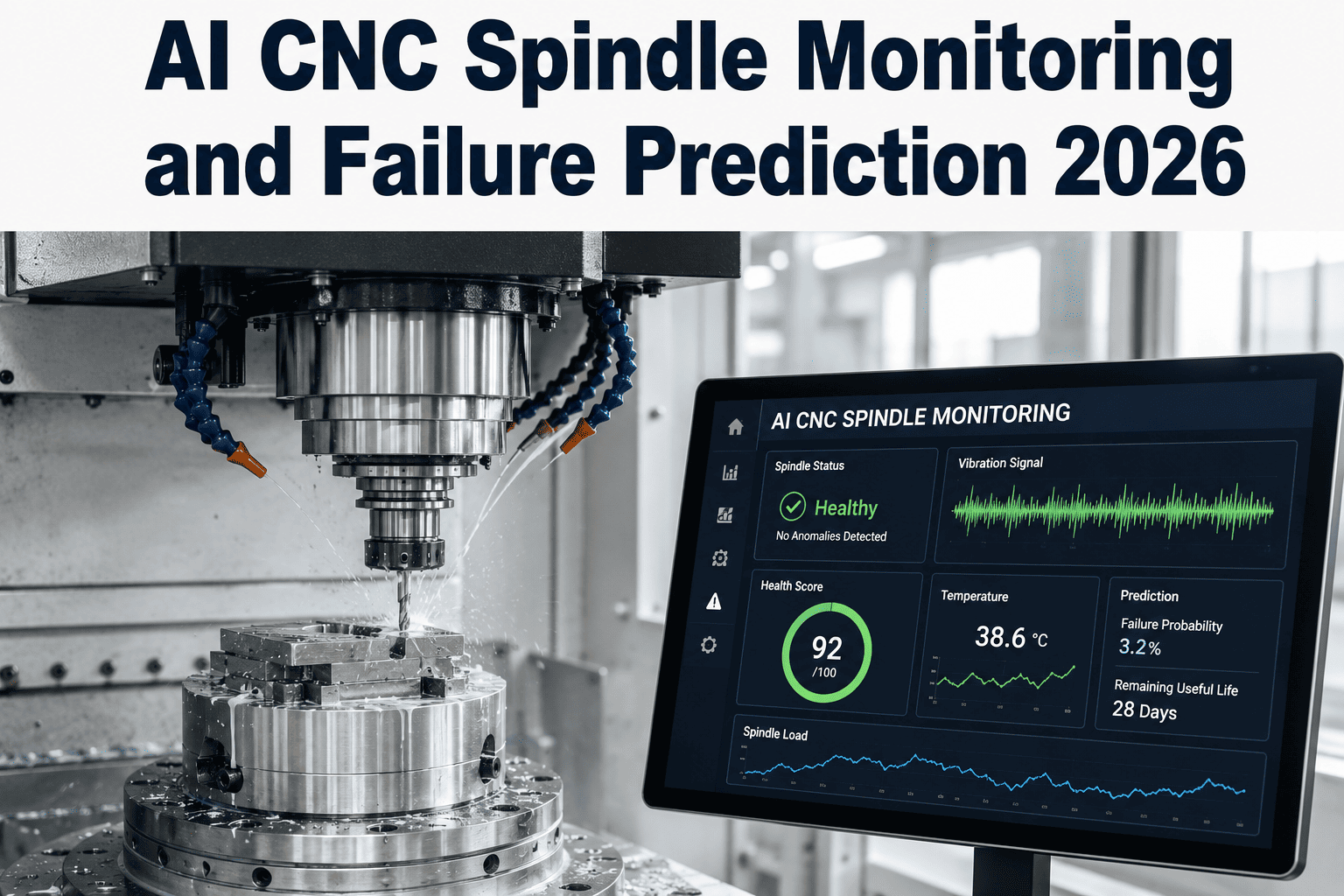
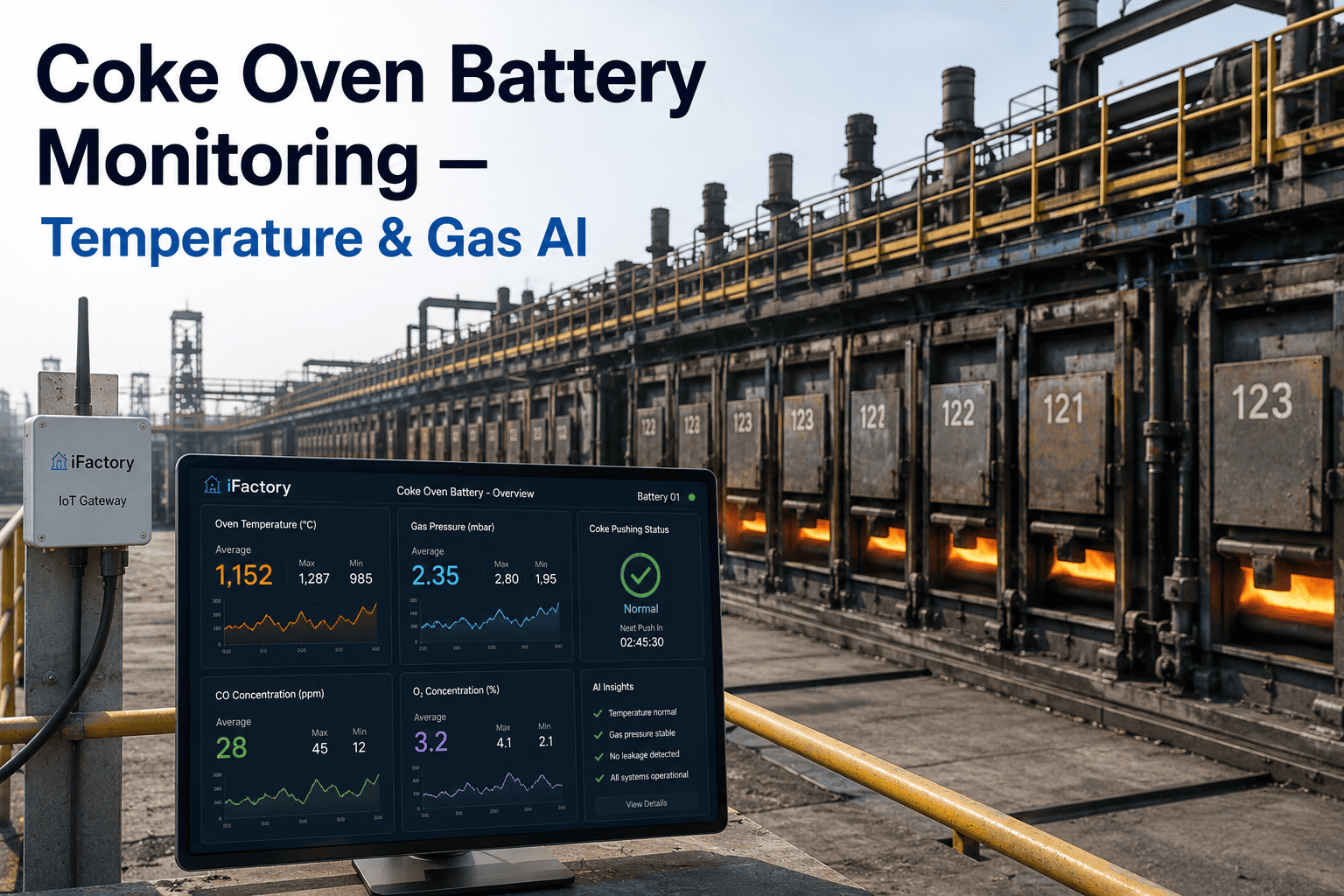
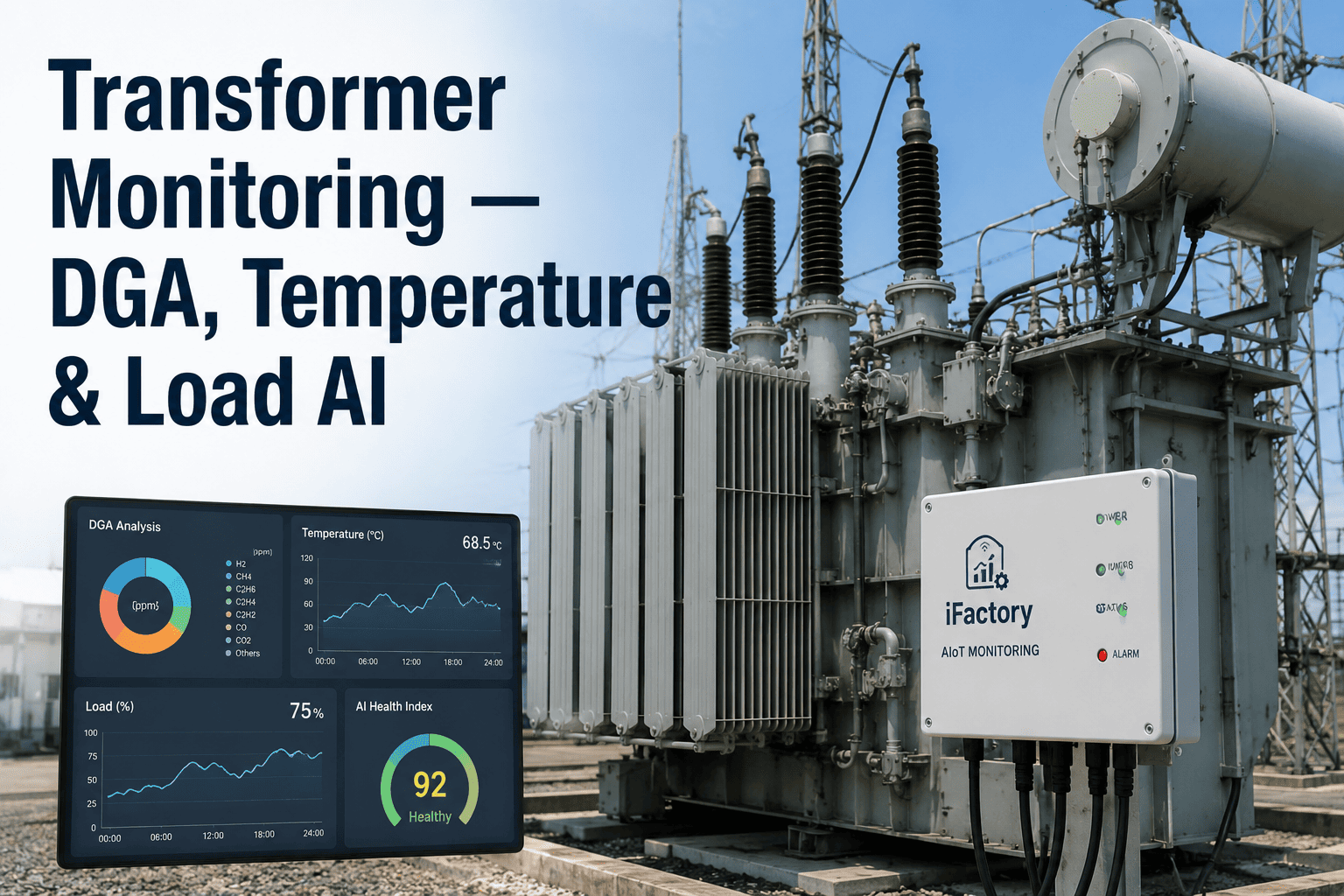
Refinery piping failures rarely happen without warning — they happen without anyone connecting the warning to the right circuit in time. A thickness reading taken during a turnaround sits in one spreadsheet, the previous year's reading sits in another PDF, and the corrosion rate that should have triggered an earlier re-inspection never gets calculated until someone goes looking for it after a leak. Risk-based inspection was designed to solve exactly this problem, but only works if the underlying thickness data actually flows into it. AI-based corrosion management closes that gap by turning every UT reading into a live remaining-life calculation the moment it's logged. Reduction in unplanned piping failures from properly implemented RBI programs runs as high as 55%. Visit iFactory support to see how this applies to your circuit inventory.
Oil & Gas · Corrosion & Integrity AI
Know Which Circuit Fails Next, Before It Fails
AI-based corrosion rate trending and remaining life prediction turn scattered UT readings into a live, prioritized inspection plan — reducing unplanned piping failures by up to 55%.
Risk Matrix, Live
What a Circuit Risk View Actually Looks Like
Every circuit is plotted by corrosion rate against remaining life. The circuits in the top row need attention this turnaround; the rest can safely wait.
Critical
CDU-104
VDU-212
HDS-330
—
Elevated
FCC-441
CDU-118
ALK-207
—
Stable
RFM-509
CDU-140
VDU-260
HDS-355
iFactory Calculates Remaining Life the Moment a Reading Is Logged.
No more waiting for a quarterly review to find out a circuit has crossed into critical territory.
The Inspection Workflow
From UT Reading to Re-Inspection Date, in Four Steps
1
UT Reading LoggedThickness data is captured at each Condition Monitoring Location and timestamped against the circuit's inspection history.
2
Corrosion Rate CalculatedShort-term and long-term rates are computed automatically, and the more conservative value is carried forward per API 570.
3
Remaining Life DerivedThe system compares projected wall loss against minimum required thickness to calculate years of safe operation left.
4
Re-Inspection Interval SetA defensible next inspection date is generated, factoring in consequence-of-failure class alongside the raw corrosion rate.
Root Cause Categories
Where Corrosion-Driven Failures Actually Start
CUI
Corrosion under insulation hides wall loss from visual inspection until the jacketing is removed, making it one of the most under-detected failure modes in a refinery.
HTHA
High temperature hydrogen attack weakens steel from the inside, and standard UT thickness readings alone may not catch early-stage damage.
Injection Points
Chemical injection points corrode faster than the surrounding pipe run and require tighter CML spacing than a standard circuit.
Erosion-Corrosion
High-velocity flow at elbows and reducers accelerates wall loss beyond what a uniform corrosion rate model would predict.
Spreadsheet vs. Live System
Where the 55% Failure Reduction Actually Comes From
Step
Spreadsheet Process
iFactory Platform
Data entry
UT readings typed in manually after the turnaround
Readings logged directly against the circuit's CML history
Corrosion rate
Calculated periodically, often quarterly
Recalculated automatically on every new reading
Risk visibility
Requires someone to build a report to see it
Live risk matrix visible to the whole integrity team
Audit trail
Scattered across files and email threads
Every entry timestamped and linked in one record
Frequently Asked Questions
Refinery Corrosion Management — What Integrity Engineers Ask
How is remaining life actually calculated from thickness readings?
Remaining life is derived by comparing the current measured wall thickness against the minimum required thickness, then dividing the available corrosion allowance by the applicable corrosion rate. API 570 requires calculating both short-term and long-term corrosion rates and using the more conservative figure, which the platform applies automatically each time a new reading is logged.
Book a demo to see the calculation run against your own circuit data.
Can risk-based inspection safely extend intervals on low-risk circuits?
Yes, when RBI methodology combines corrosion rate data with consequence-of-failure parameters correctly. Low-risk Class 3 circuits with stable, well-documented corrosion rates can justify extended intervals without compromising the tighter scrutiny that high-consequence Class 1 circuits require, which is the core efficiency gain RBI programs are built around.
What is corrosion under insulation and why is it hard to catch?
CUI occurs when moisture becomes trapped between piping and its insulation jacketing, corroding the pipe wall in a location that visual inspection cannot see without removing the insulation. Because standard walk-down inspections miss it entirely, CUI-prone circuits typically need a separate inspection strategy based on insulation condition and known moisture ingress points rather than routine UT alone.
How often should Condition Monitoring Locations be re-measured?
Re-measurement frequency depends on the calculated remaining life and the circuit's risk classification, not a fixed calendar interval. A circuit with a short remaining life or elevated consequence of failure needs more frequent monitoring, while a stable, low-risk circuit can safely extend its interval, which is why a live remaining-life calculation matters more than a static inspection schedule.
What data does an integrity team need to get started with AI-based corrosion tracking?
The minimum starting point is a CML library with at least two historical thickness readings per location, along with the nominal wall thickness and material specification for each circuit. Additional consequence-of-failure and process condition data improves risk prioritization further.
Contact support to review what your existing inspection database already provides.
Turn Your Next UT Reading Into a Remaining-Life Answer, Instantly
Corrosion rate trending, remaining life prediction, and a defensible re-inspection schedule — built directly from your circuit inspection history.