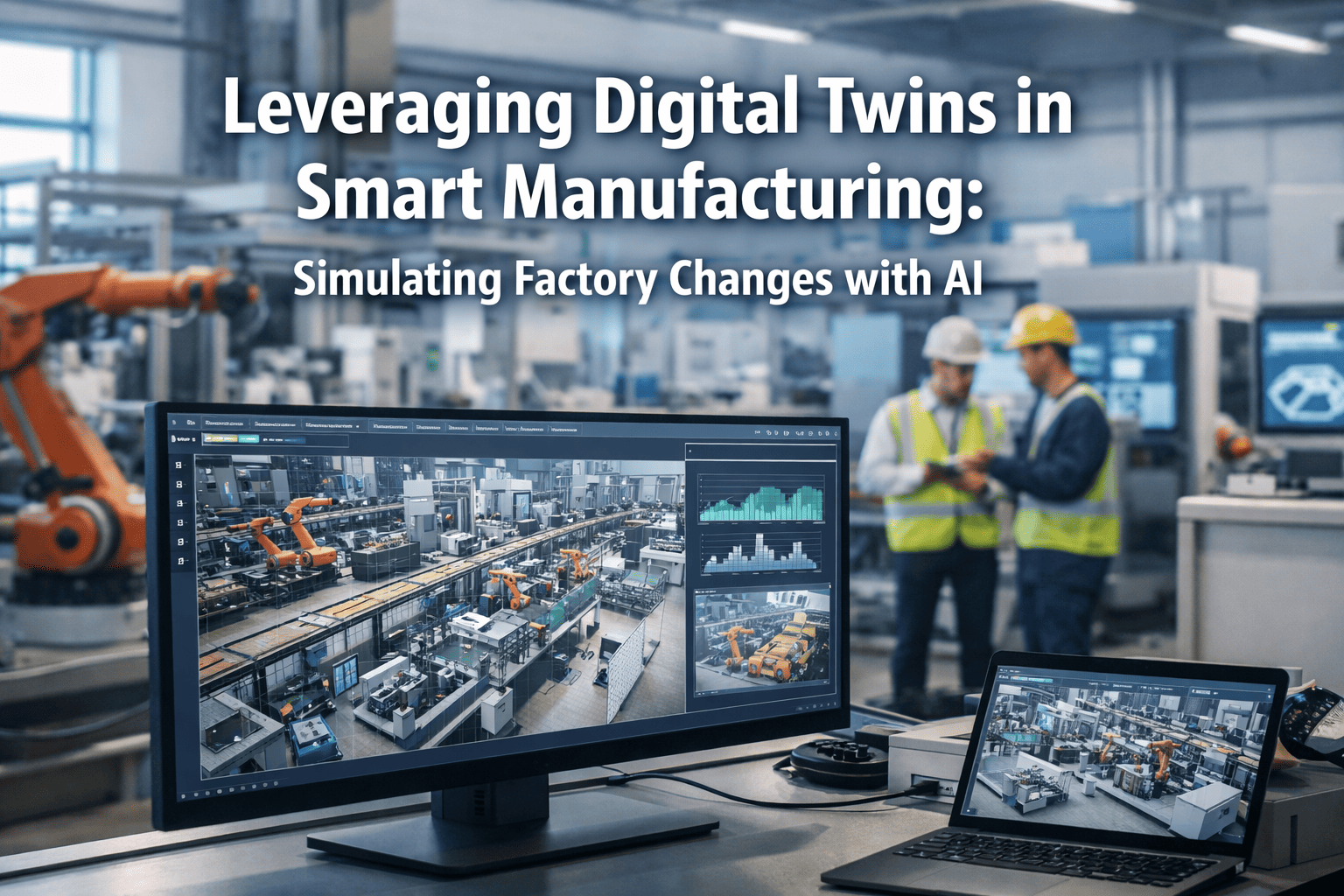
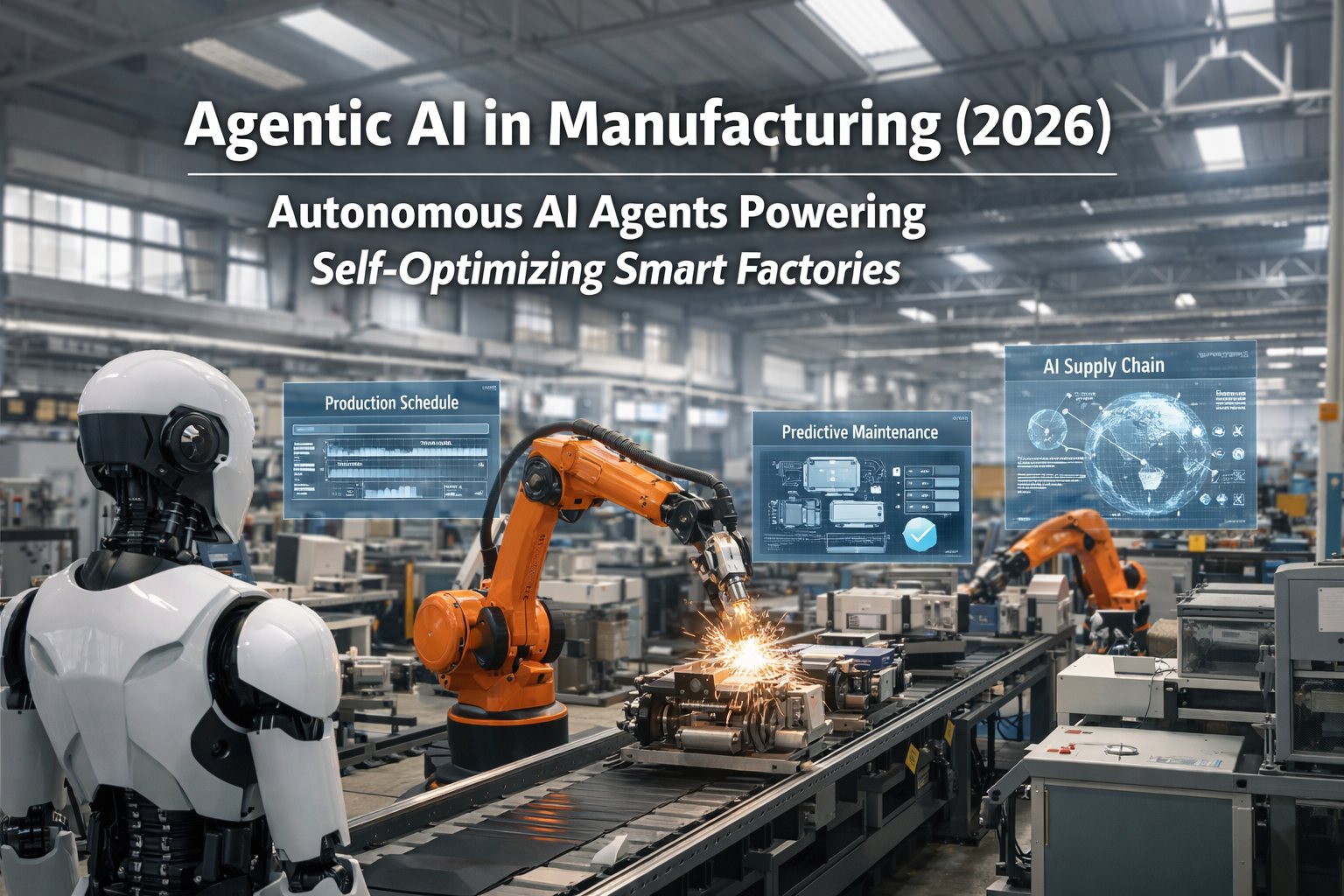
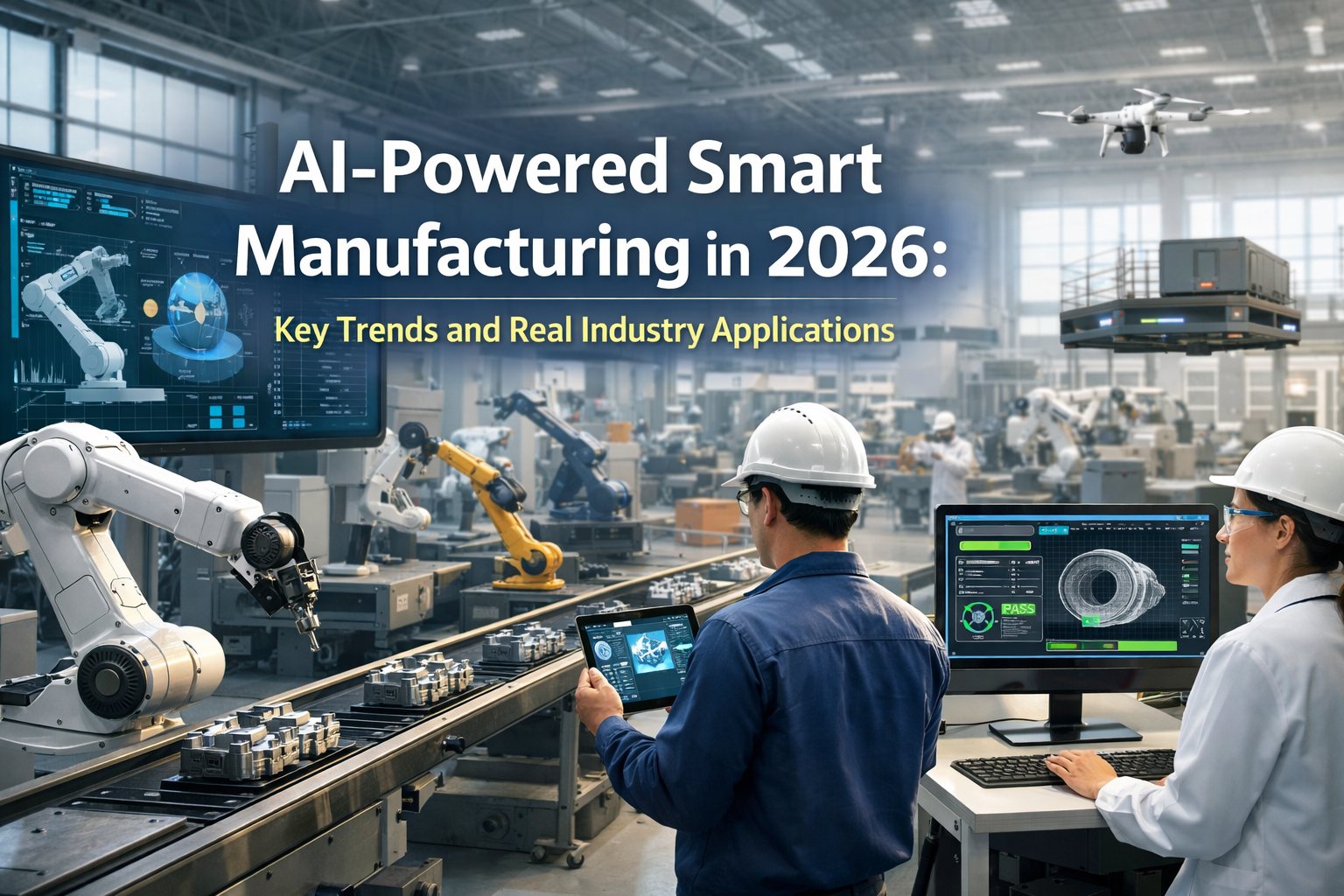
The factory floor of 2026 looks nothing like its predecessor from even five years ago. Where human workers once navigated rows of isolated machines, AI-powered systems now orchestrate entire production ecosystems in real-time—predicting equipment failures before they happen, optimizing energy consumption across shifts, and adjusting production schedules based on supply chain data streaming in from across the globe. This isn't a vision of the distant future; it's the competitive reality that manufacturers must embrace to survive.
The numbers tell the story of a transformation already underway. The global smart factory market reached $159.9 billion in 2024 and is projected to grow at a 9-10% CAGR through 2030, potentially exceeding $300 billion. Meanwhile, AI in manufacturing is experiencing explosive growth—valued at $5.32 billion in 2024 and projected to reach $47.88 billion by 2030, representing a staggering 46.5% compound annual growth rate. For manufacturers still operating traditional facilities, the message is clear: adapt now or risk irrelevance.
Where Manufacturing Meets Intelligence
This guide explores how AI is fundamentally reshaping manufacturing operations in 2026—from the technologies driving transformation to the implementation strategies that separate industry leaders from laggards. Whether you're a plant manager evaluating your first smart factory investment or a manufacturing executive scaling digital initiatives across multiple sites, understanding the landscape of intelligent manufacturing has never been more critical.
The Smart Factory Technology Stack for 2026
Smart factories aren't built on a single technology—they emerge from the convergence of multiple systems working in concert. The 2026 technology stack integrates artificial intelligence, Industrial IoT, digital twins, advanced robotics, and edge computing into unified platforms that transform raw operational data into competitive advantage. Understanding how these technologies interact is essential for any manufacturer planning their digital transformation journey.
Core Technologies Powering Smart Factories in 2026
Artificial Intelligence & ML
Machine learning algorithms analyze production data for predictive maintenance, quality control, and process optimization
Industrial IoT (IIoT)
Connected sensors and devices enable real-time monitoring, data collection, and machine-to-machine communication
Digital Twin Technology
Virtual replicas of physical assets enable simulation, testing, and optimization without disrupting production
Industrial Robotics
Advanced robots and cobots automate repetitive tasks while collaborating safely alongside human workers
Edge Computing
Local data processing enables real-time decision-making with millisecond latency for critical operations
Cloud & Data Analytics
Centralized platforms aggregate data from across operations for enterprise-wide insights and optimization
The integration of these technologies creates what industry analysts call the "connected manufacturing ecosystem"—where every machine, sensor, and system shares data through unified platforms. This connectivity enables capabilities that were impossible just years ago: production lines that automatically adjust to quality variations, supply chains that reroute in real-time based on disruptions, and maintenance systems that schedule repairs during planned downtime rather than responding to failures.
AI Applications Transforming Manufacturing Operations
Artificial intelligence has moved from experimental pilot programs to mission-critical production systems. In 2024, 35% of manufacturing firms were utilizing AI technologies, with adoption concentrated in predictive maintenance, quality control, and supply chain optimization. By 2026, these applications will expand dramatically as manufacturers realize the competitive necessity of AI-driven operations.
High-Impact AI Applications in Manufacturing
Predictive Maintenance
AI algorithms analyze sensor data to predict equipment failures before they occur, enabling proactive repairs during planned downtime.
Quality Control & Inspection
Computer vision systems detect defects with exceptional precision, ensuring consistent product quality across production runs.
Supply Chain Optimization
ML models optimize inventory levels, demand forecasting, and logistics routing based on real-time market and operational data.
Production Planning
AI optimizes production schedules, resource allocation, and workflow sequencing to maximize throughput and minimize waste.
The financial case for AI adoption is compelling. Research shows that 95% of predictive maintenance adopters report positive ROI, with 27% achieving payback in less than a year. The US Department of Energy documents that AI-driven predictive maintenance can deliver a 10x return on investment by preventing costly equipment failures. For manufacturers still relying on reactive or scheduled maintenance approaches, this represents an enormous competitive disadvantage.
The ROI of AI-Powered Predictive Maintenance
US Department of Energy
Report positive ROI
Decrease in breakdowns
Reduction in downtime
Lower maintenance costs
Digital Twins: The Virtual Factory Revolution
Digital twin technology has emerged as a cornerstone of smart factory strategy, enabling manufacturers to create virtual replicas of physical assets, production lines, and entire facilities. These dynamic digital models don't just mirror reality—they enable simulation, testing, and optimization that would be impossible or prohibitively expensive in the physical world. The digital twin market is projected to grow from $24.5 billion in 2025 to over $155 billion by 2030, with manufacturing leading adoption.
Digital Twin Impact on Manufacturing Performance
Manufacturers reduce product development cycles by half through virtual prototyping and testing
Predictive maintenance enabled by digital twins reduces maintenance expenditures significantly
Better demand forecasting and inventory management improve delivery performance
Virtual testing and simulation identify quality issues before physical production begins
Major manufacturers are already demonstrating the value of digital twin technology. Siemens uses digital twins to optimize factory layouts, reducing setup times and operational costs while improving productivity. Aerospace companies leverage digital twins to save billions annually by increasing system reliability and reducing unexpected failures. The technology enables a fundamental shift from reactive to proactive manufacturing—testing scenarios virtually before implementing them physically.
Industrial Robotics and Human-Machine Collaboration
The robotics landscape in manufacturing is evolving rapidly, with collaborative robots (cobots) growing at a 14% CAGR through 2030. Unlike traditional industrial robots confined to safety cages, cobots work alongside human workers, handling repetitive or physically demanding tasks while humans focus on complex problem-solving and quality oversight. This collaboration model is reshaping workforce dynamics across manufacturing sectors.
Industrial Robotics Market Evolution
Traditional Industrial Robots
87% of companies useCollaborative Robots (Cobots)
55% of companies useThe integration of AI into robotics is creating what analysts call "Physical AI"—robots capable of perceiving, analyzing, and making real-time decisions with unprecedented precision. Investment in humanoid robotics reached $7.3 billion in H1 2025 alone, with companies like BMW, Mercedes-Benz, and Tesla piloting humanoid robots for assembly and logistics applications. While humanoid robots remain expensive (averaging $158,400 per unit), costs are declining rapidly as technology matures.
The Industrial IoT Foundation
The Industrial Internet of Things provides the nervous system that makes smart factories possible. By connecting machines, sensors, and systems across the production environment, IIoT enables the real-time data flows that power AI analytics, predictive maintenance, and automated decision-making. The global IIoT market reached $276.6 billion in 2025 and is projected to exceed $964 billion by 2035, reflecting the technology's foundational role in manufacturing transformation.
Industrial IoT: The Smart Factory Nervous System
IIoT Application Segments
The convergence of 5G networks with IIoT is enabling capabilities that were previously impossible. 5G's ultra-low latency—measured in milliseconds—supports real-time robot coordination, safety-critical control applications, and instant data transmission across connected manufacturing ecosystems. According to Huawei Technologies, 5G has the potential to increase global manufacturing GDP by $740 billion (4%) by 2030, making network infrastructure investment a strategic priority for manufacturers.
Navigating Smart Factory Implementation Challenges
Despite the compelling business case, smart factory implementation remains challenging for many manufacturers. Deloitte's 2025 Smart Manufacturing Survey reveals that while manufacturers are achieving productivity gains of up to 20%, many companies still show low maturity in critical areas including workforce development, legacy system integration, and cybersecurity. Understanding these challenges is essential for realistic planning and successful transformation.
Top Smart Factory Implementation Challenges
Skills Gap & Workforce Development
35% of manufacturers cite adapting workers to the "Factory of the Future" as their top human capital concern. With 3.8 million new employees required by 2033, the talent crisis is real.
Legacy System Integration
Many factories operate with a mix of old and new equipment, creating compatibility issues. Integrating modern IIoT and AI with existing infrastructure requires significant investment.
High Implementation Costs
Initial setup costs for sensors, data infrastructure, and analytics platforms require significant capital investment, creating barriers especially for small and medium manufacturers.
Cybersecurity Risks
Increased connectivity creates new attack surfaces. A vulnerability in any connected device could potentially compromise the entire manufacturing system.
The workforce challenge deserves particular attention. While 85% of survey respondents agreed that smart manufacturing will attract new talent to the industry, only 48% reported having a training and adoption standard in place. This gap between aspiration and execution leaves many manufacturers struggling to realize the full potential of their technology investments. Successful transformation requires equal investment in people and processes alongside technology.
Smart Manufacturing Maturity Levels
Based on Deloitte 2025 Smart Manufacturing Survey
Production Operations
Sensors, automation, and AI integration delivering measurable productivity gains
Data & Analytics
Growing capabilities in real-time monitoring and predictive analytics
Human Capital
Workforce development and skills training remain significant gaps
Equipment Maintenance
Predictive maintenance adoption still emerging despite proven ROI
Building Your Smart Factory Roadmap for 2026
Successful smart factory transformation doesn't happen overnight—it requires a strategic, phased approach that balances quick wins with long-term capability building. Industry leaders recommend starting with high-impact, lower-complexity initiatives that demonstrate value while building organizational capabilities for more ambitious projects. The key is to begin generating ROI early while laying the foundation for comprehensive digital transformation.
Smart Factory Implementation Roadmap
Foundation & Quick Wins
- Assess current state and define measurable objectives
- Identify 3-5 critical assets for pilot programs
- Deploy initial sensors on high-value equipment
- Establish data collection and storage infrastructure
- Launch predictive maintenance pilot on rotating equipment
Scale & Integrate
- Expand sensor deployment across production lines
- Implement AI-powered quality control systems
- Integrate IIoT with existing ERP and MES systems
- Deploy digital twin for critical production processes
- Launch workforce training and upskilling programs
Optimize & Transform
- Deploy advanced AI for production planning optimization
- Implement facility-wide digital twin capabilities
- Integrate supply chain data for end-to-end visibility
- Scale collaborative robotics deployment
- Achieve autonomous decision-making for routine operations
Investment priorities for 2025-2026 are clear from industry surveys: 41% of manufacturers plan to prioritize factory automation hardware, 34% will focus on active sensors, and 28% are investing in vision systems. These priorities reflect a practical approach—building the physical infrastructure that enables AI and analytics capabilities. For manufacturers beginning their journey, starting with sensor deployment on critical equipment provides immediate value while establishing the data foundation for more advanced applications.
Ready to Transform Your Manufacturing Operations?
iFactory provides the integrated platform manufacturers need to accelerate their smart factory journey. From IIoT connectivity and predictive maintenance to AI-powered analytics and digital twin capabilities, our solutions help you capture the full potential of Industry 4.0—starting today.
Frequently Asked Questions
What is a smart factory and how does it differ from traditional manufacturing?
A smart factory is an intelligent manufacturing ecosystem that integrates advanced technologies—including artificial intelligence, Industrial IoT, digital twins, robotics, and cloud computing—into a connected production environment. Unlike traditional factories where machines operate in isolation, smart factories feature interconnected systems that share data in real-time, enabling predictive maintenance, automated quality control, and adaptive production scheduling. Smart factories can respond dynamically to changing conditions, optimize energy consumption, and make data-driven decisions without human intervention for routine operations. The key differentiator is connectivity: every machine, sensor, and system communicates through unified platforms that transform raw operational data into actionable intelligence.
What ROI can manufacturers expect from smart factory investments?
ROI from smart factory investments varies by application but is consistently positive across implementations. For predictive maintenance specifically, 95% of adopters report positive ROI, with 27% achieving payback in less than a year. The US Department of Energy documents potential 10x returns from predictive maintenance investments. Broader smart manufacturing initiatives typically deliver 20% productivity gains in both production output and workforce efficiency, according to Deloitte's 2025 survey. Other documented benefits include 70-75% reduction in equipment breakdowns, 35-45% reduction in unplanned downtime, 25% lower maintenance costs, and 30% reduction in defects. Most manufacturers achieve full ROI within 12-24 months, with initial benefits visible within 3-6 months of implementation.
What are the biggest challenges in implementing smart factory technologies?
The top challenges manufacturers face include the skills gap (36% report technical skills hurdles), legacy system integration, high implementation costs (58% cite financial concerns), and cybersecurity risks. The workforce challenge is particularly significant—35% of manufacturers cite adapting workers to the "Factory of the Future" as their top human capital concern, yet only 48% have training standards in place. Integration complexity arises from the need to connect modern IIoT and AI systems with existing equipment, ERP, MES, and SCADA systems that weren't designed for real-time connectivity. Success requires addressing these challenges through phased implementation, workforce upskilling programs, strategic technology partnerships, and robust cybersecurity frameworks.
How do digital twins benefit manufacturing operations?
Digital twins create virtual replicas of physical assets, production lines, or entire facilities that enable simulation, testing, and optimization without disrupting actual operations. Key benefits include 50% faster product development times through virtual prototyping, 40% savings in maintenance costs through predictive capabilities, 20% improvement in delivery performance through better forecasting, and 30% reduction in defects through virtual quality testing. Digital twins enable manufacturers to test scenarios virtually—new production configurations, equipment changes, or process modifications—before implementing them physically, significantly reducing risk and accelerating innovation cycles. The technology also supports remote monitoring and enables real-time optimization of production processes based on current conditions.
What is the role of AI in predictive maintenance?
AI transforms maintenance from reactive or scheduled approaches to truly predictive capabilities. Machine learning algorithms analyze data from sensors monitoring temperature, vibration, pressure, and other parameters to identify patterns that indicate potential equipment failures—often detecting issues 30 days or more before they occur. AI-powered predictive maintenance enables proactive repairs during planned downtime rather than emergency responses to failures. Documented results include 70% reduction in breakdowns, 25% lower maintenance costs, 35-45% reduction in downtime, and 20-30% extension of equipment lifespan. The AI-driven predictive maintenance market is projected to grow from $774 million in 2024 to over $2 billion by 2032, reflecting rapid adoption as manufacturers recognize the compelling ROI.
How should manufacturers prioritize smart factory investments?
Industry surveys indicate clear priorities for 2025-2026: 41% of manufacturers are prioritizing factory automation hardware, 34% are focusing on active sensors, and 28% are investing in vision systems. The recommended approach is phased implementation—starting with high-impact, lower-complexity initiatives that demonstrate value while building organizational capabilities. Most experts recommend beginning with predictive maintenance on critical rotating equipment (pumps, motors, fans) as these provide quick wins through vibration analysis. This establishes the sensor infrastructure and data foundation for more advanced applications like AI-powered quality control and production optimization. Success requires parallel investment in workforce training alongside technology deployment.
The Future Is Already Here
The smart factory isn't a distant vision—it's the competitive reality of 2026. Manufacturers who embrace AI, IIoT, digital twins, and advanced automation are achieving 20% productivity gains, 70% reductions in equipment breakdowns, and ROI measured in months rather than years. Those who delay risk falling behind competitors who are already capturing these benefits.
The technology stack is proven. The ROI is documented. The implementation path is clear. The only remaining question is whether your organization will lead the transformation or follow. In an era where manufacturing competitiveness is increasingly defined by digital capability, waiting is its own form of decision—and it's the one that carries the greatest risk.