Every hour your production line runs without real-time supply chain visibility, you are flying blind — absorbing disruption costs, missing shipment windows, and letting preventable stockouts quietly erode your margins. In 2026, manufacturers operating on static spreadsheets and reactive exception reports are not just inefficient; they are competitively exposed. The question is no longer whether to modernise your supply chain intelligence — it is how much revenue you are willing to surrender before you do.
iFactory MES Workflow Intelligence
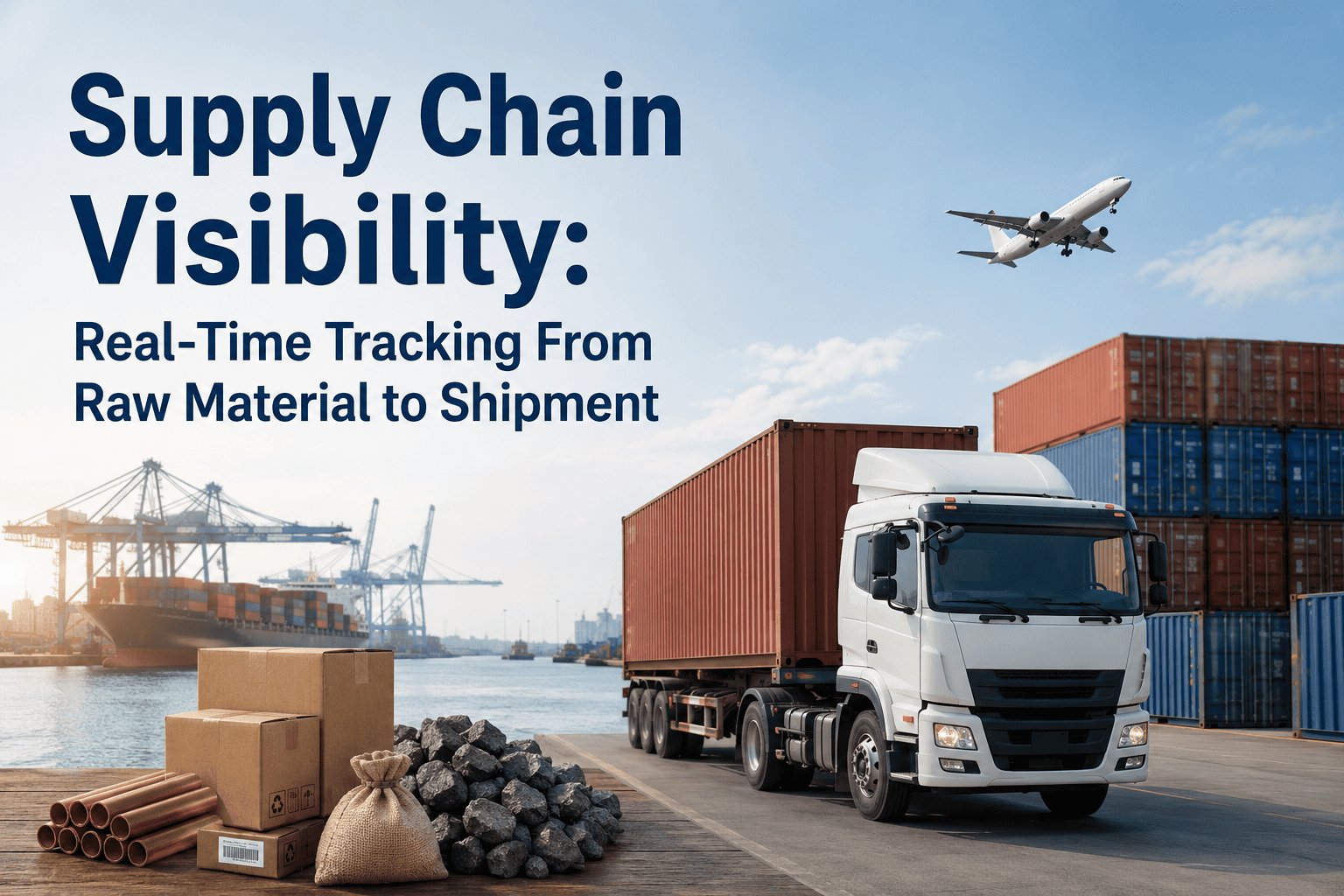
Supply Chain Visibility: Real-Time Tracking From Raw Material to Shipment
Connect suppliers, MES, and logistics in a single intelligent layer — with live exception alerts, predictive ETAs, and risk scoring that eliminates the cost of not knowing.
94%
Of supply disruptions are detectable 48+ hours in advance with real-time visibility
$1.5M
Average annual loss from unplanned supply interruptions in mid-market manufacturing
31%
Reduction in emergency procurement costs after live SCM deployment
6-10wk
Typical time to first measurable supply chain exception avoided
The Business Case
What Supply Chain Blind Spots Actually Cost You
Most manufacturers understand supply chain risk in theory. Few have quantified what opacity is costing them in practice. When your MES cannot communicate upstream supplier status in real time, and your logistics data lives in a separate portal your planners check twice a day, the gap between those systems becomes a direct drag on throughput, margin, and customer commitments. The damage accumulates across four pressure points.
Unplanned Downtime
Late material arrivals stop production lines with zero warning. Without upstream visibility, your first alert is the line going cold — not a 48-hour heads-up that lets you reschedule or source alternatives.
Excess Safety Stock
When planners cannot trust supplier ETAs, they build buffer inventory that ties up working capital. Manufacturers without real-time SCM carry 18–24% more inventory than their visibility-enabled peers.
Emergency Procurement
Reactive sourcing under pressure means paying spot-market premiums. A single critical component emergency can erase the margin on an entire production run — and damage supplier relationships for the next quarter.
Customer Promise Erosion
Order commitments made without live supply data become liabilities. Late deliveries drive churn, penalty clauses, and account review cycles that no sales team can fully recover from after the fact.
Platform Capabilities
What Real-Time Supply Chain Visibility Looks Like Inside iFactory MES
iFactory's MES Workflow module creates a connected intelligence layer across every node in your supply chain — from tier-2 supplier confirmation through inbound logistics, warehouse receipt, production floor consumption, finished goods transfer, and outbound shipment. The platform does not merely display status; it scores risk, generates alerts, and feeds decisions before disruption reaches your line.
Live Supplier Tracking
- Supplier confirmation status per purchase order line
- Automated ETA updates via EDI, API, or supplier portal
- Delay detection with configurable lead-time buffers
- Tiered supplier risk scoring updated continuously
Inbound Logistics Intelligence
- Carrier API integration for real-time shipment tracking
- Customs clearance status monitoring for international lanes
- Predictive ETA modelling adjusted for transit variance
- Dock scheduling recommendations based on live arrival data
MES Floor Synchronisation
- Material consumption mapped to active production orders
- WIP inventory levels visible to supply planners in real time
- Shortage alerts triggered before line starvation occurs
- Automatic reorder signals based on consumption velocity
Outbound Shipment Visibility
- Finished goods readiness linked to customer order timelines
- Carrier booking confirmation and document generation
- Customer-facing ETA portals fed from live dispatch data
- Exception alerts when shipments fall outside committed windows
Exception Management Engine
- Configurable alert thresholds per material, lane, and supplier
- Severity scoring: informational, at-risk, critical, breach
- Escalation routing to planner, buyer, or operations director
- Resolution tracking with mean-time-to-close reporting
Risk Scoring and Analytics
- Supplier reliability scores from 90-day rolling performance
- Lane risk index combining carrier, route, and volume factors
- Demand-supply gap analysis across 12-week planning horizon
- Executive dashboards with financial impact quantification
Legacy vs. Optimised
The Gap Between Where You Are and Where You Need to Be
The table below contrasts the operational reality of traditional supply chain management against the outcomes delivered by a real-time MES-integrated visibility platform. Each row represents a decision point where the gap between legacy friction and optimised intelligence translates directly into cost, speed, or competitive position.
| Decision Point |
Legacy Friction |
Optimised Excellence |
| Supplier status awareness |
Manual check-ins, email chains, 24–48hr lag |
Live confirmation status per PO line, automated alerts on deviation |
| Inbound ETA accuracy |
Carrier portal checked intermittently, static ETAs |
Predictive ETA updated continuously from carrier API and transit variance models |
| Shortage detection |
Line stoppage is the first alert; damage already done |
Shortage risk flagged 48–72hrs before line impact based on consumption velocity |
| Emergency procurement |
Reactive, spot-market pricing, strained supplier relationships |
Proactive sourcing triggered early with standard supplier terms preserved |
| Inventory buffer strategy |
Excess safety stock to compensate for ETA uncertainty |
Right-sized inventory driven by live demand-supply gap analysis |
| Customer commitment accuracy |
Promises made on lagging data; frequent revision calls |
Commitments backed by live supply position; proactive delay notification |
| Supplier performance review |
Quarterly retrospective with disputed data |
Continuous rolling scorecard with objective, system-generated data |
| Executive supply chain reporting |
Weekly PowerPoint assembled from five disconnected systems |
Live dashboard with financial impact quantification, updated in real time |
Business Outcomes
Three Dimensions of Measurable Impact
Workflow Transformation
Planners shift from chasing status updates to managing by exception. The average supply chain planner reclaims 6–9 hours per week previously spent on manual data gathering and cross-system reconciliation — redirected toward strategic sourcing, supplier development, and demand collaboration.
- Exception-driven workload model replaces manual monitoring
- Automated escalation eliminates decision latency
- Single-pane visibility across all supply chain nodes
Overhead Reduction
Inventory optimisation driven by accurate supply data reduces working capital tied up in safety stock. Emergency freight spend drops when disruptions are caught early. Procurement efficiency improves as buyer time shifts from firefighting to strategic negotiation and supplier rationalisation.
- 18–24% inventory reduction versus pre-visibility baseline
- 31% average reduction in emergency procurement cost
- Freight premium spend cut by removing reactive expedites
Growth Enablement
Reliable supply chain intelligence converts into reliable customer commitments — and reliable commitments convert into retained accounts, earned contract expansions, and competitive wins against less operationally mature rivals. Scale with confidence when your supply chain data scales with you.
- On-time delivery improvement of 12–19 percentage points
- Reduced customer churn from late delivery and revision fatigue
- Capacity to take on larger, more complex customer programmes
Implementation
From Integration to Insight: How Deployment Works
iFactory's supply chain visibility module deploys in a phased approach that mirrors the proven roadmap for MES-driven transformation. Integration starts with existing data sources — ERP purchase orders, current carrier accounts, and warehouse management systems — before expanding to supplier portals and advanced risk analytics. Most deployments produce the first avoided exception within 6–10 weeks of go-live.
01
Data Source Integration — Weeks 1–3
Connect ERP, existing carrier accounts, and warehouse systems via standard APIs and EDI. Map purchase order and shipment data into the iFactory visibility layer. Validate data completeness across top 20 suppliers by spend.
02
Exception Threshold Configuration — Weeks 3–5
Define alert thresholds per material category, supplier tier, and transit lane. Configure escalation routing aligned to your planning team structure. Set baseline KPIs for on-time delivery rate, exception volume, and resolution time.
03
MES Floor Synchronisation — Weeks 5–8
Link inbound supply status to active production orders on the MES floor. Activate consumption velocity tracking and shortage risk alerting. Planners begin working the exception dashboard in parallel with existing tools before full cutover.
04
Supplier Portal Onboarding — Months 2–4
Invite strategic suppliers to the self-service confirmation portal. Replace email-based status chasing with system-generated confirmations. Supplier reliability scoring becomes operational and feeds procurement review cycles.
05
Risk Analytics and Executive Reporting — Month 4+
Activate demand-supply gap modelling and 12-week horizon risk scoring. Executive dashboards go live with financial impact quantification. ROI measurement formalised against pre-deployment baselines for leadership review.
Common Questions
What Manufacturers Ask Before Deploying
Does this require replacing our existing ERP or TMS?
No. iFactory's visibility layer integrates with your existing systems via standard APIs, EDI, and database connectors. It sits alongside your ERP and TMS, enriching the data they hold with real-time context rather than replacing them. Most teams retain their existing workflows during the transition period.
How do suppliers participate without complex onboarding?
Suppliers access a lightweight web portal requiring no software installation. For high-volume or strategic suppliers, direct EDI or API integration is available. For smaller suppliers, email-based confirmation workflows are parsed automatically. The platform meets suppliers at their current technology capability level.
What if our supply chain spans multiple countries and carriers?
Multi-lane and multi-carrier support is standard. The platform integrates with major global freight carriers, customs clearance data feeds, and regional logistics providers. International shipments are tracked across all transit legs with clearance status monitoring at each border crossing point.
How quickly can we show ROI to our executive team?
The platform establishes baseline KPIs in the first two weeks, so every exception avoided or emergency freight cost eliminated is captured and quantified from day one. Most deployments produce a documented first-avoided-disruption event within 6–10 weeks — typically sufficient to validate the full programme investment with a single incident report.
Your Supply Chain Intelligence Starts Here
Stop Absorbing Disruption. Start Anticipating It.
iFactory's MES-integrated supply chain visibility platform connects every node from raw material to shipment — with exception alerts, predictive ETAs, and risk scoring that lets your team act before damage reaches the line. Deploy in weeks. Measure ROI in months.
94%
Disruptions detectable in advance
31%
Emergency procurement cost reduction
6-10wk
Time to first avoided exception
$1.5M
Average annual disruption cost eliminated