When a regional fleet operator managing 1,200+ assets across 18 distribution centers needed to reduce unplanned downtime and escalating maintenance costs, the operations team made a strategic commitment to AI-powered visual inspection. Traditional reactive repairs and scheduled preventive maintenance intervals were producing fleet availability rates incompatible with the service-level demands of modern logistics operations. The implementation of iFactory's AI Vision Camera platform across the entire fleet marked the beginning of a measurable operational transformation — one that delivered a 62% reduction in unplanned downtime, a 56% decrease in maintenance costs, and a 28% increase in asset utilization within the first year of full deployment.
AI VISION CAMERAS · FLEET PREDICTIVE MAINTENANCE · ASSET INSPECTION
See How AI Vision Cameras Enable Predictive Maintenance for Your Fleet
iFactory's AI Vision Camera platform delivers automated fleet inspections, real-time condition monitoring, and predictive maintenance analytics — purpose-built for fleet operators who cannot afford unplanned downtime at any point in their operations.
The Fleet Maintenance Challenge: Why Traditional Inspection Cannot Keep Pace
Modern fleet operations demand vehicle reliability that far exceeds what reactive maintenance or calendar-based preventive schedules can consistently deliver. A single fleet vehicle passes through thousands of operating hours across varied terrain, load conditions, and driver usage patterns — each introducing its own wear-and-tear risk profile. When unplanned breakdowns occur on the road, the consequences compound rapidly: emergency repair premiums averaging $760–$1,200 per incident, missed delivery penalties, driver downtime, and cascading service-level agreement violations that erode customer trust. The fleet operator in this case study was experiencing an unplanned downtime rate of 8.7% of operating hours across its combined fleet — a rate that translated into an annualized maintenance cost exposure of $5.7 million and increasing pressure from insurance carriers and regulatory auditors.
The root problem was structural. Vehicle inspections were performed by drivers and technicians using paper checklists under tight turnaround pressure — a combination that produces inspection consistency rates that degrade measurably as fleet utilization increases. Sampling-based inspection strategies meant that statistically, a significant proportion of vehicles received no direct condition assessment at critical wear intervals. The operations team needed a system that could inspect every vehicle, at every service interval, with consistent accuracy regardless of shift timing or fleet size — and generate an immutable digital maintenance record for every asset in operation.
62%
reduction in unplanned downtime within 12 months of AI Vision Camera deployment
56%
decrease in total maintenance costs from predictive repairs replacing reactive breakdowns
99.3%
detection accuracy across surface, component, and assembly defect categories
Under 1 min
per-vehicle inspection cycle versus 15–25 minutes for manual walk-around inspection
Root Cause Analysis
The Four Inspection Failure Modes Driving Unplanned Downtime in Fleet Operations
Before deploying iFactory's AI Vision Camera platform, the fleet operator conducted a structured root cause analysis across eighteen months of maintenance records, breakdown event data, and internal audit findings. Four systemic failure modes accounted for 89% of all unplanned downtime incidents. Understanding these failure modes is essential context for evaluating why AI Vision Camera technology eliminates them structurally rather than simply managing them procedurally.
01
Inconsistent Manual Inspections Under Operational Pressure
Driver-conducted pre-trip and post-trip inspections are the first line of defense in fleet maintenance, yet data from the operator's own audits showed that inspection completion rates dropped to 62% during peak shipping periods. Critical items — tire tread depth, brake line condition, fluid levels, and undercarriage damage — were systematically missed when vehicles were cycled through yards under tight turnaround schedules. Visual inspection accuracy for early-stage component wear was particularly unreliable under yard lighting conditions. AI Vision Cameras operate at consistent detection sensitivity across every inspection cycle without pressure-related degradation.
02
Calendar-Based Preventive Maintenance Inefficiency
Under the previous maintenance protocol, all assets were serviced on fixed mileage or calendar intervals regardless of actual operating condition. Analysis revealed that 34% of preventive maintenance actions were performed on components that did not yet require service, while 22% of breakdowns were caused by component failures that developed between scheduled service windows. This mismatch between service timing and actual component condition meant that maintenance resources were simultaneously wasted on healthy assets and insufficient to prevent failures in degrading components. AI Vision Camera inspection enables condition-based maintenance decisions grounded in actual asset condition rather than elapsed time or distance.
03
Disconnected Inspection Data and Maintenance Record Gaps
When defects were identified during manual inspections, the paper-based recording system could not rapidly correlate individual inspection findings with vehicle maintenance history, parts replacement records, or driver assignment data. This disconnection meant that when a breakdown pattern emerged in a specific vehicle class or component type, identifying the affected maintenance window required 6–18 hours of manual record reconstruction — time during which additional vehicles continued operating with undetected wear conditions. AI Vision Cameras generate per-vehicle digital inspection records automatically linked to maintenance data, enabling pattern recognition within minutes rather than days.
04
Limited Defect Classification and Predictive Insight Latency
Manual inspection produced binary pass-or-fail decisions without detailed defect characterization or dimensional measurement data. When worn components were identified, the lack of quantitative wear classification made it difficult to determine whether the root cause was normal aging, operating condition variation, or a manufacturing defect — delaying corrective action and allowing the wear condition to progress across multiple vehicles before the maintenance team recognized the pattern. AI Vision systems classify defects by type, location, severity, and dimensional measurement — providing fleet maintenance engineers with actionable data to identify root causes and schedule proactive interventions before failures occur.
Solution Overview
How iFactory's AI Vision Camera Platform Transformed Fleet Maintenance Operations
The deployment of iFactory's AI Vision Camera platform across all 18 distribution centers was designed not to supplement existing inspection workflows but to replace the manual inspection architecture entirely with a system capable of 100% asset inspection at full operational tempo. The implementation delivered measurable performance improvements across every key maintenance metric within the first operating quarter. Fleet maintenance managers who want to see this inspection architecture applied to their specific fleet environment can Book a Demo with iFactory's engineering team for a fleet-specific walkthrough.
01
Automated Visual Fleet Inspections at Service Speed
Multi-angle AI Vision Camera arrays installed at each distribution center entry and exit gate capture high-resolution vehicle imagery as every asset passes through at normal operating speed — no slowdown required. The AI inspection engine analyzes each frame for tire wear, body damage, fluid leaks, undercarriage condition, and component integrity in real time, generating a condition assessment for each vehicle within 45 seconds of passing through the inspection gate. Component wear below 0.15mm — well below human visual detection threshold under yard conditions — is detected reliably across all asset categories.
02
AI-Powered Predictive Maintenance Analytics
Beyond surface inspection, iFactory's AI Vision Camera system performs non-contact dimensional measurement at critical wear points — tire tread depth analysis, brake pad thickness estimation, suspension component alignment verification, and fluid level assessment — comparing each measurement against engineering tolerance specifications in real time. The AI analytics engine correlates visual inspection findings with historical maintenance data to generate predictive failure probability scores for each monitored component. Any measurement trending outside acceptable parameters triggers a preventive maintenance alert with a recommended service window, enabling the maintenance team to intervene before a breakdown occurs.
03
Automated Defect Classification and Maintenance Analytics
Every defect detected by the AI Vision Camera system is automatically classified by type, severity, location on the vehicle, and dimensional measurement. This classification data feeds directly into the maintenance analytics dashboard, where fleet engineers can view defect frequency trends by asset class, route type, driver assignment, and service center location. When defect frequency crosses a configurable threshold — for example, a specific brake wear pattern appearing on three consecutive vehicles from the same route — the system triggers a process alert that enables the maintenance team to investigate and correct the root cause before a wear pattern becomes a breakdown incident.
04
Per-Asset Digital Maintenance Records and Instant Lot Traceability
For every vehicle inspected, iFactory's platform generates an immutable digital maintenance record containing the full inspection image set, condition assessment results, dimensional measurement data, and pass-or-fail status — automatically linked to the asset's VIN, maintenance history, route assignment, and parts replacement records. This digital record chain enables complete forward and backward traceability for any component or defect pattern in under 2 minutes, transforming the fleet recall response process from a multi-day documentation effort into a precisely targeted, data-driven operation. The maintenance record also satisfies DOT and OSHA compliance documentation requirements without additional manual effort.
05
Continuous AI Model Improvement Through Production Learning
The AI Vision Camera platform's inspection models are continuously refined through production learning — each inspection cycle adds to the model's understanding of acceptable wear variation, known defect patterns, and facility-specific lighting and surface conditions. Over the first three months of deployment, the fleet operator's false positive rate — initially 3.8% of inspections triggering unnecessary maintenance alerts — decreased to under 0.5% as the AI model calibrated to the specific fleet environment. This ongoing improvement means inspection accuracy increases over time without requiring dedicated model retraining efforts, and predictive failure probability scoring becomes more precise with each operating mile accumulated.
Performance Results
AI Vision Camera vs. Manual Fleet Inspection: Measured Performance Outcomes
The following performance data reflects the fleet operator's maintenance metrics across three measurement periods: the twelve months immediately prior to AI Vision Camera deployment (baseline), the first six months of deployment (ramp), and months seven through twelve of full operation (steady state). The performance gap between manual inspection and AI-driven visual inspection widened at every metric as the system's AI models matured through production learning.
Fleet Inspection and Maintenance Performance — Before vs. After AI Vision Cameras
AI VISION · FLEET MAINTENANCE · PREDICTIVE ANALYTICS
Ready to Achieve These Results Across Your Fleet Operations?
iFactory's fleet engineering team will walk you through how AI Vision Camera technology maps to your specific inspection requirements — from yard entry gates and service bays to over-the-road monitoring. Schedule a demo to see live condition assessment at fleet operating speed.
Implementation Roadmap
How the Fleet Operator Deployed AI Vision Cameras Across 18 Distribution Centers
The fleet operator's deployment followed a phased implementation approach that delivered measurable maintenance cost reduction at each stage while managing the integration complexity of a live fleet operation. Maintenance managers considering a similar deployment can Book a Demo to review how iFactory's implementation methodology applies to their specific fleet configuration and operational schedule constraints.
Phase 1
Inspection Point Mapping and AI Model Baseline Training (Weeks 1–6)
The deployment began with a structured mapping of every inspection point across all 18 distribution centers — identifying camera positioning requirements, lighting configuration specifications, and the defect type profile for each asset class. iFactory's engineering team collected baseline image data from the existing fleet operation to train the initial AI inspection models on facility-specific surface characteristics, acceptable wear variation ranges, and known defect signatures before any camera hardware went live on the yard floor.
Outcome: Inspection point map complete, AI model baseline trained on fleet data
Phase 2
Yard Entry Gate Camera Deployment and Parallel Validation (Weeks 7–14)
Camera hardware was installed at all distribution center entry and exit gates during planned operational windows to avoid fleet disruption. The AI Vision system ran in parallel with existing manual inspection for four weeks, allowing the maintenance team to validate detection performance against known wear conditions and calibrate alert thresholds before transitioning to autonomous AI inspection. By the end of week fourteen, manual inspection staffing at yard gates was reduced by 60% as the AI system took over primary inspection responsibility.
Outcome: Yard gate AI inspection live, 60% manual staffing reduction validated
Phase 3
CMMS Integration and Predictive Analytics Activation (Weeks 15–22)
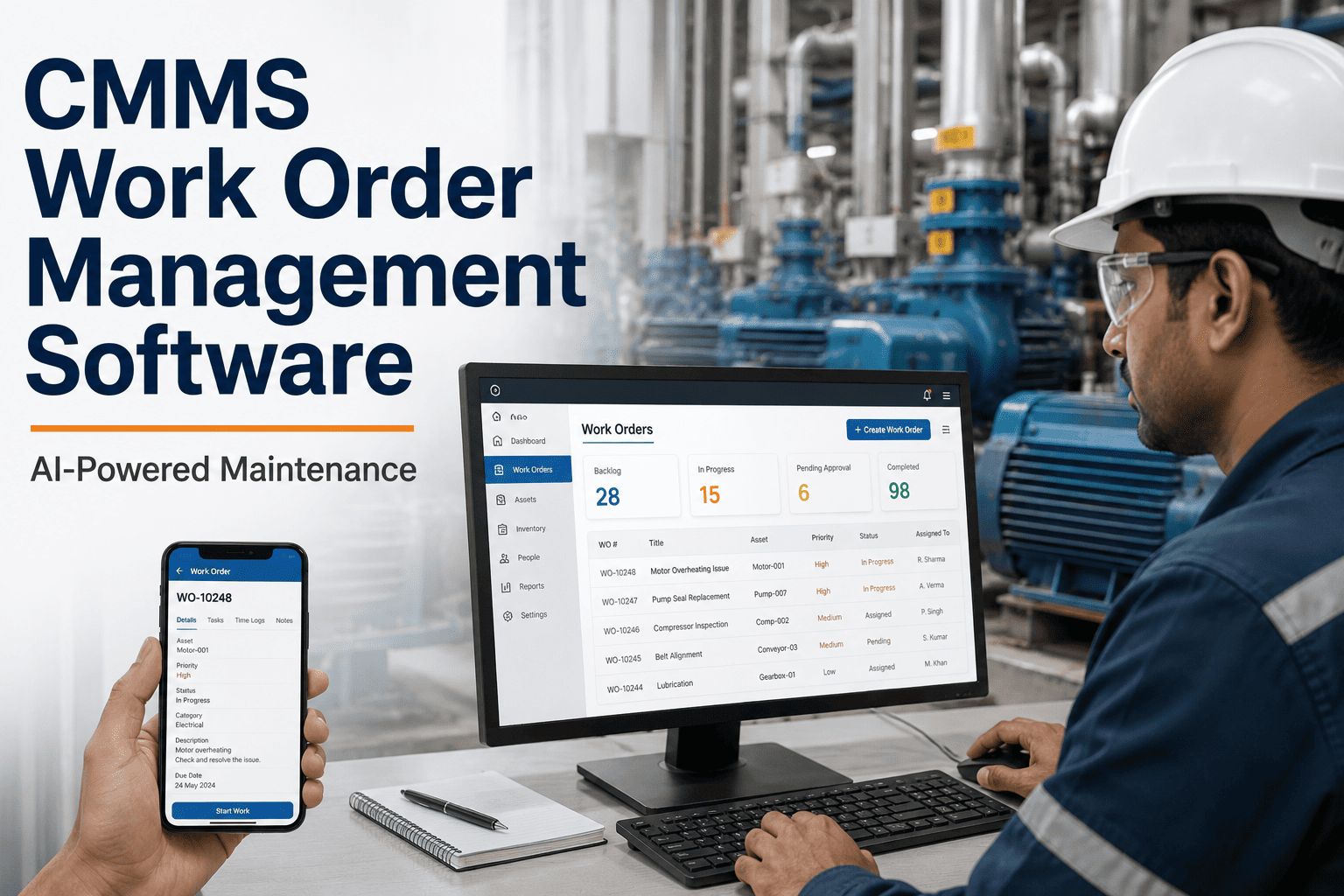
AI Vision Camera deployment at service bay inspection stations introduced additional complexity due to the requirement to integrate inspection data with the operator's existing CMMS platform. iFactory's engineering team configured API connectors to stream per-vehicle inspection results directly into the maintenance management system, enabling automated work order generation when defects were detected. Simultaneously, the predictive analytics engine was activated, correlating visual inspection findings with historical breakdown data to calculate failure probability scores for each monitored component class.
Outcome: Full CMMS integration active, predictive maintenance analytics engine operational
Phase 4
Full Autonomous Inspection and Continuous Improvement Activation (Week 23+)
With all 18 distribution centers operating under AI Vision Camera inspection, the final phase focused on transitioning from AI-assisted to fully autonomous inspection — removing parallel manual review at validated stations and activating the maintenance analytics dashboard for engineering team use. Quarterly AI model update cycles were established using accumulated fleet inspection data to continuously improve detection sensitivity and reduce false positive rates. The fleet operator conducted its first mock recall exercise under the new digital record system in month eight, achieving full maintenance record trace completion in 94 seconds.
Outcome: Full autonomous inspection across all centers, 94-second record trace validated in mock recall exercise
Frequently Asked Questions
AI Vision Cameras in Fleet Predictive Maintenance — Frequently Asked Questions
How does AI Vision Camera inspection handle the volume requirements of fleet operations?
iFactory's AI Vision Camera platform inspects each vehicle in under 45 seconds at steady state — compatible with high-volume fleet gate throughput requirements without requiring any operational slowdown. High-resolution multi-camera arrays capture complete vehicle coverage in a single pass as the asset moves through the inspection gate at normal yard speed.
What types of fleet asset defects can AI Vision Cameras reliably detect?
The platform detects surface defects including body damage, corrosion, and paint degradation; component wear including tire tread depth, brake pad thickness, and suspension alignment; fluid system issues including leaks and level verification; and assembly defects including missing fasteners, incorrect component fitment, and label verification. Detection sensitivity reaches defects as small as 0.15mm under yard operating conditions.
How does iFactory's AI Vision Camera system integrate with existing CMMS and fleet management platforms?
The platform provides standard API connectors for major CMMS and fleet management platforms and supports custom integration with ERP, telematics, and parts inventory systems. Per-vehicle inspection records are automatically linked to maintenance data without requiring changes to existing infrastructure. Integration is typically completed within the first four weeks of deployment.
What is the typical ROI timeline for AI Vision Camera deployment in fleet operations?
The fleet operator in this case study achieved full ROI in 14 months, driven by maintenance cost reduction, inspection labor reallocation, and avoided breakdown costs. Fleets with 50 or more assets and a current unplanned downtime rate above 5% typically achieve full ROI within 12–18 months of deployment.
Does AI Vision Camera deployment require fleet downtime for installation?
Camera hardware installation is planned for existing operational windows to minimize fleet disruption. The initial AI model training phase uses image data collected from normal fleet operations, so there is no requirement for dedicated training downtime. Parallel operation with existing inspection during the validation phase allows transition to autonomous AI inspection without a hard operational cutover.
How does the AI Vision Camera platform support DOT and OSHA compliance documentation?
The platform generates time-stamped, immutable digital inspection records for every vehicle inspected — satisfying DOT inspection documentation, OSHA recordkeeping, and internal compliance audit requirements. These records are generated automatically as a byproduct of normal inspection operations, eliminating manual documentation effort for audit preparation and regulatory reporting.
AI VISION CAMERAS · FLEET INSPECTION · PREDICTIVE MAINTENANCE
Deploy AI Vision Camera Inspection Across Your Fleet Operations
iFactory's AI Vision Camera platform delivers 100% asset inspection at operational speed, automated defect classification, and per-vehicle digital maintenance records — giving fleet maintenance managers the real-time condition visibility and audit-ready documentation they need to eliminate unplanned downtime and reduce total maintenance cost across every asset class.