A mid-scale hotel chain operating 14 full-service properties across three regional markets was losing guest satisfaction scores and maintenance budget to a problem its operations leadership had been unable to fully quantify: reactive maintenance cycles driven by a paper-based work order system that kept engineering staff permanently behind schedule. Preventive maintenance completion rates had fallen to 61 percent across the portfolio, equipment failure incidents were generating an average of 22 guest-facing service disruptions per month, and maintenance labor was being absorbed by emergency corrective repairs at a ratio that left no capacity for the condition-based inspections the engineering team knew were necessary. After deploying iFactory's mobile CMMS platform with IoT-connected asset monitoring and AI-driven work order automation across all 14 properties, the chain achieved 94 percent PM completion compliance, reduced equipment failure incidents by 58 percent, and cut per-property maintenance labor costs by an average of 31 percent within ten months of go-live.
A 14-Property Hotel Chain, A Maintenance Program That Had Fallen Behind
How Disconnected Maintenance Operations Were Eroding Guest Experience and Margin Across 14 Properties
Hotel maintenance programs face a set of operational constraints that distinguish them from industrial or healthcare environments: assets must be maintained without interrupting guest room occupancy, engineering work must be coordinated around front desk and housekeeping schedules, and failures in mechanical or building systems translate directly into guest-facing service incidents with measurable impact on review scores and rebooking rates. For this chain, those constraints were compounding a structural maintenance program failure that had been building for three years.
The fundamental problem was the absence of any real-time connection between asset condition, maintenance scheduling, and engineering dispatch. At each property, a chief engineer manually reviewed a paper or spreadsheet PM schedule at the beginning of the week, created handwritten work orders, and distributed them to the engineering team. Work order completion was confirmed verbally or by signature on paper, with no digital record, no timestamp, and no integration with parts inventory or equipment history. When a failure occurred — an HVAC unit going down in an occupied room block, a commercial refrigeration unit failing during a banquet service, an elevator requiring an unplanned shutdown — the response consumed the entire engineering team for hours, leaving the PM schedule further behind and setting up the next failure event.
— VP of Hotel Operations, Regional Hotel Chain
iFactory Mobile CMMS and IoT Asset Monitoring: Deployed Across 14 Properties to Rebuild the Maintenance Program from the Ground Up
Following evaluation of available mobile CMMS platforms, the chain selected iFactory for its mobile-first work order architecture, IoT sensor integration capability, automated PM scheduling engine, and portfolio-level reporting dashboard — the combination of features that addressed all five of the structural failures identified in the baseline assessment. The deployment was designed to deliver immediate PM compliance improvement at every property while building the IoT condition monitoring infrastructure required for predictive maintenance over the medium term. Hotel operations and facilities teams evaluating this architecture for their own portfolio can Book a Demo with iFactory's hospitality team to see how the platform configures for their specific property mix and asset inventory.
14 Properties Live on iFactory Mobile CMMS in 18 Weeks
The deployment was structured in four phases designed to deliver immediate PM compliance improvement at every property while building out the IoT condition monitoring infrastructure that enables predictive maintenance over the longer term. Full portfolio go-live was achieved in 18 weeks — with measurable PM completion improvement beginning at the first properties activated in week 4.
Asset data from all 14 properties migrated into the iFactory CMMS registry. PM schedules configured for every asset category based on manufacturer specifications and applicable regulatory requirements — including annual fire suppression certifications, elevator inspection intervals, commercial kitchen ventilation cleaning cycles, and pool/spa water quality testing requirements. Automated PM dispatch activated at the first four properties (highest PM backlog priority) by end of week 4, with immediate work order queuing for all overdue PMs.
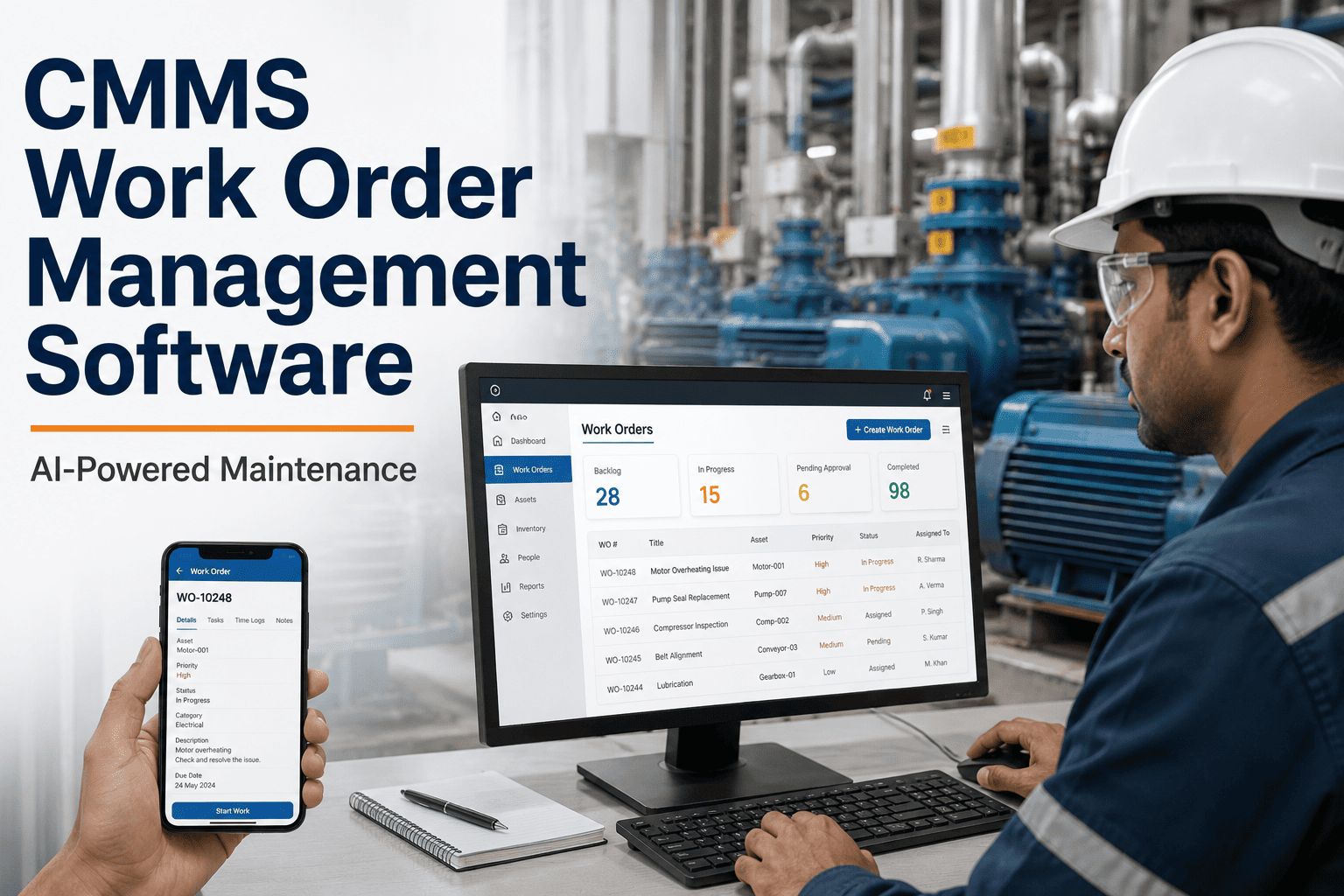
iFactory mobile app deployed to all engineering staff across the portfolio. Engineers received real-time work order queues, asset-specific PM checklists, digital completion forms, and parts request capability on their mobile devices — replacing paper-based processes entirely. By end of week 7, PM completion rates at the first four activated properties had improved from 61% to 81% as the dispatch lag was eliminated and engineers gained clear daily work queue visibility. Remaining 10 properties activated on mobile CMMS by end of week 9.
IoT condition sensors installed on Priority-1 asset categories across all 14 properties — HVAC units in occupied room blocks, commercial refrigeration, elevator drive systems, boiler and hot water systems, and pool/spa mechanical equipment. Baseline condition profiles established for each monitored asset during a two-week calibration period. First predictive work orders generated in week 13, including early detection of refrigerant pressure drift in the banquet kitchen refrigeration system at one property — avoiding a projected failure during a contracted event the following weekend.
Predictive threshold logic activated across all monitored asset classes. Portfolio operations dashboard live for regional management and hotel operations leadership. PM completion rates at 91% portfolio-wide by week 16 — exceeding the 90% initial target ahead of schedule. Guest-facing equipment failure incidents down 47% from baseline within the first full month of full IoT operation. Ten-month post-deployment review confirmed 94% PM compliance, 58% failure reduction, and 31% maintenance labor cost reduction across the portfolio.
Ten Months of Documented Outcomes: iFactory Mobile CMMS Across 14 Hotel Properties
The following performance metrics are documented outcomes measured across the ten-month post-deployment period versus the 12-month pre-deployment baseline. All figures reflect iFactory platform analytics and hotel operations records. Hotel chains and property management companies building the ROI case for mobile CMMS deployment can Book a Demo with iFactory to model projected outcomes for their specific portfolio size and asset inventory.
| Performance Metric | Pre-Deployment Baseline | Post-Deployment (10 Months) | Outcome |
|---|---|---|---|
| Portfolio PM completion compliance | 61% — 39% of PMs overdue | 94% — zero portfolio-wide overdue backlog | 33-point compliance recovery; regulatory exposure eliminated |
| Guest-facing equipment failure events | 22 incidents/month portfolio-wide | 9.2 incidents/month portfolio-wide | 58% reduction in guest-impacting failure events |
| Maintenance labor cost (per property avg) | Baseline (100%) | 69% of baseline | 31% maintenance labor cost reduction per property |
| Emergency corrective repair spend | 28% of annual maintenance budget | 11% of annual maintenance budget | $990,000 annual emergency repair cost avoidance |
| Work order dispatch latency | Manual: 3–5 day dispatch lag | Automated: same-day or sub-3-second IoT-triggered dispatch | Structural dispatch lag eliminated across all 14 properties |
| Reactive vs planned maintenance ratio | 70% reactive / 30% planned | 28% reactive / 72% planned | Fundamental shift to proactive maintenance posture |
| Online review score (maintenance-related) | Baseline — maintenance issues cited in 6.2% of reviews | Maintenance issues cited in 1.4% of reviews | 77% reduction in maintenance-related negative review mentions |
| Guest service recovery costs | $180 average per equipment failure incident × 22/month | $180 average per incident × 9.2/month | $27,864 annual service recovery cost reduction per month reduction |
| Portfolio-level maintenance visibility | Monthly manual property reports — retrospective | Real-time dashboard — all 14 properties, live KPIs | Continuous portfolio intelligence replaces retrospective reporting |
| Predictive failure events prevented | None — no condition monitoring capability | 34 confirmed predictive interventions in 10 months | 34 equipment failures avoided before guest impact occurred |
— Regional Director of Engineering, Hotel Chain
What This Deployment Teaches About Mobile CMMS and Predictive Maintenance in Hospitality
PM compliance in hotel maintenance is a dispatch problem, not a staffing problem. This chain had adequate engineering headcount at every property to achieve 90%+ PM completion — it lacked the dispatch infrastructure to ensure work orders reached technicians on the due date with the right asset information and parts requirements attached. Automated PM dispatch via iFactory's mobile platform solved the compliance problem without adding a single engineering position. Hotel operators who attribute PM compliance failures to staffing are solving for the wrong constraint.
Equipment failures in hotels are guest experience events before they are maintenance events. The 22 monthly guest-impacting failures in this portfolio were not abstract operational metrics — they were room moves, comps, bad reviews, and lost rebooking revenue. The $180 average service recovery cost per incident is a direct maintenance-to-revenue linkage that most hotel operators under-weight in their CMMS business case. The 58% failure reduction documented in this deployment translated into measurable guest satisfaction improvement that showed up in online review scores and forward booking data within the first quarter post-deployment.
Portfolio-level visibility is the capability that makes multi-property maintenance management genuinely scalable. A general manager at a single property can compensate for a weak maintenance system through proximity and attention. A regional director managing 14 properties cannot. The iFactory portfolio dashboard transformed how this chain's operations leadership managed maintenance performance — shifting from retrospective monthly reporting to real-time proactive intervention. Properties that began falling behind on PM compliance were identified and supported within days, not weeks.
Predictive maintenance in hotels delivers disproportionate value because failure timing is as important as failure frequency. An HVAC failure during a low-occupancy shoulder period is a manageable maintenance event. The same failure during a sold-out weekend with a full events calendar is a crisis. IoT condition monitoring that detects the HVAC drift 10 days in advance — when a planned repair window can be scheduled around occupancy — converts a potential crisis into a routine work order. Maintenance teams evaluating IoT-connected CMMS for hospitality applications can Book a Demo with iFactory to model how predictive capability applies to their highest-criticality asset categories.
iFactory Mobile CMMS and IoT Monitoring: Core Platform Capabilities for Hotel and Hospitality Maintenance
The iFactory platform deployed in this case study is available for single-property and multi-property hotel, resort, and extended-stay environments. The platform integrates mobile work order management, automated PM scheduling, IoT asset monitoring, AI vision camera capability, and portfolio-level analytics into a single maintenance intelligence layer purpose-built for hospitality operations. Engineering and operations teams can review the full platform capability set and request a tailored demonstration at Book a Demo.
Hotel Maintenance in 2026: Mobile CMMS and Predictive Intelligence Are the Operating Standard
The 94% PM compliance, 58% equipment failure reduction, and 31% labor cost improvement documented in this deployment were not the product of adding engineering staff or increasing maintenance budgets. They were the product of replacing a manual, disconnected, paper-based maintenance program with a mobile CMMS platform that automated the dispatch and documentation functions that had been consuming engineering management capacity — and layering IoT condition monitoring on top to shift the program from reactive to predictive.
In 2026, hotel chains and property management companies that continue to operate maintenance programs on paper work orders and spreadsheet PM schedules are not simply inefficient — they are structurally unable to achieve the PM compliance rates, failure reduction outcomes, and portfolio-level visibility that modern hospitality operations require. iFactory provides the mobile CMMS and predictive maintenance infrastructure that closes that gap. To understand how iFactory configures for your specific portfolio size, property mix, and asset inventory, Book a Demo with iFactory's hospitality engineering team.