Work order management is the operational backbone of every industrial maintenance program — the structured process that determines whether a repair request becomes a completed job with a full audit trail, or disappears into a sticky note that nobody follows up on. In a modern steel plant or manufacturing facility, where every minute of unplanned downtime can cost tens of thousands of dollars, the gap between a high-performing maintenance operation and a reactive one almost always traces back to how work orders are created, prioritized, assigned, executed, and analyzed. Manual systems and email-based coordination create massive administrative overhead: the average maintenance team loses 30 to 45 percent of available wrench time to work order friction — searching for asset history, tracking down parts, waiting for approvals, and re-entering data across disconnected systems. A structured digital approach to work order management eliminates this friction entirely, turning every maintenance request into an automated workflow that moves from submission to completion without manual handoffs, lost paperwork, or invisible backlogs. Organizations that book a demo with iFactory are discovering that AI-powered work order management reduces administrative overhead by up to 40 percent while increasing completed work orders per technician by 25 percent or more.
Eliminate Maintenance Friction from Request to Resolution
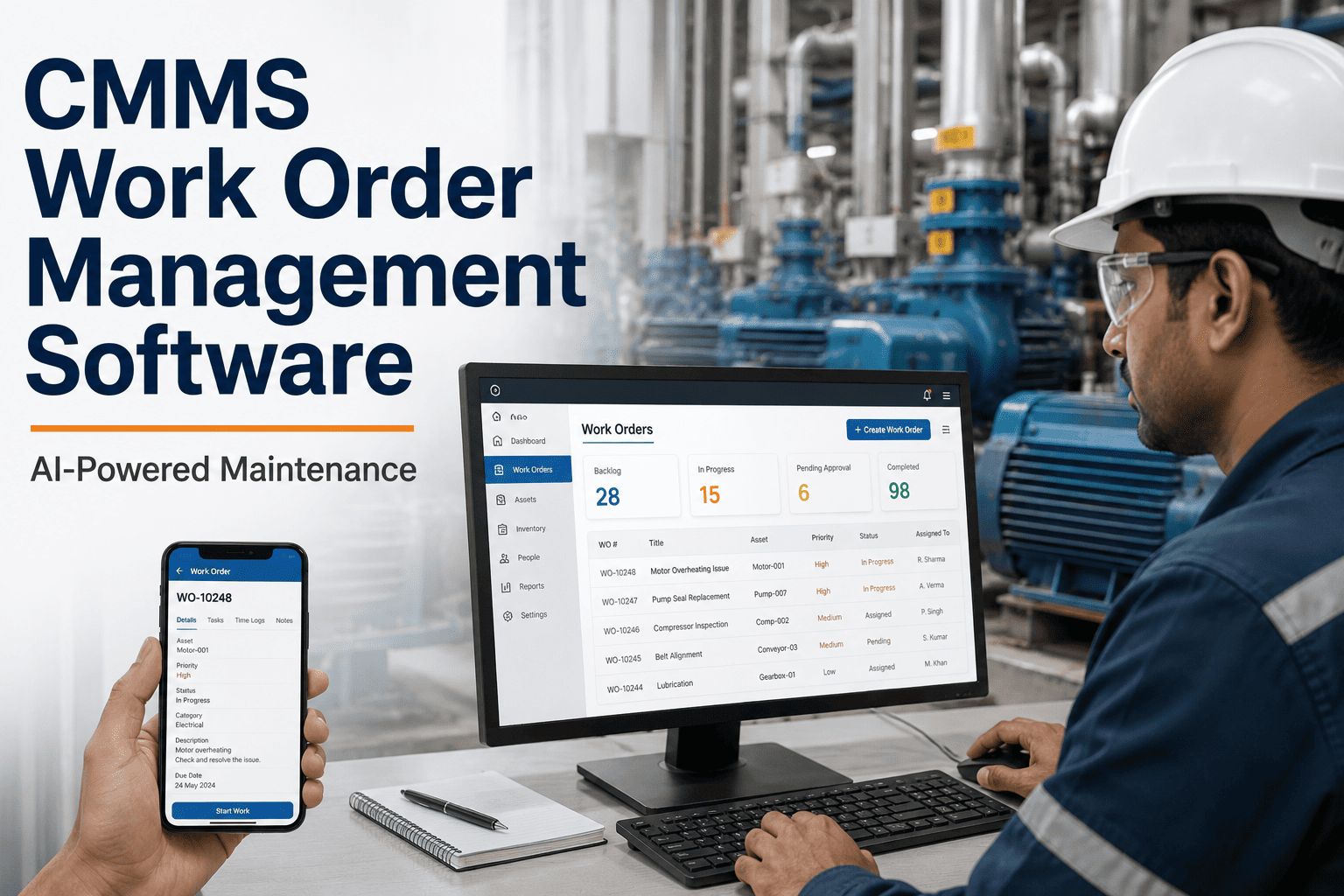
iFactory's AI-driven work order platform automates creation, assignment, tracking, and close-out — purpose-built for the demanding environments of modern industrial manufacturing.
Why Streamlining Work Order Processes is Critical for Plant Reliability
Traditional maintenance workflows are plagued by information bottlenecks. A technician at a rolling mill or furnace often has to walk back to the control room to check asset history, search through binders for wiring diagrams, call the parts room to verify inventory, and then wait for supervisor approval — all while the asset sits idle. iFactory's AI-driven work order management eliminates these bottlenecks by digitizing the entire lifecycle: work orders are auto-generated from sensor alerts or operator requests, intelligently prioritized by asset criticality, and assigned to the best-matched technician based on skills, certification, workload, and physical proximity. The result is a closed-loop system where nothing falls through the cracks and every repair generates structured data that makes the next one faster. Teams exploring this digital transformation often find that automated workflows map directly to measurable improvements in maintenance backlogs and response times.
Automated Work Order Creation
Work orders are generated automatically from IoT sensor alerts, preventive maintenance schedules, or operator mobile requests — with asset ID, failure mode, and priority pre-populated by AI.
Smart Technician Assignment
AI matches every work order to the best-qualified technician by skills, certifications, workload, and proximity. Response times drop by 40 percent and first-time fix rates climb.
Mobile-First Execution
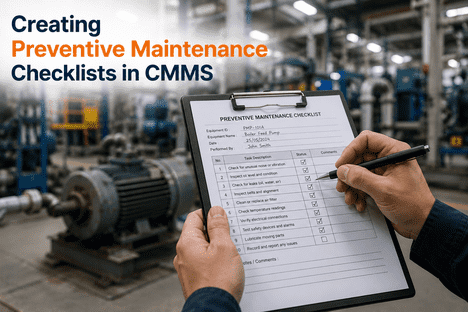
Technicians receive work orders on their mobile devices with full asset history, attached procedures, required parts, and digital checklists — even in offline environments.
Real-Time Tracking & Analytics
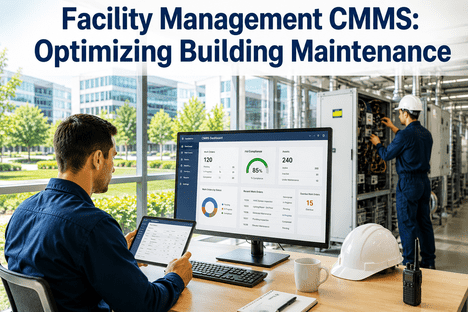
Live dashboards track every work order from open to close-out, showing MTTR, PM compliance, backlog age, and technician productivity — updated in real time.
The Three Pillars of an AI-Driven Work Order Strategy
Deploying effective work order management requires more than just digitizing paper forms — it requires a structured integration of sensor data, asset intelligence, technician workflows, and continuous improvement analytics. The iFactory work order module is built around three interconnected capability pillars: Intelligent Work Order Automation, Mobile-First Technician Enablement, and Real-Time Performance Analytics. Each pillar reinforces the others, creating a digital operations center that transforms maintenance from a reactive cost center into a proactive reliability engine. Managers building these strategies often align their work order automation pilots with plant-wide reliability goals to maximize operational impact.
Pillar 1 — Intelligent Work Order Automation
Automation bridges the gap between asset condition and technician action. iFactory converts sensor data, calendar-based PM triggers, and operator observations into structured, pre-populated work orders without human data entry. When an IoT sensor detects abnormal vibration on a cooling tower fan, the system auto-generates a complete work order containing the asset ID, diagnosed failure mode, severity classification, required parts with inventory status, recommended repair procedure, and the optimal technician assignment. This eliminates the multi-step manual process of detection, reporting, data entry, supervisor review, parts checking, and dispatching — collapsing what once took hours into under sixty seconds.
Pillar 2 — Mobile-First Technician Enablement
Mobile execution solves the connectivity gap. When a technician receives a work order on their smartphone or ruggedized tablet, they see the asset's full maintenance history, step-by-step checklists, attached technical drawings, and required parts with bin locations. They can scan a QR tag on the equipment to pull up every previous repair, capture photos of completed work, log time and parts usage, and capture digital signatures — all from the floor without returning to a desktop. Full offline capability means work continues in boiler rooms, remote sites, and basement areas where Wi-Fi does not reach. Data syncs automatically when connectivity returns.
Pillar 3 — Real-Time Performance Analytics
Analytics transforms closed work orders into intelligence. Instead of waiting for end-of-month spreadsheet reports, supervisors see live dashboards tracking mean time to repair, preventive maintenance compliance rates, backlog aging, cost per work order, and technician productivity — all updated continuously as work orders are completed. The system identifies recurring failure patterns across assets, highlights technicians who consistently achieve the highest first-time fix rates, and surfaces work orders that have exceeded their estimated hours. This closed-loop data feeds continuous improvement, making the maintenance program smarter with every completed task. Teams adopting this analytics-driven approach consistently convert maintenance data into actionable reliability insights.
Turn Your Work Order Process into a Competitive Advantage
iFactory's AI-powered work order platform integrates with your existing assets, sensors, and workflows to deliver measurable reliability improvements from day one.
How AI and IoT Transform Work Order Management
The convergence of artificial intelligence and the Internet of Things is redefining what work order management can achieve. Instead of waiting for an operator to notice a problem and submit a request, iFactory's AI vision camera system continuously monitors critical assets, detecting anomalies in vibration, temperature, pressure, and visual conditions. When the system identifies a developing fault, it automatically creates a fully populated work order — including the diagnosed failure mode, severity score, recommended repair procedure, required parts, and the optimal technician assignment — all before the asset has visibly failed. This shifts maintenance from reactive firefighting to predictive precision, where repairs are scheduled during planned windows instead of emergency shutdowns.
From Sensor Alert to Closed Work Order — Fully Automated
The iFactory platform completes the entire fault-to-fix cycle without human bottlenecks. IoT sensors detect an anomaly. AI models classify the failure pattern and severity. The system cross-references the asset registry, checks parts inventory, identifies the best-qualified technician based on current shift and workload, and generates a complete work order with step-by-step repair instructions drawn from historical data on identical failures. The technician receives a push notification on their mobile device, completes the repair using a guided digital checklist, captures photos and time logs, and closes the order — all while the system updates the asset record, recalculates KPIs, and feeds the learning loop for future predictions. This closed-loop automation is the new standard for world-class industrial maintenance, delivering measurable improvements from the first deployment.
| Capability | Traditional Approach | iFactory AI Approach | Business Impact |
|---|---|---|---|
| Work Order Creation | Operator detects issue, fills paper form, supervisor enters into system | IoT sensors trigger AI-generated work order in under 60 seconds | Eliminates 3–4 manual handoffs |
| Technician Assignment | Supervisor checks schedule board, calls available techs | AI matches by skills, certs, workload, and GPS proximity | 40% faster dispatch |
| Parts & Inventory | Technician walks to parts room, searches bins, finds shortage | Auto-checked inventory at creation; PO generated if insufficient | Eliminates parts delay |
| Field Execution | Paper checklists, return to office for data entry | Mobile app with offline mode, photo capture, digital signature | +35% productive wrench time |
| Close-out & History | Paper filed in binder, data never analyzed | Auto-updated asset history, KPI dashboards, failure pattern analysis | Continuous improvement loop |
Measuring the ROI of Streamlined Work Order Management
As industrial plants adopt AI-driven work order management, the impact is measurable across every maintenance KPI. From reducing mean time to repair to increasing preventive maintenance compliance, automated work order systems provide the digital infrastructure for a 2026-ready workforce. The iFactory platform tracks these metrics in real time, creating the definitive ROI case for industrial digital transformation. Organizations building their business case can measure savings across their specific asset base and maintenance workflows through the platform's real-time analytics.
Work Order Management — Frequently Asked Questions
How does AI improve work order creation compared to manual methods?
AI eliminates manual data entry by auto-generating work orders from IoT sensor alerts, preventive maintenance schedules, and operator mobile requests. The system pre-populates asset ID, failure mode, severity, required parts, and recommended procedures — collapsing what once took hours into under sixty seconds.
Can work orders be managed without an internet connection on the plant floor?
Yes. The iFactory mobile app supports full offline mode. Technicians can view assigned work orders, access asset history, complete checklists, and capture photos — all without connectivity. Data syncs automatically when the device reconnects to the network.
How are work orders prioritized and assigned to the right technician?
iFactory's AI engine assigns a priority score based on asset criticality, failure severity, safety impact, and production dependencies. It then matches each work order to the best technician based on skills, certifications, current workload, shift schedule, and physical proximity to the asset.
Does the platform integrate with existing IoT sensors and asset tags?
Yes. iFactory integrates with standard industrial IoT protocols and sensor networks. The platform also supports QR code and RFID asset tagging for instant access to equipment history and open work orders from the mobile app.
How does work order data feed into maintenance KPIs and continuous improvement?
Every completed work order updates the asset record and feeds real-time KPI dashboards tracking MTTR, PM compliance, backlog age, cost per work order, and technician productivity. The platform identifies recurring failure patterns and surfaces them for reliability engineering review.
Can the system auto-generate work orders from AI vision camera detections?
Yes. iFactory's AI vision camera system detects visual anomalies, equipment status changes, and safety violations. When a fault is identified, the system automatically creates a work order with the detected condition, asset location, and recommended action — all without human intervention.
How do I start an AI-driven work order pilot in my plant?
iFactory offers a 14-day Work Order Automation Assessment. We map your current maintenance workflows, identify the highest-value automation opportunities, and deploy a pilot on a critical asset line.
Streamline Your Maintenance Work Orders with AI-Powered Automation
iFactory's work order management platform automates the entire lifecycle from request to resolution — purpose-built for the demanding environments of modern industrial manufacturing and steel production.