Maintenance management has evolved far beyond reactive repair coordination. In the era of Industry 4.0, maintenance professionals are expected to combine asset management expertise with data-driven decision-making, predictive analytics, and computerised maintenance management system (CMMS) proficiency. The shift from paper-based work orders to real-time condition monitoring has created distinct career pathways that reward both technical depth and cross-functional competence. Understanding these career trajectories — from frontline technician to strategic asset management leader — is essential for professionals navigating the maintenance field and for organisations building resilient, innovation-ready maintenance teams in 2026 and beyond.
Explore How iFactory's AI Vision System Supports Your Maintenance Career Journey
iFactory's production-optimised deep learning inspection platform gives maintenance and reliability teams the real-time defect data they need to move from reactive repair to predictive asset management — accelerating career growth in modern maintenance operations.
The Shifting Landscape of Maintenance Management Careers
Work orders were logged on paper forms or basic spreadsheets. Priority was determined by seniority or loudest complaint rather than asset criticality or failure data. Backlog visibility was limited, and cross-shift handovers regularly lost context that led to repeated failures and unnecessary maintenance spend.
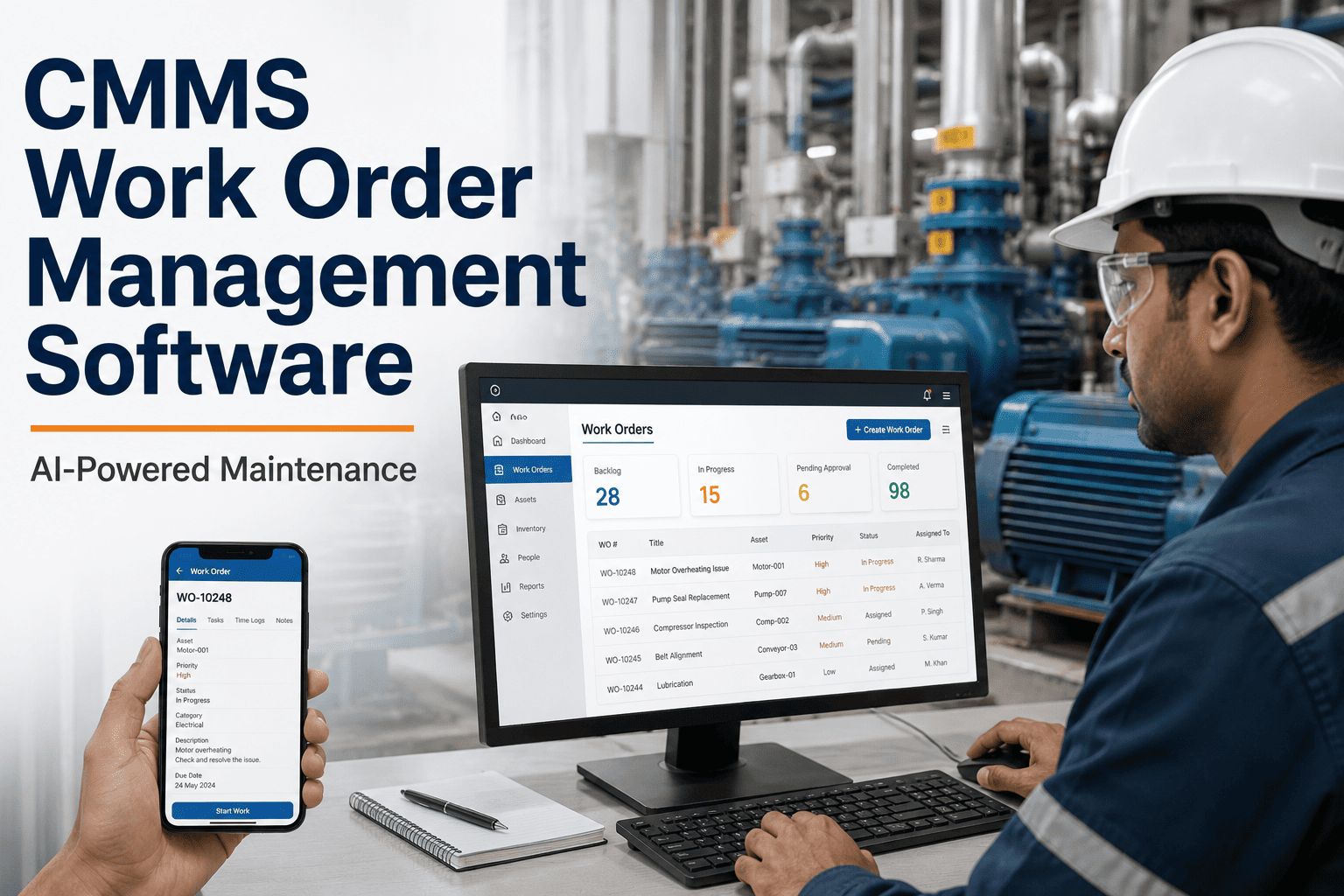
Modern CMMS platforms automate work order generation from IoT sensor triggers, predetermined maintenance schedules, and predictive model alerts. Backlogs are visible in real time with asset history attached. Integration with iFactory's AI vision inspection data enriches work orders with actual defect images and classification results, enabling precise diagnosis before the technician arrives onsite.
Career progression depended almost entirely on hands-on mechanical or electrical troubleshooting depth. Maintenance managers rose through the ranks based on tenure and ability to fix the hardest breakdowns. Formal training in data analysis, software systems, or reliability engineering was rare and undervalued in promotion decisions.
Employers now seek maintenance professionals who can configure CMMS workflows, interpret asset health dashboards, analyse failure pattern data, and collaborate with engineering on root cause. CMMS specialisation has become a distinct career track with its own certification pathways, salary premiums, and promotion velocity that often exceeds traditional hands-on progression.
Maintenance was viewed as a cost centre. Budget requests were approved sparingly, and maintenance leaders had limited input on capital equipment purchases, production scheduling, or facility design. The maintenance function reacted to decisions made elsewhere rather than shaping operational strategy.
Modern maintenance leaders sit at the strategy table. Asset performance data, predictive maintenance cost savings, and AI-inspection-derived quality intelligence give maintenance managers the evidence base to influence capital planning, production line design, and reliability investment. The CMMS has become the single source of truth for asset lifecycle decisions across the organisation.
Mapping your next career move in maintenance management? Book a Demo to see how iFactory's AI vision platform equips maintenance teams with the real-time quality inspection data that distinguishes modern CMMS-specialised professionals from traditional reactive roles.
6 Core Career Paths in Maintenance Management and CMMS Specialisation
Maintenance Technician to CMMS Specialist
Technology-Focused PathwayThe most direct entry point into CMMS specialisation starts from the technician role. Technicians who invest in learning CMMS configuration, mobile workflow setup, and asset hierarchy development transition into CMMS specialist positions that command 20–30% salary premiums over traditional technician roles. Responsibilities include system administration, user training, data quality management, and integration with IoT and AI inspection platforms like iFactory's vision system. This pathway suits professionals who want to stay close to maintenance operations while building technology expertise that scales across facilities rather than depending on proficiency with a single machine type.
Reliability Engineer
Data-Driven Decision MakingReliability engineering has emerged as a distinct career track that bridges maintenance operations and engineering analysis. These professionals use failure mode and effects analysis, Weibull analysis, and predictive model outputs to design maintenance strategies that maximise asset uptime at minimum cost. The role demands proficiency with CMMS data extraction, statistical analysis tools, and increasingly the ability to interpret AI-based inspection outputs from production-line vision systems. Reliability engineers who integrate visual defect classification data — such as the outputs from iFactory's edge AI cameras — into their failure prediction models deliver measurably higher uptime improvements than colleagues relying solely on historical work order data.
Asset Management Professional
Lifecycle Value OptimisationAsset management professionals focus on the full lifecycle of physical assets — from procurement and commissioning through operational use to decommissioning and replacement. This career path aligns with ISO 55000 standards and requires deep CMMS competency combined with financial analysis skills for capital replacement planning, depreciation optimisation, and risk-based inspection scheduling. Professionals in this track use asset condition data — including real-time defect classification from inline AI vision systems — to make data-backed decisions about repair versus replace, maintenance interval adjustment, and spares optimisation. The role is increasingly strategic as organisations seek to extract maximum value from capital-intensive production assets.
Maintenance Planning and Scheduling Manager
Operational Efficiency FocusMaintenance planners and schedulers are the operational backbone of any high-performing maintenance organisation. This career path centres on CMMS mastery — developing accurate job plans, optimising resource allocation, coordinating with production scheduling, and managing backlog priorities by asset criticality. Advanced roles incorporate predictive maintenance triggers from connected systems, including defect detection alerts from iFactory's AI vision cameras that feed real-time condition data into the maintenance planning cycle. The planning and scheduling track offers clear progression from site-level planner to regional or enterprise maintenance coordination roles with corresponding salary growth.
Maintenance Data Analyst
Emerging SpecialisationMaintenance data analytics is the fastest-growing specialisation in the field. These professionals extract, clean, and analyse CMMS data alongside IoT sensor streams, production data, and AI inspection outputs to identify failure patterns, quantify maintenance effectiveness, and recommend strategy changes. The role requires SQL proficiency, data visualisation skills, and understanding of reliability metrics such as mean time between failure, overall equipment effectiveness, and maintenance cost per unit produced. iFactory's AI vision camera output — structured defect classification data with timestamps, defect types, and severity scores — provides exactly the kind of high-quality, machine-readable data that maintenance data analysts need to build predictive models that reduce unplanned downtime.
Maintenance Director or VP of Reliability
Executive LeadershipAt the executive level, maintenance leaders are responsible for enterprise-wide reliability strategy, capital planning, and organisational design of maintenance functions across multiple sites. This career path requires deep understanding of CMMS ecosystems, reliability engineering principles, and the ability to build business cases for technology investments such as AI-based inspection systems. Leaders at this level use data from connected maintenance and inspection systems — including defect classification trends from iFactory's edge AI cameras — to demonstrate maintenance's contribution to revenue, compliance, and competitive advantage. The role reports to plant managers, operations directors, or C-suite executives and shapes maintenance's position as a strategic function rather than a cost centre.
Interested in a career track that combines maintenance expertise with CMMS and AI technology skills? Book a Demo to learn how iFactory's AI vision platform creates the data foundation that distinguishes modern maintenance professionals and accelerates career progression in Industry 4.0 environments.
Real Career Impact: How CMMS and AI Skills Transform Maintenance Career Outcomes
Accelerate Your Maintenance Career with Real-Time AI Inspection Data Skills
iFactory's AI vision platform gives maintenance professionals the hands-on experience with production-grade edge AI technology that employers increasingly demand. See how defect classification data from iFactory's cameras integrates with your CMMS to build the data foundation for predictive maintenance and career-accelerating reliability expertise.
What Industry Leaders Say About Maintenance Career Development and CMMS Skills
"The most significant shift in maintenance management careers over the past five years has been the transition from experience-based decision-making to data-based decision-making. Professionals who can extract, interpret, and act on CMMS data — and increasingly on real-time condition data from connected sensors and AI vision systems — are advancing into leadership roles at a rate that technical-only colleagues cannot match. The CMMS has evolved from a work order logging tool into the central nervous system of asset management, and the professionals who understand how to configure, integrate, and derive strategy from that system are the ones building durable, high-compensation careers in industrial maintenance. Organisations investing in CMMS capability and connected inspection technology report measurably higher retention rates among their best maintenance talent, because these professionals see a clear growth trajectory rather than a career ceiling."
5 Principles for Building a Career Path in Maintenance Management and CMMS Specialisation
Build CMMS Platform Proficiency Before Specialisation
Every career path in modern maintenance management begins with CMMS competency. Learn at least one major platform — Maximo, SAP PM, Infor EAM, or a modern cloud-based CMMS — to the level of configuration, not just end-user operation. Understand asset hierarchy design, work order lifecycle configuration, metadata standards, and integration architecture. This foundational skill is the prerequisite for every advanced pathway in the field and is the differentiator employers screen for first in hiring decisions for maintenance management roles.
Develop Data Literacy Beyond the CMMS
CMMS data alone tells an incomplete story. Modern maintenance professionals must integrate data from production systems, IoT sensor networks, and AI-based inspection platforms such as iFactory's vision cameras. Develop SQL skills for data extraction, learn visualisation tools such as Power BI or Tableau, and understand correlation analysis to connect defect trends from production line inspection with maintenance trigger events. Professionals who bridge maintenance data with production quality data deliver insights that neither function can produce independently — and are rewarded with faster promotion cycles.
Earn Recognised Reliability and Asset Management Certifications
Certifications provide structured learning and external validation that accelerates career progression. The Certified Maintenance and Reliability Professional credential, ISO 55000 Asset Management certification, and CMMS-specific platform certifications are the most recognised credentials in the field. These certifications signal to employers that you possess systematic knowledge beyond day-to-day experience. Many organisations now list CMRP or equivalent certification as a requirement for maintenance manager and reliability engineer positions, making certification a practical gatekeeper for advancement into leadership roles.
Gain Hands-On Experience with Connected Industry 4.0 Technologies
Employers increasingly seek maintenance professionals who have worked with IoT sensors, predictive analytics platforms, and AI-based inspection systems. Experience with technologies such as iFactory's edge AI vision cameras — which deliver real-time defect classification data directly into maintenance workflows — demonstrates the cross-functional capability that distinguishes candidates for senior roles. Seek opportunities to participate in technology evaluation pilots, integration projects, or digital transformation initiatives within your current organisation. Even limited project experience with Industry 4.0 tools significantly strengthens candidacy for maintenance management and CMMS specialisation roles.
Build Cross-Functional Communication and Business Case Skills
Maintenance leaders at the director level and above spend as much time communicating with finance, operations, and executive stakeholders as they do with maintenance teams. Develop the ability to translate maintenance data — uptime improvements, defect reduction from AI inspection, cost avoidance from predictive maintenance — into financial terms that non-technical stakeholders understand. The maintenance professionals who advance fastest are those who can build a compelling business case for technology investment, articulate maintenance's contribution to revenue and compliance, and lead cross-functional improvement initiatives. Communication skill is the differentiator between a maintenance manager and a maintenance director.
Frequently Asked Questions
Build Your Maintenance Career Path with Real-World AI Inspection Experience
iFactory's AI vision system combines deep learning defect classification with edge deployment, CMMS integration, and complete audit traceability — giving maintenance professionals hands-on experience with the Industry 4.0 technologies that define modern career paths in maintenance management and CMMS specialisation. Train on your specific inspection requirements and build the skills that accelerate career progression.