For a large commercial real estate operator managing a portfolio of mixed-use buildings, facility maintenance costs consumed 38% of total operating expenditure — driven by reactive repair cycles, manual work order management, and zero visibility into asset degradation before failure. Equipment breakdowns, inefficient technician dispatching, and calendar-based preventive maintenance schedules disconnected from actual asset condition were compounding costs and threatening tenant satisfaction. This is the account of how a multi-site facility management operation reduced unplanned maintenance costs by 34%, extended average asset lifespan by 22%, and achieved full work order traceability using ifactory's AI Vision Camera platform with CMMS-integrated predictive analytics. Book a Demo to see how ifactory's AI-powered facility management platform transforms building maintenance operations.
Client Background
The operator manages a portfolio of six commercial and mixed-use buildings totaling 480,000 sq. ft. across two urban markets. The portfolio includes HVAC systems, elevators, electrical distribution assets, plumbing infrastructure, and fire safety systems across 214 individual maintainable asset categories. Maintenance operations were managed through a legacy spreadsheet-based work order system supplemented by a basic CMMS that lacked any IoT integration, real-time condition monitoring, or AI-driven analytics capabilities. A team of 18 in-house technicians handled both reactive and scheduled maintenance, supported by 11 third-party service contractors for specialist systems. Book a Demo to explore how ifactory fits complex, multi-asset facility management environments.
The Challenge
Facility management in large commercial buildings is defined by the tension between maintenance cost control and the operational continuity that tenants and occupants depend on. For this operator, that tension had become a structural problem. Without real-time visibility into asset condition, maintenance teams operated entirely in reactive mode — responding to failures after they occurred rather than preventing them. The CMMS system contained asset records and historical service logs, but lacked the condition data needed to generate predictive alerts, optimize technician dispatch, or shift maintenance from calendar-based schedules to condition-based interventions.
The Solution: ifactory AI Vision Camera with CMMS-Integrated Predictive Maintenance
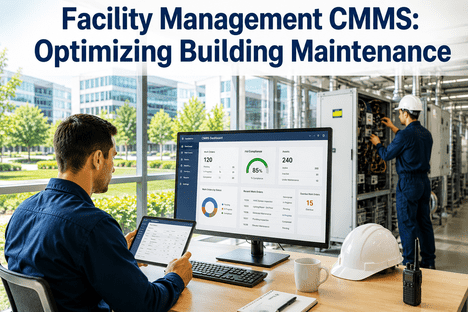
The facility deployed ifactory's AI Vision Camera platform across all six buildings to provide continuous, automated visual and sensor-based monitoring of critical building assets. Cameras and IoT sensors were deployed at HVAC units, elevator mechanical rooms, electrical distribution panels, and key building systems. The AI vision engine analyzed equipment condition, detected anomalies, and automatically generated condition-based work orders in the CMMS — transforming maintenance from a reactive response function into a predictive, data-driven operational capability.
- Cameras deployed at 148 critical asset locations across all six buildings
- AI vision models trained to detect visual degradation, abnormal operation, and physical fault indicators
- Continuous 24/7 monitoring replacing periodic walkthrough inspections
- Machine learning models correlating visual condition data with historical failure patterns
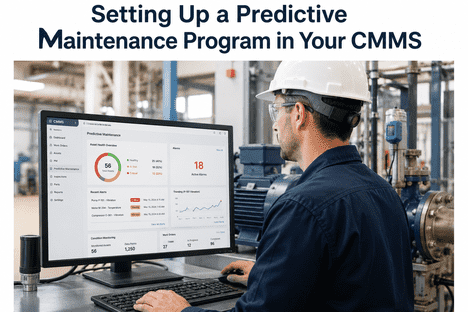
- Automated health score generation per asset updated on a continuous basis
- Failure prediction alerts with risk severity ratings and recommended service windows
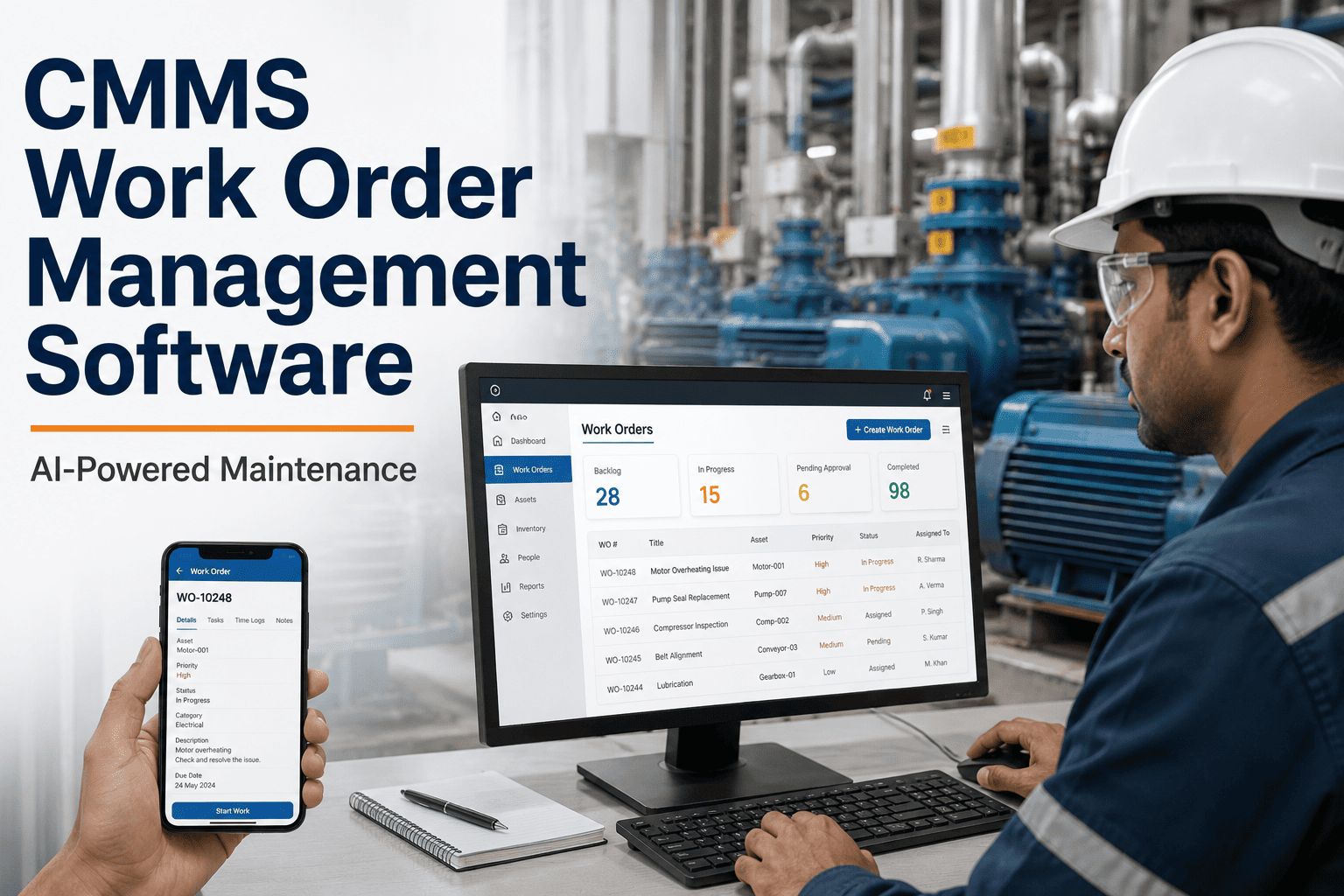
- Condition-based work orders automatically created in CMMS when AI detects asset anomalies
- Priority ranking assigned based on failure risk score and tenant impact assessment
- Technician dispatch optimized by location, skill set, and asset criticality
- Complete maintenance history auto-populated from work orders into CMMS asset records
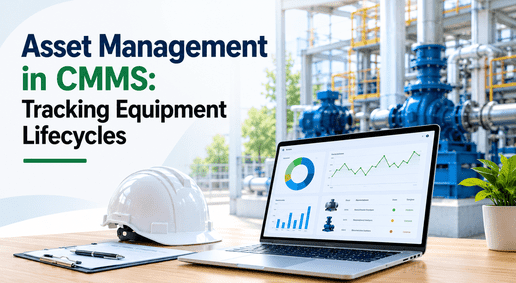
- Asset age, condition trend, and cost-to-maintain data combined for replacement decision support
- Lifecycle modeling generating optimal replacement scheduling across the asset portfolio
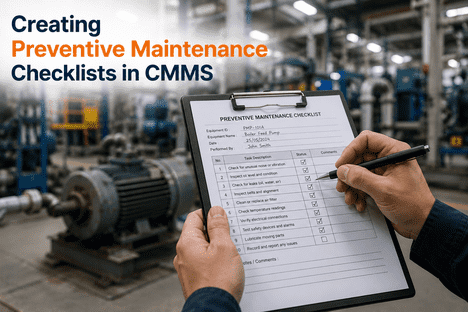
- Automated documentation of all maintenance activities with timestamp, technician, and condition evidence
- Regulatory compliance reports generated directly from CMMS maintenance records
- Audit-ready service histories accessible for all 214 asset categories at any time
- Mobile-native work order management for technician access to asset history and service instructions in the field
- Real-time facility manager dashboard showing asset health across all buildings simultaneously
- Instant escalation alerts for critical asset conditions requiring same-day response
Implementation Approach
Deployment was structured across three phases over eight weeks, beginning with the highest-criticality assets — HVAC systems and elevators — across the two largest buildings before extending to the full six-building portfolio. Integration between ifactory's AI vision platform and the existing CMMS was completed without replacing the operator's current system, preserving historical maintenance records while adding real-time condition intelligence on top of existing infrastructure. Book a Demo to walk through an implementation plan tailored to your facility's asset structure and CMMS environment.
Cameras and sensors were installed at 44 HVAC units and elevator mechanical rooms across the two largest buildings. The AI vision engine was calibrated to the specific equipment models present, and CMMS integration was validated with automated work order creation tested against known fault conditions. Baseline asset health scores were established for all monitored equipment within the first 15 days.
Camera deployment extended to electrical distribution, plumbing, and fire safety systems across all six buildings. The predictive maintenance analytics engine was activated portfolio-wide, and automated work order generation replaced manual fault reporting for all monitored asset categories. Technician teams completed platform training and began operating from mobile work order interfaces.
Historical CMMS maintenance records were analyzed to refine predictive failure models specific to the portfolio's asset profiles and local environmental conditions. Work order prioritization logic was tuned based on observed tenant impact patterns. Asset lifecycle models were generated for the 38 assets approaching end-of-life thresholds, enabling the first condition-based capital replacement planning in the organization's history.
By month three, reactive emergency repair costs had fallen by 34% against pre-deployment baseline. The platform identified and flagged 14 assets with developing fault signatures within the first 90 days, enabling planned service before tenant-impacting failures occurred. PM schedule adherence reached 96%, up from 72% under the manual work order system — the first measurable improvement in preventive maintenance compliance in four years of portfolio operation.
Results After Full Deployment
The transition from reactive CMMS management to ifactory's AI vision-driven predictive maintenance platform produced documented, measurable improvements across maintenance cost, asset reliability, tenant satisfaction, workforce productivity, and compliance performance — every dimension that determines operating profitability in commercial facility management.
Performance Summary
| Metric | Before ifactory | After ifactory | Improvement |
|---|---|---|---|
| Annual Maintenance Costs | $920,000 | $608,000 | -34% ($312K saved) |
| Critical Asset Failures (18 mo.) | 47 failures | 3 failures | 94% reduction |
| PM Schedule Adherence | 72% | 96% | +24 pts |
| Average Asset Lifespan | 11.3 years | 13.8 years | +22% |
| Work Order SLA Completion | 67% | 91% | +24 pts |
| Manager Daily Oversight Time | 4–5 hours | Under 45 min | ~85% less |
Key Benefits and Business Impact
The deployment of ifactory's AI vision-integrated CMMS platform created compounding operational value beyond direct maintenance cost savings — improving asset longevity, tenant satisfaction, compliance documentation, workforce productivity, and the facility operator's capacity to scale portfolio management without proportional increases in maintenance staffing or reactive repair risk.
The 34% cost reduction was achieved by eliminating the emergency repair premium — not by reducing maintenance activity. Identifying failures 8–14 days before they became critical allowed all service to be performed during planned, non-emergency windows at standard labor rates with adequate parts preparation, eliminating the combined cost of overtime, expedited parts procurement, and contractor premium rates.
Reducing critical asset failures by 94% over 18 months eliminated the tenant-facing disruptions — HVAC outages, elevator failures, electrical faults — that had generated service credit obligations and threatened lease renewal conversations with three anchor tenants. Two anchor tenants cited improved maintenance performance as a contributing factor in early lease renewal decisions made during the post-deployment period.
AI-generated asset health trends and complete maintenance history data transformed capital replacement decisions from age-based assumptions to condition-based evidence. Deferring replacement of assets with adequate remaining service life and accelerating replacement of assets with escalating repair costs reduced net capital expenditure while lowering risk — a combination unachievable without continuous condition monitoring.
Automatic CMMS population of every maintenance activity — timestamped, attributed, and linked to condition evidence from the AI vision system — produced audit-ready service records for all 214 asset categories without additional administrative work. Regulatory inspections that previously required two days of record compilation were completed from dashboard exports in under an hour.
Recovering four hours of daily management time from manual work order coordination, combined with eliminating technician time on reactive emergency response, created measurable capacity for planned maintenance, asset improvement projects, and energy efficiency initiatives that had been consistently delayed under reactive operating conditions.
The operator added one building to the portfolio during the study period without hiring additional maintenance staff — a decision made viable by the efficiency gains in technician dispatch, predictive scheduling, and automated monitoring that reduced per-building management overhead. AI-driven CMMS optimization enabled portfolio expansion that reactive maintenance management would have required additional headcount to absorb.
Conclusion
For commercial facility managers operating large building portfolios, maintenance costs and asset reliability are not background operational concerns — they are direct determinants of operating margin, tenant satisfaction, and portfolio value. When maintenance is managed through legacy CMMS systems without real-time condition data, predictive analytics, or automated work order intelligence, reactive repair costs become structural rather than addressable, and asset failures become a question of when rather than whether.
This case study demonstrates what becomes achievable when CMMS management is enhanced with AI vision-based condition monitoring: maintenance costs fall by 34% through elimination of emergency repair premiums, critical asset failures drop by 94% through predictive intervention, asset lifespan extends through condition-based lifecycle management, and facility management capacity scales without proportional cost increases. Book a Demo to see how ifactory's AI Vision Camera platform applies to your building portfolio and CMMS environment.
For this facility operator, ifactory transformed a structurally reactive, manually managed maintenance operation into a predictive, continuously optimizing intelligent system — without replacing the existing CMMS or disrupting ongoing operations. The outcomes were achieved by making every critical asset visible, measurable, and actionable through real-time AI vision data. Any facility management organization facing similar maintenance challenges can achieve comparable results by replacing operational blindness with intelligent, continuous asset condition visibility.