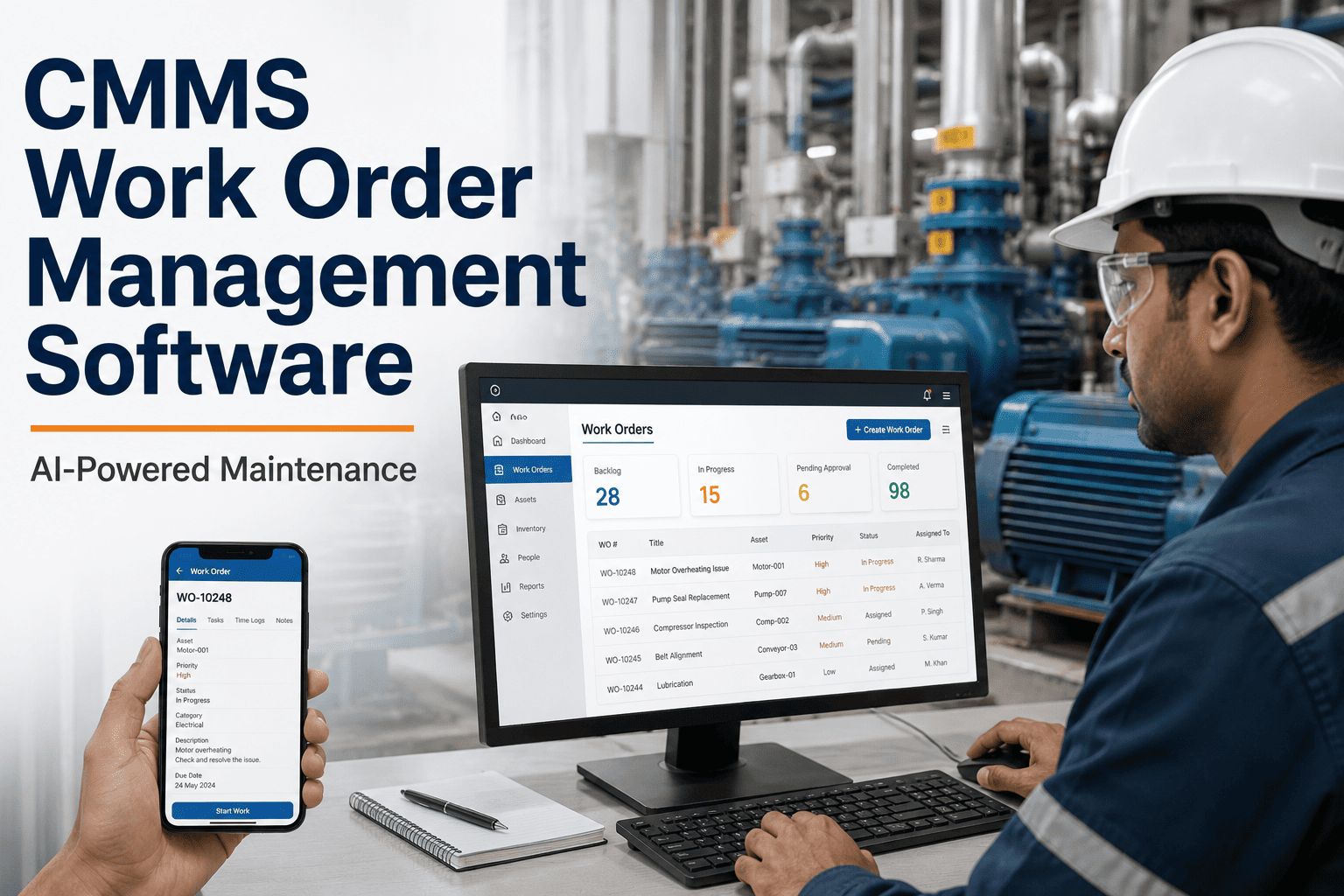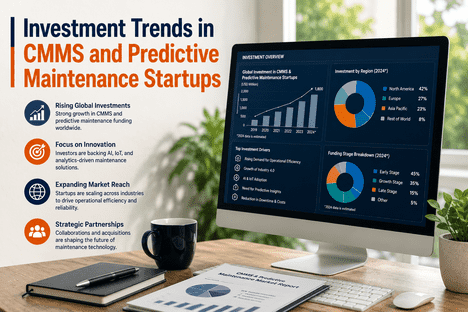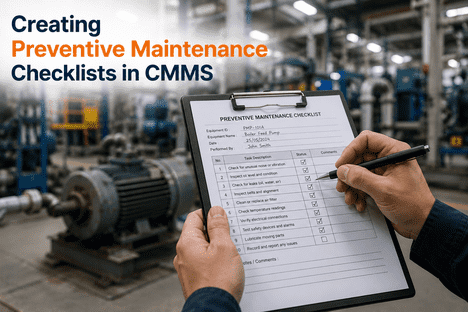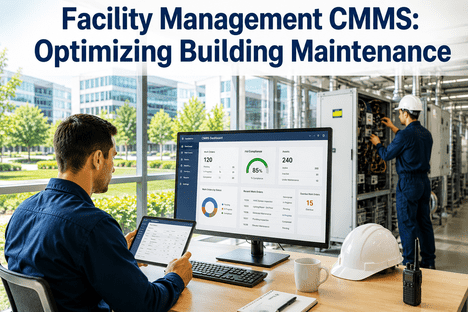
In the ultra-competitive landscape of global manufacturing, asset reliability is no longer just an operational goal—it is a critical determinant of financial survival. Plants that rely on reactive maintenance models lose millions annually to unplanned downtime, emergency repairs, and expedited part procurement. Studies show that a well-implemented preventive maintenance program powered by a modern CMMS can reduce equipment downtime by up to 25%, lower overall maintenance costs by 12-18%, and extend asset lifecycles by 15-20%[reference:0][reference:1]. However, traditional calendar-based scheduling often misses the mark, leading to either over-maintenance (wasting resources) or under-maintenance (inviting failures). iFactory's AI-powered CMMS bridges this gap by replacing guesswork with data-driven intelligence. Our platform moves beyond simple work order tracking to provide a deterministic understanding of asset health. By integrating real-time IoT sensor data—vibration, temperature, and acoustic signatures—with machine learning models, we predict failure probabilities with 95% accuracy up to 30 days in advance[reference:2]. Instead of asking "When was the last service?", your team knows precisely "When will the next failure occur?" and "What intervention is required now?" This shift from reactive firefighting to proactive, predictive maintenance is what enables our customers to achieve 40% less downtime and 30% cost savings within the first year of deployment[reference:3]. Preventive maintenance scheduling with iFactory's CMMS transforms asset management from a cost center into a strategic profit driver. To see how our AI-driven scheduling can optimize your maintenance operations, Book a Demo with our industrial asset management team today.
The Three Pillars of Modern Preventive Maintenance Scheduling
Why Spreadsheets and Calendar Reminders Fail to Deliver Asset Reliability
Most maintenance organizations operate on what we call the "Illusion of Planning." They have schedules on paper, but those schedules are disconnected from actual asset condition. A maintenance manager might see a PM completion rate of 85% on a dashboard, but that number hides the truth: the wrong tasks are being done at the wrong time, or critical work orders are stuck in approval queues while technicians wait. iFactory's preventive maintenance scheduling platform eliminates these blind spots through three foundational capabilities. First, we automate work order generation from five distinct triggers—scheduled PMs, IoT sensor alerts, QR code requests, inspection failures, and AI predictive alerts—ensuring no maintenance event falls through the cracks[reference:4]. Second, we apply AI-driven priority scoring that considers asset criticality, safety impact, compliance deadlines, and historical failure patterns to route the right work to the right technician at the right time. Third, we provide mobile-first execution with offline capabilities, allowing technicians to access asset history, SOPs, and parts lists directly from the shop floor. The result is a maintenance ecosystem where every action is intentional, data-driven, and traceable. Book a Demo to see how our CMMS transforms your maintenance maturity.
From Calendar-Based Guesswork to Condition-Based Precision
The Shift to Usage-Based and Predictive Maintenance Triggers
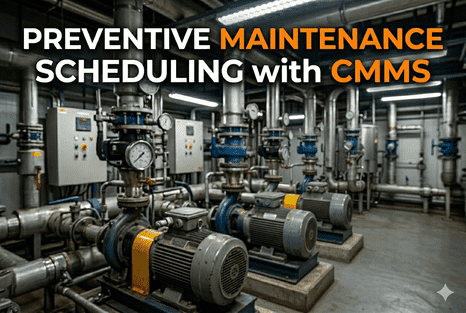
The most common failure in preventive maintenance is the assumption that time-based schedules work for all assets. A conveyor belt running two shifts per day ages differently than the same belt running around the clock. Yet traditional systems treat them identically, leading to either unnecessary component replacement (wasting parts and labor) or premature failure (costing production). iFactory's CMMS enables a more sophisticated approach: usage-based and condition-based maintenance triggers. Instead of "every 30 days," your PM tasks can be set to trigger after every 500 operating hours, 10,000 production units, or when specific vibration thresholds are crossed. IoT sensors feed real-time data—vibration, temperature, pressure, current draw—into AI models that detect subtle degradation patterns weeks before failure[reference:5]. When a sensor anomaly is detected, the platform automatically generates a prioritized work order with the asset ID, failure mode, recommended repair, and technician assignment pre-populated. No manual data entry, no lost requests, no silent failures. This is the difference between a maintenance program that just checks boxes and one that actively prevents breakdowns. Book a Demo for a customized maintenance maturity assessment.
Preventive Maintenance KPIs That Drive Operational Excellence
Moving Beyond Activity Metrics to Reliability Outcomes
A common pitfall in maintenance management is measuring activity instead of impact. "We completed 120 work orders this week" tells you nothing about asset reliability. iFactory's CMMS provides real-time dashboards for the KPIs that actually matter: Mean Time Between Failures (MTBF) measures asset reliability and the effectiveness of your PM program; Mean Time To Repair (MTTR) tracks maintenance team efficiency; Overall Equipment Effectiveness (OEE) combines availability, performance, and quality for a holistic view of production impact; Planned Maintenance Percentage (PMP) should exceed 85% for a mature program; and PM Compliance tracks what percentage of scheduled tasks are completed on time—the benchmark is 90% or higher[reference:7][reference:8]. By tracking these metrics in real time, maintenance leaders can identify which assets need schedule adjustments, which technicians require additional training, and which parts are failing prematurely. This data-driven visibility is what separates reactive firefighting from proactive reliability. Book a Demo to see our KPI dashboards in action.
| Maintenance KPI | Industry Benchmark | iFactory AI Impact | Financial Leverage |
|---|---|---|---|
| Mean Time Between Failures (MTBF) | Increasing trend indicates improved reliability | +35–50% Improvement | Reduced emergency repair costs, extended asset life |
| Mean Time To Repair (MTTR) | Decreasing trend shows efficient maintenance | –28% Reduction | Less production interruption, lower labor overtime |
| Planned Maintenance Percentage (PMP) | 85% or higher for mature organizations | From ~58% to 98.5% Achievable | Eliminates costly reactive emergency responses |
| Overall Equipment Effectiveness (OEE) | 85% World-Class; 60-70% Typical | +12–18% Increase | Direct throughput gain without CapEx |
| PM Compliance Rate | 90%+ for effective programs | From 55% to 95%+ Achievable | Ensures scheduled work prevents failures |
The Financial Case: CMMS ROI and Downtime Cost Avoidance
Why Every Hour of Unplanned Downtime Erodes Your Profit Margin
The true cost of reactive maintenance is rarely captured on a P&L statement. Most plants track the repair invoice—and completely miss the 80% of cost that lives outside it[reference:9]. A single unplanned stop cascades through multiple layers of loss: lost production output ($36K to $2.3M per hour depending on industry); expedited parts and overtime labor (3.2x more labor hours than planned repairs); safety and compliance risk (emergency repairs triple injury risk); and reputation impact (missed deliveries, SLA penalties, contract risk)[reference:10]. For a Fortune 500 manufacturing firm, average annual downtime loss is approximately $2.8 billion—about 11% of revenue[reference:11]. By contrast, companies that implement AI-driven preventive maintenance through a CMMS achieve a 10:1 to 30:1 ROI within 12-20 months, with 12-18% direct cost reduction and 35-45% less downtime[reference:12]. iFactory customers consistently reduce total maintenance spend by 22-28% within 12 months and eliminate unplanned line stops by 89%[reference:13]. The question is no longer whether you can afford a CMMS; it is whether you can afford not to have one.
Asset Lifecycle Extension Through Prescriptive Maintenance
How AI Turns Historical Data Into Long-Term Asset Strategy
Every work order your team closes contains valuable intelligence about failure modes, repair effectiveness, and component lifespan. Traditional CMMS systems store this data but do nothing with it. iFactory's AI-powered CMMS continuously learns from every closed work order, feeding outcomes back into machine learning models to improve prediction accuracy across your entire asset fleet[reference:14]. This creates a virtuous cycle: more completed work orders generate more data, which improves AI predictions, which generates more accurate work orders, which further reduces unplanned downtime. Over time, the platform identifies patterns that human analysts would never see—for example, that a specific pump model fails 40% faster when ambient temperature exceeds 35°C, suggesting a design or lubrication change. By moving from preventive to prescriptive maintenance, iFactory customers extend asset lifespans by 25-30% and achieve 85%+ planned work, compared to the industry average of less than 60%[reference:15]. This is not just maintenance optimization; it is capital expenditure avoidance at scale. Book a Demo to see our prescriptive maintenance models.
"Before iFactory, our preventive maintenance was calendar-based guesswork. We were replacing parts on schedule even when they had 60% life remaining, and missing early warning signs on equipment that needed attention sooner. iFactory's AI-driven scheduling transformed our entire approach. By moving to condition-based triggers, we reduced emergency work orders by 70%, extended motor bearing life by 40%, and saved over $1.2M in unnecessary parts replacement and overtime labor in the first nine months."
Maintenance Director, Global Automotive Supplier
"The work order friction in our old system was killing our productivity. Our technicians were spending only 30% of their shift actually fixing equipment—the rest was searching for parts, chasing approvals, and re-entering data across three disconnected systems. iFactory's auto work order generation changed everything. A sensor spikes, and within 60 seconds, a complete work order is in the right technician's mobile device with parts reserved and priority set. We've increased completed work orders per technician by 38% and cut response times by 65%. It's the single most impactful maintenance investment we've ever made."
VP of Operations, Heavy Industrial Manufacturer
Frequently Asked Questions
What is preventive maintenance scheduling in CMMS?
Preventive maintenance scheduling in a CMMS refers to the automated planning and assignment of maintenance tasks based on time intervals, meter readings, or asset condition. iFactory's CMMS goes further by integrating IoT sensor data and AI predictions to trigger work orders precisely when maintenance is needed—never too early and never too late.
How does AI improve CMMS preventive maintenance?
AI analyzes historical sensor data, work order history, and real-time equipment conditions to predict when failures are likely to occur. Instead of rigid calendar schedules, iFactory's AI creates dynamic maintenance triggers that adapt to actual asset wear patterns, reducing unnecessary maintenance by up to 30% while preventing costly breakdowns[reference:16].
What is the typical ROI for a CMMS implementation?
Companies implementing AI-powered CMMS solutions achieve full payback within 6-12 months. Typical benefits include 12-18% direct maintenance cost reduction, 25-40% reduction in unplanned downtime, 20-30% improvement in technician productivity, and 15-20% extension of asset lifecycles[reference:17][reference:18].
Can CMMS integrate with our existing ERP and IoT sensors?
Yes, iFactory's CMMS connects seamlessly with major ERP systems (SAP, Oracle, Microsoft Dynamics), PLC/SCADA systems via OPC-UA and MQTT protocols, and any IoT sensor infrastructure[reference:19]. Our platform is built for interoperability, not vendor lock-in.
What is the difference between preventive and predictive maintenance?
Preventive maintenance is time-based or usage-based (e.g., "every 500 hours"). Predictive maintenance uses real-time sensor data and AI to forecast exactly when a failure will occur (e.g., "bearing failure in 12 days"). iFactory's CMMS supports both approaches and helps organizations mature from reactive to preventive to predictive to prescriptive maintenance[reference:20].
How does mobile CMMS work for field technicians?
iFactory's mobile app gives technicians offline-capable access to work orders, asset history, parts lists, SOPs, and safety checklists. QR code scanning instantly pulls up asset details. Photos and completion data sync automatically when connectivity is restored, eliminating paper and reducing data entry errors[reference:21].
What are the key KPIs to track for preventive maintenance effectiveness?
Essential KPIs include PM Compliance (target 90%+), Planned Maintenance Percentage (target 85%+), MTBF (increasing trend), MTTR (decreasing trend), and OEE (target 85% world-class). iFactory's dashboards track all these metrics in real time and provide drill-down to root causes[reference:22].
How do I schedule a demo or assessment for my plant?
iFactory offers a complimentary 14-day maintenance maturity assessment. Our team will analyze your current work order process, identify automation opportunities, and deliver a structured ROI roadmap. Book a Demo to begin your transformation.