The Hidden Costs of Poor Spare Parts Management
Why Spreadsheets and “Tribal Knowledge” Fail Your Stockroom
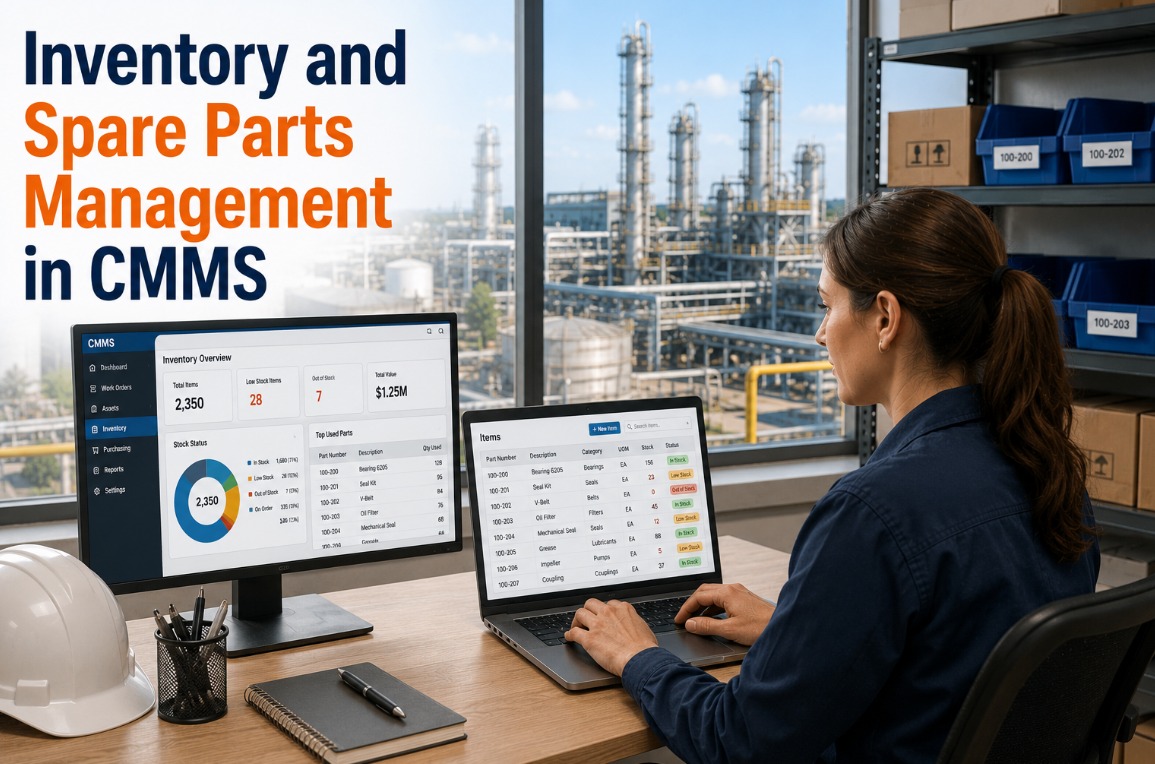
Most maintenance organizations manage spare parts with a dangerous combination of Excel spreadsheets, sticky notes, and the memory of a veteran storekeeper. When that storekeeper retires, the knowledge walks out the door. iFactory’s CMMS replaces guesswork with a real‑time, multi‑location inventory system. Every part is tagged with a unique QR code, bin location, minimum stock level, reorder quantity, and supplier lead time. When a technician completes a work order and consumes parts, the system instantly deducts stock and, if the quantity drops below the reorder point, automatically generates a purchase requisition. But we don’t stop there. Our AI analyzes historical consumption patterns to detect seasonal spikes, predict future demand based on upcoming PM schedules, and even suggest “kitting” for repetitive jobs—reducing the time technicians spend hunting for parts by up to 80%. Book a Demo to walk through a live inventory dashboard.
From Reactive Reordering to Predictive Inventory Optimization
How Machine Learning Transforms MRO Stocking Strategies
Traditional reorder points are static—they don’t adapt to changing production schedules, lead time fluctuations, or asset failure patterns. iFactory’s AI ingests data from work orders, IoT sensors, and ERP systems to create a dynamic inventory model. For example, if a critical pump is showing increased vibration (a precursor to bearing failure), the platform automatically checks the stock level of the required bearing, forecasts the remaining useful life of the pump, and if stock is low, generates a purchase order with expedited shipping flagged. This “demand‑driven” replenishment ensures that you never tie up capital in parts you don’t need, and you never miss parts you do. In addition, our “ABC analysis” engine automatically classifies parts based on criticality and velocity, recommending that A‑items (high criticality, high usage) be kept at higher safety stock levels, while C‑items (low criticality, slow moving) be shifted to vendor‑managed inventory. The result is a lean, agile stockroom that supports reliability without draining working capital. Book a Demo to see predictive inventory models in action.
Spare Parts Management KPIs That Matter
Moving Beyond “Inventory Turns” to Reliability‑Centric Metrics
Traditional inventory KPIs like turnover ratio are useful but insufficient. iFactory’s dashboard tracks a more complete set of metrics tailored for maintenance: Stockout Rate (percentage of work orders delayed due to missing parts) – target <2%; Emergency Purchase Premium (extra cost paid for expedited parts) – target <5% of total spend; Parts‑to‑Asset Availability (for critical assets, do we have all required parts in stock?) – target 100%; Storekeeper Productivity (time spent locating/kitting parts) – reduced by 60‑80%; and Carrying Cost of Obsolete Inventory (reduced by 30‑50% after AI cleanup). With these metrics, maintenance and procurement teams can align on a single source of truth, eliminating the finger‑pointing that often occurs after a stockout‑driven downtime event. Book a Demo to customize your KIB scorecard.
| Inventory KPI | Industry Baseline | iFactory AI Target | Financial Impact |
|---|---|---|---|
| Stockout Rate (work orders affected) | 8–12% | <2% | Avoids $500k+ in emergency freight & downtime |
| Obsolete/Slow‑Mover Value | 25–35% of MRO value | <10% | Free up 15‑20% working capital |
| Emergency PO Premium | 15–20% of spend | <5% | Direct 10‑15% procurement savings |
| Inventory Accuracy (cycle count) | 70–85% | 99%+ | Eliminates “phantom stock” and duplicate orders |
| Technician Parts‑Hunting Time | 45‑60 min per job | <10 min | Productivity gain = 2 extra jobs/day |
Financial Case: The Real Cost of “Just‑In‑Case” Inventory
How AI‑Driven Spare Parts Management Delivers 5x to 10x ROI
Most plants hold more inventory than they need, afraid of the consequences of a stockout. But holding that extra inventory has a direct carrying cost (storage, insurance, capital cost) of 20–30% of the part’s value per year. For a plant with $2M in MRO inventory, that’s $400K–$600K annually just to hold parts that may never be used. iFactory’s AI slashes that waste by identifying the optimal safety stock for each part, factoring in lead time variance and criticality. Simultaneously, by eliminating stockouts, we prevent downtime that can cost $10K–$100K per hour. Customers report an average ROI of 580% within 12 months, driven by three direct savings: reduced carrying cost (15–25%), reduced emergency purchase premiums (10–15% of procurement spend), and reduced technician non‑productive time (labor efficiency). Additionally, the platform’s automatic PO generation reduces administrative overhead by up to 80%. To see your personalized ROI projection, Book a Demo with our inventory optimization team.
“Our stockroom was a black hole. We had $3.2M in parts, yet we still faced weekly stockouts. iFactory’s CMMS scanned our entire inventory, identified $900K of obsolete parts, and auto‑adjusted reorder points based on actual consumption. Within six months, stockouts dropped from 12% to 1.5%, emergency freight spend fell by 80%, and we returned over $500K of working capital to the business. The AI‑generated PO suggestions alone saved our buyers 15 hours a week.”
Maintenance & Reliability Manager, Fortune 500 Chemical Plant
“Integration with our work order system was a game changer. Now, when a technician completes a PM, parts are automatically deducted, and low‑stock alerts trigger purchase orders. Our inventory accuracy went from 72% to 99.8%, and we’ve eliminated the monthly ‘wall‑to‑wall’ count. The ROI came faster than any project we’ve ever done—less than 5 months.”
Supply Chain Director, Heavy Equipment Manufacturer
Frequently Asked Questions
How does CMMS improve spare parts inventory control?
A CMMS connects parts consumption directly to work orders, providing real‑time stock levels, automatic reorder triggers, and usage analytics. iFactory goes further with AI that predicts demand based on asset health and upcoming PM schedules, eliminating both stockouts and excess inventory.
What is the difference between min/max and AI‑driven reorder points?
Min/max is static: you set a fixed level. AI reorder points adapt to changes in usage velocity, supplier lead time, and seasonality. For example, if a bearing is used more in summer due to higher production, iFactory will automatically raise the reorder point before summer starts.
Can iFactory’s CMMS handle multiple storage locations (e.g., satellite bins)?
Yes. The platform supports unlimited locations, sub‑locations, and even consigned stock. Parts can be transferred between bins with scan‑based tracking, and the system shows location‑specific availability before a technician starts a job.
Does the inventory module integrate with my ERP (SAP, Oracle, etc.)?
Absolutely. iFactory offers two‑way integration with major ERPs. Work orders can pull BOMs, and inventory transactions automatically update the general ledger. For procurement, POs created in iFactory can be sent to your ERP for approval and vendor transmission.
How does the system handle “kitting” for preventive maintenance jobs?
You can create a kit list (e.g., “PM‑KIT‑01” for conveyor #12). When the work order is generated, iFactory reserves those parts, ensuring they are available. If any part is below the kit requirement, the system issues a replenishment alert before the PM due date.
What is the typical ROI for AI‑powered inventory management in CMMS?
Most customers see full payback within 6–9 months. Savings come from reduced carrying cost (15‑25% reduction), eliminated emergency freight (80% reduction), lower administrative overhead, and reduced technician wait time.
Can I use barcode scanning or RFID with iFactory?
Yes. iFactory supports QR, barcode, and passive RFID. Scanning a part while issuing to a work order automatically updates inventory and logs the serial number for traceability—critical for warranty claims and regulatory compliance.
How do I start with inventory optimization in my plant?
iFactory offers a 14‑day MRO inventory health check. Our team will analyze your current stock levels, consumption patterns, and stockout history, then deliver a prioritized roadmap. Book a Demo to schedule your assessment today.