Every maintenance leader eventually faces the same strategic decision: should the organization continue investing in scheduled preventive maintenance, or is it time to build the data infrastructure required for a genuinely predictive approach? The answer is not universal, and organizations that treat it as a simple technology upgrade decision consistently underestimate the operational, cultural, and financial implications of getting it wrong. Preventive maintenance—the discipline of servicing assets on fixed time or usage intervals regardless of actual condition—has delivered reliable asset protection for decades across manufacturing, process, and heavy industries. Predictive maintenance, powered by IoT sensors, AI vision cameras, and machine learning inference models, replaces those calendar triggers with condition-based intelligence that tells your CMMS exactly when intervention is needed. Both strategies have legitimate roles in a mature maintenance program. The real question is understanding which assets, operating environments, and failure mode profiles justify each approach—and how to transition between them without disrupting production availability. Organizations exploring this decision often Book a Demo with iFactory to see how AI Vision Camera technology can serve as the condition monitoring layer that makes predictive maintenance operationally viable in their specific environment.
Move Beyond Preventive Schedules — Let Asset Condition Drive Your Maintenance Decisions
iFactory's AI Vision Camera platform delivers continuous asset health intelligence directly into your CMMS—replacing calendar-based PM triggers with real-time condition alerts that eliminate unnecessary maintenance labor, extend asset lifespan, and prevent unplanned failures before they occur.
What Preventive Maintenance Actually Means in Practice
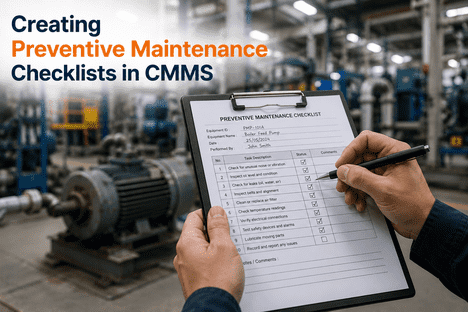
Preventive maintenance is the execution of planned maintenance activities at predetermined intervals—measured in calendar time, operating hours, production cycles, or cumulative mileage—regardless of the current observable condition of the asset. The logic is straightforward: assets degrade over time, so servicing them before degradation reaches a failure threshold prevents unplanned breakdowns. In a CMMS context, preventive maintenance manifests as recurring work orders generated automatically when an asset reaches its scheduled interval. Lubrication routes, filter changes, belt inspections, coupling alignments, and bearing replacements all fall under the preventive maintenance umbrella. The strategy works well for assets with predictable, age-related wear curves—where the failure probability increases monotonically with time or usage. It is less effective, and often costly, when applied to assets whose failure modes are dominated by random events, operating stress variation, or environmental factors that do not correlate reliably with calendar intervals.
What Predictive Maintenance Actually Requires to Work
Predictive maintenance is the practice of monitoring the actual condition of an asset continuously or at high frequency, using that condition data to forecast remaining useful life, and scheduling maintenance intervention based on the predicted failure timeline rather than a fixed interval. In practice, this requires three things working in concert: first, a condition monitoring layer that captures relevant physical parameters—vibration signatures, thermal profiles, visual anomalies, pressure deviations, fluid contamination levels—with sufficient frequency and sensitivity to detect early-stage fault development. Second, an AI or statistical inference engine that distinguishes normal operating variation from genuine fault signatures and produces actionable predictions with enough lead time for maintenance planning. Third, a CMMS integration pathway that translates condition-based alerts into structured work orders with asset context, fault evidence, and recommended actions—without requiring manual interpretation by an engineer between detection and execution. iFactory's AI Vision Camera is purpose-built to serve as the condition monitoring and inference layer in this architecture, delivering structured fault alerts with photographic evidence directly into the CMMS workflow.
Preventive vs. Predictive Maintenance: The Full Comparison
The decision between preventive and predictive maintenance is not binary—most industrial operations benefit from running both strategies simultaneously, applied to different asset classes based on criticality, failure mode characteristics, and monitoring infrastructure availability. The comparison below provides a structured view of how the two strategies differ across the dimensions that matter most to maintenance leaders and CMMS users.
| Comparison Dimension | Preventive Maintenance | Predictive Maintenance | Strategic Implication |
|---|---|---|---|
| Work Order Trigger | Calendar / usage interval | Condition threshold or AI alert | PdM eliminates unnecessary WOs on healthy assets |
| Failure Detection Speed | After interval expiry | 2–6 weeks before failure | PdM provides planning lead time; PM may miss between intervals |
| CMMS Data Requirement | Asset register + PM schedule | Condition data API + alert logic | PM easier to implement; PdM requires integration investment |
| Asset Coverage | All assets regardless of monitoring | Assets with condition monitoring deployed | PM has broader coverage; PdM focuses on monitored critical assets |
| Maintenance Labor Cost | High — many PMs performed on healthy assets | Lower — work orders driven by actual need | PdM reduces labor cost 20–30% on monitored asset population |
| Unplanned Downtime Risk | Moderate — failures between PM intervals | Low — faults detected weeks in advance | PdM reduces unplanned stops by up to 80% on monitored assets |
| Technology Dependency | Low — works without sensors or AI | High — requires IoT, AI, and CMMS integration | PM appropriate where monitoring infrastructure is absent |
| ROI Timeline | Immediate — no deployment required | 3–12 months depending on scope | PdM ROI compounds significantly after year one |
| Best Fit Asset Profile | Age-related wear, low monitoring cost | High criticality, high downtime cost | Asset criticality analysis determines which strategy applies |
5 Factors That Determine Which Strategy Is Right for Each Asset
The correct maintenance strategy for any given asset is determined by a combination of failure mode characteristics, downtime consequence, monitoring feasibility, and the current state of your CMMS data quality. The following five factors provide a structured framework for making this determination across your asset population—and for identifying where iFactory's AI Vision Camera delivers the highest return on predictive investment.
Failure Consequence — What Does Downtime Actually Cost?
The higher the financial and operational consequence of an unplanned failure, the stronger the justification for predictive monitoring investment. For assets where a single unplanned stoppage costs more than an entire year of predictive monitoring program expenses, the business case is unambiguous. Assets where failures are self-contained, inexpensive to repair, and carry no production impact can often be managed effectively with preventive or even run-to-failure strategies. Map your asset population by failure consequence before allocating monitoring resources—concentrate predictive investment on the top 20% of assets by downtime cost exposure.
Failure Mode Pattern — Age-Related or Random?
Preventive maintenance is most effective against age-related failure modes that follow a predictable degradation curve—where failure probability increases monotonically with operating time or cycles. Bearings, belts, seals, and consumable components in consistent operating environments are good candidates. Predictive maintenance outperforms preventive for assets with random or condition-driven failure modes—where the dominant failure drivers are load variation, environmental stress, contamination, or operational factors that do not correlate reliably with calendar intervals. Most complex industrial assets exhibit a mix of both—which is why a hybrid strategy, with PM covering age-related components and PdM covering condition-sensitive failure modes, is often the optimal approach. Maintenance teams mapping this analysis for their facility often Book a Demo to evaluate how AI Vision Camera monitoring can cover the condition-sensitive failure modes that PM schedules miss.
P-F Interval — How Much Warning Does the Asset Give Before Failure?
The P-F interval is the time between the point at which a potential failure becomes detectable (P) and the point at which the asset reaches functional failure (F). Assets with long P-F intervals—weeks or months of detectable degradation before failure—are ideal candidates for predictive monitoring, because there is sufficient lead time for planned intervention. Assets with very short P-F intervals—where failure develops in minutes or hours—may require either redundancy, run-to-failure acceptance, or very high-frequency monitoring. iFactory's AI Vision Camera continuously monitors visual and thermal signatures with sub-minute detection latency, capturing the earliest detectable manifestations of fault development and maximizing the usable P-F interval for planning purposes.
CMMS Data Maturity — Is Your Asset History Clean Enough for Prediction?
Predictive maintenance AI models require historical asset data to establish normal operating baselines and train fault detection algorithms. If your CMMS asset register is incomplete, failure history is poorly documented, or PM records are inconsistently logged, the data foundation for predictive modeling is weak. Before deploying AI-driven condition monitoring on a broad asset population, invest in CMMS data quality: complete the asset register, standardize failure codes, and ensure PM completion is consistently recorded. iFactory's AI Vision Camera can begin delivering value immediately without extensive historical data by applying pre-trained industry fault models—but the platform's predictive accuracy improves continuously as it accumulates asset-specific operating history from your facility.
Monitoring Feasibility — Can the Asset's Condition Be Observed Continuously?
Not every asset can be monitored continuously in a cost-effective way. Large rotating machinery, high-criticality process equipment, and assets with accessible external surfaces are strong candidates for AI Vision Camera and IoT sensor deployment. Assets that are fully enclosed, submerged, or physically inaccessible during operation may require manual sampling techniques or alternative monitoring strategies. iFactory's non-contact AI Vision Camera is specifically advantageous for assets where retrofitting internal sensors would require disassembly or production downtime—the camera observes the asset externally and delivers condition intelligence without any invasive installation. This dramatically expands the proportion of an asset population that is feasibly monitorable without capital-intensive instrumentation projects. Facilities ready to assess their monitoring coverage often Book a Demo to evaluate AI Vision Camera coverage options for their specific asset mix.
How to Transition from Preventive to Predictive Without Disrupting Operations
The transition from a predominantly preventive maintenance program to a condition-driven predictive approach does not require a wholesale replacement of existing infrastructure or a big-bang technology deployment. The most successful transitions follow a phased approach that preserves PM coverage for asset classes where it remains the most cost-effective strategy while progressively introducing predictive monitoring on the highest-criticality assets where the ROI justification is clearest.
Asset Criticality and Data Quality
Timeline: 0–3 Months
- Complete CMMS asset register with criticality scores for all assets
- Standardize failure codes and PM completion logging in CMMS
- Identify top 20 assets by unplanned downtime cost exposure
- Map dominant failure modes for critical asset population
- Establish current MTBF and MTTR baselines for each critical asset
Condition Monitoring and CMMS Integration
Timeline: 3–9 Months
- Deploy AI Vision Camera on highest-criticality assets first
- Connect condition alerts to CMMS via API for auto work order generation
- Configure alert thresholds and work order templates per failure mode
- Run PM and predictive monitoring in parallel for validation period
- Begin replacing fixed PM intervals with condition-based triggers on monitored assets
Full Condition-Based Program Management
Timeline: 9–18 Months
- Expand AI Vision Camera coverage to secondary-criticality asset population
- AI models forecasting remaining useful life per asset class
- CMMS auto-scheduling spare parts procurement based on predictive alerts
- Monthly KPI review: MTBF, MTTR, planned/unplanned ratio, cost per WO
- Continuous AI model refinement using CMMS work order outcomes as feedback
Which Asset Classes Belong in Each Strategy
Applying the correct maintenance strategy to each asset class is the operational core of any hybrid maintenance program. The following framework identifies which asset types are best served by preventive maintenance, which justify predictive investment, and where iFactory's AI Vision Camera delivers the most significant ROI improvement over traditional PM approaches.
Large motors, pumps, compressors, gearboxes, and turbines with high replacement cost and significant production impact when they fail. Structural assets—frames, welds, pressure vessels, and pipelines—where crack propagation is visible before structural compromise. Conveyor systems, automated assembly lines, and robotic work cells where a single failure halts an entire production zone. iFactory's AI Vision Camera monitors these assets continuously, detecting surface cracks, thermal hotspots, misalignments, seal failures, and abnormal motion patterns weeks before functional failure occurs—and pushing structured work orders to the CMMS automatically.
Belts, gaskets, seals, and other consumable components with predictable wear curves and low unit replacement cost are most efficiently managed through fixed PM intervals—the cost of condition monitoring deployment exceeds the savings from interval optimization. Lubrication routes, hydraulic filter changes, and instrumentation calibration follow deterministic degradation patterns where time-based scheduling is both adequate and cost-effective. Safety relief valves, pressure gauges, and safety interlocks require interval-based testing regardless of apparent condition to meet regulatory compliance requirements.
Many industrial assets exhibit both age-related wear (suited to PM) and condition-sensitive failure modes (suited to predictive monitoring). Heat exchangers, for example, require scheduled cleaning based on operating hours, but fouling rate is also highly variable and benefits from continuous thermal monitoring to catch accelerated degradation between cleaning cycles. Mid-criticality pumps benefit from scheduled seal replacements on PM cycles combined with AI Vision Camera monitoring for impeller cavitation and bearing thermal anomalies that develop independently of the seal replacement schedule. Running both strategies in concert on these assets provides comprehensive failure coverage at optimized total cost.
How iFactory AI Vision Camera Bridges Preventive and Predictive Maintenance
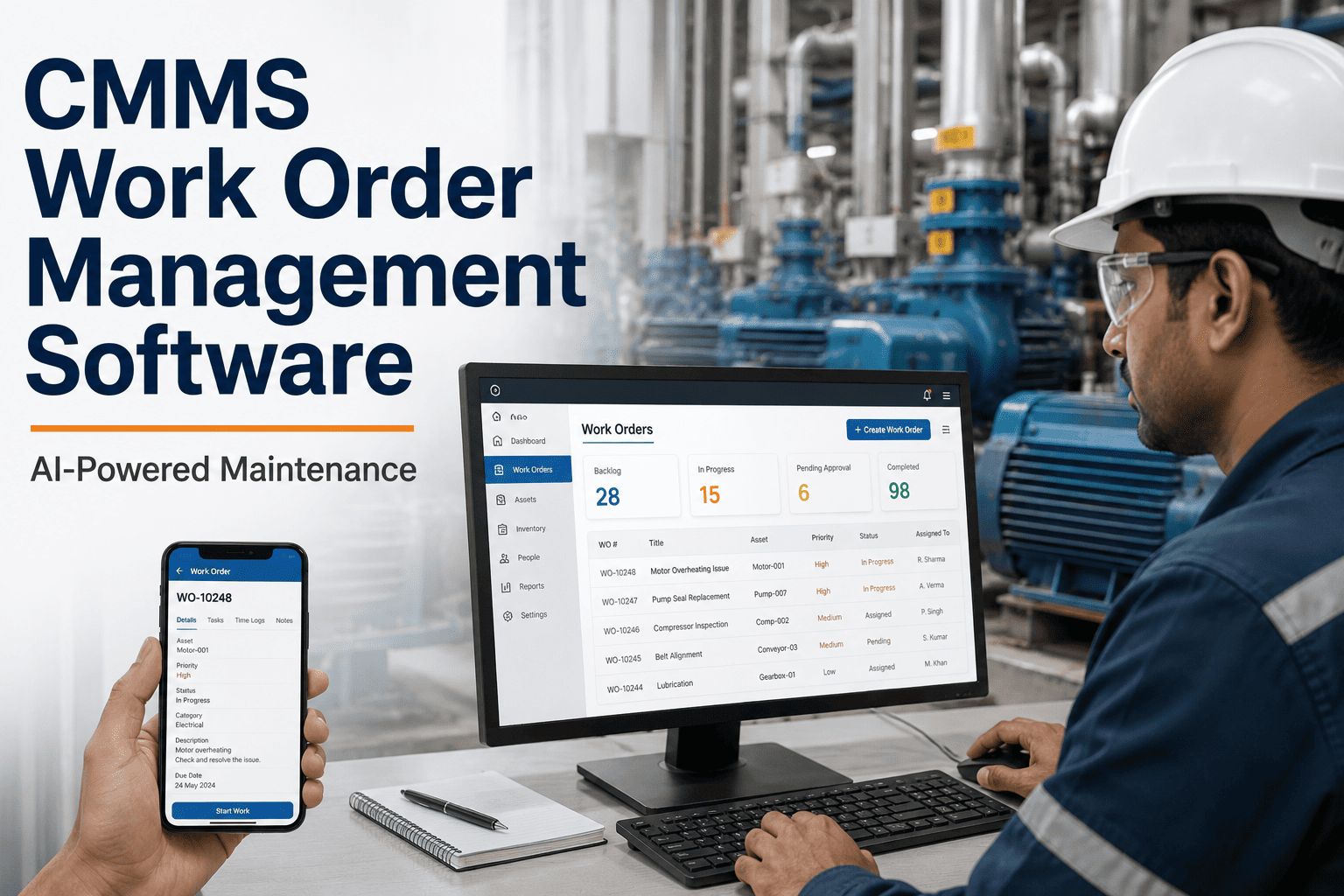
iFactory's AI Vision Camera is purpose-built to serve as the condition monitoring layer that enables the transition from preventive to predictive maintenance without requiring disruptive sensor retrofitting or complex instrumentation projects. Deployed externally on or near the asset, the camera continuously analyzes visual and thermal signatures against AI models trained on industrial fault patterns—detecting surface cracks, fluid leaks, thermal hotspots, positional deviations, and abnormal motion in real time. The platform connects to all major CMMS platforms via OPC-UA, MQTT, and REST API, automatically generating structured work orders with asset ID, fault classification, severity score, and photographic evidence when condition thresholds are exceeded. This eliminates the manual handoff between detection and action that consumes engineering time and allows faults to progress in siloed monitoring environments. For organizations running predominantly preventive maintenance programs today, the AI Vision Camera provides the lowest-friction entry point into predictive condition monitoring—delivering ROI within weeks on critical asset deployments without requiring a wholesale transformation of existing maintenance workflows. Facilities ready to take this step are encouraged to Book a Demo and see a live demonstration of the CMMS integration workflow.
Not Sure Where to Start? Get a Maintenance Strategy Assessment for Your Facility
iFactory's industrial AI team will evaluate your current asset population, identify which assets justify predictive monitoring investment, and deliver a structured ROI analysis showing the financial impact of transitioning from time-based PM to condition-driven predictive maintenance on your highest-criticality equipment.
"We had been running a solid preventive maintenance program for years—well-documented PM schedules, good CMMS compliance, trained technicians. But we were still experiencing two to three unplanned motor and conveyor failures per month that our PM program never caught, because those failures were driven by load variation and contamination events that had nothing to do with our service intervals. Deploying iFactory's AI Vision Camera on our fifteen highest-criticality assets eliminated every unplanned failure on that population within four months. The transition from preventive to predictive was not a wholesale change—we kept PM where it made sense and added AI monitoring for the failure modes PM could never address. The ROI was visible within the first quarter."
Preventive vs. Predictive Maintenance — Frequently Asked Questions
Build the Right Maintenance Strategy for Every Asset in Your Facility
iFactory's industrial AI team will assess your current maintenance program, identify the highest-value opportunities for predictive monitoring, and deliver a structured ROI projection showing exactly how much unplanned downtime, maintenance labor, and equipment degradation cost you can eliminate with the right strategy applied to the right assets.