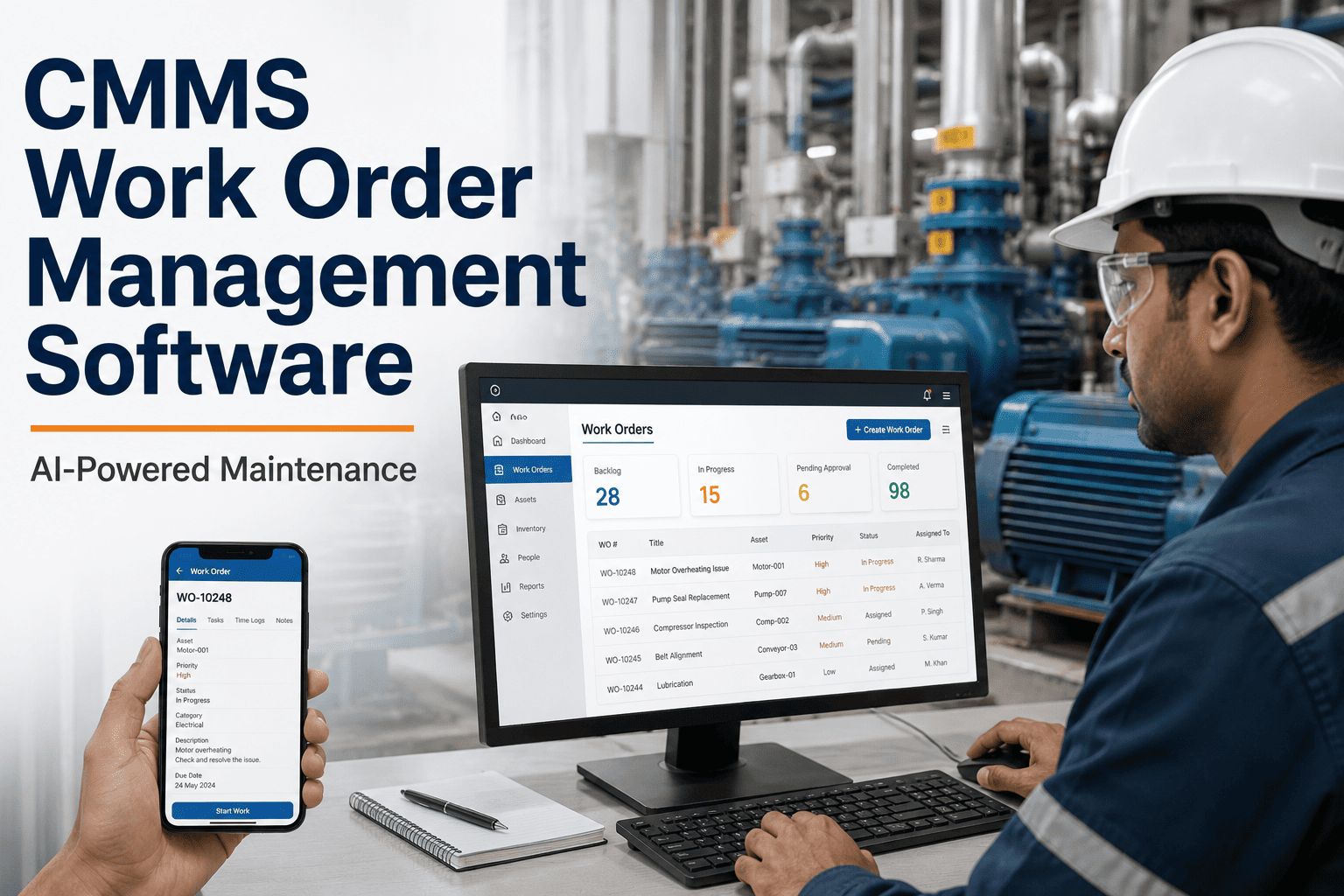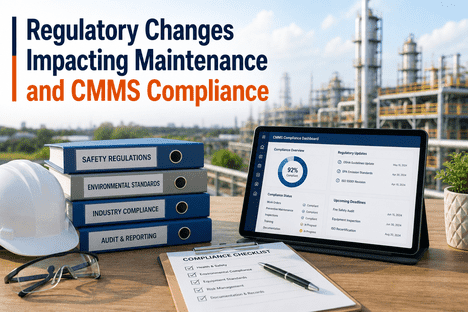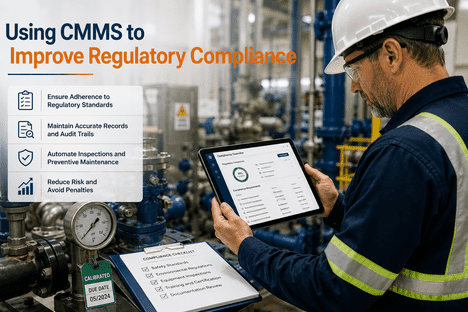
Regulatory compliance in U.S. oil and gas operations demands meticulous documentation, timely inspections, and auditable maintenance records across frameworks like OSHA 1910.119 Process Safety Management, API 580/581 Risk-Based Inspection, and EPA 40 CFR Part 68 Risk Management Programs. Computerized Maintenance Management Systems (CMMS) have become the operational backbone for meeting these obligations — centralizing work order tracking, preventive maintenance scheduling, inspection documentation, and asset history in a single auditable platform. Yet many facilities still operate their CMMS as a passive record-keeping tool rather than an active compliance engine, leaving gaps in mechanical integrity documentation, overdue inspection follow-ups, and management of change records that regulators and incident investigators routinely identify as root causes of citations and process safety events. iFactory's AI-enhanced CMMS platform transforms maintenance data into continuous compliance intelligence — connecting your CMMS, historian, and process control infrastructure to automate regulatory documentation, flag mechanical integrity deviations in real time, and generate audit-ready records without the latency of manual compilation. Operators seeking to close the gap between maintenance operations and regulatory compliance can Book a Demo with iFactory for a facility-specific assessment of how AI-powered CMMS compliance mapping addresses their existing OSHA PSM, API RBI, and EPA RMP obligations.
How CMMS Strengthens OSHA PSM Mechanical Integrity Compliance
OSHA 1910.119(j) requires documented inspection results, corrective actions, and next inspection dates for all pressure vessels, piping systems, and relief devices. A properly configured CMMS transforms this obligation from a manual tracking burden into an automated compliance workflow — scheduling inspections based on regulatory intervals, generating work orders automatically when inspections become due, capturing signed inspection records with digital timestamps, and triggering escalation alerts when overdue items accumulate. Facilities using iFactory's AI-enhanced CMMS platform gain an additional layer of compliance intelligence: the system continuously cross-references inspection completion records against asset registers, flagging undocumented equipment items before they become gaps that OSHA inspectors identify during audit reviews. The result is a mechanical integrity program that maintains complete, audit-ready documentation across the entire fixed equipment fleet without requiring manual reconciliation between inspection logs, spreadsheet trackers, and work order histories.
CMMS Data as the Foundation for API 580/581 Risk-Based Inspection
API 580 defines the methodology for Risk-Based Inspection, while API 581 provides quantitative probability and consequence of failure assessment tools. The quality of any RBI program depends directly on the completeness and accuracy of the inspection data feeding it — wall thickness measurements, NDE records, corrosion rate calculations, and maintenance intervention histories. A CMMS that captures this data at the point of inspection with timestamps, inspector attribution, and equipment-level tagging provides the data integrity that RBI assessments require. iFactory's platform extends CMMS capabilities with AI models that analyze historical inspection data to calibrate damage mechanism libraries for facility-specific operating conditions — producing PoF assessments that reflect actual degradation environments rather than generic API 581 default values. This continuous data flow from CMMS to RBI engine ensures that risk rankings remain current between scheduled revalidation cycles, adjusting automatically when new inspection data reveals changing damage rates.
CMMS for Environmental Compliance: LDAR, RMP, and Emissions Tracking
Environmental compliance obligations under EPA 40 CFR Part 60/63 Leak Detection and Repair, 40 CFR Part 68 Risk Management Programs, and 40 CFR Part 75 Continuous Emissions Monitoring Systems each require component-level tracking, scheduled monitoring, and documented corrective action workflows that align naturally with CMMS capabilities. A CMMS configured for LDAR compliance manages component inventories, schedules leak monitoring rounds, records concentration measurements against regulatory thresholds, and generates repair work orders automatically when components exceed allowable limits. For RMP compliance, CMMS change tracking provides the audit trail that demonstrates management of change processes were followed when process conditions or chemical inventories triggered update requirements. iFactory's AI-enhanced platform unifies these environmental compliance workflows with process safety monitoring in a single dashboard — giving HSE managers real-time visibility into compliance status across every regulatory framework their facility operates under.
iFactory AI Vision Camera: Visual Compliance Intelligence for CMMS-Connected Inspections
iFactory's AI Vision Camera extends CMMS compliance capabilities into the visual inspection domain — capturing high-resolution imagery of equipment condition during routine inspections, applying computer vision models to detect corrosion, cracking, coating degradation, and mechanical damage that human inspectors may miss, and automatically associating visual findings with the corresponding equipment record in the CMMS. This visual compliance layer creates a permanent, timestamped visual record of equipment condition at each inspection interval — eliminating reliance on subjective inspector notes and providing OSHA and API auditors with verifiable visual evidence that inspections were performed and conditions were assessed. The AI Vision Camera integrates directly with iFactory's compliance platform, creating a unified data pipeline from visual inspection capture through condition assessment, documentation generation, and audit record archiving.
CMMS Deployment Best Practices for Regulatory Compliance Outcomes
Deploying a CMMS for regulatory compliance requires more than software configuration — it demands process alignment between maintenance workflows and regulatory documentation requirements. Facilities achieving the highest compliance outcomes follow several proven practices: mapping every regulatory documentation requirement to a specific CMMS data field and workflow step; configuring inspection intervals based on regulatory minimums rather than operational convenience; establishing digital signature and timestamp protocols that meet OSHA and EPA record-keeping standards; and integrating CMMS data with RBI and RMP assessment tools to eliminate manual data transfer between compliance systems. iFactory's compliance engineering team provides structured deployment support — including compliance gap assessment, CMMS integration mapping, and regulatory documentation template configuration — enabling facilities to achieve audit-ready compliance status within weeks rather than quarters. Teams ready to accelerate their compliance transformation can Book a Demo with iFactory for a facility-specific deployment assessment.