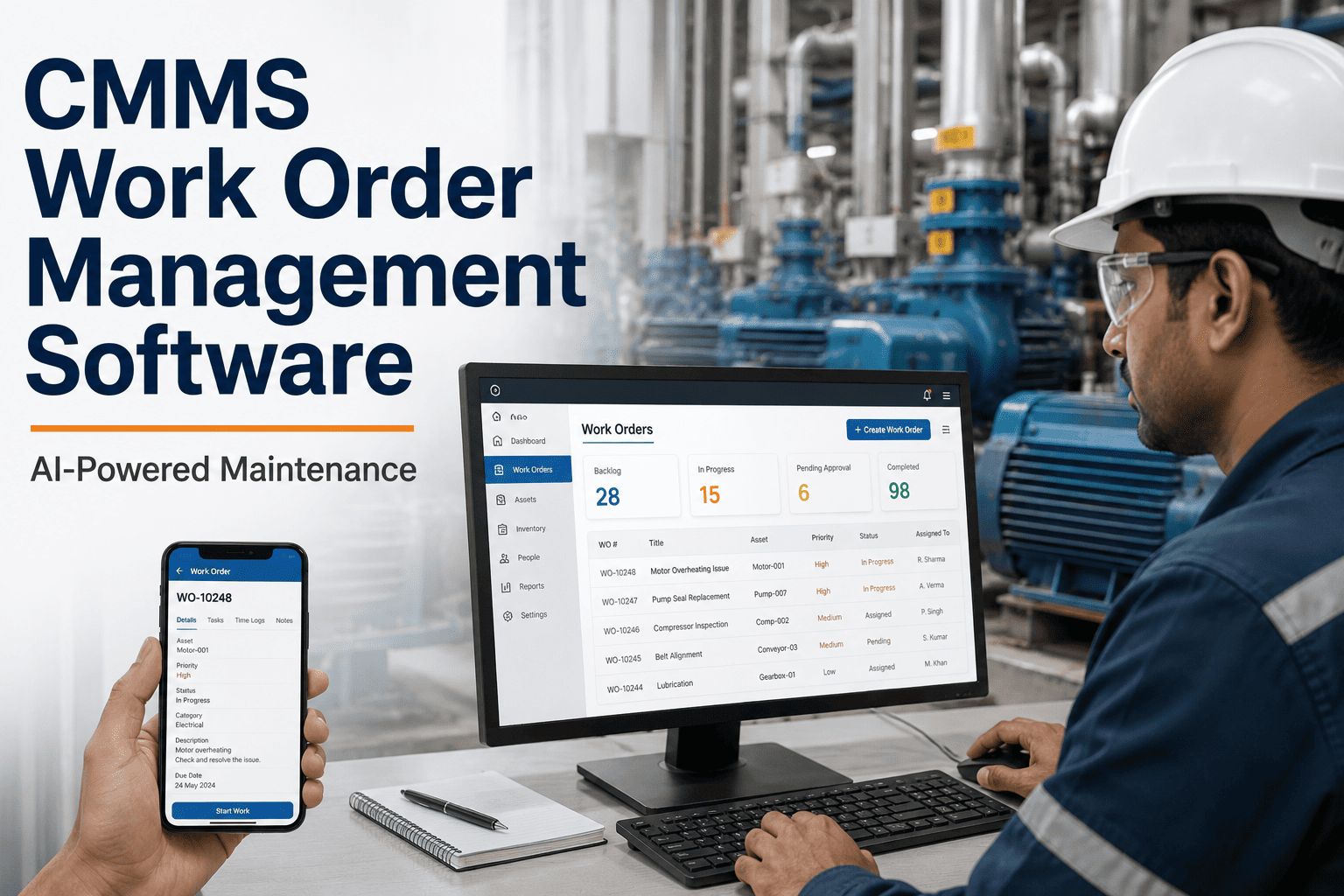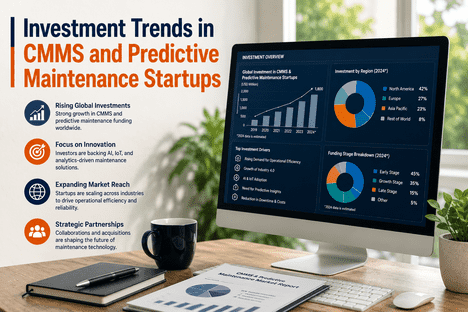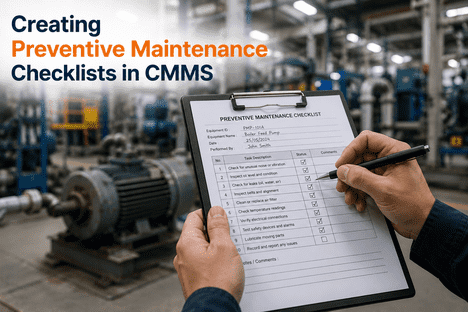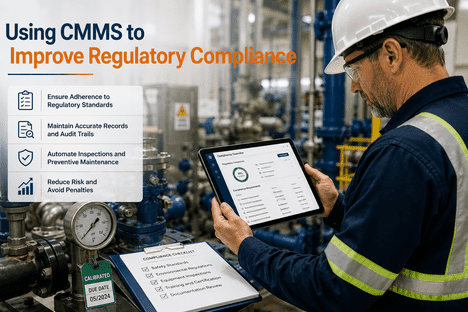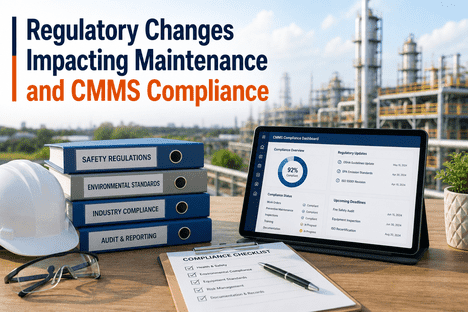
Maintenance and asset management teams operating in 2026 face a compliance environment that has grown significantly more complex, more documented, and more consequential than at any point in the past decade. Regulatory frameworks that once applied only to the largest industrial operators are now reaching mid-size facilities. Documentation requirements that were previously met with paper logs and manual spreadsheets are increasingly being scrutinized in real-time audits where incomplete records carry the same penalty as missing inspections. The United States alone enforces over 300 distinct OSHA standards and 150+ EPA regulations with direct facility-level implications, and OSHA's maximum penalty for willful or repeated violations now reaches $165,514 per citation as of January 2025. ISO 55001 for asset management, ISO 50001 for energy management, EPA methane and GHG reporting rules, OSHA Process Safety Management requirements, and the EU Carbon Border Adjustment Mechanism are each evolving independently — but they converge on the same operational demand: maintenance activities must be documented, traceable, condition-based, and audit-ready at all times, not assembled from spreadsheets when an inspector arrives. iFactory's AI-powered platform is built to address exactly this compliance reality — connecting existing SCADA, PLC, and DCS infrastructure to automated documentation, predictive maintenance, and real-time ESG reporting so that every regulatory obligation is met as a byproduct of normal operations rather than a manual effort separate from them. Maintenance leaders evaluating their current compliance posture regularly choose to Book a Demo with iFactory's engineering team to map the platform's compliance automation capabilities against their specific regulatory obligations.
The Compliance Landscape Has Changed — And Most CMMS Platforms Have Not
Why Paper-Based and Disconnected Maintenance Records Create Regulatory Exposure
The most expensive compliance failures in industrial maintenance are not caused by missing inspections — they are caused by missing documentation of inspections that were performed. When OSHA investigators arrive at a facility and request 36 months of lockout/tagout records, PSM mechanical integrity logs, and confined space entry permits, the question is not whether the maintenance team did the work. The question is whether the evidence can be produced. Fourteen of the most common citation categories in recent industrial facility audits have been documentation failures rather than actual safety failures — and each carries the same financial and operational consequences as if the inspection had never occurred. The structural problem is that most maintenance operations run compliance tracking on a separate system from work order execution — paper forms, spreadsheets, and calendar reminders that do not escalate when a due date passes and cannot produce a timestamped audit trail on demand. iFactory resolves this at the architecture level by converting every regulatory inspection requirement into a scheduled, trackable CMMS work order with automatic completion records, timestamped evidence capture, and on-demand audit export — so that compliance posture is continuous, not assembled before each audit cycle.
Key Regulatory Frameworks Reshaping Maintenance and CMMS Compliance in 2026
From OSHA PSM to ISO 55001 — What Each Standard Demands From Your Maintenance Operation
How AI Vision Monitoring Strengthens Compliance Inspection Programs
Continuous Visual Evidence Where Manual Inspection Leaves Gaps
One of the most significant compliance vulnerabilities in industrial maintenance is the interval between scheduled visual inspections. OSHA PSM mechanical integrity requirements, EPA leak detection and repair (LDAR) programs, and API pipeline integrity standards all specify inspection frequencies — but none of them specify continuous coverage. When an inspector arrives and asks for evidence of the condition of a specific asset between inspection dates, the answer is usually silence. iFactory's AI Vision Monitoring module addresses this gap by deploying computer vision cameras across facility infrastructure — pipelines, wellheads, pressure vessels, compressor trains, and processing equipment — delivering continuous visual monitoring that generates a timestamped photographic and anomaly-detection record for every monitored asset, every hour of every day. Compliance teams can demonstrate asset condition at any point between scheduled inspections with complete visual evidence. Leak detection under EPA LDAR programs is particularly impacted — AI vision systems identify leak formation in hours rather than waiting for the next quarterly inspection round. Reliability and compliance engineers who want to understand how this maps to their LDAR and PSM obligations regularly choose to Book a Demo to walk through iFactory's AI vision compliance capabilities against their specific asset portfolio.
The 5 Ways Regulatory Changes Are Forcing CMMS Evolution in 2026
What Modern Compliance Demands From Your Maintenance Platform
iFactory Compliance Coverage Across Major Regulatory Frameworks
What iFactory Automates Per Standard — Zero Manual Data Consolidation
| Regulatory Framework | Core Requirement | iFactory Capability | Compliance Outcome |
|---|---|---|---|
| OSHA PSM (29 CFR 1910.119) | Mechanical integrity inspection records, corrective action tracking | AI-scheduled recurring PM tasks, auto-generated work orders, timestamped completion records | Audit-ready 36-month history on demand |
| EPA Methane Rule (NSPS OOOOb) | Emissions from maintenance activities, GHG Reporting Year data | IIoT methane and VOC sensor aggregation, auto-generated EPA GHG and methane compliance reports | Zero manual emissions data consolidation |
| ISO 55001 Asset Management | Risk-based maintenance decisions, structured asset registry, continual improvement evidence | AI condition-based work orders, asset criticality classification, 12-month decision audit trail | 60%+ reduction in audit preparation time |
| ISO 50001 Energy Management | Energy Performance Indicators, Energy Baseline, continuous measurement | Real-time per-asset energy monitoring, automated EnPI dashboards, Scope 1 & 2 carbon calculations | Always-current ISO 50001 compliance posture |
| EU CBAM | Verified embedded emissions per production batch | Immutable energy and emissions records linked to batch IDs via Digital Twin, export-ready CBAM declarations | Production-linked emissions evidence chain |
| EPA LDAR Programs | Leak detection and repair documentation across facility components | AI vision cameras providing continuous visual monitoring for leak formation, timestamped anomaly records | Leak detection in hours vs. quarterly inspection cycles |
What iFactory's Architecture Delivers for Compliance-Driven Maintenance Operations
Unified Platform, Continuous Evidence, Zero Audit Scramble
The fundamental challenge of compliance-driven maintenance is that regulatory obligations require continuous, structured evidence — but most maintenance operations generate evidence episodically, through manual rounds and paper logs that were never designed to produce audit trails at scale. iFactory's architecture is designed around the assumption that compliance documentation should be a natural output of normal maintenance operations, not a separate activity that happens before each audit. The platform's IoT integration layer connects to existing SCADA, DCS, PLC, and historian infrastructure via OPC-UA, Modbus, and REST APIs — ingesting operational data continuously without requiring hardware replacement. The AI layer processes this data stream to generate condition-based maintenance decisions with documented rationale, predictive work orders with full failure mode context, and automated ESG and emissions records that meet EPA, ISO, and GHG Protocol reporting requirements. On-premise deployment ensures that sensitive OT data never leaves the facility perimeter — a critical requirement for facilities under OSHA PSM that must demonstrate control system security alongside mechanical integrity compliance. Maintenance directors building out compliance programs for 2026 regulatory submissions regularly Book a Demo to review how iFactory's compliance automation architecture maps to their specific documentation obligations.
Conclusion: Regulatory Compliance Is No Longer a Documentation Exercise — It Is an Operational System
The regulatory changes reshaping maintenance and CMMS compliance in 2026 share a common structural demand: compliance must be continuous, evidence-generating, and embedded in daily operations — not assembled manually when an auditor arrives. OSHA's escalating penalty structure, the EPA methane fee framework, ISO 55001's evidence-based audit requirements, ISO 50001's expanded scope under the EU Energy Efficiency Directive, and CBAM's production-linked emissions documentation requirements all point to the same conclusion. The facilities that will carry the least regulatory risk and the lowest compliance labor overhead are those that have embedded compliance automation into their maintenance platform — converting every inspection, every predictive work order, and every sensor reading into the documentation that regulators require. iFactory is the platform that makes this possible, because it connects every operational system, every asset, and every compliance obligation into a single AI intelligence layer that generates regulatory evidence as a natural byproduct of operational excellence. For maintenance and compliance teams evaluating how to close their current regulatory exposure, the most effective next step is to Book a Demo and walk through a site-specific compliance gap assessment with the iFactory engineering team.
Frequently Asked Questions
How does iFactory support OSHA PSM mechanical integrity compliance requirements?
iFactory converts every PSM-mandated mechanical integrity inspection into a scheduled, recurring CMMS work order with automatic due-date escalation. Completion records are timestamped and immutable, with full technician, asset, and action context. Equipment deficiencies generate corrective work orders with tracked closure dates — producing the 36-month audit-ready history that OSHA inspectors require on demand.
Does iFactory automatically generate EPA methane and GHG compliance reports?
Yes — iFactory's IIoT sensor network continuously aggregates methane, VOC, and flaring data across all operational segments. EPA GHG Reporting Rule, EPA Methane Emissions (NSPS OOOOb), and Scope 1 and 2 GHG Protocol reports are auto-generated with zero manual data consolidation. Reports are audit-ready the moment a reporting period closes.
How does iFactory's AI vision monitoring support regulatory inspection programs?
iFactory's AI Vision Monitoring module deploys computer vision cameras across facility infrastructure, providing continuous visual inspection records between scheduled manual rounds. For EPA LDAR programs, API pipeline integrity requirements, and OSHA PSM visual inspection mandates, this creates a timestamped photographic and anomaly-detection record at every monitored asset — closing the coverage gap between scheduled inspection intervals.
Can iFactory support ISO 55001 and ISO 50001 compliance on the same platform?
Yes — iFactory's eight AI-powered modules cover both standards. ISO 55001 asset management evidence — risk-based work orders, asset condition records, corrective action audit trails — is generated automatically through the CMMS and predictive maintenance layers. ISO 50001 Energy Performance Indicators, Energy Baselines, and Scope 1 and 2 carbon calculations are delivered through the Energy Monitoring module, with continuous compliance posture and no manual reporting effort.
Does iFactory's OT data security architecture meet OSHA PSM cybersecurity requirements?
Yes — iFactory deploys on-premise within existing OT networks with optional air-gapped deployment for critical infrastructure. AES-256 encryption at rest and TLS 1.3 in transit are standard. SOC 2 Type II and ISO 27001 certifications are maintained with annual third-party audits — directly supporting the control system security documentation that OSHA PSM and NERC CIP frameworks require.