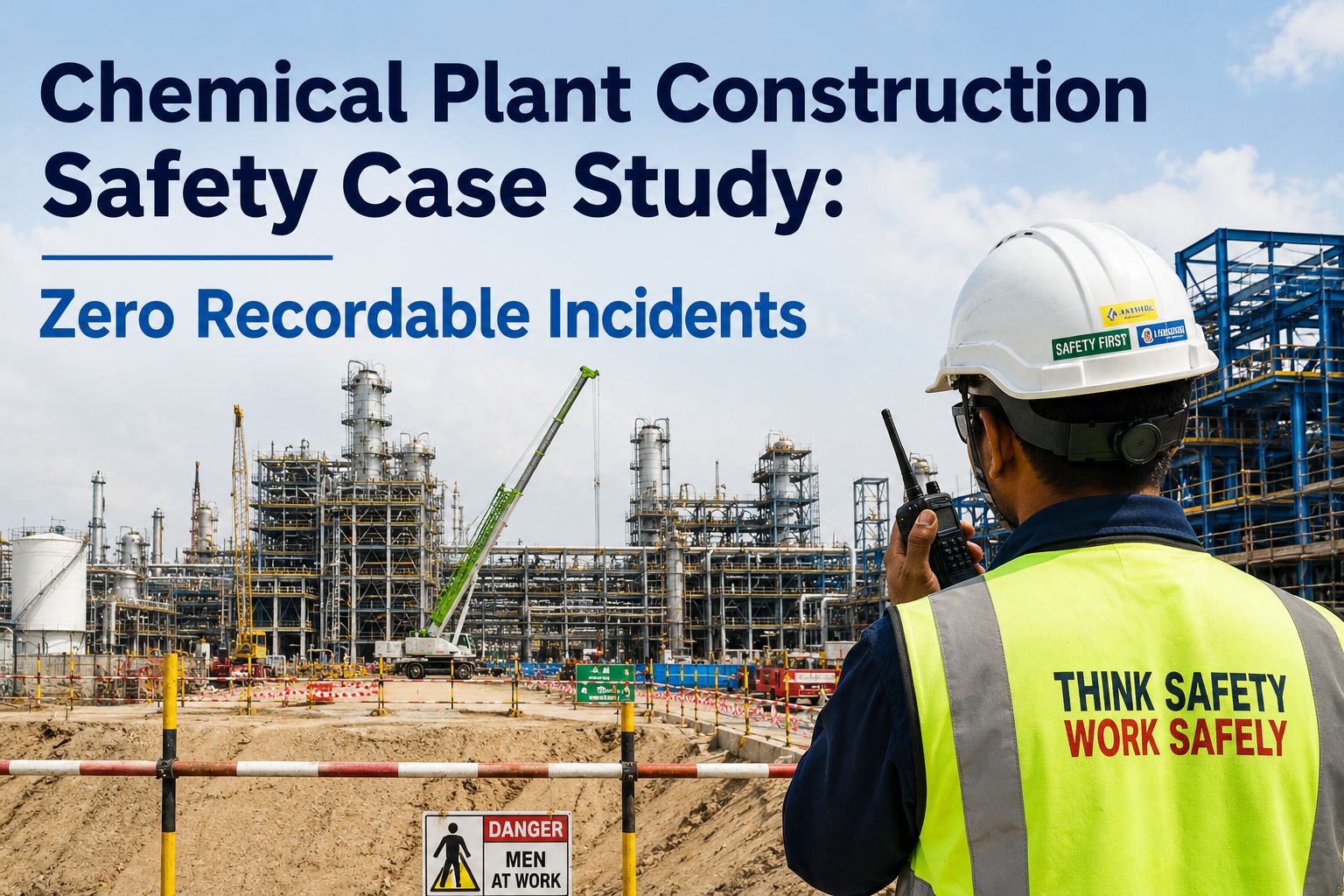
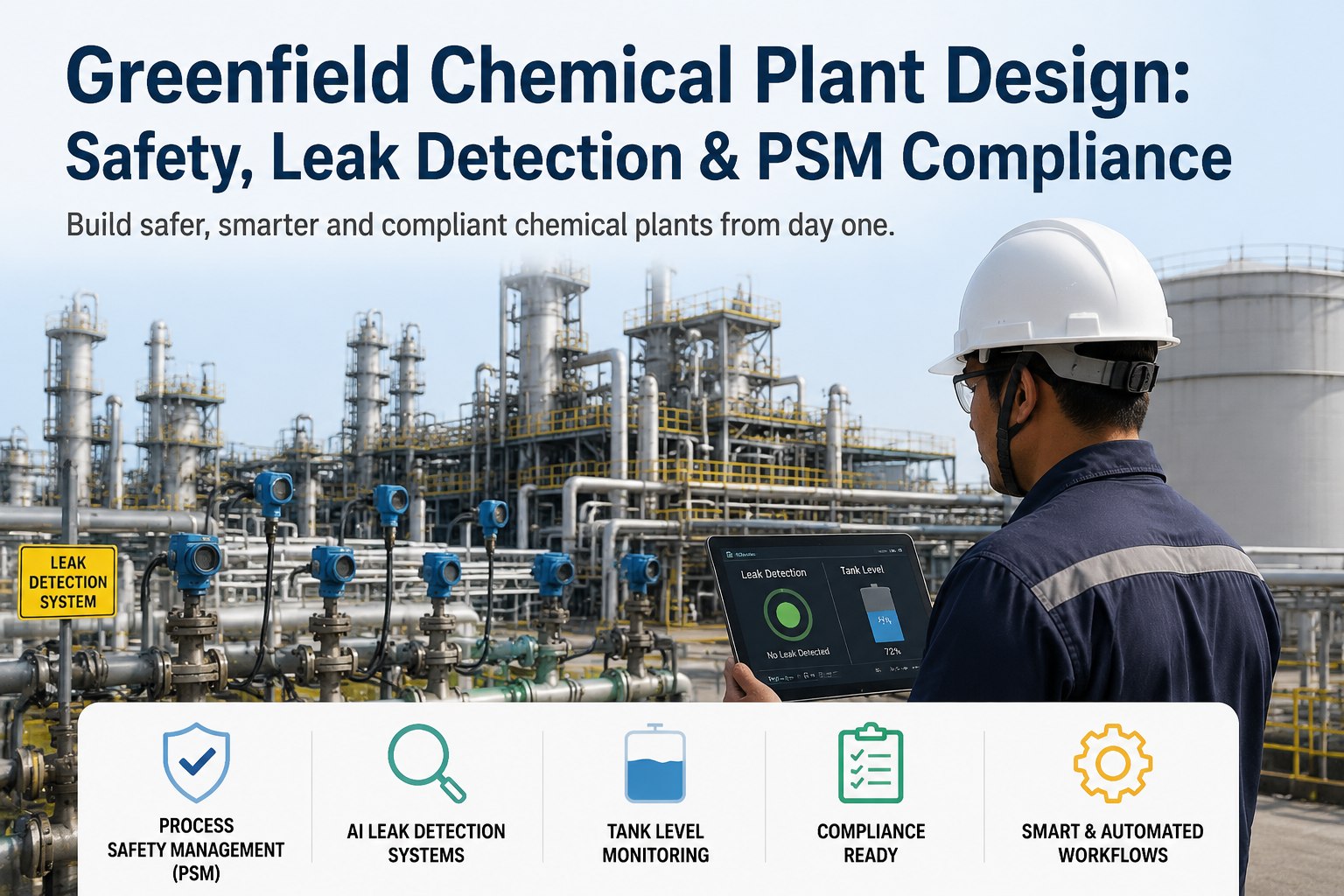
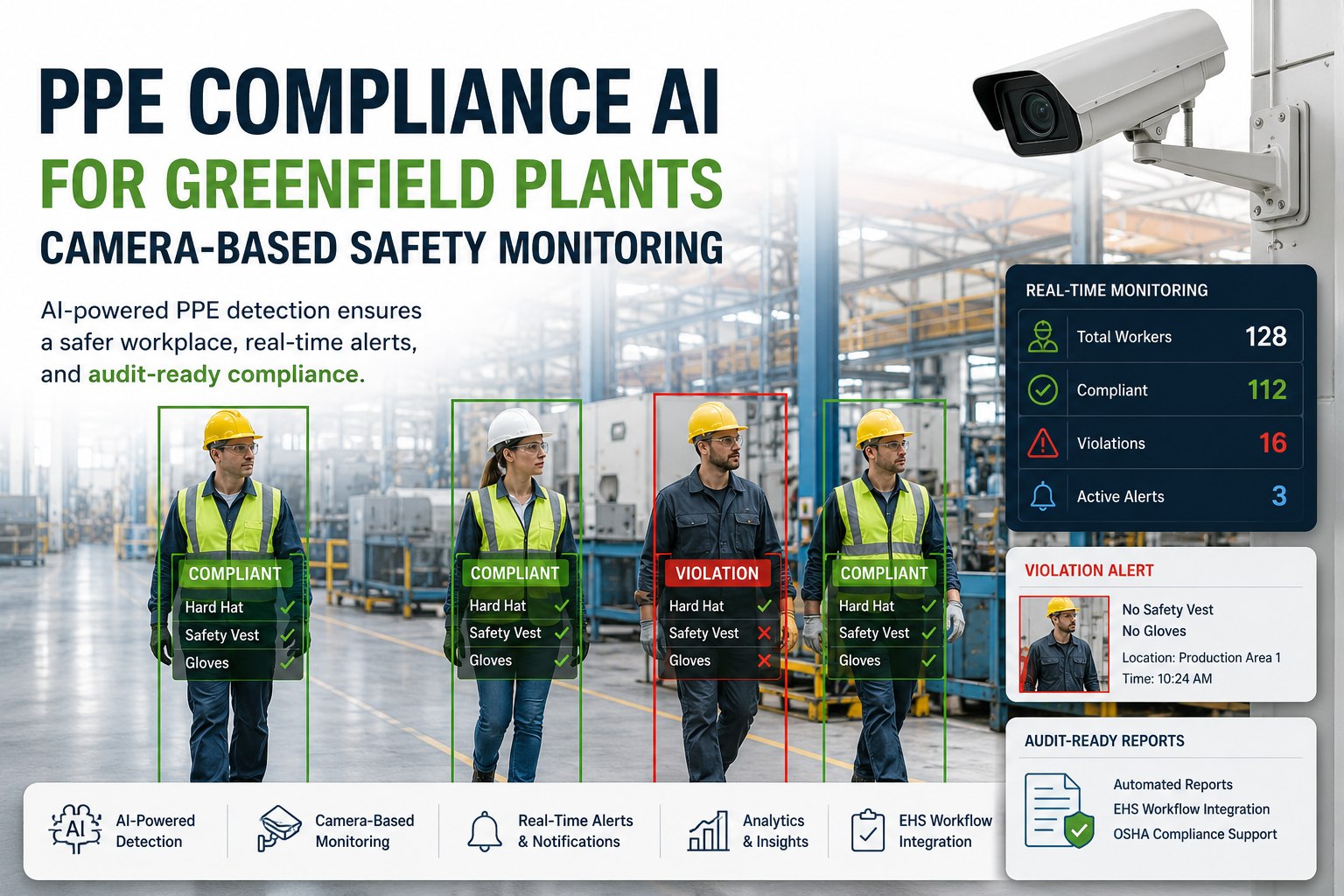
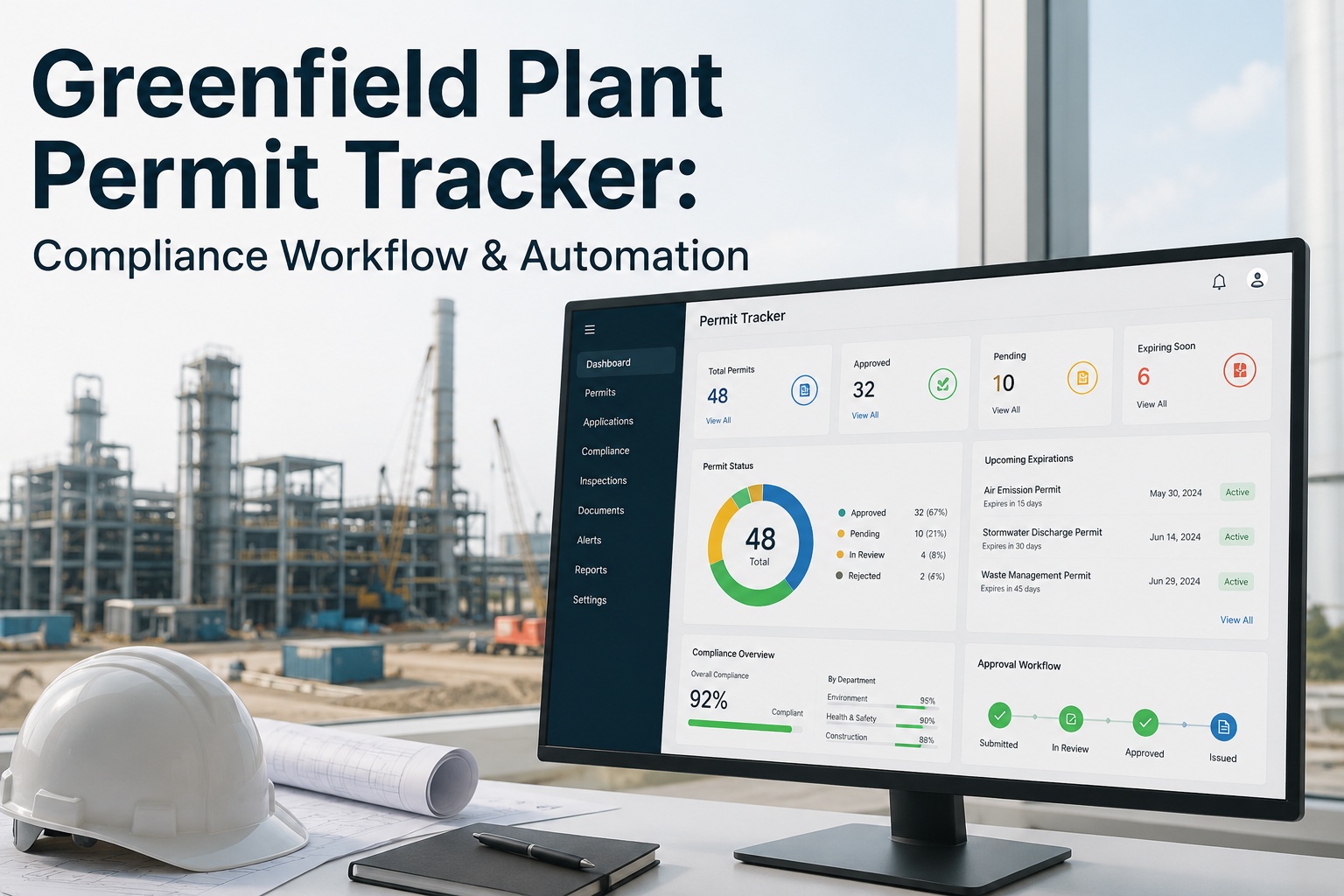
A greenfield specialty chemicals plant completed 3.5 million construction man-hours across 24 months with zero recordable safety incidents — against an industry baseline TRIR of 3.1 that would have predicted ~55 recordable injuries on a project this size. This case study breaks down the 5-pillar safety program — digital permit-to-work, AI computer vision monitoring, rigorous contractor qualification, predictive risk analytics and real-time KPI dashboards — that closed the gap between industry baseline and a true zero-incident outcome. Book a safety program assessment to apply this approach to your project.
0
Recordable Incidents
Industry baseline (TRIR 3.1) predicted ~55
Peak Workforce
1,200 workers
PSM Regulated
Yes · 1910.119
The Challenge · Why Chemical Construction Is Different
Chemical plant construction sits at the intersection of two high-hazard environments: general construction (1,069 US fatalities in 2024) and chemical processing (OSHA PSM-regulated). A greenfield project introduces additional risks during commissioning — first introduction of hazardous materials, complex interlocks being tested, contractor coordination at peak intensity. This project's baseline risk profile demanded a higher-than-standard safety architecture.
01
OSHA Fatal Four Exposure
Falls, struck-by, caught-in/between, and electrocutions account for 58.6% of construction deaths. Chemical site complexity amplifies all four — confined spaces, elevated piping, mobile equipment, energized systems.
02
PSM & Highly Hazardous Chemicals
14 mandatory PSM elements under 29 CFR 1910.119. PSSR required before HHC introduction. MOC and PHA continuously active across commissioning. Single procedure gap can cascade.
03
Hot Work in Live Environments
Welding, cutting, and grinding adjacent to flammable systems during commissioning. Requires permit-to-work coordination across 8-12 contractor companies operating simultaneously.
04
Contractor Coordination at Scale
1,200 peak workforce across 30+ subcontractor companies. Different safety cultures, different baseline TRIRs, different languages on the same job site. Coordination becomes the safety system.
The 5-Pillar Safety Program
The project team rejected the traditional "paper PTW + monthly inspections" approach in favor of a digitally-instrumented safety architecture. Each pillar reinforced the others — no single technology was load-bearing, and gaps in one were caught by another. This is what produced the zero-incident outcome.
Pillar 1
Digital Permit-to-Work (e-PTW)
Every hot work, confined space, working-at-height, LOTO, and excavation permit issued through digital workflow. Auto-conflict detection prevented simultaneous incompatible permits in the same zone.
Impact
~12,400 permits issued · 0 conflict-related near-misses
Pillar 2
AI Computer Vision Monitoring
Site cameras with AI vision detected PPE non-compliance, unauthorized zone entry, and unsafe behaviors in real-time. Supervisor alerts within 60 seconds of detection.
Impact
~2,800 violations corrected before incidents · 30% improvement in detection
Pillar 3
Contractor Qualification & Pre-Quals
Every contractor company pre-qualified on safety record, TRIR history, EMR, and program maturity. Site induction included plant-specific training before any worker entered the gate.
Impact
3 contractors disqualified pre-bid · 100% inducted before site entry
Pillar 4
Predictive Risk Analytics
Multi-variable sensor data (gas, temperature, vibration, weather) plus permit patterns fed predictive models. High-risk-day alerts triggered enhanced supervision and toolbox talks.
Impact
14 high-risk days flagged · 72+ hour advance warning on near-misses
Pillar 5
Real-Time KPI Dashboards
Three dashboards — floor supervisor, safety manager, executive leadership — each with the metrics that matter for their role. Leading indicators visible before lagging indicators triggered.
Impact
TRIR calculated in real-time · weekly trend reviews with C-suite
Results · By the Numbers
The 5-pillar program produced measurable outcomes across leading and lagging safety indicators. The headline metric — zero recordable incidents across 3.5 million man-hours — represents the most visible outcome, but the leading indicators tell the story of how it happened.
0
Recordable Incidents
vs ~55 predicted by industry TRIR baseline
0
Lost-Time Injuries
Zero days away from work for any worker
0.00
Total Recordable Rate
vs industry construction average of 3.1
2,800+
Vision-Detected Corrections
PPE, zone, behavior — caught before incident
12,400
Digital Permits Issued
Zero permit-conflict near-misses
94%
Near-Miss Reporting Rate
vs ~30% industry baseline · culture of disclosure
Build a Zero-Incident Safety Architecture for Your Project
iFactory's safety practice deploys the same 5-pillar program — digital PTW, AI computer vision, contractor management, predictive analytics, real-time dashboards — for greenfield chemical, pharmaceutical, and high-hazard manufacturing projects.
Technology Stack Deployed
The case study program ran on a unified digital safety platform integrating five technology layers. Each layer captured data that fed the others — the e-PTW system informed vision monitoring zones, the predictive analytics consumed sensor data plus permit patterns, and dashboards rolled up everything for leadership visibility.
Layer 1
e-PTW Platform
Digital permit workflow, auto-conflict detection, mobile sign-off, audit trail
Layer 2
AI Computer Vision
PPE detection, zone violation alerts, unsafe behavior recognition · 60-sec alerting
Layer 3
Wearable + Environmental Sensors
Gas detectors, fall-protection telemetry, heat stress monitoring, location tracking
Layer 4
Predictive Risk Engine
ML models flagging high-risk days · weather + permit + sensor + workforce signals
Layer 5
Role-Based KPI Dashboards
Supervisor (real-time) · Safety mgr (daily) · Executive (weekly TRIR + leading indicators)
Want the same digital stack for your chemical plant build? Book a tech stack demo with our safety platform team.
Contractor Safety Management
30+ subcontractor companies meant safety couldn't be the GC's program alone — it had to be everyone's, with non-negotiable standards. The contractor management lifecycle below ran continuously from pre-bid through demobilization.
01
Pre-Qualification
EMR, OSHA 300A logs, TRIR history, program maturity audit. Disqualified 3 bidders.
02
Site Induction
Plant-specific orientation, HHC awareness, e-PTW training, emergency response.
03
Daily Coordination
Pre-task FLHAs, JSAs reviewed, permit issuance, zone-by-zone work plans.
04
Continuous Monitoring
Vision system + supervisor walkdowns + sensor data feed contractor scorecards.
05
Performance Reviews
Weekly scorecard reviews. Underperformers re-trained or removed from site.
Need a contractor safety program for your multi-contractor project? Connect with our contractor management team for a program review.
5 Lessons Learned
Zero-incident outcomes don't come from one heroic effort — they come from a handful of disciplined choices made consistently. These five lessons transferred from this project to subsequent greenfield safety programs.
01
Leading Indicators > Lagging Indicators
Don't wait for recordables to react. Near-miss reporting (94% rate on this project), PPE corrections, and predictive risk scores show problems before they become incidents.
02
Digital PTW Isn't Optional at Scale
Paper permits with 1,200 workers and 30 contractors create coordination chaos. Auto-conflict detection alone prevented multiple incompatible-permit situations weekly.
03
Contractor Pre-Qual Is the First Defense
3 disqualified bidders saved the project from inheriting their TRIR. Pre-qualification cost weeks; not pre-qualifying would have cost months in remediation and incidents.
04
AI Vision Pays Back Within 90 Days
2,800 corrections — most before supervisors would have caught them — turned vision monitoring into a leading-indicator factory. Payback isn't even safety alone; productivity improved too.
05
Executive Visibility Drives Culture
Real-time C-suite dashboards changed the conversation from "what happened" to "what's happening." Weekly executive reviews kept safety at the same priority as schedule.
Apply these lessons to your next chemical or PSM-regulated build. Book a project safety scoping session with our greenfield team.
Expert Perspective
Zero-incident outcomes look like luck to anyone who hasn't been inside one. They're not luck — they're the visible output of a thousand invisible decisions made correctly. The supervisor who refused to issue a hot work permit because the gas reading drifted 2% above baseline. The vision system flagging an unbuckled harness 40 feet up. The pre-task JSA that catches a missing isolation point before LOTO is applied. Multiply those moments across 3.5 million man-hours and the recordable count becomes zero by mathematical inevitability. The safety teams that get there share one belief: every incident is preventable. Every single one.
— Chemical Plant Construction Safety Best Practice
3.1
US construction TRIR · industry baseline
58.6%
Construction deaths from OSHA Fatal Four
30-40%
Incident reduction · AI safety platforms
14
Mandatory PSM elements · 1910.119
Bottom Line · Zero Is a Decision, Not an Aspiration
Zero recordable incidents on a 3.5-million-man-hour chemical plant build isn't an outlier — it's the predictable output of an integrated digital safety architecture run with discipline. Every project that achieves this outcome shares the same playbook: leading indicators drive decisions, digital PTW handles coordination at scale, AI vision catches what humans miss, contractor pre-qualification keeps high-baseline-TRIR companies off the site, predictive analytics flag tomorrow's risks today, and executive dashboards make safety as visible as schedule. Skip any pillar and the math reverts to industry averages. Run all five and zero becomes inevitable.
Take Zero-Incident Construction From Aspirational to Operational
iFactory's safety practice deploys the same 5-pillar program documented in this case — digital PTW, AI vision, contractor management, predictive analytics, real-time dashboards. Built for greenfield chemical, pharma, and high-hazard projects.
Frequently Asked Questions
How did the project achieve zero recordable incidents?
A 5-pillar integrated safety architecture: digital permit-to-work (12,400 permits issued with auto-conflict detection), AI computer vision (2,800 corrections before incidents), contractor pre-qualification (3 disqualified bidders), predictive risk analytics (14 high-risk days flagged), and real-time KPI dashboards for floor, manager, and exec roles.
What is TRIR and what's the industry baseline?
Total Recordable Incident Rate = recordable injuries per 200,000 work hours. US construction industry average: 3.1. US manufacturing average: 2.8. On 3.5M man-hours, a TRIR of 3.1 predicts approximately 55 recordable injuries. This project achieved 0 — a TRIR of 0.00.
What is a digital permit-to-work (e-PTW) system?
A digital workflow for hot work, confined space, working-at-height, LOTO, and excavation permits. Key benefits: auto-conflict detection (catches incompatible simultaneous work), audit-proof trail, mobile sign-off, real-time site visibility, and expiry alerts. Replaces paper-based PTW that fails at multi-contractor scale.
How does AI computer vision improve construction safety?
Site cameras with AI vision detect PPE non-compliance (hard hat, harness, gloves, glasses), unauthorized zone entry, and unsafe behaviors in real-time. Supervisor alerts within 60 seconds. Industry data shows AI safety platforms reduce incidents by 30-40% by catching what humans miss between walkdowns.
Can this 5-pillar approach work for non-chemical projects?
Yes. The pillars transfer to any greenfield manufacturing project:
pharma, semiconductor, EV battery, F&B. Chemical plants need extra emphasis on PSM compliance (1910.119) and HHC commissioning, but the architecture — digital PTW + AI vision + contractor mgmt + predictive analytics + dashboards — works across high-hazard construction.
Book an architecture review for your specific project type.