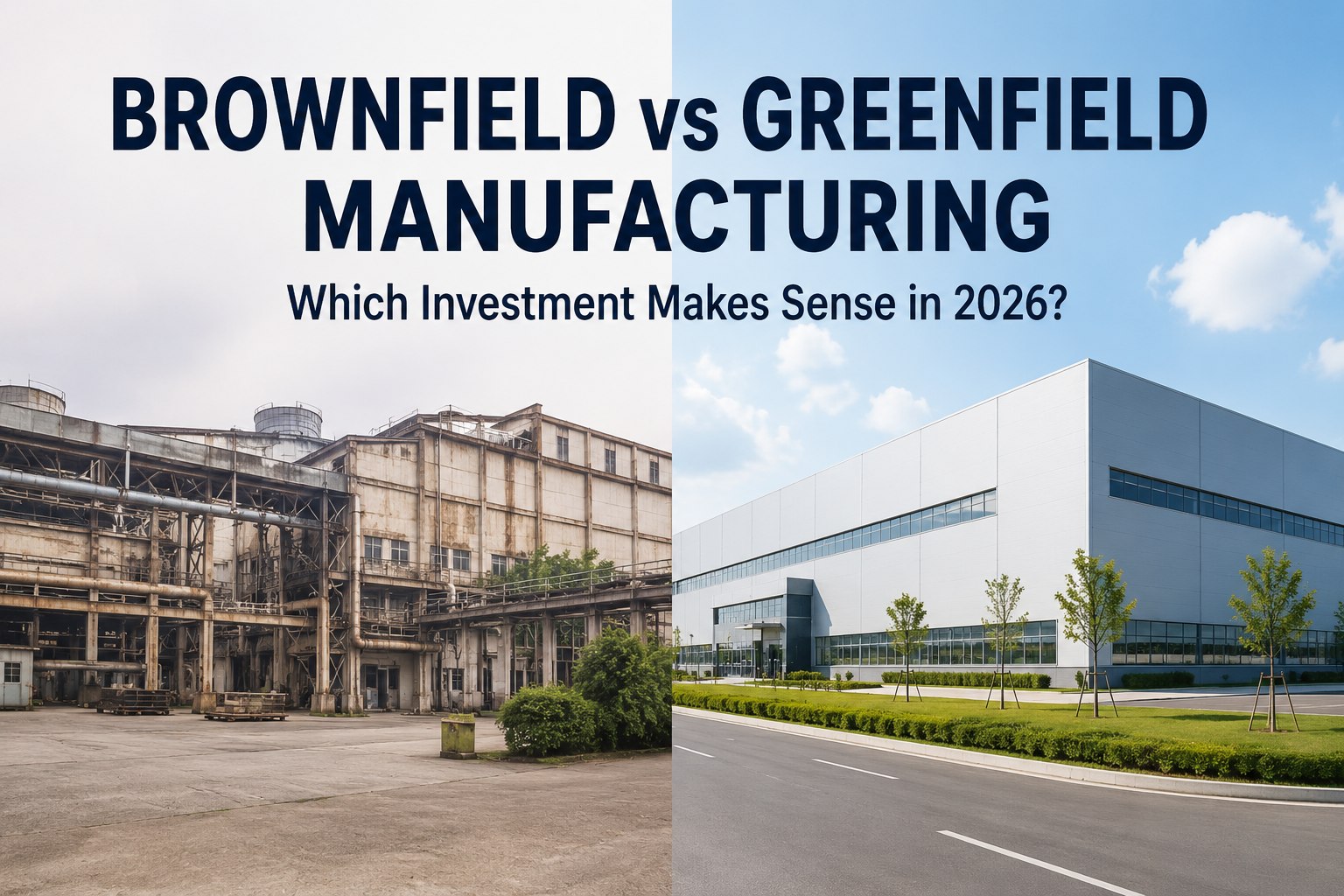
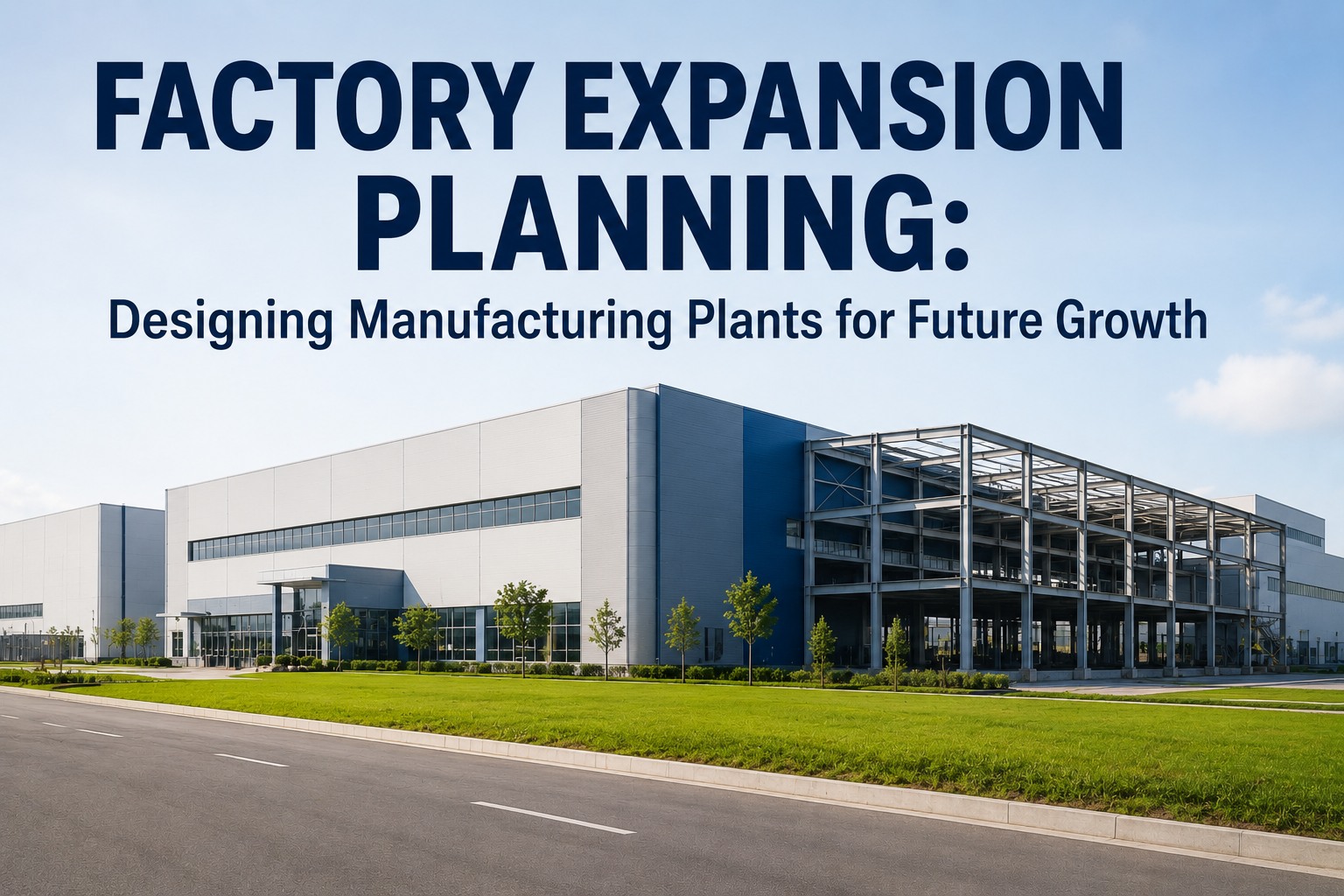
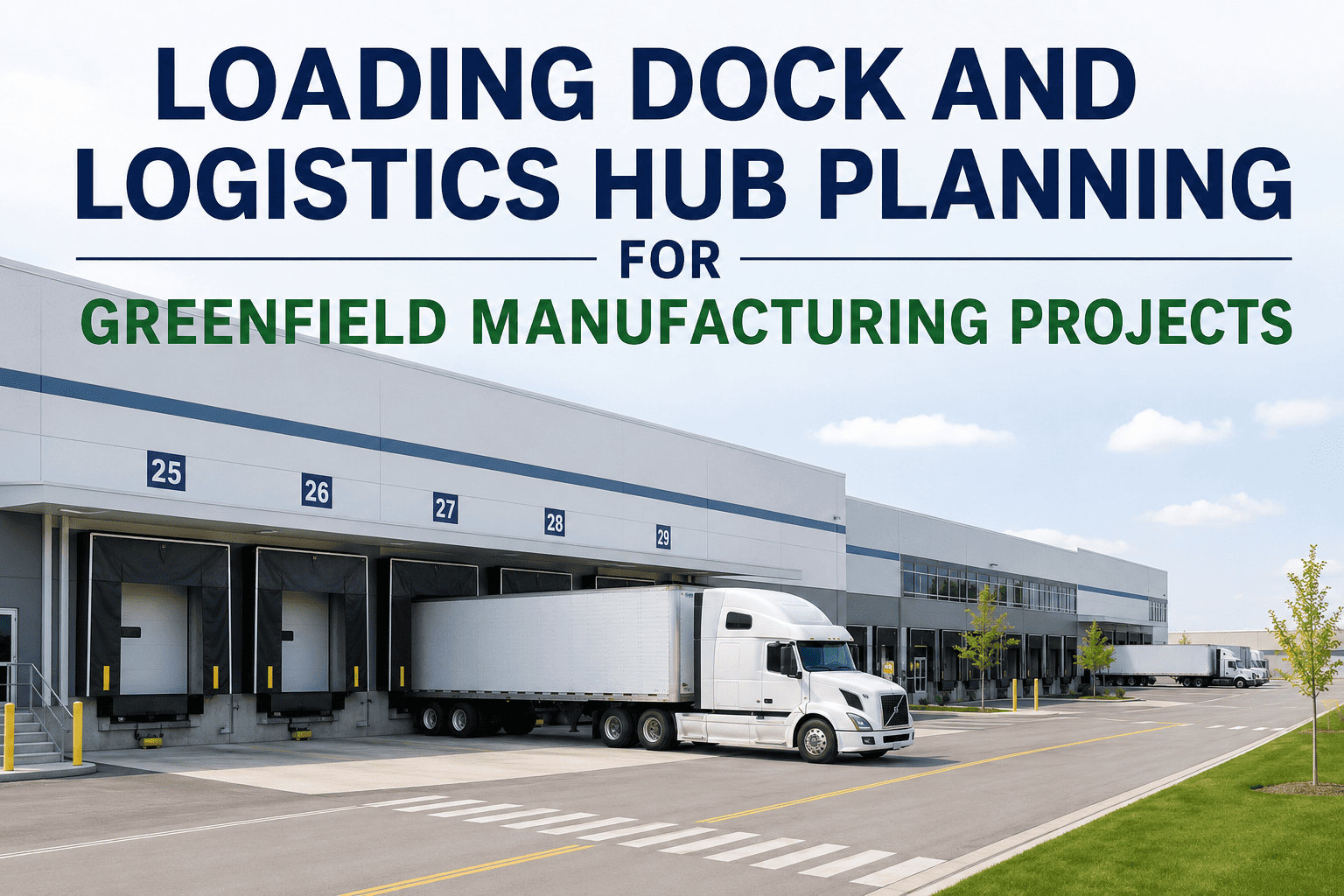
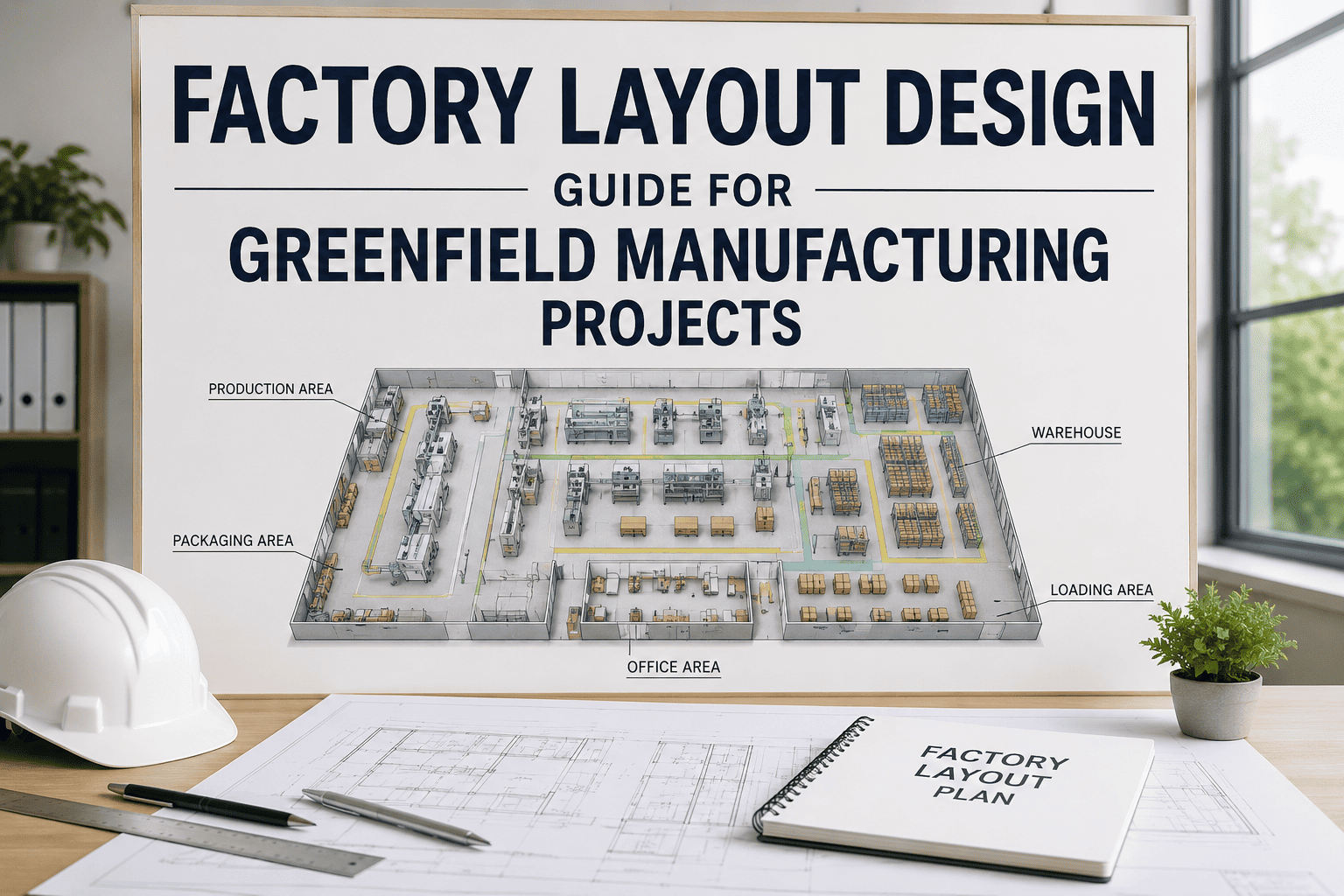
Only 14% of manufacturers choose pure greenfield. The other 86% face the same decision you're facing: build new from scratch or renovate what already exists. The wrong call costs $5-15M in stranded CAPEX or 18 months of capacity you didn't get. Greenfield costs 40-60% more upfront but delivers 95% OEE by month three. Brownfield ships 6-12 months faster but often hits performance ceilings at 60-80% of potential. This guide breaks down the cost math, timeline reality, ROI curves, and decision framework that separates the right answer from the easy one. Book a project advisory session to apply this to your specific decision.
Option A
Greenfield
Build new · maximum design freedom
CAPEX$12M-$55M
Timeline12-24 months
OEE @ Mo 3~95%
5-Yr TCO↓ up to 80%
Option B
Brownfield
Renovate existing · faster to market
CAPEX$6M-$22M
Timeline6-12 months
OEE Typical~71%
Tax IncentivesHigher
Defining the Decision
Greenfield and brownfield aren't just project labels — they're fundamentally different investment philosophies with different risk profiles, technology ceilings, and ROI curves. Understanding what each actually involves is the first step to making the right call.
Greenfield
Build From Scratch
New facility on undeveloped or cleared land. Complete design freedom — layout, utilities, automation, digital infrastructure all optimized from concept. No legacy constraints.
StrengthMaximum design freedom + technology ceiling
WeaknessHigher CAPEX, longer to revenue
Best forCapacity additions, new geographies, tech-forward production
Brownfield
Renovate Existing
Retrofit, expand, or repurpose an existing facility — whether your own underutilized site or a recently-closed industrial asset. Existing utilities, structure, and permits reduce CAPEX and timeline.
StrengthLower CAPEX + faster time-to-production
WeaknessLegacy constraints, hidden integration costs
Best forCapacity expansion, modernization, capital-constrained projects
Cost, Timeline & ROI · The Real Numbers
The headline cost difference is real — but it's not the whole story. The metrics below come from 2024-2026 industrial project data. Look at the WINNER column carefully: neither option wins on every dimension, and the "right" answer depends on which dimensions matter most for your project.
Metric
Greenfield
Brownfield
Winner
Initial CAPEX
$12M-$55M
$6M-$22M
Brownfield · 40-60% lower
Time to Production
12-24 months
6-12 months
Brownfield · 6-12mo faster
Design Flexibility
Complete freedom
Constrained by existing structure
Greenfield · no legacy limits
OEE at Steady State
~95% (mo 3)
~71% typical
Greenfield · 24pt advantage
5-Year TCO
Up to 80% lower
Higher ongoing costs
Greenfield · efficiency wins
Technology Adoption
45% faster
Retrofit constraints
Greenfield · clean slate
Year-3 ROI
25% higher
Faster early payback
Greenfield · long-term
Tax Incentives
Limited
Cleanup credits, abatements
Brownfield · government support
Hidden Cost Risk
Construction overruns
Integration surprises
Both risk >60% overrun
Run a Defensible Brownfield vs Greenfield Analysis
iFactory's greenfield advisory team builds quantified comparison models — 5-year TCO, scenario analysis, ramp curves, technology ceiling assessment — that survive board scrutiny. Vendor-neutral. Data-driven. Built for the $10M+ decision.
When Brownfield Wins
Brownfield isn't the "cheap alternative" — it's the right call in specific scenarios where speed, capital efficiency, or existing asset value outweigh greenfield's long-term advantages. Five situations where brownfield is the smarter investment.
01
Speed Is the Constraint
Customer commitments, market window, or competitive threat require production in < 12 months. Greenfield can't deliver — brownfield often can.
02
Capital Is Constrained
Board approval capped at $20M, debt covenants tight, or competing CAPEX priorities. Brownfield's 40-60% lower CAPEX makes the project financeable.
03
Existing Asset Has Bones
Owned or available facility with good structure, adequate utilities, and reasonable floor plate. Renovating beats abandoning a depreciated asset.
04
Capacity Is Incremental
Adding a second line to a proven product, not launching new technology. Brownfield captures the existing infrastructure investment.
05
Tax Incentives Tilt Math
EPA cleanup credits, state brownfield grants, and Opportunity Zone benefits can shift 15-25% of project economics in favor of redeveloping contaminated sites.
Brownfield fits your situation? Schedule a brownfield feasibility assessment with our project team.
When Greenfield Wins
Greenfield is the right call when the project's long-term economics or technical requirements can't be met by retrofitting an existing facility. Five scenarios where the higher CAPEX pays back many times over.
01
New Technology Doesn't Fit Old Buildings
AI computer vision needs camera infrastructure. AMRs need column spacing. Vertical lift modules need ceiling height. Legacy buildings often physically can't accommodate modern automation.
02
Long-Term TCO Beats Initial CAPEX
5-year TCO of greenfield can be 80% lower than retrofit. If horizon is 10+ years, the math always favors greenfield over band-aid renovations.
03
New Geography or Market
Reshoring to US, expanding into EU, building near customer concentration. No existing asset to renovate — greenfield is the only option.
04
Regulated Industry Requirements
Pharmaceutical cleanrooms, semiconductor fabs, food-grade facilities. Compliance retrofitting often costs more than new build by the time validation is complete.
05
ESG & Energy Performance
Net-zero commitments, ZLD water recycling, renewable energy integration. Designing for ESG from scratch beats bolting it onto legacy infrastructure.
Greenfield aligns with your strategic horizon? Connect with our greenfield design team for a concept review.
The Hybrid Path · What Most Manufacturers Actually Do
The most common executive mistake is treating brownfield vs greenfield as binary. Most successful manufacturing investments are hybrid — brownfield for core continuity, greenfield principles where redesign unlocks ROI. Four hybrid patterns we see in practice.
Pattern 1
Brownfield Shell + Greenfield Process Lines
Reuse the existing building, utilities, and footprint. Install greenfield-grade automation, AMRs, vision systems, and digital infrastructure inside. Best when the building has good bones but the production system is outdated.
Pattern 2
Greenfield Core + Brownfield Auxiliary
Build new production hall greenfield. Keep existing warehouse, office, or utility buildings on adjacent land. Captures most greenfield benefits at 70-80% of full greenfield CAPEX.
Pattern 3
Phased Brownfield-to-Greenfield Migration
Start with brownfield to capture quick revenue. Build greenfield in parallel for 24-36 months. Migrate production once greenfield is online, then sell or repurpose the brownfield site.
Pattern 4
Distributed Network · Both Approaches
Greenfield for new geographies and tech-forward production. Brownfield for capacity expansion in established markets. The network-level decision considers each site individually rather than a single corporate philosophy.
Designing a hybrid strategy for multi-site network? Book a network strategy session with our greenfield advisors.
Decision Framework · 6 Questions That Settle It
Stop debating philosophy. Run your project through these six questions in order. By question six, the right answer is usually obvious — and the team will agree on it.
Q1
Do you have time? Is production needed in < 12 months?
Yes → Brownfield
Q2
Will new technology (AI vision, AMRs, vertical storage) fit existing buildings?
No → Greenfield
Q3
Is the planning horizon 10+ years with high-volume production?
Yes → Greenfield (TCO wins)
Q4
Is CAPEX capped < $25M with debt covenant constraints?
Yes → Brownfield
Q5
Is the project entering a new geography or regulated industry?
Yes → Greenfield
Q6
Could a hybrid (brownfield shell + greenfield internals) capture both benefits?
Often yes → Hybrid
Expert Perspective
The brownfield-vs-greenfield calls we see go wrong share one pattern: someone fell in love with the answer before running the numbers. The CFO loved the lower brownfield CAPEX and missed the integration surprises. The COO loved the greenfield design freedom and ignored the 18-month revenue gap. Real decision discipline means modeling both options to the same level of detail — same TCO horizon, same risk-adjusted ROI, same scenario tree on demand and ramp. The right answer reveals itself in the data. Decisions made before the modeling is done aren't decisions — they're rationalizations.
— Manufacturing CAPEX Best Practice
14%
Manufacturers choosing pure greenfield
60%
Average capital project schedule overrun
70%
Average capital project budget overrun
15-25%
Greenfield IRR target range
Bottom Line · Run the Model, Then Decide
Brownfield wins on speed, capital efficiency, and tax incentives. Greenfield wins on technology ceiling, long-term TCO, and design freedom. Most successful manufacturers run hybrid strategies — capturing greenfield benefits where they matter, brownfield economics where they pay. The wrong answer isn't choosing one over the other — it's choosing before the modeling is done. Build the 5-year TCO model both ways. Stress-test against demand scenarios. Quantify the integration risks. Then let the numbers settle the debate. The companies that get this right turn $10M+ CAPEX decisions into competitive advantages. The ones that don't turn them into post-mortems.
Get a Quantified Brownfield vs Greenfield Comparison
iFactory's project advisory team builds defensible comparison models for $10M+ manufacturing CAPEX decisions — 5-year TCO, scenario analysis, ramp curves, technology ceiling assessment, board-ready outputs. Vendor-neutral. Data-driven.
Frequently Asked Questions
What is the difference between brownfield and greenfield manufacturing?
Greenfield = building a new facility from scratch on undeveloped land. Complete design freedom, higher CAPEX ($12-55M), longer timeline (12-24 months). Brownfield = renovating or repurposing an existing facility. Lower CAPEX ($6-22M), faster (6-12 months), but constrained by legacy structure. Only 14% of manufacturers choose pure greenfield; 86% go brownfield or hybrid.
Which costs more — greenfield or brownfield?
Greenfield costs 40-60% more upfront. Typical CAPEX: $12-55M (greenfield) vs $6-22M (brownfield). But 5-year TCO often favors greenfield by up to 80% due to higher OEE (~95% vs ~71%), better energy efficiency, and modern automation. The right question isn't "which costs less" but "which delivers better TCO over your planning horizon."
When should I choose greenfield over brownfield?
Choose greenfield when: 1) New technology (AI vision, AMRs, vertical storage) won't fit existing buildings. 2) Planning horizon is 10+ years with high volume. 3) Entering new geography or regulated industry (pharma, semi, food-grade). 4) ESG/net-zero commitments require ground-up design. Greenfield's higher CAPEX pays back through superior OEE and TCO.
When does brownfield make more sense than greenfield?
Brownfield wins when: 1) Speed matters (production needed <12 months). 2) Capital constrained (board cap <$25M). 3) Existing asset has good bones (structure, utilities, footprint). 4) Adding incremental capacity to proven products. 5) Brownfield tax incentives (EPA cleanup credits, state grants) tilt the math. Faster time-to-revenue often wins.
Can I combine brownfield and greenfield approaches?
Yes — hybrid is the most common pattern. Examples:
brownfield shell + greenfield process lines (reuse building, install modern automation),
greenfield core + brownfield auxiliary (new production hall, keep existing warehouse), or
phased migration (brownfield now for revenue, build greenfield in parallel, migrate later).
Book a hybrid strategy session to design yours.