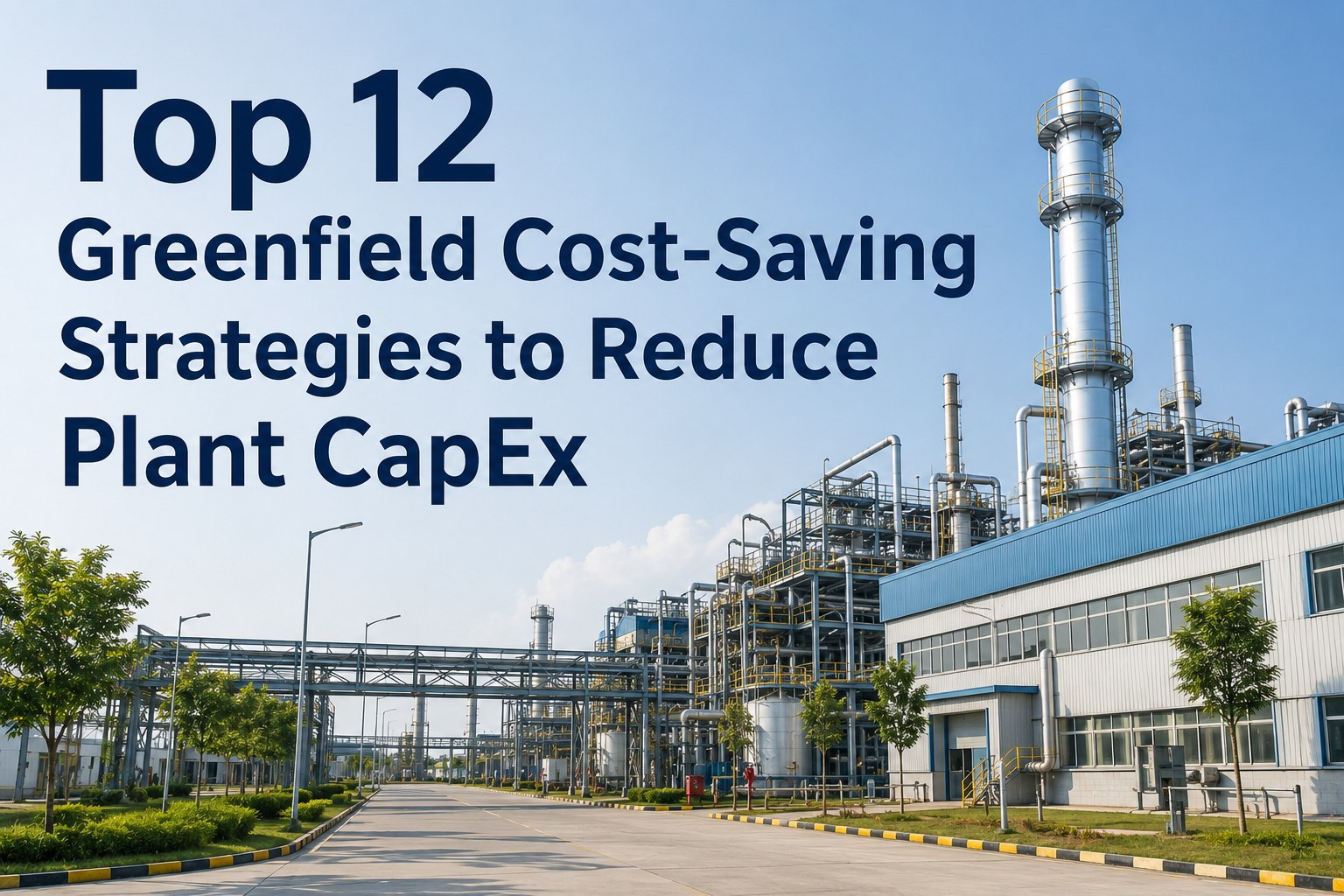
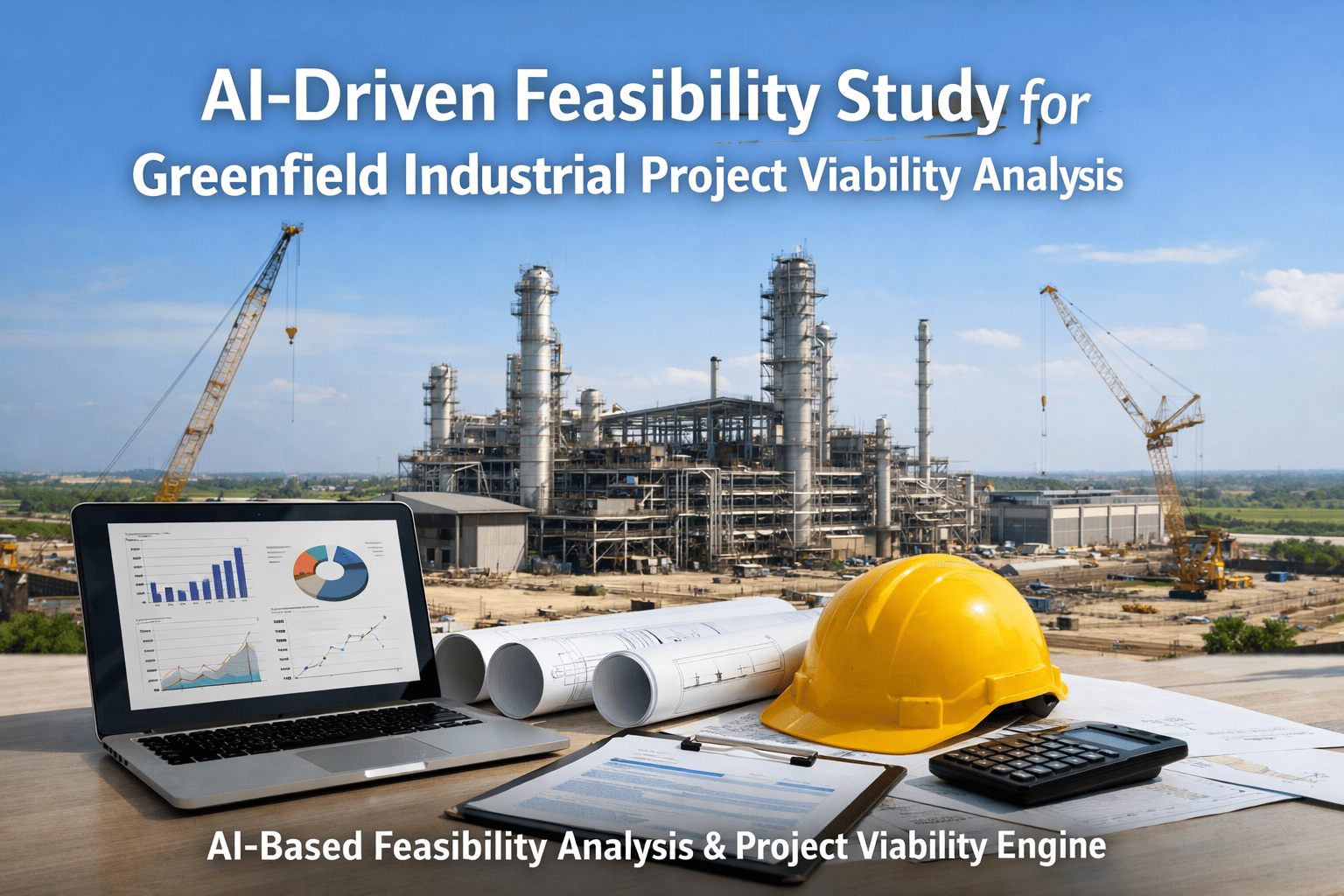
McKinsey's analysis of over 500 large capital projects found that the average cost overrun amounts to $1.3 billion per project — with overruns averaging 79% above initial budgets and delays running 52% beyond original timelines. Ninety-eight percent of megaprojects suffer cost overruns exceeding 30%. These numbers are not outliers — they are the industry baseline. The root cause is consistently the same: decisions made with incomplete data during the planning phase, then locked into concrete and steel before anyone realizes the estimate was wrong. AI-driven cost modeling changes this equation fundamentally. Instead of building a financial plan based on assumptions, AI simulates thousands of scenarios — testing every CAPEX line item, OPEX projection, and revenue variable against historical data, market conditions, and risk profiles — before the first purchase order is issued. iFactory delivers AI-powered cost optimization and ROI modeling for greenfield manufacturing plants — book a 30-minute consultation to see how simulation-driven financial planning can protect your next investment.
Cost Optimization & ROI Modeling
Every Dollar Modeled.
Every Risk Quantified.
AI-Driven CAPEX Optimization, Scenario Simulation & Investment Analysis for Greenfield Plants
Book a Free Consultation
98%
Of Megaprojects Suffer 30%+ Cost Overruns (McKinsey)
$1.3B
Average Cost Overrun Per Large Capital Project
79%
Average Budget Overrun Across 500+ Projects Analyzed
25%
CAPEX Reduction Achievable with Mature Planning Processes
Why Greenfield Projects Hemorrhage Capital
The construction industry loses $1.6 trillion annually to inefficiency. The average large capital project runs 60% over schedule and 70% over budget. But these are not random failures — they trace to a predictable set of root causes that occur during the planning and estimation phase, long before the first shovel breaks ground.
32%
Poor Estimation During Planning
The single largest contributor to project failure. Optimistic cost assumptions, underestimated complexity, and insufficient benchmarking produce budgets that are wrong before construction begins.
28%
Design Errors & Scope Changes
Mid-project design changes cost 10–50x more than catching them during the planning phase. Incomplete specifications and evolving requirements drive cascading rework across all trades.
22%
Schedule Compression & Labor Gaps
Unrealistic timelines force overtime premiums, subcontractor markups, and material expediting fees. Skilled labor shortages — affecting 2.4M+ unfilled US manufacturing jobs — compound delays.
18%
Supply Chain & Material Volatility
Tariff changes, commodity price swings, and logistics disruptions make fixed-price estimates obsolete within months. Long-lead equipment procurement adds schedule risk at every milestone.
How AI Transforms Greenfield Cost Modeling
Traditional cost estimation relies on historical averages, expert judgment, and spreadsheet-based sensitivity analysis. AI-driven cost modeling replaces guesswork with simulation — running thousands of scenarios across every cost variable to identify the most likely outcomes, worst-case exposures, and highest-leverage optimization opportunities before the financial investment decision is made.
The 6-Layer Cost Optimization Framework
iFactory applies a structured six-layer framework to greenfield cost optimization — each layer addressing a different dimension of capital efficiency, from strategic investment sizing through operational cost reduction.
01
Investment Sizing & Feasibility
Right-size the plant capacity against demand forecasts, market scenarios, and phased expansion options. Avoid the two costliest mistakes: building too large (stranded capital) or too small (lost market share and expensive Phase 2 expansion).
02
CAPEX Line-Item Optimization
AI analyzes every major equipment purchase, construction cost, and infrastructure investment against benchmark databases. Identifies overspecified equipment, redundant infrastructure, and procurement timing opportunities that reduce total CAPEX 15–35%.
03
Layout & Process Optimization
Digital twin simulation tests multiple plant configurations to minimize material handling costs, reduce building footprint, and optimize utility routing. One semiconductor fab saved 10%+ on total project cost through generative scheduling alone.
04
OPEX Forecasting & Energy Modeling
Model operating costs across the plant lifetime — energy consumption, maintenance schedules, staffing levels, and consumables — before committing to a design. AI-based load balancing alone cuts energy costs 20–40%.
05
Schedule & Procurement Optimization
Generative scheduling tests thousands of construction sequence alternatives to find the fastest, lowest-cost path. One automotive OEM saved $40M and shaved a month from delivery using AI-optimized tooling installation scheduling.
06
ROI Modeling & Payback Analysis
Build dynamic financial models that track IRR, NPV, and payback period across multiple revenue, cost, and market scenarios. Investors and boards see probabilistic returns — not single-point estimates — before committing capital.
What AI-Driven ROI Modeling Actually Looks Like
Traditional ROI analysis produces a single number: "This project will achieve 18% IRR." AI-driven ROI modeling produces a probability distribution: "There is a 75% probability that IRR will fall between 15% and 22%, a 15% probability it will exceed 22%, and a 10% probability it will fall below 15% — with the primary downside drivers being material cost inflation and a 6-month demand ramp delay." This is the difference between hope and informed decision-making.
AI ROI Model Outputs vs Traditional Analysis
Probabilistic IRR Range
Instead of a single IRR number, the model produces a probability distribution showing the likelihood of every return outcome — from best case to worst case — weighted by the risk factors specific to your project.
Sensitivity Waterfall
Identifies which variables have the biggest impact on returns. Does a 10% steel price increase hurt more than a 3-month construction delay? The model quantifies the answer so you know where to focus risk mitigation.
Scenario Comparison Dashboard
Compare 3–5 plant configurations side by side: different capacities, automation levels, phasing strategies, and financing structures — each with full NPV, IRR, and payback projections.
Break-Even Mapping
Shows exactly what combination of capacity utilization, product price, and operating cost is required to reach positive cash flow — and how long each scenario takes to achieve it under different market conditions.
15–35%
CAPEX Reduction Through Structured Pre-Investment Optimization
2–4%
ROIC Improvement with Mature Capital Planning Processes
$40M+
Saved by One OEM Using AI Schedule Optimization
10%+
Total Cost Cut via Generative Scheduling in Semiconductor Fab
Where the Biggest Savings Hide in Greenfield Projects
Cost optimization is not about cutting corners. It is about finding overspecification, redundancy, and timing inefficiencies that add cost without adding value. The biggest savings are typically found in five areas that most traditional planning processes overlook.
Equipment Right-Sizing
10–25% savings
Engineers routinely overspecify equipment by 20–40% to create "safety margins." AI benchmarking against actual operational data from comparable plants identifies where specifications can be optimized without compromising performance.
Building Footprint Optimization
8–15% savings
Digital twin layout simulation often reveals that the same throughput can be achieved in 10–20% less floor space through optimized material flow, denser equipment placement, and smarter buffer zone design.
Utility Infrastructure Sizing
12–20% savings
WAGES (Water, Air, Gas, Electricity, Steam) systems are frequently oversized to handle worst-case demand that rarely materializes. Simulation-based utility modeling right-sizes infrastructure from day one.
Construction Sequencing
5–15% savings
Generative scheduling identifies faster construction sequences that reduce labor idle time, equipment rental costs, and general conditions overhead. Modular prefabrication strategies compress timelines by 20–30%.
Procurement Timing
5–12% savings
AI-driven procurement models identify optimal ordering windows based on commodity price forecasts, lead time analysis, and supplier capacity utilization — avoiding both rush premiums and excess inventory carrying costs.
Frequently Asked Questions
How much can AI-driven cost modeling actually save on a greenfield project?
Companies with mature CapEx optimization processes reduce capital spend by 15–35% and improve ROIC by 2–4% through better planning, benchmarking, and execution control. One industrial company achieved 35% CAPEX savings through targeted pre-investment optimization sprints on their largest cost areas. An automotive OEM saved $40 million using AI-optimized scheduling alone. The savings compound because early-phase decisions drive 80%+ of total project cost.
What is the difference between traditional ROI analysis and AI-driven ROI modeling?
Traditional analysis produces a single-point estimate based on fixed assumptions. AI-driven modeling produces probabilistic outcomes using Monte Carlo simulation across thousands of scenarios, sensitivity analysis covering all cost interdependencies, and real-time market data integration. The result is not "the project will return 18%" but rather "there is a 75% probability of 15–22% IRR, with material costs and ramp timeline as the primary risk variables."
When in the project lifecycle should AI cost modeling begin?
Before the Final Investment Decision (FID). McKinsey's research demonstrates that the pre-construction phase is where the most value can be captured or lost. Decisions made during feasibility and detailed engineering determine 80% of total project cost. Starting AI modeling after construction begins means the highest-leverage optimization opportunities have already been locked in — or missed.
How does iFactory approach greenfield cost optimization?
iFactory combines digital twin simulation with AI-driven financial modeling to optimize every dimension of a greenfield investment — from CAPEX line-item benchmarking and layout optimization to OPEX forecasting and dynamic ROI tracking. We test thousands of plant configurations, construction sequences, and market scenarios virtually, delivering a financial model that boards and investors can trust because every assumption has been stress-tested.
Stop Guessing. Start Simulating. Invest with Confidence.
iFactory delivers AI-powered cost optimization and ROI modeling for greenfield manufacturing plants. Every CAPEX line item benchmarked. Every OPEX scenario simulated. Every investment decision backed by data, not assumptions.