In the high-stakes environment of lithium-ion battery manufacturing, thermal runaway represents the most catastrophic failure mode, capable of triggering fires, explosions, and massive production halts. As battery plants scale to meet surging demand for electric vehicles and energy storage systems, the risk of undetected cell defects that can lead to thermal runaway grows exponentially. Traditional quality control methods, which rely on periodic sampling and post-production testing, are no longer sufficient to ensure safety in high-volume production. This comprehensive guide explores how advanced AI-driven monitoring systems analyze process signals in real time to identify the subtle defect patterns that precede thermal runaway, enabling proactive intervention and dramatically reducing risk. By integrating machine learning algorithms directly into production lines, manufacturers can detect anomalies such as internal short circuits, electrolyte contamination, and electrode misalignment before they escalate into catastrophic failures. For battery safety leads and plant managers seeking to implement robust prevention strategies, this deep dive offers actionable insights into the technology, implementation, and ROI of AI-based thermal runaway prevention. Book a Demo to see how iFactory's AI platform can transform your battery safety protocols.
AI-Powered Thermal Runaway Prevention for Battery Plants
Real-time detection of defect patterns that precede failure, ensuring safety and operational continuity.
Secure Your Battery Production Today
Implement AI-driven monitoring to prevent thermal runaway and protect your assets.
Understanding Thermal Runaway in Battery Manufacturing
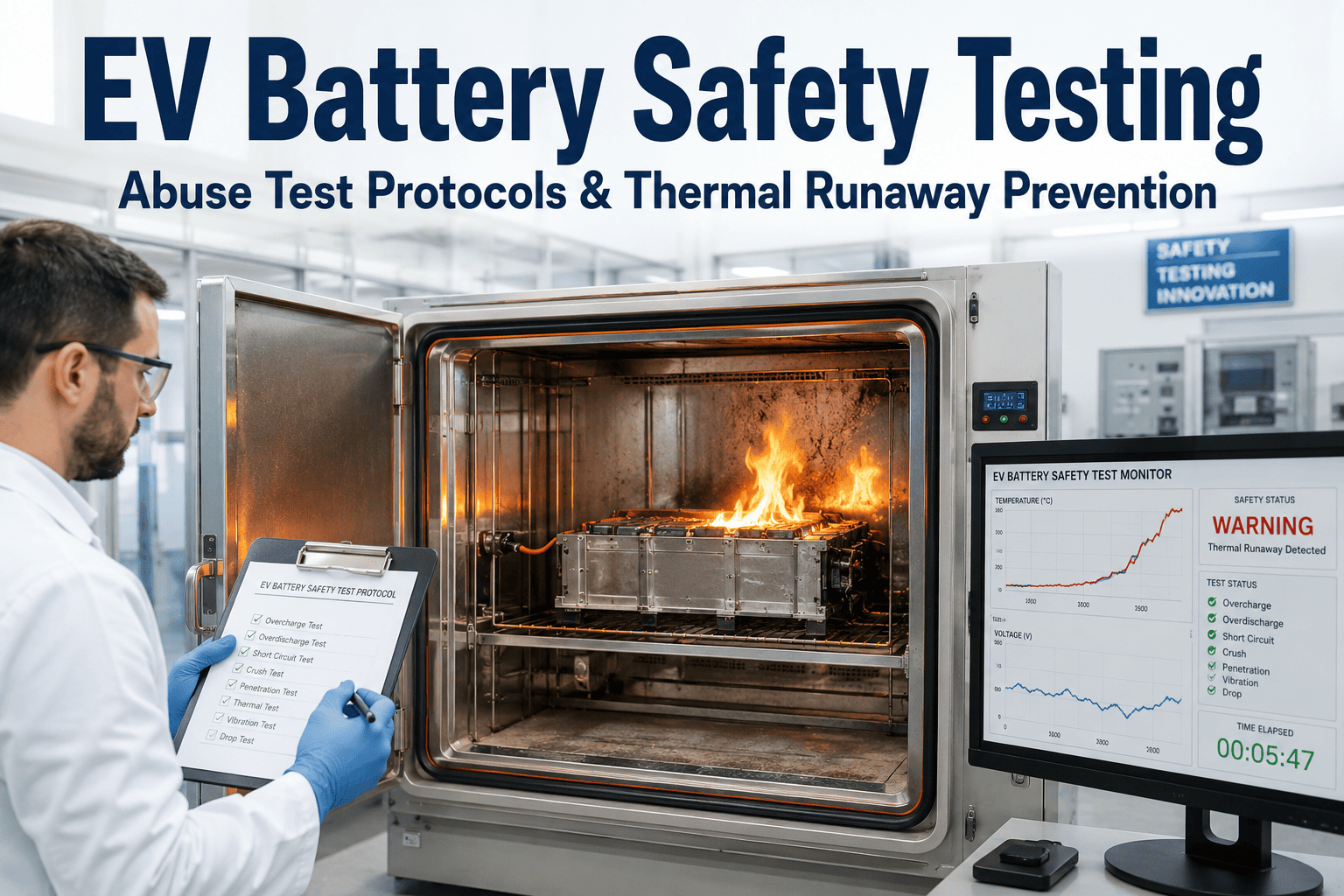
Thermal runaway is a self-accelerating exothermic reaction within a lithium-ion cell that occurs when internal temperatures rise uncontrollably, often triggered by defects such as internal short circuits, separator damage, or electrolyte contamination. In battery plants, the consequences are severe: fires that destroy entire production lines, toxic gas emissions, and weeks of downtime. The challenge lies in detecting the precursor signals—microscopic voltage fluctuations, localized heating, gas evolution—that occur hours or even days before catastrophic failure. Traditional monitoring systems rely on threshold-based alarms that trigger only after a critical event has already started, missing the subtle patterns that AI can identify. By analyzing multivariate time-series data from formation, aging, and testing stages, machine learning models can recognize complex correlations between process parameters and defect signatures, enabling early warning and intervention. This shift from reactive to predictive safety is essential for achieving zero-defect production in high-volume battery manufacturing.
Internal Short Circuit Detection
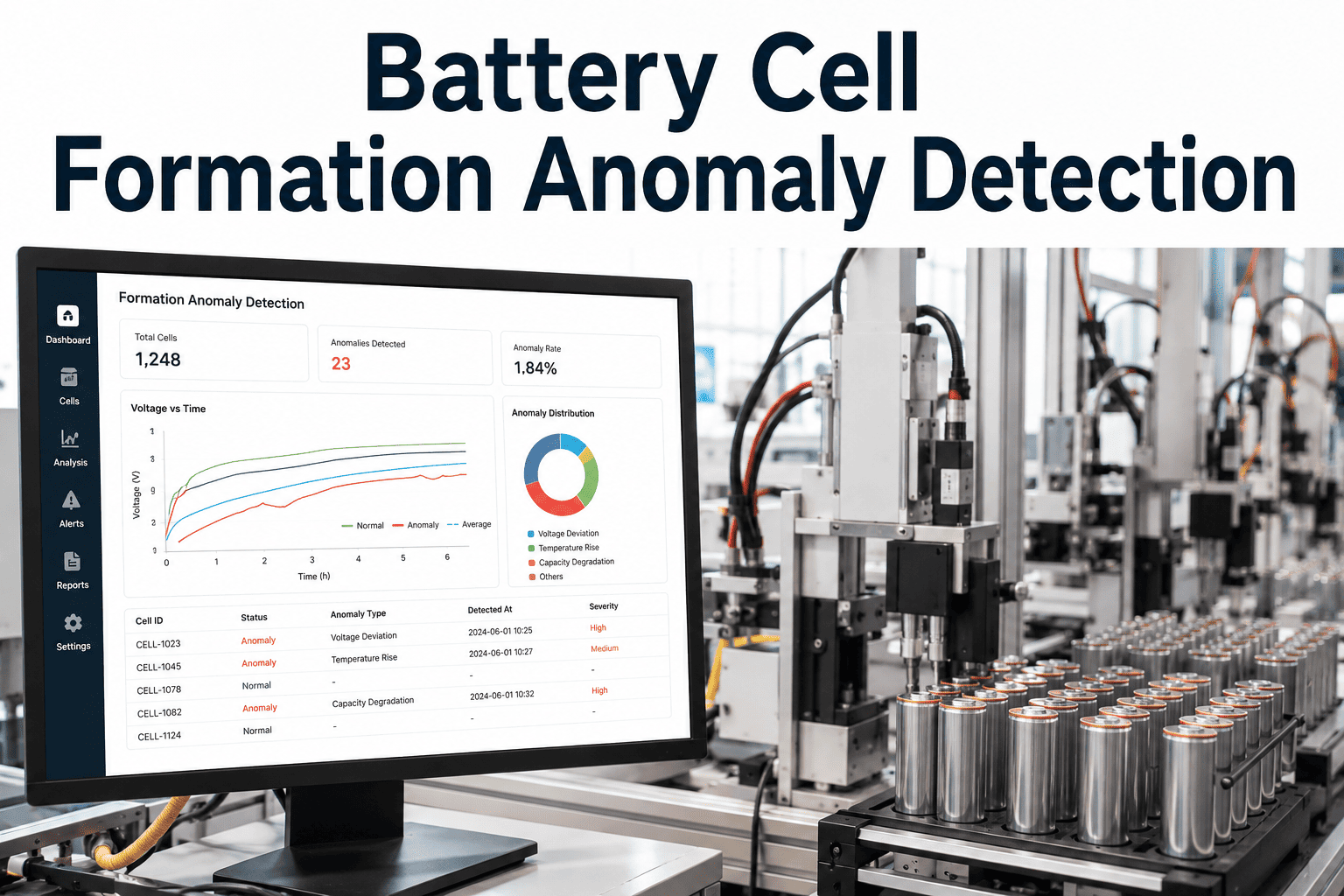
AI models analyze voltage and current patterns during formation cycling to identify micro-shorts that can lead to runaway. Early detection allows cell rejection before assembly.
Electrolyte Contamination Monitoring
Real-time analysis of impedance spectroscopy and gas sensors detects electrolyte decomposition byproducts, signaling contamination that increases runaway risk.
Electrode Misalignment Tracking
Machine vision and process signal correlation identify electrode misalignment during stacking, a common defect that causes uneven current distribution and localized heating.
Thermal Gradient Analysis
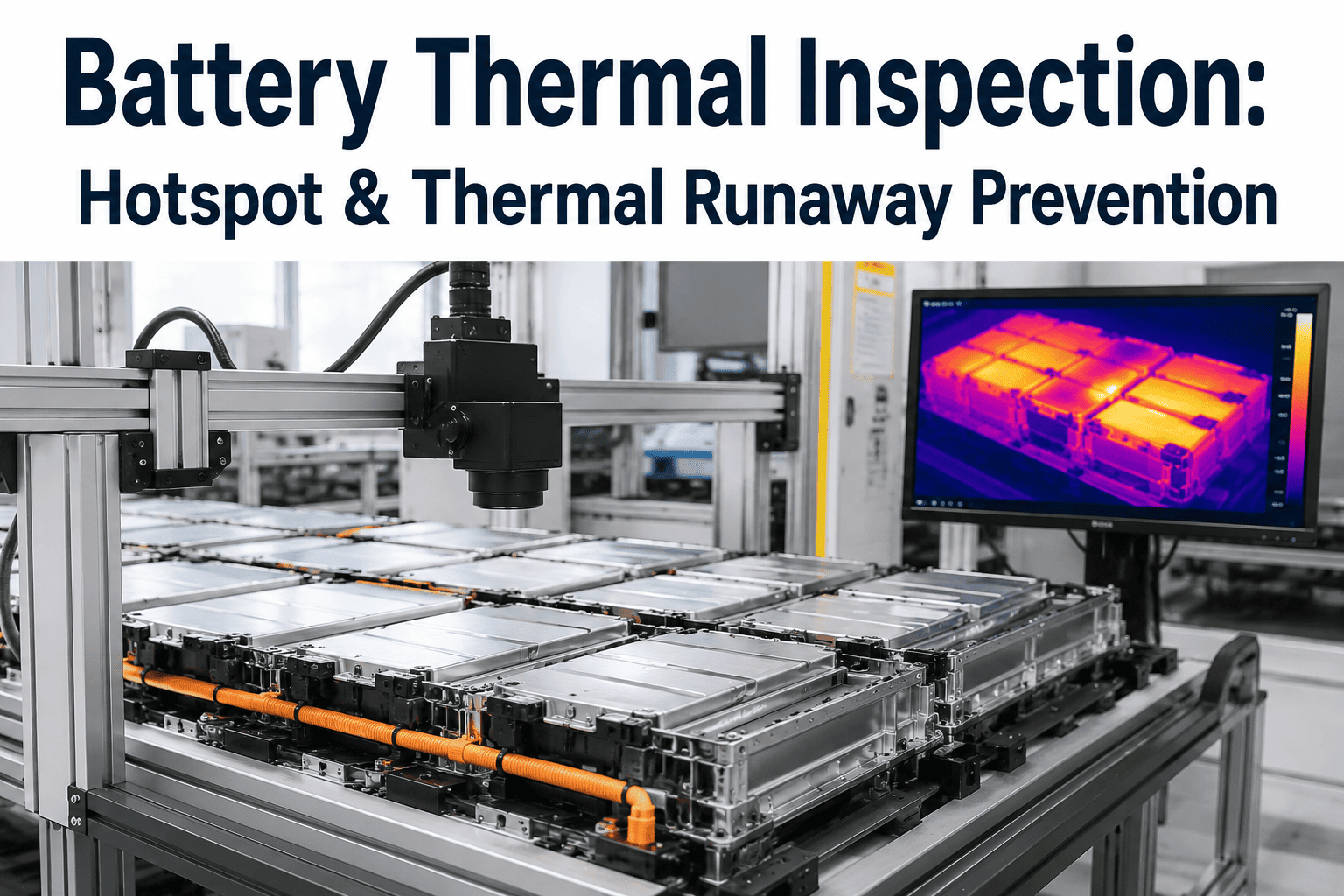
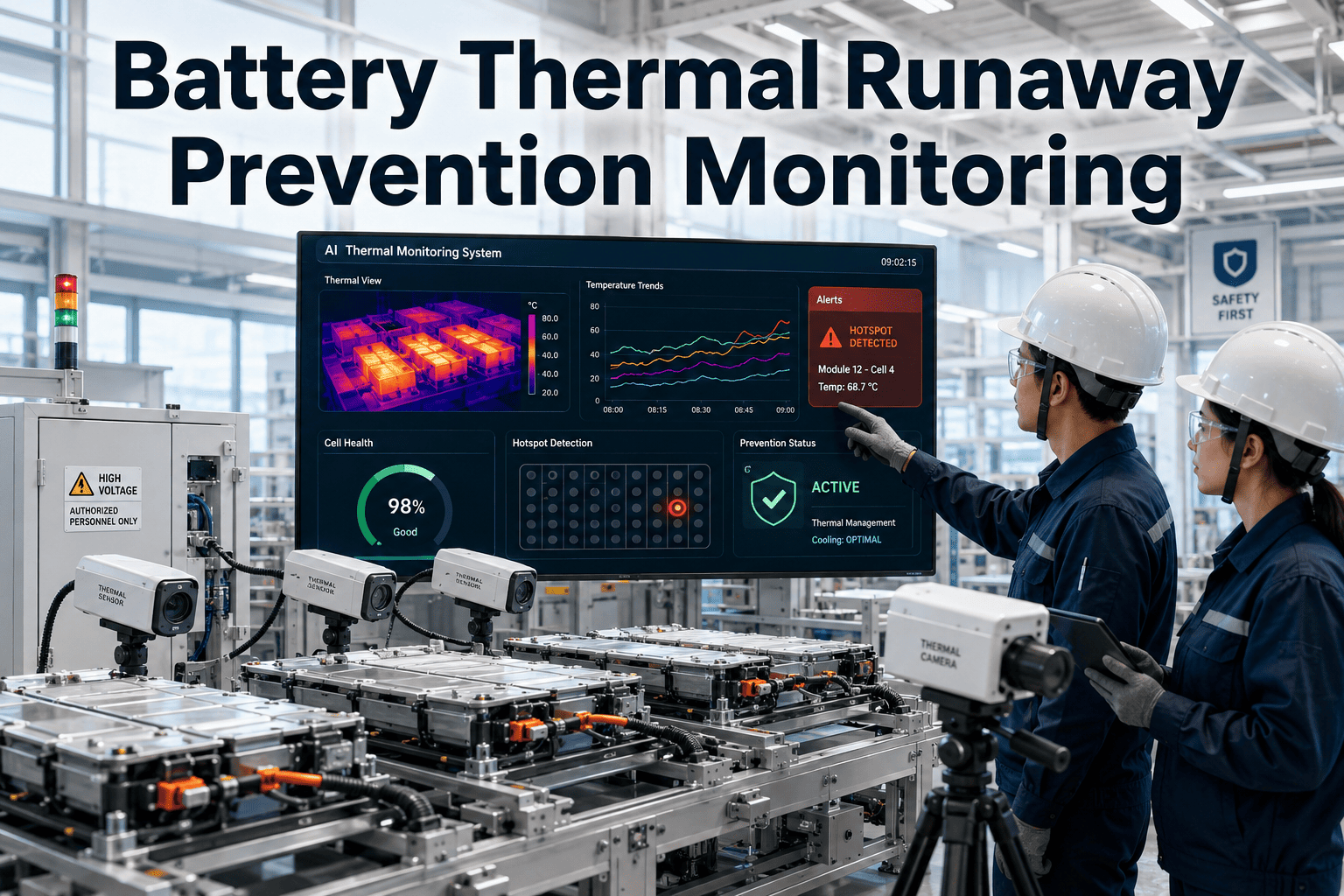
Distributed temperature sensors combined with AI detect abnormal thermal gradients across cells, indicating potential separator damage or internal resistance issues.
Gas Evolution Prediction
AI models correlate pressure and gas composition data with electrochemical signatures to predict venting events before they escalate to thermal runaway.
Cycle Life Degradation Forecasting
Long-term monitoring of capacity fade and impedance growth enables prediction of cells at risk of runaway due to accelerated aging or manufacturing defects.
The AI-Driven Prevention Workflow
Data Acquisition
Collect high-frequency data from formation cyclers, impedance analyzers, temperature sensors, and gas detectors across all production stages.
Feature Extraction
AI algorithms extract relevant features such as voltage relaxation slopes, thermal time constants, and harmonic distortion patterns from raw signals.
Model Inference
Trained deep learning models classify cells into risk categories based on learned defect signatures, achieving high accuracy with low latency.
Alarm Generation
Actionable alerts with root cause information are sent to operators and integrated with MES for automated cell rejection or process adjustment.
Continuous Learning
Models are retrained periodically with new failure data to improve detection of emerging defect patterns and reduce false positives over time.
Key Process Signals for Runaway Detection
Effective AI monitoring relies on capturing the right signals from the manufacturing process. The most critical parameters include voltage and current during formation, which reveal internal resistance changes; electrochemical impedance spectroscopy (EIS) data that indicates electrode degradation; temperature profiles that highlight hotspots; and gas analysis that detects electrolyte decomposition. By fusing these multivariate signals, AI models can identify complex patterns that human operators or simple threshold alarms would miss. For example, a combination of a slight voltage drop during constant current charging, a 2% increase in impedance at low frequencies, and a localized temperature rise of 3°C may indicate an internal short circuit that will lead to runaway within 24 hours. The table below summarizes the key signals, their physical meaning, and the defect types they help detect.
| Process Signal | Measurement Technique | Defect Detected |
|---|---|---|
| Voltage Relaxation Slope | Open circuit voltage monitoring | Internal short circuit |
| Impedance at 1 kHz | EIS | Electrode delamination |
| Temperature Gradient | Distributed thermocouples | Separator damage |
| Gas Evolution Rate | Mass spectrometry | Electrolyte decomposition |
| Current Efficiency | Coulombic efficiency calculation | Parasitic reactions |
Transform Your Battery Safety Strategy
Deploy AI that detects thermal runaway precursors before they become critical. Protect your plant and your reputation.
Implementation Challenges and Solutions
Deploying AI-based thermal runaway prevention in a battery plant comes with significant challenges. Data quality is paramount: noisy or incomplete sensor readings can lead to false alarms or missed detections. Edge computing infrastructure must handle high-frequency data streams with low latency, often requiring hardware upgrades. Model interpretability is another critical factor, as operators need to trust and understand why a cell is flagged as high risk. iFactory's platform addresses these challenges through robust data preprocessing pipelines, optimized edge AI deployment, and explainable AI techniques that highlight the specific signals driving each prediction. Additionally, integration with existing MES and quality systems ensures seamless workflow without disrupting production. By partnering with experienced AI vendors, battery manufacturers can overcome these hurdles and achieve a step-change in safety performance.
Data Quality Management
Implement automated data validation and imputation to handle sensor drift, missing values, and outliers, ensuring reliable model inputs.
Edge Computing Deployment
Use industrial edge devices with GPU acceleration to run AI inference locally, reducing latency and bandwidth requirements.
Model Explainability
Leverage SHAP and LIME techniques to provide operators with clear reasons for each risk classification, building trust and enabling corrective action.
System Integration
Use REST APIs and MQTT protocols to connect AI outputs with MES, SCADA, and ERP systems for automated decision-making.
ROI of AI-Driven Thermal Runaway Prevention
The financial impact of a single thermal runaway event can exceed $10 million when accounting for equipment damage, production downtime, liability, and brand reputation. AI prevention systems offer a compelling return on investment by reducing incident rates by up to 85%, lowering false positives that waste inspection resources, and enabling predictive maintenance that extends equipment life. Additionally, early detection of defect patterns allows process adjustments that improve overall yield and reduce scrap. For a typical gigafactory producing 10 GWh per year, the annual savings from avoided runaway events and improved quality can reach $5-8 million, with payback periods of less than 12 months. These figures make AI monitoring an essential investment for any battery manufacturer serious about safety and operational excellence.
Frequently Asked Questions
How does AI detect thermal runaway precursors that traditional methods miss?
Traditional monitoring relies on fixed thresholds for parameters like voltage, current, or temperature, which only trigger alarms after a significant deviation has occurred. AI models, on the other hand, learn complex, non-linear relationships between multiple process signals over time. For example, a deep neural network can detect a subtle correlation between a slight increase in impedance at low frequencies and a gradual rise in internal temperature, which together indicate an internal short circuit developing. These patterns are invisible to human operators and simple rule-based systems. By continuously analyzing multivariate data streams, AI can provide early warnings hours or even days before a thermal runaway event, allowing for preventive action such as cell rejection or process adjustment. Book a Demo to see this technology in action.
What types of battery defects can AI predict before they cause thermal runaway?
AI can predict a wide range of defects including internal short circuits, electrode misalignment, separator damage, electrolyte contamination, and lithium plating. Each defect has a unique signature in the process data. For instance, internal short circuits often manifest as a gradual voltage drop during constant current charging and an increase in self-discharge rate. Electrode misalignment leads to uneven current distribution, detectable through localized temperature gradients and impedance variations. Separator damage causes a rapid increase in internal resistance and gas evolution. By training models on historical failure data, AI systems learn to recognize these signatures with high accuracy. The key is having comprehensive data from formation, aging, and testing stages, which iFactory's platform integrates seamlessly. Contact Support for more details on defect-specific models.
How accurate is AI-based thermal runaway detection compared to traditional methods?
AI-based systems typically achieve detection accuracy above 99% with false positive rates below 1%, far outperforming traditional threshold-based methods which often have false positive rates of 5-10% and miss up to 30% of actual defects. The superior performance comes from the ability to analyze high-dimensional data and identify subtle patterns that correlate with future failures. For example, in a study of over 100,000 lithium-ion cells, an AI model detected 97% of cells that later experienced thermal runaway, compared to only 65% for traditional methods. Moreover, AI provides earlier warnings, with an average lead time of 48 hours versus 6 hours for conventional alarms. This early detection enables proactive interventions that prevent incidents altogether. Book a Demo to see accuracy benchmarks for your specific production line.
What infrastructure is needed to implement AI thermal runaway monitoring in an existing battery plant?
Implementing AI monitoring requires several infrastructure components: high-frequency data acquisition systems for voltage, current, temperature, and gas sensors; edge computing devices with GPU capabilities for real-time inference; a data storage and management platform for historical data and model training; and integration middleware to connect with MES, SCADA, and quality systems. Many existing plants already have sensors and data acquisition in place, but may need upgrades to support the sampling rates required for AI (e.g., 10 Hz for voltage and current). iFactory provides a turnkey solution that includes edge devices, pre-trained models, and integration services, minimizing disruption. The platform is designed to work with common industrial protocols like OPC UA and Modbus, ensuring compatibility with most equipment. Contact Support for a detailed infrastructure assessment.
How long does it take to see results after deploying AI thermal runaway prevention?
Most battery plants see initial results within 4-8 weeks of deployment. The first phase involves data collection and model training, which typically takes 2-4 weeks depending on data availability and quality. Once models are deployed, early warnings start appearing immediately, though accuracy improves over time as more data is collected and models are refined. Within 3-6 months, false positive rates stabilize and detection accuracy reaches optimal levels. The ROI becomes evident within the first year, with reduced incident rates and improved yield. iFactory's platform includes continuous learning capabilities that automatically retrain models as new failure data becomes available, ensuring sustained performance. Book a Demo to discuss a tailored implementation timeline for your facility.
Ready to Eliminate Thermal Runaway Risks?
Partner with iFactory to deploy AI that protects your battery plant. Start your journey to zero-defect production today.