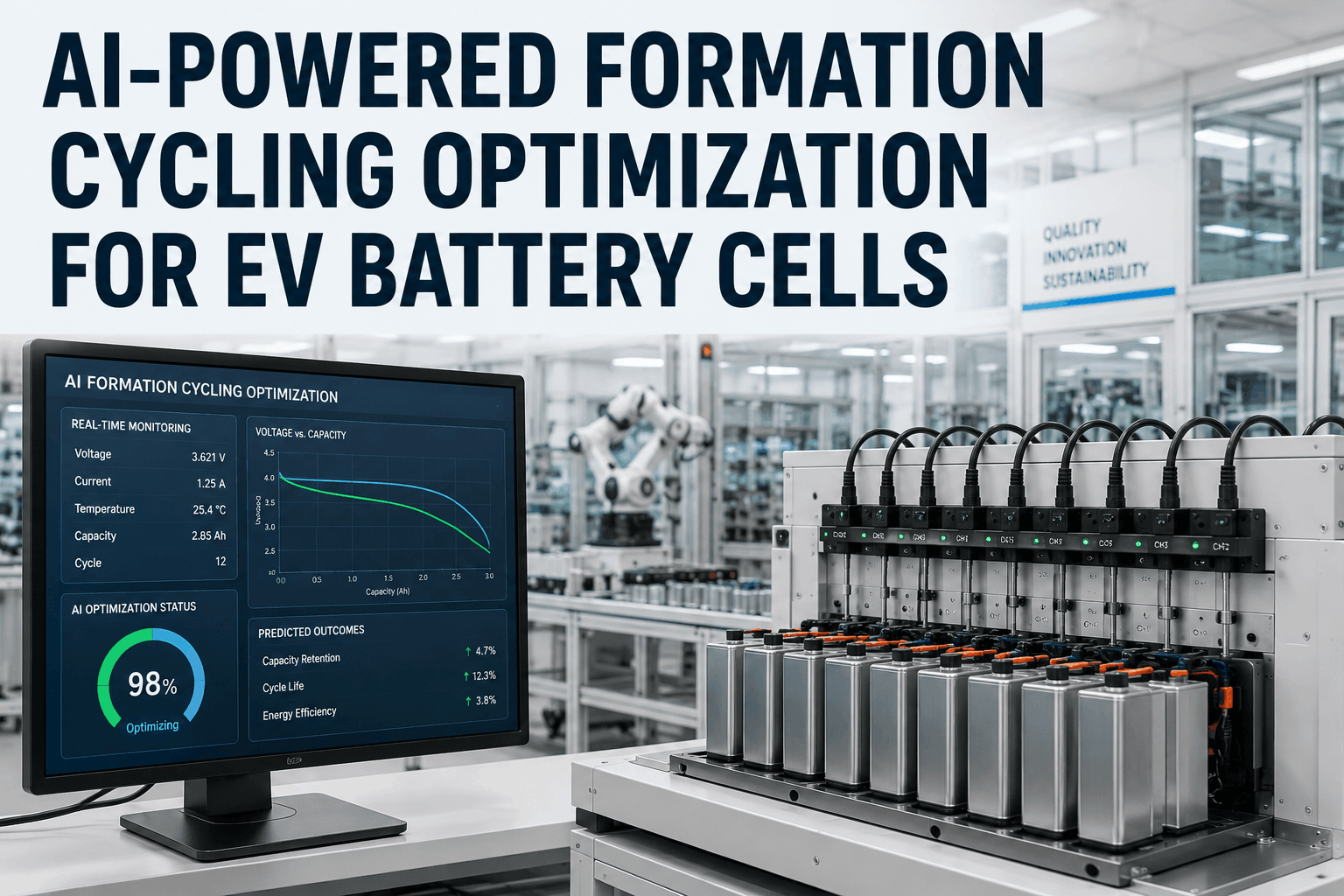
AI-Powered Formation Cycling Optimization for EV Battery Cells

By John Polus on May 21, 2026

ai-powered-formation-cycling-optimization-for-ev-battery-cells

The EV revolution has a hidden bottleneck — and it's not the battery chemistry. It's the formation cycling process: the final, make-or-break manufacturing stage where raw cells are activated, validated, and graded before they ever reach a vehicle. Formation cycling can consume up to 20% of a battery pack's total manufacturing cost and stretch production timelines by days. AI is now changing that equation entirely — and manufacturers who move first are gaining a decisive edge. Book a demo to see how iFactory brings AI to your battery production line.

AI in EV Manufacturing
AI-Powered Formation Cycling Optimization for EV Battery Cells
Cut formation time. Slash defect rates. Predict cell performance before it ships — all with AI running inside your production line.

What Is Formation Cycling — And Why Does It Hurt?

Formation cycling is the first controlled charge-discharge sequence applied to a freshly assembled lithium-ion cell. This process builds the solid electrolyte interphase (SEI) layer, activates the cell chemistry, and determines whether the cell meets quality specifications. It sounds routine. It is anything but.

Up to 48 hrs
per formation cycle (traditional)
~20%
of battery pack cost consumed by formation & test
60%+
of engineers say current methods can't meet EV demands
~100 days
traditional cycle-life testing to predict cell longevity

Every hour a cell spends in a formation chamber is a capital asset idle on a rack. Multiply that across tens of thousands of cells per day in a modern gigafactory and you're staring at a massive throughput constraint that traditional process engineering simply cannot optimize fast enough.

How AI Transforms the Formation Process

Artificial intelligence doesn't just speed up formation — it fundamentally changes what's possible. Here's how AI operates across the formation workflow:

01
Adaptive Charge Protocol Selection
AI models analyze real-time cell voltage, temperature, and impedance signatures to dynamically adjust charge rates mid-cycle. Instead of a fixed protocol applied to every cell, each cell receives the protocol it actually needs — reducing over-formation and thermal stress.
02
Early-Cycle Life Prediction
Stanford researchers demonstrated that ML models trained on early formation data can predict long-term cell life after just the first 100 cycles — reducing what used to be a 100-day testing window to days. Manufacturers can make grading decisions faster and more accurately.
03
Automated Capacity Grading
Instead of full charge-discharge grading cycles, AI models trained on formation-stage data predict final cell capacity with high accuracy — eliminating redundant testing steps and the energy cost that comes with them. One manufacturer reported up to 90% energy savings in the grading step alone.
04
Anomaly & Defect Detection
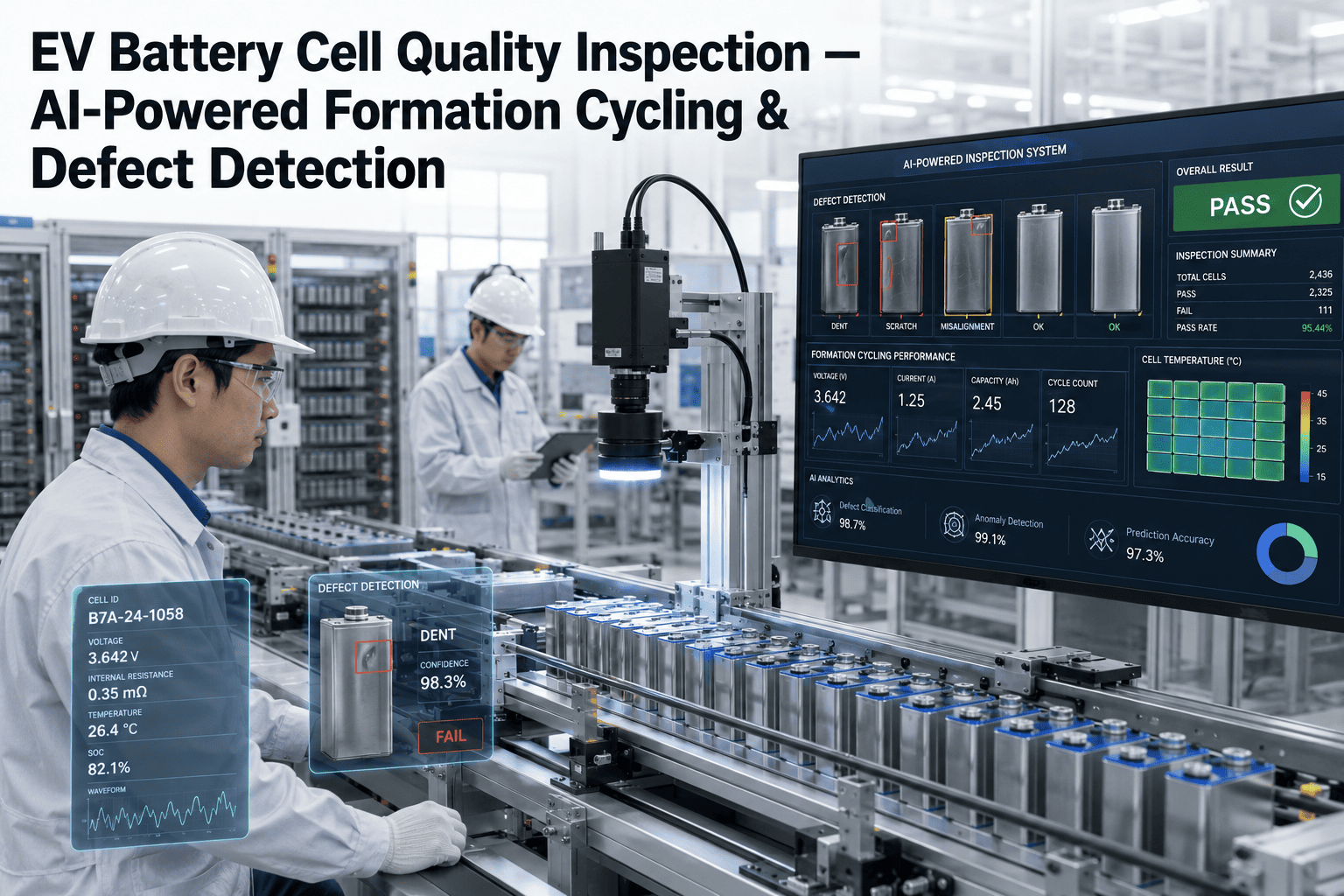
AI continuously monitors voltage curves, internal resistance trends, and temperature profiles during formation. Deviations that predict early failure — invisible to human operators — are flagged in real time, preventing defective cells from progressing down the line.
05
Digital Twin Integration
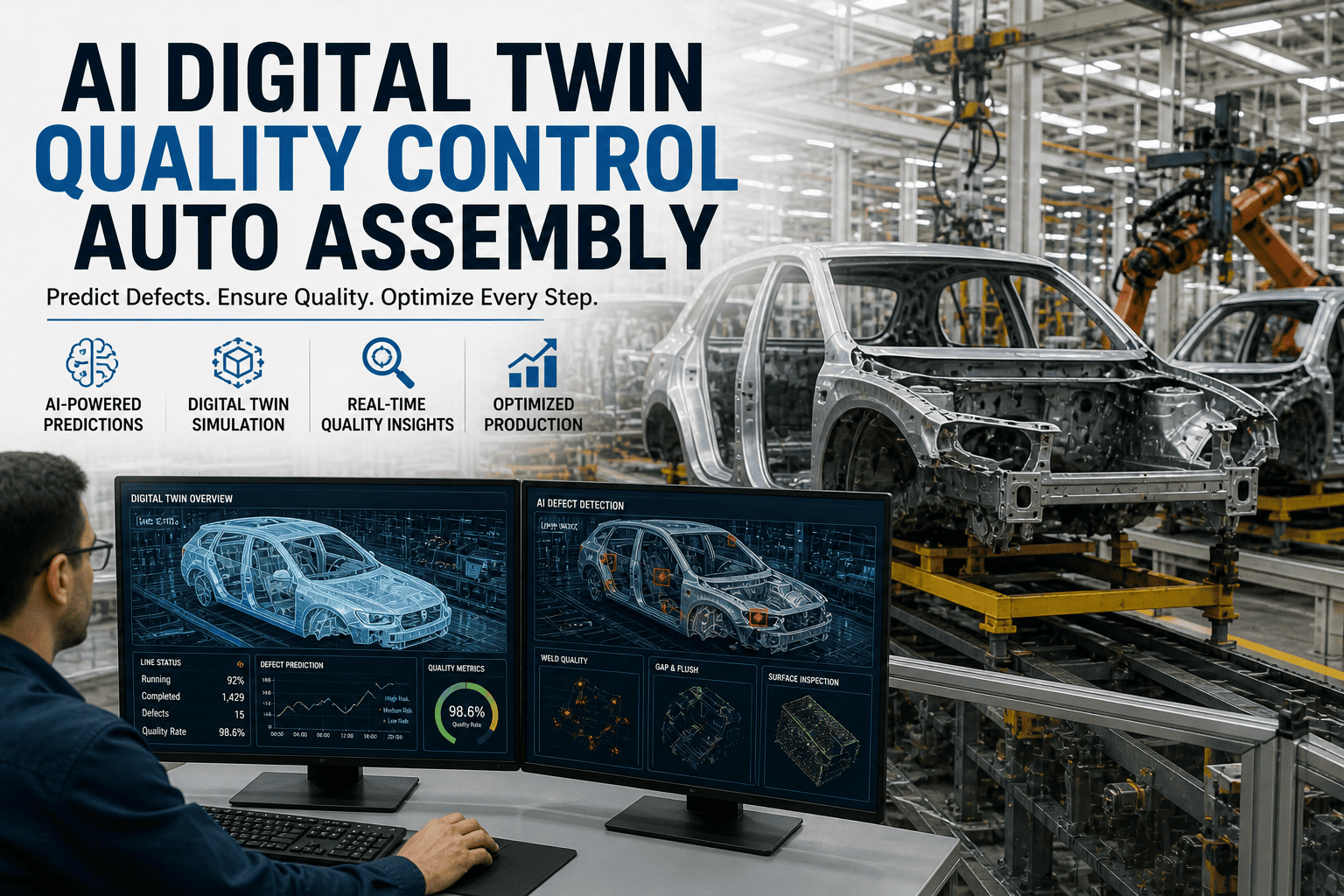
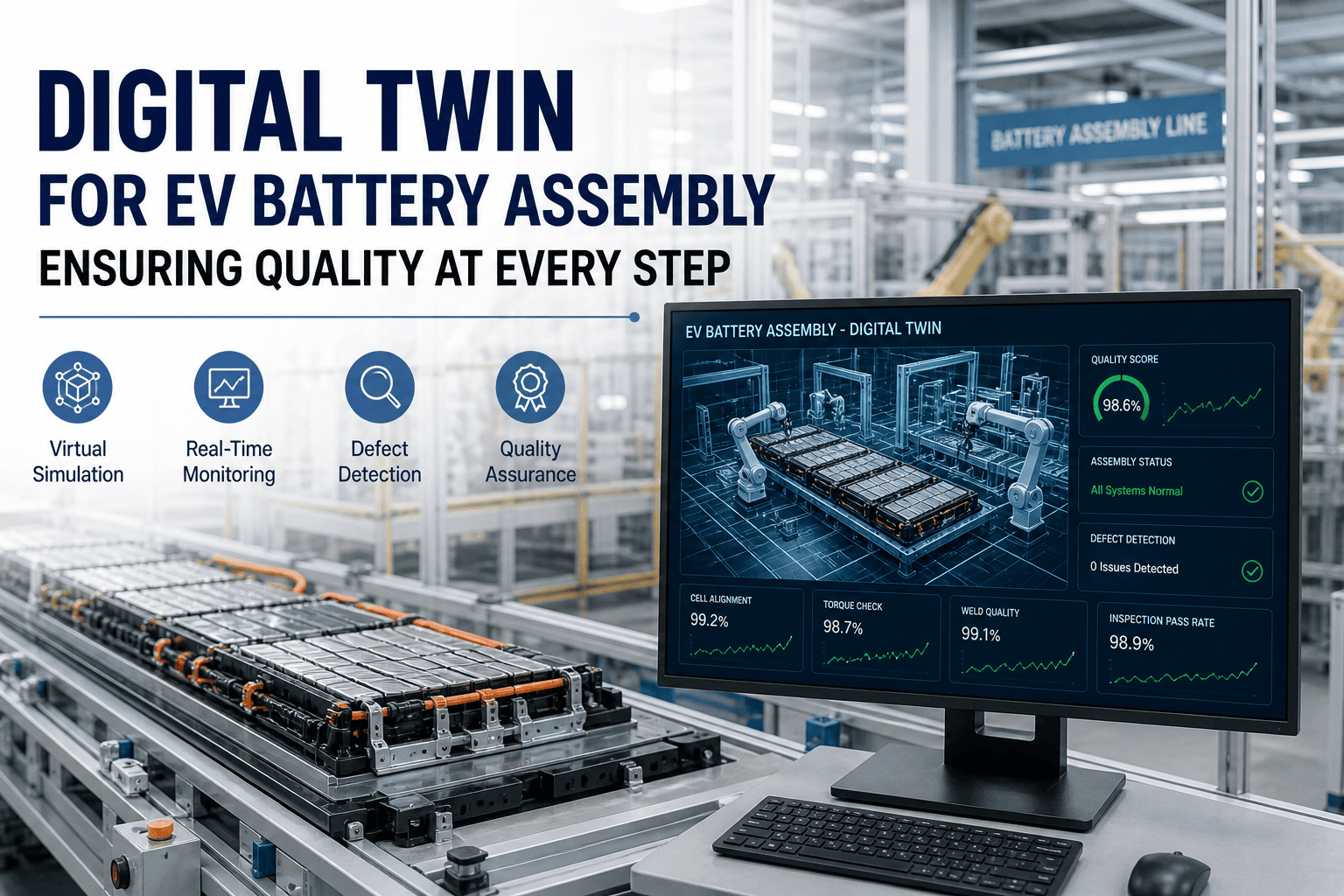
Formation parameters feed a living digital twin of the production line. Engineers can simulate protocol changes, new cell chemistries, or capacity ramp scenarios virtually before any physical change — de-risking process improvements and compressing validation timelines.
06
Closed-Loop Optimization
AI doesn't just monitor — it learns. Optimal experimental design algorithms iteratively recommend next test parameters, converging on lifetime-optimized charge protocols faster than any human-driven design-of-experiments approach.

The Numbers That Matter: AI Formation Optimization ROI

Testing Time Reduction
98%
Development Cycle Acceleration
40–50%
Manufacturing Cost Reduction
20–30%
Grading Energy Savings
Up to 90%
Cycle Life Prediction Error (lower is better)
9.2%
Sources: Stanford University Energy Research, TCS White Paper on AI & Quantum in EV Batteries, TDengine Case Study, IDTechEx AI Battery Report 2025

Traditional vs. AI-Optimized Formation: Side by Side

Traditional Formation
  • Fixed charge-discharge protocol for all cells
  • Up to 48-hour formation cycles
  • 100-day cycle life testing to validate quality
  • Manual inspection catches defects late
  • Grading requires full additional charge cycles
  • Process changes validated only in production
  • High scrap rate discovered at end of line
AI-Optimized Formation
  • Adaptive protocols per cell based on real-time data
  • Compressed cycles via dynamic parameter control
  • Life predicted from first 100 cycles (16 days vs. 2 years)
  • Anomaly detection flags defects during formation
  • Capacity predicted from formation data — no extra cycles
  • Digital twin validates process changes before deployment
  • Defects intercepted at source, not end of line

Real-World Application: What Happens on the Line

The impact becomes clearest when you look at how AI-optimized formation plays out inside an actual gigafactory environment. Consider a manufacturer ramping a new NMC chemistry for a next-generation EV platform. Three critical inflection points define whether the launch succeeds or stumbles:


Week 1–2 of Ramp
Formation Protocol Calibration
AI ingests formation data from the first production batches and immediately starts identifying which cells respond differently to the standard protocol. Outlier voltage curves and temperature signatures are flagged. Protocol adjustments are tested in the digital twin before any physical change.

Week 3–5 of Ramp
Predictive Grading Deployment
With enough early formation data now in the model, AI-predicted capacity grading replaces full discharge cycles for 80% of cells. Testing throughput increases sharply. Reject rates fall because the model catches out-of-spec cells before expensive assembly steps.

Week 6+ Steady State
Closed-Loop Optimization
The AI model continuously refines protocol recommendations as production variance data accumulates. Supplier batch variations, ambient temperature shifts, and equipment wear are all absorbed and compensated — automatically. The formation line runs itself to its own optimal.

Why Industry Leaders Are Moving Now

CATL and Samsung SDI have both begun integrating machine learning methods into their battery development processes, and the competitive pressure is cascading through the entire supply chain. For Tier 1 suppliers and regional EV manufacturers, the window to adopt AI formation optimization before it becomes table stakes is narrowing fast.

"Over 60% of senior automotive engineering decision-makers report their current validation methods cannot meet the rigorous demands of EV battery development."
— Forrester Consulting study commissioned by Monolith AI, 2024 (via World Economic Forum)

The strategic urgency is real. By 2040, global EV sales are projected to hit 54 million units annually — roughly 58% of all new car sales. The battery capacity needed to support that trajectory demands manufacturing productivity improvements that only AI can unlock at scale.

How iFactory Delivers AI Formation Optimization

01
Formation Digital Twin

Virtualize your entire formation line — chambers, protocols, cell variants — and simulate protocol changes before committing to production.

02
Real-Time Anomaly Detection

Monitor voltage, temperature, and impedance signatures in real time. Defective cells are flagged during formation, not at final test.

03
Predictive Capacity Grading

Replace energy-intensive grading cycles with AI predictions derived from formation data — cutting energy consumption and cycle time simultaneously.

04
Closed-Loop Protocol Learning

AI learns from every production batch, continuously improving formation protocols and compensating for supplier and equipment variance automatically.

05
MES & Supply Chain Integration

Connect formation AI outputs to your MES and supply chain visibility tools for end-to-end traceability from cell to pack to vehicle.

06
Ramp Readiness Simulation

Before you increase volume, simulate formation line behavior under new output targets — and identify throughput constraints before they become production crises.

Ready to Optimize?

Stop Losing Time and Cost to Formation Bottlenecks

iFactory's AI formation optimization platform is built for EV battery manufacturers who need to move faster without sacrificing quality. See it in action on your actual production data.
Formation Digital Twin Predictive Grading Anomaly Detection Closed-Loop AI MES Integration

Share This Story, Choose Your Platform!