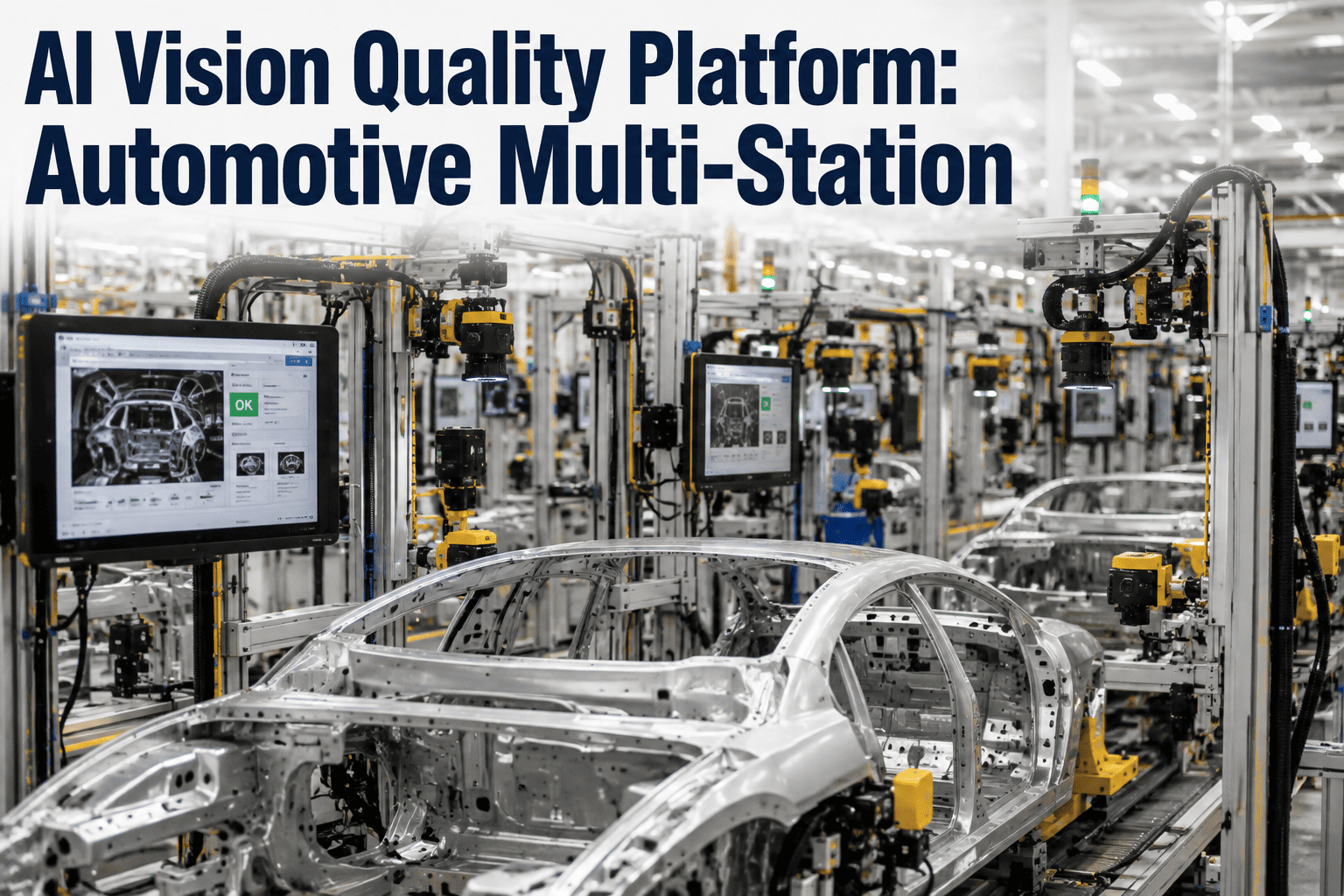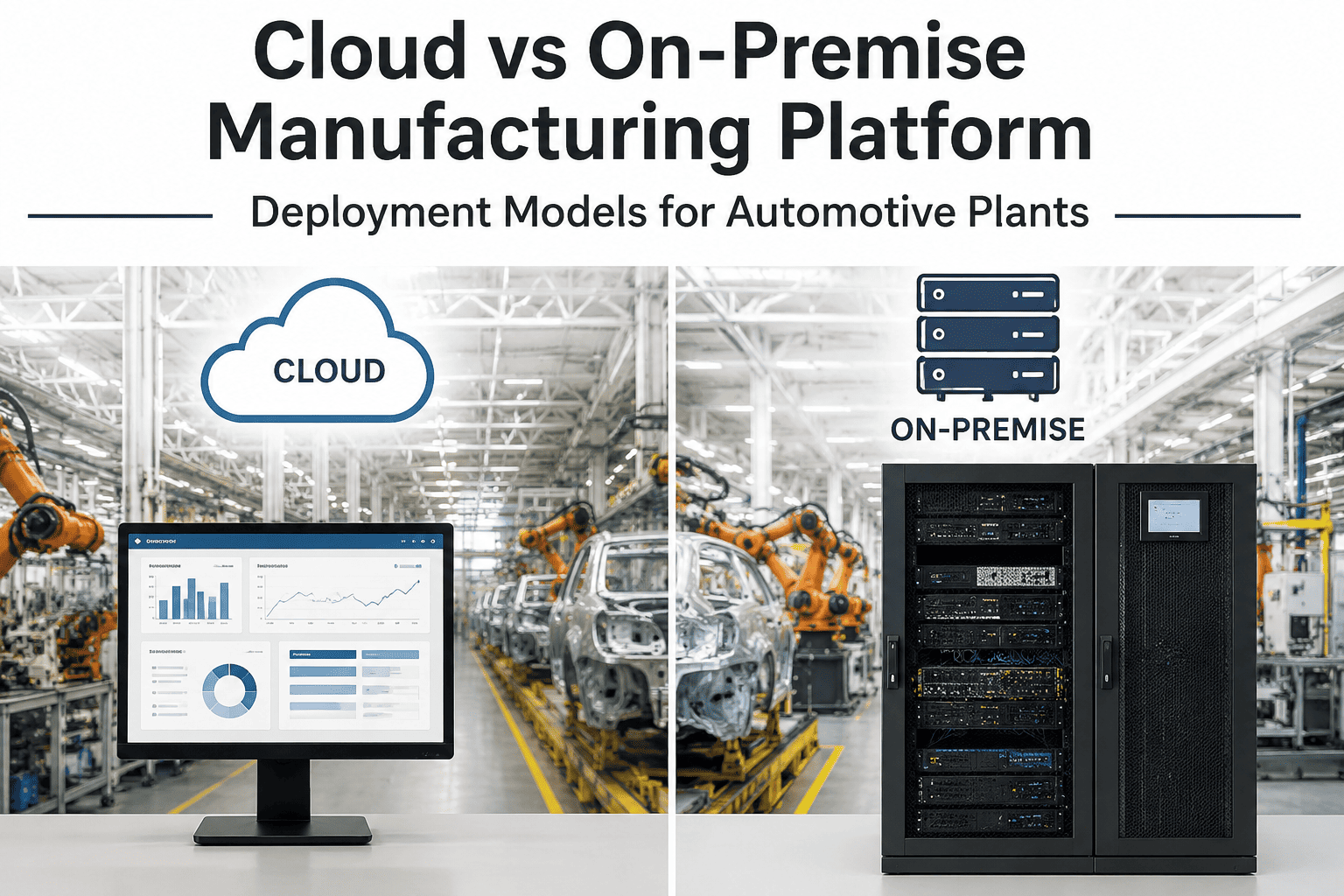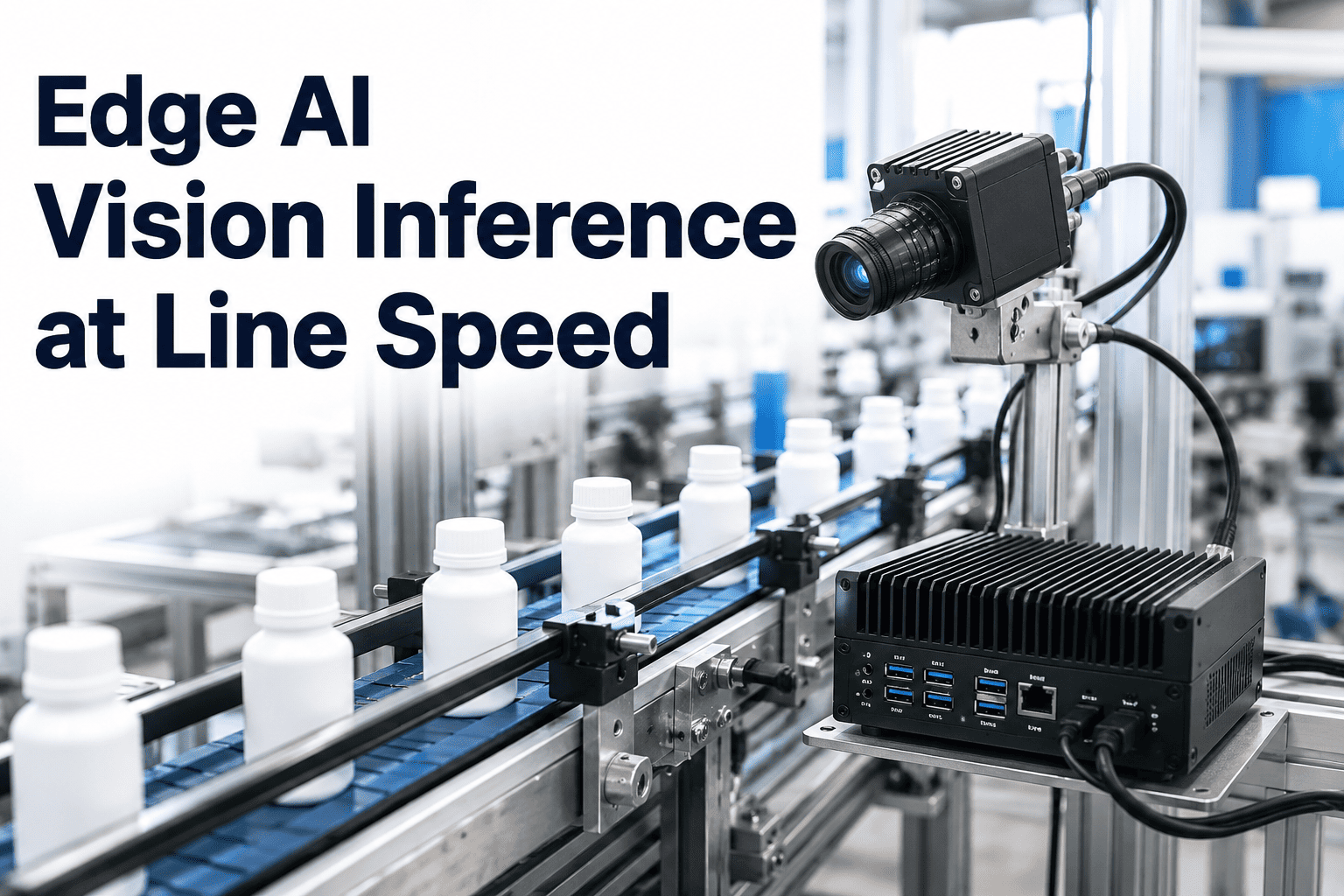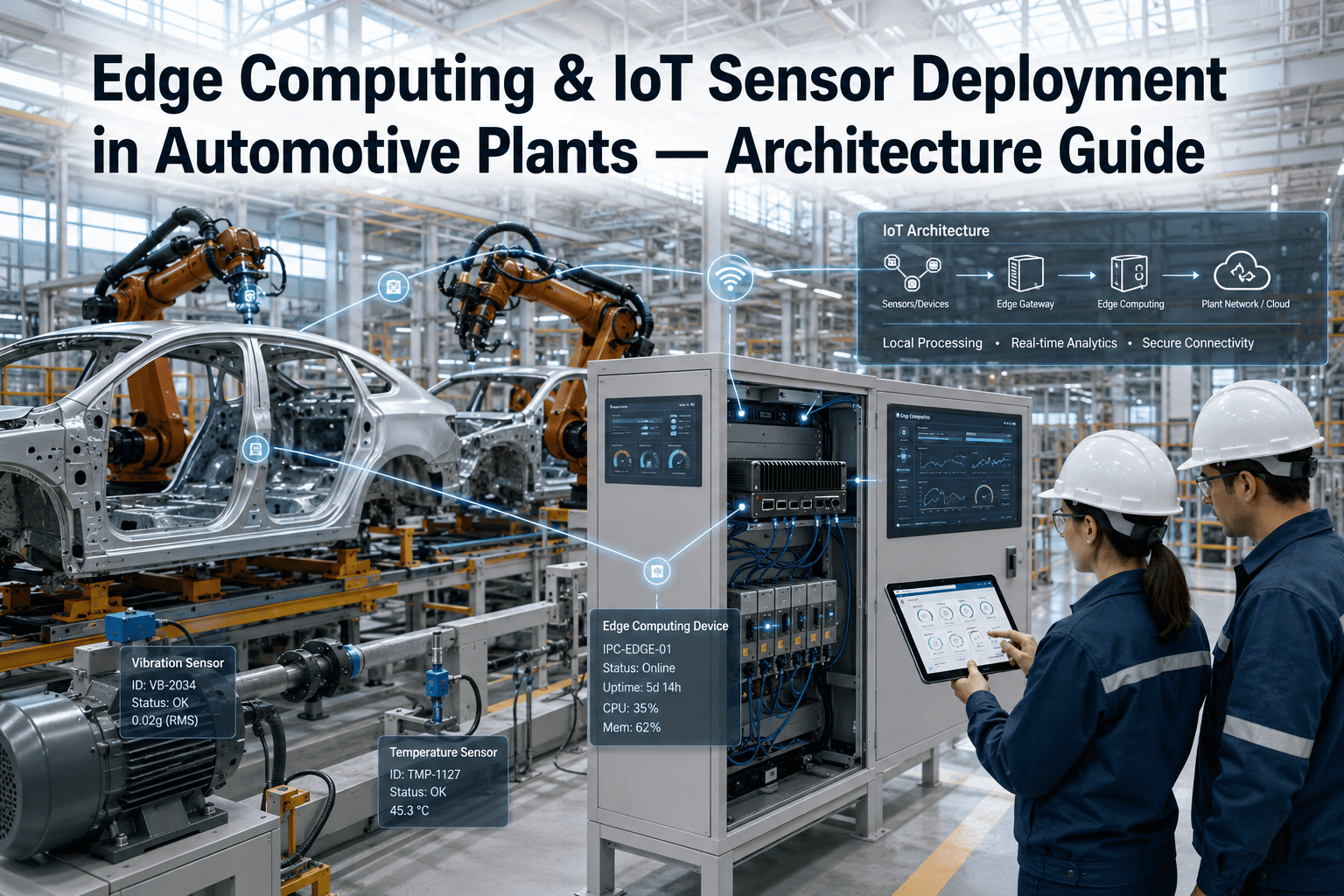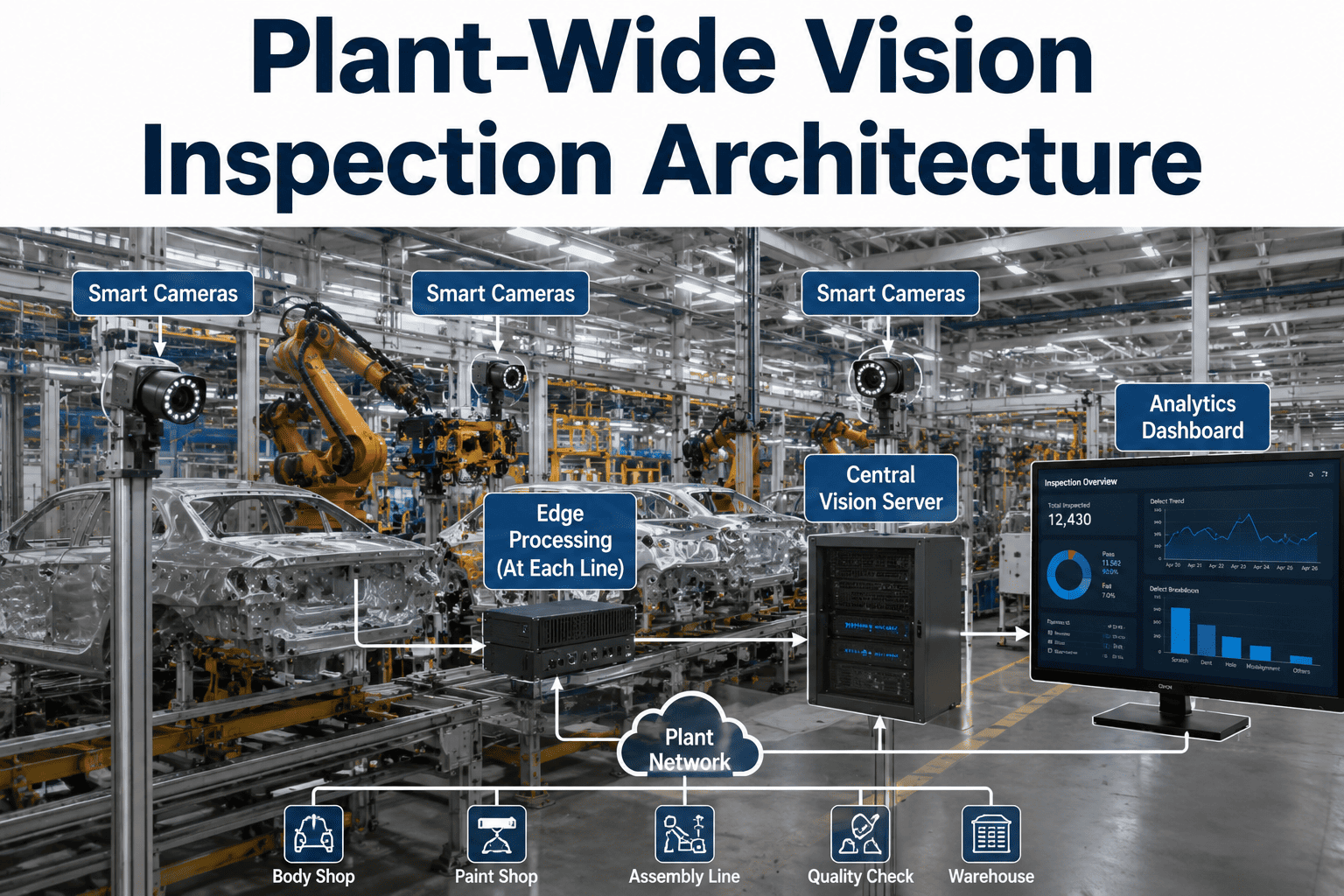
Modern manufacturing lines demand near-perfect quality, but scaling vision inspection from a single station to a plant-wide system introduces profound architectural challenges. Traditional siloed cameras and local processing units cannot keep pace with the data volume, latency requirements, and model update cycles required for Industry 4.0. A plant-wide vision inspection architecture must harmonize centralized AI model training with distributed edge inference, ensuring every station benefits from continuous learning while maintaining real-time decision speeds. This guide dives deep into the technical blueprint of such a system, exploring data pipelines, model versioning, inference orchestration, and the critical role of a unified vision platform. For enterprise decision-makers seeking a robust, scalable solution, Book a Demo to see how iFactory enables end-to-end vision intelligence across your entire factory floor.
Scale Vision Intelligence Across Your Entire Plant
Unify inspection data, centralize model training, and deploy at the edge with a single platform.
Centralized Model Repository
All vision models are stored, versioned, and audited in a single cloud or on-prem repository. This enables consistent updates across stations, rollback capabilities, and lineage tracking for compliance.
Edge Inference Nodes
Each inspection station runs a lightweight inference engine that loads the latest approved model from the repository. Inference happens locally with sub-100ms latency, independent of central network health.
Continuous Learning Loop
Defect data from every station is sent back to the central training pipeline. Models are retrained periodically and automatically validated before being pushed to the edge, creating a virtuous cycle of improvement.
Architecture Implementation Roadmap
Assess Current Station Hardware
Inventory all existing cameras, lighting, and processing units. Determine which stations can support edge inference (GPU or VPU) and which need upgrades. This baseline informs the migration plan.
Design Central Data Lake
Create a centralized data lake that ingests images, metadata, and inspection results from all stations. Use a schema-on-read approach to accommodate heterogeneous data formats from different vendors.
Develop Model Training Pipeline
Automate the training workflow: data labeling, augmentation, model training (using frameworks like TensorFlow or PyTorch), evaluation against KPIs, and versioning. Integrate with CI/CD tools for seamless deployment.
Deploy Edge Inference Orchestrator
Install a lightweight orchestrator on each edge node that manages model loading, inference execution, and result transmission. Ensure fallback mechanisms if the central repository is unreachable.
Establish Feedback & Retrain Loop
Configure stations to send low-confidence predictions and human-verified defect images back to the data lake. Trigger retraining automatically when model performance drops below a threshold.
Data Pipeline Architecture for Multi-Station Vision
A robust data pipeline is the backbone of any plant-wide vision system. Images captured at each station must be ingested, preprocessed, and stored in a way that supports both real-time inference and historical analysis. We recommend a streaming architecture using Apache Kafka or similar for high-throughput ingestion, with a separate batch layer for model training. Each image is tagged with metadata including station ID, timestamp, product SKU, and environmental conditions (lighting, temperature). This rich dataset enables not only defect detection but also root cause analysis and predictive maintenance of the cameras themselves.
Data preprocessing at the edge includes resizing, normalization, and format conversion to match the input requirements of the deployed model. To reduce bandwidth, only low-confidence predictions and a subset of normal images are sent to the central lake. The central training pipeline then uses this curated dataset to retrain models, which are validated against a holdout set before being promoted to production. Model versioning is critical: each deployment is tagged with a unique ID, and the orchestrator ensures that all stations running the same model version produce consistent results.
Edge Node Specification Comparison
| Component | Minimum Requirement | Recommended | Enterprise Grade |
|---|---|---|---|
| Processor | Quad-core ARM Cortex-A72 | Intel i5 or NVIDIA Jetson Xavier | Dual NVIDIA A100 or Intel Xeon with GPU |
| Memory | 4 GB RAM | 16 GB RAM | 64 GB RAM |
| Storage | 128 GB SSD | 512 GB NVMe | 2 TB NVMe RAID |
| Network | 1 GbE | 10 GbE | 25 GbE with redundancy |
| Inference Framework | TensorFlow Lite / ONNX Runtime | TensorFlow RT / PyTorch | Custom optimized runtime |
Model Management & Governance at Scale
As the number of stations grows, manual model management becomes impossible. A centralized model registry with fine-grained access control ensures that only approved models are deployed. Each model is associated with a set of metadata: training dataset hash, evaluation metrics, hardware compatibility, and a digital signature. The registry also maintains a rollback log, allowing operators to revert to a previous version if a deployment causes quality drift. Integration with existing MES and ERP systems is achieved through REST APIs, enabling automatic model promotion based on production schedules.
Governance extends to data retention policies. Images with defects are retained indefinitely for audit trails, while normal images may be purged after a configurable period. All model updates are logged in an immutable audit trail, satisfying regulatory requirements in automotive and aerospace sectors. The platform also supports A/B testing of models on a subset of stations before full rollout, minimizing risk and ensuring continuous improvement.
Ready to Unify Your Vision Ecosystem?
Move from isolated stations to a plant-wide intelligence network. See how iFactory orchestrates models and data.
Edge Inference Orchestration: Ensuring Deterministic Performance
Edge inference nodes must guarantee deterministic latency even under peak production loads. The orchestrator assigns priority levels to different inspection tasks, with critical safety inspections receiving highest priority. A watchdog timer ensures that if a model fails to return a result within the allowed window, a fallback algorithm (e.g., rule-based inspection) is invoked. The orchestrator also monitors node health, reporting GPU temperature, memory usage, and inference throughput to a central dashboard.
Model updates are pushed to edge nodes during scheduled maintenance windows or when a station is idle. The orchestrator downloads the new model, validates its integrity using a checksum, and atomically swaps it with the previous version. This zero-downtime deployment strategy ensures that production is never interrupted. In the event of a failed update, the orchestrator automatically reverts to the last known good model and alerts the central system.
Centralized Training Infrastructure
Leverage cloud-based GPU clusters or on-prem servers for training. Use MLflow or Kubeflow for experiment tracking and model registry. Automate hyperparameter tuning with Bayesian optimization to find the best architecture for each inspection task.
Distributed Data Labeling
Implement a human-in-the-loop labeling system where uncertain predictions are sent to quality engineers for verification. Active learning algorithms prioritize images that would most improve model performance, reducing labeling effort by up to 60%.
Real-Time Monitoring & Alerts
Deploy a monitoring stack (Prometheus + Grafana) that tracks inference accuracy per station, drift in model confidence, and data pipeline health. Set up alerts for accuracy drops below threshold, triggering automatic retraining or human review.
Security & Compliance in a Multi-Station Architecture
Plant-wide vision systems are prime targets for cyberattacks, as they control quality gates and can disrupt production. All communication between edge nodes and the central repository must be encrypted using TLS 1.3. Edge nodes authenticate using device certificates, and access to the model registry is governed by role-based access control (RBAC). Audit logs capture every model deployment, data access, and configuration change, providing a complete chain of custody for compliance with ISO 9001 and IATF 16949.
Data residency requirements often mandate that defect images remain on-premises. In such cases, the central repository can be deployed on a local server with air-gapped access. Model training can still leverage federated learning techniques, where model updates (gradients) are shared without raw data leaving the plant. This approach preserves privacy while enabling continuous improvement from multiple sites.
Frequently Asked Questions
How do I ensure low latency when scaling to 50+ inspection stations?
Low latency is achieved by performing inference at the edge, close to the camera. Each station runs its own inference engine, so network latency is eliminated. The central system only handles model updates and aggregated analytics. To maintain low latency, ensure edge nodes have sufficient compute (GPU or VPU) and that the inference model is optimized for the target hardware using quantization or pruning. For more details, visit our support page on edge optimization.
Can I use different camera brands and resolutions across stations?
Yes, the architecture is camera-agnostic. The data pipeline normalizes images to a standard format (e.g., resolution, color space) before feeding them to the model. Metadata tagging preserves original camera details for traceability. The central model can be trained on multi-resolution data using data augmentation techniques. For integration guidelines, Book a Demo to discuss your specific hardware ecosystem.
How do I handle model drift in a high-mix production environment?
Model drift is monitored per station and per product variant. When accuracy drops below a threshold, the system automatically triggers retraining using recent defect data. Continuous learning ensures that models adapt to changing production conditions. Additionally, you can schedule periodic full retraining using all accumulated data. For best practices, explore our model management resources.
What is the bandwidth requirement between edge and central?
Bandwidth depends on the volume of images sent to the central lake. By default, only low-confidence predictions (typically less than 5% of all inspections) and a random sample of normal images are transmitted. This reduces bandwidth to a few Mbps even for 100 stations. If you need to store all images, consider using edge caching and batch upload during off-peak hours. For a bandwidth calculator, Book a Demo.
How do I ensure consistency across identical stations?
Consistency is ensured by deploying the same model version to all stations and using identical hardware configurations where possible. The orchestrator verifies model integrity before activation. Regular cross-station validation runs compare inference results on known test parts, flagging any discrepancies. For advanced consistency monitoring, check our system health tools.
Transform Your Quality Control with Unified Vision Architecture
Stop fighting siloed inspection systems. iFactory delivers a plant-wide platform that scales. Book your demo today.