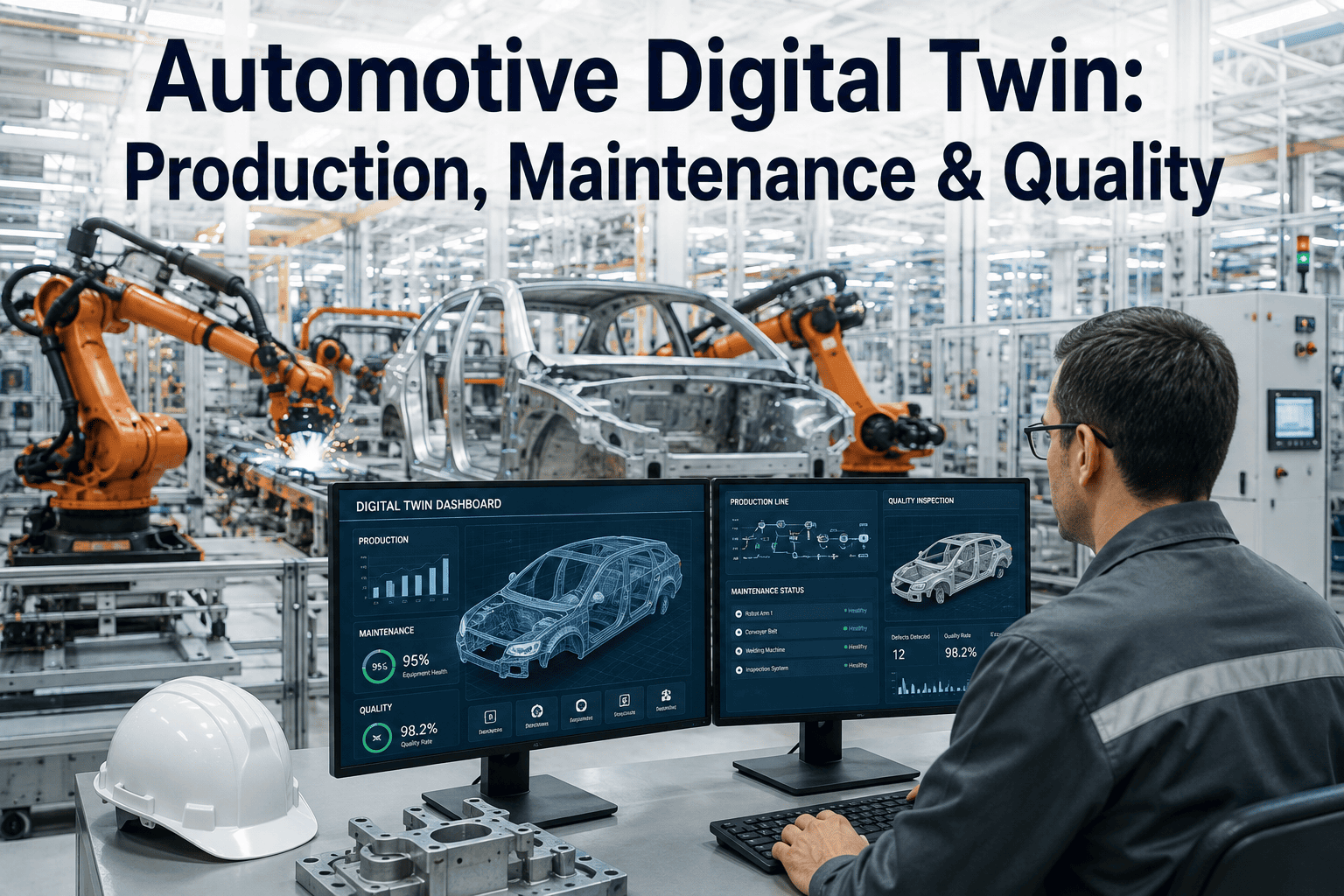
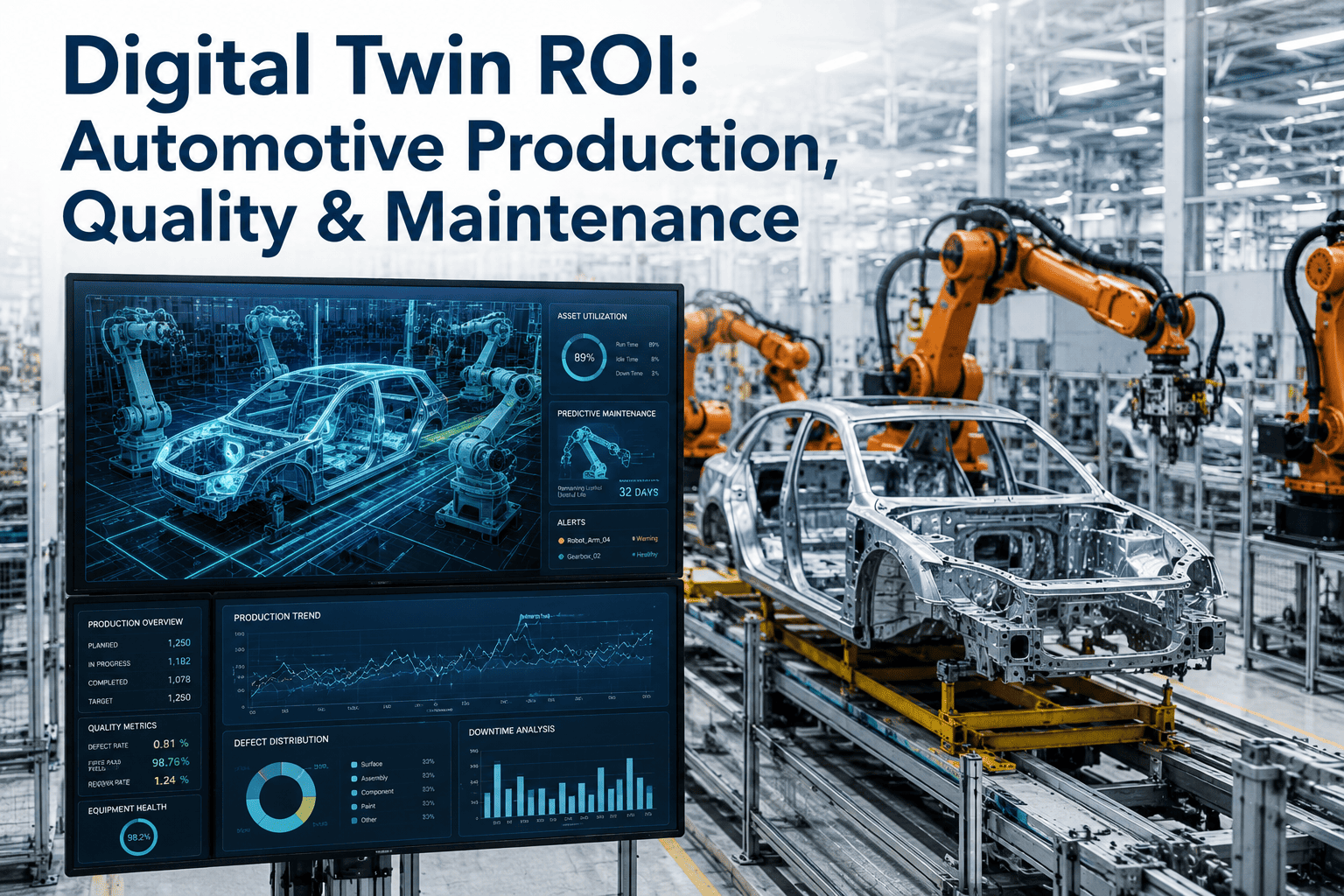
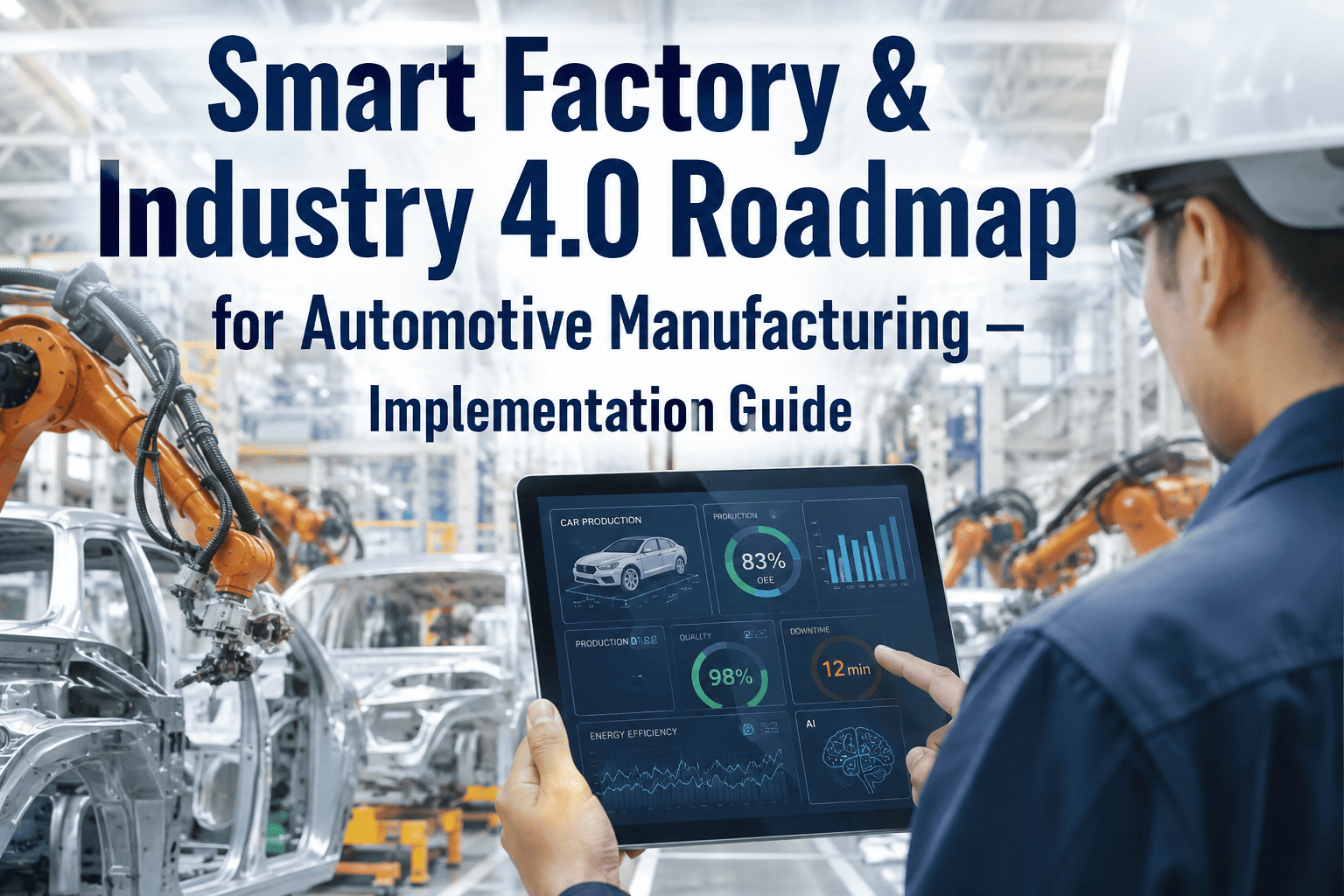
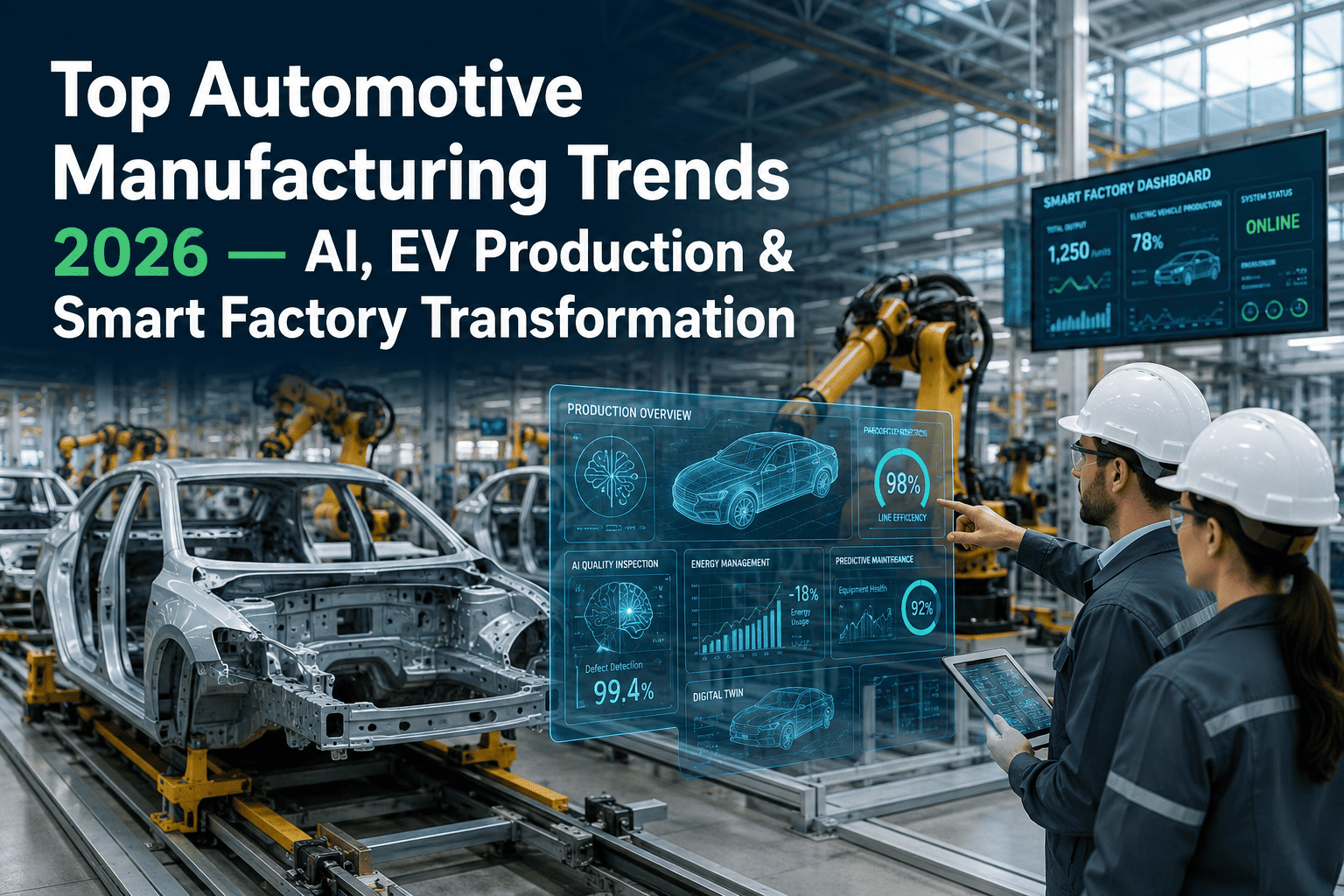
Smart factories are no longer a vision of the future—they're the competitive standard in 2026. IoT sensors, 5G connectivity, and edge computing are transforming automotive plants into fully connected ecosystems that communicate, adapt, and optimize in real-time. Manufacturers deploying advanced IoT connectivity report 35% improvements in OEE, 45% reduction in energy waste, and real-time visibility across every machine, line, and facility. This guide explores how leading automotive plants are building the connected infrastructure that powers next-generation manufacturing.
The IoT-Connectivity Stack: How It All Connects
Smart factory IoT isn't a single technology—it's a layered architecture where sensors collect data, connectivity transmits it, and intelligent platforms turn it into action. Understanding each layer is key to building a resilient, scalable connected plant.
IoT Infrastructure
- Thousands of edge sensors
- 5G & industrial Wi-Fi networks
- Edge computing gateways
- SCADA & PLC integration
- Digital twin platforms
- Cloud data lakes
Smart Factory Outcomes
- Predictive maintenance alerts
- Real-time OEE dashboards
- Energy optimization
- Automated quality tracking
- Supply chain visibility
- Continuous improvement data
Ready to see smart factory IoT in action? Book a demo of iFactory's connected plant solutions.
5 IoT Applications Reshaping Automotive Plants
Connected IoT technology is being deployed across every layer of automotive manufacturing. These five applications deliver the highest operational impact and fastest ROI.
Real-Time Machine Health Monitoring
Thousands of IoT sensors continuously track vibration, temperature, pressure, and current draw on every critical asset. AI-powered analytics detect anomalies milliseconds after they occur, enabling teams to respond before a minor issue becomes a production-stopping failure.
Digital Twin Plant Simulation
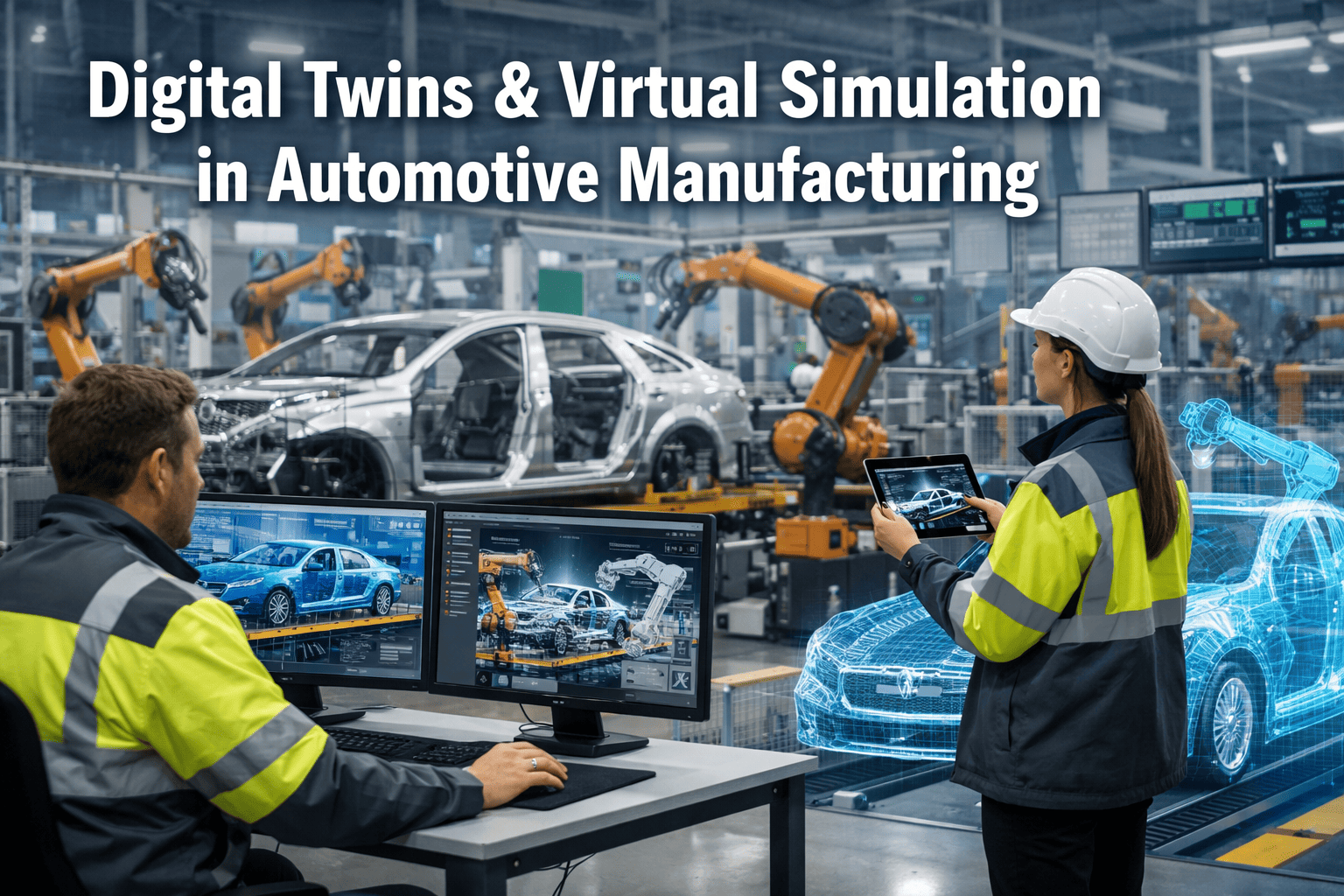
Real-time digital replicas of entire production lines allow engineers to simulate changes, test new configurations, and optimize throughput without touching the physical floor. When connected to live IoT data, digital twins reflect actual plant conditions with millisecond accuracy.
Intelligent Energy Management
IoT energy meters on every machine, HVAC unit, and lighting circuit feed AI systems that optimize consumption in real-time. Demand-response algorithms shift non-critical loads during peak pricing windows, while automated alerts flag energy anomalies that indicate equipment inefficiency.
Connected Quality Traceability
Every component is tracked from raw material to final vehicle using IoT-enabled RFID, barcodes, and vision systems. Process parameters are captured at every station, enabling instant root-cause analysis when defects emerge—and full traceability for recalls that once took weeks now takes minutes.
Supply Chain & Inventory IoT
Smart shelves, RFID receiving docks, and connected supplier portals give plant managers real-time inventory visibility. AI-driven reorder logic ensures components arrive just-in-time, while automated alerts prevent line stoppages caused by parts shortages before they happen.
Want to identify the highest-ROI IoT applications for your plant? Talk to our smart factory specialists for a personalized connectivity assessment.
Core IoT Connectivity Technologies in Smart Plants
Different connectivity technologies serve different plant environments. Choosing the right mix ensures reliable, low-latency data across your entire facility.
5G Private Networks
Fastest GrowingUltra-low latency wireless for time-sensitive applications like AGV coordination, real-time robot control, and high-speed vision systems on the plant floor.
Industrial Ethernet (TSN)
Most ReliableTime-Sensitive Networking over wired Ethernet delivers deterministic, real-time data for safety-critical control systems, PLCs, and precision motion control.
Edge Computing Nodes
High ImpactLocal processing at the machine level reduces cloud latency and bandwidth costs, enabling real-time analytics and AI inference without round-tripping to the cloud.
LPWAN Sensors
Lowest CostLow-power wide-area networks (LoRaWAN, NB-IoT) connect battery-powered sensors for environmental monitoring, asset tracking, and condition monitoring across large facilities.
Monitor Every Connected Asset in Real-Time
iFactory's IoT integration platform connects your sensors, PLCs, and machines into a unified dashboard—with predictive alerts, automated work orders, and live OEE analytics.
ROI Breakdown: The Numbers Behind Smart Factory Investment
IoT connectivity requires upfront infrastructure investment. Here's what the data shows about actual returns across connected automotive manufacturing facilities in 2026.
Real-time visibility into availability, performance, and quality eliminates hidden losses that previously went undetected for hours or entire shifts.
Granular energy monitoring per machine reveals waste sources invisible to facility-level meters. AI scheduling shifts loads intelligently to minimize peak demand charges.
Continuous machine health monitoring detects failure precursors weeks before breakdowns occur, enabling scheduled maintenance that never disrupts production.
Connected traceability links every defect to exact process parameters, enabling fast root-cause analysis that closes quality loops in hours instead of weeks.
Want to calculate potential ROI for your connected plant initiative? Get a custom IoT efficiency analysis from our team.
Smart Factory Implementation Roadmap
Building a connected smart factory is a phased journey. This proven roadmap minimizes disruption while delivering measurable value at every stage.
Connectivity Assessment & Architecture
- Audit existing network infrastructure and coverage gaps
- Identify critical assets and high-value sensor opportunities
- Design IoT architecture (5G, Ethernet, LPWAN mix)
- Define data governance and cybersecurity frameworks
Sensor Deployment & Integration
- Install IoT sensors on priority machines and assets
- Connect PLCs and SCADA systems to data platform
- Deploy edge computing gateways at production areas
- Integrate with CMMS for automated work order generation
Analytics & Optimization
- Build OEE dashboards and real-time KPI monitoring
- Train AI models on machine-specific failure patterns
- Activate energy optimization and demand-response logic
- Establish digital twin baseline for key production lines
Plant-Wide Scale & Continuous Improvement
- Expand IoT connectivity across all production lines
- Connect supplier portals for end-to-end supply chain visibility
- Deploy advanced digital twin simulations facility-wide
- Build continuous improvement culture driven by live data
Ready to start your smart factory journey? Schedule a roadmap planning session with our IoT implementation team.
Expert Perspective
"The gap between connected and unconnected automotive plants is widening faster than most executives realize. Plants with mature IoT deployments are making production decisions in milliseconds that their competitors are still making in hours. By 2027, real-time connectivity won't be a competitive advantage—it will be a baseline requirement for staying in the supply chain. The window to build this foundation is now, not after your next major downtime event."
Conclusion
Smart factories powered by IoT and advanced connectivity are delivering measurable, compounding advantages in automotive manufacturing. With 35% OEE improvements, 45% energy cost reductions, and 50% less unplanned downtime, the business case is unambiguous. From real-time machine health monitoring and digital twin simulation to connected quality traceability and intelligent energy management, IoT is transforming how automotive plants operate, compete, and scale. The implementation roadmap is proven, the technology is mature, and the ROI timeline is shorter than most teams expect. For plant leaders, the question isn't whether to invest in IoT connectivity—it's how fast you can build the foundation before your competitors do.
Schedule your iFactory demo to see smart factory IoT in action, or connect with our specialists to discuss your connectivity challenges.
Connect Every Asset. Optimize Everything.
Join leading automotive manufacturers using iFactory to unify IoT data, automate maintenance workflows, and achieve real-time visibility across every machine and line.