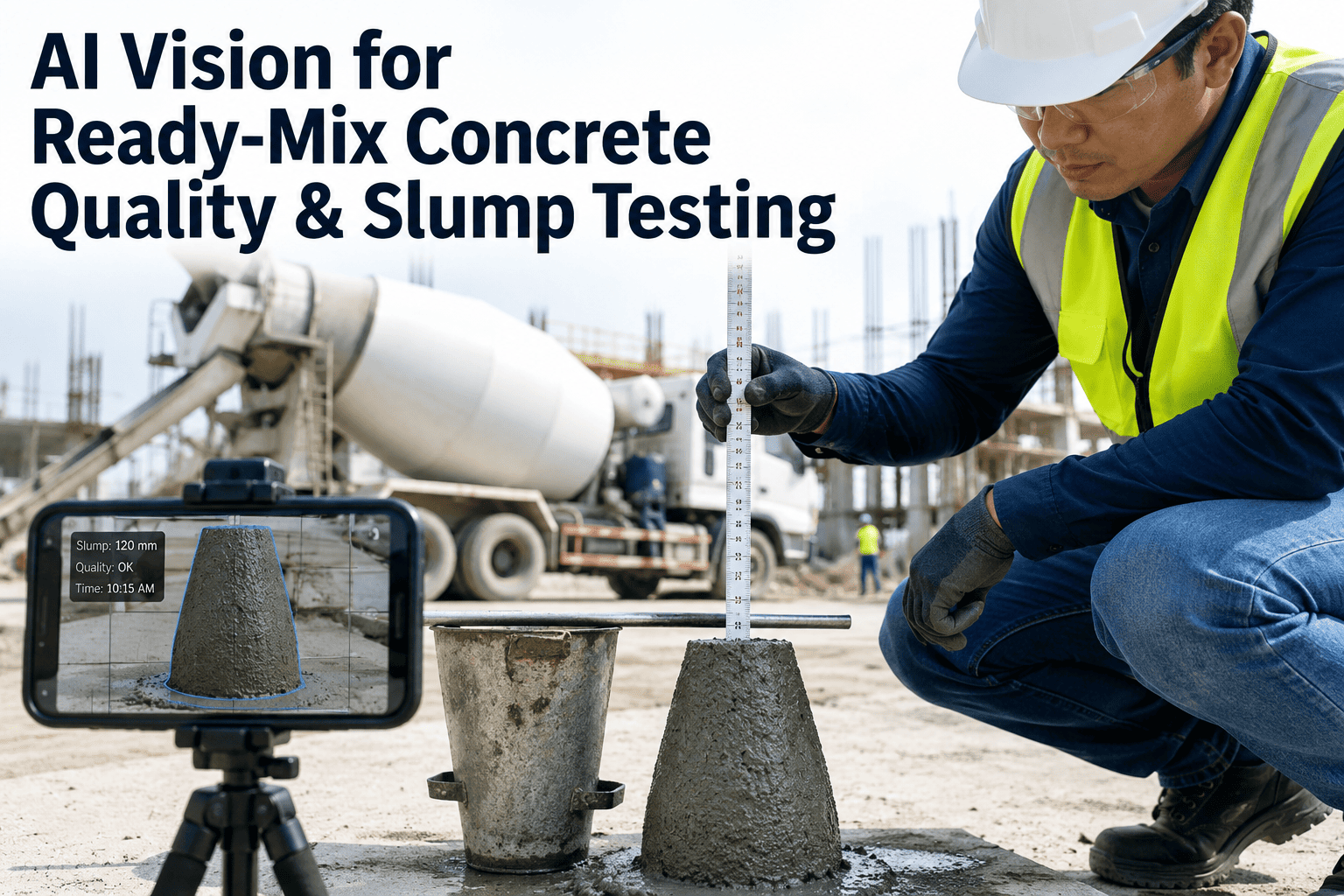
A slump test takes about two minutes to perform and tells a quality team almost nothing about the truck that arrives ten minutes later. Standard practice calls for testing one sample per truck or per batch, using a 12-inch cone standardized nearly a century ago, and the reading must be taken within a couple of minutes of sampling or it stops reflecting the concrete's true condition. That leaves every truck between scheduled tests running on assumption, and any subtle drift in water content, admixture dosing, or aggregate moisture goes unnoticed until a load already at the pour site turns out to be too stiff to place or too wet to hold its strength. AI vision now lets ready-mix producers watch discharge flow at every chute on every load, turning a spot check into continuous quality coverage. Book a demo to see how iFactory's AI vision platform monitors slump and consistency on every truck, not just the ones you test.
Every Truck Deserves a Slump Reading. Right Now, Most Never Get One.
A typical reinforced concrete mix targets a 50-100mm slump, and every additional inch beyond spec can cut compressive strength by roughly 500 psi — yet most plants confirm that number on only a fraction of loads. iFactory's AI vision platform watches the discharge chute on every truck, classifying flow behavior in real time and flagging out-of-spec loads before they leave the yard or reach the pour site.
100%
Of loads visually monitored vs a single sampled truck per batch
6-10sec
Camera observation window needed per discharge event
80%+
Classification accuracy demonstrated on field discharge video
0
Additional sensors or hardware needed on the mixer truck itself
Why One Slump Test Per Truck Leaves Ready-Mix Quality Exposed
Slump testing works well as a spot check, but a spot check by definition only covers the moment it was taken. Talk to support about where your current testing frequency leaves coverage gaps.
One Reading Represents an Entire Batch
A single cone test per truck is treated as representative of the whole load, but water content, admixture dosing and aggregate moisture can all vary within the same batch, especially on hot or humid days when concrete changes faster than it can be tested.
The Test Window Is Only Two Minutes
Slump readings must be taken almost immediately after sampling, since delay changes the result through early setting or moisture loss. That narrow window means most trucks simply pass through without ever being sampled at all.
Results Depend on the Operator
Cone placement, tamping consistency, and lift technique all affect the reading, so the same batch can produce different results depending on who performs the test and how carefully each step is followed.
Out-of-Spec Loads Are Often Caught Too Late
When a problem is only discovered at the pour site, the options are limited to rejecting the load, adjusting on site without documentation, or placing concrete that will underperform its design strength.
Batch-to-Batch Consistency Is Hard to Prove
Customers and inspectors increasingly want evidence that every load met spec, not just the sampled ones, and a logbook of periodic readings cannot demonstrate consistency across a full day's production.
Rework and Rejected Loads Are Expensive
A rejected truck means wasted material, a delayed pour, and a return trip to the plant, all of which could often have been prevented if the workability drift had been visible before the truck left the yard.
How AI Vision Slump Monitoring Works, Chute to Alert
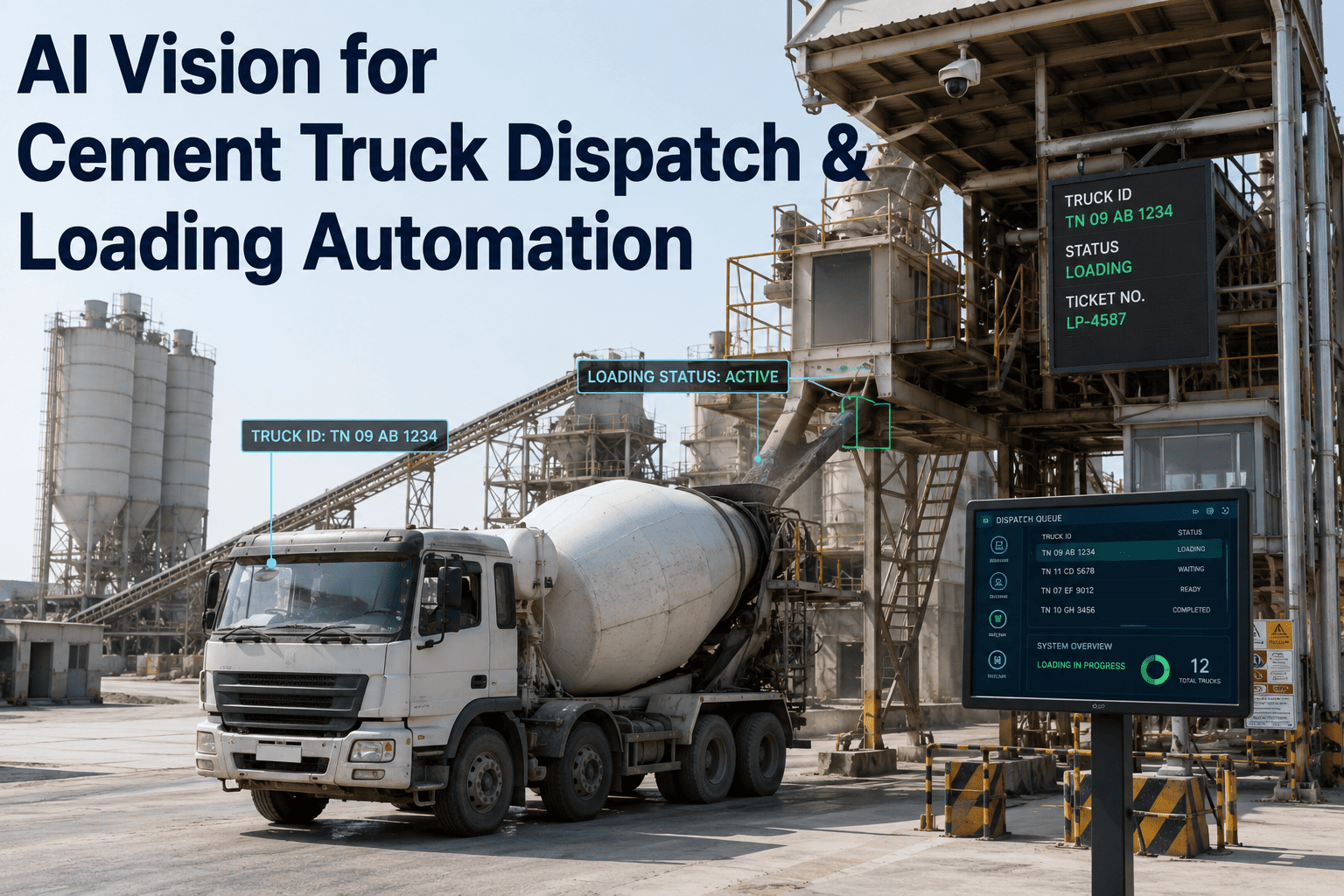
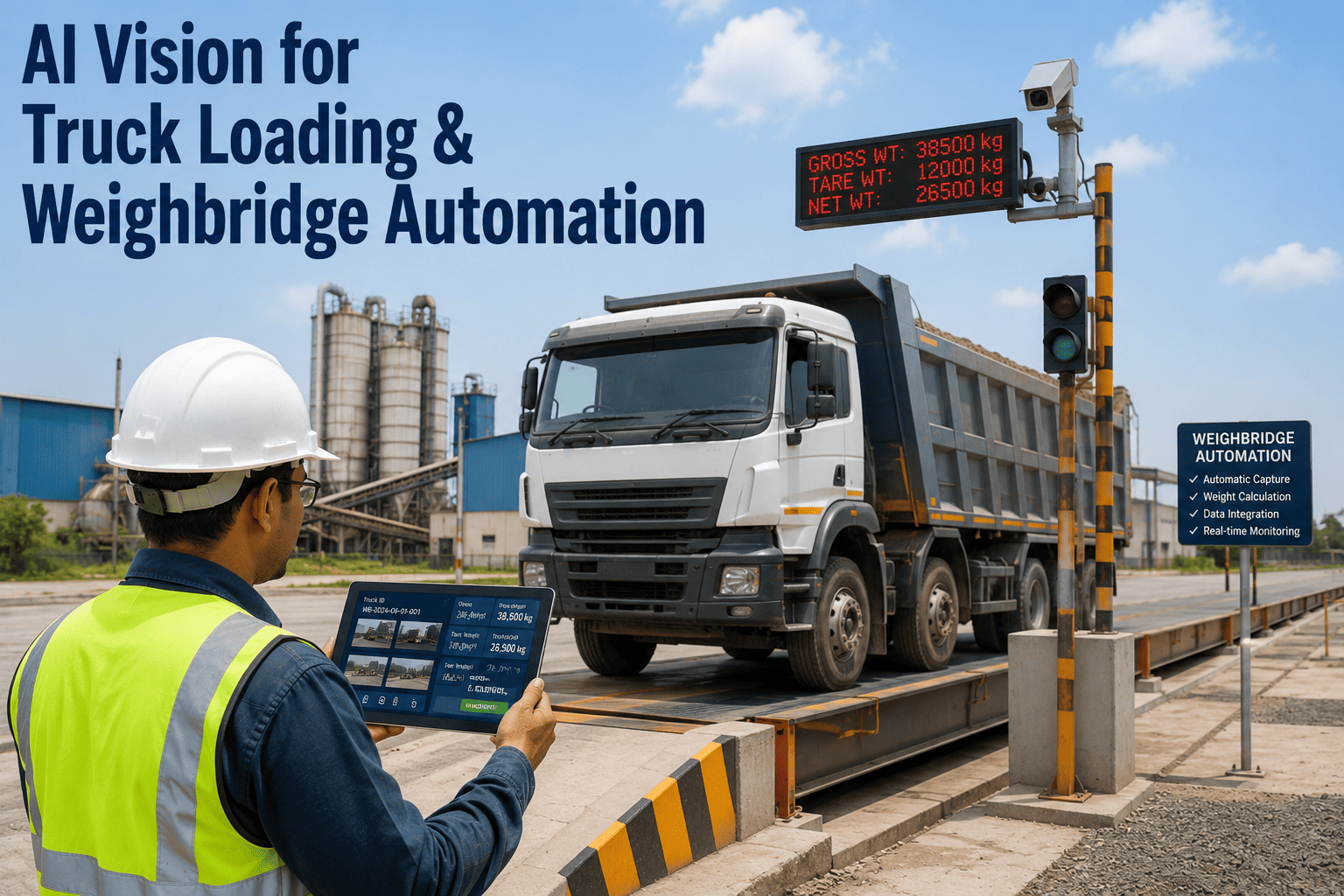
The same discharge flow a QC technician would watch by eye is captured on camera and processed through a four-stage pipeline built specifically for concrete discharge behavior.
1
Chute Detection
A fixed camera locates the active discharge chute on the mixer truck, working across different truck geometries and lighting conditions in the yard or at the loading bay.
2
Pour Event Identification
The system identifies the exact moment concrete begins flowing from the chute, isolating the discharge window so classification only runs on genuine flow, not idle chute footage.
3
Flow Behavior Classification
Roughly 6 to 10 seconds of discharge video is analyzed for flow rate, spread pattern and visual viscosity, classifying the load's workability without a cone, a tamping rod, or a technician on site.
4
Out-of-Spec Alerting
Loads that fall outside the target slump range are flagged immediately, giving the batching team a chance to correct the mix or hold the truck before it leaves for the pour site.
Manual Slump Testing Compared to AI Vision Monitoring
| Capability |
Manual Cone Testing |
iFactory AI Vision Monitoring |
| Load Coverage |
One sample per truck or per batch, leaving most loads untested between spot checks. |
Every discharge event on every truck observed continuously through the chute camera. |
| Result Consistency |
Depends on technician technique — cone placement, tamping, and lift speed all affect the reading. |
Consistent model-based classification applied identically to every load, removing operator variability. |
| Time to Result |
Roughly two minutes per test, and only practical for a fraction of daily loads. |
Seconds per discharge event, generated automatically without slowing down loading. |
| Documentation |
Handwritten or manually logged readings tied to whichever loads were actually sampled. |
Automatic video-backed record for every monitored load, supporting customer and inspector requests for evidence. |
| Correction Timing |
Problems are often discovered at the pour site, after the truck has already left the plant. |
Out-of-spec flow is flagged before or as the truck leaves the yard, while correction is still possible. |
| Equipment Needed |
Slump cone, tamping rod, base plate, and a trained technician available at testing time. |
A fixed camera at the chute — no sensors on the truck and no additional site equipment. |
Stop Testing One Truck and Hoping the Rest Match
iFactory's AI vision platform watches discharge flow on every load, flags workability drift before the truck leaves the yard, and gives you a video-backed record for every batch — not just the ones a technician happened to sample.
Getting AI Vision Slump Monitoring Live at Your Plant
Deployment is scoped around your existing loading bays and truck routes, with monitoring active on the busiest chutes first.
Week 1
Camera Placement
Fixed cameras are installed or repositioned at loading bay chutes with the discharge angle and lighting the model needs for reliable flow classification.
Week 2
Site Calibration
The model is calibrated against your specific mixes, aggregate types and lighting conditions using recorded discharge footage from your own trucks.
Week 3
Parallel Validation
AI classifications run alongside manual slump tests on the same loads, validating accuracy against your technicians' cone readings before manual testing is scaled back.
Week 4
Full Bay Coverage
Monitoring goes live across all loading bays, with out-of-spec alerts routed to the batching team and a video-backed quality log running for every load.
Results From Ready-Mix Producers Running AI Vision Monitoring
A ready-mix producer running six batch plants was manually testing roughly one in eight loads and relying on driver feedback for the rest. After installing chute cameras at each loading bay, every load was classified for workability before leaving the yard. Rejected loads at the pour site fell 48% within four months, and the company began supplying customers with a video-backed quality log for every delivery on request.
48%Fewer loads rejected at the pour site
100%Of loads now visually classified before dispatch
A high-volume precast operation needed consistency across dozens of daily pours but could not staff manual testing at that frequency. AI vision monitoring flagged three separate admixture dosing drifts within the first month that would previously have gone unnoticed until finished units showed inconsistent surface finish. Batch-to-batch workability variance dropped 35%, reducing surface defect rework significantly.
35%Reduction in batch-to-batch workability variance
3Admixture dosing drifts caught in the first month
What Ready-Mix Quality Teams Say
We used to test one truck and assume the rest matched. Now every chute is watched, and we catch drift before a truck ever leaves the yard.
Quality Control Manager, Regional Ready-Mix Producer
A customer asked for proof that every load on a large pour met spec. For the first time we had a video-backed answer instead of a partial logbook.
Plant Manager, Ready-Mix Concrete Plant
The system caught an admixture dosing drift on a Friday afternoon that our manual sampling schedule would not have found until Monday.
Batching Supervisor, Precast Facility
Rejected loads used to mean a wasted truck and a delayed pour. Now we see workability issues in the yard, not at the job site.
Dispatch Coordinator, Ready-Mix Operation
Frequently Asked Questions
Does AI vision monitoring replace the standard cone slump test entirely?
How accurate is video-based slump classification compared to a physical cone test?
Field evaluations of camera-based discharge classification have demonstrated accuracy above 80% under diverse real-world pouring conditions, including variation in lighting, mix design and aggregate visibility. Accuracy improves further once the model is calibrated to your specific mixes and camera placement during the first weeks of deployment.
What camera setup is needed, and does it require sensors on the truck?
No sensors or hardware are needed on the mixer truck itself. A single fixed camera positioned at the loading bay chute captures the discharge flow, and the same setup works whether concrete is discharging from a stationary truck at the plant or at a loading bay used for multiple trucks throughout the day.
Can the system catch problems before the truck leaves the plant?
Yes. Because the camera observes the natural discharge during loading, out-of-spec flow behavior is flagged in seconds, while the batching team still has the opportunity to adjust the mix, hold the truck, or investigate the cause before the load is dispatched to a job site.
Book a demo to see the alerting workflow on your own loading bays.
How long does deployment take and what does the plant need to provide?
Most plants are live within about four weeks, starting with camera placement at loading bay chutes, followed by site-specific calibration, a parallel validation period against manual testing, and then full bay coverage. The plant mainly needs to provide camera mounting access and a short period of manual testing data for calibration.
See Every Load's Workability, Not Just the One You Sampled
iFactory's AI vision platform watches discharge flow at every chute, classifies workability in seconds, and flags out-of-spec loads before they leave the yard — giving your quality team coverage a single cone test was never designed to provide.
Every load observed through the discharge chute, not just sampled batches
Flow classification in seconds with no sensors on the truck
Out-of-spec alerts before the truck leaves the yard
Video-backed quality records for every monitored load