A Blaine fineness test takes roughly five minutes of dedicated instrument time and returns exactly one number: an estimated surface area that is assumed, not proven, to correlate with strength and setting time. Laser diffraction improves on that by capturing the full particle size distribution in seconds, but most cement labs still run color measurement, physical testing and sample prep as separate manual steps handled by whichever technician is available. Every one of those steps was designed for a world with one grade change per shift, not the grade-switching frequency and turnaround pressure most plants operate under today. AI machine vision now automates fineness classification, color consistency checks, and physical test monitoring together, so a lab spends less time waiting on results and more time acting on them. Book a demo to see how iFactory's AI machine vision platform accelerates cement quality lab testing end to end.
Your Lab Shouldn't Be the Bottleneck Between Grinding and Grade Approval
Laser diffraction can characterize an entire particle size distribution from 0.25 to 3,500 micrometers in seconds, yet fineness, color and physical testing are still run as separate manual steps in most labs, each waiting on technician availability. iFactory's AI machine vision platform automates classification and monitoring across these tests together, cutting the time between a mill sample and a grade decision.
Why Manual Lab Testing Slows Down Quality Decisions
Individually, each cement quality test is well understood and reliable. The problem is what happens when several of them have to run one after another before a grinding or grading decision can be made. Talk to support about where testing sequence is adding the most delay in your lab.
Fineness Testing
Blaine air-permeability testing takes several minutes per sample and returns a single surface-area estimate, while sieve-based fineness residue tests add further time for a narrower piece of information than a full particle size distribution provides.
Color Consistency
Color checks are frequently done visually against a reference sample, a method that is fast but subjective and inconsistent between shifts, even though customers increasingly specify color tolerance as part of acceptance criteria.
Physical Testing
Compressive strength testing requires cube preparation, a curing period of one to twenty-eight days depending on the specification, and a technician present to load, monitor and record each test, with failure mode assessed by eye.
Sample Handling
Moving samples between instruments, logging results manually, and re-running tests when a reading looks anomalous all add time that compounds across a lab handling dozens of samples per shift.
Reporting Turnaround
Combining fineness, color and strength results into a single grade report is typically a manual compilation step, adding time between the last test finishing and a decision actually being made on the batch.
Where AI Machine Vision Cuts Testing Time Most
The chart below compares typical time-per-sample for manual testing methods against AI machine vision-assisted equivalents across the tests that create the most lab bottleneck.
Physical Test Monitoring
Manual observation, full test
Automated capture and classification
Result Compilation
Manual report assembly ~10-15 min
Automatic grade report generation
Manual Lab Testing Compared to AI Machine Vision Testing
| Capability |
Manual Lab Testing |
iFactory AI Machine Vision Testing |
| Fineness Result |
Single surface-area estimate from Blaine, or a separate laser diffraction run, each requiring dedicated instrument time. |
Automated particle size classification integrated directly into the grade decision workflow. |
| Color Assessment |
Visual comparison against a reference sample, subject to lighting and observer variability. |
Camera-based color measurement applying consistent criteria across every sample and shift. |
| Physical Test Monitoring |
Technician loads and observes each compressive test, assessing failure mode by eye. |
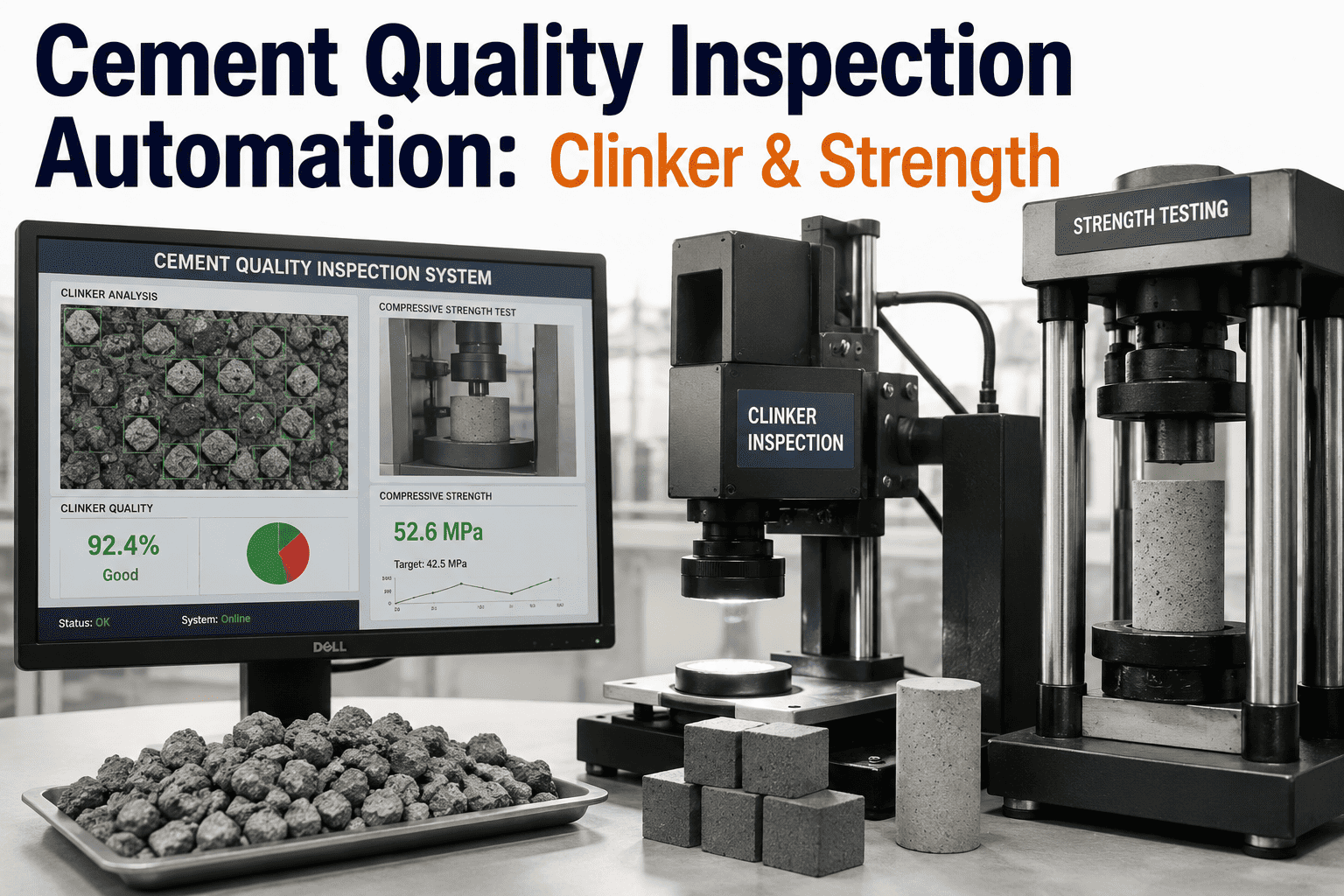
Automated load monitoring with vision-based failure mode classification captured on every test. |
| Sample Throughput |
Limited by technician availability and sequential instrument use. |
Higher throughput through parallel automated testing and reduced manual handling steps. |
| Result Consistency |
Varies with operator technique and shift-to-shift practice. |
Consistent classification criteria applied identically regardless of shift or technician. |
| Reporting |
Manual compilation of fineness, color and strength results into a grade report. |
Automatic grade report generation as soon as all test results are available. |
Every Test Individually Fast. Together, Still Too Slow.
iFactory's AI machine vision platform automates fineness classification, color consistency checks and physical test monitoring together, closing the gap between a mill sample arriving and a grade decision being made.
Getting AI Machine Vision Testing Running in Your Lab
Deployment integrates with the instruments your lab already runs, adding automated classification and reporting on top rather than replacing your testing equipment.
1
Instrument and camera integration with existing fineness, color and compression testing equipment
→
2
Model calibration against your specific cement grades and historical test records
→
3
Parallel validation running automated and manual testing side by side
→
4
Full lab rollout with automated grade reporting live across all sample types
Results From Cement Labs Running AI Machine Vision Testing
A plant producing multiple cement grades on the same mill line was losing production time waiting on sequential fineness, color and strength testing before each grade change was confirmed. Automated fineness classification and color measurement cut the testing sequence from roughly forty minutes to twelve, and automatic grade reporting removed the manual compilation step entirely. Grade-change confirmation time dropped 65%, reducing off-spec material produced during transitions.
65%Faster grade-change confirmation time
40→12minReduction in the full testing sequence
A quality lab running high sample volumes had noticed inconsistency in how different technicians classified cube failure modes, complicating trend analysis over time. Vision-based failure mode classification applied the same criteria to every test automatically, and historical inconsistency in failure mode logging dropped significantly. This gave the lab's trend analysis a much more reliable dataset to correlate against mix design changes.
100%Of compression tests now classified with consistent criteria
Same-dayFailure mode data available for trend analysis
What Cement Lab Teams Say
We used to run three separate tests before we could confirm a grade change. Now the results come together automatically, and the report is ready before the technician has moved to the next sample.
Lab Manager, Multi-Product Cement Plant
Different shifts used to classify cube failures differently. Now every test gets the same classification criteria, and our trend data finally makes sense across shifts.
Quality Control Supervisor, Integrated Cement Plant
Color checks used to be a judgment call against a reference sample. Camera-based measurement gave us a number instead of an opinion, and that changed how we handle customer color complaints.
Technical Services Manager, Cement Manufacturing Group
Frequently Asked Questions
Does AI machine vision testing replace our existing lab instruments?
How does vision-based color measurement compare to a visual reference check?
A visual comparison against a reference sample depends on lighting conditions and the individual observer, which introduces inconsistency between shifts. Camera-based color measurement applies the same measurement criteria to every sample regardless of who is on shift, giving a consistent number rather than a subjective judgment call, and creating a documented record for customer color specification requirements.
Can the system classify compressive strength test failure modes automatically?
Yes. A camera integrated with the compression testing machine captures the failure pattern on each cube, and the model classifies the failure mode using the same criteria on every test. This removes the shift-to-shift variability that comes with manual visual assessment and builds a more reliable dataset for correlating failure patterns with mix design or process changes over time.
How long does it take to get AI machine vision testing running in an existing lab?
Deployment typically starts with integrating cameras and data feeds from your existing fineness, color and compression testing equipment, followed by calibration against your specific cement grades and a parallel validation period where automated and manual results are compared side by side. Most labs move to full rollout within a few weeks once validation confirms the automated results match manual testing.
Book a demo to get a deployment timeline scoped to your lab's instruments.
Does this help with faster grade change decisions on multi-product mill lines?
Yes. Plants producing multiple cement grades on the same line often lose production time waiting on sequential fineness, color and strength results before a grade change can be confirmed. Automating classification across those tests and generating the grade report automatically as soon as results are available shortens the time between a mill sample and a confirmed grade decision.
Turn Your Lab Into a Speed Advantage, Not a Bottleneck
iFactory's AI machine vision platform automates fineness classification, color measurement and physical test monitoring across your existing lab instruments, cutting the time between a mill sample and a confirmed grade decision.
Automated fineness classification integrated with existing instruments
Camera-based color measurement replacing subjective visual checks
Vision-based failure mode classification on every compression test
Automatic grade reporting as soon as results are available