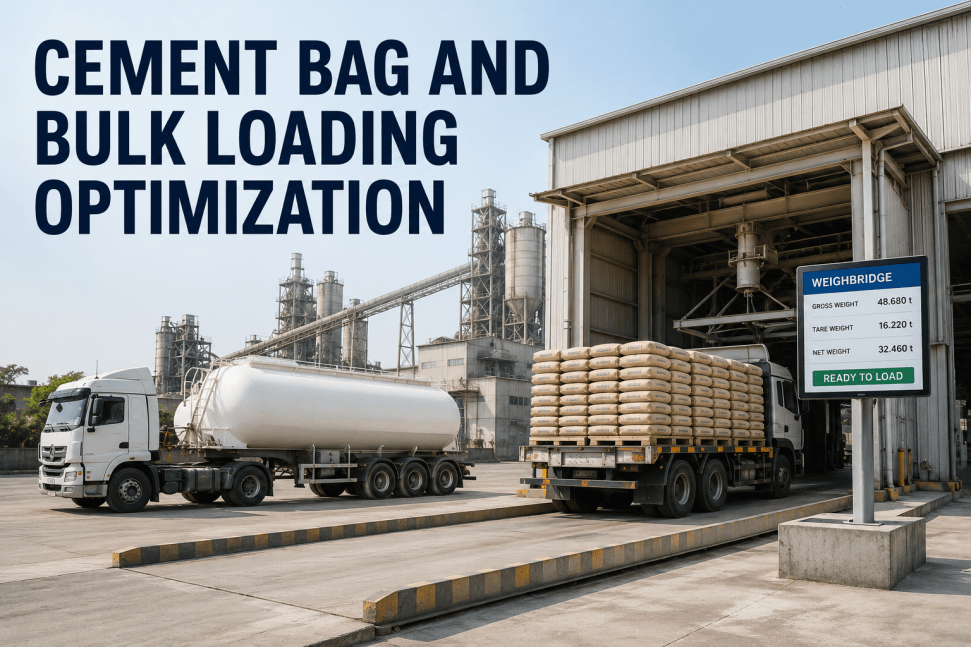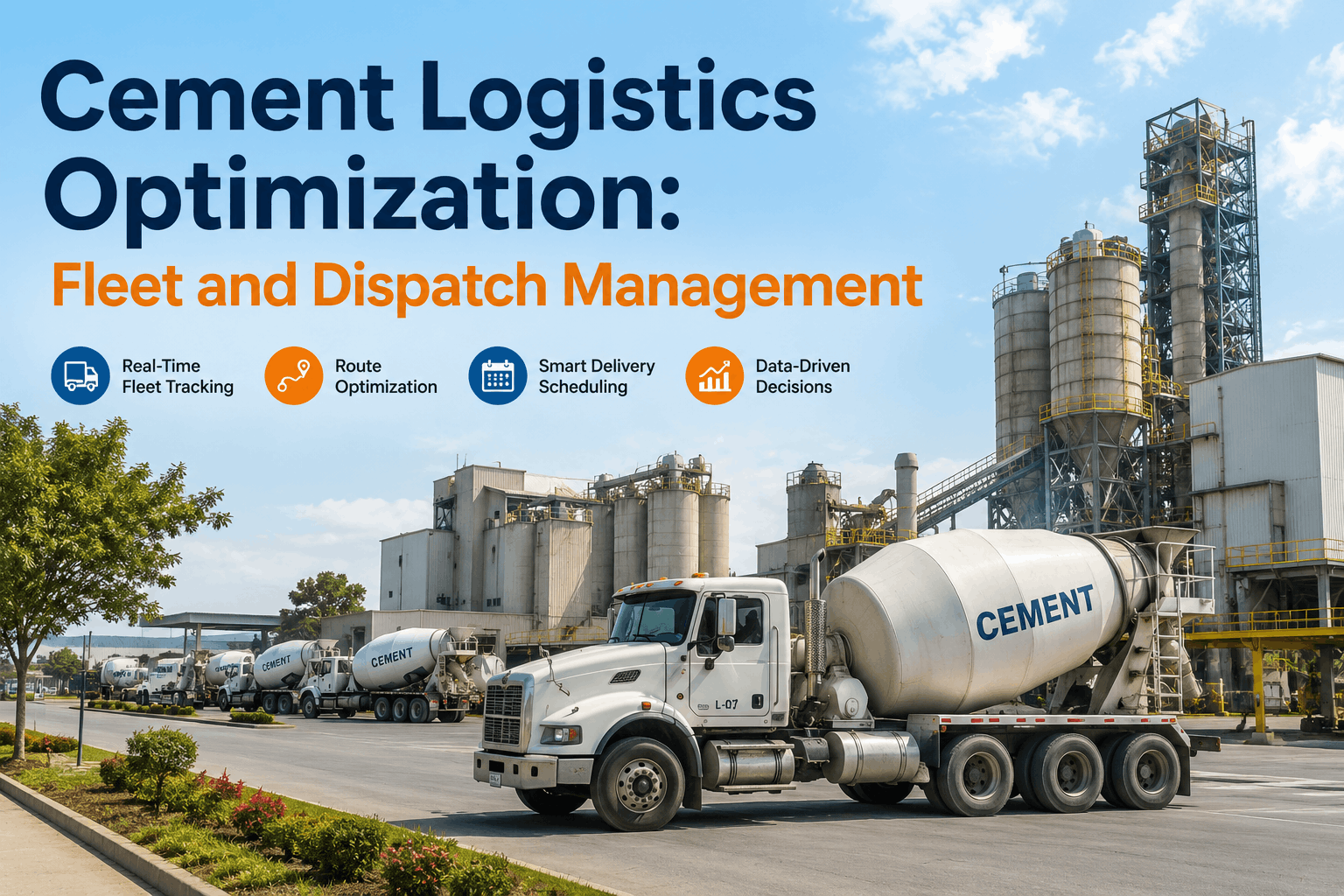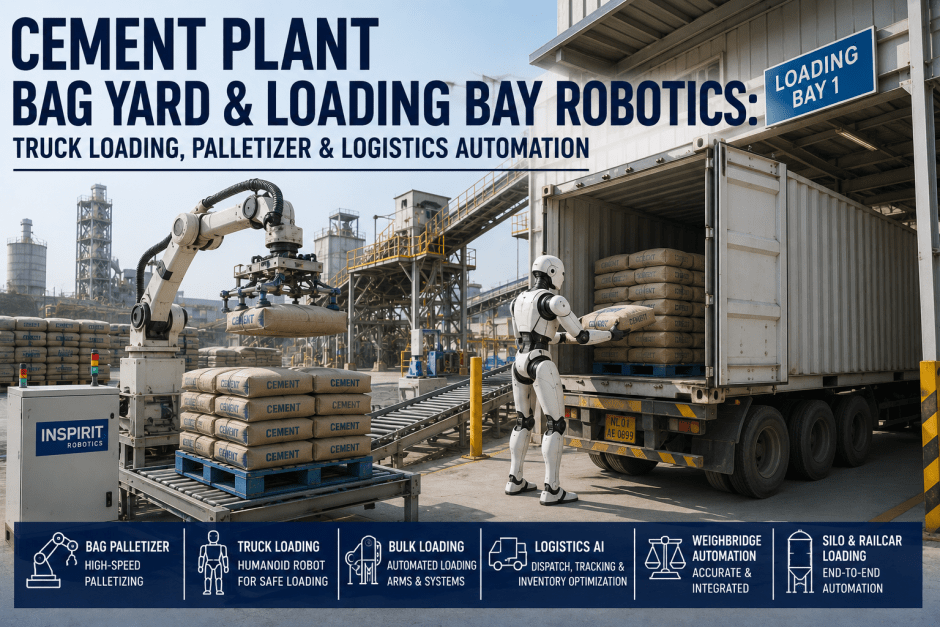
Cement plant bag yards and loading bays are among the most labor-intensive zones in any cement manufacturing operation — and among the least automated. A typical 2 MTPA cement plant moves 600,000 to 900,000 bags of cement per year through its packing and loading operations, with each bag handled multiple times from the packer to the palletizer to the truck bed or railcar. The physical demands of bag handling create persistent labor shortages, high turnover, and injury risk that drive up operating costs and constrain dispatch throughput during peak demand periods. Robotic automation — palletizer robots, truck loading humanoids, bulk loading arms, and AI-coordinated dispatch logistics — is transforming the cement loading bay from a cost center into a competitive advantage by eliminating manual bag handling, reducing loading times by 60 to 75 percent, and enabling 24-hour dispatch operations without incremental labor cost. Plant managers and logistics directors evaluating loading bay automation can book a demo to see how iFactory's integrated bag yard and loading bay robotics platform is being deployed at cement plants across North America and Europe.
Cement Bag Yard & Loading Bay Robotics: Eliminating Manual Handling from Packer to Dispatch
A comprehensive technical guide to deploying palletizer robots, truck loading humanoids, bulk loading automation, and AI-driven dispatch logistics across cement plant bag yards and loading bays — covering application architecture, implementation roadmap, and measurable operational impact.
The Cement Bag Yard Labor Crisis: Why Manual Handling Is No Longer Sustainable
Cement bag yards operate at the intersection of production output and customer delivery, yet most remain configured around manual labor processes that have not changed significantly in decades. The physical demands of handling 50-kilogram cement bags — lifting, stacking, palletizing, loading — create working conditions that are increasingly difficult to staff, particularly in markets with aging workforce demographics and competitive labor markets. The consequences of manual bag yard operations extend beyond direct labor cost to include loading time variability that strains customer relationships, injury-related downtime that disrupts dispatch schedules, and throughput constraints that limit a plant's ability to capitalize on peak demand periods. Logistics and dispatch teams evaluating robotic automation for their bag yard often book a demo to benchmark their current loading bay performance against iFactory's automated bag yard reference plants.
Bag Palletizing Labor
Manual bag palletizing requires 4 to 6 workers per shift at a typical 2 MTPA plant, lifting 30,000 to 45,000 kg of cement per person per shift. Robotic palletizer systems eliminate this labor category entirely while achieving 1,800 to 2,400 bags per hour with zero lifting injuries.
Truck Loading Bottleneck
Manual truck loading of bagged cement averages 45 to 75 minutes per truck depending on bag count and crew availability. Robotic truck loading systems — including articulated arm and humanoid configurations — reduce loading time to 12 to 20 minutes per truck.
Loading Bay Injury Risk
Bag yard and loading bay operations account for 35 to 45 percent of all workplace injuries at cement plants, with back strain, crush injuries, and fall-from-height incidents being the most common categories. Robotic automation eliminates the highest-risk manual tasks from the loading bay environment.
Dispatch Throughput Variability
Manual bag yard throughput varies by 30 to 50 percent depending on shift crew composition, fatigue levels, and truck arrival patterns. AI-coordinated dispatch logistics combined with robotic loading delivers consistent throughput within 5 percent of target regardless of shift or day of week.
Bulk Loading Inefficiency
Bulk cement loading operations at many plants still rely on manual valve operation and visual level monitoring, resulting in underfilled or overfilled tankers that require adjustment and rework. Automated bulk loading arms with AI flow control achieve target fill weights within 0.5 percent every cycle.
Weighbridge & Document Delay
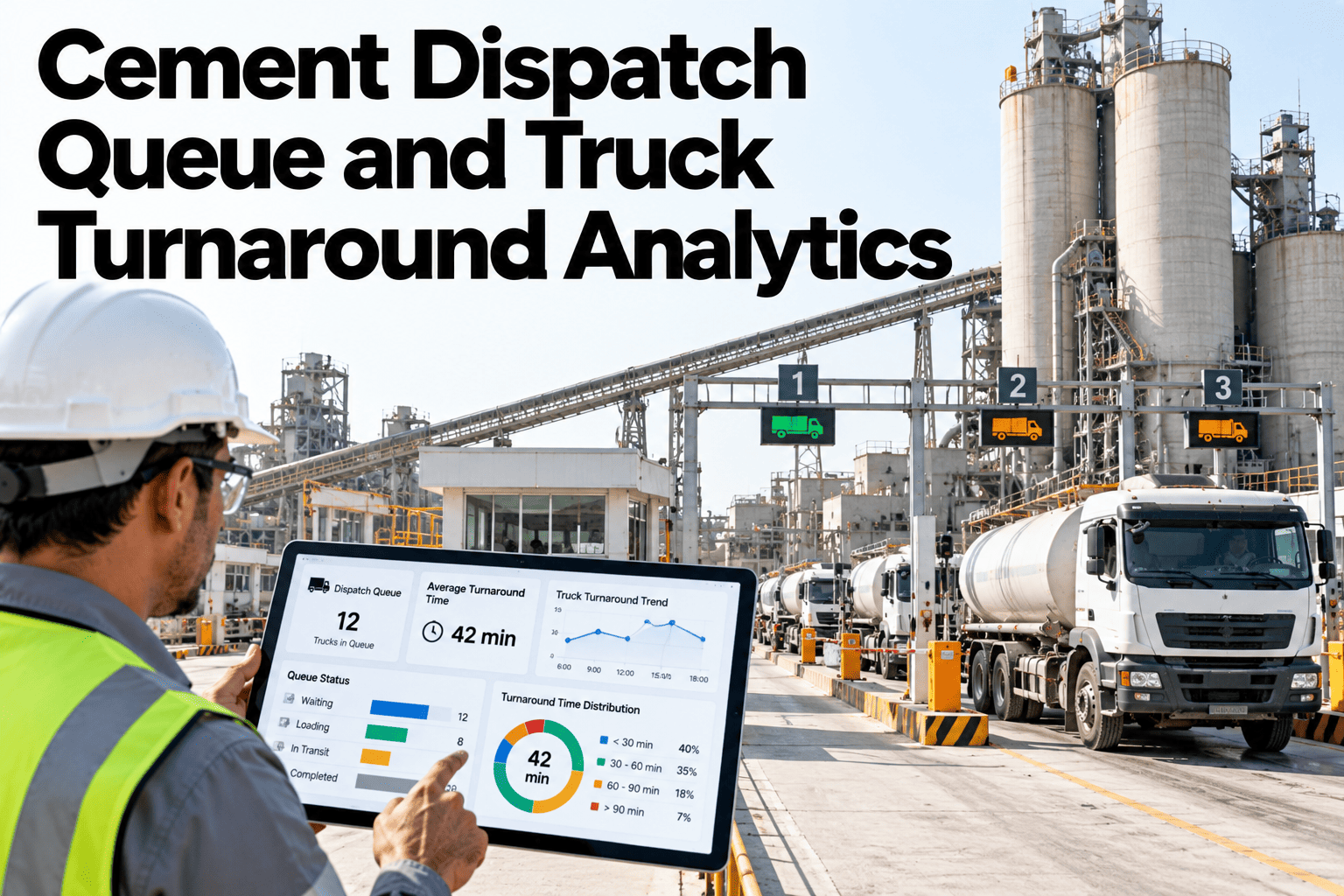
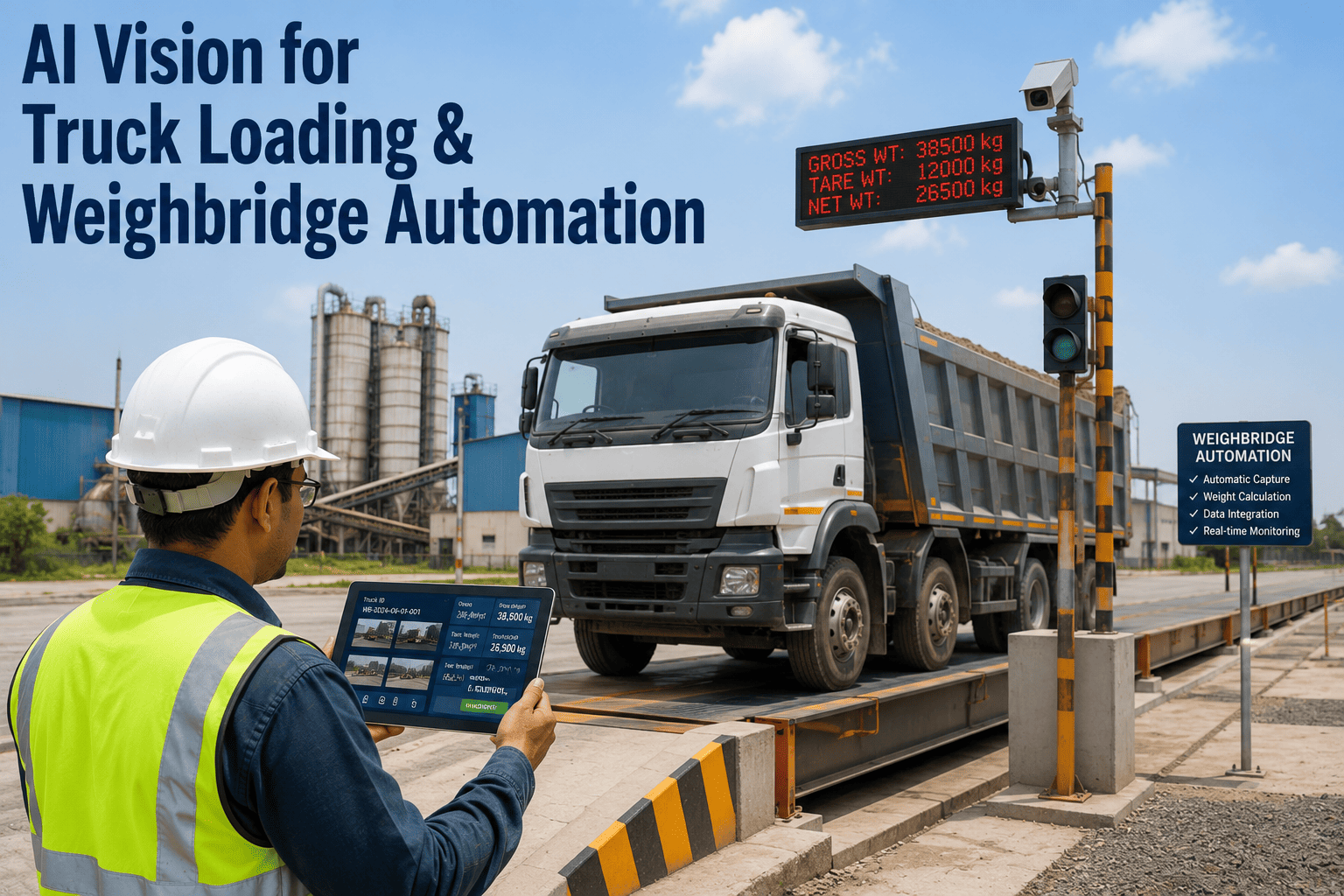
Manual weighbridge operations and paper-based dispatch documentation add 8 to 14 minutes per truck transaction. AI-integrated weighbridge automation with license plate recognition and digital documentation reduces gate-to-gate truck cycle time by 40 to 55 percent.
Loading Bay Automation: Manual vs. Robotic Performance Benchmarks
Quantifying the operational impact of robotic bag yard and loading bay automation across the four most critical dispatch performance KPIs. Moving from manual methods to integrated robotic systems transforms loading bay economics.
Benchmark Your Loading Bay Performance Against Automated Reference Plants
iFactory's loading bay automation database tracks deployment metrics across 30+ cement plants with robotic palletizer, truck loading, and bulk loading systems. Schedule a confidential benchmark review to see how your plant's loading bay performance compares and identify the highest-ROI automation opportunities for your dispatch volume and truck fleet profile.
Four Deployment Tiers for Cement Bag Yard and Loading Bay Robotics
A complete bag yard and loading bay robotics deployment follows a phased architecture that addresses the highest-labor-impact applications first while building the digital infrastructure for fully autonomous dispatch operations. iFactory's four-tier deployment framework enables cement plants to start with proven palletizer and truck loading systems and expand to full loading bay automation as operational confidence and data infrastructure mature. Plant managers planning their loading bay automation roadmap typically book a demo to review iFactory's tiered deployment options configured for their specific bag yard layout, dispatch volume, and truck fleet profile.
Robotic Palletizer & Bag Stacking
Deployment of 4-axis and 6-axis robotic palletizer systems at each bagging line. Robots receive bags from the packer conveyor, arrange them in programmed stacking patterns, and dispense full pallets to the loading bay buffer. Systems handle 1,800 to 2,400 bags per hour with pattern flexibility for different pallet dimensions and truck loading configurations.
Autonomous Truck & Railcar Loading
Deployment of articulated robotic loading arms and humanoid robots for truck bed and railcar loading. AI vision systems identify truck bed geometry, pallet placement zones, and securement requirements. Robots load palletized bags and bulk containers at rates of 24 to 36 tons per hour with zero manual intervention. Compatible with flatbed, curtain-side, and container configurations.
Bulk Loading & Weighbridge Automation
AI-controlled bulk loading arms with automated flow rate optimization and target weight accuracy within 0.5 percent. Integrated weighbridge automation with ANPR, digital documentation, and automated gate control reduces gate-to-gate truck cycle time from 28 minutes to 14 minutes. Bulk loading and bag loading share a unified dispatch scheduling system.
AI Dispatch Logistics & Autonomous Operations
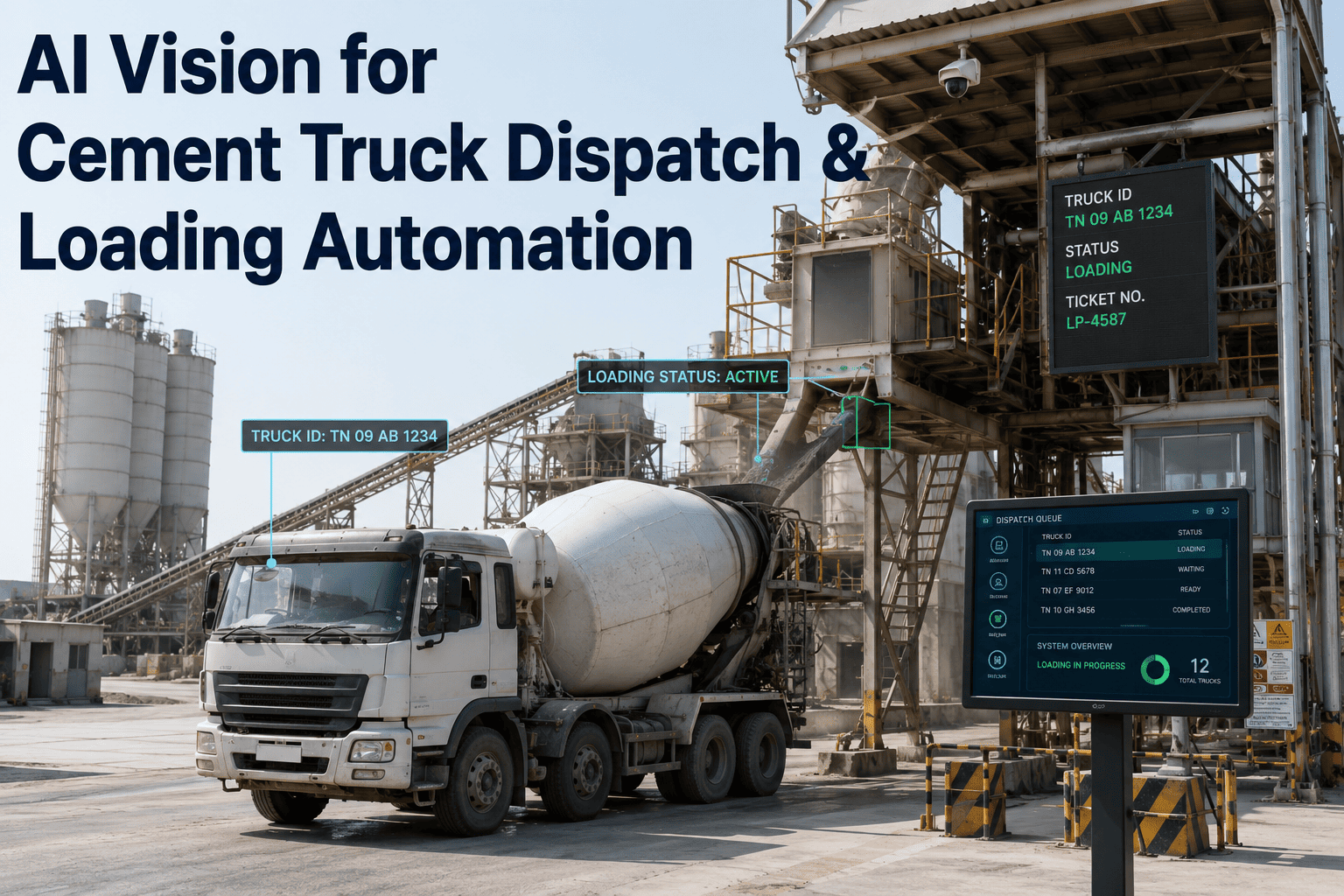
Full AI-coordinated dispatch logistics platform that integrates order management, truck scheduling, loading bay allocation, robotic loading execution, and documentation generation. The platform optimizes loading bay sequencing based on truck arrival times, loading type, and customer priority — enabling 24-hour autonomous dispatch operations with remote supervision.
Bag Yard and Loading Bay Automation: Application Coverage by Technology Type
Each loading bay task requires a specific robot configuration optimized for the material type, throughput requirement, and workspace geometry. The matrix below maps the primary robot technology types to the specific loading bay applications they serve, with coverage data from iFactory's deployed systems across cement plants in North America, Europe, and Asia.
| Loading Bay Application | Preferred Robot Type | Throughput per Hour | Labor Impact | Payback Period |
|---|---|---|---|---|
| Cement Bag Palletizing | 4-Axis/6-Axis Articulated Arm | 1,800-2,400 bags | 4-6 workers eliminated per shift | 8-12 months |
| Truck Bed Bag Loading | Humanoid + Articulated Arm | 24-36 tons | 2-3 loaders eliminated per truck | 10-16 months |
| Bulk Cement Loading | Automated Loading Arm | 80-120 tons | 1 operator replaced per shift | 6-10 months |
| Railcar Loading | Automated Loading Arm + Conveyor | 120-180 tons | 2-4 workers eliminated per shift | 12-18 months |
| Weighbridge & Dispatch | AI Vision + ANPR + Digital Docs | 15-25 trucks per hour | 1-2 dispatchers per shift | 5-9 months |
"Our bag yard was the most difficult part of the plant to staff and the most consistent source of customer complaints. Trucks waited 90 minutes or more for loading during peak periods, and we had a 28 percent annual turnover rate among loading bay workers. We deployed iFactory's robotic palletizer and truck loading system across three bagging lines in early 2025. The palletizer robots handled the full bagging output at 2,100 bags per hour per line from day one. The truck loading robot — an articulated arm system with AI vision — loads a full truck of 1,500 bags in 18 minutes versus the 68-minute average our manual crews achieved. We eliminated all five manual palletizing positions, redeployed three of the workers to quality inspection and equipment cleaning roles, and reduced our loading bay headcount by 60 percent without any layoffs — all through attrition over six months. Our customer on-time loading performance went from 72 percent to 99 percent, and the system paid for itself in 11 months."
Conclusion: The Loading Bay Is the Next Frontier of Cement Plant Automation
Cement plants have invested heavily in production area automation — kiln control systems, mill optimization, quarry automation — but the bag yard and loading bay have remained largely manual, representing the largest remaining automation gap in cement manufacturing operations. The technology to close this gap is mature and proven: robotic palletizers, truck loading articulated arms, humanoid loaders, automated bulk loading arms, and AI-coordinated dispatch logistics platforms are deployed at cement plants across North America, Europe, and Asia with documented payback periods of 6 to 18 months. The labor availability trends that make manual bag yard operations increasingly unsustainable — aging workforce demographics, competitive labor markets, and rising injury costs — are not temporary. They are structural shifts that will make robotic loading bay automation a competitive necessity rather than a differentiator within the next three to five years. For cement plant logistics and operations leaders who are still managing manual loading bays, the question is not whether to automate but how quickly the transition can be made.
Frequently Asked Questions: Cement Plant Bag Yard and Loading Bay Robotics
Transform Your Cement Plant Loading Bay with Integrated Robotic Automation
Speak with an iFactory loading bay automation specialist about deploying robotic palletizers, truck loading systems, and AI-coordinated dispatch logistics across your cement plant's bag yard and loading bay operations. Get a detailed ROI analysis for your specific plant configuration and dispatch volume.