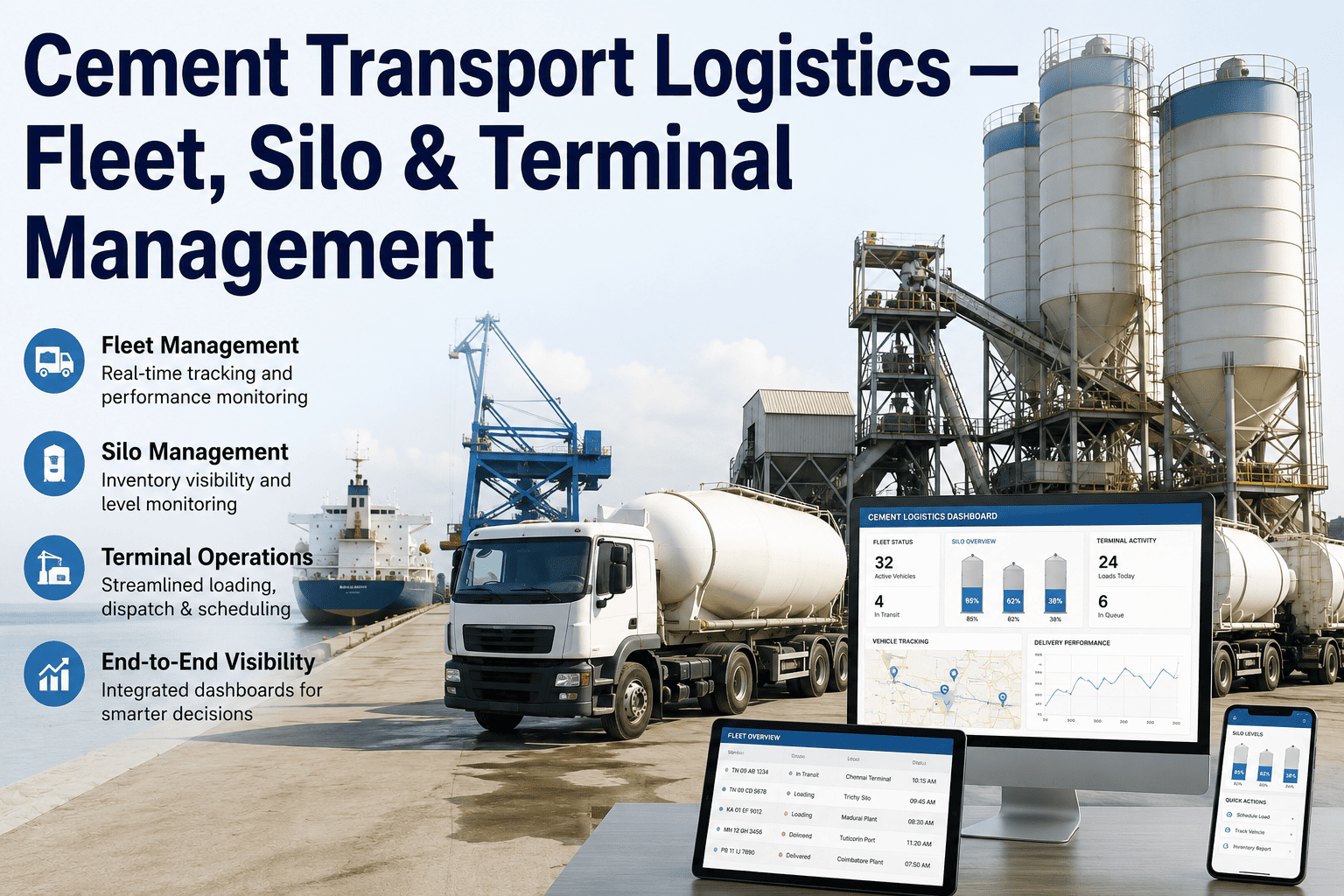
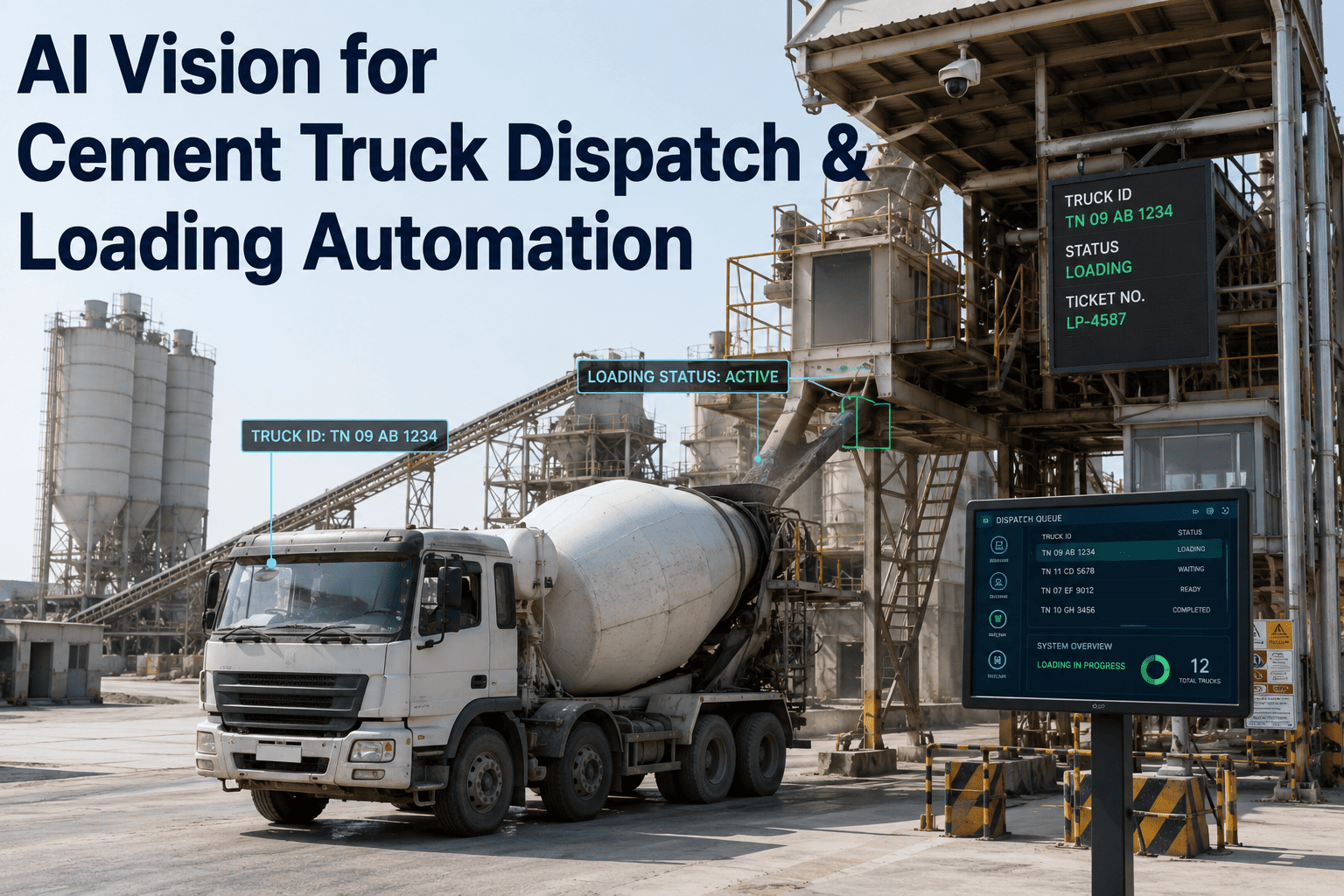
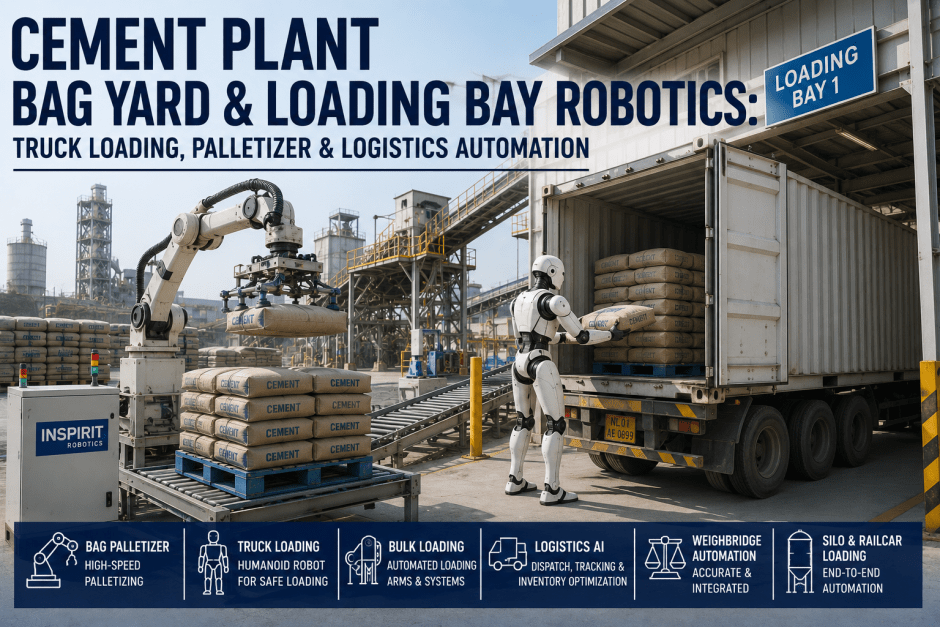
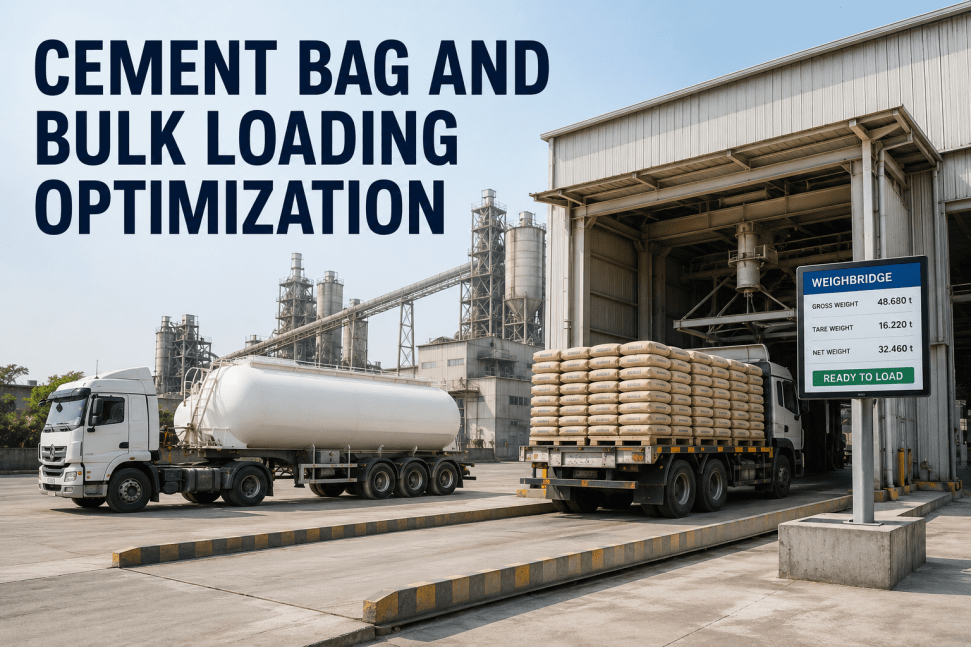
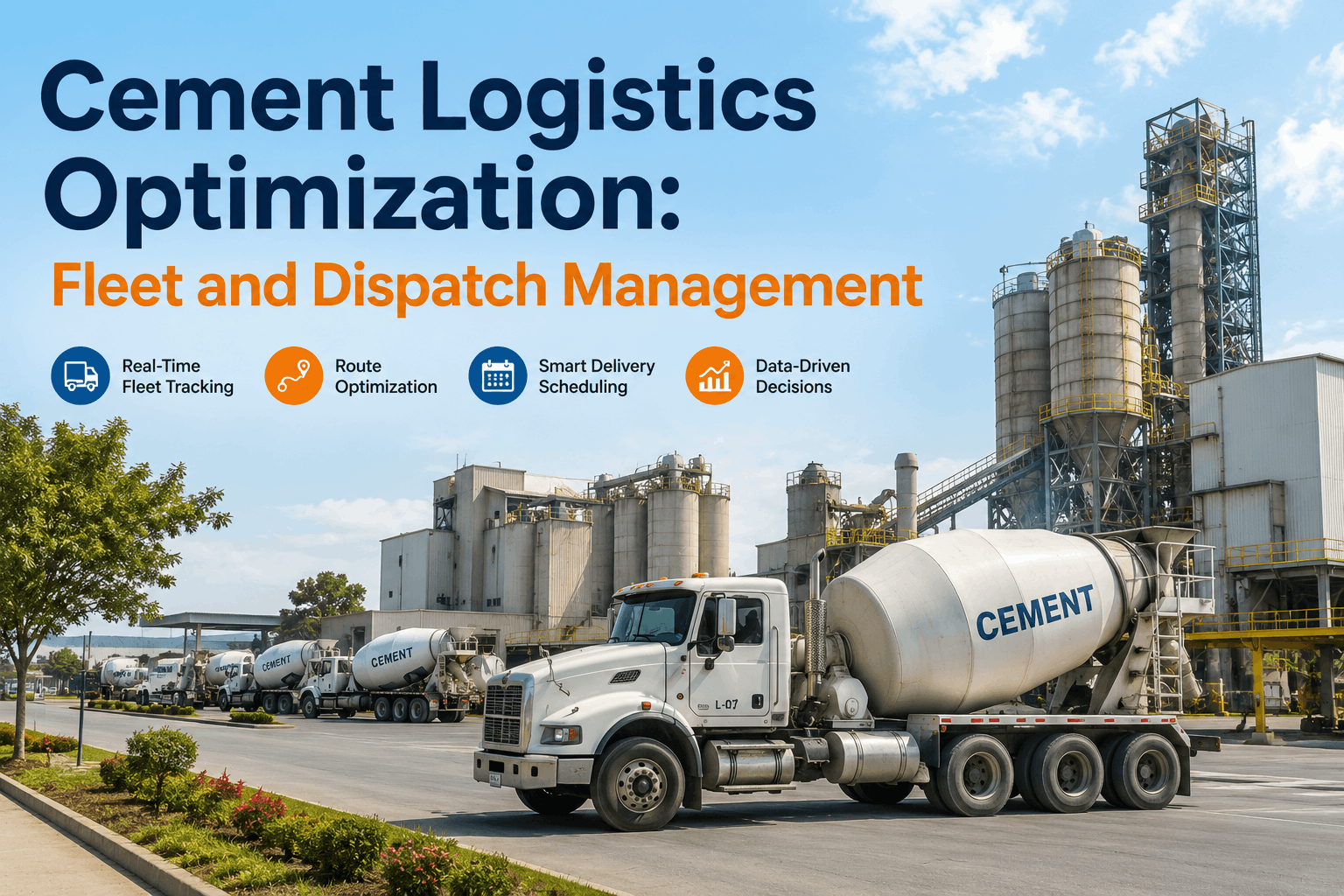
A cement plant can run its kiln at perfect efficiency and still lose money at the loading bay if trucks are idling in a queue, loading bays are sitting empty between dispatches, or drivers are being routed to the wrong silo for the order they are carrying. Dispatch and truck loading sit at the exact point where production output turns into revenue, yet most plants still coordinate it through radio calls, whiteboards, and a dispatcher's memory of which customer gets priority. iFactory applies AI scheduling and logistics analytics directly to the dispatch yard so trucks spend less time waiting and more time on the road, and our team can show you what that looks like against your own yard layout.
AI Cement Dispatch and Truck Loading Optimization
iFactory sequences truck arrivals, loading bay assignments, and product routing in real time, turning a dispatch yard that runs on radio calls into one that runs on a live, optimized schedule.
20–35%
Typical reduction in average truck turnaround time at the loading bay
10–15%
Additional daily truck throughput achievable from the same bay count
Real-Time
Bay and product assignment updates as orders and inventory change
Where Dispatch Efficiency Actually Gets Lost
Truck queuing looks like a yard capacity problem from the outside, but the underlying cause is almost always a coordination gap between order information, silo inventory, and bay availability. Each of these gaps is small on its own and invisible in daily throughput numbers, but together they routinely cost a mid-size plant hours of avoidable truck idle time every single day.
1
Manual Queue Sequencing
Trucks are called forward in arrival order rather than by which bay and product combination is actually free, creating avoidable waiting even when capacity exists
2
Silo-to-Order Mismatches
A truck is routed to a bay tied to a silo that does not hold the ordered product grade, forcing a re-route after the truck has already queued and lost time
3
Uneven Bay Utilization
Some loading bays sit idle while others back up, because assignment is based on habit or driver preference rather than current queue length and product availability
4
Paper-Based Order Confirmation
Load tickets and order details are confirmed manually at the bay, adding minutes per truck that compound into hours across a full day of dispatch volume
5
No Visibility Into Downstream Delay
Dispatchers cannot see that a delivery is already running late until the customer calls, losing the chance to re-prioritize the loading queue in time to recover
How the AI Dispatch Workflow Runs From Order to Departure
iFactory treats dispatch as a continuous optimization problem rather than a series of individual decisions. Each stage below feeds live data into the next, so the loading bay a truck is assigned to reflects the actual state of the yard at that moment, not a plan made hours earlier.
Step 1
Order Intake and Prioritization
Incoming orders are checked against inventory, customer priority, and delivery windows, then queued for assignment as trucks arrive rather than in raw arrival sequence
Step 2
Live Bay and Silo Matching
Each truck is matched to the loading bay tied to the correct product silo with the shortest realistic wait, recalculated continuously as other trucks load and depart
Step 3
Automated Load Confirmation
Load weight, product grade, and order details are confirmed digitally at the bay, removing the manual paperwork step that adds delay to every single truck
Step 4
Route and Delivery Tracking
Dispatched trucks are tracked against expected delivery windows so a developing delay is visible to the dispatch team while there is still time to communicate or adjust
Manual Dispatch vs AI-Optimized Dispatch: A Side-by-Side View
The difference between a radio-coordinated dispatch yard and an AI-optimized one shows up most clearly in the metrics that actually determine how many trucks a plant can turn around in a given shift.
Scroll to compare dispatch approaches
Watch Your Own Dispatch Yard Simulated Under AI Sequencing
iFactory can model your current bay layout, silo configuration, and typical order volume to show exactly how much truck idle time is realistically recoverable before you commit to anything.
Operational Impact Before and After AI Dispatch
The change plant teams describe after adopting AI dispatch is less about any single metric and more about the yard becoming predictable — dispatchers stop firefighting and start managing a schedule that mostly runs itself.
Before AI Dispatch
Trucks queue in arrival order regardless of which bay is actually free for their product
Dispatchers coordinate bay assignment by radio, relying on memory during busy periods
Paper load tickets add several minutes of manual processing to every truck cycle
Delivery delays are discovered when the customer calls, not when the delay begins
Some bays sit idle while others back up during the same peak dispatch window
After iFactory AI Dispatch
Trucks are sequenced against live bay and product availability, cutting avoidable wait time
Bay assignment updates automatically as orders, inventory, and queue length change
Load confirmation is digital and automatic, removing manual paperwork delay
Developing delivery delays are visible to dispatch while there is still time to act
Bay utilization stays balanced across the yard throughout the entire shift
The Data Sources Behind Every Dispatch Decision
An AI dispatch engine is only as good as the data it can actually see in real time. iFactory pulls from several live sources simultaneously so a bay assignment reflects what is happening in the yard at that exact moment rather than a plan built at the start of the shift.
Silo Inventory Levels
Live product levels per silo so a truck is never routed to a bay whose silo is about to run dry mid-load
Order Management Data
Customer priority, order quantity, and committed delivery windows pulled directly from your existing order system
Bay Occupancy Status
Real-time status of every loading bay, including in-progress load duration, so idle capacity is never left unassigned
Truck and Driver Location
Arrival sequencing based on actual yard position rather than a paper sign-in sheet at the gate
Why Peak Season Exposes Dispatch Gaps That Slow Periods Hide
Most dispatch problems are invisible during a normal shift because there is enough slack in bay capacity to absorb inefficient sequencing without anyone noticing a queue forming. Peak construction season removes that slack, and the same yard that ran smoothly in a slower month suddenly backs up trucks onto the public road.
Order Volume Spikes Faster Than Staffing
Dispatcher headcount rarely scales with seasonal order volume, so the same one or two people are making sequencing calls under far more pressure and with far less time per decision
Small Sequencing Errors Compound
A five-minute misassignment that would be absorbed during a slow week instead pushes every truck behind it further back, since there is no idle bay capacity left to recover the lost time
Customer Tolerance Drops When Everyone Is Busy
Contractors racing their own project deadlines are far less forgiving of a late delivery during peak season, making dispatch delays that were a minor annoyance in slower months into a real customer relationship problem
Frequently Asked Questions
Q: Does the dispatch system integrate with our existing order management and ERP platform?
Yes, iFactory's dispatch optimization is built to pull order and customer priority data directly from your existing order management or ERP system rather than requiring dispatchers to re-enter information separately. This keeps a single source of truth for order status and avoids the data mismatches that happen when two systems are maintained independently.
Contact our team to confirm the integration path for your specific ERP and order management setup.
Q: How does the system decide which truck gets priority when several are waiting at once?
Priority is calculated from a combination of order commitments, delivery window urgency, and which bay-product combination is realistically available soonest, rather than simple arrival order. This means a truck that arrived later but is carrying a time-sensitive order can be sequenced ahead of one with more schedule flexibility, while still keeping overall queue fairness in view. Dispatchers retain the ability to manually override sequencing for exceptional cases such as customer escalations.
Q: What happens if a silo runs low on a product mid-shift and orders are still queued for it?
The system detects the inventory shortfall as soon as it is reflected in silo data and can automatically flag affected orders for dispatcher review, rather than letting trucks queue at a bay for product that will not be available in time. This gives dispatch the chance to communicate realistic wait times to customers or reroute trucks to an alternate product line if the order allows for it. Catching this early is one of the more common sources of recovered truck time in yards that previously relied on manual tracking.
Q: Can this work with a smaller dispatch yard that only has a couple of loading bays?
Yes, the optimization logic scales down as well as up, and smaller yards often see a proportionally larger benefit because even a small sequencing error consumes a much bigger share of limited bay capacity. A two-bay yard has less room to absorb an uneven assignment than a yard with ten bays, so the gains from removing manual guesswork tend to show up quickly.
Book a demo to see how the system would model your specific bay count and typical daily volume.
Q: How long does it take to get the dispatch optimization running at a live plant?
Most single-site dispatch deployments are operational within three to five weeks from kickoff, covering integration with order and inventory data, bay and silo mapping, and an initial calibration period against your actual traffic patterns. Dispatchers typically continue working with existing radio and manual processes as a fallback during the first shift cycles while confidence in the automated sequencing builds. Larger multi-yard rollouts are usually phased by site rather than deployed all at once.
Stop Losing Truck Hours to Manual Dispatch Coordination
iFactory sequences your dispatch yard in real time, matching trucks to the right bay and product the moment capacity opens up so your loading operation runs on a live schedule instead of radio calls.