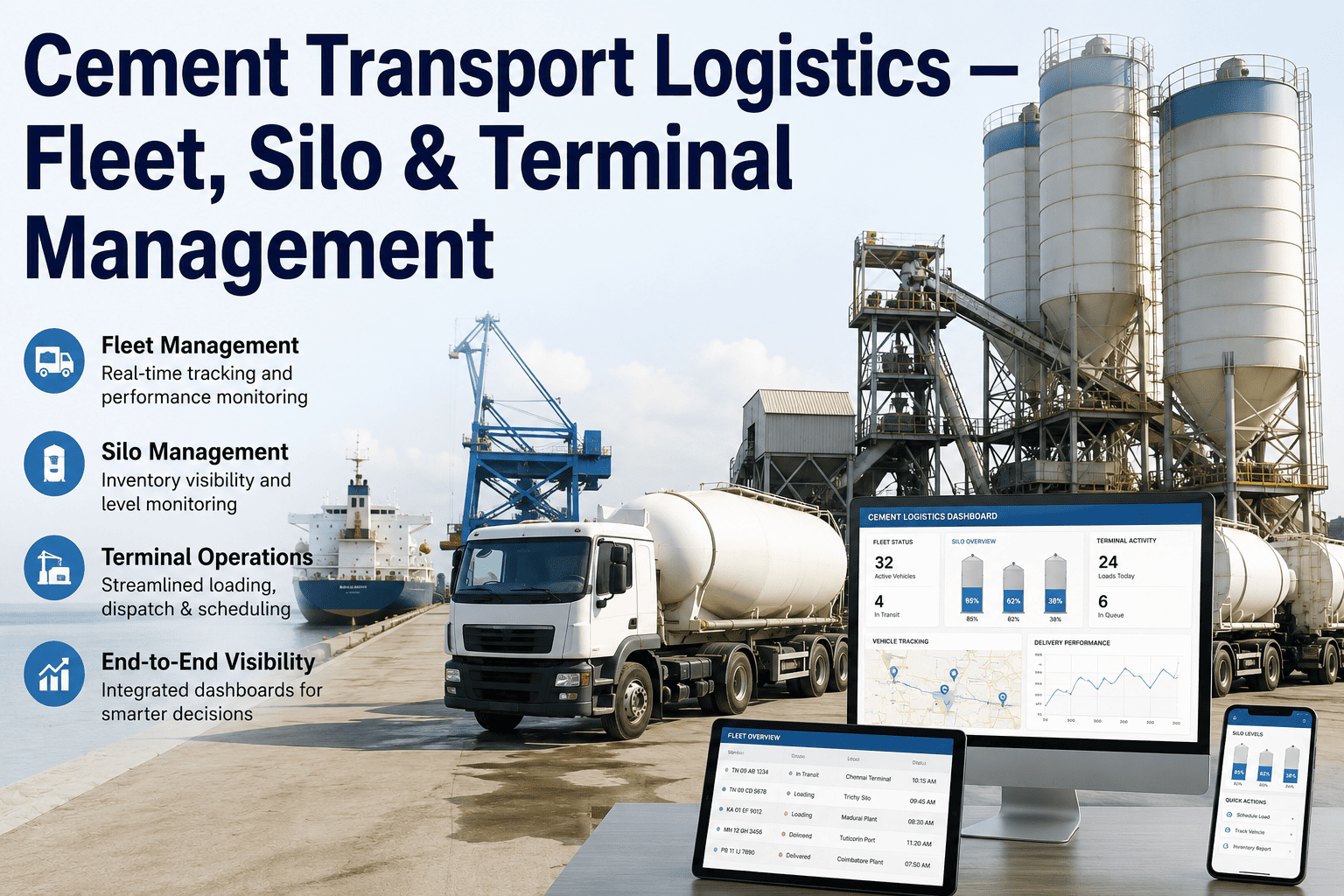
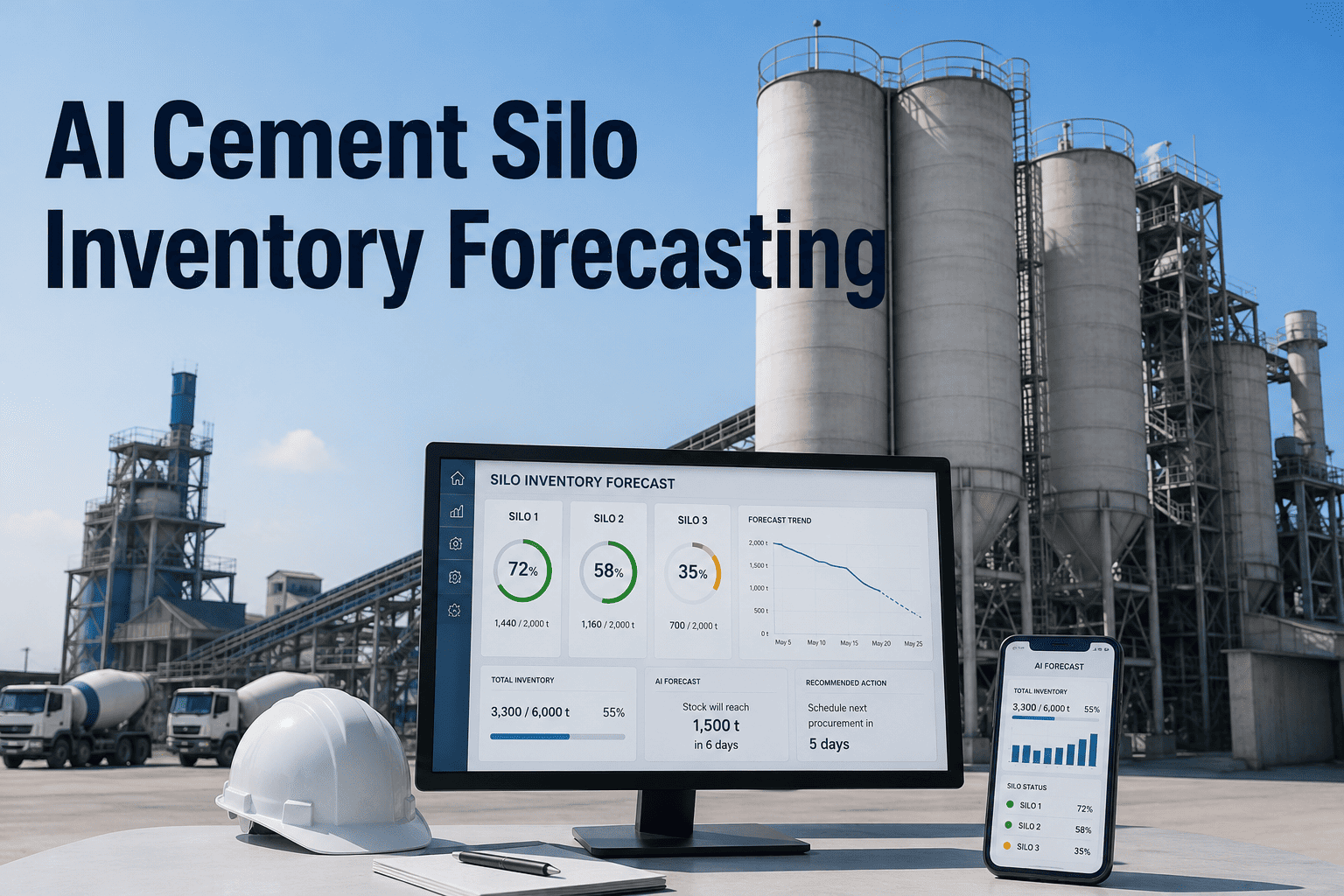
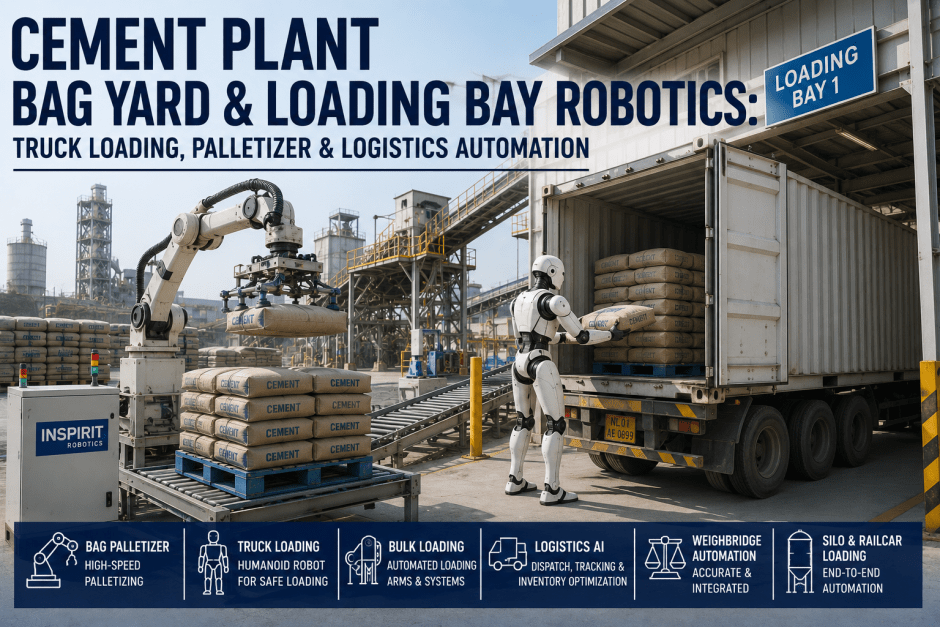
From the moment water touches cement in a ready-mix drum, a ninety-minute clock starts ticking — and nothing about weather, traffic, or a silo running low can pause it. Cement logistics is one of the least forgiving supply chains in industrial transport: perishable product, bulk weight, and a delivery window measured in minutes rather than days. Most plants still run this on whiteboards, radio chatter, and a dispatcher's memory of which truck is closest. Book a demo to see fleet, silo, and terminal data unified into one live operating picture.
CEMENT LOGISTICS · FLEET, SILO & TERMINAL OPERATIONS
Three Systems, One Clock — Why Cement Logistics Breaks When Fleet, Silo, and Terminal Don't Talk
A truck can be perfectly maintained, a silo perfectly stocked, and a terminal perfectly staffed — and a delivery can still fail because none of those three systems knew what the other two were doing in real time.
20%
Increase in Daily Load Volume Reported by Fleets Using Dynamic Dispatch
30%
Reduction in Plant Turnaround Time With Coordinated Dispatch Systems
90 Min
Typical Delivery Window Before a Ready-Mix Load Must Be Placed
THE COST OF DISCONNECTED SYSTEMS
Where Cement Logistics Actually Loses Money
Transport, inventory, and time-related costs are consistently the three most expensive problem areas in cement logistics — and each one compounds the others. Bulk weight drives freight cost up on every load. Perishability means a scheduling miss doesn't just delay a delivery, it can turn an entire load into a rejected, wasted one. And inaccurate scheduling wastes production capacity at the plant end, since a mixer or loading bay sitting idle while a truck circles the yard is lost throughput that never gets recovered.
None of these are separate problems. A silo that isn't reporting accurate live inventory forces a dispatcher to guess whether a plant can fulfill the next load. A truck without real-time telematics forces a terminal to plan turnaround windows on outdated ETAs. The fix is not better guessing — it's connecting fleet, silo, and terminal data into a single view that updates continuously.
THE THREE OPERATING LAYERS
Fleet, Silo, and Terminal — What Each Layer Needs to Run Without Breaking the Other Two
01
Fleet Dispatch & Telematics
Dynamic routing that accounts for the 90-minute perishability window, live traffic, and driver hours — not a static route plan built the night before. Engine fault codes and pre-trip inspection failures should generate maintenance work orders automatically, before a truck breaks down mid-route with a live load.
02
Silo Inventory Management
Real-time level monitoring that dispatch and sales can both see, so a load never gets promised against inventory that isn't actually available. Silo buildup, bridging, and aeration failures degrade usable capacity silently — a monitored silo catches that before it becomes a stuck delivery.
03
Terminal & Loading Operations
Loading bay scheduling coordinated against incoming truck ETAs cuts the idle time that eats labor and fleet cost on both ends. Terminals positioned and run well reduce hauling distance and turnaround simultaneously — but only if loading is scheduled against real truck positions, not paper appointments.
HOW THE DATA CONNECTS
From Silo Sensor to Dispatch Screen to Loading Bay — the Path a Single Load Follows
1
Order enters the system. Sales confirms an order against live silo inventory instead of a static stock report from that morning.
2
Dispatch assigns the nearest available truck. Routing accounts for current truck position, driver hours, and the delivery site's placement window.
3
Terminal schedules the loading bay. Bay assignment is timed against the truck's live ETA, not a fixed appointment slot, cutting queue time at the yard.
4
Telematics tracks the load in transit. A pre-trip inspection failure or an engine fault code triggers a maintenance work order automatically, and dispatch is alerted before the truck is stranded en route.
5
Delivery closes the loop. Confirmed delivery updates silo inventory and fleet availability simultaneously, so the next order is scheduled against current reality, not yesterday's numbers.
The Plants Running 20% More Daily Loads Aren't Working Harder — Their Systems Are Talking to Each Other
Connecting fleet telematics, silo sensors, and terminal scheduling into one platform removes the guesswork that turns a tight delivery window into a rejected load.
WHERE THE COST ACTUALLY SITS
Breaking Down the Cost of a Missed Cement Delivery
Rejected Load
A load that exceeds its placement window is unusable material plus a wasted round trip — full material cost, full fuel and labor cost, zero revenue recovered.
Idle Loading Bay
A terminal bay sitting empty while a truck is misrouted or delayed is lost throughput capacity that cannot be recovered later in the shift.
Unplanned Truck Downtime
A mechanical failure mid-route with a live load compounds the lost delivery with a roadside recovery cost and a truck out of rotation for the rest of the day.
Customer Trust
Repeated missed windows on active job sites push contractors toward competitors — a cost that never shows up on a single invoice but compounds across every future bid.
FLEET MAINTENANCE & SAFETY
Why Preventive Fleet Maintenance Is a Logistics Problem, Not Just a Maintenance One
A bulk cement tanker that fails mid-route doesn't just cost a repair bill — it strands a live, perishable load and forces dispatch to scramble a replacement truck against a delivery window that's already closing. Preventive maintenance scheduling tied directly into dispatch visibility means a truck flagged for an overdue service interval never gets assigned to a long haul in the first place, protecting both the delivery and the driver.
Pre-trip inspection failures deserve the same urgency as an engine fault code. A driver who reports a brake or tire issue before departure and has that report routed automatically into a maintenance work order — rather than logged on a paper form that reaches the shop hours later — keeps a marginal mechanical issue from becoming a roadside breakdown with a full tanker attached.
TERMINAL OPERATIONS
What Makes a Cement Terminal Run Efficiently — and What Quietly Breaks It
Terminals exist to buffer supply against demand — centralizing bulk storage so one large shipment replaces dozens of smaller, less efficient trips. That efficiency depends entirely on the terminal knowing, at any moment, exactly how much usable capacity it has and how many trucks are inbound. Storage buildup inside silos over time reduces effective capacity in ways that don't show up until a load doesn't fit, and unmanaged turnaround queues erode the labor and fuel savings the terminal was built to capture in the first place.
Strategic terminal placement near ports and highways only pays off if the operational layer keeps pace — real-time inventory visibility, coordinated bay scheduling, and dispatch integration that treats the terminal as part of the same live system as the fleet and the plant, not a separate operation reporting on a delay.
FREQUENTLY ASKED QUESTIONS
Common Questions From Cement Logistics and Fleet Managers
How does real-time silo monitoring actually prevent rejected loads?
Rejected loads most often happen when dispatch promises a delivery against inventory that silo-level data hasn't caught up to yet — a stock report from that morning, not the current tank level. Real-time silo monitoring feeds live volume directly into the dispatch and sales system, so no order gets confirmed against material that isn't actually there.
Book a demo to see live silo data connected to dispatch scheduling.
Can fleet telematics integrate with our existing dispatch software instead of replacing it?
Yes. Telematics and dispatch platforms are typically layered on top of existing systems rather than requiring a full replacement — engine fault codes and inspection data route into maintenance work orders while dispatch continues running the routing logic your team already knows.
Contact logistics support to review integration options for your current fleet management stack.
What causes the most turnaround delay at a cement terminal loading bay?
Unscheduled arrivals are the single biggest driver — trucks queuing on a first-come basis rather than a bay assignment timed against their actual ETA. Coordinating loading schedules against live truck position data, instead of static appointment windows, is what drives the meaningful turnaround-time reductions plants report after adopting dynamic dispatch.
How much does poor logistics coordination actually cost a cement operation?
The cost shows up across three compounding areas: elevated freight cost from inefficient routing on already-expensive bulk loads, rejected or wasted loads from missed delivery windows, and idle production capacity when trucks and loading bays aren't synchronized. Individually each looks manageable — together they represent a meaningful share of avoidable logistics cost in a typical cement operation.
Book a session to walk through where these costs show up in your current operation.
Does connecting fleet, silo, and terminal data require new hardware at every site?
Most plants already have partial instrumentation — silo level sensors, telematics units, or terminal scheduling software — that can be integrated rather than replaced. A logistics platform typically connects to what already exists via standard telematics APIs and sensor protocols, filling gaps only where a site has no monitoring in place at all.
Talk to logistics support about what your current sites already have in place.
ONE LIVE PICTURE, NOT THREE SEPARATE ONES
Stop Running Fleet, Silo, and Terminal as Three Systems That Only Talk at the End of the Day
Every delayed load, rejected shipment, and idle loading bay traces back to a gap between what dispatch knew and what was actually happening at the silo or the yard. Close that gap.