Continuous emissions monitoring systems tell a cement plant exactly what is coming out of the stack in parts per million, but they were never designed to answer a simpler, more visible question: does the plume look compliant to anyone watching from outside the fence line. A CEMS reading within permit limits and a visibly dark plume are not mutually exclusive, and that gap is exactly where community complaints, regulatory site visits, and reputational risk tend to originate. AI-powered opacity monitoring closes that gap by watching the stack the way an inspector would, continuously and automatically. Book a Demo with iFactory AI to see vision-based opacity monitoring running against a live camera feed.
See What Your CEMS Cannot: The Plume Itself.
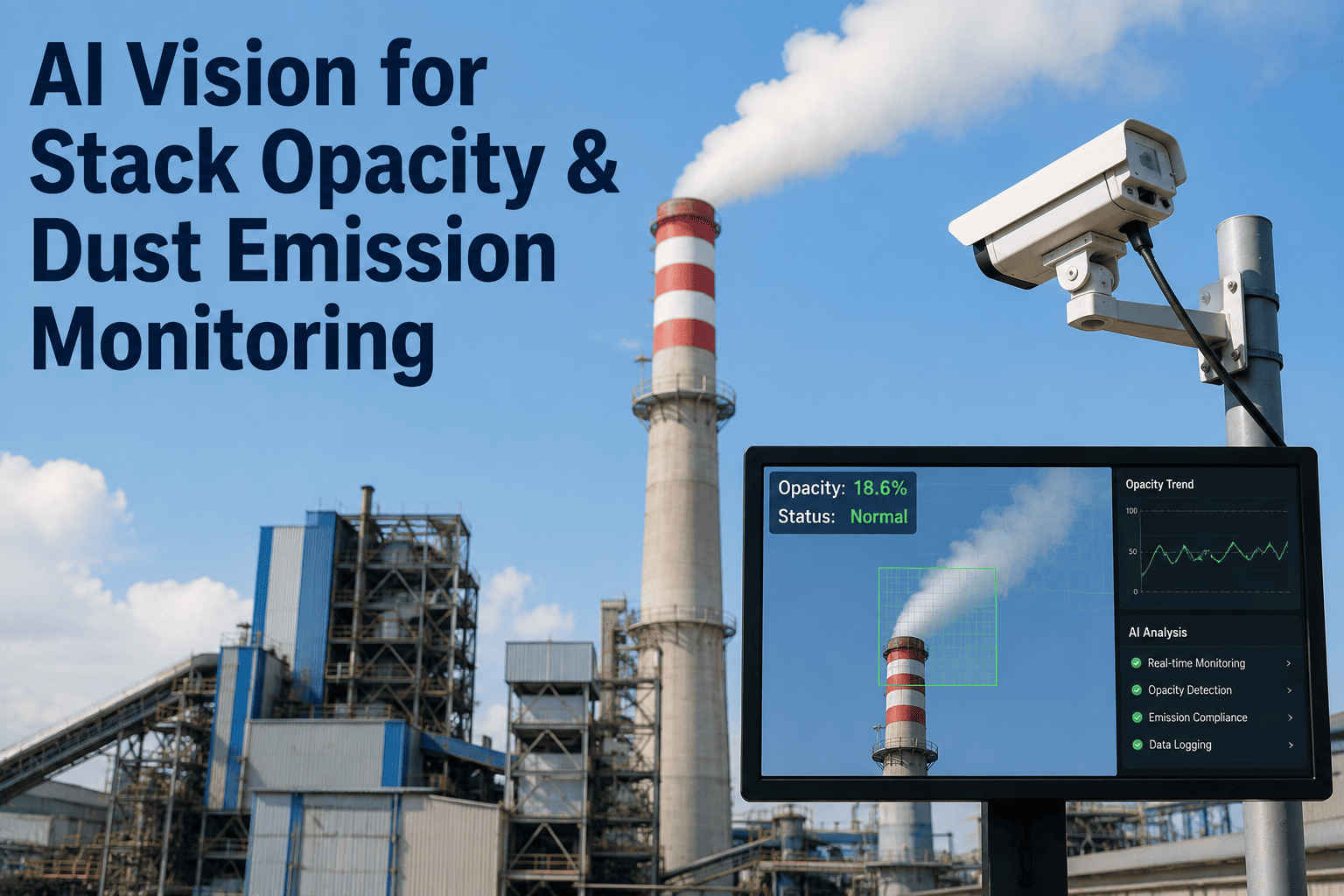
iFactory AI's vision monitoring reads stack opacity continuously from live camera feeds, flagging visible emission events in real time as a direct supplement to existing CEMS infrastructure.
The Blind Spot Between Compliant Readings and Visible Emissions
Continuous emissions monitoring systems remain the regulatory backbone of stack emission compliance, measuring specific pollutant concentrations with a level of precision that visual observation could never match. But CEMS instrumentation typically samples a fixed point in the gas stream and reports concentration data, which is a fundamentally different measurement than the visible opacity of the plume as observed from outside the stack. A brief upset condition, a filter bag failure, or a process transient can produce a visibly darker plume for several minutes without necessarily driving the sampled pollutant concentration outside permit limits during that same window, especially if the CEMS sampling and averaging period smooths over short-duration events.
Regulatory opacity requirements exist precisely because visible emissions carry their own compliance significance independent of measured pollutant concentration, and many permits include specific opacity limits enforced through periodic manual observation by a certified reader, a method that is inherently limited to the specific windows when a trained observer happens to be watching. AI vision monitoring extends that same observational method to continuous, automated coverage, catching the exact type of transient visible emission event that scheduled manual readings are statistically likely to miss.
From Camera Feed to Compliance-Grade Opacity Reading
Continuous Camera Capture
Fixed cameras positioned with appropriate sky background and lighting conditions capture the stack plume continuously, day and night, using low-light and thermal-assisted imaging where visible light conditions are insufficient.
Opacity Estimation Model
A vision model trained on plume imagery estimates opacity percentage frame by frame, accounting for background sky conditions and lighting variation the way a certified human reader is trained to compensate for.
Threshold Detection & Alerting
Readings exceeding a configured threshold or duration trigger an immediate alert to operations and environmental staff, with the underlying video clip attached for rapid investigation of the cause.
Continuous Compliance Record
Every reading is logged and time-stamped, building a continuous opacity record that supplements periodic manual readings and CEMS data for a fuller compliance picture during audits or inspections.
Each of these steps builds on the one before it, and the value of the system comes from how tightly they are integrated rather than any single step in isolation. A camera feed without a calibrated opacity model is just a video recording. An opacity model without threshold-based alerting requires someone to actively watch a dashboard rather than being notified when attention is actually needed. And alerting without an attached video clip leaves an environmental team with a number but no context for what actually happened, which is often the first thing anyone investigating the alert wants to see.
Manual Opacity Reading vs. AI Vision Monitoring
| Monitoring Attribute | Manual Certified Reader | AI Vision Monitoring |
|---|---|---|
| Coverage window | Scheduled periods, typically hours per month | Continuous, 24 hours a day |
| Consistency | Varies by individual reader and fatigue | Consistent model application every reading |
| Transient event capture | Likely missed outside scheduled windows | Captured whenever it occurs |
| Evidence for investigation | Written observation notes only | Time-stamped video clip attached to alert |
| Recertification requirement | Periodic reader recertification needed | Model validated against reference method |
Beyond Compliance: Why Visible Emissions Carry Reputational Weight
Regulatory agencies and surrounding communities both pay attention to what a cement plant's stack looks like, independent of what the CEMS data says. A plant can be fully within its permitted pollutant concentration limits and still generate a community complaint, a local news inquiry, or an unscheduled regulatory site visit simply because a plume was visibly dark during a transient event that nobody at the plant was watching for in real time. These reputational and regulatory relationship costs rarely show up in a compliance spreadsheet, but they consume disproportionate time and attention from environmental and plant leadership once they occur, often triggering enhanced monitoring requirements or stricter permit conditions that could have been avoided with earlier detection of the underlying process issue.
Continuous vision monitoring changes this dynamic by giving plant environmental staff the same visibility a concerned neighbor or a regulatory inspector would have, but with the added advantage of being alerted to a visible emission event in real time rather than learning about it after the fact through a complaint. This shifts the plant's posture from reactive explanation, after a community member has already raised a concern, to proactive investigation and correction, often resolving the underlying process issue before it generates any external attention at all. That shift in posture is difficult to quantify financially but is consistently cited by environmental managers as one of the most valuable outcomes of continuous opacity monitoring.
Adding Vision Monitoring Without Disrupting Existing CEMS
AI vision opacity monitoring is deployed as a supplemental layer alongside existing CEMS infrastructure, not a replacement for it. Camera installation typically requires a clear sightline to the stack with appropriate background conditions, which most plants can achieve using existing structures or a dedicated mounting point without major civil work. Once cameras are in place, the vision model is calibrated against the plant's specific stack geometry, typical background sky conditions, and lighting patterns across a representative period before moving into active alerting mode, ensuring the opacity estimates it produces are reliable across the full range of conditions the site actually experiences rather than only the conditions present during a brief initial setup window.
Once operational, the system integrates alerts directly into existing environmental monitoring dashboards and notification workflows, so operations and environmental staff receive opacity alerts through the same channels they already use for CEMS exceedance notifications, rather than requiring a separate monitoring workflow to check independently.
Multi-stack sites benefit from a phased rollout that starts with the stack carrying the highest visibility risk, whether due to permit history, proximity to a community boundary, or process characteristics that make transient events more likely, before expanding coverage across the remaining monitoring points. This phased approach lets environmental teams validate the system's calibration accuracy and alert workflow on a single stack before scaling it plant-wide, building internal confidence in the technology at each step rather than committing to a full rollout before the first deployment has proven itself.
What Plants Report After Adding Vision Opacity Monitoring
Continuous coverage compared to scheduled manual readings
Reduction in time to detect and respond to visible emission events
Of alerts backed by a time-stamped video clip for investigation
AI Vision Opacity Monitoring — Common Questions
Does AI vision monitoring replace the requirement for a certified opacity reader?
In most jurisdictions, regulatory opacity compliance still requires periodic readings from a certified observer using the official reference method, and vision monitoring is deployed as a continuous supplement rather than a regulatory replacement. It significantly expands coverage between certified readings and helps plants catch and respond to events that would otherwise go unnoticed until the next scheduled reading. Our team can clarify how this fits your specific permit requirements.
How accurate is vision-based opacity estimation compared to a human reader?
Vision models are calibrated and validated against reference method readings during setup, and once calibrated they apply the same estimation standard consistently across every reading, removing the reader-to-reader variability that naturally exists in manual observation. Accuracy is highest when cameras are positioned with unobstructed sightlines and appropriate background conditions established during initial calibration.
Can the system monitor multiple stacks and emission points at once?
Yes, the platform is designed to monitor multiple stacks, baghouses, and vent points simultaneously from a single dashboard, with independent threshold configuration for each point based on its specific permit limits. This is particularly valuable at cement plants with multiple kiln lines or process vents that each require separate compliance tracking.
What happens during low-light or nighttime conditions?
Camera systems are configured with low-light imaging and, where needed, thermal-assisted capture to maintain monitoring coverage through nighttime and adverse lighting conditions. The vision model accounts for these different imaging conditions during calibration so opacity estimates remain reliable across the full day-night cycle rather than only during standard daylight hours.
How long does installation and calibration take?
Camera installation is typically completed within a few days for most stack configurations, followed by a calibration period of several weeks during which the model is validated against reference readings across varying weather and lighting conditions before moving into full alerting mode. Book a Demo to scope an installation timeline for your specific stacks.
See Your Stack Through a Continuous, Automated Lens
Talk to our team about adding vision-based opacity monitoring to your existing CEMS and environmental compliance program.