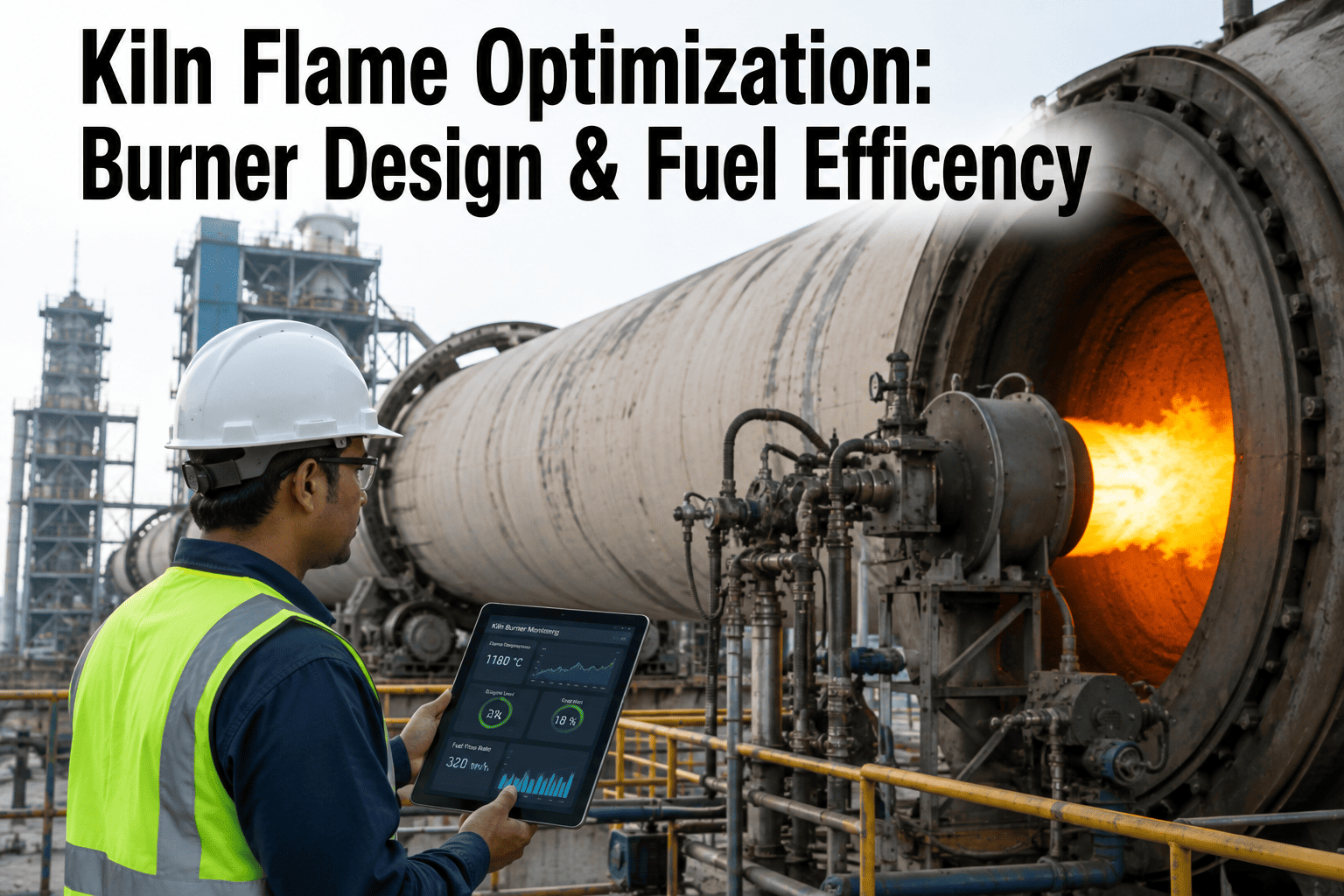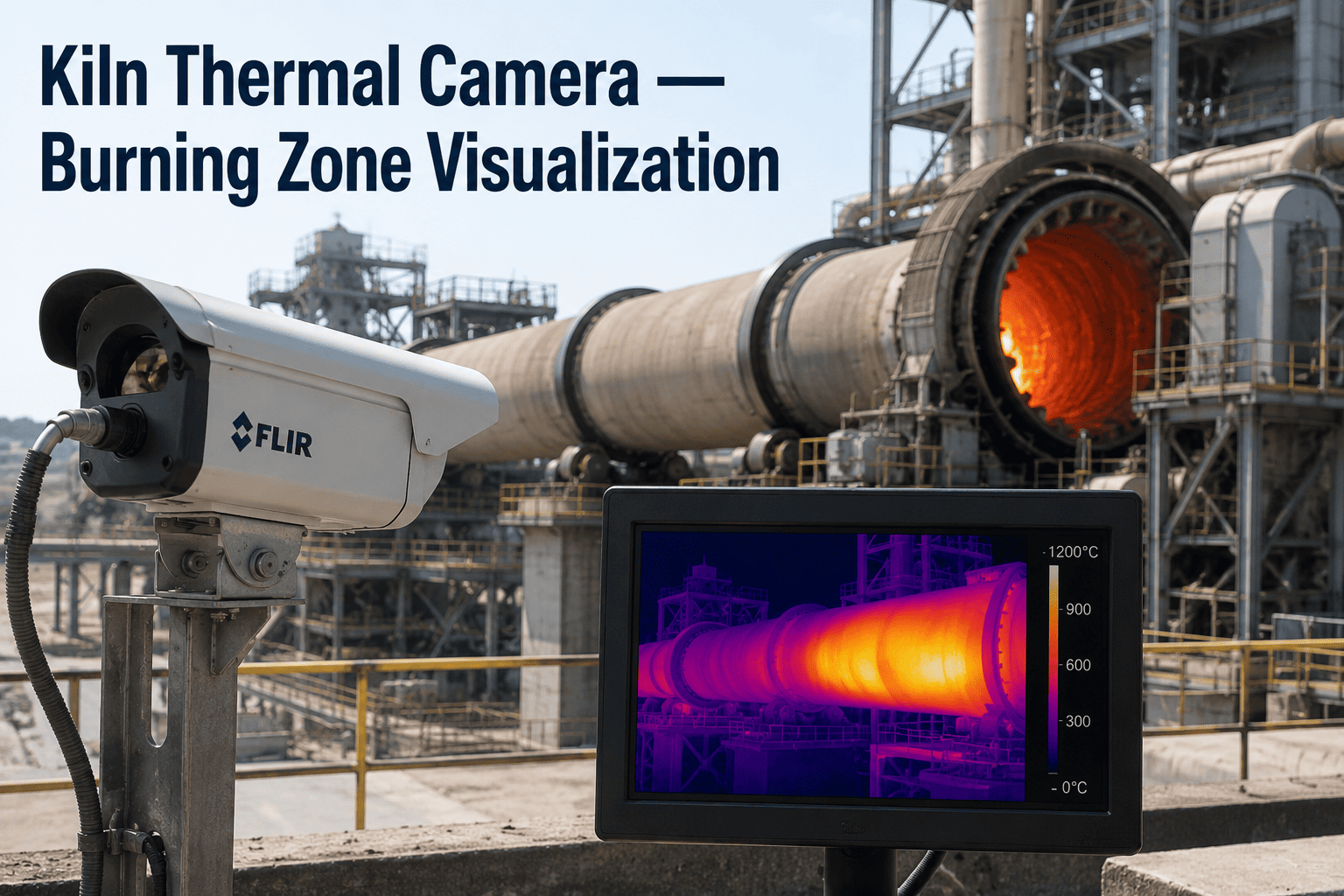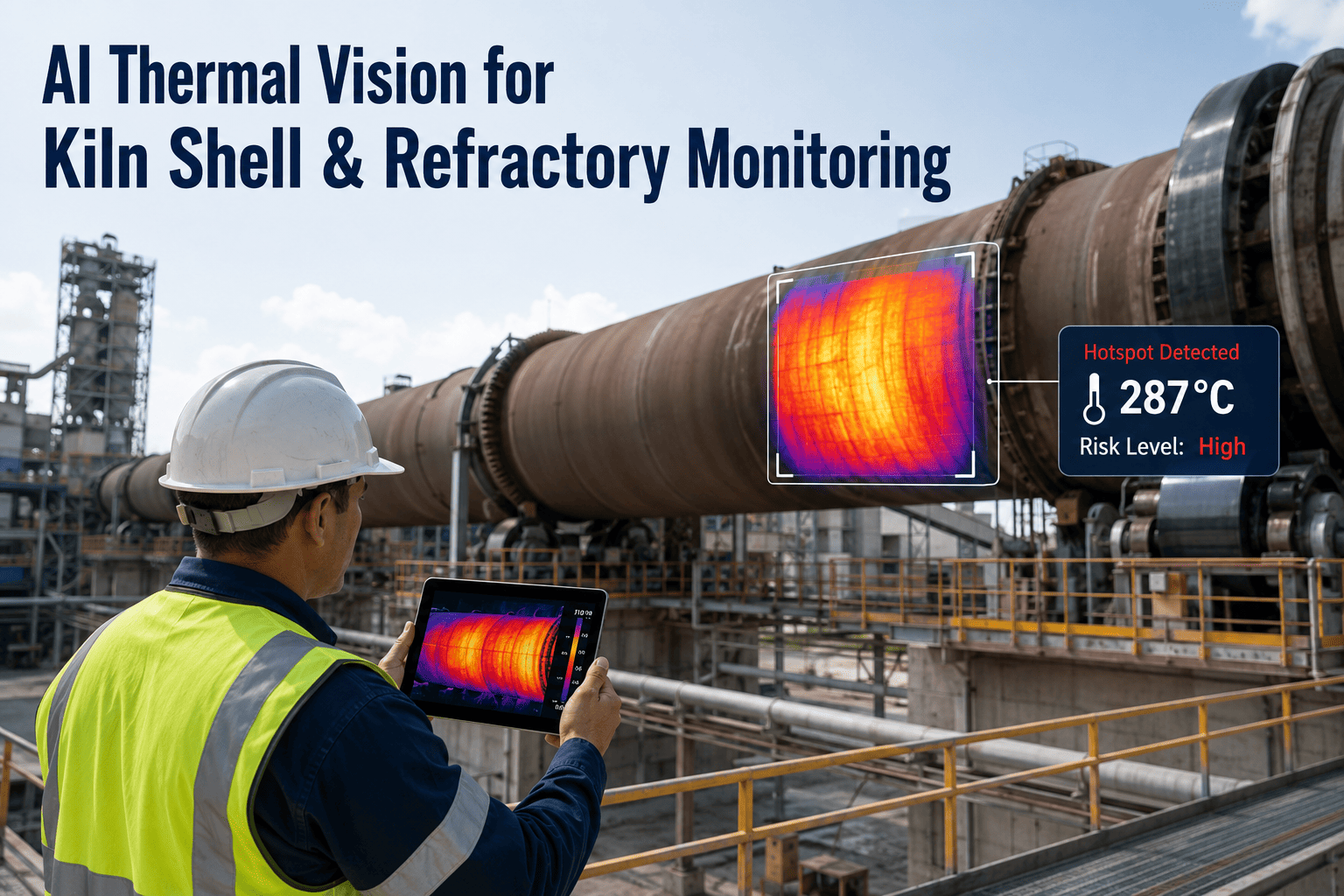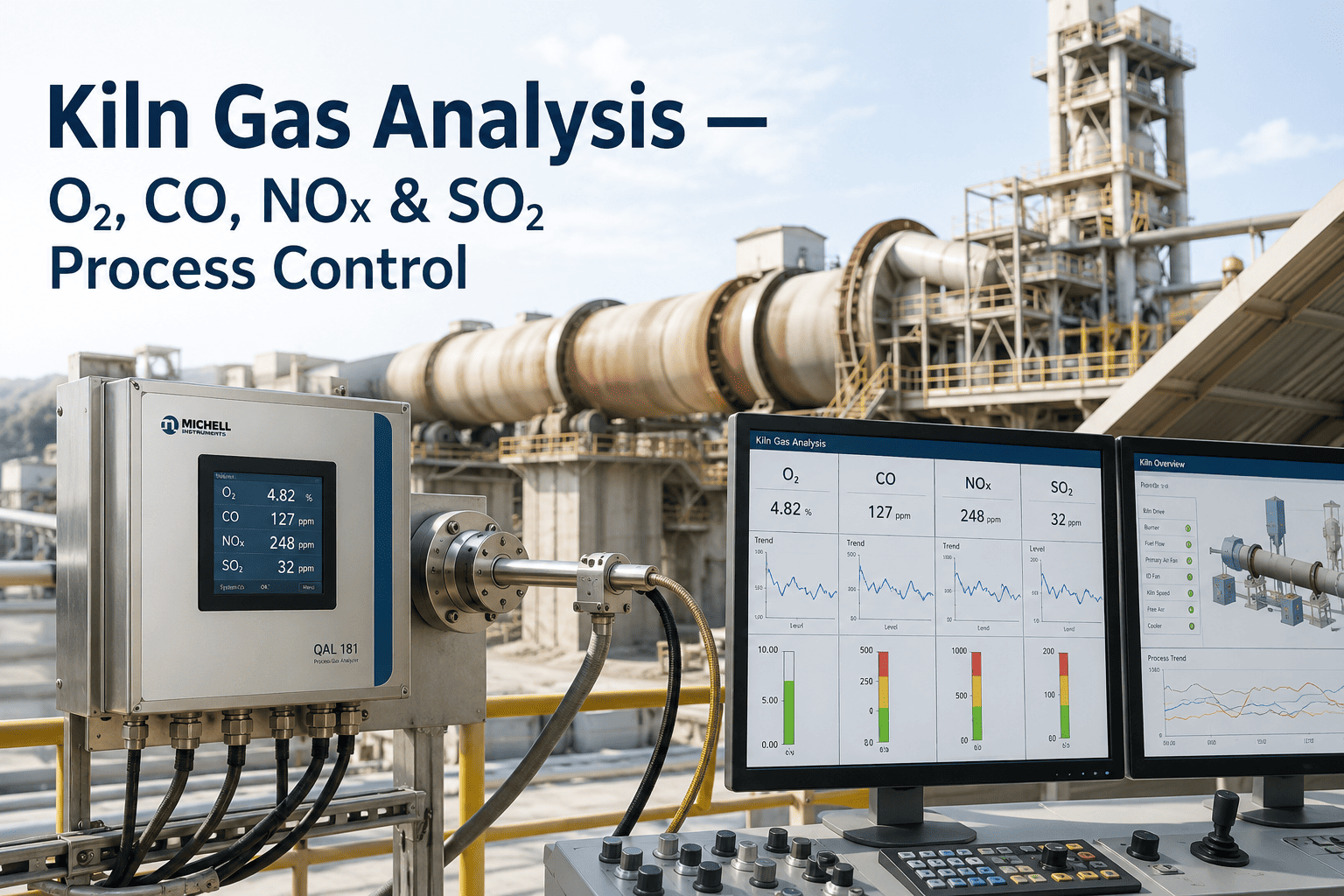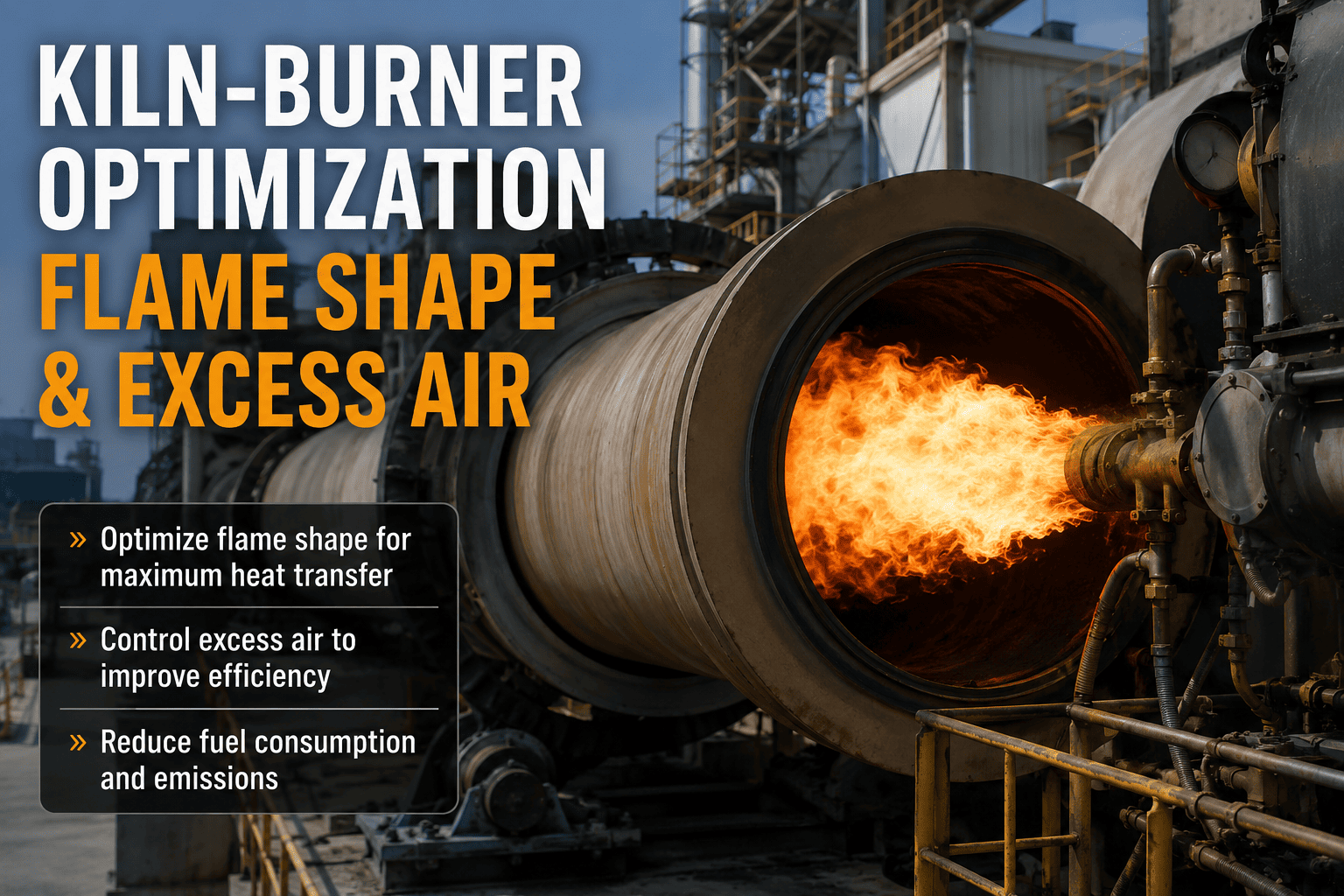
For most of cement manufacturing history, judging a kiln flame has meant one thing: a senior operator squinting through a viewport, reading shape, color, and length against decades of pattern recognition built up in their own head. That expertise is real, but it is not continuous, it is not consistent from shift to shift, and it disappears the day that operator retires. Unstable flame shape, burner tip degradation, and refractory-damaging buildup all show up first in the flame itself, long before they show up in fuel consumption or clinker quality reports. High-temperature cameras paired with computer vision now capture flame shape, luminosity, and heat distribution continuously and turn subjective viewport observation into quantified, trackable metrics. That shift is exactly what AI flame analysis for kiln combustion optimization is designed to deliver.
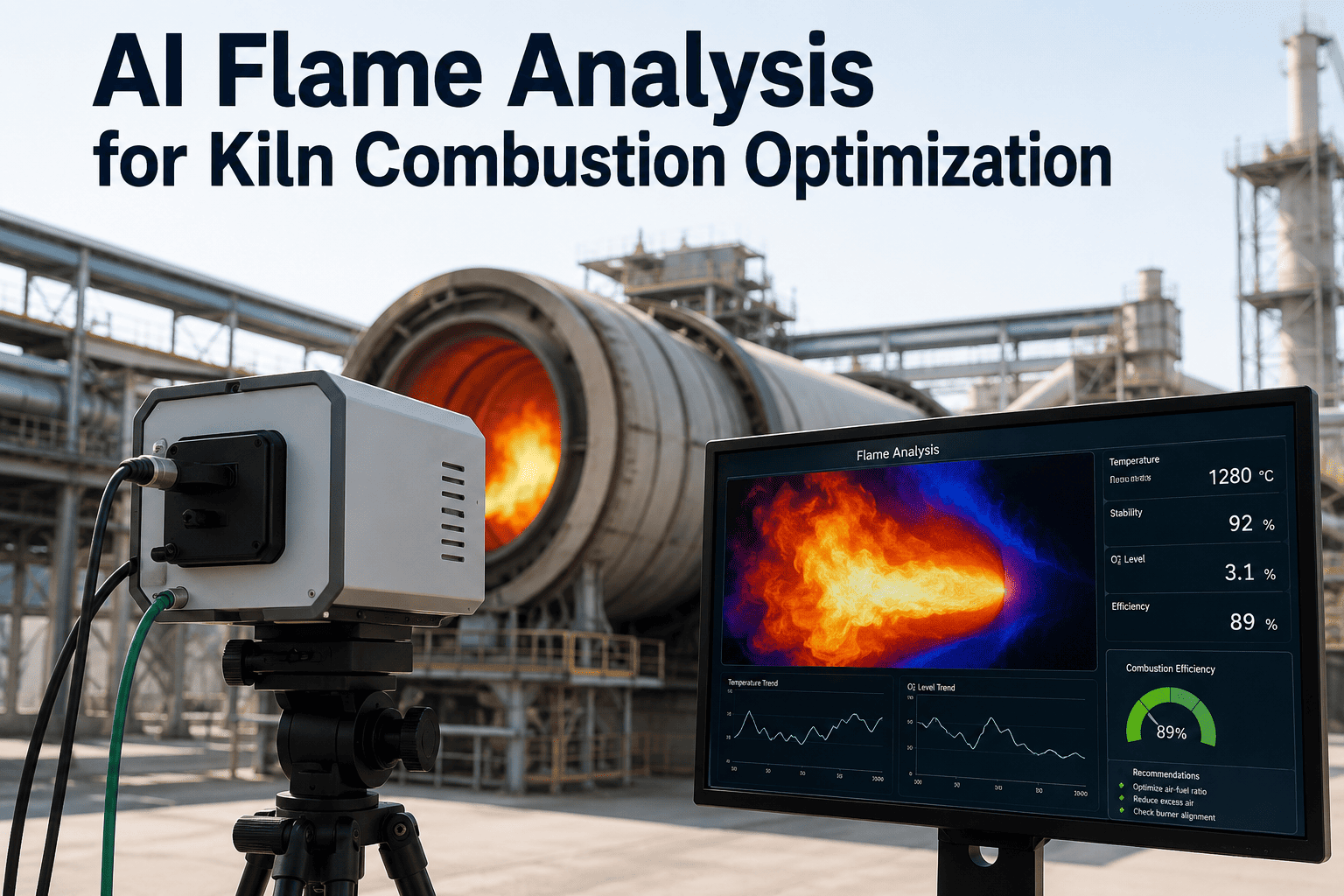
AI Flame Analysis for Kiln Combustion OptimizationReplace subjective viewport judgment with quantified combustion metrics
Continuous imaging tracks flame shape, color, luminosity, and length in real time, flagging deviations and burner wear before they cost fuel or clinker quality.
Shape, color gradient, and core luminosity are exactly what the vision model measures every frame, all day, every shift.
What Operators Have Always Watched For
Experienced kiln operators read the same three visual signals every time they check the flame. AI vision measures the identical signals, just continuously and without fatigue.
Flame Shape
A well-formed flame holds a consistent, symmetric profile. Distortion, wandering, or an irregular silhouette usually signals a fuel-air ratio problem or burner misalignment.
Color & Luminosity
Brightness and color distribution correspond to temperature and combustion completeness. A dull, uneven, or discolored flame often points to incomplete combustion.
Flame Length
Too short and the flame impinges on the clinker bed; too long and heat transfer happens in the wrong zone. Length drift is one of the earliest signs of burner tip wear.
Why a Distorted Flame Is Never Just a Visual Issue
Every one of the three signals connects directly to fuel efficiency, refractory life, or clinker quality — which is why catching drift early matters.
Incomplete Combustion
Wastes fuel and increases pollutant formation, raising both operating cost and emissions exposure at the same time.
Burner Tip Degradation
Left undetected, a worn burner tip distorts flame geometry further and accelerates its own wear in a compounding cycle.
Rhino Horn Buildup
Irregular flame impingement contributes to material buildup inside the kiln that can eventually force an unplanned shutdown to clear.
Clinker Quality Variation
Unstable thermal profile in the burning zone shows up downstream as inconsistent clinker reactivity and strength.
From Viewport Glances to Continuous Measurement
The difference is not just automation for its own sake — it is turning an inconsistent human judgment into a repeatable, trackable number.
| Aspect | Viewport Observation | AI Flame Analysis |
|---|---|---|
| Frequency | Periodic manual checks | Continuous, every frame |
| Consistency | Varies by operator and shift | Identical criteria every time |
| Record keeping | Rarely logged in detail | Full historical image and metric log |
| Early warning | Noticed after a visible change | Flagged at first measurable deviation |
Give Every Shift the Senior Operator's Eye
iFactory captures flame shape, luminosity, and heat distribution continuously through high-temperature cameras, quantifies deviation from stable combustion, and alerts before fuel waste or refractory damage compounds.
Getting Flame Analysis Running on Your Kiln
A structured rollout keeps the system tied to operator decisions from day one instead of becoming a dashboard nobody checks.
Install a High-Temperature Rated Camera
Position a camera system with an active cooling and retraction unit at the burner viewport to withstand kiln conditions safely.
Establish a Healthy Flame Baseline
Capture shape, color, luminosity, and length during known stable operation so deviations have a clear reference point.
Set Deviation Thresholds
Define how far each metric can drift before triggering an alert, calibrated against your specific fuel mix and burner design.
Route Alerts to the Control Room
Send real-time notifications to operators the moment flame geometry or luminosity moves outside the healthy range.
Correlate With Fuel Mix and Clinker Quality
Layer flame data against fuel-air ratio adjustments and downstream lab results to close the loop between combustion and product.
Kiln Flame Analysis — Questions Answered
What process and combustion engineers ask most often when evaluating AI-based flame monitoring for the first time.
Q: Can a camera actually survive kiln burner conditions?
Yes, dedicated flame monitoring camera systems are built specifically for this environment, combining an RGB or thermal imaging sensor with an active cooling system and a retractor unit that pulls the camera back automatically if temperature exceeds a safe threshold. This is standard equipment in kilns already using thermography-based flame analysis systems, and it is what makes continuous imaging practical in a zone that regularly exceeds 1,450°C. Camera placement and cooling design are matched to each kiln's specific burner geometry.
Q: How does AI actually quantify something as subjective as flame shape?
The system segments the flame region from the background image and extracts specific luminous and dynamic features — including flame length, width, brightness distribution, and how the shape changes frame to frame — using computer vision techniques such as region-growth segmentation. Those extracted features feed a model trained to distinguish stable combustion from early-stage deviation, effectively converting what an operator would describe qualitatively into a repeatable numeric measurement. Book a demo to see the feature extraction on your own kiln footage.
Q: Does flame analysis replace the combustion engineer's judgment?
No, it extends it. The system does not decide fuel-air ratio adjustments on its own in most deployments; it surfaces the deviation, attributes it to a likely cause such as burner wear or fuel quality shift, and gives the operator or engineer a quantified basis for the adjustment they would otherwise make from memory and instinct alone. The result is that the twenty or thirty years of pattern recognition a senior operator carries becomes available and consistent on every shift, not just when that person is at the control station.
Q: What fuel types does this work with, including alternative fuels?
Flame monitoring systems have been applied successfully across traditional fuels like coal and petroleum coke as well as alternative and refuse-derived fuels, though flame characteristics do shift with fuel composition. Because refuse-derived fuel composition varies more than conventional fuel, continuous flame monitoring is particularly valuable there, since it can catch combustion instability that intermittent sample-based fuel testing alone would miss between test intervals.
Q: How quickly does a deviation get flagged once it starts?
Because the system analyzes video frames continuously rather than on a periodic check cycle, deviations are typically flagged within the same operating window they begin, well before they would be noticed through routine viewport observation or downstream fuel and quality reports. That speed is the core value proposition — catching combustion drift while it is still a minor adjustment rather than a fuel or refractory cost. Reach out to our support team to discuss alert configuration for your kiln.
Turn Flame Watching Into Flame Measurement
Every unstable flame is a fuel, quality, or refractory cost waiting to happen. Let iFactory capture flame shape, color, and luminosity continuously, quantify the deviation, and route it to your team before it shows up in next month's fuel bill.