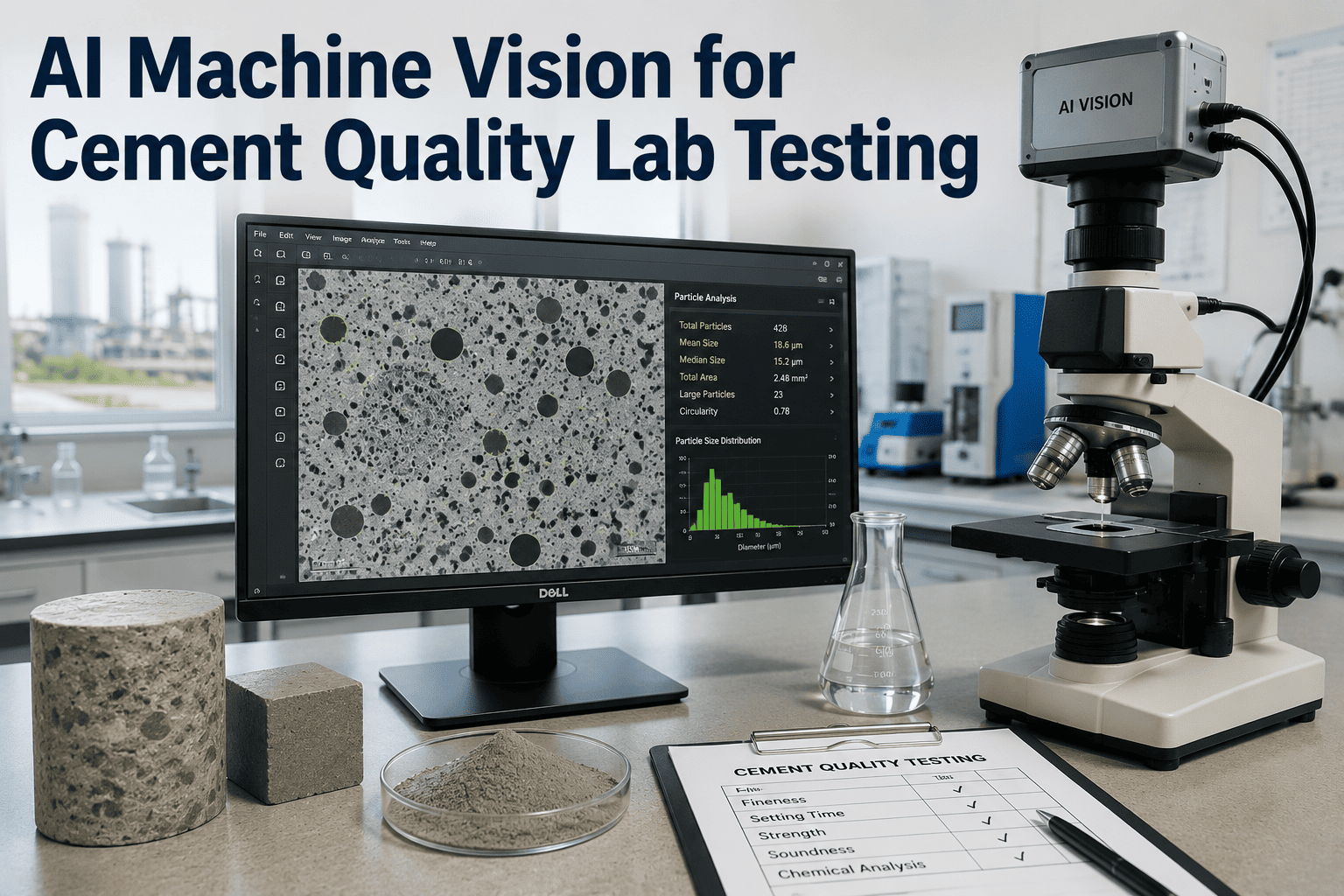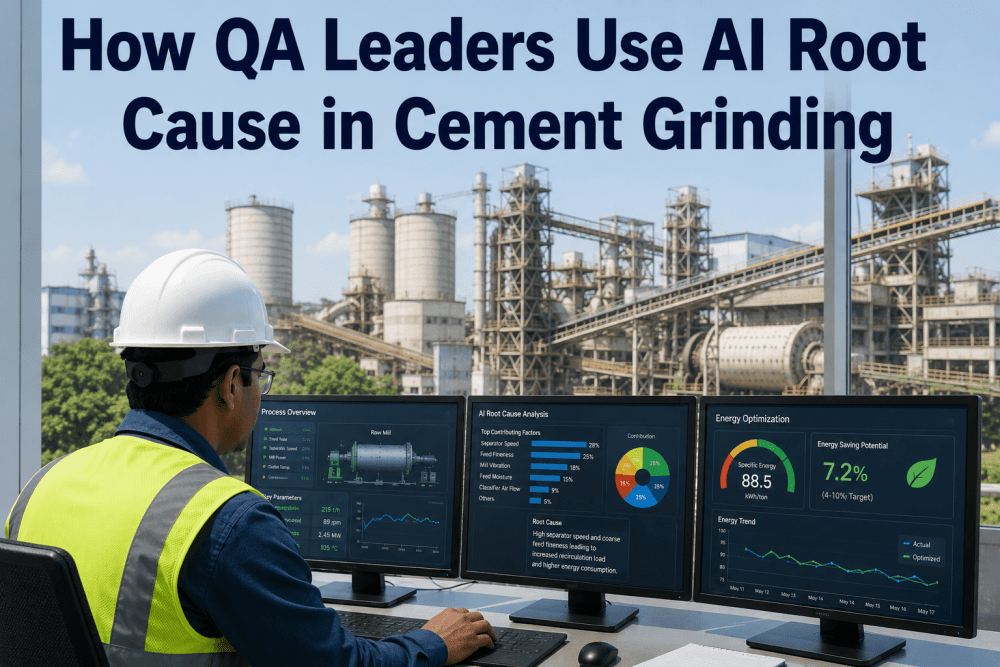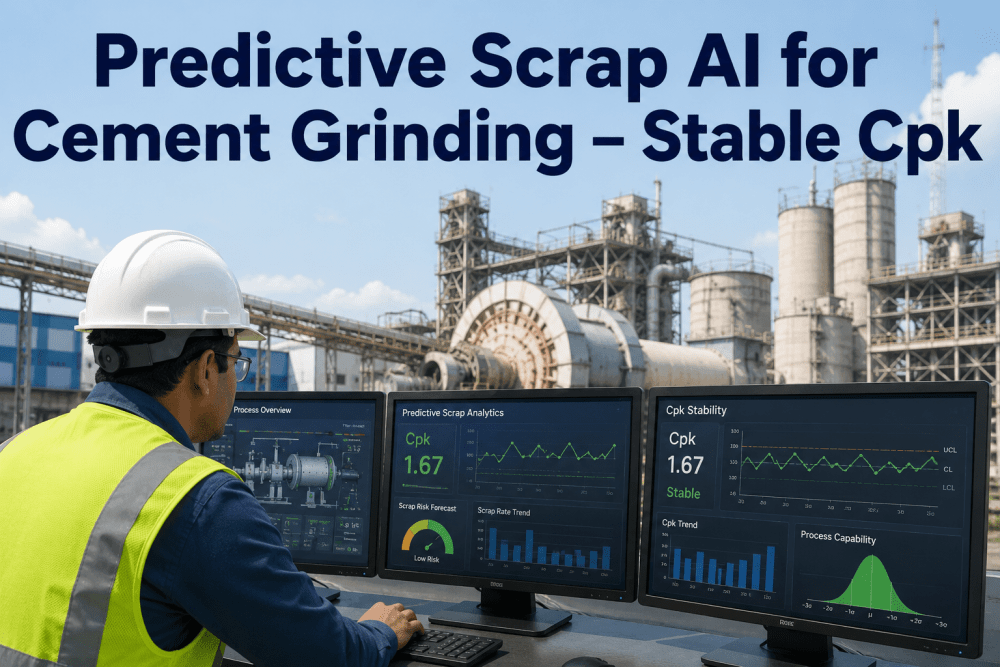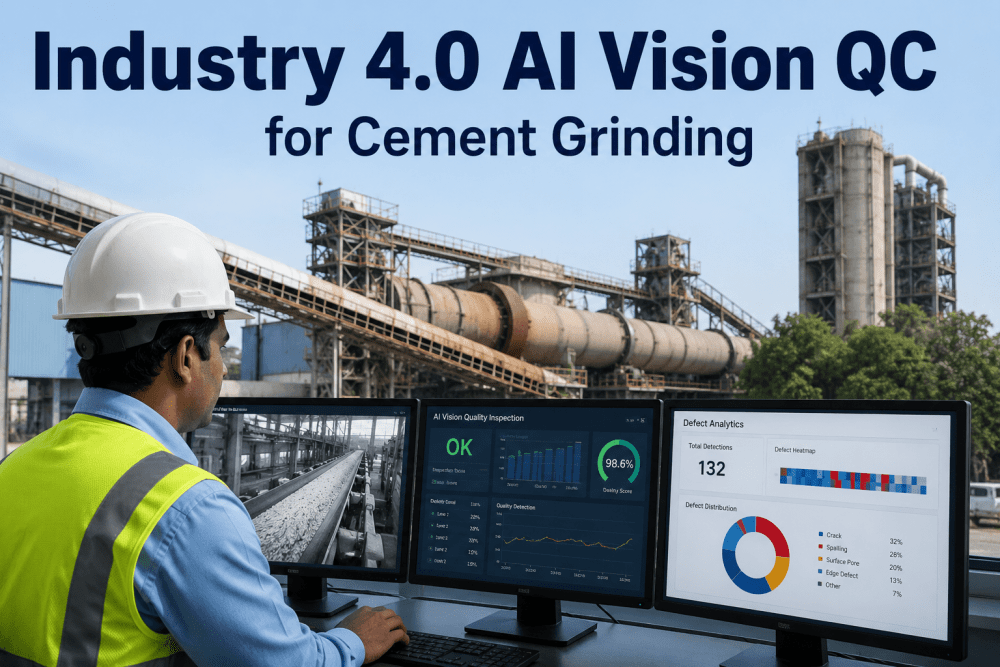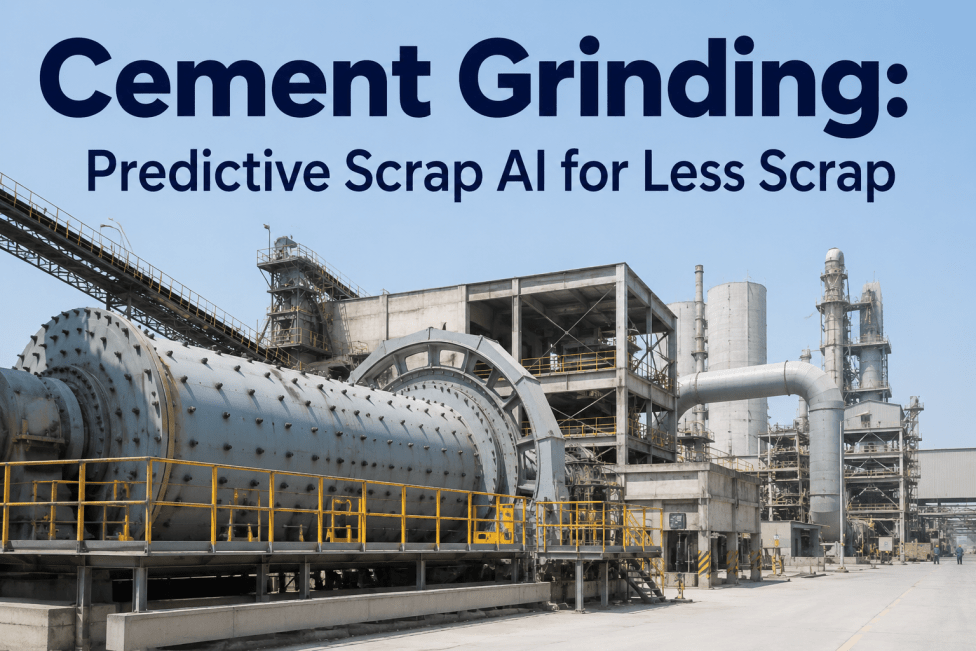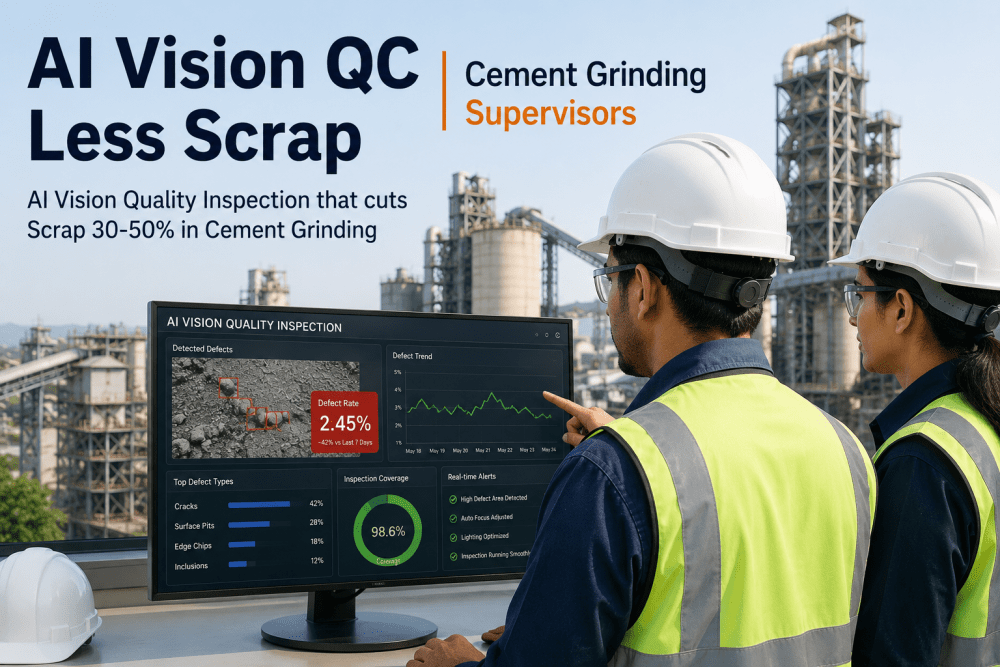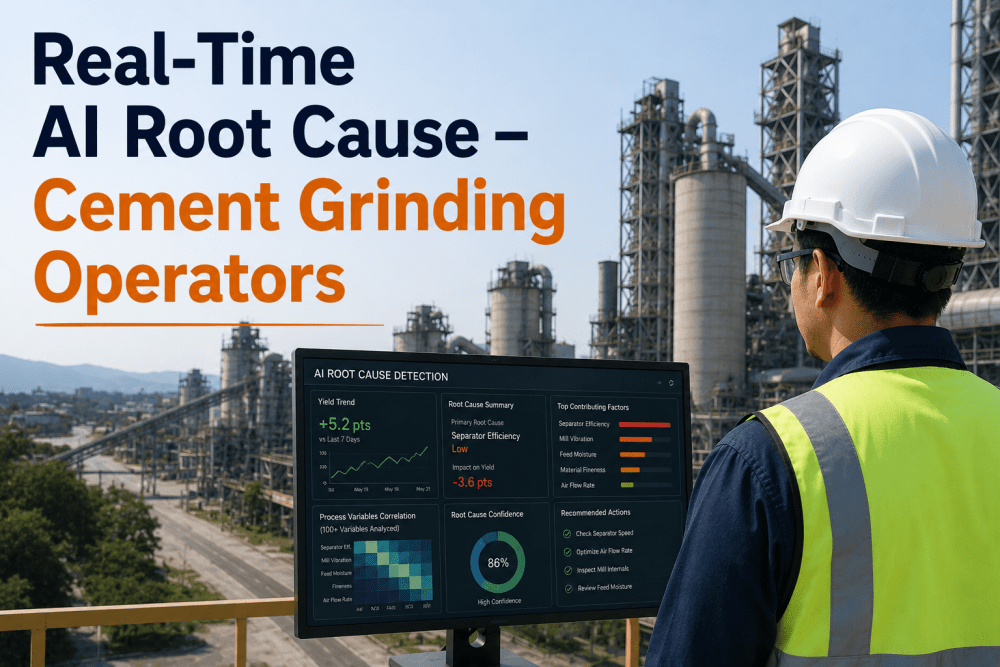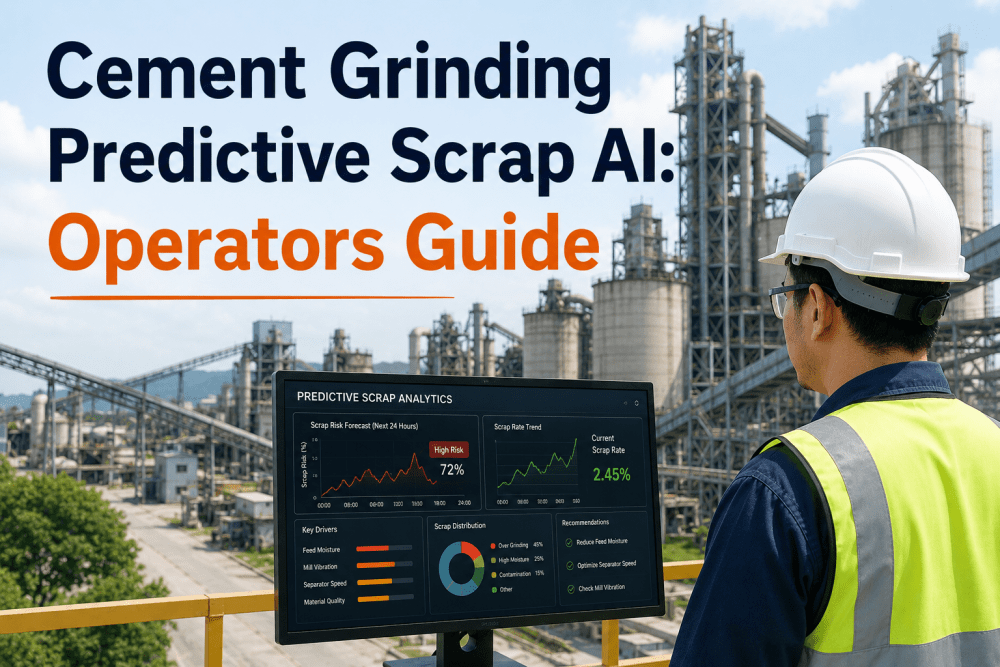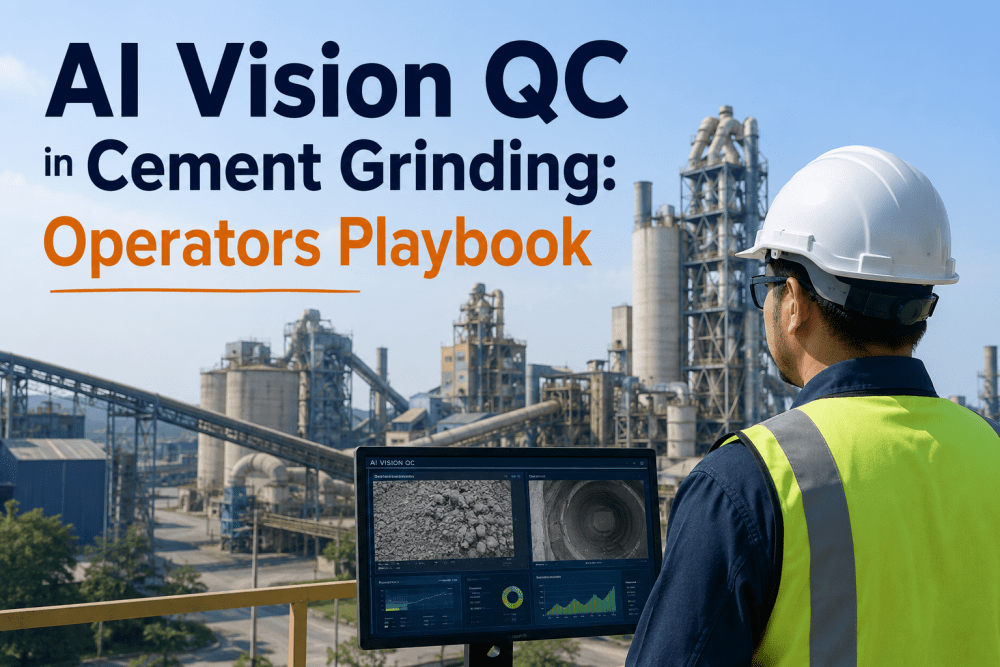
Cement grinding operations across the USA, Canada, UK, and Australia are producing millions of tons of product every year — yet most plants still rely on 30–60 minute laboratory sampling cycles to verify quality, leaving hundreds of tons of potential off-spec material undetected between tests. Manual visual inspection of clinker and cement surfaces catches only the most obvious defects, while subtle variations in particle size distribution, Blaine fineness, and color consistency pass through until the next lab result confirms what has already been produced. AI Vision Quality changes this entirely — deploying deep-learning machine vision models that analyze particle morphology, surface defects, and composition indicators from camera streams every 60 seconds, detecting anomalies the human eye misses and reducing scrap by 30–50% in the first month of deployment. Book a Live SPC Walkthrough to see how iFactory's AI vision platform transforms cement quality inspection.
Why AI Vision Quality Is Transforming Cement Grinding Inspection
From ball mill circuits producing Type I/II cement in the Midwest to vertical roller mills grinding specialty blends in Ontario, and from roller press finish systems in the UK to combined grinding plants in Australia — every cement grinding operation shares the same inspection gap: laboratory sampling provides accuracy but at 30–90 minute latency, while human visual inspection provides speed but at 35–50% defect detection rates. AI vision quality inspection bridges this gap by fusing high-resolution camera streams with deep-learning models trained on your specific clinker and cement characteristics — delivering laboratory-grade accuracy at real-time speed. Here is how AI vision performs across the three critical inspection domains in cement grinding:
AI vision models trained on scanning electron microscope (SEM) reference data estimate Blaine fineness and particle size distribution from camera images of the cement stream with 94% correlation to laboratory laser diffraction analysis — every 60 seconds instead of every 60 minutes. Operators see real-time Blaine trends superimposed on lab results, with autonomous alerts when estimated fineness drifts outside control limits. Plants running AI vision for PSD estimation report 42% fewer off-spec fineness events and 28% faster recovery from process upsets, directly reducing scrap from re-grinding and downgrading.
Deep-learning defect detection models identify clinker surface anomalies — including under-burned particles, alkali reaction spots, and texture inconsistencies — that correlate with downstream cement quality issues. Camera systems mounted on conveyor lines capture every particle stream at full production speed, classifying each frame as acceptable, marginal, or reject with 89% accuracy against laboratory petrographic analysis. Plants using AI surface inspection catch 3.4x more defect events than manual visual inspection alone, enabling upstream process adjustments before off-spec material reaches the finish mill.
AI vision models calibrated to your specific clinker source and cement formulation detect color and brightness variations that correlate with composition shifts — including C3S/C2S ratio changes, free lime excursions, and iron content variations. Multi-spectral camera analysis combined with deep-learning classification provides real-time composition estimates between laboratory XRF tests, reducing the latency of composition deviation detection from hours to minutes. Plants using AI composition vision report 56% faster response to chemistry upsets and 31% fewer out-of-spec cement batches reaching the silo.
"We deployed AI vision cameras on our clinker conveyor and finish mill baghouse lines eight months ago. In the first 90 days, the system detected 47 quality anomalies that our QC team had either missed entirely or identified only after off-spec material was already in the silo. The deep-learning models caught particle size distribution drift an average of 38 minutes before our laboratory sampling schedule would have detected it — giving us enough lead time to adjust separator speed and mill feed composition without producing a single ton of re-grind material. Our scrap rate dropped from 6.8% to 3.1% in the first quarter alone. The system paid for itself in under 5 months."
AI Vision Quality vs. Traditional Cement QC Methods
Most cement plants operate a hybrid of laboratory sampling, manual visual inspection, and basic sensor threshold monitoring — each with critical gaps in coverage, speed, or accuracy. AI vision quality inspection does not replace laboratory analysis; it augments it with continuous, real-time visibility between sampling intervals. The comparison below illustrates where each method excels and where AI vision closes the gaps that traditional approaches leave open. Quality teams that schedule a technical review consistently report that this layered approach delivers the highest defect detection rate at the lowest quality cost per ton.
| Quality Parameter | Laboratory Sampling (LIMS) | Manual Visual Inspection | AI Vision Quality (iFactory) |
|---|---|---|---|
| Inspection Cadence | Every 30–90 minutes per sample point | Continuous but inconsistent attention | Every 60 seconds, 24/7 autonomous |
| Defect Detection Rate | Near 100% for sampled material only | Estimated 30–50% of visible defects | 89–94% across all production volume |
| Particle Size / Blaine | Laser diffraction or sieve analysis | Not visually quantifiable | Deep-learning estimation from camera images |
| Surface Defect Detection | Not applicable to lab samples | Operator-dependent, fatigue-limited | Automated pixel-level classification |
| Composition Inference | XRF/XRD with 2–4 hour turnaround | Color estimation only, low accuracy | Multi-spectral AI correlation in real time |
| Audit Readiness | Paper or LIMS records per sample | No automated records | Full video and classification archive |
| Scrap Reduction Impact | Reactive — detects after production | Limited by human detection rate | 30–50% proactive reduction verified |
Cut Scrap 30–50% With Continuous AI Vision Inspection
iFactory's deep-learning vision platform provides real-time particle size, surface defect, and composition analysis — purpose-built for cement grinding operations. Deploy in 4 weeks. Scrap reduction begins in week 2.
Scrap Reduction KPIs From Live Cement AI Vision Deployments
iFactory's AI vision quality platform delivers measurable scrap reduction and quality cost savings within the first 30 days of production deployment. The following KPIs reflect aggregated performance across ball mill, VRM, and roller press grinding circuits at operating cement plants in the USA, Canada, UK, and Australia.
4-Week AI Vision Deployment and Validation Plan
Every iFactory AI vision quality engagement follows a structured 4-week program with defined deliverables per week — and measurable scrap reduction indicators visible from week 2 of deployment. No open-ended data science projects. No months of model training before a single defect is detected. Reliability and quality managers who book a deployment consultation receive a detailed site assessment and camera placement plan before the program begins.
Camera Installation and Baseline Data Collection
Mount high-resolution industrial cameras at conveyor transfer points, finish mill outlet, and baghouse fill lines. Collect 40+ hours of baseline video with corresponding laboratory sample labels for model training. Network connectivity and inference server configuration completed.
AI Model Training and Validation
Train deep-learning vision models on labeled baseline data — particle size distribution, surface defect classification, and color/composition correlation. Validate model accuracy against independent laboratory test sets. Achieve 89%+ detection rate before production deployment.
Production Rollout and Scrap Baseline Confirmation
Activate AI vision models on live production streams with operator alerts and quality dashboard. Confirm scrap reduction against pre-deployment baseline. Generate first audit-ready quality report with time-stamped defect classifications and operator intervention records.
AI Vision Quality in Cement Grinding — Frequently Asked Questions
How does AI vision compare to laboratory laser diffraction for Blaine estimation?
AI vision models trained on SEM and laser diffraction reference data achieve 94% correlation with laboratory methods — sufficient for real-time process control and deviation detection. Laboratory analysis remains the reference standard for certification and customer reporting. AI vision fills the gap between lab results with continuous estimates updated every 60 seconds.
What types of surface defects can AI vision detect on clinker and cement?
Deep-learning models detect under-burned clinker particles, alkali reaction spots, texture inconsistencies, color variation from composition shifts, and foreign material contamination. The model library is pre-trained on over 500,000 cement and clinker images and fine-tuned on your plant's specific material characteristics during the week 2–3 validation phase.
Does AI vision replace our existing laboratory quality control staff?
No. AI vision augments laboratory QC by providing continuous visibility between sampling intervals, allowing lab technicians to focus on root-cause analysis and process improvement rather than routine pass/fail inspection. Plants using AI vision report that their QC teams shift from reactive defect detection to proactive quality optimization within 60 days.
How does the system handle different cement types with varying target fineness and color?
The AI vision platform maintains separate deep-learning model configurations per cement type — automatically switching models when the mill changes product type based on DCS signals or operator input. Each model includes type-specific Blaine targets, defect classification thresholds, and color/composition reference ranges calibrated during validation.
What is the typical payback period for an AI vision quality system in cement grinding?
Plants deploying iFactory AI vision quality report an average payback period of 4–6 months, driven by 30–50% scrap reduction, lower re-grinding energy costs, reduced laboratory testing overhead, and elimination of customer claims from undetected quality deviations. Payback accelerates at plants producing multiple cement types with complex specification limits.
Stop Relying on Intermittent Lab Samples. Deploy AI Vision Quality in 4 Weeks.
iFactory's deep-learning vision platform delivers continuous particle size, surface defect, and composition analysis for cement grinding operations — catching defects between lab samples, reducing scrap 30–50%, and generating audit-ready quality records automatically.