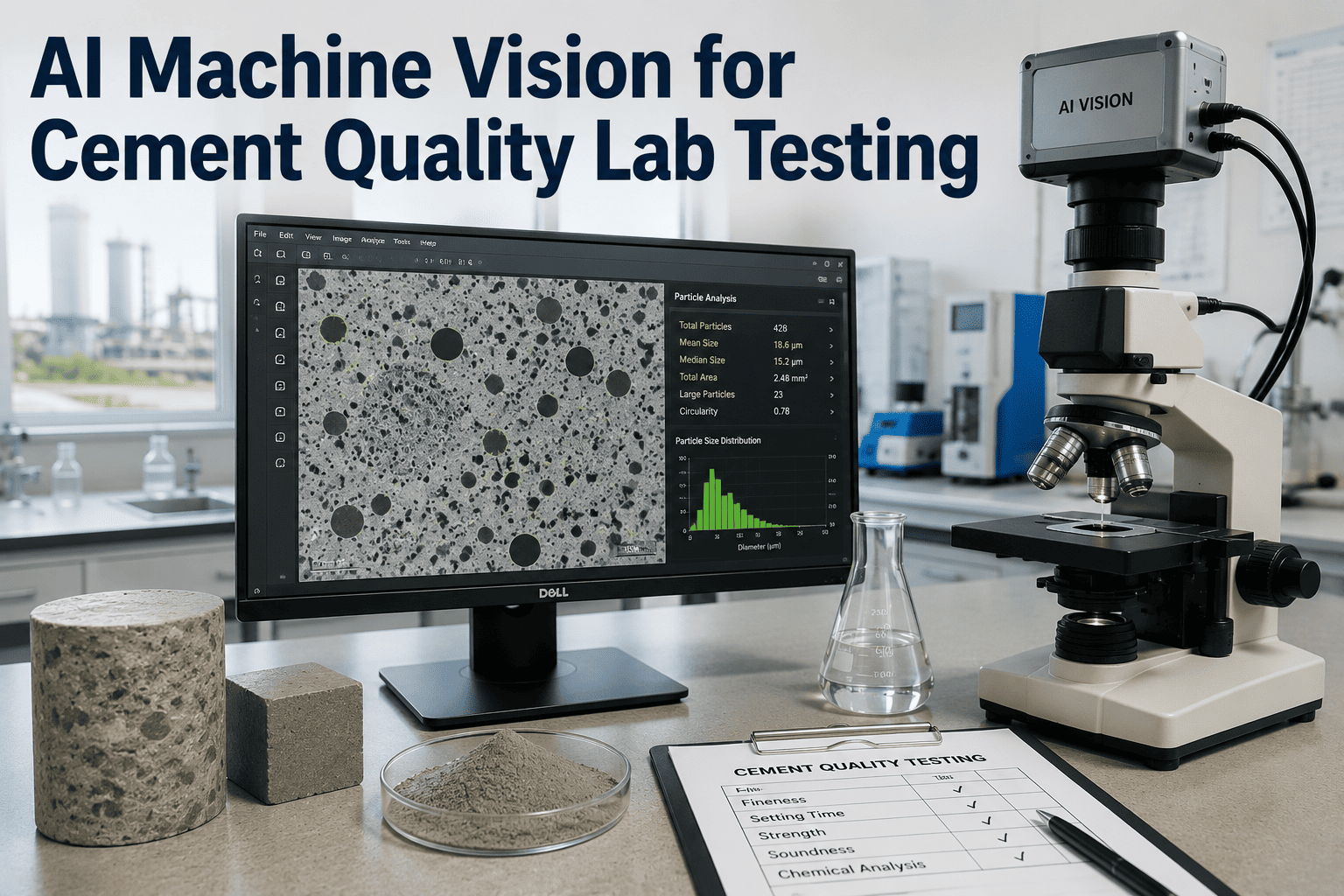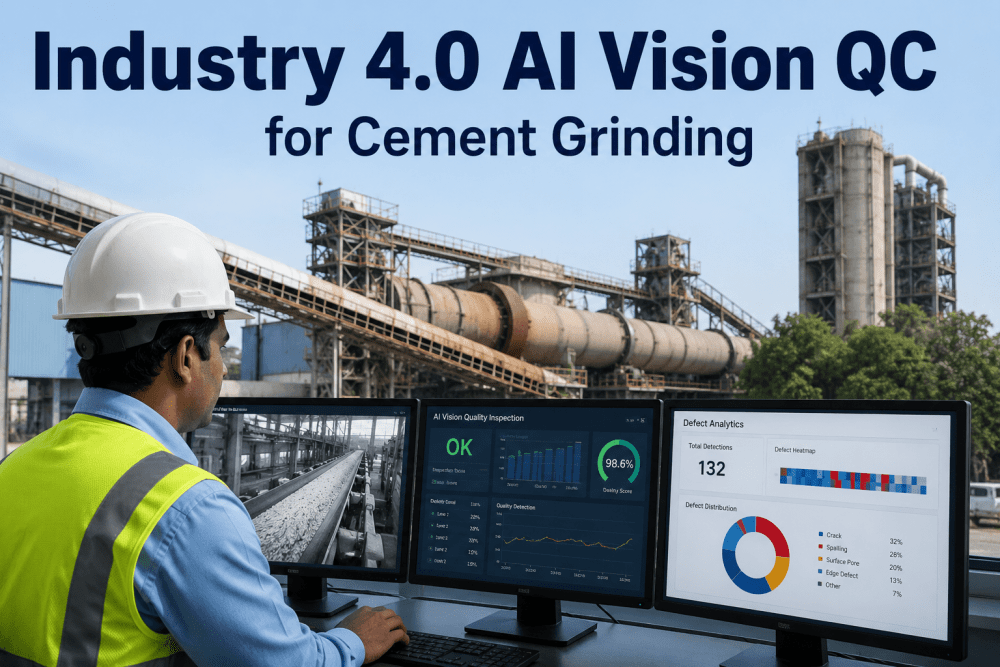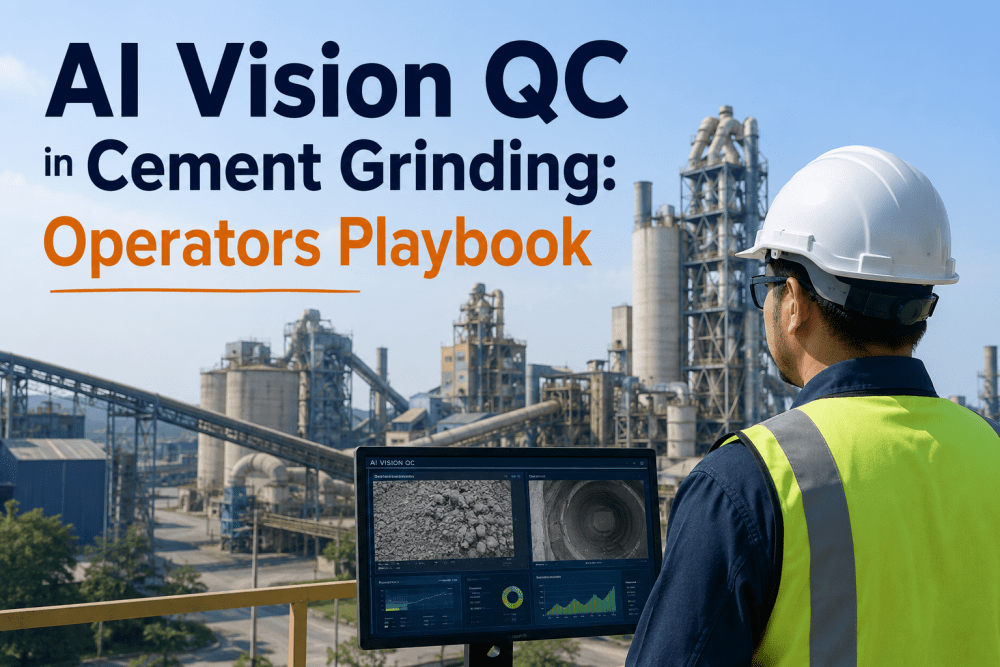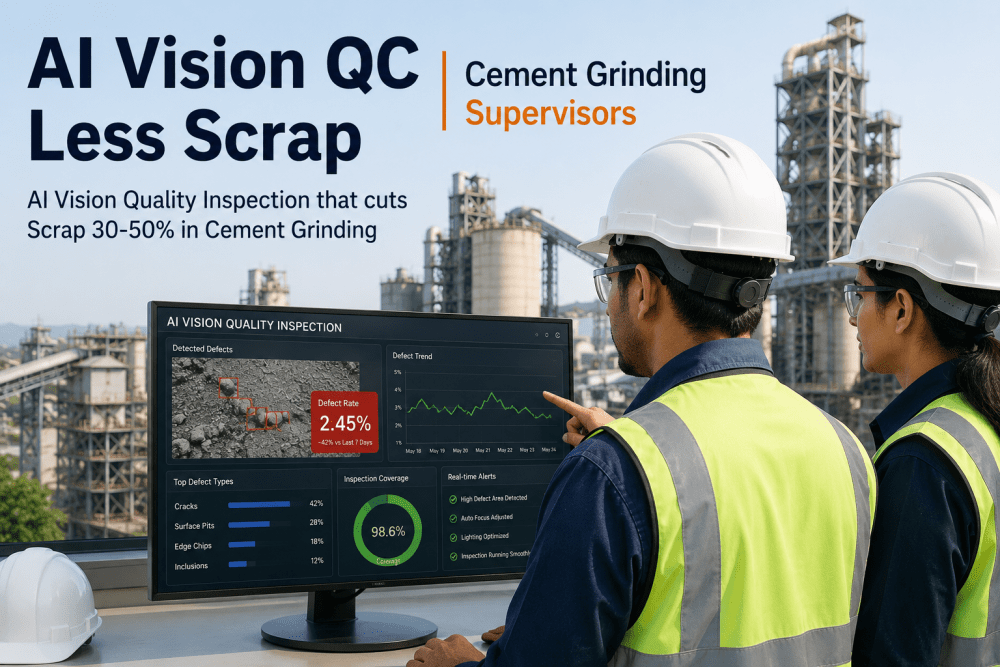
Shift supervisors in cement grinding operations across the USA, Canada, UK, and Australia are responsible for quality outcomes across every ton produced on their watch — yet most supervisors today rely on laboratory results that arrive 30–90 minutes after the material has already been produced, and manual visual inspections that catch fewer than half of visible surface defects. The gap between what a grinding circuit is producing and what the supervisor knows about it is measured in minutes and tons of potential off-spec material. AI vision quality inspection changes this entirely — deploying deep-learning machine vision models that analyze particle size distribution, surface defects, and composition indicators from camera streams every 60 seconds, giving supervisors real-time quality visibility across every mill line on their shift, with automated alerts the moment any parameter drifts outside specification. Request a Shift-Floor Demo to see how iFactory's AI vision platform puts real-time quality control at every supervisor's fingertips.
Cut Scrap 30–50% With Real-Time AI Vision Across Every Mill Line on Your Shift
iFactory's deep-learning vision platform provides supervisors with continuous particle size, surface defect, and composition analysis — purpose-built for cement grinding shift management. Deploy in 4 weeks. Scrap reduction begins in week 2.
Why AI Vision Quality Is Essential for Shift Supervisors in Cement Grinding
The shift supervisor sits at the intersection of production accountability and quality outcomes — responsible for every ton of cement produced during their shift, but typically dependent on laboratory sampling cycles that provide quality confirmation only after the material has reached the silo. Manual visual inspection of clinker and cement surfaces catches obvious defects but misses subtle variations in particle morphology, color consistency, and texture that signal developing quality issues. AI vision quality eliminates this blind spot by deploying continuous camera-based inspection that reports quality conditions every 60 seconds — giving supervisors the real-time visibility they need to make process adjustments before off-spec material is produced. Request a Shift-Floor Demo to see the difference real-time quality visibility makes in a shift supervisor's ability to control outcomes.
Limited Cross-Shift Quality Visibility
Supervisors receive handoff reports that document laboratory results from the previous shift — but those results describe material that was produced 2–4 hours earlier. Quality trends developing during the handoff window remain invisible until the next lab sample is processed.
Delayed Defect Detection Cycles
Manual visual inspection of cement and clinker surfaces across multiple mill lines is physically impossible to sustain continuously. Studies show shift-based visual inspection catches 30–50% of visible defects, with detection rates declining across the shift as inspector fatigue increases.
Manual Scrap and Quality Reporting
Scrap events, off-spec batches, and quality deviations are documented manually in shift logs — introducing delays, inconsistent severity classification, and data loss at shift boundaries. Supervisors lack the real-time scrap visibility needed to manage quality during their shift.
No Real-Time Root Cause Visibility
When quality deviations are detected by laboratory testing, supervisors must manually correlate DCS trends, operator observations, and lab results to identify the cause — a process that takes 30–90 minutes and often produces inconclusive findings that delay corrective action.
"Before AI vision quality, my shift handoff reports told me what the laboratory had found 2–3 hours before I arrived. I was making decisions about mill adjustments based on data that described conditions that no longer existed. The AI vision system changed that completely. Now I open my dashboard and see real-time Blaine estimates, surface defect classifications, and color consistency readings for every mill line — updated every 60 seconds. In my first month using the system, I caught a developing fineness drift on line 2 at 10:15 AM that the laboratory would not have confirmed until 11:30 AM. I adjusted the separator speed at 10:18 AM and the drift corrected before a single ton of off-spec material reached the silo. That is the difference between managing quality and reacting to scrap."
How AI Vision Quality Changes What a Supervisor Can See and Do During a Shift
AI vision quality does not replace the supervisor's judgment or experience — it provides the real-time data foundation that allows experienced supervisors to make faster, more precise decisions. The table below maps how a shift supervisor's ability to detect, diagnose, and respond to quality deviations changes when AI vision provides continuous inspection coverage across all mill lines. Supervisors who request a shift-floor demo consistently report that the transition from reactive to proactive quality management is the most significant operational change of their career.
| Supervisor Responsibility | Without AI Vision Quality | With AI Vision Quality (iFactory) |
|---|---|---|
| Quality Visibility | Laboratory results every 30–90 min. Material produced between samples is invisible. | Continuous AI vision results every 60 seconds across all mill lines. No gaps between samples. |
| Defect Detection | 30–50% of visible surface defects caught by manual inspection. Fatigue reduces rate across shift. | 89–94% defect detection rate sustained across entire shift. Automated classification never fatigues. |
| Scrap Awareness | Confirmed by laboratory after material reaches silo. Supervisor learns of scrap 60–120 min after production. | Real-time scrap risk scoring with 30–60 min advance warning. Supervisor intervenes before scrap is produced. |
| Shift Handoff Quality | Verbal handoff with written logs. Quality context and developing trends frequently lost between shifts. | Auto-generated shift quality summary with time-stamped AI vision records. Complete quality context transferred every shift change. |
| Decision Speed | 30–90 min to detect, diagnose, and respond to quality deviations — dependent on lab cycle time. | 60 sec to detect deviation, 60 sec for AI root cause attribution. Response possible before off-spec material produced. |
| Cross-Shift Quality Trend Visibility | Limited to written shift logs and manual data comparison. Trends across 3–5 shifts difficult to identify. | Dashboard shows quality trends across all shifts with AI vision data. Recurring patterns visible regardless of shift boundaries. |
Every Shift You Wait for Lab Results Is a Shift Where Scrap Could Have Been Prevented
iFactory's AI vision quality platform gives supervisors continuous real-time visibility into every mill line on their shift — detecting defects 60 seconds after they appear, not 60 minutes after they reach the silo. Scrap reduction starts in week 2.
Measured Impact: AI Vision Quality Results at Supervised Cement Grinding Operations
iFactory's AI vision quality platform delivers measurable scrap reduction and quality improvement within the first 30 days of deployment — with supervisors seeing the impact in their shift-end scrap reports from week 2. The following KPIs reflect aggregated performance across ball mill, VRM, and roller press circuits at operating cement plants in the USA, Canada, UK, and Australia.
4-Week AI Vision Deployment: What Shift Supervisors Can Expect
Every iFactory AI vision quality deployment follows a structured 4-week program that includes supervisor training, dashboard configuration, and shift-specific quality threshold calibration — ensuring that every supervisor on every shift has the tools and training needed to act on AI vision data from day one of production rollout. Supervisors who request a shift-floor demo receive a preview of the supervisor dashboard configured with their plant's data before the deployment begins.
Camera Installation and Supervisor Dashboard Preview
High-resolution AI vision cameras installed at conveyor transfer points, mill outlet, and baghouse fill lines. Supervisor dashboard configured with live quality feeds per mill line. Shift supervisors receive dashboard access and introductory training — 45 minutes per shift team. Timeline: 5 days.
AI Model Validation and Supervisor Calibration
Deep-learning vision models validated against plant-specific laboratory reference data per cement type. Supervisors participate in threshold calibration sessions — setting quality alert limits and scrap risk thresholds that match their shift management approach. Operator and supervisor training completed. Timeline: 10 days.
Production Rollout and Shift-Level Scrap Baseline
AI vision models activated on all production streams with supervisor alerts, quality dashboards, and automated shift summary reports. Scrap reduction measured per shift against pre-deployment baseline. Supervisor feedback incorporated into model tuning. Complete handoff quality package available for every shift transition. Timeline: 5 days.
AI Vision Quality for Cement Grinding Supervisors — Frequently Asked Questions
How does AI vision quality change what I see in my shift handoff reports?
Instead of receiving handoff reports based on laboratory results from material produced 2–4 hours before your shift, you receive an AI vision quality summary showing real-time conditions across every mill line — Blaine estimates, surface defect counts, color consistency readings. The system auto-generates a shift quality report at every handoff, so both incoming and outgoing supervisors share complete quality context.
Can AI vision detect quality issues on every cement type my plant produces?
Yes. The AI vision platform maintains separate deep-learning model configurations per cement type — automatically switching models when the mill changes product. Each model includes type-specific Blaine targets, defect classification thresholds, and color/composition reference ranges. Supervisors can view quality data per cement type or aggregated across all production on a single dashboard.
How much training does a shift supervisor need to use the AI vision dashboard effectively?
Supervisor training is delivered in two 45-minute sessions during week 1 of deployment — the first covering dashboard navigation and real-time quality interpretation, the second covering alert response protocols and shift report generation. Most supervisors report full proficiency after their first shift using the system with support from the iFactory deployment team.
Does AI vision quality replace the laboratory or reduce the need for quality control staff?
No. AI vision augments laboratory quality control by providing continuous visibility between sampling intervals. Laboratory analysis remains the reference standard for certification and customer reporting. AI vision allows supervisors to detect and respond to quality deviations between lab samples — reducing scrap without replacing any laboratory personnel.
How does the system handle quality deviations that originate from upstream processes outside the grinding circuit?
AI vision models are trained to detect quality signatures correlated with upstream conditions — including clinker quality variation, additive feed changes, and kiln condition shifts. When a deviation is detected, the system provides a root cause attribution that identifies whether the source is upstream or within the grinding circuit, enabling supervisors to direct corrective action to the right process stage.
Conclusion: Every Shift Supervisor Deserves Real-Time Quality Visibility
Cement grinding shift supervisors across the USA, Canada, UK, and Australia are held accountable for quality outcomes they cannot see until hours after the material is produced. Laboratory sampling provides accuracy but at a latency that makes real-time quality management impossible. Manual visual inspection provides speed but at detection rates that leave 50–70% of defects undetected. The gap is not a capability gap — it is an information gap, and AI vision quality inspection closes it.
iFactory's AI vision quality platform gives shift supervisors continuous real-time visibility into every mill line on their shift — detecting particle size deviations, surface defects, and composition shifts 60 seconds after they appear, with automated alerts, root cause attribution, and corrective action recommendations that allow supervisors to intervene before off-spec material is produced. The 30–50% scrap reduction, the 94% defect detection rate, and the 38-minute average lead time over laboratory sampling are outcomes already measured at operating cement plants. They are available to every supervisor ready to see what their process is actually doing in real time. Request a Shift-Floor Demo to see iFactory's AI vision quality platform configured with your plant's data.
Stop Managing Quality by Lab Results That Are Hours Old. Get Real-Time AI Vision on Your Shift.
iFactory's AI vision platform delivers continuous particle size, surface defect, and composition analysis — giving shift supervisors the real-time quality visibility needed to cut scrap 30–50% and manage quality proactively from the first minute of every shift.