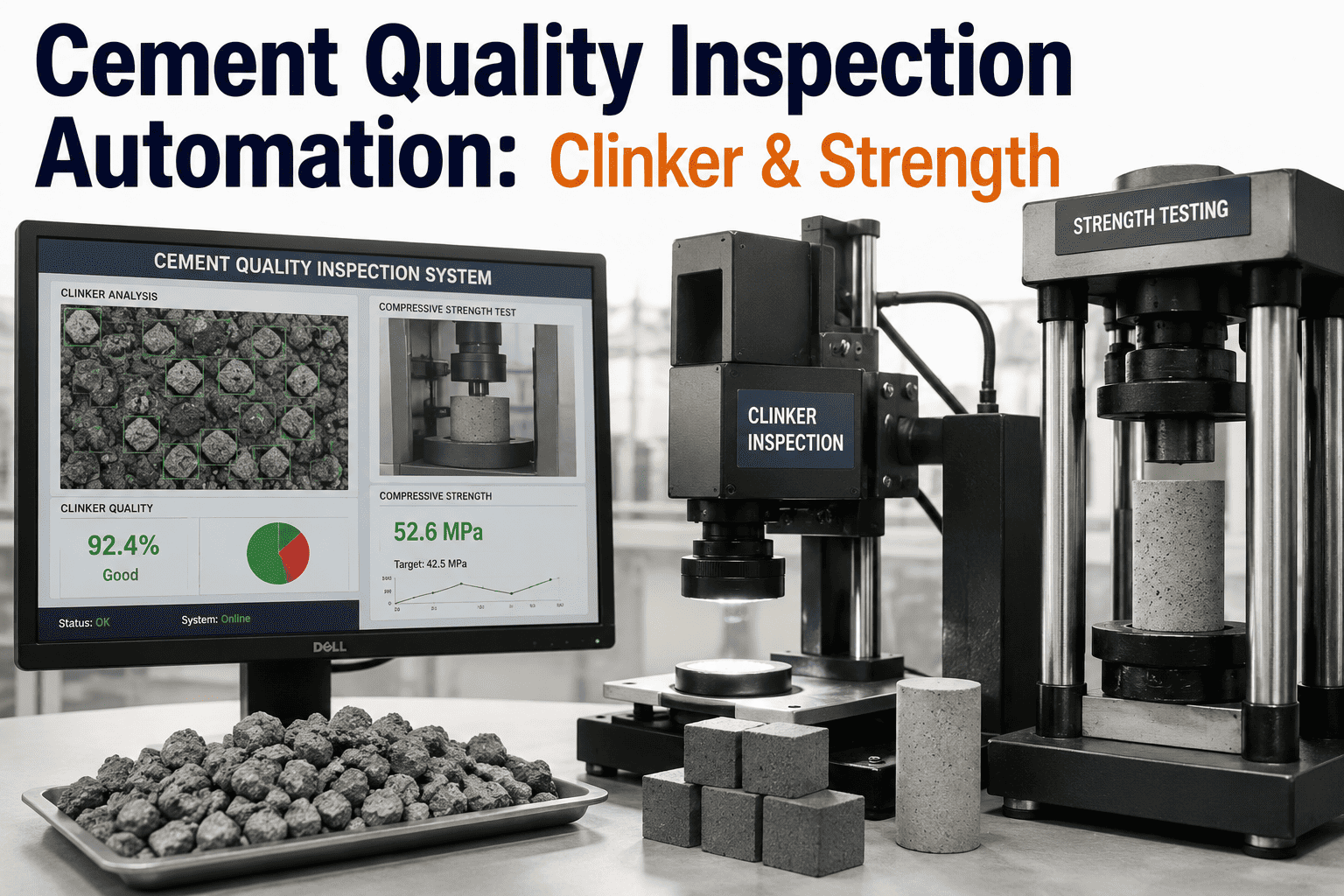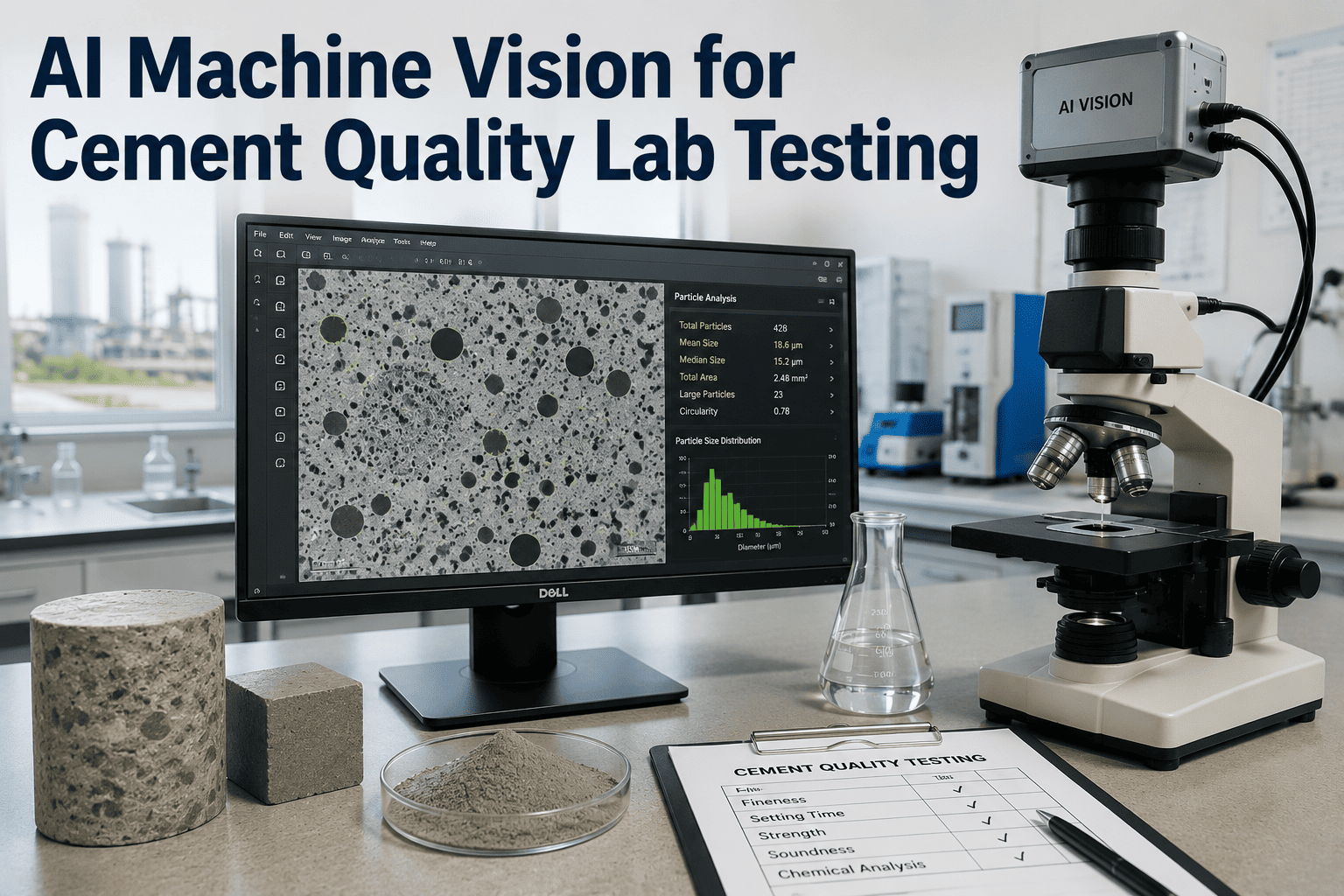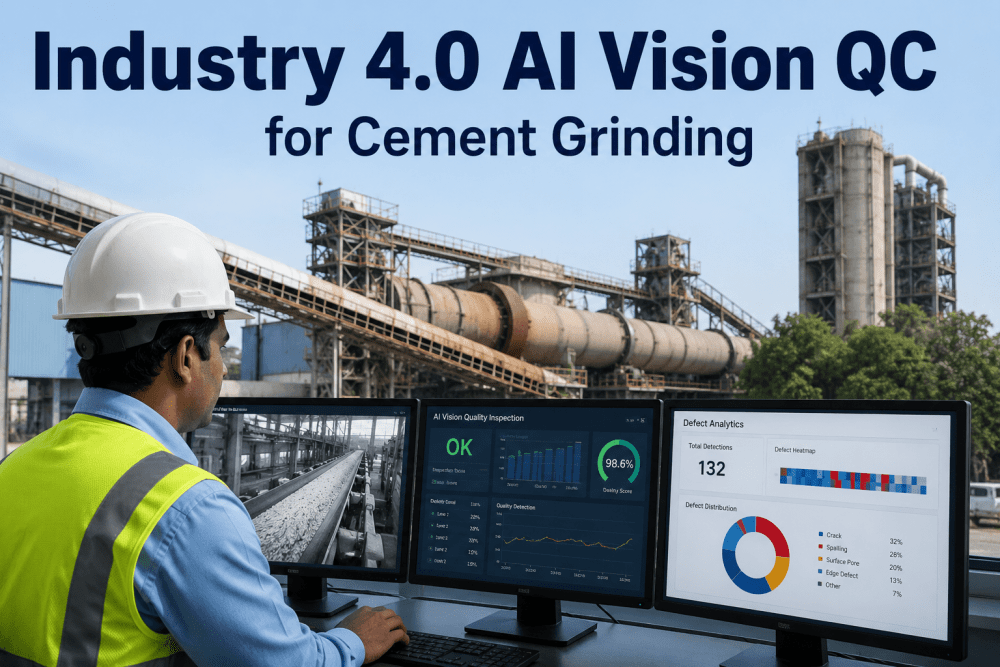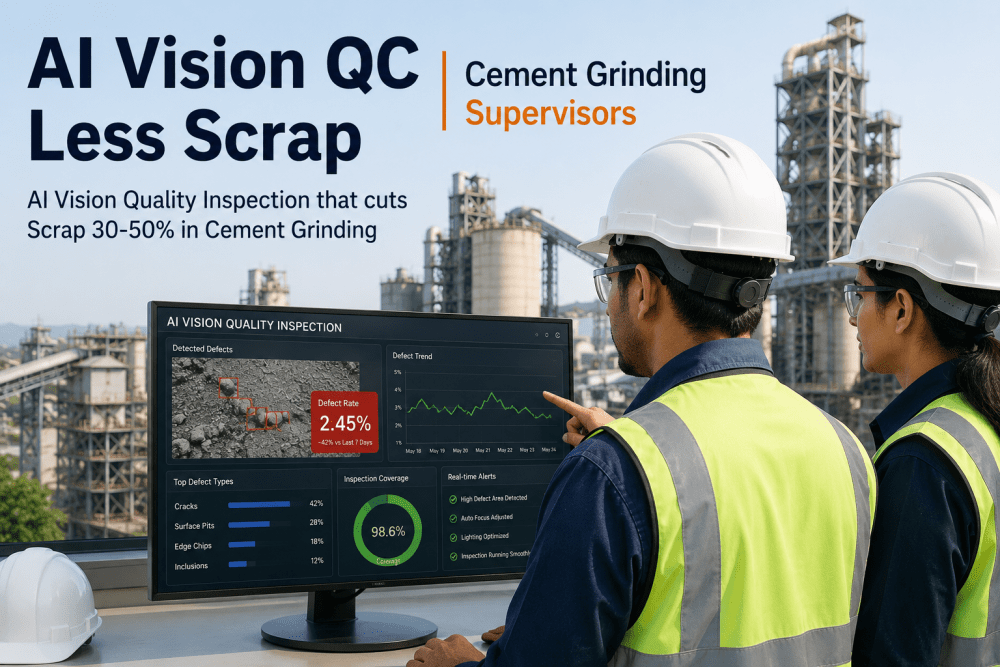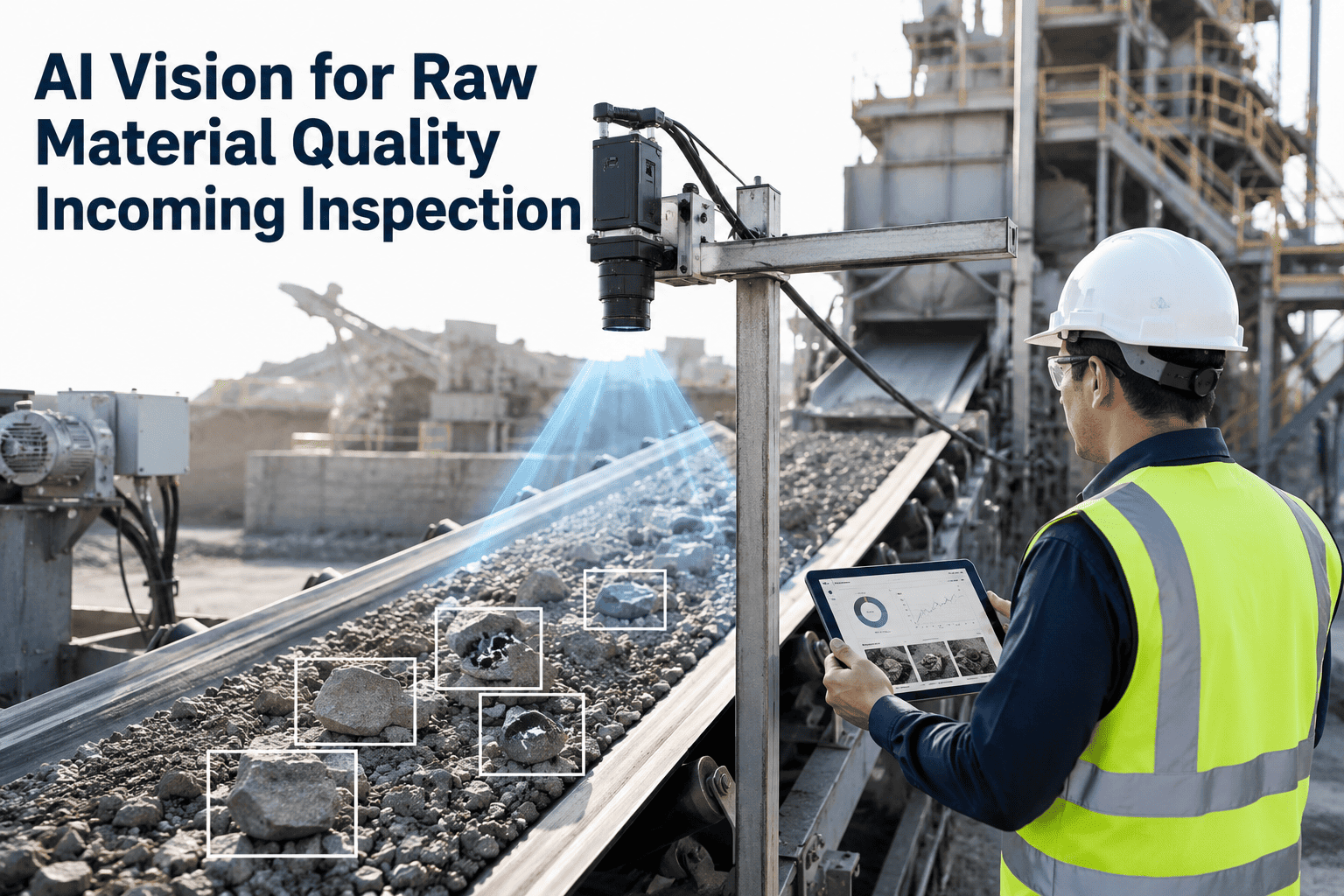
In cement manufacturing, the quality of the final product is fundamentally determined by the raw materials entering the kiln. Limestone, clay, gypsum, and corrective additives each carry unique chemical and physical properties that must be precisely controlled. However, traditional manual inspection methods are slow, subjective, and prone to error, often allowing contaminated or off-specification materials to slip into the production stream. This leads to increased energy consumption, clinker quality deviations, and costly downtime. iFactory’s AI-driven vision systems offer a transformative solution: real-time, automated inspection of incoming raw materials at the quality gate. By deploying high-resolution cameras and deep learning algorithms at conveyor belts and truck unloading stations, manufacturers can detect contaminants like organic matter, oversized rocks, moisture variations, and size distribution anomalies instantly. This proactive approach shifts quality control from a reactive lab-based check to a continuous, inline monitoring process. To see how your facility can eliminate raw material variability and stabilize production, Book a Demo with our team today.
Transform Your Incoming Inspection with AI
Eliminate contamination and variability before they impact your kiln. Achieve 100% continuous monitoring of every truck and conveyor load.
Why Traditional Incoming Inspection Fails
Manual sampling and lab analysis can take hours, during which entire truckloads of raw material may already be dumped into the crusher. Human visual inspection is inconsistent, especially for subtle contaminants like organic matter in clay or fine dust in limestone. Moreover, manual methods cannot capture real-time trends in moisture or particle size distribution, leading to downstream process upsets. The result is a hidden cost: increased fuel consumption in the preheater, higher wear on grinding equipment, and frequent quality reblending. iFactory’s AI vision eliminates these blind spots by providing instant, objective, and quantifiable data at the very first point of entry.
How AI Vision Works at the Quality Gate
Our system integrates high-resolution multispectral cameras and LiDAR sensors over conveyor belts and truck unloading hoppers. As material flows, the AI model trained on thousands of labeled images identifies contaminants (wood, plastic, oversized rocks), estimates moisture content through spectral analysis, and measures particle size distribution in real time. The system flags any batch that deviates from predefined quality thresholds, automatically triggering a rejection mechanism or rerouting the material to a corrective blending pile. All data is logged to a central dashboard for traceability and continuous model improvement.
Limestone Inspection
Detect chert, clay balls, and organic inclusions that can cause kiln rings and reduce clinker strength. AI identifies these with 99% precision.
Clay & Shale Analysis
Monitor moisture content and plasticity indicators. High-moisture clay leads to material handling blockages; AI flags deviations instantly.
Gypsum Quality Check
Ensure purity and particle size. Contaminated gypsum can cause false set in cement. AI vision classifies gypsum by color and texture.
Additive Verification
For corrective materials like iron ore or sand, AI verifies correct grade and absence of tramp metal or oversized lumps.
Technical Architecture of the Inspection System
The system comprises a camera array (visible and near-infrared), a high-speed frame grabber, and an edge AI inference unit running a convolutional neural network (CNN) optimized for industrial speed. The CNN processes up to 60 frames per second, detecting and classifying objects as small as 2 mm. A separate moisture estimation module uses NIR reflectance to predict moisture within ±0.5%. The particle size distribution is computed using a segmentation algorithm that measures each particle's Feret diameter. All outputs are fused into a single quality score per batch, which is sent to the plant's MES via OPC UA.
| Material | Key Defects Detected | Detection Method | Accuracy |
|---|---|---|---|
| Limestone | Chert, clay, organic matter | Visible + NIR imaging | 99.2% |
| Clay | High moisture, oversize lumps | NIR reflectance + LiDAR | 97.8% |
| Gypsum | Anhydrite contamination, fine dust | Color + texture CNN | 98.5% |
| Iron Ore | Tramp metal, low grade | Inductive + vision fusion | 99.0% |
Implementation Roadmap
Site Audit & Sensor Placement
Our engineers conduct a thorough assessment of your receiving area, conveyor speeds, and lighting conditions to design optimal camera and sensor positions.
AI Model Training
We collect 10,000+ images of your specific raw materials and contaminants, then train a custom CNN model to recognize your unique quality signatures.
Integration with Control Systems
The edge device connects to your PLC or MES via OPC UA or Modbus, enabling automatic rejection or diversion of non-conforming material.
Go-Live & Continuous Improvement
The system runs 24/7, with a feedback loop that retrains the model weekly based on new defect images and lab validation results.
Ready to Automate Your Quality Gate?
Stop relying on slow manual checks. Deploy AI vision that inspects every gram of incoming material with surgical precision.
Zero-Defect Material Intake
Eliminate contaminated batches before they enter the process, saving millions in rework and energy costs.
Real-Time Traceability
Every truck and conveyor load is logged with a digital fingerprint, providing full traceability from quarry to clinker.
Reduced Lab Workload
Lab technicians focus only on flagged batches, increasing overall quality throughput by 40%.
Predictive Quality Alerts
The system learns supplier patterns and alerts you to deteriorating quality trends before they become critical.
Customer Success: 300% ROI in 6 Months
A major Indian cement manufacturer deployed iFactory’s AI vision at their two primary limestone quarries. Within three months, contamination detection accuracy rose from 82% to 99.5%, and the rejection of off-spec material reduced kiln feed variability by 18%. The system paid for itself in under six months through reduced fuel costs and fewer quality incidents.
Frequently Asked Questions
Can the system handle high conveyor speeds up to 5 m/s?
Yes, our camera array and edge AI processor are designed for belt speeds up to 6 m/s. The system uses high-speed global shutter cameras and dedicated GPU acceleration to maintain full accuracy even at maximum throughput. For more details on conveyor specifications, visit our support page.
How does the AI differentiate between different types of contaminants?
The model is trained on a diverse dataset containing thousands of labeled images of contaminants such as wood, plastic, metal, organic matter, and oversized rocks. It uses a combination of color, texture, shape, and spectral features to classify each object. The system continuously improves through active learning, where uncertain detections are flagged for human review and then used for retraining. Learn more about our training methodology at our support resources.
What is the typical return on investment?
Most customers achieve payback within 6 to 12 months. Savings come from reduced fuel consumption (due to consistent kiln feed), lower maintenance costs (fewer blockages and wear), and decreased quality rework. For a detailed ROI calculator, book a demo with our team.
Does the system require special lighting or environmental conditions?
Our system is designed for harsh industrial environments. The cameras are housed in IP65 enclosures with integrated LED lighting that compensates for ambient light variations. The system operates reliably in temperatures from -10°C to 50°C and in dusty conditions typical of cement plants. For installation guidelines, see our support documentation.
Can the AI be trained to detect new contaminants over time?
Absolutely. The system includes a continuous learning pipeline. When a new type of contaminant appears, operators can capture images and label them via the dashboard. The model is then retrained automatically, typically within 24 hours, to recognize the new defect. This ensures the system adapts to changing supplier quality and quarry conditions. For more on model retraining, visit our support page.
Secure Your Raw Material Quality Today
Stop contamination at the gate. iFactory’s AI vision gives you 100% inspection, real-time alerts, and full traceability.