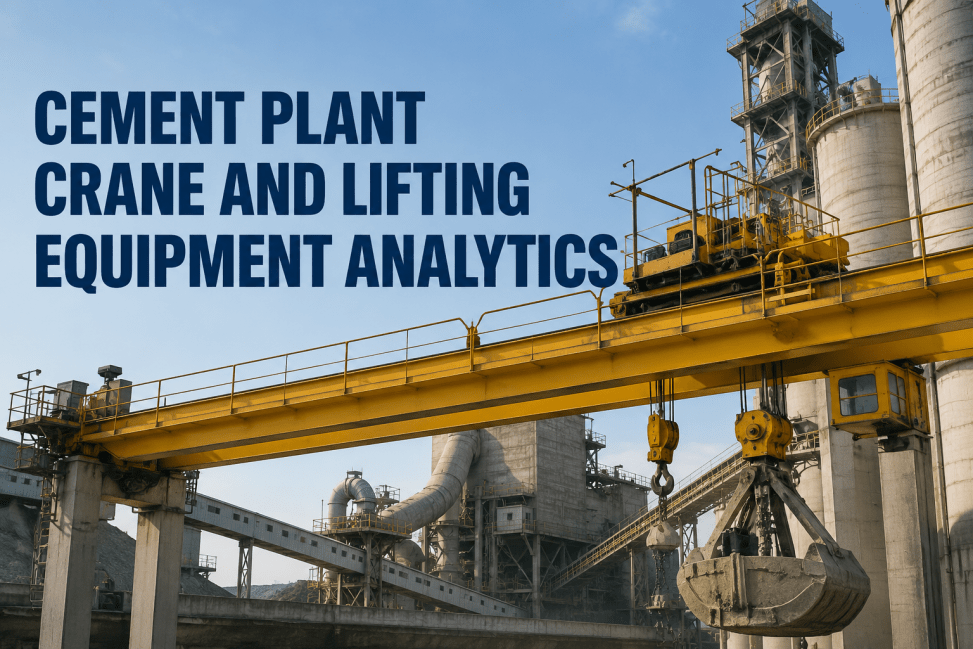
Crane and lifting equipment in a cement plant occupy a category of assets unlike any other in the facility's maintenance program. They are not production-critical in the way a kiln main drive is — a single failed crane rarely stops clinker production for more than a shift. But they are safety-critical in a way that almost nothing else on the plant is: a crane that fails under load, a wire rope that parts at peak tension, or a hoist brake that releases unexpectedly does not produce a production loss report. It produces a fatality investigation, an OSHA 1904 recordable and a regulatory enforcement action that can result in $156,259 per-violation willful penalty under current OSHA citation schedules. The challenge with crane and lifting equipment maintenance in cement plants is that most facilities treat it as a compliance exercise rather than a reliability program. Annual third-party inspections are completed, load test certificates are filed, and wire rope is replaced on calendar intervals that may or may not correspond to actual wear rates under the cement plant's specific operating conditions. Between those inspection events, the cranes keep running — often with defects that are developing and detectable but that no one is systematically looking for because the maintenance program does not include condition monitoring between formal inspections. iFactory's Asset Tracking and Safety Management platform closes that gap by digitizing the complete crane and lifting equipment maintenance program: registering every item in the lifting equipment inventory with its inspection history and certification status, automating inspection scheduling and renewal alerts tracking load test and rope inspection outcomes against OSHA and ASME standards and generating the digital audit trail that protects the facility during OSHA inspections and incident investigations. Book a Demo to see iFactory's lifting equipment management platform configured for your cement plant's crane and hoist inventory.
Digital Crane and Lifting Equipment Analytics — From Paper Inspection Logs to Real-Time Compliance Tracking
iFactory's Asset Tracking and Safety Management modules register every crane, hoist, and lifting device in your cement plant, automate inspection and certification renewal alerts, and generate the digital audit trail that protects your facility during OSHA inspections and incident investigations.
What U.S. Cement Plants Are Required to Maintain — The Regulatory Baseline for Crane and Lifting Equipment
Crane and lifting equipment compliance in U.S. cement plants sits at the intersection of three overlapping regulatory frameworks: OSHA 29 CFR 1910.179 for overhead and gantry cranes in general industry, ASME B30 standards for cranes, hoists, and rigging hardware, and OSHA 29 CFR 1910.184 for slings and rigging equipment. Most cement plant safety programs can identify the annual third-party inspection requirement. Fewer have systematic programs for the daily, monthly, and quarterly inspection frequencies that OSHA and ASME standards require — and even fewer have digital tracking systems that can produce a complete inspection history for a specific asset on demand during an OSHA inspection. The compliance matrix below maps every inspection type, frequency, and documentation requirement that applies to a typical cement plant's crane and lifting equipment inventory.
| Equipment Category | Regulatory Standard | Required Inspection Frequency | Key Inspection Items | Documentation Required | OSHA Citation Risk |
|---|---|---|---|---|---|
| EOT / Overhead Bridge Crane | 29 CFR 1910.179; ASME B30.2 | Daily (operator); monthly (competent person); annual (qualified inspector) | Hooks, wire rope, brakes, limit switches, runway rails, electrical controls, structural | Daily operator checklist; monthly written report; annual third-party certificate | Critical — $156K/violation |
| Jib Cranes and Monorail Hoists | 29 CFR 1910.179; ASME B30.11 | Daily (operator); monthly (competent person); annual (load test every 4 years) | Boom condition, mounting bolts, hoist mechanism, wire rope or chain, load brake | Monthly inspection log; load test certificate at initial installation and after major repair | Critical — $156K/violation |
| Chain Hoists (manual and electric) | 29 CFR 1910.179; ASME B30.16 | Before each use (operator); quarterly (competent person); annual (formal) | Chain condition, hooks, latch pins, sheaves, brake mechanism, load chain wear | Quarterly inspection record; annual certification; load test after repair | High — $15.6K/violation |
| Wire Rope Slings | 29 CFR 1910.184; ASME B30.9 | Before each use; quarterly (competent person); annual (all items) | Broken wires per lay, kinks, crushing, heat damage, end fittings, identification tag | Annual inventory with condition rating; removal from service records | High — $15.6K/violation |
| Chain Slings and Synthetic Web Slings | 29 CFR 1910.184; ASME B30.9 | Before each use; quarterly; annual | Chain: link wear, cracks, twist. Synthetic: cuts, snags, UV degradation, chemical exposure | Tagged inspection record; annual certification; end-of-life disposal documentation | High — $15.6K/violation |
| Shackles, eyebolts, and rigging hardware | 29 CFR 1910.184; ASME B30.26 | Before each use; annual inventory and condition assessment | Thread engagement, body deformation, pin security, manufacturer WLL marking legibility | Annual inventory with WLL confirmation; removal from service records | Significant — $15.6K/violation |
The Four Compliance Gaps That Create OSHA Liability at Cement Plants
Most U.S. cement plants are not failing crane compliance because they are ignoring the regulations. They are failing because their lifting equipment program is managed through paper logs, shared spreadsheets, and third-party inspection certificates that live in file cabinets — and the gap between what the program is supposed to deliver and what it actually delivers only becomes visible when OSHA arrives or an incident occurs. These are the four compliance gaps that iFactory's digital platform closes.
Incomplete Equipment Register
Most cement plants cannot produce a complete, current inventory of every lifting device in their facility — because chain hoists and slings are added, removed, and transferred between areas without registration. OSHA expects every item to be identifiable; an unregistered hoist with no inspection record is a per-item willful violation.
Missed Intermediate Inspections
Annual third-party inspections get scheduled. Monthly competent-person inspections and daily operator checklists are the first items cut when the production shift is running behind. Paper-based programs have no mechanism to detect or document a missed monthly inspection — digital programs do, and the absence of records is itself an OSHA finding.
Expired Certifications in Service
Without automated renewal alerts, certification expiry dates for wire rope load tests, annual inspections, and operator qualifications are tracked manually — or not at all. A crane operating on an expired annual inspection certificate is a per-item serious violation; a crane operator whose license has lapsed is an additional willful citation.
No Defect-to-Resolution Audit Trail
When a monthly inspection identifies a defect — a hook with measurable throat opening, a wire rope approaching discard criteria — the corrective action must be documented to demonstrate prompt response. Paper programs generate findings; they rarely generate a documented link between finding and resolution that survives an OSHA investigation or incident litigation.
Structured Analytics Program for Every Lifting Device Category in the Cement Plant
An effective crane and lifting equipment analytics program in a cement plant is not a single inspection template applied uniformly — it is a differentiated program that matches inspection type, frequency, and technical criteria to the specific equipment category, operating environment, and consequence severity. iFactory's platform configures separate maintenance and inspection programs for each equipment type, with custom checklists, frequency schedules, and discard criteria calibrated to OSHA, ASME, and OEM specifications. Book a Demo to see iFactory's inspection program templates for your specific crane and lifting equipment inventory.
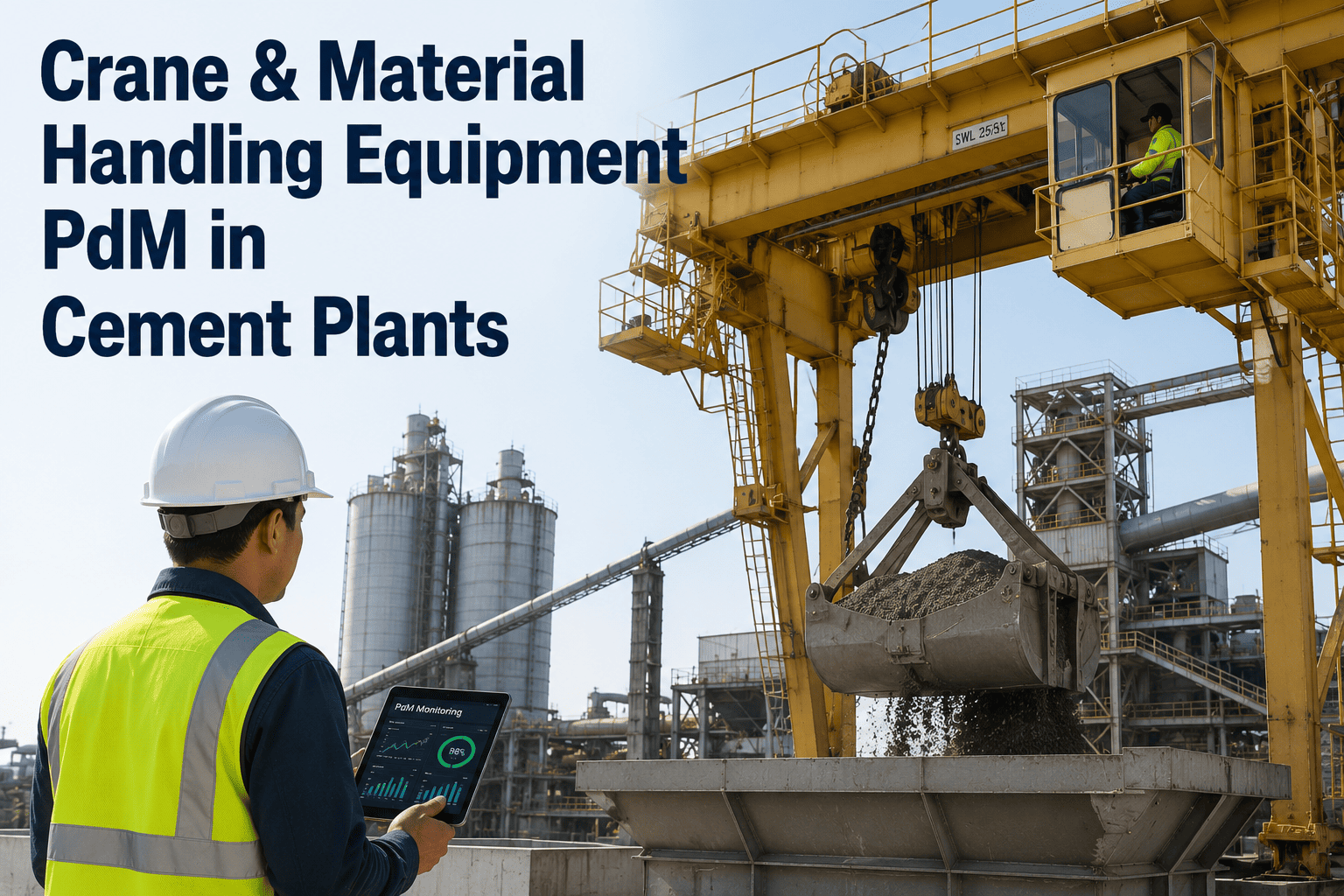
EOT bridge cranes are the highest-consequence lifting equipment in a cement plant — typically carrying 20 to 100 tonne loads of clinker, equipment, or refractory materials in conditions of airborne dust, vibration from adjacent production equipment, and thermal cycling from kiln proximity. The wire rope condition monitoring program is the highest-value element of the EOT crane maintenance program: OSHA and ASME discard criteria for wire rope include six randomly distributed broken wires per rope lay, three broken wires per strand in one rope lay, diameter reduction of more than 1/3 from wear or corrosion, and evidence of heat damage or kinking. iFactory's EOT crane inspection program digitizes daily operator checks with mobile-accessible checklists, automates the monthly competent-person inspection schedule with overdue alerts, and tracks wire rope replacement history per crane to document that discard criteria are being applied consistently.
Cement plants typically operate 15 to 40 individual chain hoists and jib cranes across raw mill, kiln, finish mill, and maintenance shop areas — and these are the items most likely to have incomplete inspection records, because their number makes systematic tracking difficult without a digital register. Load chain stretch is the most common discard criterion met in the field and the most frequently missed in paper-based programs — measuring chain elongation requires a reference measurement at installation and a current measurement at each inspection, which paper programs rarely capture consistently. iFactory registers every hoist with its WLL, installation date, and initial chain measurement as baseline data, then tracks subsequent inspection results against that baseline to detect stretch progression and generate removal-from-service documentation when discard criteria are met.
Sling management is the most administratively complex element of a cement plant's lifting equipment program — a large plant may have 200 to 400 individual slings of various types, capacities, and configurations, each requiring identification tags, a quarterly competent-person inspection, and an annual inventory confirmation. The core compliance risk is slings that have been removed from the tag system or whose identification tags have become illegible — OSHA treats an unidentified sling as a sling with no WLL, which is automatically unusable. iFactory's sling register generates a tag number at initial entry, tracks every inspection result against the tag ID, and flags slings for quarterly inspection on a rolling schedule. Annual inventory reconciliation confirms that every registered sling is either in service with a current inspection record or has been documented as removed from service with disposal record.
Rigging hardware is the most commonly unregistered category of lifting equipment in cement plants — shackles and eyebolts accumulate in tool rooms, maintenance carts, and staging areas without formal registration, and the result is items of unknown provenance, unknown WLL, and unknown inspection history being used for critical lifts. ASME B30.26 requires that every piece of rigging hardware have a legible WLL marking and be included in a documented inspection program. iFactory's rigging hardware register creates a unique asset ID for every item at initial inventory, stores the OEM WLL and minimum breaking force data, and generates the annual re-inspection workflow that confirms each item's continued fitness for service — replacing the informal accumulation system with a documented, defensible inspection record that survives both OSHA inspections and contractor audit requirements for lift planning documentation.
From Paper Logs to Digital Compliance — iFactory Crane Analytics Deployment in Five Stages
Transitioning a cement plant's crane and lifting equipment program from paper-based to fully digital does not require simultaneous replacement of every inspection process. iFactory's deployment is structured as a five-stage program that digitizes the highest-risk items first, builds the complete equipment register progressively, and has the full inspection and certification tracking program operational within 90 days of project start.
Stage 1 — Complete Lifting Equipment Inventory and Registration (Weeks 1–3)
Physical walkdown of all production areas, maintenance shops, and storage locations to identify every crane, hoist, sling, and rigging item. Every item is registered in iFactory's asset register with its equipment ID, WLL, manufacturer, installation date, and current inspection status. Items without legible WLL markings or identification tags are flagged for immediate removal from service and investigation. The inventory is typically completed in 10 to 15 working days and reveals an average of 15 to 25% more unregistered items than the plant's existing records indicate.
Stage 2 — Inspection Schedule Configuration and Certification Loading (Weeks 3–5)
For each registered item, the correct inspection schedule is configured in iFactory — daily operator checklists for cranes and hoists, quarterly competent-person inspection for slings and rigging hardware, and annual formal inspection for all items. Existing certification documents — third-party inspection certificates, load test records, wire rope replacement records — are uploaded and indexed to each asset, establishing the historical inspection baseline. Certification expiry dates trigger automated alerts at 60, 30, and 14 days before expiry to the responsible safety manager and area supervisor.
Stage 3 — Mobile Inspection Deployment for Operators and Competent Persons (Weeks 5–8)
Daily operator inspection checklists are deployed as mobile forms accessible on any smartphone or tablet — eliminating paper daily inspection logs and generating a timestamped digital record for every completed check. Competent-person monthly inspection checklists include equipment-specific criteria based on ASME B30 standards for each item category. Any inspection finding that meets a discard criterion triggers an automatic out-of-service notification and work order for resolution, and the item's status in iFactory is updated to prevent authorized-use sign-off until corrective action is documented as complete.
Stage 4 — Third-Party Inspection Integration and Annual Program (Weeks 8–12)
Annual third-party inspection findings are entered into iFactory by the inspection contractor or imported from inspection report PDFs — linking every finding to the specific asset record and generating corrective work orders for each deficiency. Annual load test certificates and inspection reports are stored in iFactory's document management module indexed to each crane's asset record, replacing paper filing systems that generate retrieval delays during OSHA inspections. Wire rope replacement events are recorded per crane with the rope specification, manufacturer, and installation date — building the complete rope history the OSHA standard requires.
Stage 5 — Compliance Dashboard and Operator Qualification Tracking (Week 12 Onward)
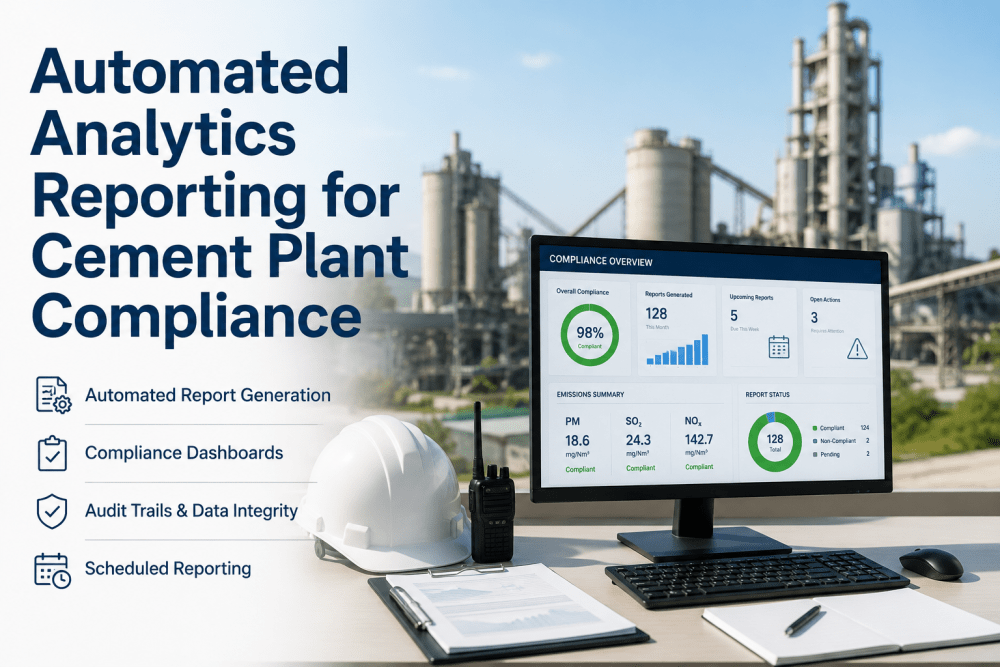
The safety compliance dashboard provides a real-time view of every crane and lifting device's current status — inspection current or overdue, certification valid or expiring, any open deficiencies awaiting resolution. Crane operator qualification records are loaded into iFactory's personnel module — tracking operator licenses, refresher training completions, and medical certifications against expiry dates. The dashboard generates a one-screen OSHA audit readiness report showing every item's compliance status that the safety manager can present to an OSHA inspector within minutes of a site entry notification.
Turn Paper Crane Inspection Logs Into a Digital Compliance Program That Protects Your Facility
iFactory's crane and lifting equipment analytics platform registers every device, automates inspection scheduling, tracks certifications against expiry, and generates the audit-ready documentation that protects cement plant operations during OSHA inspections and incident investigations.
What Cement Plant Safety Managers Say About Digital Crane and Lifting Equipment Compliance
I have been the EHS manager at this cement plant for eleven years, and the crane and lifting equipment program was the one area of our safety management system that I could not get fully under control using paper-based processes. Not because the people doing the inspections were not competent — they were — but because with 340 individual items in the lifting equipment register and three production areas, tracking which items were current on inspections, which certifications were about to expire, and which deficiencies from the last monthly inspection had been resolved required a level of administrative management that a paper program simply cannot provide reliably.
The OSHA inspection we had in 2024 found 14 citation items, 9 of which were documentation-related rather than actual equipment deficiencies. The equipment was generally in good condition. The records were not. We had daily inspection logs with gaps. We had a sling in one of the maintenance shops with an illegible tag that no one could trace to the register. We had a jib crane annual inspection certificate that was 47 days expired — not because the inspection had not been done, but because the new certificate had been filed in the inspector's folder and not in ours. That citation cost us $23,500 in penalty and about 300 hours of management time in the resolution process. After deploying iFactory's lifting equipment management module, our next OSHA interaction was an informal visit by a compliance officer during a neighboring facility investigation. The officer asked to see our crane inspection records. We pulled up the iFactory dashboard and showed every crane's inspection history, current certification status, and open deficiency log — all timestamped, all current, all linked to the actual inspection documents. The officer spent 20 minutes reviewing, found nothing to cite, and left. That is the difference between a paper program and a digital program in crane compliance. The equipment might be identical. The documentation is not.
— EHS Manager, U.S. Integrated Cement Plant — 4,200 tpd Kiln — 11 Years Cement Plant Safety Management — Certified Safety Professional (CSP)Conclusion
Crane and lifting equipment compliance in U.S. cement plants is not a technical problem — it is a documentation and tracking problem. The equipment in most facilities is maintained by competent technicians who know what they are looking for. The compliance gap is in the program around the maintenance: the incomplete equipment register, the missed monthly inspections that no system flagged as overdue, the expired certification that lived in a file cabinet rather than an automated alert system, and the deficiency that was corrected but not documented in a way that creates a defensible audit trail. iFactory's Asset Tracking and Safety Management platform resolves each of these gaps systematically — building the complete lifting equipment register that OSHA expects, automating the inspection schedule that ASME standards require, tracking certifications against expiry with advance alerts, and generating the corrective action documentation trail that protects the facility when an OSHA inspection or incident investigation arrives.
The $156,259 per-violation willful penalty exposure and the far larger legal and human cost of a crane-related incident are both preventable through a digital compliance program that costs a fraction of either consequence. The 90-day deployment timeline means full compliance visibility is achievable within a single quarter, and the audit-ready dashboard that results means the safety manager's relationship with OSHA crane compliance moves from anxiety about what might be missing to confidence in what is documented. Book a Demo to see iFactory's crane and lifting equipment analytics platform configured for your cement plant's specific inventory and inspection program requirements.
Crane and Lifting Equipment Compliance — Frequently Asked Questions
iFactory generates a unique internal asset ID for every sling and rigging item at registration — printed as a durable tag or stamped identifier applied at the time of initial inventory. The iFactory ID links to the item's WLL, manufacturer, capacity, and inspection history. Items without manufacturer serial numbers are fully trackable through this system, and the ID is the reference used for all subsequent inspection records.
Yes. iFactory's document management module stores PDF and image files directly in each crane's asset record — including annual inspection certificates, load test reports, wire rope replacement records, and repair certifications. Every document is indexed with its inspection date and expiry date, which drives the automated renewal alert system.
Yes. iFactory's personnel module tracks crane operator qualifications, NCCCO certifications, site-specific authorization records, and annual refresher training completions — all with expiry date alerts. Operator qualification status is visible in the compliance dashboard alongside equipment inspection status, enabling the safety manager to confirm that only currently authorized operators are assigned to specific crane categories.
When an inspection finding meets a discard criterion, iFactory automatically changes the item's status to Out of Service, generates a corrective work order, and notifies the responsible supervisor. The item remains out of service until a qualified inspector or supervisor documents the corrective action as complete. Book a Demo
For a cement plant with 200 to 400 lifting equipment items, iFactory's asset tracking and safety management deployment typically ranges from $22,000 to $48,000 including initial inventory walkdown support, system configuration, and operator training. Against $156,259 per-violation OSHA penalty exposure and the cost of a single major citation response, the program investment typically paybacks within the first year of operation.