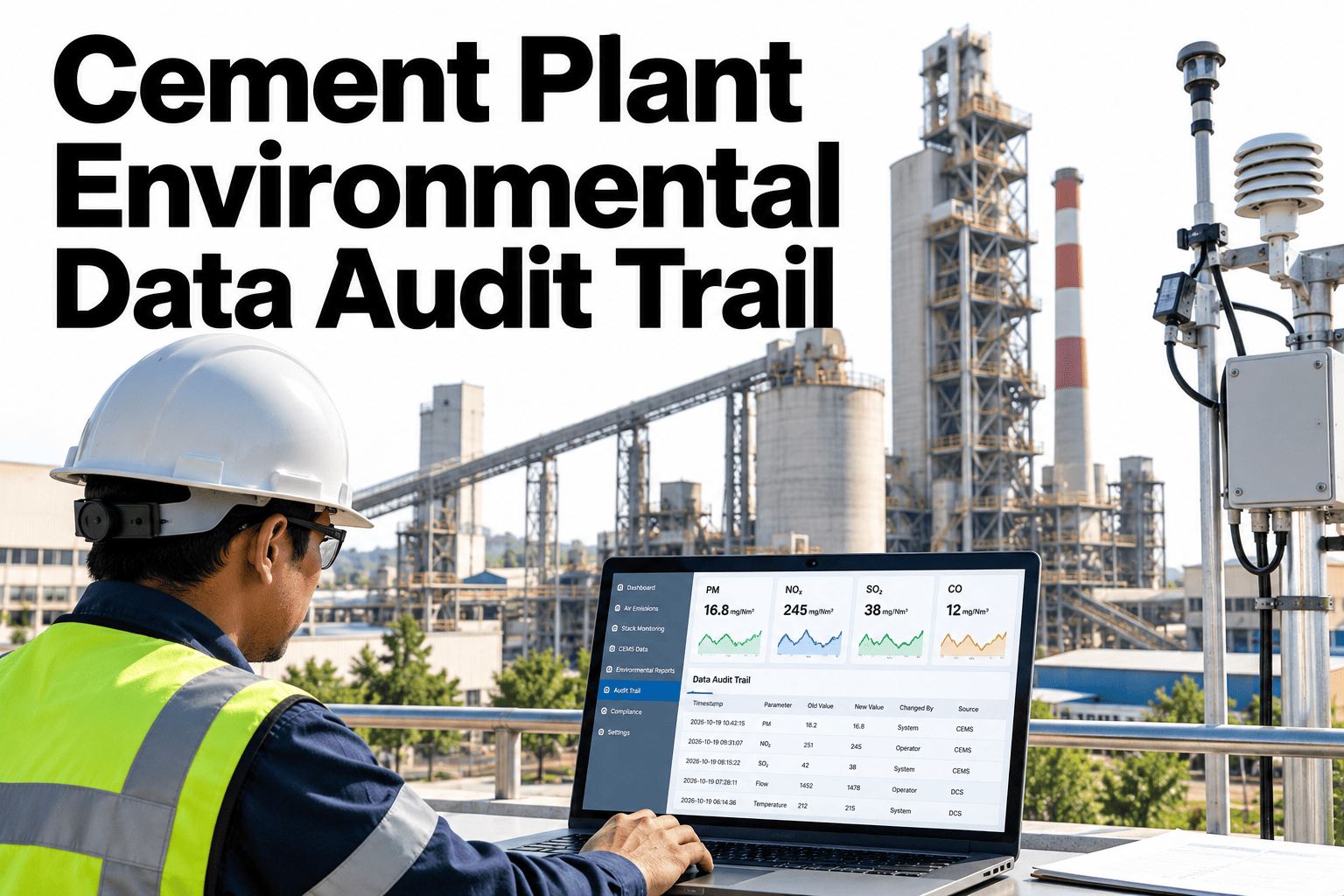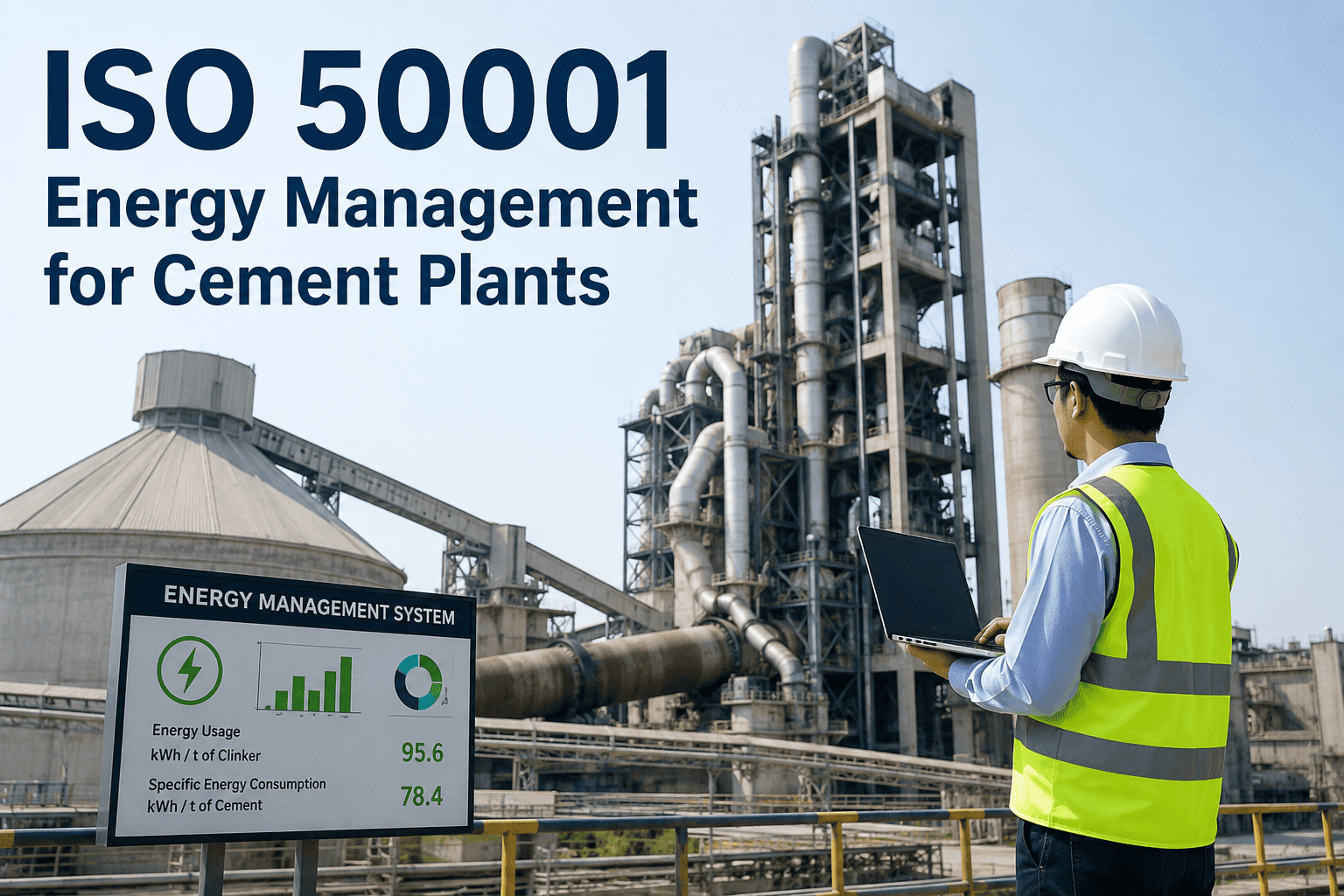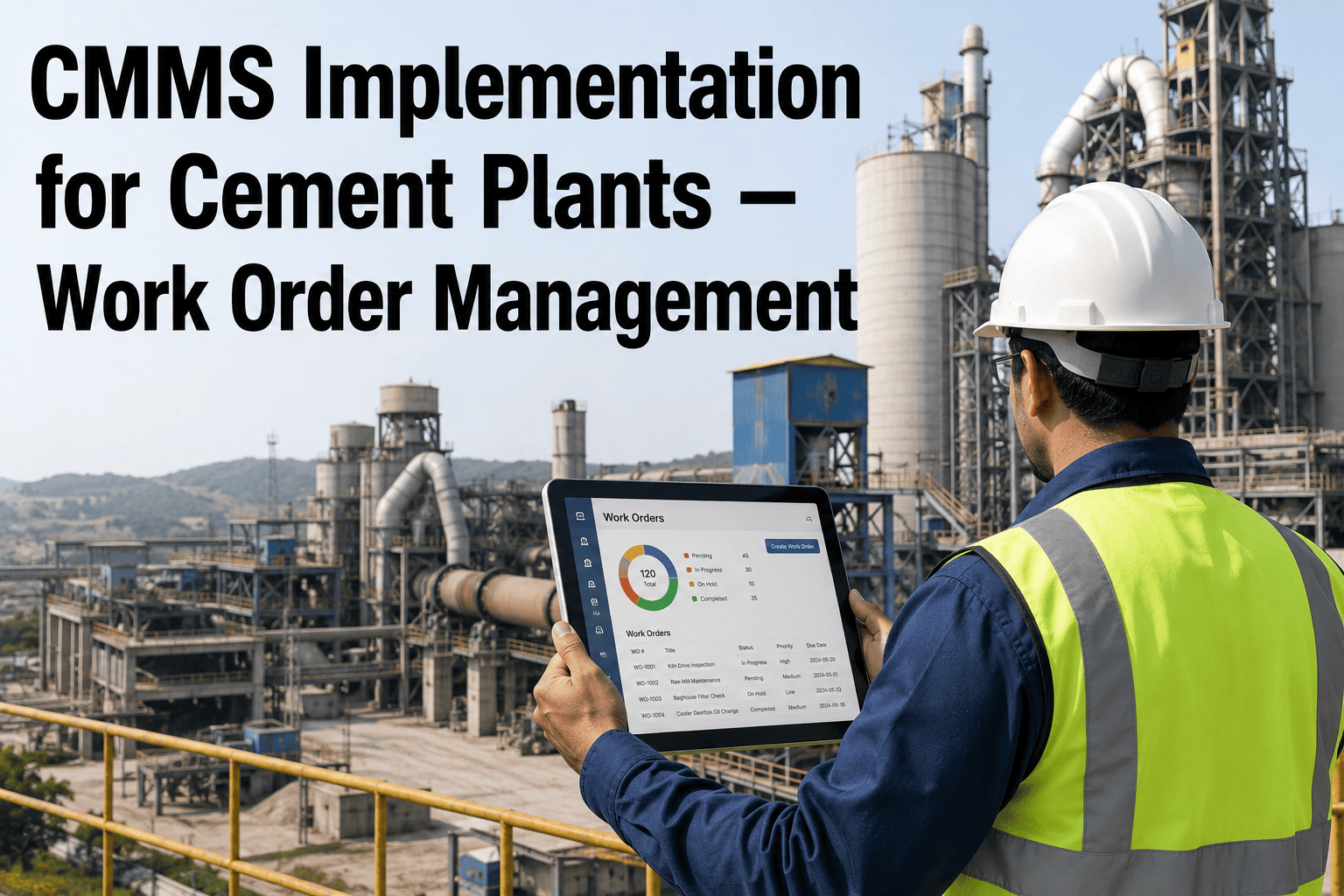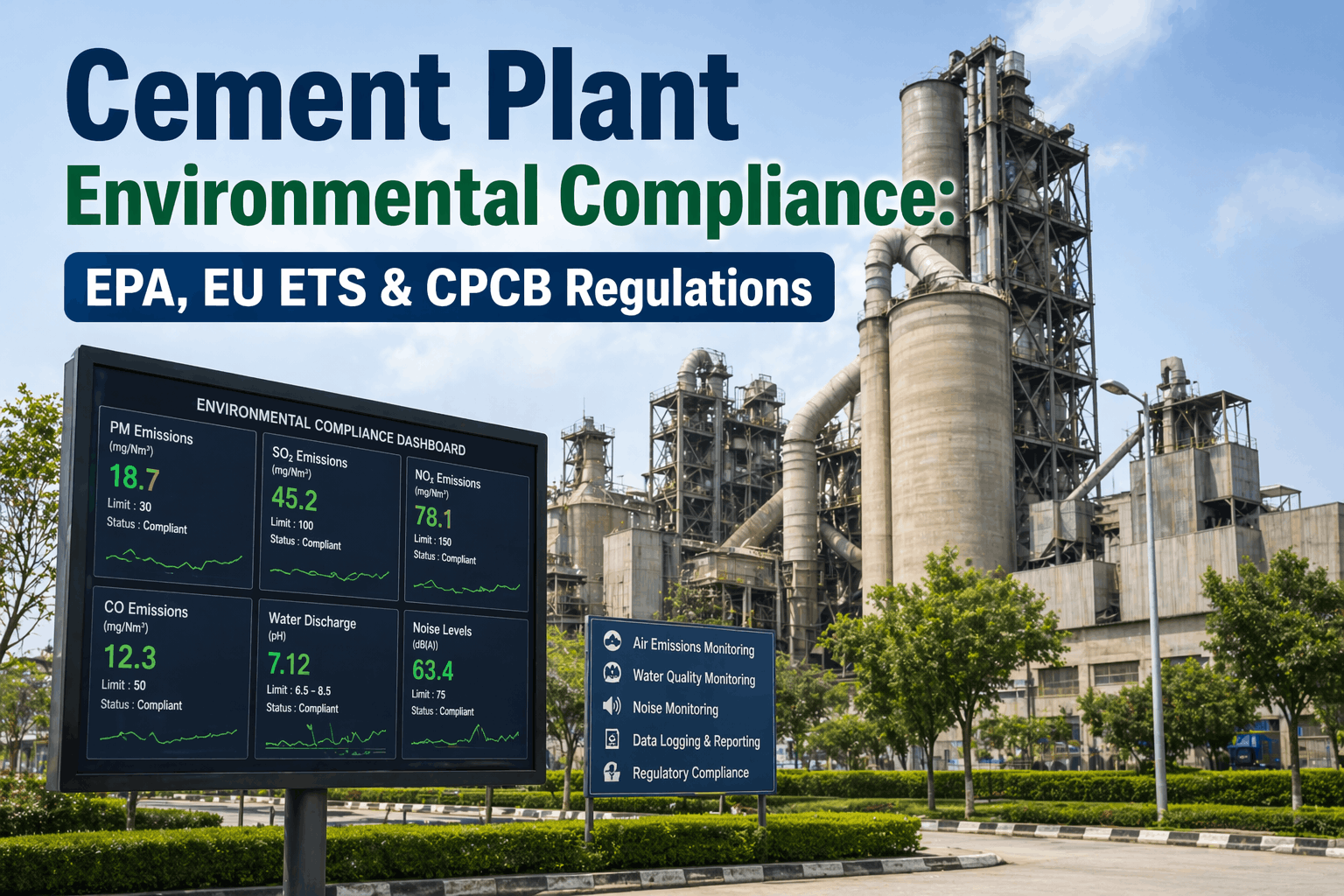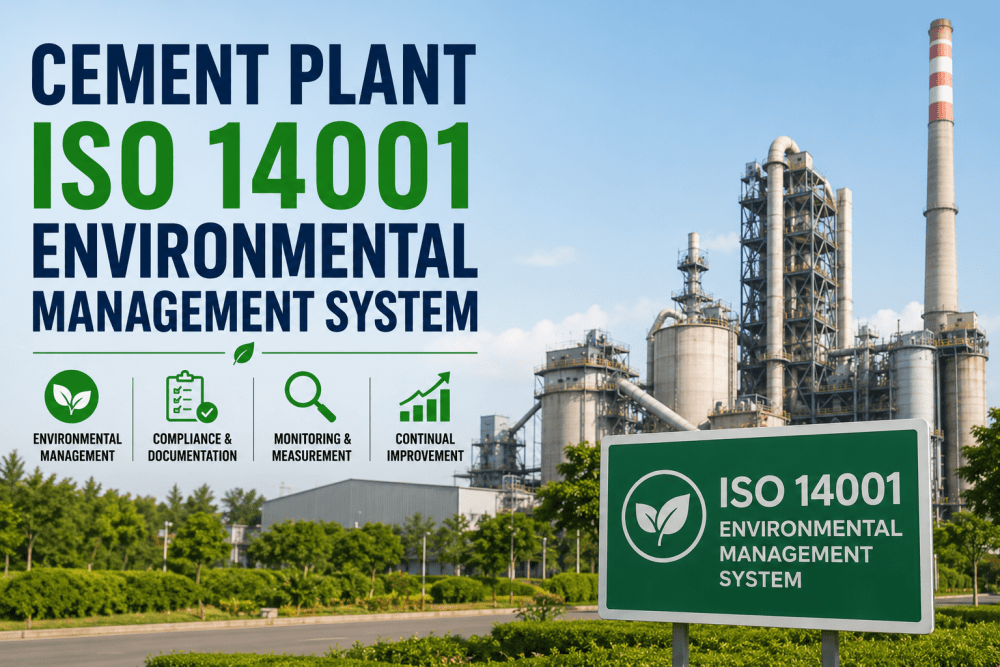
ISO 14001 certification for cement manufacturing is not a corporate branding exercise — it is the most internationally recognized framework for establishing an environmental management system (EMS) that meets regulatory requirements, reduces environmental risk, and demonstrates due diligence to regulators, customers, and the communities where cement plants operate. A U.S. integrated cement plant pursuing ISO 14001 certification typically requires 12 to 18 months from the decision to certify through the final registration audit, depending on the existing environmental management practices at the facility. The investment — including consulting support, training, documentation development, and certification body fees — ranges from $85,000 to $175,000 for a single integrated plant, with annual surveillance audit costs of $18,000 to $35,000. The return on that investment includes reduced regulatory penalties (ISO 14001-certified facilities demonstrate systematic compliance management), improved operational efficiency through structured environmental performance monitoring, and preferential treatment in bidding for infrastructure projects that require certified environmental management from their construction material suppliers. iFactory's Compliance Tracking and Audit Management modules provide cement plant environmental managers with the digital infrastructure to manage EMS documentation, track environmental objectives and targets, schedule internal audits, maintain training records, and prepare for certification and surveillance audits — replacing the paper-based EMS binder system with a connected digital platform that supports every element of the ISO 14001 standard. Book a Demo to see how iFactory supports ISO 14001 environmental management system implementation and certification for cement plant operations.
Is Your Cement Plant's Environmental Management System Ready for ISO 14001 Certification?
iFactory AI's Compliance Tracking and Audit Management modules provide the digital infrastructure to manage EMS documentation, track environmental objectives, schedule audits, and prepare for certification — replacing the paper-based binder with a connected digital platform.
ISO 14001 Requirements for Cement Plant Environmental Management Systems
ISO 14001:2015 follows the Plan-Do-Check-Act (PDCA) cycle applied to environmental management. The standard requires a cement plant to establish an environmental policy, identify environmental aspects and associated impacts, determine compliance obligations, set environmental objectives and targets, implement operational controls, monitor and measure performance, evaluate compliance, conduct internal audits, and perform management reviews. For a cement plant, the environmental aspects that drive the EMS include air emissions (PM, NOx, SO2, CO, HAPs from the kiln and clinker cooler), energy consumption (55 to 65% of plant operating cost), water usage and discharge, waste generation (kiln dust, refractory, baghouse dust), and the environmental impacts of raw material extraction and transportation. Each aspect must be evaluated for significance based on its environmental impact severity, regulatory sensitivity, and stakeholder concern.
EMS Documentation Framework — The Five Levels of ISO 14001 Documentation for Cement Plants
ISO 14001 requires a documented environmental management system, but the standard does not prescribe a specific documentation format or structure. The most widely adopted approach in cement manufacturing follows a five-level documentation hierarchy, consistent with ISO 14001:2015 clause 7.5 requirements for documented information. Each level serves a specific purpose in the EMS and supports a different audience — from the plant manager who needs the environmental policy and manual, to the operator who needs the work instruction for managing a specific environmental aspect.
Environmental Policy — The Foundation Document of the EMS
The environmental policy is the highest-level EMS document and must be approved by top management. It commits the cement plant to environmental protection, compliance with obligations, pollution prevention, and continual improvement of the EMS. The policy must be communicated to all employees and made available to the public. For a cement plant, the policy typically references the company's commitment to reducing emissions, optimizing energy use, managing waste responsibly, and engaging with the local community on environmental matters. The policy is reviewed annually during management review and updated when significant changes occur in the plant's operations or regulatory environment.
- Signed by top management (plant manager or corporate environmental director)
- Communicated to all employees through training and posted in common areas
- Available to public via company website or facility notice board
- Reviewed annually during management review meeting
Environmental Management Manual — The EMS Framework Document
The environmental management manual describes the scope of the EMS, the documented procedures or references to them, and the interaction between EMS processes. For a cement plant, the manual defines the organizational structure for environmental management (including roles and responsibilities of the environmental manager, plant manager, department heads, and shift supervisors), describes how environmental aspects are identified and evaluated for significance, documents the approach to setting environmental objectives and targets, and establishes the framework for operational control, monitoring, audit, and management review. The manual is the primary document reviewed by certification body auditors during the Stage 1 documentation audit.
- Describes the EMS scope — which operations, products, and services are covered
- Documents the interaction between EMS processes
- Establishes roles and responsibilities for environmental management
- Reviewed during Stage 1 certification audit by external certification body
Environmental Procedures — The Core EMS Operating Documents
Procedures document how specific EMS activities are performed. ISO 14001 requires documented procedures for operational control of significant environmental aspects, monitoring and measurement, evaluation of compliance, internal audit, nonconformity and corrective action, and control of documented information. For a cement plant, operational control procedures cover emission monitoring (CEMS operation and QA/QC, stack testing protocols), water management (process water treatment operation, stormwater inspection and sampling), waste management (hazardous waste storage and disposal, kiln dust management, recycling programs), and emergency preparedness and response (spill prevention and response, fire response, natural disaster procedures).
- Typically 12 to 18 procedures for a cement plant EMS
- Written in a standardized format with purpose, scope, references, definitions, and step-by-step responsibilities
- Controlled documents — version-managed and reviewed at defined intervals
Work Instructions — Task-Level Environmental Operating Documents
Work instructions provide detailed step-by-step guidance for tasks that affect environmental performance. For cement plant operations, work instructions cover CEMS daily calibration checks, pH adjustment on process water treatment, hazardous waste container labeling requirements, baghouse pressure drop inspection and recording, dust suppression system operation at material storage areas, and kiln startup and shutdown procedures that affect emission compliance. Work instructions are the documents used most frequently by operators and technicians, and they are the EMS documents most commonly cited during surveillance audits when an operator cannot demonstrate that they are following the documented procedure.
- Posted at the task location or available electronically through the CMMS
- Reviewed with operators during scheduled EMS training sessions
- Updated when equipment or process changes affect the environmental task
- Most commonly cited EMS documents during surveillance audits
Environmental Records — Objective Evidence of EMS Performance
Environmental records provide objective evidence that the EMS is operating effectively and that the plant is meeting its compliance obligations and EMS requirements. Records required by ISO 14001 include environmental aspect identification and significance evaluation records, compliance obligations register, environmental objectives and targets with progress tracking, training records, monitoring and measurement data, calibration records, equipment maintenance records, internal audit reports, management review minutes, and nonconformity and corrective action records. For a cement plant, the most frequently audited records are emission monitoring data, compliance reports submitted to regulatory agencies, training records for environmental procedures, and internal audit reports with corrective action closure documentation.
- Retained for defined periods per the document control procedure (typically 3 to 5 years minimum)
- Organized in a logical filing system accessible to the environmental manager and internal auditors
- Available in hard copy or electronic format — electronic systems preferred for searchability and backup
ISO 14001 Implementation Timeline — 18 Months from Launch to Certification for U.S. Cement Plants
Implementing an ISO 14001-compliant environmental management system at a U.S. cement plant requires structured effort across five phases — from initial gap analysis through certification audit. The timeline below assumes a dedicated environmental manager with EMS implementation experience and iFactory's digital platform for documentation, compliance tracking, and audit management. Plants without digital EMS infrastructure should add 3 to 6 months to the timeline.
Gap Analysis and Environmental Aspect Identification
Conduct a comprehensive gap analysis comparing current environmental management practices against ISO 14001:2015 requirements. Identify and evaluate environmental aspects for all operations — air emissions, energy use, water consumption and discharge, waste generation, raw material use, and potential emergency situations. Develop the significance evaluation criteria and apply them to each aspect to determine which are significant and require operational control. Establish the baseline for environmental performance indicators. Complete the compliance obligations register documenting all applicable regulatory requirements.
EMS Documentation Development and Implementation
Develop the five levels of EMS documentation — policy, manual, procedures, work instructions, and record templates. Write procedures for each EMS element with input from operations, maintenance, and environmental staff. Develop work instructions for tasks that affect significant environmental aspects. Create the document control system with version management and review schedules. Establish the EMS training program and deliver initial awareness training to all plant personnel. Define environmental objectives and targets with measurable indicators and assign responsible owners.
EMS Operation and Data Collection
Operate the EMS for a minimum of 3 to 6 months with complete documentation, training, and recordkeeping in place. Collect monitoring data for each significant environmental aspect. Conduct internal audits of all EMS elements. Process audit findings through the corrective action system with root cause analysis and action plan tracking. Conduct the first management review meeting with top management — review audit results, environmental performance against objectives, compliance status, and resource requirements for the EMS. Generate and retain all records required for certification audit evidence.
Pre-Certification Audit and Corrective Action
Conduct a pre-certification (Stage 1) audit with a certification body — the auditor reviews the EMS documentation for conformity with ISO 14001 requirements and assesses the plant's readiness for the Stage 2 certification audit. Address any nonconformities identified during Stage 1. Conduct a comprehensive internal audit covering all EMS elements in preparation for Stage 2. Complete any outstanding corrective actions and verify effectiveness. Ensure all records are organized and accessible for the Stage 2 audit team.
Certification Audit and Registration
The certification body conducts the Stage 2 certification audit — a comprehensive on-site assessment of the EMS implementation, documentation, records, and performance. The audit team interviews personnel at all levels, reviews records for each EMS element, and verifies that the EMS is effectively implemented and maintained. Any nonconformities identified must be closed within the certification body's defined timeframe (typically 30 to 90 days). Upon successful closure of all nonconformities, the certification body issues the ISO 14001 certificate, valid for 3 years with annual surveillance audits.
ISO 14001 Audit Preparation — Internal Audit vs. External Certification Audit Readiness
Audit preparation is the most intensive phase of ISO 14001 implementation and the most common source of certification delays at cement plants. Internal audits must be conducted before the certification audit to identify gaps and nonconformities while there is still time to correct them. The comparison below contrasts the two audit types and the preparation required for each.
- Conducted by plant-trained internal auditors or corporate environmental staff
- Scope: full EMS or specific elements depending on the audit schedule
- Frequency: at least annually, with audits of all EMS elements completed in a 12-month cycle
- Report findings as nonconformities, observations, and opportunities for improvement
- Corrective action timeline: typically 30 to 60 days for nonconformity closure
- Documents reviewed: procedures, work instructions, training records, monitoring data, compliance records
- Personnel interviewed: environmental manager, department heads, operators, maintenance technicians
- Conducted by accredited certification body (registrar) auditors
- Scope: full EMS assessment across all ISO 14001 clauses
- Frequency: initial certification, then annual surveillance, then recertification every 3 years
- Report findings as major nonconformities, minor nonconformities, and observations
- Corrective action timeline: 30 days for major, 60–90 days for minor nonconformities
- Documents reviewed: EMS manual, all procedures, records for each EMS element, compliance documentation
- Personnel interviewed: top management, environmental manager, department heads, shift supervisors, operators
Document Control
- All EMS documents version-controlled with approval dates, review schedules, and revision history
- Automated review reminders ensure documents are reviewed before the certification audit
- Audit-ready document packages generated on demand for auditor review
Corrective Action Tracking
- Every audit finding logged with root cause, action plan, responsible owner, and due date
- Automated escalation for overdue corrective actions prevents findings from falling through the cracks
- Verification of effectiveness documentation linked to each closed corrective action
Audit History
- Complete audit trail with all internal and external audit reports, findings, and closure evidence
- Trend analysis identifies recurring findings that may indicate systemic EMS weaknesses
- Management review reports generated automatically with EMS performance data and audit results
Expert Perspective: What an ISO 14001 Certification Auditor Looks For at a Cement Plant
I have conducted over 40 ISO 14001 certification and surveillance audits at cement plants across the United States and Canada in the past 12 years. The single most common reason that a cement plant fails its Stage 2 certification audit is not a gap in the documentation — it is a gap between the documentation and what is actually happening on the plant floor. The EMS manual and procedures are well written. The environmental policy is posted on the wall. The training records are filed. But when I walk out to the preheater tower and ask the operator to show me the work instruction for the CEMS daily calibration check, either the work instruction is not at the location, or the operator cannot describe the calibration procedure, or the calibration log does not match the documented procedure. That is a major nonconformity — the documented EMS says one thing, and the operation is doing another thing. The second most common issue I see at cement plants is the environmental aspect register. Plants routinely list all their emission sources and waste streams, but they fail to include energy consumption as an environmental aspect. ISO 14001 requires that the organization determine the environmental aspects of its activities that it can control and those that it can influence. Energy consumption is the largest environmental impact of cement manufacturing after air emissions — a 4,000 TPD plant consumes 30 to 35 MW of electrical power and 3.5 to 4.5 MMBtu per ton of clinker in thermal energy. If energy consumption is not listed as an environmental aspect, the EMS is nonconforming. The plants that pass their certification audit on the first attempt share three characteristics: they have a digital EMS platform that manages their documentation, corrective actions, and audit records in one system; they have conducted at least two full internal audits before the Stage 2 audit; and their top management participates actively in the management review process rather than delegating it to the environmental manager. iFactory's Audit Management module addresses all three of these success factors — documented information control, corrective action tracking with root cause analysis, and management review reporting with objective evidence of EMS performance.
ISO 14001 Certification Is Achievable in 18 Months — But Only with a Structured, Digital EMS Platform
ISO 14001 certification for a U.S. cement plant is a structured 12 to 18 month process that requires commitment from top management, dedicated resources for EMS documentation and implementation, and a systematic approach to environmental aspect identification, operational control, monitoring, audit, and management review. The certification is achievable — hundreds of cement plants worldwide operate under certified ISO 14001 EMS programs — but it requires more than a binder on the environmental manager's shelf. It requires a connected digital platform that manages EMS documentation with version control and review scheduling, tracks environmental objectives and targets against performance data, schedules and documents internal audits, tracks corrective actions to closure with root cause analysis, and generates the objective evidence that certification body auditors require.
iFactory's Compliance Tracking and Audit Management modules provide cement plant environmental managers with the digital infrastructure to implement and maintain an ISO 14001-compliant EMS — from gap analysis through certification audit through annual surveillance cycles — in a single platform built for the complexity of cement manufacturing environmental management. Book a Demo with iFactory's compliance team to see the ISO 14001 EMS platform configured for your cement plant's operations and environmental permit portfolio.
Deploy a Digital ISO 14001 Environmental Management System Across Your Cement Plant
iFactory AI manages EMS documentation, environmental objectives, corrective actions, internal audits, and certification audit preparation in one platform built for cement plant compliance management.
Cement Plant ISO 14001 Environmental Management — Frequently Asked Questions
Does ISO 14001 certification require a cement plant to reduce its emissions below regulatory limits?
No. ISO 14001 does not set specific environmental performance requirements or emission limits. It requires the organization to commit to compliance with applicable legal requirements, prevention of pollution, and continual improvement of the EMS — but the improvement is in the management system, not necessarily in environmental performance. A cement plant that meets all regulatory emission limits but has no structured EMS documentation, training, audit, or management review process would fail a certification audit despite being in regulatory compliance.
Can a cement plant use its existing environmental permits and compliance reports as ISO 14001 documentation?
Yes. ISO 14001 allows an organization to integrate its existing environmental documentation, permits, and compliance reports into the EMS without rewriting them. The Title V operating permit, NPDES permit, emission monitoring reports, and compliance certifications are all valid documented information under ISO 14001 as long as they are referenced in the EMS manual or procedures and are controlled document version management. The key requirement is that the EMS documentation structure connects these existing documents to the relevant ISO 14001 clauses.
How does iFactory support ISO 14001 internal audit management at a cement plant?
iFactory's Audit Management module supports the complete internal audit cycle — audit schedule creation with defined scope and frequency, auditor assignment, checklist generation based on ISO 14001 clauses and plant-specific procedures, finding recording with classification (nonconformity, observation, opportunity for improvement), corrective action tracking with root cause analysis and effectiveness verification, and management review reporting with trend analysis across all audit findings.
What is the most common major nonconformity found during ISO 14001 Stage 2 certification audits at cement plants?
The most common major nonconformity is inadequate operational control of significant environmental aspects — specifically, a documented procedure exists but the operator on shift cannot demonstrate that they are following it. This is most frequently cited for CEMS calibration and QA/QC procedures, hazardous waste accumulation area management, and stormwater inspection procedures. The gap between documented EMS procedures and actual operator practice is the primary focus of Stage 2 audit preparation.
Does iFactory provide the documentation templates for ISO 14001 EMS implementation, or do we need an external consultant?
iFactory provides the digital platform with configurable templates for EMS documentation — including environmental policy templates, aspect register templates, compliance obligation registers, objective and target tracking frameworks, procedure templates, work instruction templates, audit checklist templates, and management review report templates. The plant's environmental staff or an external EMS consultant develops the facility-specific content based on the plant's operations, environmental aspects, and compliance obligations. Book a Demo to see iFactory's EMS documentation templates configured for a cement plant.