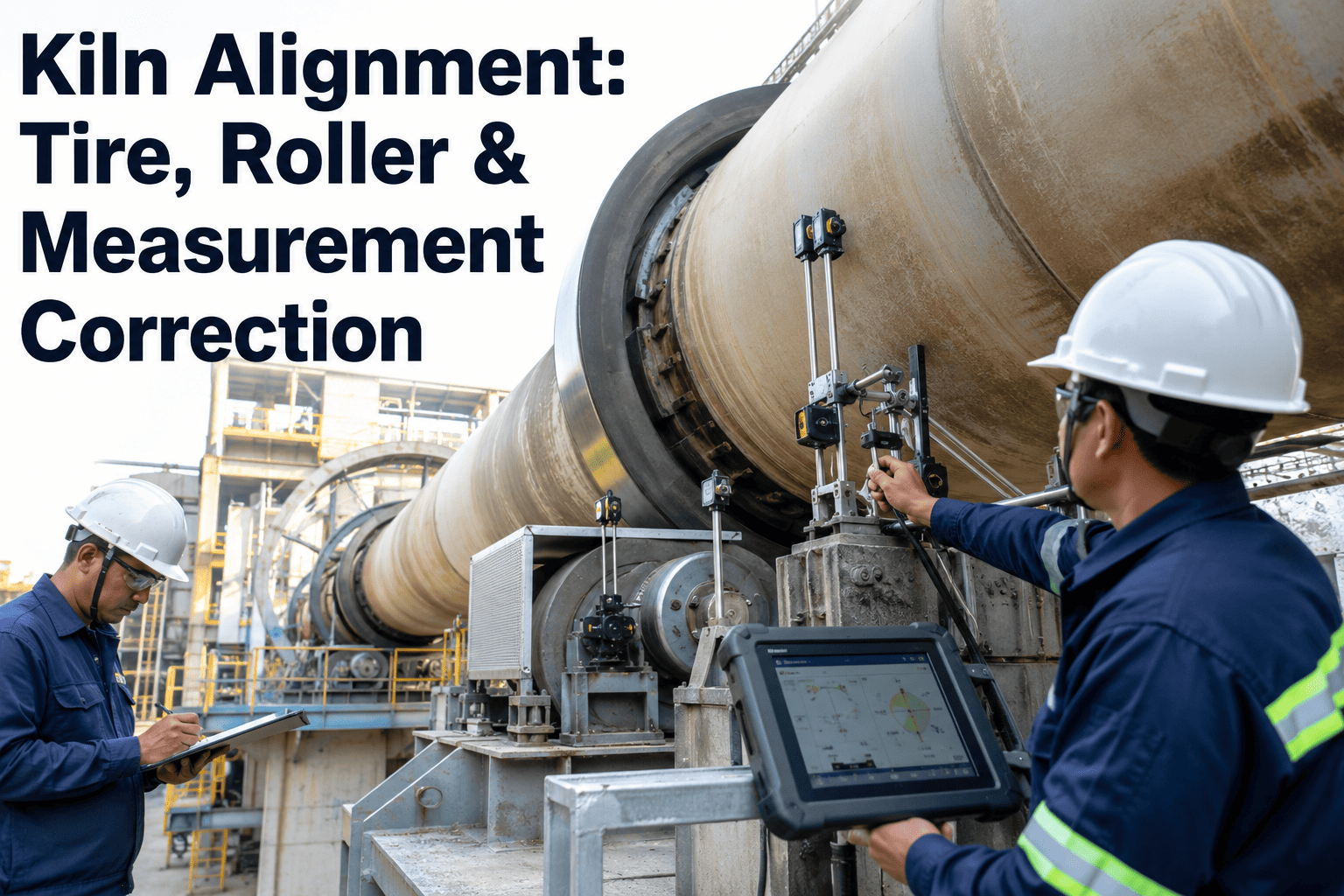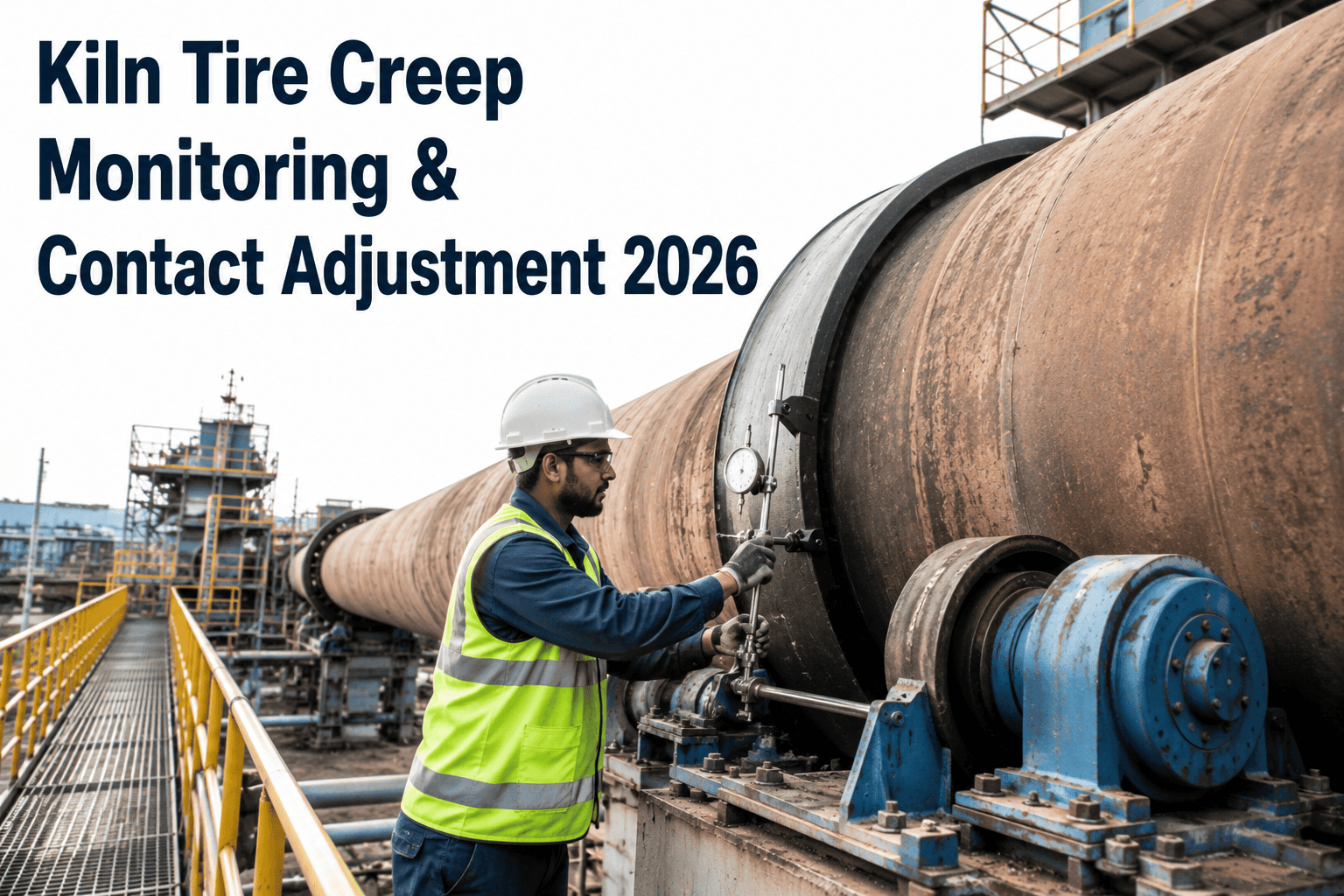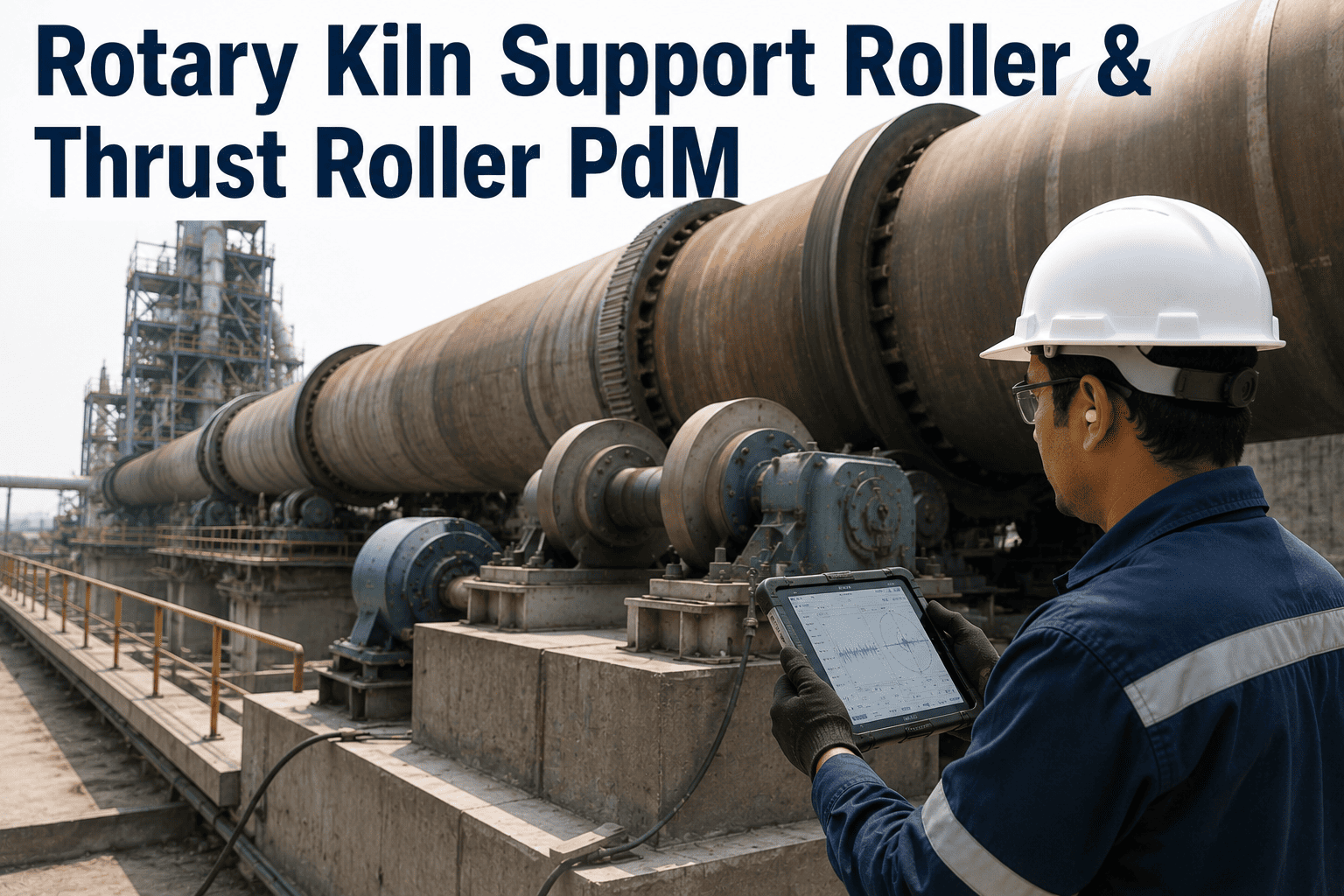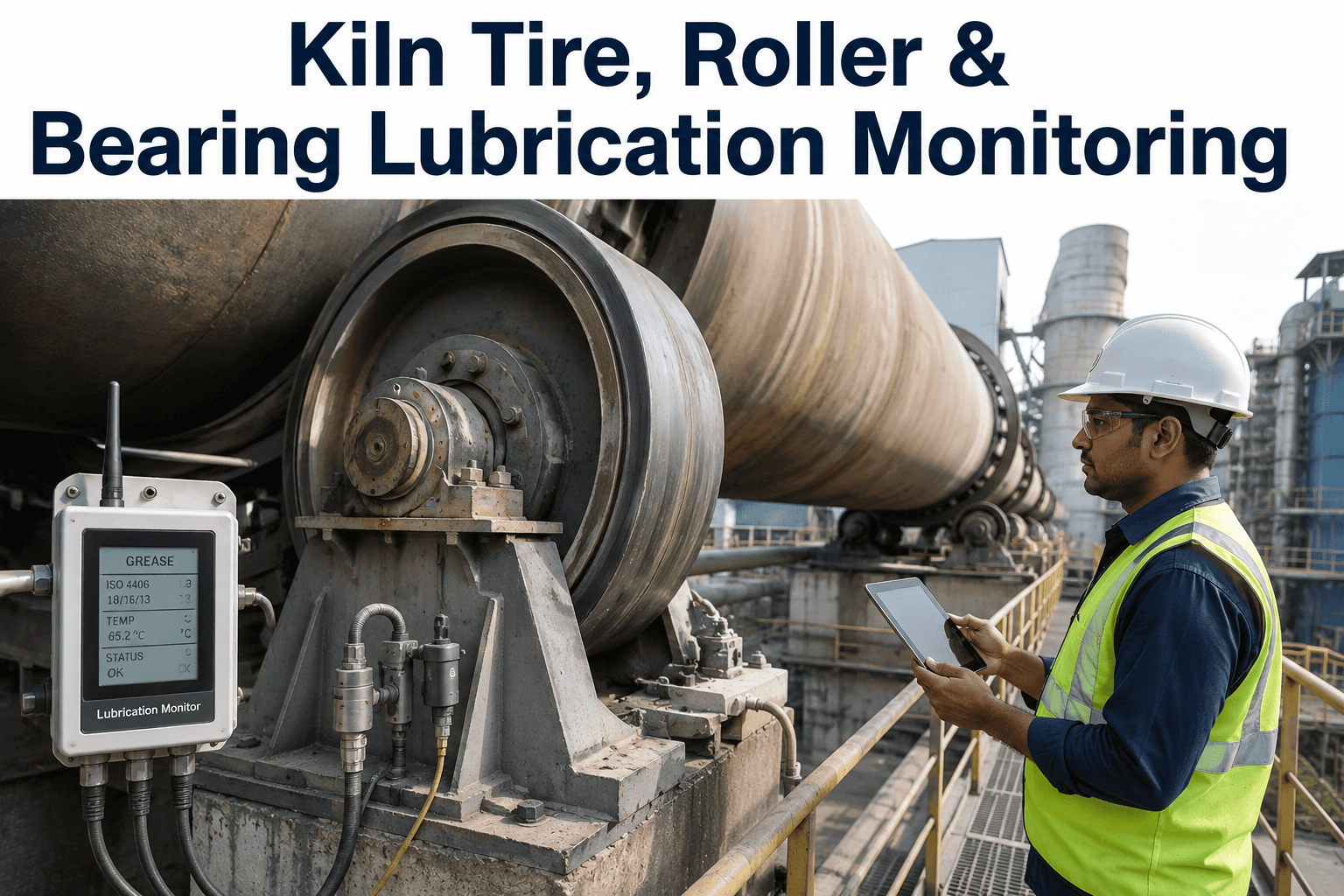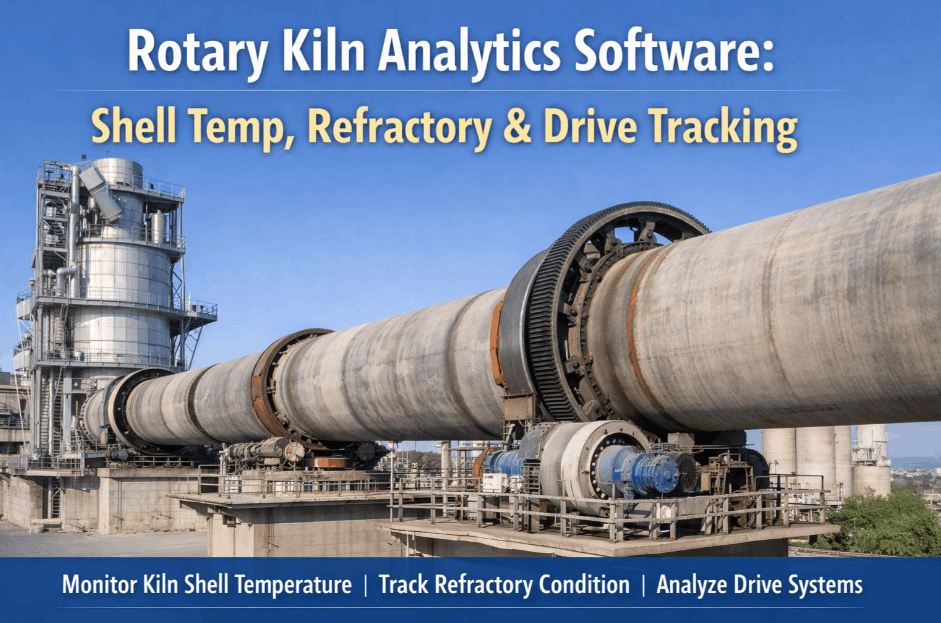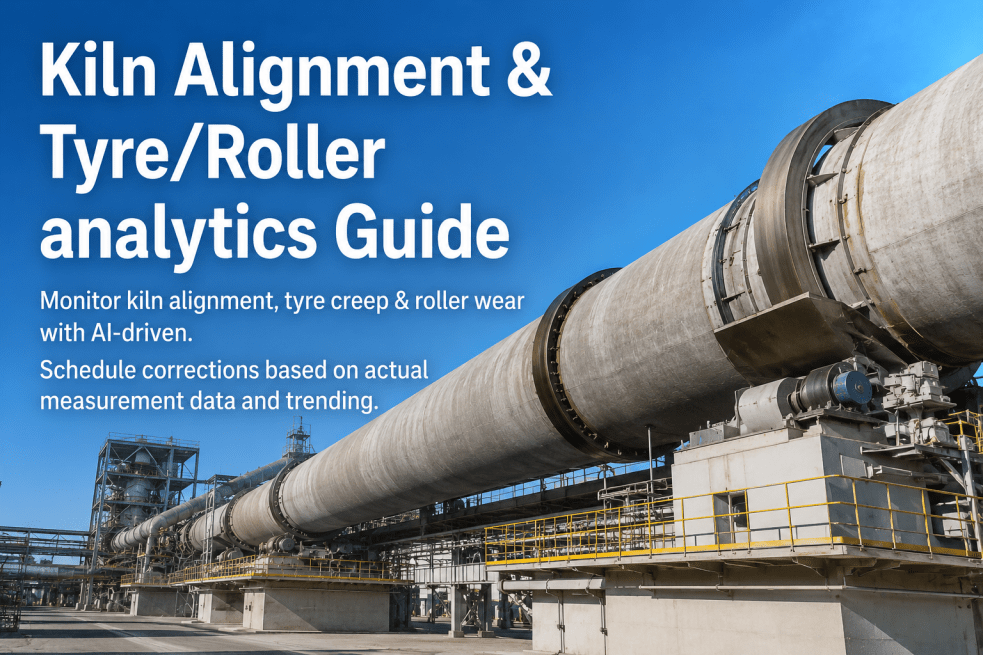
Rotary kiln alignment and tyre-roller condition monitoring are among the most critical mechanical disciplines in cement plant maintenance — directly determining kiln shell integrity, refractory life, and production availability. A kiln operating outside its design alignment tolerances experiences accelerated tyre and roller wear, shell ovality that stresses refractory brickwork, thrust load imbalances that damage gear drives, and fatigue cracking that can lead to catastrophic shell failure. Traditional alignment verification relies on periodic optical surveys performed by specialized contractors at 6-to-18-month intervals — leaving months of operating time between measurements when alignment drift and component wear can progress unnoticed. iFactory AI's kiln mechanical analytics platform transforms this periodic inspection model into a continuous monitoring discipline, tracking alignment trends, tyre creep rates, roller wear patterns, and shell ovality in real time — enabling maintenance teams to schedule corrective actions based on actual mechanical condition rather than arbitrary calendar intervals. Book a Demo to see the platform configured for your kiln configuration and mechanical monitoring requirements.
Ready to Transform Your Kiln Alignment and Tyre-Roller Monitoring with AI?
iFactory's AI platform ingests continuous sensor data from kiln bearings, tyres, rollers, and shell monitoring systems to detect alignment drift, predict component wear, and optimize maintenance scheduling — all from a single unified dashboard.
Why Kiln Alignment and Mechanical Condition Demand Continuous Analytics
A modern cement kiln is a 60-to-100-meter long rotating cylinder weighing 1,000 to 2,500 metric tons, supported at multiple piers by tyres and rollers that must maintain precise geometric alignment under extreme thermal and mechanical loading. Kiln shell temperatures range from 200 degrees Celsius at the inlet to over 400 degrees at the burning zone, creating thermal expansion effects that shift the shell position relative to its support structure with every production cycle. Tyre creep — the differential movement between the tyre and shell — is a normal operating phenomenon, but abnormal creep rates indicate shell warpage, roller misalignment, or refractory ring buildup that can escalate into serious mechanical damage if not detected early. Traditional periodic optical surveys capture a snapshot of alignment at a single point in time but cannot track the continuous evolution of mechanical condition between surveys. Book a Demo to see how iFactory's continuous monitoring platform closes this visibility gap.
| Parameter | Traditional Method | AI-Driven Monitoring | Impact of Early Detection | Risk Level |
|---|---|---|---|---|
| Kiln Axis Alignment | Optical survey every 6-18 months | Continuous bearing temperature and vibration analysis | Shell stress reduced by 30% | High |
| Tyre Creep | Manual chalk mark measurement | Non-contact displacement sensors with AI trend analysis | Refractory life extended by 20% | High |
| Roller Wear and Condition | Visual inspection during scheduled outages | Surface profile monitoring and temperature trending | Unplanned stops reduced by 50% | High |
| Shell Ovality | Periodic stop measurements with mechanical gauges | Continuous strain gauge monitoring with predictive analytics | Crack detection 4-8 weeks earlier | Medium |
| Thrust Load Balance | Manual load cell readings at each support pier | Real-time thrust force monitoring and automated load balancing | Gear drive life extended by 35% | High |
Core AI Technologies for Kiln Mechanical Analytics
AI-driven kiln mechanical analytics is not a single monitoring tool but an integrated stack of sensor data ingestion, machine learning models, and predictive algorithms that together transform how maintenance teams understand and manage kiln mechanical condition. Each technology layer addresses a specific monitoring challenge — from detecting tyre creep anomalies to predicting roller wear progression — and together they create a unified mechanical intelligence platform that continuously improves as more operational data accumulates.
Continuous Alignment Trending
Machine learning models trained on bearing temperature, roller load distribution, and kiln drive power consumption detect alignment drift patterns 4-6 weeks before they would be identified by periodic optical survey. The AI correlates alignment indicators with production parameters to distinguish thermal expansion effects from mechanical degradation requiring corrective action.
Tyre Creep Monitoring
Non-contact displacement sensors measure tyre-to-shell relative movement continuously, feeding data into AI models that differentiate between normal thermal creep and abnormal wear-driven migration. The system alerts maintenance teams when creep rates exceed established thresholds and predicts when corrective action will be required based on trend acceleration.
Roller Condition Analytics
Continuous monitoring of roller bearing temperature, housing vibration, and surface contact patterns enables AI models to detect roller wear and bearing degradation at the earliest stage. The system predicts remaining useful life for each roller assembly and recommends optimal timing for grinding or replacement during planned maintenance windows.
Shell Ovality and Integrity Monitoring
Continuous strain gauge and temperature sensor arrays around the kiln shell feed data into AI models that track ovality changes, identify localized stress concentrations, and predict fatigue crack initiation risk. Early detection of abnormal ovality trends enables corrective alignment adjustments before shell damage accumulates to the point requiring major repair.
How to Implement a Kiln Alignment and Tyre-Roller Monitoring Program
Deploying continuous kiln mechanical analytics requires a structured approach that begins with baseline condition assessment and progresses through sensor deployment, model training, and operational integration. The implementation roadmap below guides cement plant maintenance teams through a systematic deployment that delivers measurable ROI within the first operating campaign. Book a Demo to walk through iFactory's pre-configured kiln analytics templates with our cement industry solutions team.
Baseline Survey and Sensor Installation
Conduct a comprehensive optical alignment survey to establish baseline kiln axis position, tyre clearance, roller slope, and shell ovality at each support pier. Install continuous monitoring sensors — bearing temperature probes, roller vibration transducers, tyre displacement sensors, and shell strain gauges — at each pier location based on the baseline findings and historical failure data.
Data Ingestion and Model Training
Connect all sensor data streams into iFactory's ingestion layer alongside kiln production parameters — feed rate, kiln speed, burning zone temperature, and fuel consumption. Train baseline AI models on the first 4-6 weeks of continuous data to establish normal operating envelopes for each monitored parameter at each support pier location.
Alert Threshold Configuration
Configure tiered alert thresholds for each monitored parameter — caution, warning, and critical — based on statistical deviation from the established baseline envelope. Differentiate between event-driven alerts for immediate attention and trend-driven notifications for predictive maintenance planning to avoid alarm fatigue in the operations center.
Dashboard and Workflow Integration
Deploy iFactory's kiln mechanical analytics dashboard showing real-time condition status for each support pier, trend charts for alignment and tyre creep parameters, and predictive maintenance recommendations. Integrate alert-driven work order generation with the plant CMMS to ensure alignment corrections are scheduled and tracked through the maintenance workflow.
Continuous Improvement and Trend Analysis
Review alignment trend data monthly to track the rate of mechanical condition change at each pier. Use AI-predicted degradation trajectories to optimize optical survey intervals and alignment correction timing. Feed post-correction measurement data back into the model to improve prediction accuracy for future alignment drift events at the same and similar kiln configurations.
Industry Expert Perspective: AI's Role in Kiln Mechanical Reliability
"The kiln alignment industry has relied on periodic optical surveys as the gold standard for decades, and those surveys remain essential for establishing absolute position. But a survey every 12 months tells you where the kiln was on that specific day — it tells you nothing about the trajectory of mechanical change between surveys. We had a 5.2-meter diameter kiln that developed a 6-millimeter alignment shift at pier three over a nine-month period following a refractory replacement. The change was gradual enough that the operators did not notice the increasing drive power consumption and bearing temperature trends as early indicators. The next optical survey caught the misalignment, but by that point the shell ovality had already caused refractory damage that cost $180,000 to repair during a 14-day emergency outage. With continuous AI-driven monitoring, that alignment drift would have been detected within two weeks of onset, and a corrective adjustment could have been scheduled during a regular weekly maintenance window at a fraction of the cost. The technology exists to close this gap — the question is why the industry continues to accept the risk."
Measurable ROI — What Continuous Kiln Mechanical Analytics Delivers
The financial case for continuous kiln mechanical analytics is built from measurable operational improvements that directly impact the plant's bottom line: reduced unplanned downtime, extended refractory campaigns, optimized maintenance spending, and avoided catastrophic shell damage. The impact metrics below represent results from cement plants that have deployed continuous kiln monitoring programs using iFactory's platform.
Operational Reliability
- Unplanned kiln mechanical stops reduced by 40-60%
- Refractory campaign life extended by 15-25%
- Alignment drift detected 4-8 weeks earlier than survey cycle
- Emergency outage cost avoidance of $150,000-$300,000 per event
Maintenance Optimization
- Optical survey frequency optimized based on actual drift trends
- Roller grinding scheduled at optimal condition, not fixed intervals
- Tyre replacement planned 4-6 months before failure threshold
- Maintenance labor and contractor costs reduced by 20-30%
Asset Life Extension
- Kiln shell fatigue life extended through early crack detection
- Gear drive and pinion life extended by 30-40%
- Roller and bearing replacement intervals extended 25-35%
- Total kiln mechanical maintenance cost reduced by 15-25% annually
Kiln Alignment and Tyre-Roller Analytics — Frequently Asked Questions
What is kiln alignment analytics and why is it important for cement plant operations?
Kiln alignment analytics is the continuous monitoring and AI-driven analysis of a rotary kiln's geometric alignment, tyre condition, roller wear, and shell integrity — replacing traditional periodic optical surveys with real-time mechanical intelligence. It is critically important because kiln misalignment is the root cause of the majority of mechanical reliability issues in cement pyroprocessing: refractory damage from shell ovality, tyre and roller wear acceleration, thrust load imbalance that damages gear drives, and fatigue cracking that can lead to catastrophic shell failure requiring weeks of repair downtime and costs exceeding $500,000.
How does AI-driven tyre creep monitoring differ from traditional chalk mark measurement?
Traditional tyre creep monitoring uses manual chalk marks applied during a kiln stop, with the creep distance measured after a defined number of operating hours — providing a single data point that cannot capture the continuous evolution of creep behavior under varying thermal and mechanical conditions. AI-driven monitoring uses non-contact displacement sensors that measure tyre-to-shell relative position continuously, feeding data into machine learning models that differentiate between normal thermal expansion-driven creep and abnormal wear-driven migration. The AI detects creep rate acceleration as it begins and predicts when corrective intervention will be required, rather than simply recording how much creep occurred after the fact.
How often should kiln alignment be monitored with continuous analytics?
Continuous analytics monitors kiln alignment in real time — every second of every operating day — using bearing temperature trends, roller load distribution, and kiln drive power consumption as alignment proxies. This continuous stream of alignment indicators enables the AI to detect drift trends within days of onset, compared to the 6-to-18-month gap between periodic optical surveys. The system generates alignment status reports at whatever frequency the maintenance team requires — daily operational snapshots, weekly trend summaries, and monthly condition reports for long-term planning. A full optical survey remains necessary for absolute position verification, but the interval can be extended to 18-24 months when continuous monitoring confirms stable alignment trends.
What are the early warning signs of kiln misalignment detectable by AI analytics?
AI analytics detects kiln misalignment through several early indicators that are invisible in periodic survey data: asymmetrical bearing temperature elevation at a specific support pier compared to historical baseline, increasing drive motor current draw indicating additional friction from misaligned components, rising roller bearing vibration in frequency bands associated with uneven loading, abnormal tyre creep rate acceleration at specific shell temperature ranges, and localized shell surface temperature variations indicating uneven contact between the shell and support rollers. The AI correlates these signals to distinguish between thermal expansion effects requiring no action and mechanical degradation requiring corrective alignment within a defined time window.
What is the typical ROI of implementing a continuous kiln mechanical analytics program?
Cement plants deploying continuous kiln mechanical analytics typically achieve payback within 8-12 months, driven by three primary value sources: avoided emergency outage costs from early alignment drift detection saving $150,000 to $300,000 per prevented event, extended refractory campaign life adding $100,000 to $250,000 per campaign in reduced refractory replacement cost and lost production, and optimized maintenance spending on roller grinding and tyre replacement reducing annual mechanical maintenance costs by 15-25 percent. Single-event avoidance — particularly preventing a kiln shell crack requiring 4-6 weeks of repair downtime — often covers the entire first-year platform investment.
Deploy Continuous Kiln Mechanical Analytics with iFactory
Cement plants across North America are using iFactory's AI platform to transform kiln mechanical reliability — detecting alignment drift weeks earlier, extending refractory life, and reducing unplanned stops with continuous condition monitoring.