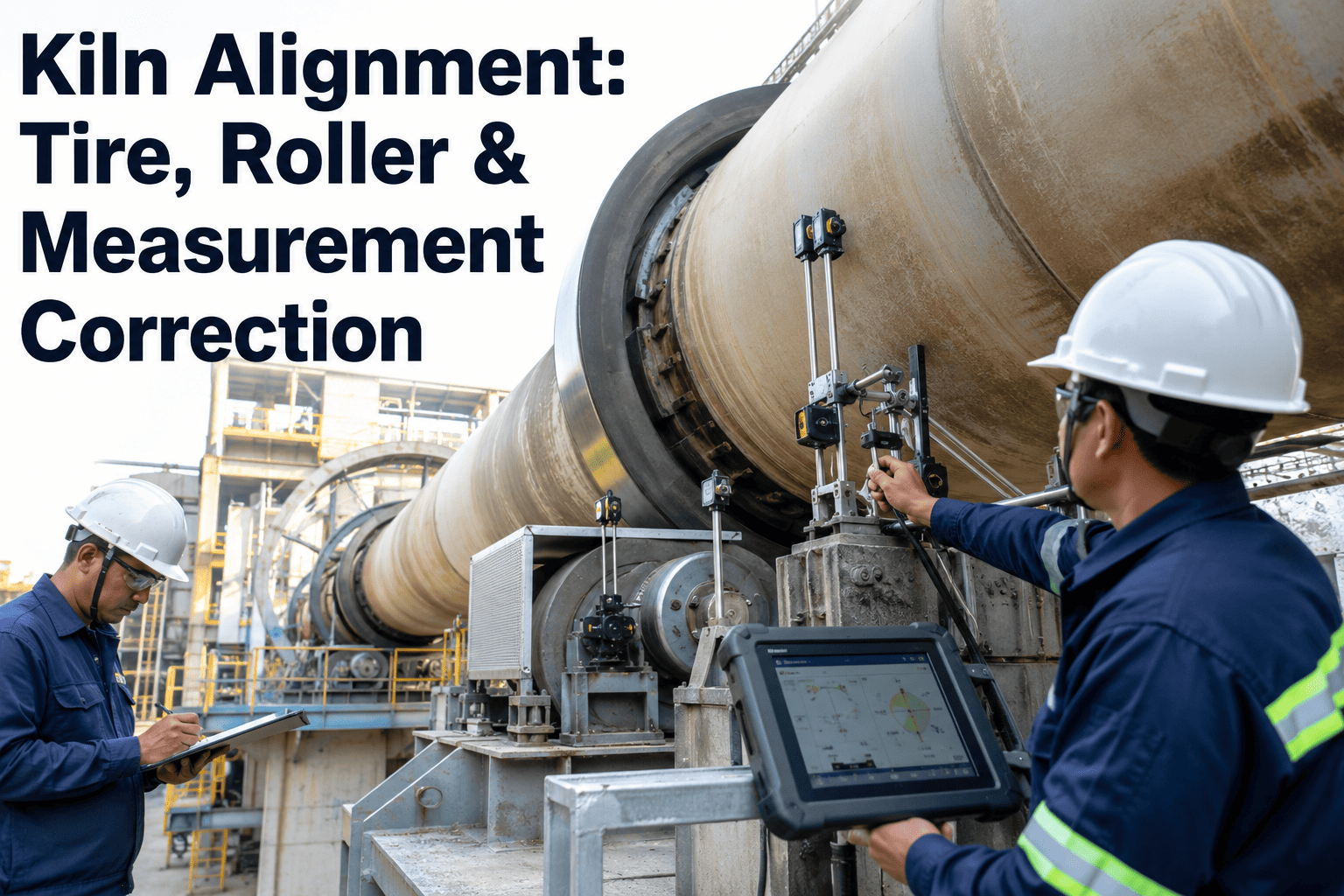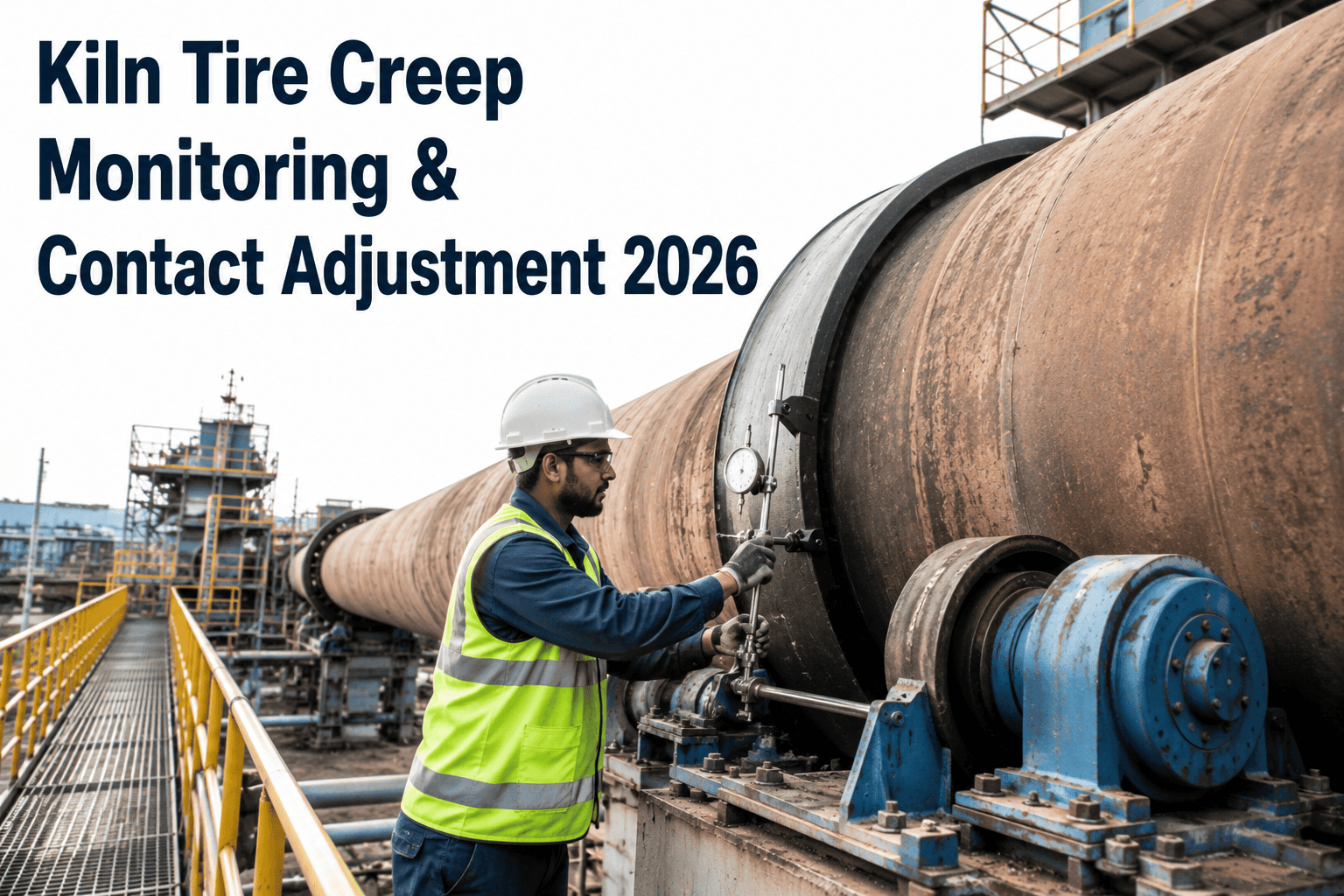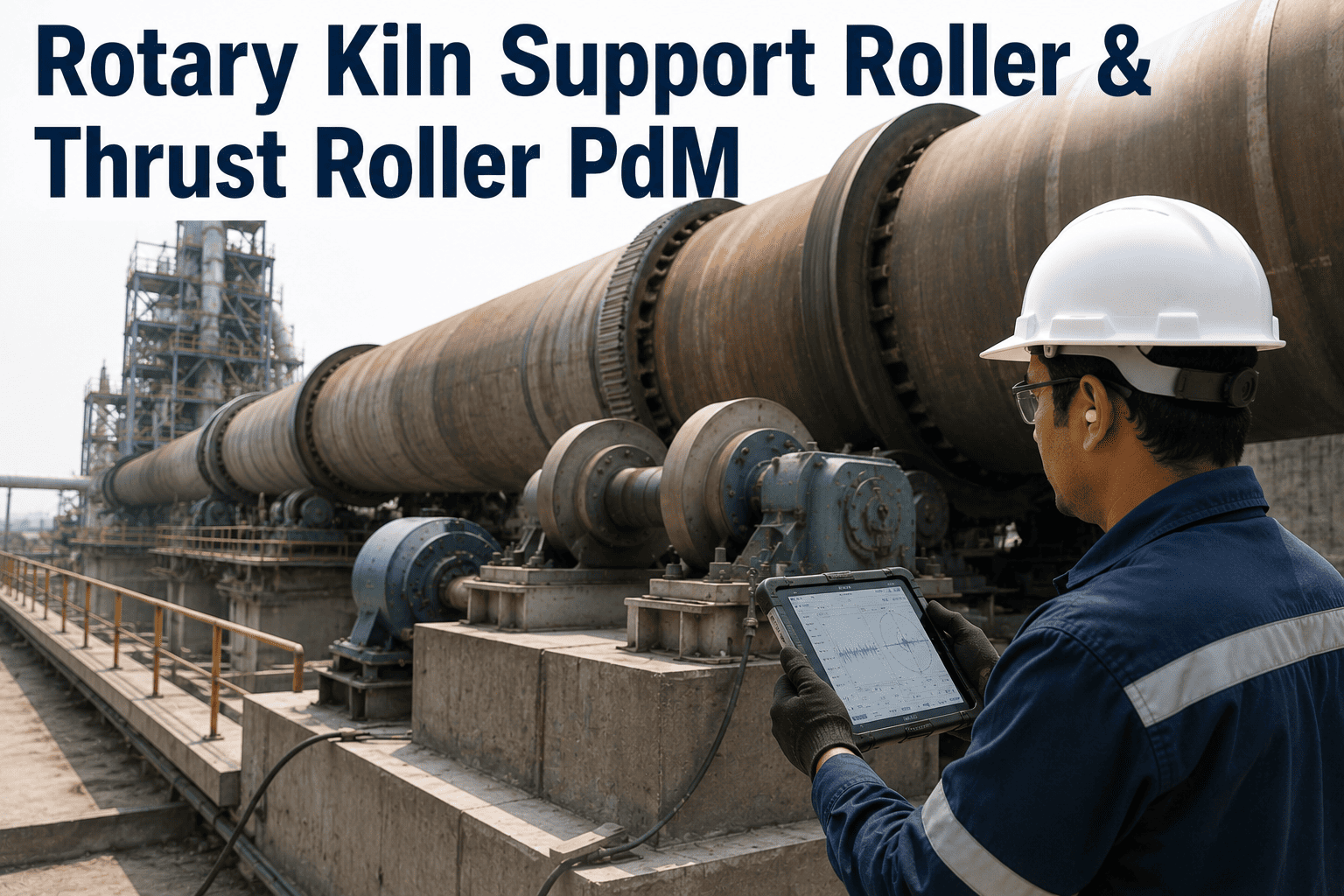
A rotary kiln shell weighing two thousand tonnes or more rests entirely on two to four support piers, each carrying its full load through a pair of rollers and a set of self-adjusting journal bearings that depend on a continuous, correctly maintained oil film to survive. When that oil film breaks down, even briefly, the bearing goes from hydrodynamic lubrication to metal-to-metal contact in minutes, and the resulting heat can force an emergency kiln stop that costs far more than the maintenance it would have taken to prevent it. Most plants still rely on a technician walking the piers on a fixed schedule, touching each bearing housing and logging a single point-in-time reading that says nothing about what happened in the hours between rounds. Reliability teams who book a demo with iFactory get continuous visibility into bearing temperature and lubrication trends instead of relying on a technician's hand on the housing during a walk-round.
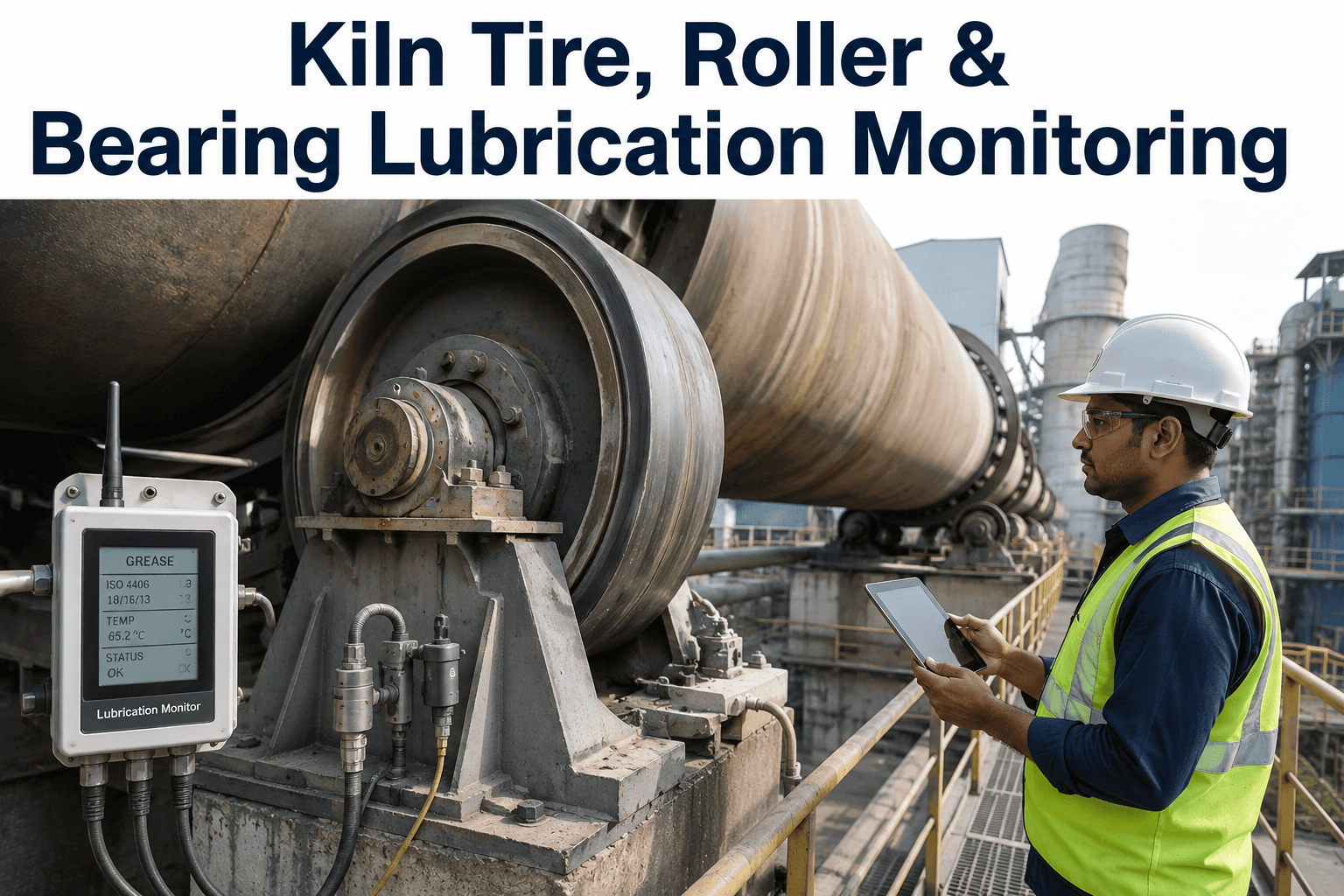
Kiln Tire, Roller & Bearing Lubrication Monitoring
Continuous temperature, vibration, and oil condition tracking across every support pier — built to catch bearing seizure and tire migration risk long before a shutdown becomes unavoidable.
Why Kiln Support Bearings Fail Faster Than Most Teams Expect
Kiln support roller bearings run on hydrodynamic lubrication, meaning the oil itself forms a load-bearing film between the journal and the bearing liner rather than relying on rolling elements. That film is remarkably durable under normal conditions, but it depends on maintaining oil viscosity, supply pressure, and cleanliness within a narrow operating window at every moment the kiln is rotating. A pressure drop during a pump hiccup, a viscosity shift from unexpected heat, or a slug of contaminated oil can starve the bearing of film thickness in the time it takes a technician to walk to the next pier on a scheduled round.
The three failure modes below account for the overwhelming majority of unplanned kiln support bearing incidents, and each one produces a distinct, detectable signature well before the bearing itself is damaged beyond repair.
Thermal Overload
Unbalanced kiln loading, skewing, or an upgrade that shifted weight distribution across piers drives abnormal friction and heat at one bearing while its neighbors stay in the normal range, a pattern that is easy to miss on a single-point manual reading.
Lubricant Starvation
Slow rotational speeds during startup, a partially blocked feed line, or oil that has thickened from cold ambient conditions can all prevent the hydrodynamic wedge from forming, allowing brief metal-to-metal contact that scores the bearing liner.
Contamination Ingress
Dust and process particulate entering through a worn seal accelerates abrasive wear on the bearing surface far faster than clean oil operation, and the damage is often invisible until the next scheduled oil analysis confirms it.
Every one of these failure modes shares a common trait: the bearing gives off measurable signals well before it actually seizes, whether that is a slow temperature climb, a change in vibration signature, or a shift in oil cleanliness. The problem is not that these signals are hidden. It is that most plants only capture them at the interval of a manual round or a scheduled lab sample, and a bearing can move from healthy to critical inside that gap.
Bearing Temperature Thresholds Every Shift Should Know
Support roller bearing temperature is the single fastest indicator of a developing lubrication problem, and the ranges below are the general industry bands most cement plants calibrate against before adjusting for their own baseline and ambient conditions. What matters as much as the absolute number is the trend and the comparison across piers: a bearing sitting at 60°C is not a concern on its own, but the same bearing climbing steadily from a 45°C baseline over several shifts, or running noticeably hotter than its neighbors on the opposite side of the same pier, is exactly the kind of pattern a continuous monitoring system is built to surface.
| Condition | Bearing Temperature | Recommended Response |
|---|---|---|
| Normal Operation | 40°C – 65°C | Continue routine monitoring, log trend for baseline accuracy |
| Warning | Above 70°C | Check oil supply pressure and flow, inspect for skewing or misalignment |
| Alarm | Above 80°C | Investigate immediately, consider switching to a higher-grade lubricant |
| Persistent Above Baseline | 65°C with no improvement | Evaluate higher-viscosity EP lubricant grade per bearing manufacturer guidance |
Oil Condition Parameters That Predict Bearing Life
Temperature tells you a bearing is already stressed. Oil analysis tells you why, and gives enough lead time to correct the cause before the next thermal event. The parameters below are what a structured kiln lubrication monitoring programme tracks on every scheduled sample, and together they explain nearly every temperature anomaly a continuous monitoring system will flag.
| Parameter | Target | Why It Matters |
|---|---|---|
| ISO Cleanliness Code | 18/17/14 or better | Particulate above ISO 20 accelerates bearing surface fatigue significantly |
| Oil Supply Pressure | 2 – 4 bar | Below 1.5 bar, bearings are starved even with a full reservoir |
| Operating Oil Temperature | 40°C – 60°C | Above 70°C viscosity drops rapidly; below 35°C oil is too thick to distribute reliably |
| Oil Change Interval | 6,000 – 12,000 hours | Interval should be set by analysis results, not a fixed calendar date |
Of these four parameters, cleanliness and supply pressure deserve the closest attention because they are the ones most likely to drift silently. A slow filter blockage or a small pressure loss in the distribution line rarely trips an alarm on its own, but it steadily starves the bearing pads furthest from the pump, which is exactly why plants that only monitor reservoir level and never check pressure at the pad itself are often surprised by a failure at the far end of the supply loop.
Building a Monitoring Architecture Across the Kiln Piers
A meaningful kiln support monitoring programme does not need to instrument every bearing on day one. The sequence below is how most plants build coverage in a way that captures the majority of risk early while keeping sensor and integration costs proportionate, and it mirrors how broader plant-wide condition monitoring rollouts are typically sequenced across other rotating equipment as well.
- Rank piers by criticality
Start with the piers carrying the highest thrust load or showing the most historical temperature variance, since a focused programme on the highest-criticality bearings captures most of the failure-prevention value before expanding further.
- Deploy continuous temperature sensing
Industrial sensors rated for continuous high-ambient operation near the kiln shell are required here, since standard sensors rated for lower ambient temperatures fail within weeks in this environment.
- Layer in vibration and oil pressure signals
Housing vibration in specific frequency bands combined with supply pressure readings lets an analytics platform distinguish thermal expansion, which needs no action, from genuine mechanical degradation that does.
- Correlate against scheduled oil analysis
Lab-confirmed viscosity, particle count, and water content results validate what the continuous sensors are predicting, closing the loop between real-time signals and physical ground truth.
What Vibration Signatures Reveal Before Temperature Ever Moves
Bearing degradation almost always progresses through recognizable stages, and vibration analysis catches the earliest of them well before heat becomes measurable at the housing surface. Understanding this progression is what lets a maintenance team plan a roller regrind or bearing replacement during a scheduled outage instead of reacting to an alarm at two in the morning.
Ultrasonic Onset
The earliest sign of surface fatigue appears only in ultrasonic frequency ranges, well above what a standard vibration sensor or the human ear can detect, and bearing temperature and running sound remain completely normal at this point.
Resonance Frequencies Emerge
As surface defects develop, they begin exciting the natural resonant frequencies of bearing components, visible in high-frequency vibration data. This is typically the latest practical point to schedule a planned replacement before the defect starts generating measurable heat.
Harmonics and Sidebands Appear
Defect frequencies and their harmonics become visible in standard vibration spectra, and a slight, measurable temperature rise often begins here. Bearing replacement should be planned within weeks rather than months at this stage.
Audible and Thermal Failure
Noise, elevated temperature, and broadband vibration become obvious even without instrumentation, and the bearing can seize with very little further warning. Continuous monitoring exists specifically to prevent a bearing from ever reaching this stage in production.
What Consistent Bearing Monitoring Changes on the Floor
Plants that move kiln support monitoring from paper rounds sheets to continuous, logged data see the benefit less in any single saved bearing and more in the accumulated avoidance of the incidents that never happen because a trend was caught early. The figures below give a sense of scale for what a structured programme typically involves and what a single missed event can cost by comparison.
Kiln Bearing and Lubrication Monitoring — Frequently Asked Questions
How quickly can a starved kiln support bearing actually fail?
Once hydrodynamic lubrication breaks down and metal-to-metal contact begins, heat generation accelerates quickly, and a bearing that was reading normal on the previous shift's manual round can reach alarm-level temperatures within a few hours. This is precisely why continuous temperature logging matters more than periodic manual checks, since the failure window is often shorter than the interval between scheduled rounds, and a bearing that seizes overnight leaves no trend data behind to explain what happened or when it actually started.
Is vibration monitoring necessary if bearing temperature is already being tracked?
Temperature and vibration catch different stages and types of the same underlying problem, so relying on temperature alone means missing early mechanical wear that has not yet generated enough friction to raise the reading. Housing vibration in specific frequency bands can flag bearing degradation before it becomes a thermal event, giving maintenance planners a longer window to schedule corrective work during a planned outage instead of an emergency one.
What causes tire migration and why does the 24-hour rate matter?
Tire migration is the gradual axial movement of the kiln tire relative to the shell, driven by thermal cycling, kiln slope, and support roller alignment, and a small amount of migration is normal during every rotation cycle as the shell expands and contracts with the heat of production. The 24-hour rate matters because it is the earliest quantifiable signal of a developing alignment problem, and plants that only check this during periodic manual inspections lose the ability to see whether the rate is stable, accelerating, or already past a safe threshold, a gap our support team can walk through in more detail.
Can oil analysis alone replace continuous temperature monitoring?
No, because oil analysis samples are typically taken on a scheduled interval measured in weeks, while a lubrication or thermal failure can develop and escalate in a matter of hours. The two data sources are complementary rather than substitutes: continuous temperature and vibration sensing catch fast-developing problems in real time, while periodic oil analysis confirms the underlying condition of the lubricant itself and validates whether continuous sensor trends are being read correctly. A programme that relies on only one of the two will always have a blind spot the other was designed to cover.
Where should a plant start if it has no kiln bearing monitoring in place today?
Start with continuous temperature sensing on the highest-criticality piers, since this single data stream catches the majority of urgent lubrication and thermal problems and requires the least integration work to deploy. Teams that book a demo with iFactory typically begin with a criticality assessment of their existing piers before deciding how many sensor points the first phase should cover.
Catch a Bearing Problem While It's Still a Maintenance Task, Not an Emergency Stop
iFactory brings continuous temperature, vibration, and lubrication trend data into one view across every kiln support pier, so your team acts on an early signal instead of a shutdown.