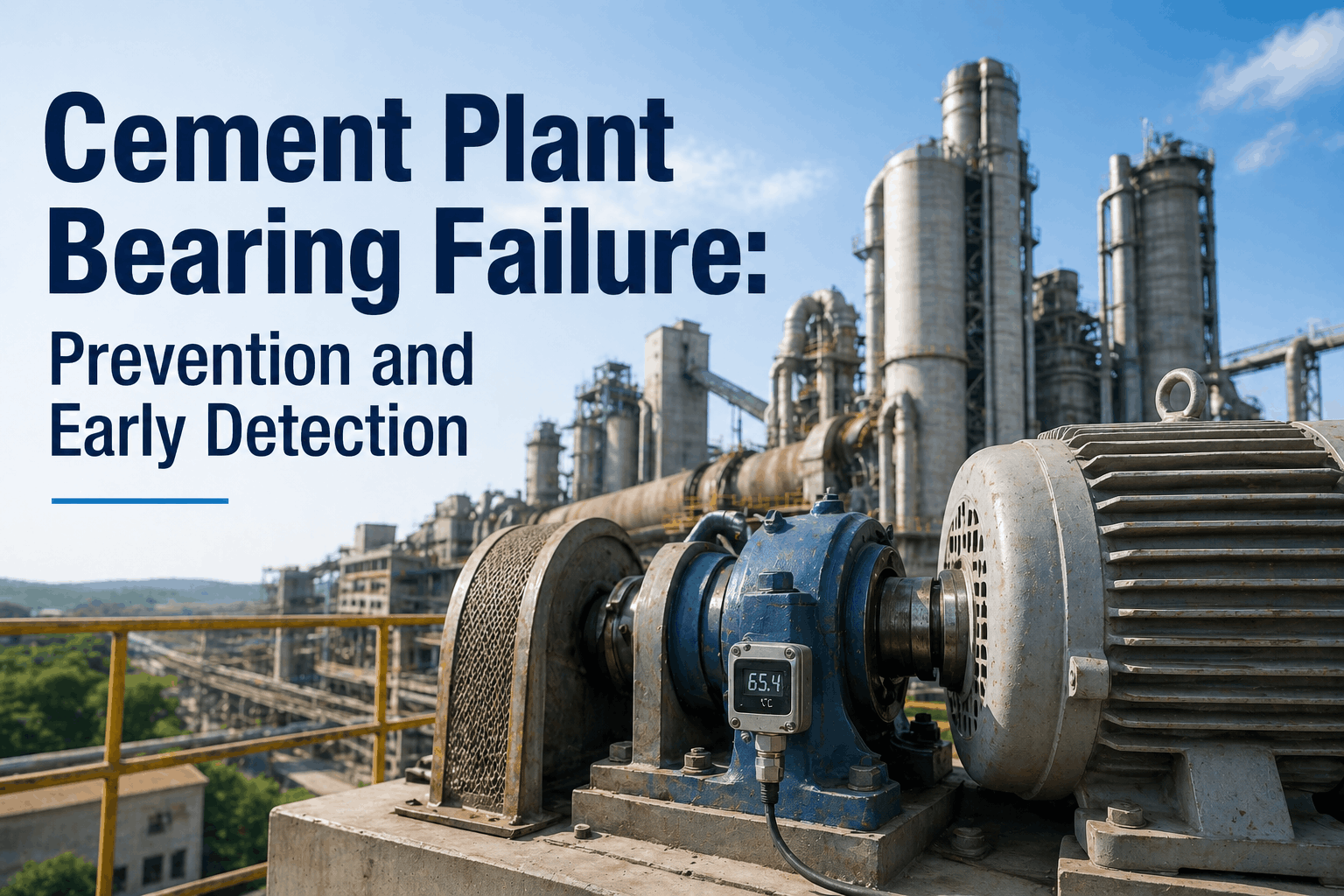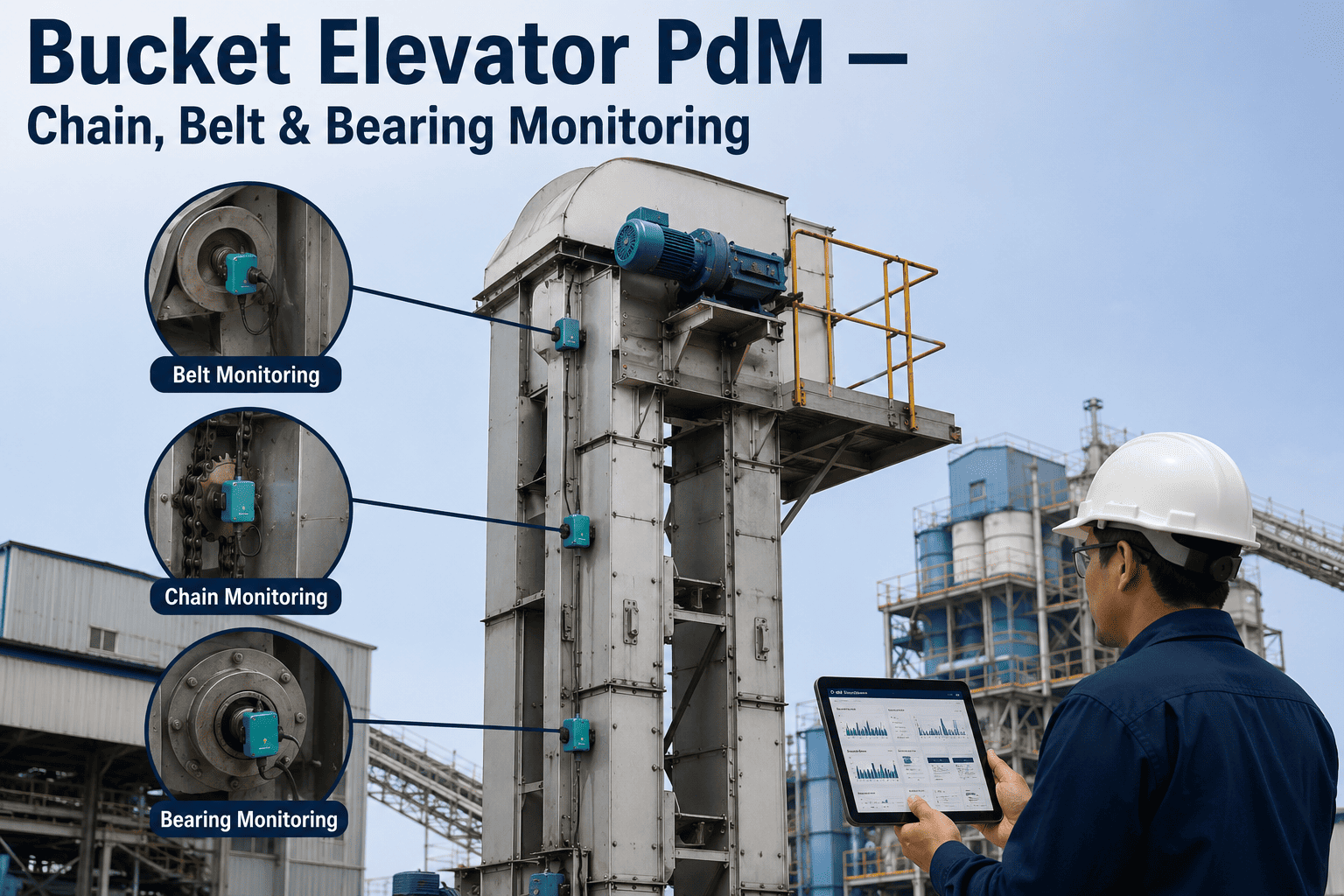
Bucket elevators are the vertical arteries of modern cement plants, moving raw meal, clinker, and finished product between process stages. A single unplanned elevator stoppage can cascade into a full plant shutdown, costing upwards of $50,000 per hour in lost production and restart delays. Traditional time-based maintenance—greasing bearings every 500 hours or replacing chains annually—is no longer sufficient in the era of Industry 4.0. Predictive maintenance (PdM) for bucket elevators leverages continuous vibration analysis, chain elongation sensing, belt tension monitoring, and thermal imaging to detect degradation weeks before failure. By integrating IIoT sensors with edge analytics, plant engineers can transition from reactive repairs to data-driven reliability. This guide provides a deep technical framework for implementing PdM on bucket elevators, covering chain, belt, bearing, and bucket wear monitoring with actionable KPIs and deployment strategies. For a personalized assessment of your elevator fleet, Book a Demo with our reliability experts.
Transform Your Elevator Reliability Today
Move from reactive breakdowns to predictive excellence. Our IIoT platform delivers real-time chain, belt, bearing, and bucket health data.
The Hidden Cost of Elevator Failures
Bucket elevators represent a critical pinch point in cement production. A single failure at the elevator transporting raw meal to the preheater tower forces the entire kiln line to idle. Data from the Cement Industry Association shows that elevator-related downtime accounts for 12-18% of all unplanned stops in cement plants. The root causes are predictable: chain elongation beyond 3% stretches links, causing sprocket jump; belt misalignment from uneven tension leads to edge fray; bearing fatigue in the head shaft produces vibration spikes; bucket wear from abrasive clinker reduces capacity. Each of these failure modes follows a distinct degradation curve that can be monitored with the right sensors. By deploying PdM, plants have reduced elevator failures by 78% and extended component life by 40% in documented case studies. The technology pays for itself within 6 months through avoided downtime and optimized spare parts inventory.
Chain Elongation Monitoring
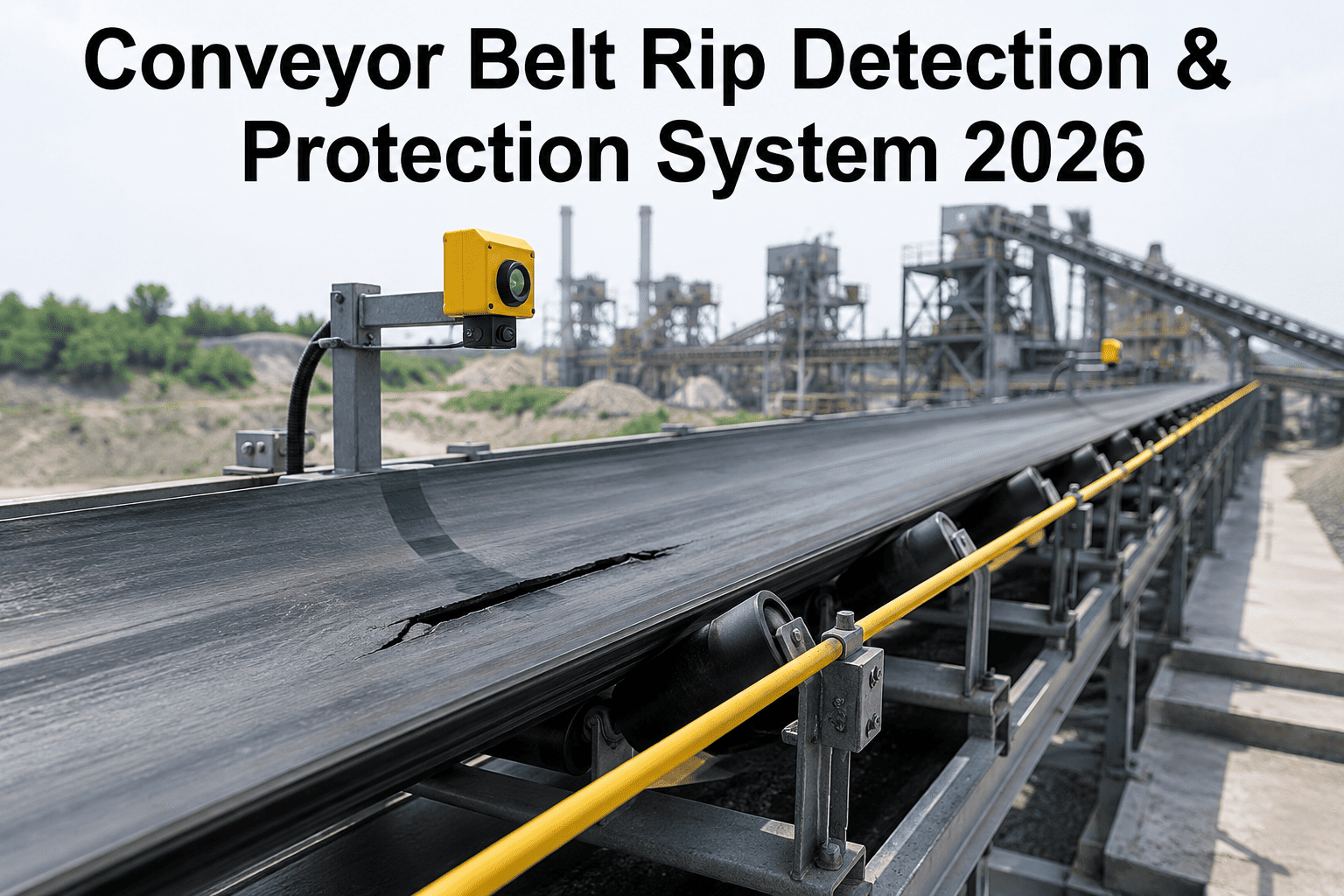
Chain elongation is the primary failure mode for bucket elevators. As links wear, the pitch increases, causing the chain to ride up on sprocket teeth. This leads to jerky motion, increased load on the head shaft, and eventual chain breakage. PdM uses laser distance sensors mounted on the return side of the chain to measure pitch elongation in real time. The sensor array captures data every 10 seconds, calculating elongation percentage relative to the original pitch. Alarms trigger at 2% elongation (warning) and 3% (critical). The system also logs chain speed variations, which indicate binding links or sprocket wear. By trending elongation over time, maintenance can schedule replacement during planned outages rather than emergency shutdowns. Typical chain life in cement elevators ranges from 18 to 36 months, but with PdM, replacement can be optimized to the exact wear curve.
Belt Tension & Health
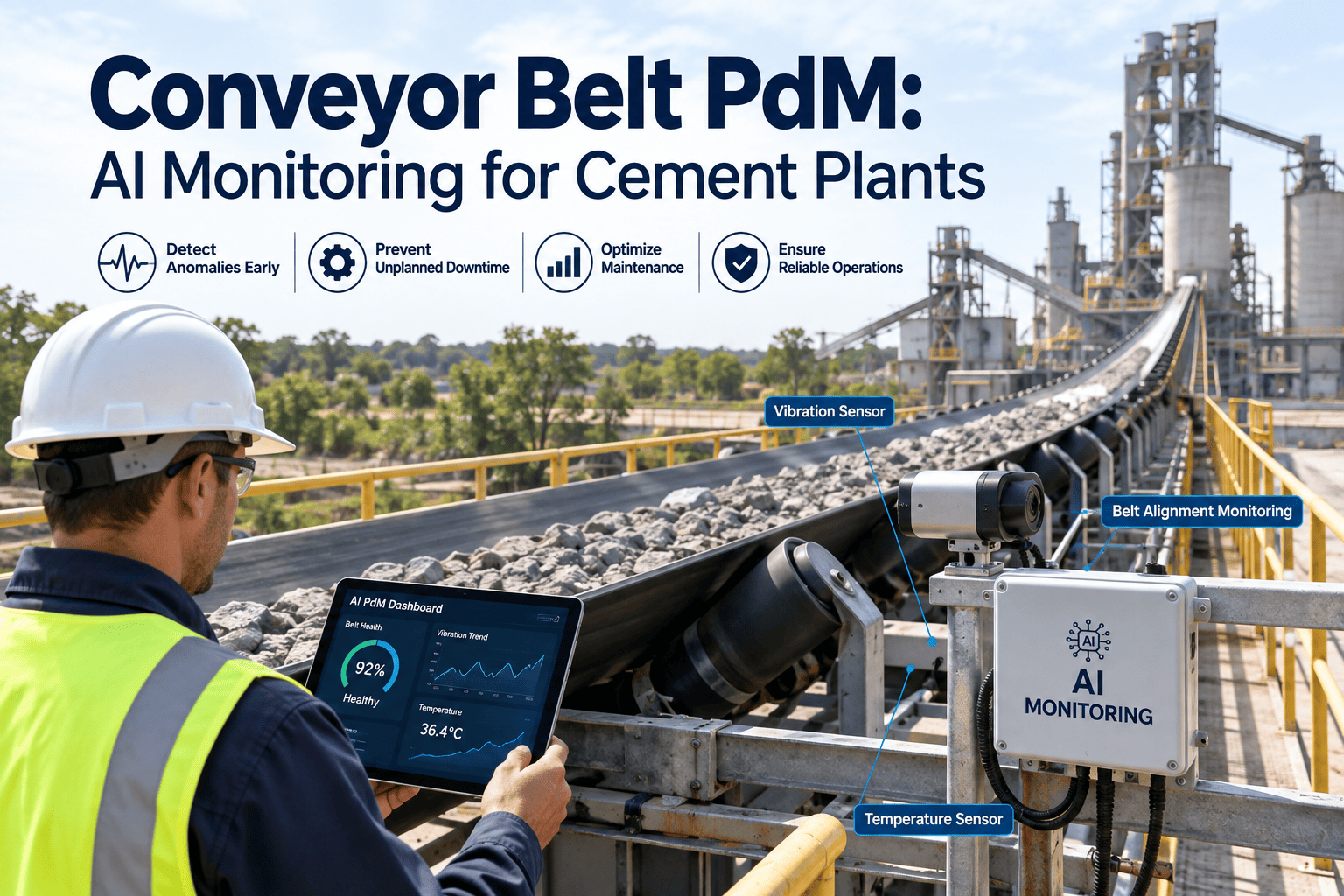
Belt-driven bucket elevators suffer from tension loss due to stretch, temperature fluctuations, and material buildup on pulleys. A slack belt causes slippage, reducing lift capacity and generating heat that can ignite combustibles. PdM employs ultrasonic thickness gauges and tension sensors embedded in the belt carcass. These sensors measure belt tension in kN/m and detect delamination or cord exposure. Additionally, accelerometers on the take-up pulley monitor vibration patterns that indicate misalignment or pulley wear. The system provides a tension stability index, flagging deviations beyond 10% from the setpoint. For steel-cord belts, magnetic flux leakage sensors identify broken cords before they propagate. Real-time data enables dynamic tension adjustments via automated take-up systems, maintaining optimal belt grip and extending belt life by up to 50%. In one cement plant, belt failures dropped from 4 per year to zero after implementing continuous tension monitoring.
Bearing Condition Monitoring
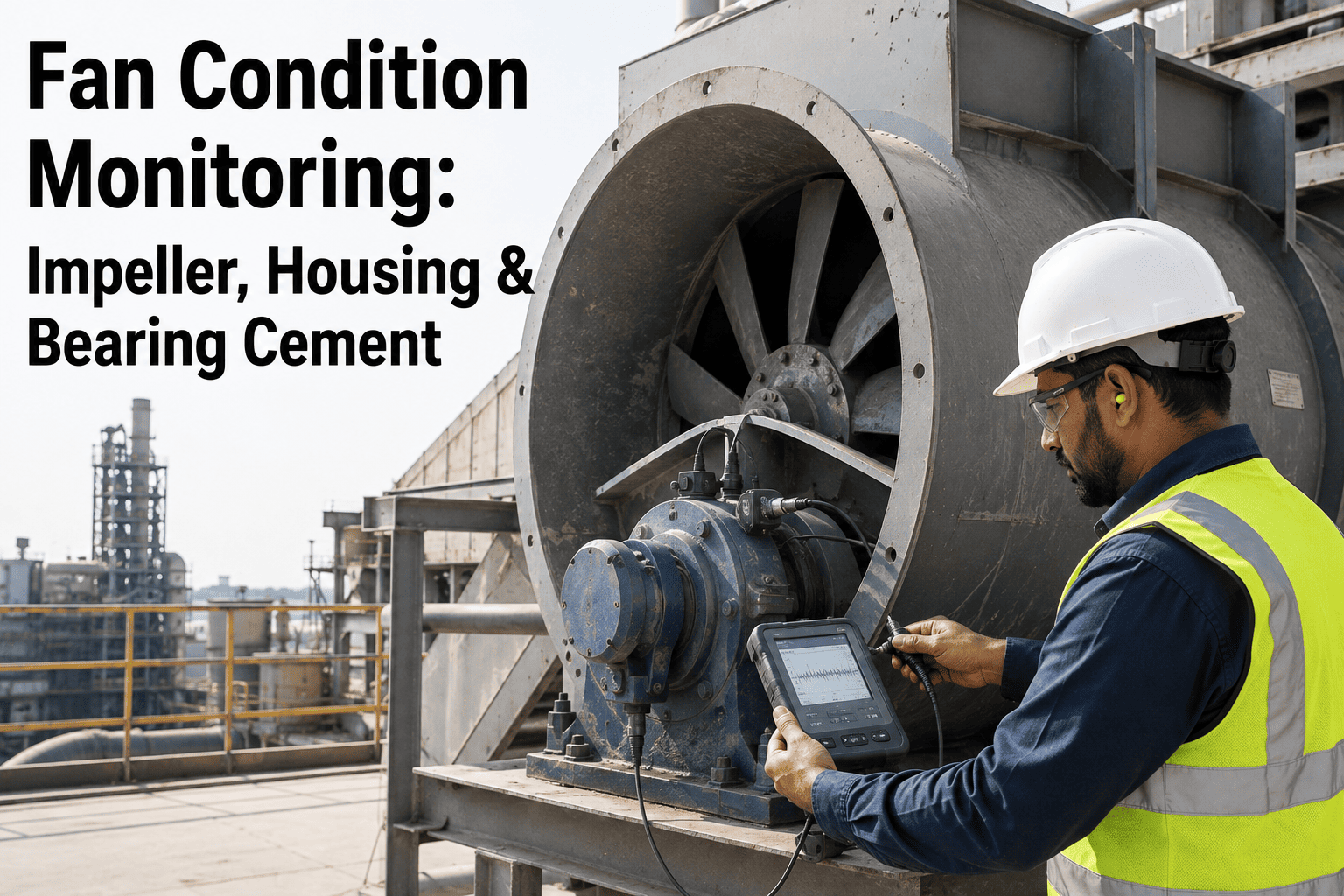
Head shaft and boot shaft bearings endure heavy radial loads from chain tension and material weight. Bearing failure typically begins with lubrication degradation, leading to raceway pitting and spalling. PdM uses dual-axis accelerometers mounted directly on bearing housings, sampling at 10 kHz to capture high-frequency vibration signatures. Envelope analysis isolates bearing defect frequencies (BPFI, BPFO, BSF) from background noise. Temperature sensors (RTDs) provide cross-correlation: a 10°C rise above ambient indicates incipient failure. The system also monitors oil debris in recirculating lubrication systems using inductive particle counters. By combining vibration, temperature, and oil analysis, PdM can predict bearing remaining useful life (RUL) with ±5% accuracy. Alerts are sent via mobile app to maintenance teams, allowing replacement during shift changes. Plants using this approach have eliminated catastrophic bearing failures and reduced bearing inventory by 30% through just-in-time procurement.
Bucket Wear Detection
Bucket wear is often overlooked until capacity drops or buckets detach, causing damage to the elevator casing. Abrasive materials like clinker and limestone erode bucket lips and sidewalls, reducing fill volume. PdM uses laser profilometry and acoustic emission sensors to assess bucket condition. Laser scanners mounted at the discharge point measure bucket lip thickness and profile in 3D. Acoustic sensors detect the characteristic sound of a loose or cracked bucket hitting the casing. The system tracks wear rate per bucket, identifying patterns that indicate misalignment or material flow issues. A wear index alerts operators when bucket thickness drops below 70% of original. This allows targeted replacement of only the most worn buckets, rather than entire sets. In a clinker elevator application, this approach saved $120,000 annually in bucket replacement costs while maintaining full design capacity.
Implementation Roadmap for PdM on Bucket Elevators
Sensor Deployment Strategy
Begin with a risk assessment of your elevator fleet. Prioritize elevators handling high-value materials or those with a history of failures. Install vibration sensors on head and boot shaft bearings, laser distance sensors on chain return runs, and ultrasonic thickness gauges on belts. For bucket wear, deploy a single laser scanner at the discharge chute. Use wireless IIoT nodes to minimize cabling costs. Each sensor should be calibrated to baseline readings during a known good operating condition. The sensor network connects to an edge gateway that preprocesses data before sending to the cloud. Typical deployment takes 2-3 days per elevator with minimal production interruption.
Data Integration & Analytics
Stream sensor data into a unified analytics platform (e.g., iFactory PdM). Configure dashboards that display real-time metrics: chain elongation %, belt tension kN/m, bearing vibration velocity mm/s, and bucket wear index. Set threshold alarms based on ISO 10816-3 for vibration and manufacturer specifications for chain/belt. Implement machine learning models that learn normal operating patterns and detect anomalies. For example, a sudden increase in chain elongation rate may indicate a lubrication failure in the chain pins. The platform should generate weekly health reports with trend graphs and RUL predictions. Integrate with your CMMS to automatically create work orders when alerts trigger.
Maintenance Workflow Optimization
Define clear response protocols for each alert level (info, warning, critical). For a warning on chain elongation (2%), schedule inspection within the next 7 days. For critical elongation (3%), plan replacement during the next weekend outage. Use the RUL predictions to order spare parts just in time, reducing inventory carrying costs. Train maintenance teams to interpret PdM data and perform targeted interventions. For example, if bearing vibration increases but temperature is normal, relubrication may suffice. If both vibration and temperature rise, plan bearing replacement. Continuously refine thresholds based on historical failure data to minimize false alarms.
Start Your PdM Journey Now
Our experts will help you design a sensor deployment plan tailored to your elevator fleet. Get a free feasibility assessment.
Key Performance Indicators for Elevator PdM
| Component | Parameter | Sensor Type | Warning Threshold | Critical Threshold |
|---|---|---|---|---|
| Chain | Elongation % | Laser distance | 2% | 3% |
| Belt | Tension (kN/m) | Ultrasonic | 10% below setpoint | 20% below setpoint |
| Bearing | Vibration velocity (mm/s) | Accelerometer | 4.5 | 7.1 |
| Bearing | Temperature rise (°C) | RTD | 10 | 20 |
| Bucket | Lip thickness (mm) | Laser profilometer | 70% of original | 50% of original |
Advanced Analytics: Fusion of Vibration and Temperature Data
While individual sensor streams provide valuable insights, the true power of PdM lies in data fusion. For head shaft bearings, combining vibration and temperature data enables early detection of lubrication degradation. A typical failure timeline: 1) Lubricant breaks down, increasing friction and generating heat. 2) Temperature rises 5-10°C, but vibration remains normal. 3) As wear progresses, vibration spikes appear at bearing defect frequencies. 4) Without intervention, catastrophic failure occurs within 2-4 weeks. By correlating temperature rate of change with vibration acceleration, the PdM system can predict failure 3 weeks earlier than vibration-only analysis. Similarly, for chains, combining elongation with motor current data reveals loading conditions that accelerate wear. High motor current during start-up indicates chain binding, while low current during steady state suggests slack chain. Machine learning models trained on historical data can classify these patterns and recommend corrective actions. For example, a model might detect that a specific elevator experiences elongation spikes when handling wet raw meal, prompting adjustments to the material feed rate. This level of insight transforms maintenance from a cost center to a strategic asset.
Case Study: Cement Plant Reduces Elevator Downtime by 85%
A major cement producer in the Midwest operated 12 bucket elevators handling raw meal and clinker. They experienced an average of 6 elevator failures per year, each causing 8-12 hours of downtime. After implementing iFactory's PdM solution, they deployed vibration sensors on all head and boot bearings, laser elongation sensors on chains, and ultrasonic belt monitors. Within the first year, failures dropped to 1 (a bucket detachment not covered by the system). The PdM platform detected a developing bearing fault on the raw meal elevator 6 weeks before failure, allowing scheduled replacement during a planned outage. Total downtime from elevator issues fell from 72 hours to 10 hours annually. The plant saved $2.1 million in lost production and avoided emergency repair costs. The system paid for itself in 4 months.
Cost-Benefit Analysis of Elevator PdM
Investing in PdM for bucket elevators delivers a clear ROI. Consider a typical cement plant with 10 elevators. Sensor hardware and installation: $150,000. Annual software subscription: $30,000. Total first-year cost: $180,000. Benefits: Reduced unplanned downtime (saving $500,000 in lost production), extended component life (saving $100,000 in replacement parts), optimized inventory (saving $50,000), and reduced labor for emergency repairs (saving $40,000). Total first-year benefit: $690,000. Net savings: $510,000. Over 5 years, cumulative savings exceed $3 million. Additionally, improved reliability enhances plant throughput and reduces safety risks from catastrophic failures. The intangible benefits—operator confidence, regulatory compliance, and brand reputation—are equally valuable.
Frequently Asked Questions
What is the typical lifespan of a bucket elevator chain under PdM?
With PdM monitoring, chain life can be extended by 30-50% compared to time-based replacement. In cement plants, chains typically last 24-36 months when replaced based on elongation thresholds. Without PdM, chains are often replaced prematurely (at 18 months) due to uncertainty, or too late (after failure). Continuous monitoring allows you to replace exactly at the optimal point, maximizing both safety and cost efficiency. The system also detects issues like uneven wear from misaligned sprockets, which can be corrected to further extend life. For more details on chain monitoring, visit our support page.
Can PdM detect belt misalignment before it causes damage?
Yes, PdM systems use edge-tracking sensors and vibration analysis to detect belt misalignment early. Edge-tracking sensors monitor lateral belt movement; deviations beyond 5 mm from center indicate misalignment. Vibration sensors on the take-up pulley detect characteristic frequencies of belt flutter. Once detected, the system can trigger automated alignment corrections or alert operators to adjust tracking bolts. Early detection prevents edge fraying, reduces belt replacement frequency, and avoids damage to the casing. In one installation, belt life increased from 12 to 20 months after implementing misalignment monitoring. Book a Demo to see how our belt monitoring works.
How does PdM handle false alarms from transient events?
Modern PdM platforms use advanced filtering and machine learning to distinguish true faults from transient events. For example, a vibration spike during a start-up transient is ignored by the system using time-synchronous averaging. Temperature readings are averaged over 10-minute windows to smooth out fluctuations. Additionally, the system learns normal operating patterns for each elevator, such as vibration levels during different material loads. Anomaly detection algorithms compare real-time data to these baselines and only trigger alarms when deviations persist for a configurable duration (e.g., 5 minutes). False alarm rates can be reduced to less than 2% with proper tuning. Our support team provides ongoing calibration assistance; contact us for more information.
What is the minimum data required to start PdM on an elevator?
A minimum viable PdM deployment requires vibration sensors on the head and boot shaft bearings (one per bearing), a chain elongation sensor (laser or encoder), and a belt tension sensor (if belt-driven). This setup captures the three most critical failure modes. Additional sensors for bucket wear and temperature are recommended but not mandatory for initial deployment. The system needs at least 2 weeks of baseline data to establish normal operating envelopes. Data sampling rates should be at least 1 Hz for trend monitoring and 10 kHz for vibration analysis. Our platform can integrate with existing PLC data to reduce sensor needs. For a custom sensor plan, schedule a consultation.
How does PdM integrate with existing plant CMMS?
PdM platforms offer API-based integration with major CMMS systems like SAP PM, IBM Maximo, and Infor. When an alert triggers, the system can automatically create a work order with relevant data (sensor readings, trend graphs, recommended action). This streamlines the maintenance workflow and ensures no alerts are missed. Integration also enables closed-loop feedback: when a work order is completed, the PdM system updates its models with the actual repair data, improving future predictions. Our platform supports REST APIs and OPC UA for seamless connectivity. Visit our support page for integration guides.
Ready to Eliminate Elevator Downtime?
Join industry leaders who have transformed their maintenance operations with iFactory. Get a demo tailored to your plant's specific elevator fleet.