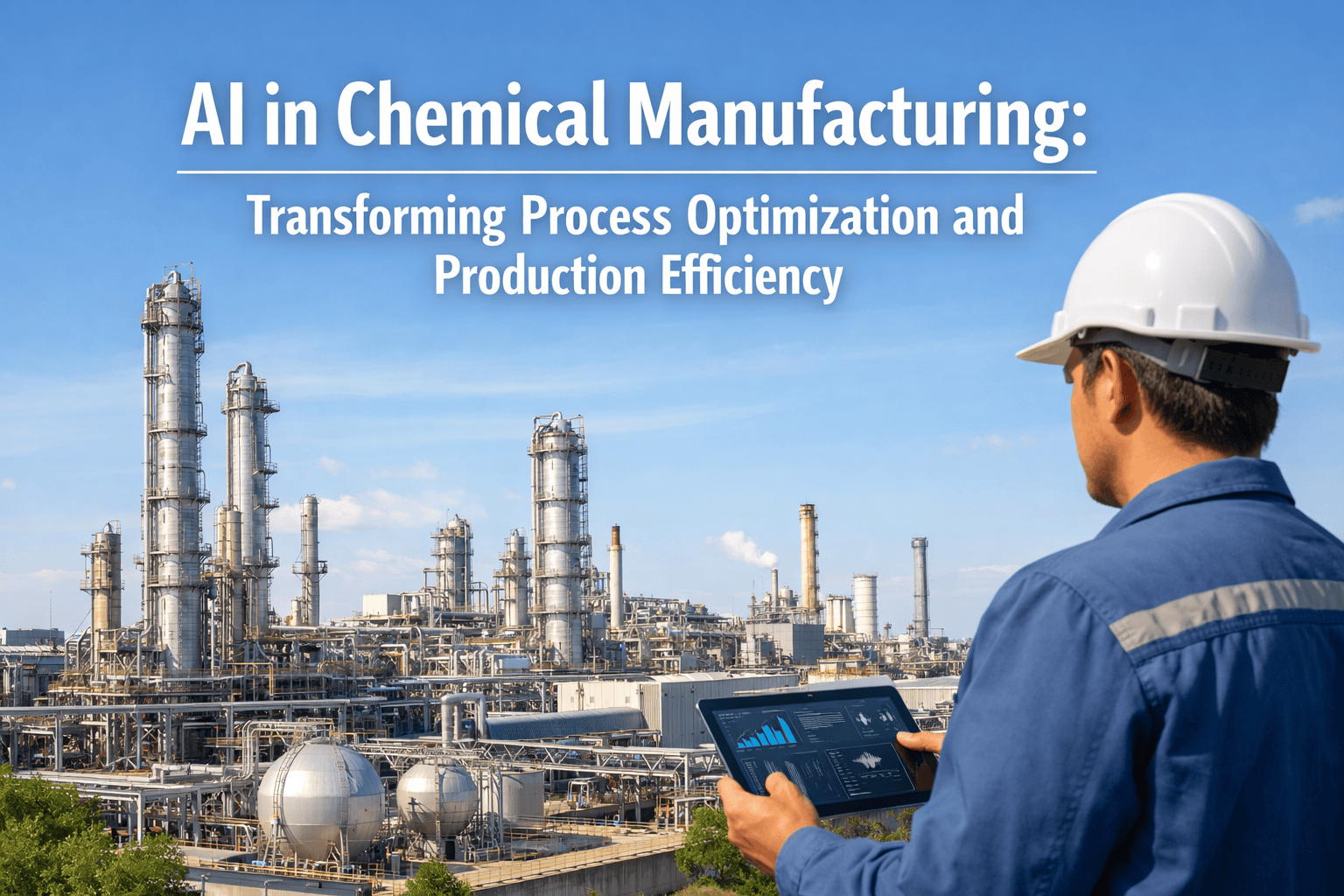
US chemical plants waste an average of 22–35% of distillation energy annually to suboptimal operating conditions — not from equipment degradation, but from static reflux ratios, delayed tray/packing response detection, unbalanced heat integration, and manual control adjustments that cannot keep pace with feed variability. By the time column flooding, weeping, off-spec product, or utility spikes are confirmed through lab assays or operator observation, the compounding costs are already realized: excessive reboiler duty, reduced throughput, extended startup cycles, and margin erosion. iFactory's AI-powered distillation optimization platform changes this entirely — detecting separation inefficiencies in real time, classifying hydraulic deviations before product impact occurs, and integrating directly into your existing DCS, APC, and utility metering systems without a rip-and-replace. Book a Demo to see how iFactory deploys AI column optimization across your separation train within 8 weeks.
95%
Separation efficiency accuracy before measurable product deviation occurs
$1.8M
Average annual utility & off-spec cost savings per mid-size distillation unit
84%
Reduction in steam and reflux waste vs. static manual control protocols
8 wks
Full deployment timeline from column audit to live AI optimization go-live
Every Undetected Hydraulic Shift Is Compounding Separation Cost. AI Optimizes It at the Source.
iFactory's AI engine monitors reflux/boil-up ratios, tray temperature gradients, pressure drop profiles, feed composition shifts, and heat exchanger duty patterns across your entire distillation train — 24/7, without operator lag or sampling blind spots.
The Hidden Cost of Column Inefficiency: Why Manual Optimization Fails US Chemical Plants
Before exploring solutions, understand the root causes of distillation underperformance in industrial environments. Manual control strategies introduce systemic inefficiencies that compound over time — gaps that AI-driven optimization directly addresses.
Suboptimal Reflux & Boil-Up Ratios
Static setpoints cannot adapt to feed variability or seasonal temperature shifts. Excessive reflux drives up steam consumption while insufficient reflux compromises separation purity and product yield.
Flooding and Weeping Cycles
Tray and packing hydraulics shift unpredictably under load fluctuations. Operators identify flooding or weeping only after differential pressure spikes or tray efficiency drops — typically after product quality is already compromised.
Delayed Thermal Integration
Reboiler and condenser duties operate in isolation from upstream/downstream units. Missed pinch opportunities, uncoordinated heat recovery, and manual valve adjustments waste BTUs and increase utility procurement costs.
Manual Control Lag & APC Drift
Traditional PID loops and legacy APC models degrade over time. Without continuous recalibration, controllers chase setpoints instead of optimizing separation efficiency, leading to cycling, oscillation, and energy waste.
How iFactory Solves Distillation Column Optimization Challenges
Traditional distillation control relies on fixed setpoints, periodic tray audits, and reactive operator adjustments — all of which respond after separation efficiency has already degraded. iFactory replaces this with a continuous AI model trained on industrial column data that detects the precursors to hydraulic and thermal inefficiency, not the product deviations themselves. See a live demo of iFactory detecting simulated column flooding and reflux ratio drift in an industrial separation facility.
01
Multi-Parameter Column Monitoring
iFactory ingests data from differential pressure transmitters, tray temperature profiles, reflux flow meters, bottom composition analyzers, and steam/cooling water meters simultaneously — fusing multi-source signals into a single column health score, updated every 15 seconds.
02
AI Reflux & Boil-Up Optimization
Proprietary ML models dynamically adjust reflux-to-boil-up ratios based on real-time feed composition, tray efficiency, and product purity targets. Operators receive setpoint recommendations with confidence intervals. Steam consumption drops by 18–26% without sacrificing separation quality.
03
Flooding & Weeping Prediction
iFactory's hydraulic forecasting engine identifies tray and packing deviations trending toward flooding, weeping, or entrainment 1–8 hours before impact — giving control rooms time to adjust vapor velocity, liquid loading, or feed preheat proactively.
04
DCS, APC & Utility Integration
iFactory connects to Honeywell, Emerson, Yokogawa, and Aspen DCS/APC environments plus utility metering platforms via OPC-UA, Modbus TCP, and REST APIs. No control loop replacement required. Integration completed in under 10 days.
05
Heat Integration & Duty Optimization
iFactory correlates reboiler/condenser loads with upstream process heat availability and downstream cooling demands. Automated pinch analysis identifies heat recovery opportunities and duty redistribution strategies in real time, maximizing thermal efficiency across the train.
06
Separation Decision Support
iFactory presents ranked optimization recommendations per column — adjust reflux ratio, modify feed tray location, shift heat integration, or recalibrate APC models — with cost impact estimates and carbon reduction metrics per hour. Teams optimize based on verified data, not operator intuition.
Industry Standards & Regulatory Alignment
iFactory's distillation optimization platform is engineered to meet the operational and compliance requirements of US chemical manufacturing. No custom development needed — optimization logic is pre-aligned with recognized industry frameworks.
API / ASME Standards
Design and operation protocols aligned with API 521, API 650, and ASME BPVC for pressure relief, vessel integrity, and column hydraulic limits. Optimization stays within certified operating envelopes.
EPA & OSHA PSM Compliance
Process safety management documentation, mechanical integrity tracking, and hazard analysis support. Continuous monitoring ensures columns operate within approved pressure, temperature, and composition limits.
ISO 50001 Energy Management
Structured energy baselines, performance tracking, and continuous improvement documentation. Automated reporting supports ISO certification and corporate sustainability targets.
ASTM & Quality Specifications
Real-time correlation of column operating parameters with ASTM product purity standards. Off-spec prediction models prevent quality excursions and reduce laboratory rework cycles.
iFactory Distillation Optimization Implementation Roadmap
iFactory follows a fixed 5-stage deployment methodology designed specifically for US chemical plant separation units — delivering pilot optimization results in week 4 and full train optimization by week 8. No open-ended implementations. No control layer disruption.
01
Column Audit
Hydraulic mapping & instrument gap analysis
02
System Integration
DCS, APC, and utility connection via OPC-UA, Modbus
03
Model Baseline
AI training on historical column & separation data
04
Pilot Validation
Live optimization on 2–3 highest-impact columns
05
Full Production
Plant-wide AI distillation optimization live
8-Week Deployment and ROI Plan
Every iFactory engagement follows a structured 8-week program with defined deliverables per week — and measurable ROI indicators beginning from week 4 of deployment. Request the full 8-week deployment scope document tailored to your distillation train configuration.
Weeks 1–2
Infrastructure Setup
Critical column audit and instrument gap identification across monitored separation units
DCS, APC, and utility metering connection via OPC-UA or Modbus — no control loop replacement
Historical column performance, feed assays, and utility data ingestion for baseline model training
Weeks 3–4
Model Training and Pilot
AI model trained on your plant's specific feed variability, hydraulic limits, and separation targets
Pilot optimization activated on 2–3 highest-consumption or highest-margin columns
First separation efficiency gains captured — ROI evidence begins here
Weeks 5–6
Calibration and Expansion
Optimization thresholds refined based on pilot stability, hydraulic response, and detection accuracy
Coverage expanded to full plant distillation and separation train
Operations team training completed — column response protocols activated
Weeks 7–8
Full Production Go-Live
Full plant AI column optimization live — all columns, all parameters, 24/7
Compliance and sustainability reporting activated for applicable frameworks
ROI baseline report delivered — utility savings, throughput gains, and separation optimization data
ROI IN 6 WEEKS: MEASURABLE RESULTS FROM WEEK 4
Plants completing the 8-week program report an average of $185,000 in avoided utility costs and off-spec reduction within the first 6 weeks of full production optimization — with separation efficiency improvements of 4.8–7.2% detected by week 4 pilot validation.
$185K
Avg. savings in first 6 weeks
4.8–7.2%
Separation efficiency gain by week 4
79%
Reduction in steam & reflux waste
Full AI Column Optimization. Live in 8 Weeks. ROI Evidence in Week 4.
iFactory's fixed-scope deployment program means no open timelines, no control layer disruption, and no months of consulting before you see a single result.
Use Cases and KPI Results from Live Deployments
These outcomes are drawn from iFactory deployments at operating US chemical plants across three separation optimization categories. Each use case reflects 6-month post-deployment performance data. Request the full case study report for the column configuration most relevant to your plant.
A Gulf Coast fractionation facility operating 12 distillation columns was experiencing recurring steam waste due to static reflux ratios that could not adapt to seasonal feed variability. Legacy control logic identified efficiency loss only after 10–14% purity drift. iFactory deployed multi-parameter column monitoring with AI reflux-to-boil-up optimization. Within 6 weeks of go-live, the platform dynamically adjusted reflux ratios in real time, preventing 17 early-stage separation deviations.
17
Pre-deviation separation anomalies detected in 6 weeks
$1.4M
Estimated annual steam and off-spec cost prevented
96%
Detection accuracy on early-stage reflux efficiency loss
A specialty solvents manufacturer operating packed distillation columns was generating 30–45 flooding alarms per month from legacy differential pressure thresholds — causing unnecessary throughput cuts and manual valve adjustments. iFactory replaced threshold logic with hydraulic AI classification, reducing actionable alerts to under 5 per month while increasing column throughput from 82% to 94% of design capacity. Utility consumption dropped by 28.6% as vapor/liquid loading stabilized.
94%
Design capacity utilization — up from 82% with legacy controls
28.6%
Steam and cooling water consumption reduction
89%
Reduction in monthly flooding alarm volume
A polymer manufacturing complex was losing an average of $510K annually in excess reboiler duty and cooling tower load, traced to uncoordinated heat exchange across a 5-column distillation train. Manual pinch analysis identified integration opportunities only after 3–4 weeks of thermal drift. iFactory's thermal correlation models identified all 6 active heat recovery gaps within 72 hours of go-live, enabling duty redistribution without production interruption.
$510K
Annual utility cost eliminated through heat optimization
72hrs
Time to identify all 6 active heat integration gaps
$840K
Annual throughput & utility value from proactive integration
What US Chemical Plant Operations Teams Say About iFactory
The following testimonials are from plant managers, process engineers, and operations directors at facilities currently running iFactory's AI distillation optimization platform.
We reduced our fractionation steam consumption by 24% while maintaining 100% product spec compliance. iFactory tells us exactly which column needs reflux adjustment, when, and by how much. Our separation unit has never been this efficient.
Director of Separation Operations
Petrochemical Complex, Texas
The flooding alarm fatigue was causing unnecessary throughput cuts across three shifts. Within six weeks of iFactory going live, our control room operators were acting on hydraulic recommendations because they trusted the column health modeling. That shift alone prevented two off-spec batches in month one.
Senior Process Engineer
Specialty Solvents Facility, Louisiana
Integration with our Emerson DeltaV and existing pressure/temperature transmitters took 9 days. I was expecting months of control loop reconfiguration. The iFactory team understood both the separation physics and the DCS architecture. Execution is genuinely different here.
Head of Process Control
Polymer Manufacturing, Illinois
We prevented a critical reflux collapse during a seasonal feed spike in month three. The iFactory system flagged vapor velocity imbalance 5 hours before it would have impacted tray efficiency. Operators adjusted boil-up and heat duty safely. That outcome alone justified the investment.
Plant Operations Manager
Aromatics Production, Ohio
Frequently Asked Questions
Does iFactory require new column instrumentation or control loop replacement?
In most deployments, iFactory connects to existing column instrumentation via DCS, APC, or utility metering integration — no control loop replacement required. Where sensor gaps are identified during the Week 1–2 audit, iFactory recommends targeted additions only (typically 2–4 temperature/DP points per critical column), not a full instrumentation overhaul. Integration is complete within 10 days.
Which DCS, APC, and control systems does iFactory integrate with?
iFactory integrates natively with Emerson DeltaV, Honeywell Experion, Yokogawa CENTUM, Aspen DMC, and Rockwell PlantPAx via OPC-UA and Modbus TCP. For utility and energy management, iFactory connects to custom historian platforms and metering systems via REST APIs. Custom integration support is available for legacy controllers. Integration scope is confirmed during the Week 1 column audit.
How does iFactory handle feed variability and seasonal throughput changes?
iFactory uses adaptive AI forecasting — combining historical column baselines, feed assay correlation, ambient temperature models, and real-time sensor feedback — to detect hydraulic shifts and optimize reflux/boil-up ratios across all operating conditions. High-load, low-load, seasonal, and feed transition variations are fully supported. Optimization scope is confirmed during the Week 1 audit.
What safety and compliance frameworks does iFactory's optimization support?
iFactory operates within certified column envelopes and auto-generates structured operational reports aligned with API 521/650, OSHA PSM mechanical integrity requirements, EPA emission tracking, and ISO 50001 energy management standards. Optimization recommendations are constrained by safety interlocks and pressure relief limits.
How long does it take before the AI model produces reliable column optimizations?
Baseline model training on historical column and separation data typically takes 5–7 days using 60–90 days of plant operating history. First live optimizations are validated during the Week 3–4 pilot phase. Full model calibration — with hydraulic prediction accuracy above 90% — is achieved within 6 weeks of deployment for standard US chemical separation environments.
Can operators override AI recommendations or maintain manual control?
Yes. iFactory provides ranked optimization recommendations, not autonomous control. Operators and control room engineers retain full authority to accept, modify, or override setpoint suggestions. All decisions are logged for auditability and continuous model improvement. The platform enhances human expertise, it does not replace it.
Stop Wasting Steam. Stop Risking Off-Spec Product. Deploy AI Column Optimization in 8 Weeks.
iFactory gives US chemical plant operations teams real-time AI column monitoring, hydraulic prediction, automated compliance reporting, and separation decision support — fully integrated with your existing DCS and APC in 8 weeks, with ROI evidence starting in week 4.
95% separation accuracy before measurable product deviation
DCS, APC & utility integration in under 10 days
Hydraulic alerts with under 7% false positive rate
Auto-generated reports for API, EPA, OSHA PSM & ISO 50001