Quadruped Robots for Emergency Response & Spill Containment in Chemical Plants

By Jennie on March 6, 2026

quadruped-emergency-response-chemical-spills

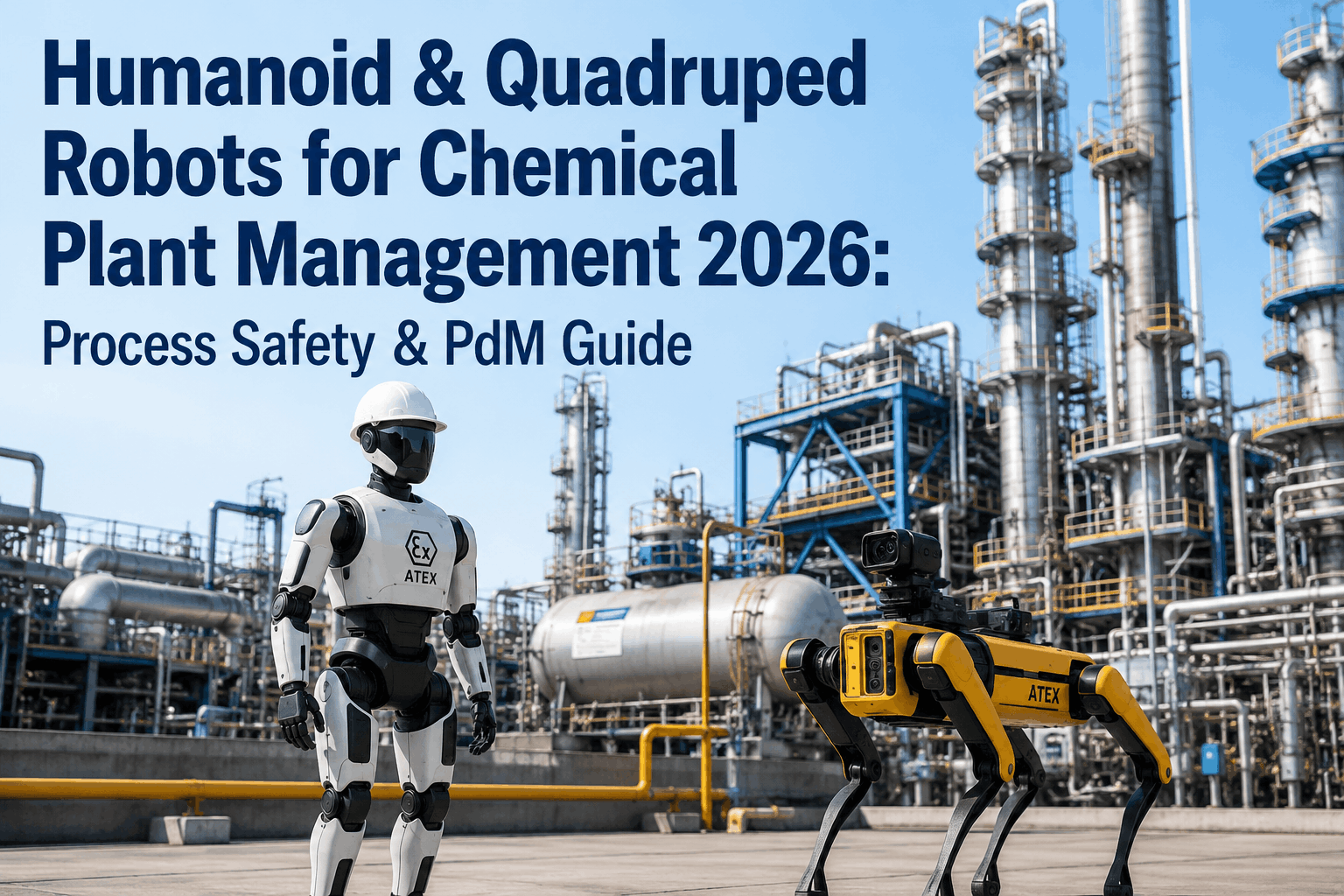
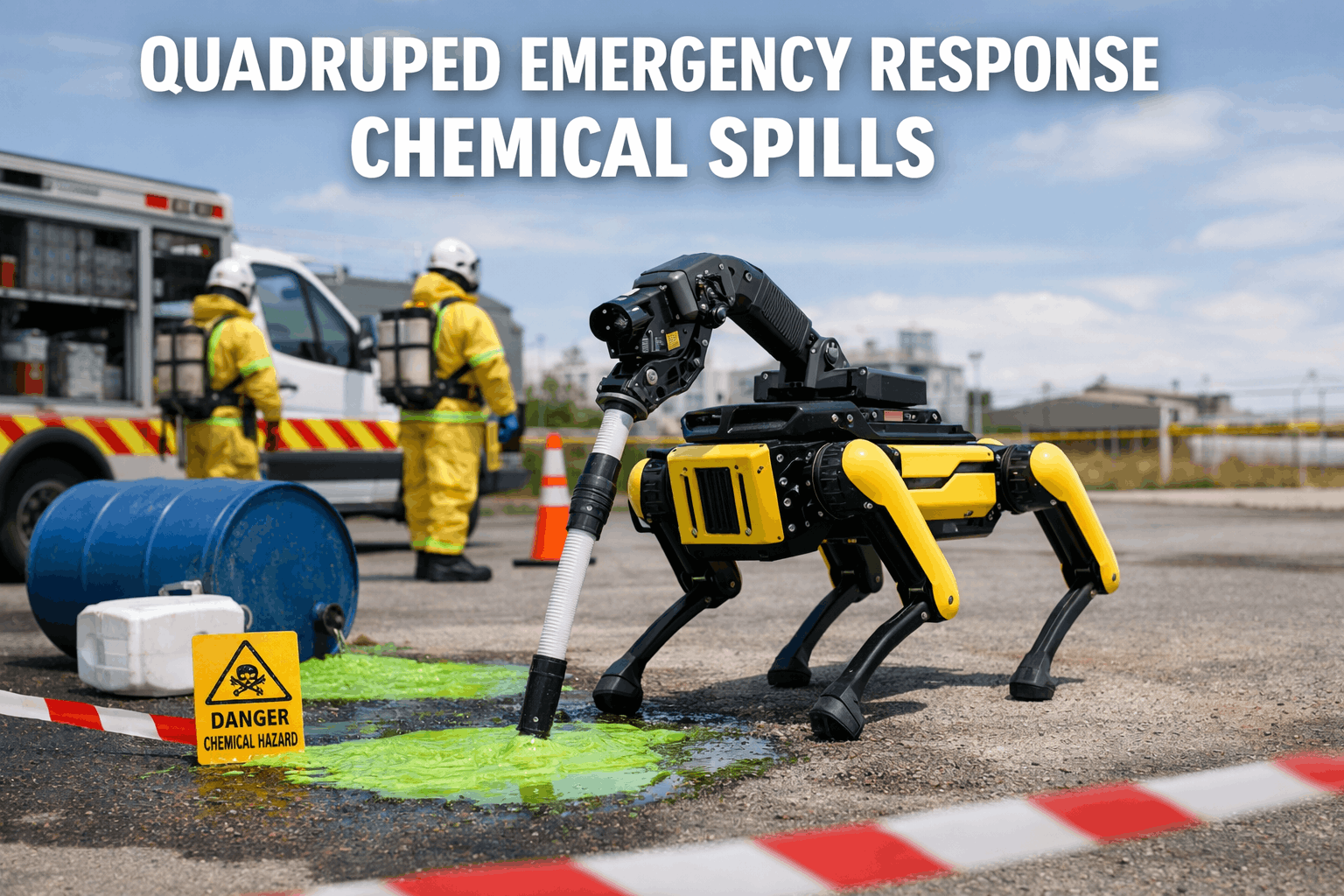
When a chemical spill alarm triggers in a processing facility, the first minutes define everything — how far the release spreads, whether secondary containment holds, how many personnel enter the hazard zone, and whether the incident escalates from a localized event into a full emergency evacuation. Traditionally, the initial assessment requires a human responder to suit up in Level A or Level B PPE, approach the spill perimeter, visually identify the release source, estimate the volume and spread rate, check containment berms, and radio back findings to the incident commander — all while breathing through an SCBA with limited air supply and restricted visibility. Quadruped robots change this calculus entirely. Deployed from a safe standoff distance, a teleoperated quadruped robot traverses uneven plant terrain, descends stairs, navigates pipe racks, and reaches the spill zone in minutes — streaming live video, gas concentration readings, and thermal imagery back to the command post without placing a single responder inside the immediate danger zone. Book a demo to see how iFactory's incident response platform integrates quadruped robot telemetry with automated containment tracking and response playbooks — or talk to our team today. After integrating iFactory, every robot-assisted incident assessment generates a timestamped response record — teleoperation logs, sensor readings, containment status, and remediation work orders — automatically documented from deployment to closure.

iFactory Incident Response Hub
Quadruped Robots. Remote Assessment. Zero Personnel in the Danger Zone.
Spill assessment, gas mapping, containment verification, and post-incident documentation — all managed from one platform with real-time robot telemetry, automated incident playbooks, and CMMS-tracked remediation workflows.
90%
reduction in personnel exposure during initial spill assessment using robotic first response
3–5 min
from alarm to robot deployment vs. 15–25 min for human responder PPE donning and entry
faster incident situational awareness with multi-sensor robot telemetry vs. radio-relayed human observation
100%
of robot-assisted assessments produce timestamped, auditable incident records automatically
Response Capabilities

Four Mission Profiles — All Executed by One Quadruped Platform

Quadruped robots deployed through iFactory's incident response module execute every critical assessment task from a single robotic platform — with mission-specific sensor configurations, automated telemetry logging, and direct integration with incident response playbooks. The operator selects the mission profile, teleoperates the robot to the incident zone, and iFactory records every sensor reading, video frame, and navigation path automatically. Book a demo to see every mission profile live on the platform.

SPL
Spill Assessment & Mapping
First Response

The spill assessment mission is the highest-value deployment in chemical emergency response — replacing the human scout who would otherwise enter the hazard zone in full PPE to visually identify the release source, estimate spread area, and assess whether secondary containment is holding. The quadruped robot traverses the spill perimeter with onboard cameras streaming live high-definition video and thermal imagery to the incident commander. Onboard LiDAR generates a real-time 3D map of the spill footprint, while chemical sensors identify vapor concentrations at ground level and at breathing zone height. iFactory logs the complete assessment — spill boundary coordinates, vapor readings at each waypoint, thermal hot spots, and containment berm status — as a timestamped incident record that becomes the foundation for every subsequent response decision.

Live HD video and thermal imaging streamed to incident command post
LiDAR-generated 3D spill footprint map with boundary coordinates
Chemical vapor concentration readings at ground and breathing zone height
Secondary containment berm integrity verification from robot-eye view
Timestamped assessment record auto-generated in iFactory incident log
GAS
Gas Cloud Mapping & LEL Monitoring
Atmospheric Hazard

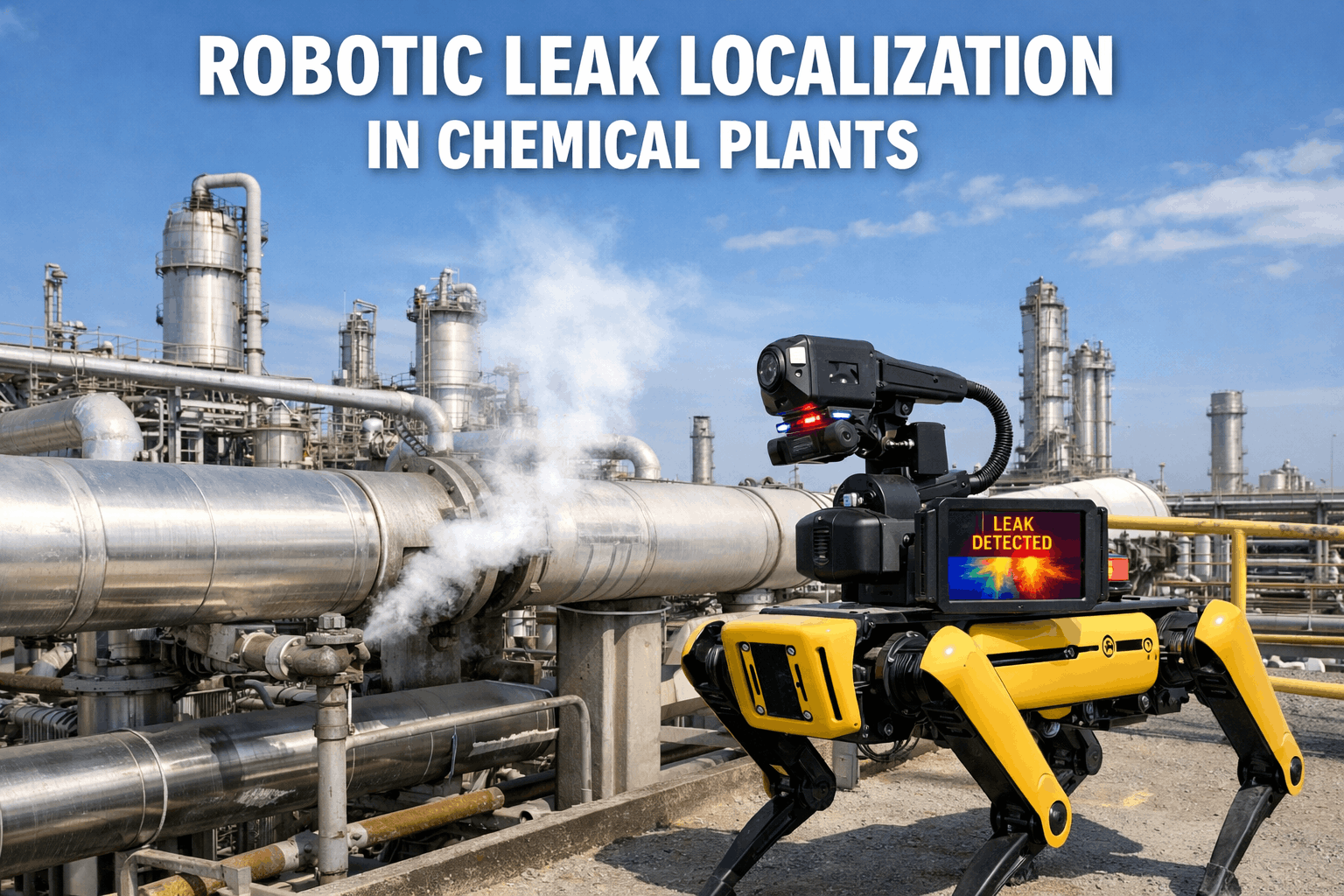
Gas releases in chemical plants create invisible hazard zones that shift with wind direction, temperature, and terrain — making human entry for atmospheric monitoring one of the most dangerous response tasks. The quadruped robot carries a multi-gas detector array (LEL, O2, H2S, VOC, and target-specific sensors configurable per facility) and walks a systematic grid pattern through the suspected gas cloud, logging concentration readings at each waypoint with GPS coordinates. iFactory aggregates these waypoint readings into a real-time gas concentration heat map overlaid on the facility plot plan — showing the incident commander exactly where the cloud boundary sits, where concentrations exceed IDLH thresholds, and how the plume is evolving over time. This map replaces the hand-drawn perimeter estimates that traditional response teams produce from upwind observations.

Multi-gas detector array — LEL, O2, H2S, VOC, plus facility-specific sensors
Systematic grid-walk pattern with GPS-tagged concentration readings
Real-time gas heat map overlaid on facility plot plan in iFactory
IDLH threshold alerts with automatic exclusion zone boundary marking
Plume evolution tracking across sequential robot survey passes
CNT
Containment Verification
Containment Tracking

After the initial spill assessment, the incident commander needs continuous verification that secondary containment is holding — berms are not overtopped, drain valves are closed, sump pumps are operating, and the spill is not migrating through cracks, joints, or underground pathways to storm drains or waterways. The quadruped robot performs scheduled containment verification patrols, walking the containment perimeter at configured intervals and streaming visual confirmation of berm levels, drain valve positions, and sump status back to iFactory. Each verification patrol generates a containment status record logged against the incident timeline. If the robot detects containment breach indicators — rising liquid levels approaching berm tops, liquid visible beyond the containment boundary, or open drain valves — iFactory triggers an immediate escalation alert and generates a containment breach work order routed to the response team. See containment tracking in a live demo.

Automated containment perimeter patrols at configured time intervals
Visual berm level verification with photo evidence at each checkpoint
Drain valve position confirmation — open/closed status logged per patrol
Containment breach detection triggers immediate escalation alert
Patrol-by-patrol containment status record in iFactory incident timeline
DOC
Post-Incident Documentation & Investigation
Regulatory Evidence

Every chemical incident triggers regulatory reporting obligations — OSHA, EPA, state environmental agencies, and potentially the Chemical Safety Board. The quality of the post-incident investigation depends entirely on the quality of the evidence collected during the event. Quadruped robots deployed through iFactory produce a complete, timestamped evidentiary record of every assessment: video footage with embedded time codes, sensor readings at every waypoint, 3D spill maps, containment verification logs, and the full teleoperation path the robot followed. This record is generated automatically as a byproduct of the response — not assembled manually after the fact from memory, radio logs, and photographs taken on personal phones. Investigators receive a structured incident package exported from iFactory in minutes, not a folder of disorganized files compiled over days.

Complete timestamped video record with embedded time codes per mission
Sensor data logs — gas concentrations, temperatures, locations — per waypoint
3D spill maps and containment status records across full incident timeline
Teleoperation path log showing exact robot route during each deployment
One-click regulatory evidence package export — OSHA, EPA, CSB ready
Deployment Workflow

From Alarm to Assessed — How a Quadruped Robot Responds to a Chemical Incident in Under 10 Minutes

The iFactory incident response workflow operates from the control room. The operator deploys the robot, teleoperates it to the incident zone, and iFactory handles telemetry logging, sensor data aggregation, playbook execution, and work order generation automatically. No paperwork. No post-incident data assembly. No personnel in the danger zone during initial assessment. Book a demo to walk through the complete deployment workflow.

Alarm Triggers — Incident Playbook Activates
When a spill alarm, gas detection alarm, or manual emergency report triggers in the facility's DCS or safety system, iFactory receives the alarm signal and automatically activates the pre-configured incident response playbook for that alarm type and zone. The playbook pre-selects the appropriate robot mission profile (spill assessment, gas mapping, or containment verification), identifies the nearest available quadruped robot, and alerts the teleoperation operator that a deployment is pending. Response clock starts automatically.

Robot Deploys from Staging Position
The quadruped robot departs from its pre-positioned staging location — typically a weatherproof charging dock at a strategic plant access point — and navigates toward the incident zone using a pre-mapped route. The operator can take full teleoperative control at any point, or allow the robot to autonomously navigate to the waypoint nearest the alarm source. During transit, all onboard sensors activate and begin streaming data — the iFactory telemetry log begins recording from the moment the robot leaves its dock.

Operator Teleoperates Through Hazard Zone
The teleoperator guides the robot through the incident zone using live HD video, thermal overlay, and real-time gas sensor readings displayed on the command post workstation. The robot traverses stairs, grating, pipe racks, and uneven terrain that wheeled platforms cannot navigate. At each assessment waypoint, the operator pauses the robot to capture detailed imagery, and iFactory logs sensor readings with GPS coordinates automatically. The operator communicates findings to the incident commander in real time — but the permanent record is the telemetry log, not the radio call.

iFactory Generates Incident Assessment Record
As the robot completes its assessment mission, iFactory compiles the telemetry into a structured incident assessment record — spill boundary map, gas concentration heat map, containment status, thermal imagery, and the complete video log with embedded timestamps. The incident commander receives the compiled assessment within minutes of mission completion. No post-mission data assembly required. The record is stored permanently against the incident case in iFactory.

Remediation Work Orders Auto-Generated
Based on the assessment findings, iFactory automatically generates remediation work orders — spill cleanup, containment repair, equipment isolation, environmental sampling, and any corrective maintenance identified during the robot's survey. Each work order is pre-populated with the incident reference, location coordinates, hazard data from the robot's sensors, and the relevant photograph or video frame from the assessment. The response team receives dispatched, diagnosed jobs — not raw sensor dumps that require interpretation. Book a demo to see the complete alarm-to-work-order workflow.
iFactory Incident Response — Book a Demo

See how quadruped robots, real-time telemetry, automated playbooks, and CMMS work orders combine into a single incident response platform.

Incident Documentation

What an iFactory Robot-Assisted Incident Record Contains

Every robot deployment through iFactory generates a complete incident assessment record automatically — no manual report writing, no post-event evidence compilation, no data stitching from multiple sources. The record is available to the incident commander within minutes of mission completion and serves as the evidentiary foundation for regulatory reporting and root cause investigation. See a sample incident record in a demo.

01
Incident Header and Alarm Source
Facility name, alarm type, alarm source zone, incident classification, date and time of alarm, time of robot deployment, and incident commander assignment — all populated automatically from the DCS alarm signal and iFactory playbook activation.
02
Robot Teleoperation Path Log
Complete GPS-tracked path showing every meter the robot traveled during the assessment mission, with waypoint timestamps and dwell times. The path log confirms exactly where the robot went, when it arrived at each location, and how long it spent at each assessment point.
03
Sensor Data at Every Waypoint
Gas concentration readings (LEL, O2, H2S, VOC, target gases), temperature measurements, and atmospheric conditions logged at every assessment waypoint with GPS coordinates and timestamps. Data presented as both a tabular log and a visual heat map overlaid on the facility plot plan.
04
Spill Boundary and Containment Map
LiDAR-generated 3D map of the spill footprint with measured boundary coordinates, estimated volume, and containment status at each verification checkpoint. Containment berm levels, drain valve positions, and sump pump status are documented with corresponding robot-eye photographs.
05
Video Record with Embedded Time Codes
Complete HD video from the robot's onboard cameras — front-facing, thermal, and downward-looking — with embedded timestamps synchronized to the telemetry log. Investigators can jump to any moment in the assessment and see the video, sensor readings, and GPS position simultaneously.
06
Remediation Work Orders and Response Timeline
Every work order generated from the assessment — cleanup, containment repair, equipment isolation, environmental sampling — is listed with its creation timestamp, priority, assigned team, and current status. The complete incident timeline from alarm to final remediation closure is visible in a single chronological view.
Response Comparison

Human-First vs. Robot-First Chemical Incident Response: Outcome Comparison

Without Quadruped Robots — Traditional Response
15–25 minutes for first responder to don Level A/B PPE before entering the hazard zone for initial visual assessment
Situational awareness limited to what the human scout can see, smell, and radio back — no sensor data, no mapping, no permanent visual record
Gas cloud boundaries estimated from upwind observation and portable detector spot-checks — no comprehensive concentration mapping
Containment verification requires repeated human entry into the hazard zone — each entry consuming SCBA air supply and adding exposure risk
Post-incident evidence compiled manually from radio logs, personal photos, and responder memory — often days after the event
With iFactory Quadruped Response — Robot-First Assessment
Robot deployed in 3–5 minutes from alarm — arrives at incident zone before human responders finish PPE donning
Live HD video, thermal imagery, and multi-gas sensor data streamed to incident command — full situational awareness from the control room
Gas cloud mapped with GPS-tagged concentration readings at every waypoint — IDLH boundaries marked automatically on facility plot plan
Containment verification performed by robot on scheduled patrols — zero additional human entries required during active incident
Complete incident record generated automatically — video, sensor logs, maps, containment records, work orders — exportable in minutes for regulatory submission
"
We had an acid tank overflow event at 2 AM in our sulfuric acid storage area. Under the old response protocol, we would have sent two operators in Level A suits into the containment area to assess the release, check the berm levels, and confirm the sump was holding. The last time we did that for a similar event, one operator's suit snagged on a pipe bracket and we had to execute an emergency extraction. With the quadruped, the shift supervisor deployed the robot from the control room in four minutes. We had live video of the spill source, thermal confirmation of the acid flow path, and containment berm status within eight minutes of the alarm — all without a single person entering the area. When we sent the cleanup crew in two hours later, they knew exactly what they were walking into, they had the right neutralization materials staged, and the entire assessment was already documented in iFactory. The incident investigation that used to take a week to compile was exported the next morning.
EHS Manager  ·  Specialty Chemical Manufacturing Facility, Gulf Coast
Common Questions

What Chemical Plant Teams Ask About Quadruped Robot Emergency Response

Can quadruped robots operate in ATEX/Class I Division 1 hazardous atmospheres?
Quadruped robots deployed for chemical emergency response are available in intrinsically safe or explosion-proof configurations rated for Class I Division 1 and ATEX Zone 1 environments. The robot's electrical systems, motors, sensors, and communication modules are certified for operation in atmospheres where flammable gases or vapors may be present at concentrations above their lower explosive limit. For facilities operating in less-classified areas or where the robot approaches but does not enter the most hazardous zone, standard industrial-rated robots with appropriate IP ratings may be sufficient. iFactory's incident playbook configuration includes hazardous area classification for each zone, ensuring the correct robot with the correct certification is deployed to each area automatically. Book a demo to discuss hazardous area robot specifications.
What terrain and obstacles can a quadruped robot navigate that wheeled robots cannot?
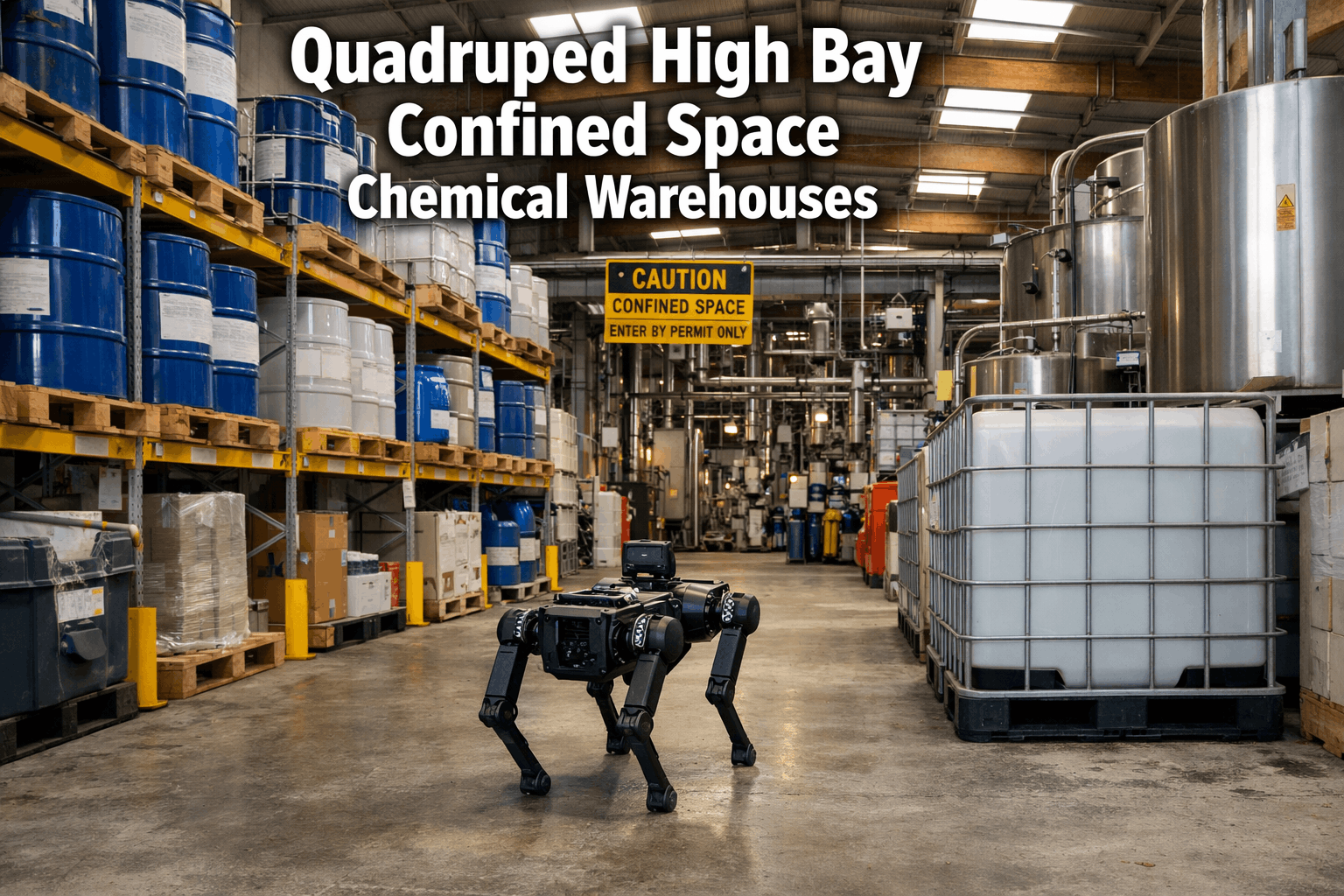
Quadruped robots are specifically designed for the unstructured environments found in chemical processing facilities. They climb industrial stairs and ladders, traverse pipe racks and cable trays, walk across grating, step over piping and conduit runs, navigate through doorways and confined access points, and maintain stability on wet, oily, or debris-covered surfaces. Their four-legged locomotion provides dynamic balance that allows operation on slopes up to 30 degrees, in standing water up to knee depth, and across surfaces with gaps and irregularities that would immobilize wheeled or tracked platforms. For chemical plants where the incident zone may involve elevated process structures, multi-level buildings, or outdoor tank farms with irregular terrain, the quadruped's mobility is the critical capability that makes remote assessment feasible in areas that wheeled robots simply cannot reach. See terrain capability footage in a demo.
How does iFactory's incident playbook integrate with the robot deployment?
iFactory's incident response playbooks are pre-configured decision trees that activate automatically when a qualifying alarm is received from the facility's DCS, safety instrumented system, or manual emergency report. Each playbook maps an alarm type and zone to a specific robot mission profile — defining which sensors activate, which assessment route the robot follows, what data is logged at each waypoint, and what thresholds trigger escalation alerts. When the alarm fires, the playbook selects the nearest available robot, pre-loads the mission configuration, and alerts the teleoperator. The operator can follow the playbook route exactly or deviate based on real-time conditions — iFactory logs both the planned route and the actual path taken. Playbooks are built once by the EHS team in the iFactory web dashboard and can be updated, cloned, or versioned as facility layouts and hazard profiles change. Contact support for playbook configuration details.
What is the typical deployment time from alarm to robot arrival at the incident zone?
Total deployment time from alarm activation to robot arrival at the incident zone is typically 3 to 8 minutes, depending on the distance between the robot's staging position and the incident location. The breakdown is approximately 30 seconds for iFactory to receive the alarm and activate the playbook, 60 seconds for the teleoperator to acknowledge and initiate deployment, and 2 to 6 minutes for the robot to traverse from its staging dock to the incident zone at walking speed. By comparison, traditional human first-response requires 15 to 25 minutes before the first responder is suited in PPE and enters the hazard zone. Pre-positioning robots at multiple staging locations throughout the facility reduces the transit component further — most large chemical plants deploy two to four staging positions to ensure sub-5-minute response coverage to any zone in the facility. Book a demo to see deployment timing analysis for your facility layout.
iFactory Incident Response — Talk to Our Team

Quadruped robots. Remote teleoperation. Automated incident records. Zero personnel in the danger zone during initial assessment. One platform for every chemical emergency response mission.

Spill assessment that maps the release before anyone enters the area. Gas cloud mapping that marks IDLH boundaries in real time. Containment verification without repeated human entry. Post-incident documentation generated automatically — ready for regulators, investigators, and management review.


Share This Story, Choose Your Platform!