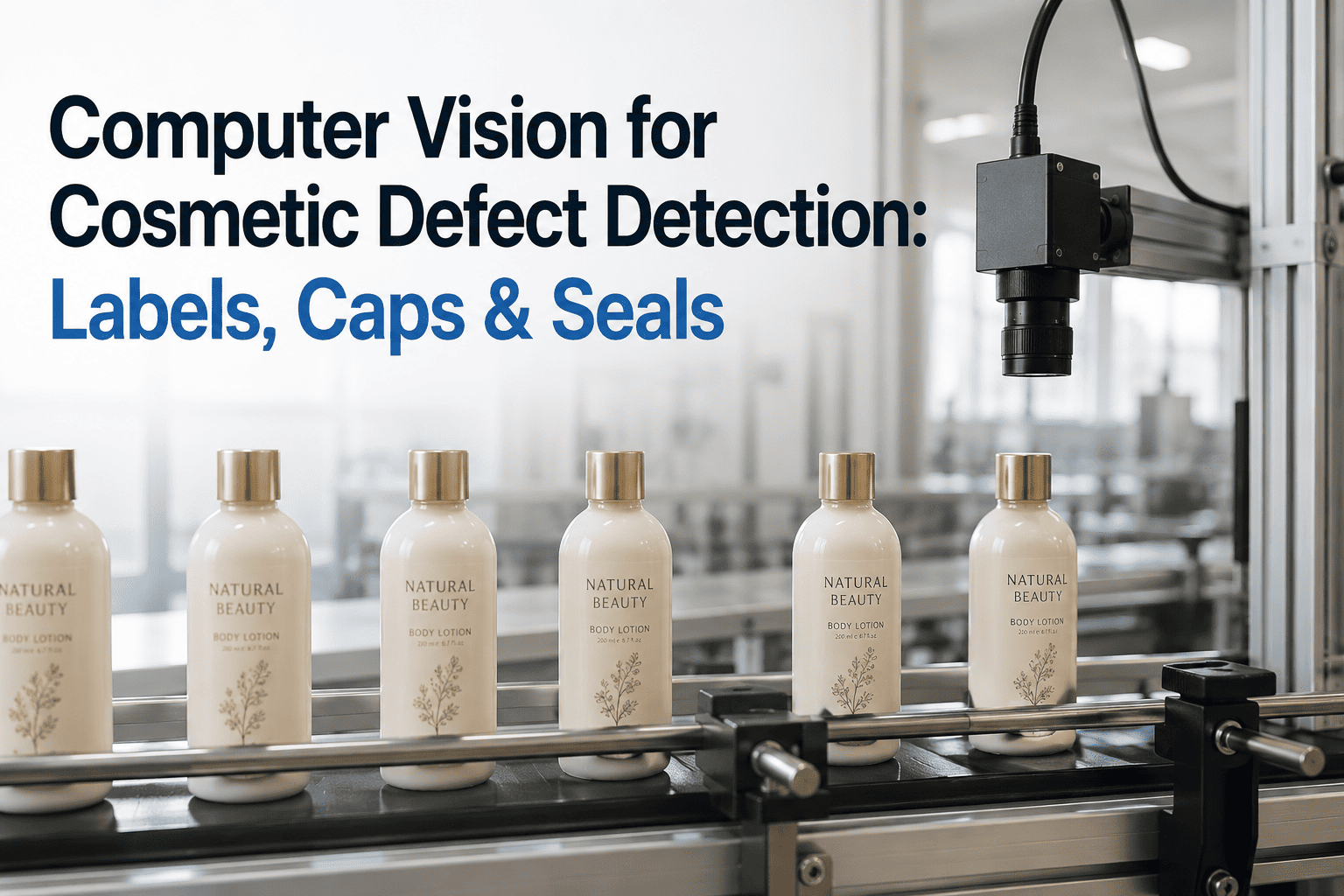
Every second your cosmetic production line runs without AI vision inspection, defective products move closer to retail shelves — triggering recalls, chargebacks, and brand erosion that no quality team can manually prevent at scale. Misaligned labels, unseated caps, compromised seals, and incorrect fill levels are not isolated incidents; they are systemic failure patterns that legacy visual inspection simply cannot detect at line speed. If your facility is still relying on manual QC sampling or outdated camera rigs, your competitors deploying AI Vision Cameras are already capturing the quality gap — and the revenue that comes with it.
Is Your Cosmetic Line Inspecting Every Unit — or Just Hoping for the Best?
iFactory's AI Vision Cameras deliver 99%+ defect detection accuracy for labels, caps, seals, and fill levels — at full production line speed, with zero manual sampling gaps.
Why Computer Vision Is Now a Non-Negotiable for Cosmetic Defect Detection
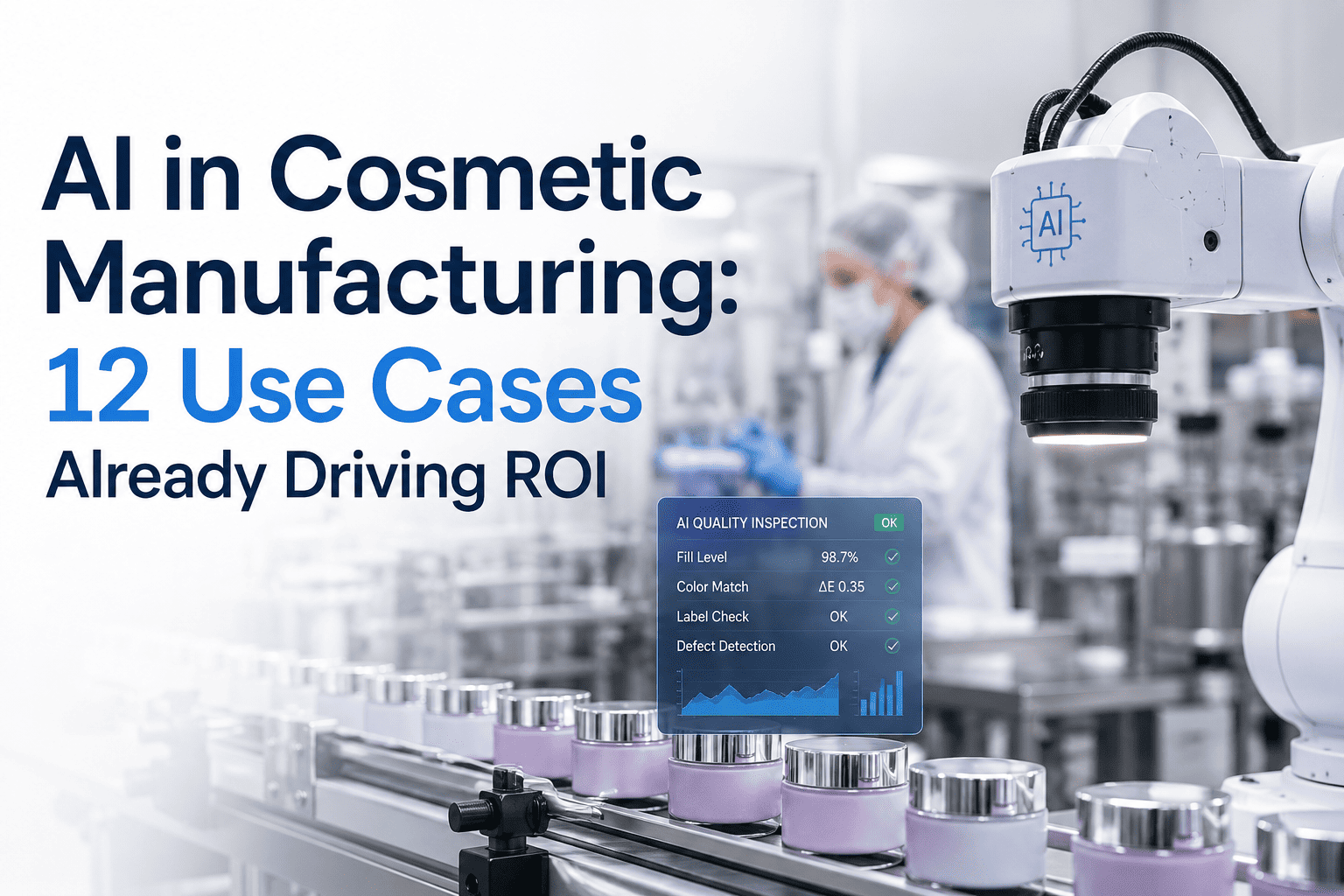
The cosmetic packaging line operates at velocities no human inspector can match — hundreds of units per minute, across multiple SKUs, with zero tolerance for the label misalignment or seal failure that triggers a retailer chargeback or, worse, an FDA adverse event. AI vision systems trained on cosmetic-specific defect libraries now identify label placement drift, cap seating anomalies, foil seal micro-tears, and fill level deviations in real time, rejecting non-conforming units before they reach downstream palletization. The business case is not incremental improvement; it is the structural elimination of escape defects and the customer complaints, regulatory exposure, and brand damage that follow them. Book a Demo to see iFactory's AI Vision Camera platform running live on a cosmetic production environment.
Label Alignment Inspection
AI vision cameras detect label skew, vertical drift, bubble formation, and wrinkle defects at sub-millimeter precision — across every unit, every shift, without fatigue-driven miss rates that degrade manual QC performance after hour two.
Cap Seating Verification
Missing caps, partial threads, and cross-threaded closures are classified in milliseconds using depth-mapped vision models trained on cosmetic closure geometries — preventing leakage complaints and contamination incidents that destroy customer trust.
Seal Integrity Detection
Foil induction seals, tamper-evident bands, and shrink sleeves are inspected for micro-tears, incomplete adhesion, and off-center placement that compromise product safety and fail retail compliance audits at point of receipt.
Fill Level Measurement
Vision-based fill level AI measures product volume against defined tolerances for every container profile — flagging underfill that violates net content regulations and overfill that inflates COGS without consumer awareness.
Legacy Manual QC vs. AI Vision Inspection: The Performance Gap
The gap between manual cosmetic inspection and AI vision is not a matter of degree — it is a structural difference in what is physically possible at production line speeds. The table below maps the key operational dimensions where legacy approaches generate compounding risk and where AI vision systems deliver measurable, auditable performance. Book a Demo to benchmark your current defect escape rate against iFactory's AI Vision platform.
| Inspection Dimension | Legacy Manual QC | iFactory AI Vision | Business Impact | Risk Level |
|---|---|---|---|---|
| Inspection Coverage | 2–5% statistical sampling | 100% of every unit produced | Eliminates defect escape to retail | Critical |
| Detection Speed | Limited to <30 units/min manually | Matches full line speed (300+ UPM) | Zero throughput compromise | Critical |
| Label Defect Accuracy | Varies by inspector fatigue | 99%+ consistent detection rate | Reduces chargebacks and rework cost | Critical |
| Seal Inspection Depth | Visual surface check only | Micro-tear and adhesion mapping | Prevents contamination liability | High |
| Audit Trail Generation | Manual paper logs, incomplete | Automated image + defect records | FDA inspection-ready in real time | High |
| Scalability Across SKUs | Requires retraining per product | Model library scales instantly | Supports portfolio expansion | Moderate |
5-Step Deployment: AI Vision Cameras on Your Cosmetic Production Line
Deploying a cosmetic vision inspection system is a structured engineering process — not a plug-and-play installation. The roadmap below defines the five phases that take a cosmetics manufacturer from baseline defect data to fully autonomous AI-driven inspection, with measurable quality KPIs at each stage. Book a Demo to review iFactory's deployment methodology for your specific line configuration.
Defect Library Definition & Line Audit
Map every cosmetic defect type — label skew thresholds, cap seating tolerances, seal adhesion standards, and fill level specs — against your retailer compliance requirements and internal quality gates. This library becomes the ground truth for AI model training and defines the rejection criteria the vision system enforces autonomously.
Camera Positioning & Lighting Engineering
Install AI vision cameras at critical inspection points — post-labeling, post-capping, post-sealing, and post-fill — with engineered illumination rigs that eliminate surface glare, shadow artifacts, and reflective false positives that degrade detection accuracy on glossy cosmetic packaging.
AI Model Training on Cosmetic Defect Data
Train vision models on annotated image datasets covering your full SKU portfolio — including edge-case defect samples that rarely appear in standard production but drive the highest recall incidents when they escape. Models are validated against held-out defect sets before line deployment.
Live Integration with Rejection & MES Systems
Connect AI vision outputs to automated rejection hardware and your MES platform so that flagged units are physically removed from the line and defect events are logged in real time — creating a closed-loop quality control architecture that requires no manual intervention to enforce standards.
Continuous Model Improvement & KPI Reporting
Establish a model retraining cadence fed by production defect data, new SKU introductions, and packaging redesigns. Track detection rate, false positive rate, and defect escape rate against baseline KPIs to demonstrate continuous quality improvement to operations and executive stakeholders.
Six Cosmetic Packaging Defects That Escape Manual Inspection — Until It's Too Late
Retailers, e-commerce platforms, and regulatory bodies have zero tolerance for cosmetic packaging defects that reach end consumers — yet manual QC systems are structurally incapable of catching these failure modes at the frequencies required. The gaps below represent the defect categories most commonly cited in cosmetic recall events and retailer compliance failures.
Label placement errors below 2mm are invisible to the human eye at line speed but trigger retailer planogram rejections and consumer perception defects that drive negative reviews and returns at scale.
Caps that appear seated but have incomplete thread engagement pass visual inspection and fail during consumer use — generating leakage complaints, contamination incidents, and warranty claims that erode brand equity.
Induction seal micro-tears smaller than 0.5mm are undetectable by human inspectors but allow oxidation, contamination, and tamper evidence failure — creating product safety liability and recall exposure.
Filling equipment calibration drift accumulates across shifts, producing systematic underfill or overfill that statistical sampling misses until enough units have shipped to trigger net content regulatory action.
Shrink sleeve and tamper-evident band misalignment passes QC but fails the consumer unboxing test — creating social media amplified quality perception damage that outweighs the production cost of the original defect.
Batch/lot codes, expiry dates, and ingredient compliance labels applied in secondary packaging steps are missed by primary line inspectors — creating regulatory non-compliance exposure in every shipment that escapes detection.
iFactory's AI Vision Camera platform systematically closes every one of these defect escape pathways — Book a Demo to see the full defect detection library applied to your cosmetic packaging profile.
AI Vision, GMP Documentation, and FDA Inspection Readiness for Cosmetics Manufacturers
Under MoCRA and ISO 22716 GMP frameworks, cosmetics manufacturers are required to demonstrate documented quality control processes — and AI vision systems that generate timestamped defect images, rejection event logs, and batch-level quality reports satisfy inspection requirements that manual QC paper logs cannot. Every rejection event captured by iFactory's AI Vision Camera platform is automatically linked to the corresponding batch record, creating an unbroken audit trail that reduces FDA inspection response time and eliminates the documentation gaps that generate Warning Letters. Facilities deploying AI-powered cosmetic defect detection are not just improving line quality — they are building a defensible compliance architecture that supports MoCRA adverse event reporting, retail partner audits, and ISO certification maintenance simultaneously. Book a Demo to explore iFactory's full GMP compliance integration for cosmetic vision inspection systems.
Deploy AI Vision Inspection Across Your Cosmetic Production Line
iFactory's AI Vision Cameras deliver 99%+ detection accuracy for labels, caps, seals, and fill levels — with automated rejection, GMP audit trails, and real-time quality dashboards built in.
Scaling AI Cosmetic Vision Inspection Across Multi-Site Manufacturing Networks
Single-line AI vision deployment proves the ROI model — but enterprise cosmetics manufacturers operating across multiple facilities, contract manufacturers, and international production sites require a centralized vision intelligence architecture that standardizes defect thresholds, shares model improvements across sites, and consolidates quality KPIs into a single operational dashboard. iFactory's multi-site vision platform synchronizes defect libraries across your entire manufacturing network, applies model updates globally without site-by-site manual reconfiguration, and gives quality directors real-time visibility into defect rates, rejection events, and compliance status across every facility from one interface. The manufacturers who scale AI vision infrastructure today will outperform competitors still managing quality through distributed spreadsheets and manual inspection reports as cosmetic retail compliance requirements intensify through 2026. Book a Demo to see iFactory's multi-site cosmetic vision dashboard in action.
AI Vision for Cosmetic Defect Detection — Frequently Asked Questions
Can AI vision systems inspect multiple cosmetic SKUs on the same production line?
Yes — iFactory's AI Vision Camera platform uses SKU-aware model switching that automatically loads the correct defect detection parameters when a new product format is detected, enabling multi-SKU lines to run without manual camera reconfiguration between changeovers. Label templates, cap geometries, and fill tolerances are stored per-SKU and applied instantly at line speed.
What defect types can AI vision detect on cosmetic labels specifically?
iFactory's cosmetic label inspection detects skew and angular misalignment, vertical and horizontal placement drift, bubble and wrinkle formation, print quality degradation, barcode and QR code readability, color registration errors, and missing secondary labels — all at sub-millimeter resolution and full production line speed without sampling gaps.
How does AI fill level detection work on opaque cosmetic containers?
For opaque containers — common in cosmetic packaging — iFactory deploys weight-vision fusion combining inline checkweighers with AI vision measurement of visible fill indicators such as neck fill height, product surface level through translucent regions, and cap engagement depth, delivering fill accuracy that meets net content regulations without requiring transparent container formats.
What is the ROI timeline for cosmetics manufacturers deploying AI vision inspection?
Cosmetics facilities deploying AI vision typically recover full system investment within 8–14 months through reduction in retailer chargeback penalties, elimination of manual QC labor on 100% inspection lines, decreased rework costs from defect escape, and avoidance of recall events — each of which can generate six-to-seven-figure liability exposure that dwarfs platform investment. Book a Demo to model your specific ROI with iFactory's team.
Does the AI vision system integrate with existing MES and ERP platforms?
iFactory's AI Vision Camera platform provides bi-directional integration with leading MES and ERP systems including SAP, Oracle, and Microsoft Dynamics — passing defect event data, rejection counts, and batch quality scores into your operational systems in real time without manual data re-entry or disconnected quality silos.
How are AI vision models updated when cosmetic packaging is redesigned?
Packaging redesigns trigger a structured model update workflow within iFactory's platform — new reference images are annotated, defect thresholds are reconfigured for the updated geometry, and the updated model is validated against a held-out test set before live deployment, ensuring inspection accuracy is maintained across every packaging refresh without production downtime. Book a Demo to review iFactory's model lifecycle management process.
Launch AI Vision Inspection on Your Cosmetic Line with iFactory
Cosmetics manufacturers across the U.S. and globally trust iFactory's AI Vision Cameras to inspect every label, cap, seal, and fill level — at line speed, with full GMP documentation and zero manual sampling gaps.