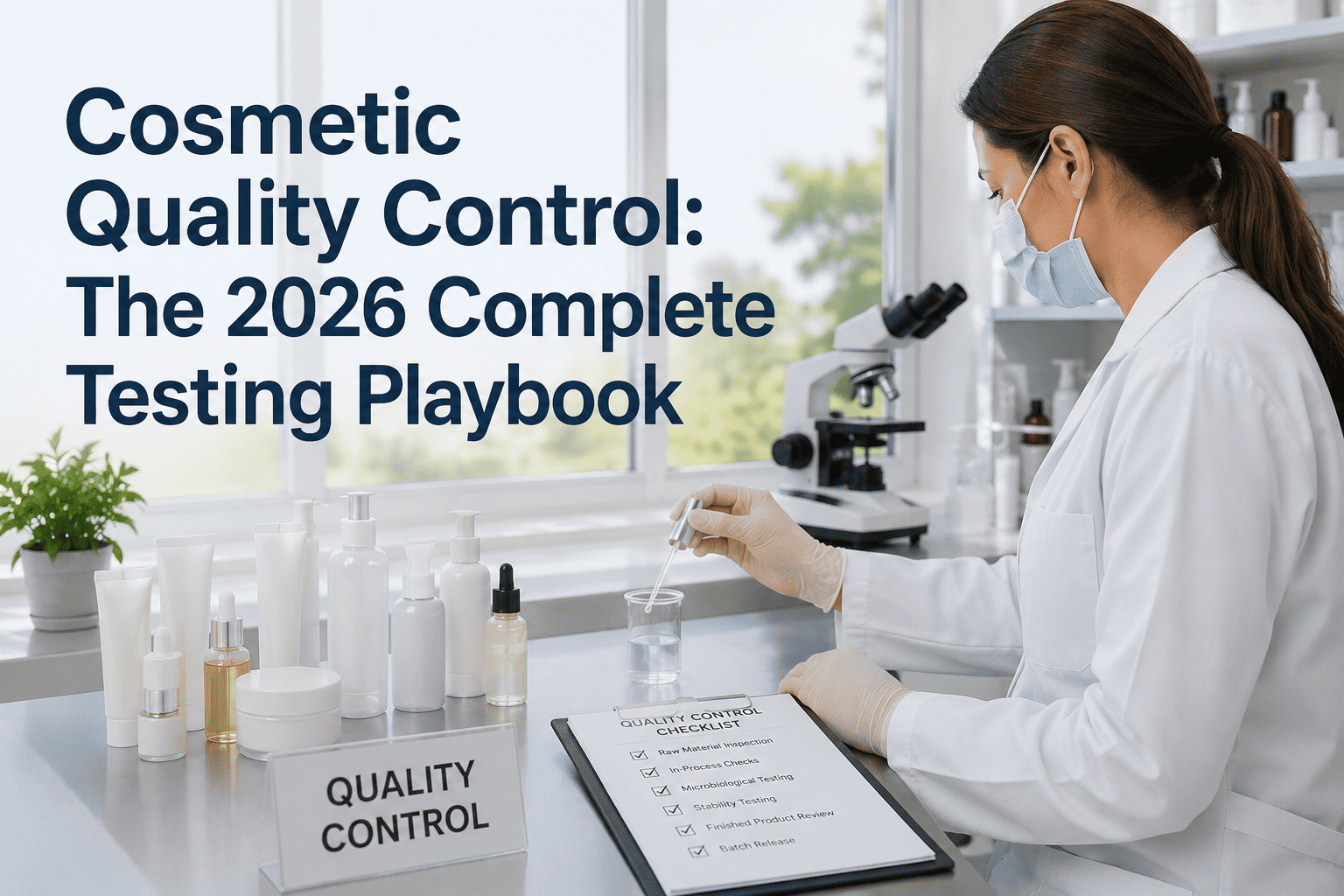
In 2026, cosmetic quality control is no longer a back-office function — it is the operational backbone determining which manufacturers stay on shelf and which face FDA enforcement, import alerts, and retailer delisting. Facilities still running QC on spreadsheets and paper COA logs are accruing silent liability with every batch released: one failed micro test, one undocumented in-process deviation, one missed specification triggers a cascade that costs more than an entire year of compliance investment. The manufacturers pulling ahead are those who have unified raw material testing, in-process checks, finished product release, and MoCRA-aligned documentation into a single, audit-ready quality management system.
Is Your Cosmetics QC Infrastructure Ready for 2026 FDA Scrutiny?
iFactory's Quality Management platform automates cosmetic testing workflows, COA capture, micro release protocols, and MoCRA audit trails — eliminating manual gaps before they become enforcement events.
Why Cosmetic Quality Control Is the Highest-ROI Compliance Investment in 2026
MoCRA's expanded FDA authority — including mandatory adverse event reporting, safety substantiation requirements, and facility inspection powers — has transformed cosmetic QC from a voluntary best practice into a legally enforceable obligation. Manufacturers that align their quality control architecture with MoCRA expectations gain a structural competitive advantage: faster retail onboarding, fewer import holds, and defensible documentation during FDA inspections. The playbook below maps every layer of cosmetic QC, from incoming raw material COAs to finished product release, with the platform infrastructure that makes each step scalable, automated, and inspection-ready.
Raw Material COA Management
Every cosmetic formulation begins with supplier-provided Certificates of Analysis — documents that must be captured, version-controlled, and cross-referenced against in-house specifications before any material enters production. Automated COA ingestion eliminates manual re-entry errors and creates traceable material genealogy from supplier to finished batch.
In-Process Quality Checks
In-process controls — viscosity, pH, color, fill weight, emulsion stability — must be captured at defined production intervals with electronic signatures and deviation flagging. Without structured in-process data capture, out-of-specification batches reach finished goods inspection, dramatically increasing rework costs and release delays.
Finished Product Release Testing
Finished product release requires a defined specification matrix covering physical, chemical, and microbiological parameters, with formal disposition authority tied to electronic QC sign-off. Automating release workflows against pre-configured pass/fail criteria removes bottlenecks and creates the audit trail FDA inspectors require under MoCRA's quality system expectations.
Microbiological Testing Protocols
Micro testing — including Total Aerobic Count, yeast and mold, and challenge testing per ISO 11930 — represents the highest-risk quality gate in cosmetic manufacturing, where a single contamination event can trigger a voluntary recall and MedWatch adverse event report. Integrated micro lab management with automated result entry and hold/release workflows closes this risk gap systematically.
Legacy QC Friction vs. Optimized Cosmetic Quality Excellence
The gap between manufacturers still operating legacy QC processes and those running unified digital quality management is widening — not just in compliance posture, but in production throughput, batch release velocity, and cost-per-unit. The matrix below maps the structural differences that determine which operations thrive under 2026 MoCRA enforcement and which face systemic risk. Book a Demo to benchmark your current QC architecture against the optimized standard.
| QC Dimension | Legacy Friction (Old Way) | Optimized Excellence (New Way) | Business Impact |
|---|---|---|---|
| COA Management | Manual PDF filing, no version control | Auto-ingested, spec-linked, searchable vault | Zero material traceability gaps |
| In-Process Data Capture | Paper logbooks, transcribed post-shift | Real-time digital entry with SPC alerts | Deviations caught before batch completion |
| Micro Testing Workflow | Spreadsheet tracking, manual hold flags | Integrated LIMS with auto hold/release logic | Contaminated batches never reach distribution |
| Finished Product Release | Email approvals, no audit trail | Electronic disposition with 21 CFR Part 11 signatures | FDA-defensible release records on demand |
| Specification Management | Static Word/Excel documents | Versioned spec library linked to batch records | Always-current specs, no obsolete document risk |
| Supplier Quality | Ad hoc COA review, no scorecard | Automated supplier scorecards and COA variance alerts | Upstream quality issues resolved before production impact |
6-Step Cosmetic QC Testing Playbook for 2026 Compliance
A complete cosmetic quality control program covers six sequential phases — from supplier qualification through post-market surveillance — each of which must generate documentation linkable to your MoCRA facility registration and adverse event reporting obligations. The playbook below provides the operational blueprint compliance teams and quality directors can implement immediately. Book a Demo to see how iFactory maps pre-built workflows to each phase.
Supplier Qualification and COA Intake Standards
Define minimum COA requirements for every raw material category — including identity, potency, purity, and microbiological limits — and establish an approved supplier list with documented qualification records. Automated COA comparison against in-house specifications at the point of receipt eliminates the risk of non-conforming materials entering your production stream undetected.
Incoming Material Testing and Quarantine Protocols
All incoming raw materials must be quarantined pending receipt inspection and, for critical components, in-house identity verification testing — particularly for actives, preservatives, and colorants. Digital quarantine status management with automatic release authorization upon passing test results prevents unauthorized material use and creates the traceability records required for batch record completeness.
In-Process Control Points and SPC Monitoring
Define critical in-process control points for each product type — emulsification temperature, pH adjustment windows, viscosity ranges, and fill weight tolerances — with electronic data capture at each checkpoint. Statistical Process Control (SPC) monitoring with real-time control charts enables early detection of process drift before batches reach out-of-specification status, dramatically reducing rework and reject rates.
Microbiological Challenge and Release Testing
Every finished cosmetic product requires micro testing against defined acceptance criteria — typically aligned with ISO 11930 and USP guidelines — covering Total Aerobic Microbial Count, Total Combined Yeast/Mold Count, and specified pathogens. Preservative Efficacy Testing (PET/challenge testing) must be documented for each formulation and linked to the product's safety substantiation file, which MoCRA requires responsible parties to maintain.
Finished Product Specification Review and Formal Disposition
Finished product release requires systematic review of all in-process and finished testing data against the approved product specification, with formal disposition authority (Approve/Reject/Hold) documented under electronic signature. Conditional release workflows — allowing distribution pending final test results with full audit trail — enable throughput optimization without sacrificing compliance integrity.
Post-Market Surveillance and Adverse Event Integration
MoCRA requires responsible parties to report serious adverse events to FDA within 15 business days — a mandate that demands a direct data link between your quality management system and your adverse event reporting workflow. Post-market surveillance programs that systematically capture consumer complaints, retailer feedback, and adverse event signals feed directly into product quality reviews and formulation risk assessments.
How Unified Cosmetic QC Improves Workflow, Reduces Overhead, and Accelerates Growth
The ROI of an integrated cosmetic quality management platform extends far beyond compliance avoidance — it directly impacts production throughput, batch release cycle time, supplier performance, and brand reputation with retail partners. The impact grid below quantifies the operational transformation across three dimensions that matter most to cosmetics manufacturing executives.
Unified digital workflows eliminate the handoff friction between lab, production, and quality teams. Key improvements include:
- COA review time reduced by up to 65% through automated spec comparison
- In-process deviation alerts triggered in real time, not at shift end
- Batch record compilation automated from captured data — no manual assembly
- Electronic disposition eliminates email approval bottlenecks for product release
Manual quality processes are the primary driver of unnecessary labor cost in cosmetics manufacturing. Platform-driven QC delivers:
- 40–55% reduction in regulatory documentation labor through workflow automation
- Rework rates cut by early in-process SPC deviation detection
- Supplier non-conformances resolved upstream, before production line impact
- FDA inspection preparation time reduced by 70% with instant audit-ready record retrieval
Quality infrastructure is increasingly a retail and distribution partner prerequisite. Integrated QC enables:
- Faster new product introduction through reusable specification templates and testing protocols
- Retailer compliance audits passed on first submission with complete digital documentation packages
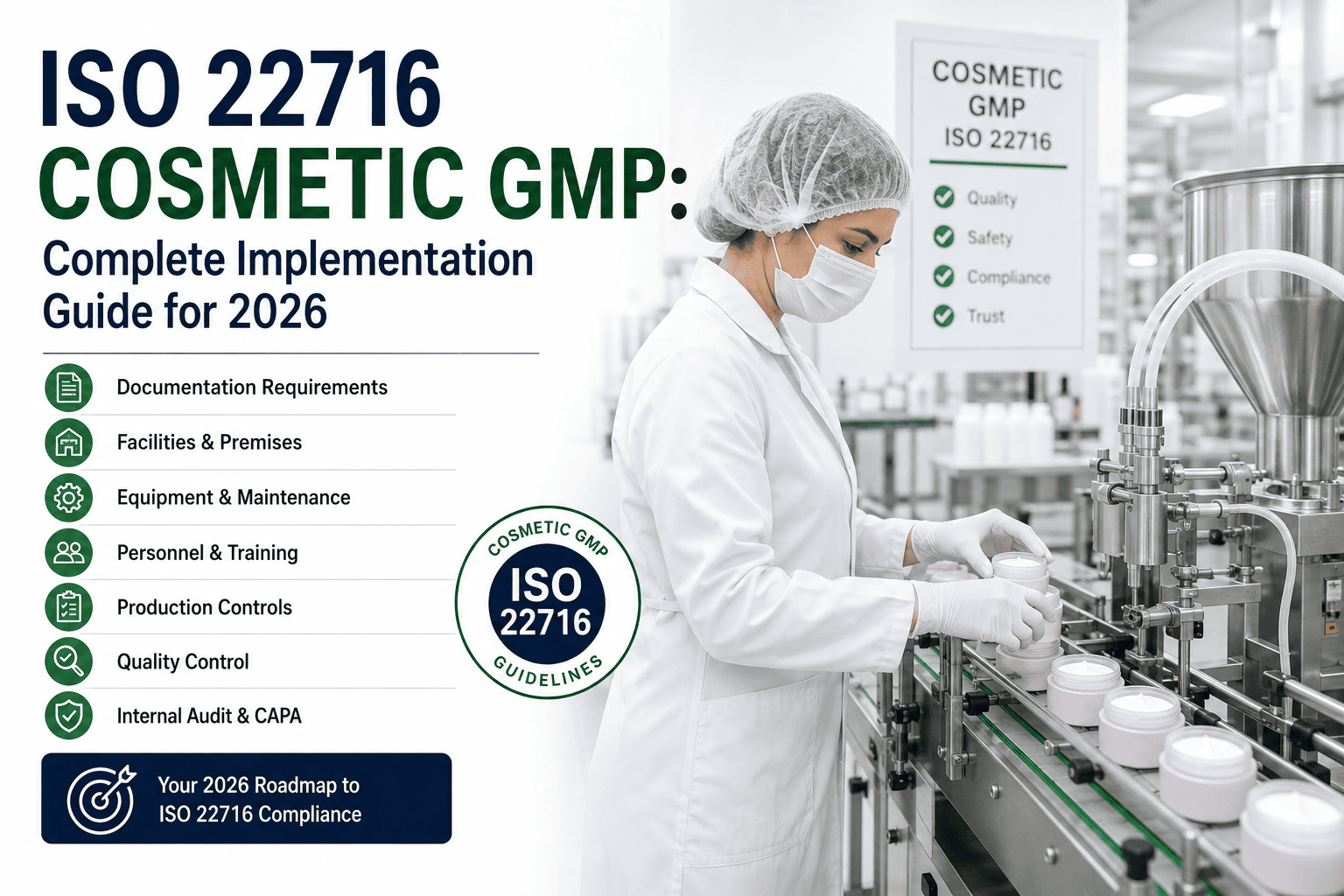
- International market entry accelerated by ISO 22716 GMP-aligned quality records
- Brand equity protected through zero post-market contamination events and rapid adverse event response
Launch a Unified Cosmetic Quality Control Platform for Your Facility
iFactory gives cosmetics manufacturers a single audit-ready system for raw material COA management, in-process controls, micro release testing, finished product disposition, and MoCRA-aligned documentation — with AI-powered alerts and GMP-compliant records built in from day one.
Top Cosmetic Quality Control Failures That Trigger FDA Enforcement in 2026
FDA inspection observations in cosmetics facilities consistently reveal the same preventable quality control failures — gaps that exist not because manufacturers lack expertise, but because legacy systems cannot support the documentation density MoCRA-era enforcement demands. Understanding these failure patterns is the first step toward building a quality architecture that converts compliance risk into operational confidence.
Using outdated or unversioned product specifications during batch release creates a documentation mismatch that FDA inspectors flag immediately. Every specification used in a production or testing decision must be the current approved version, with a documented revision history accessible on demand during inspections.
Many manufacturers perform Preservative Efficacy Testing once during formulation development and never repeat it after formula or packaging changes — a practice that leaves the safety substantiation file incomplete and indefensible. MoCRA's safety requirements demand current, product-specific micro data for every marketed SKU.
Releasing batches after an OOS result without a formal investigation, root cause analysis, and documented disposition decision is among the most cited quality system deficiencies. Every OOS result must trigger a structured investigation workflow with escalation paths and a final disposition rationale before the batch can be released or destroyed.
Accepting supplier COAs at face value without periodic identity confirmation testing — especially for actives and preservatives — creates an unverified supply chain that regulators and retail partners increasingly scrutinize. A documented supplier qualification program with periodic skip-lot or full identity testing is the minimum defensible standard in 2026.
Consumer complaints and retailer-reported reactions that qualify as serious adverse events under MoCRA must be reported to FDA within 15 business days — a timeline that is routinely missed when complaints live in a CRM disconnected from the quality system. Integrating complaint management directly into adverse event workflows is now a compliance requirement, not an optimization.
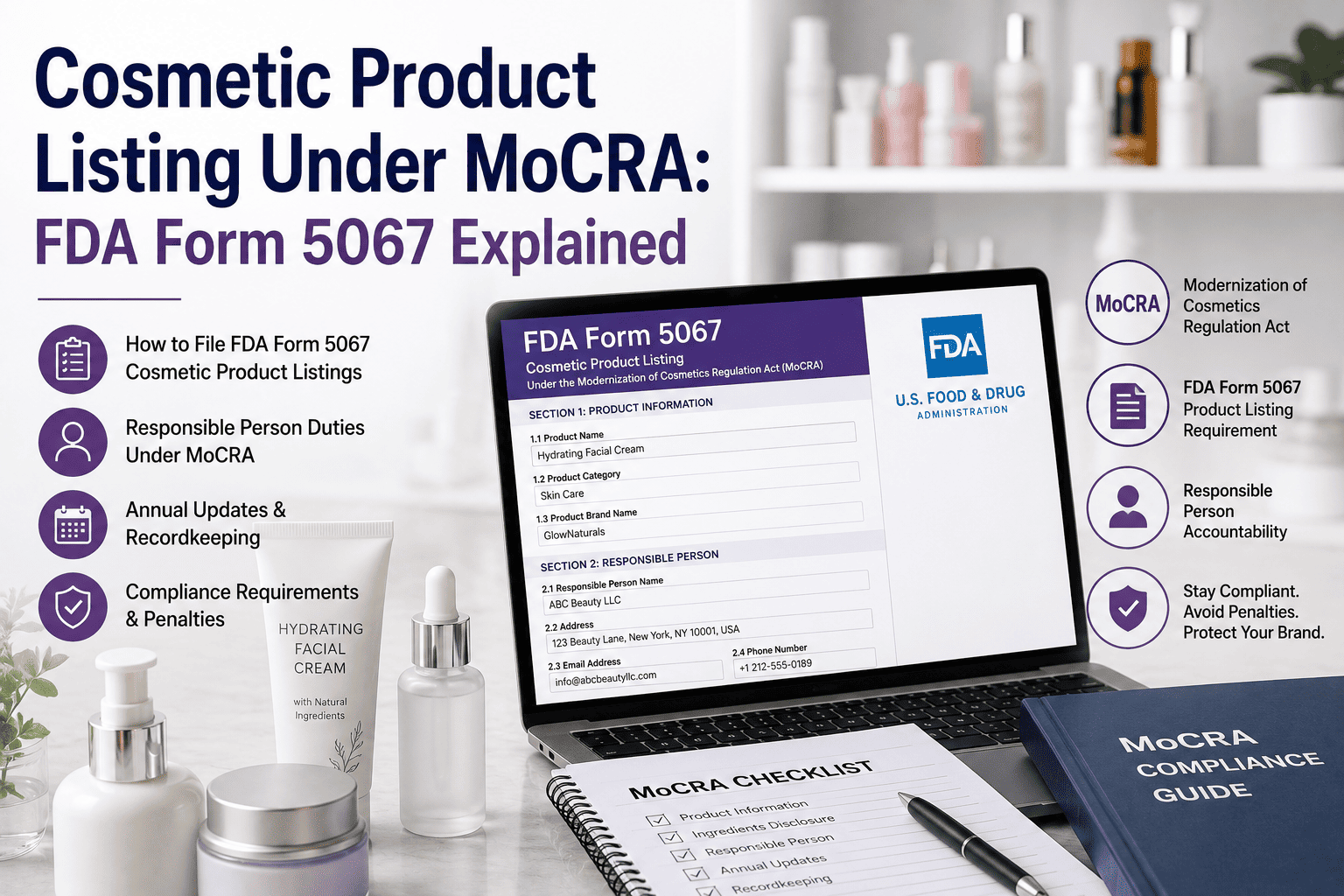
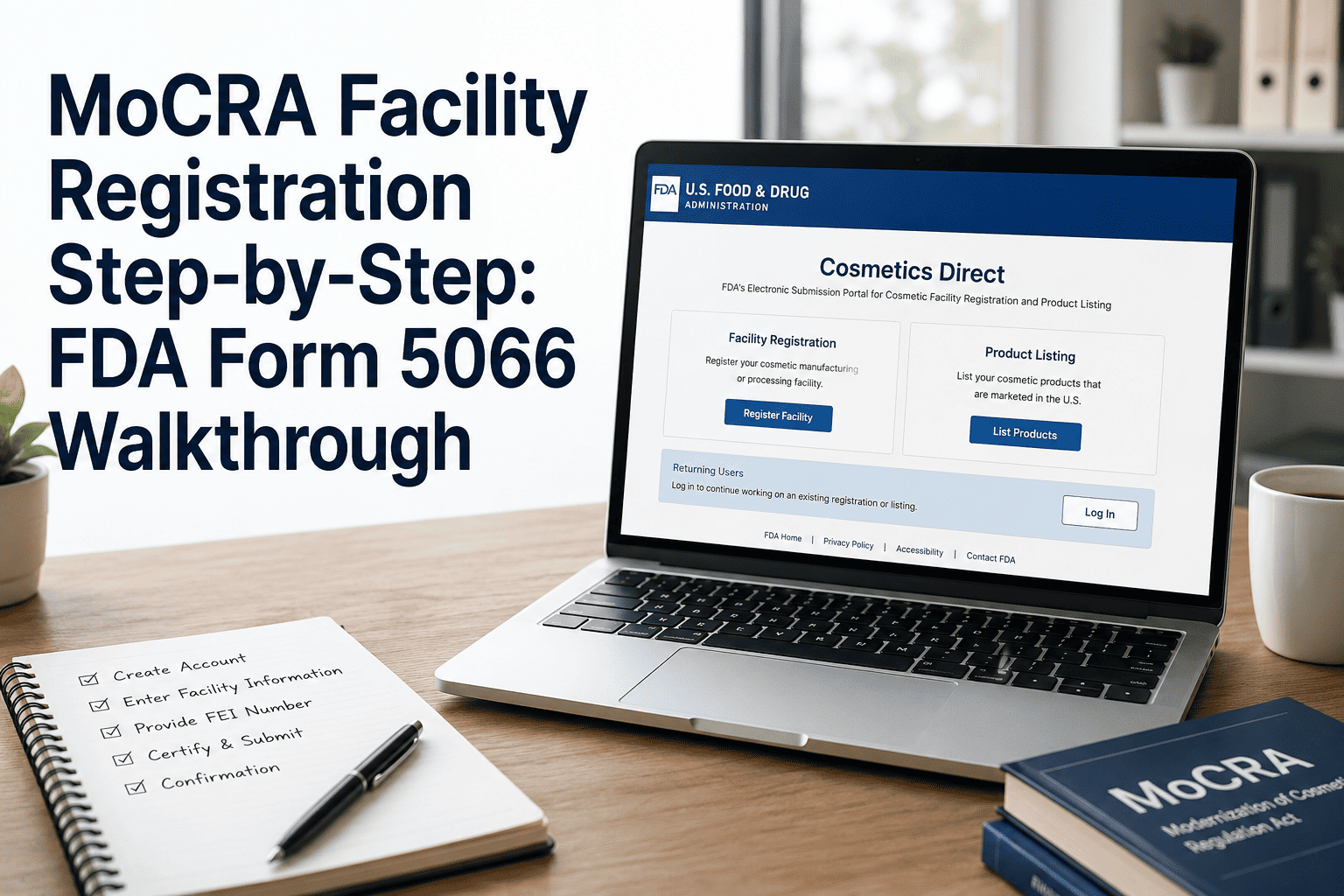
MoCRA creates a regulatory data chain from facility registration and FEI number through product listings to batch-level quality records — a chain that breaks when batch documentation is siloed in disconnected ERP or paper systems. Inspectors and import reviewers are now expecting traceability from your FEI to the individual batch record for products entering the U.S. market.
Every one of these gaps is systematically eliminated when cosmetic quality control runs on a unified platform — Book a Demo to see how iFactory's Quality Management module closes each failure point across your entire product portfolio.
Cosmetic Quality Control — Frequently Asked Questions for 2026
What micro testing standards apply to cosmetic products under MoCRA?
MoCRA does not prescribe a single micro testing standard by name, but FDA's safety substantiation requirement effectively mandates that manufacturers maintain Preservative Efficacy Testing data (aligned with ISO 11930 or USP 51) and Total Aerobic/Yeast-Mold count results demonstrating product safety. For products with a high water activity — rinse-off products, eye-area products, and products used on infants — the testing burden is higher and the acceptance criteria more stringent.
How does MoCRA define "safety substantiation" for cosmetic quality purposes?
Under MoCRA, the responsible party must ensure that adequate substantiation of safety exists for each cosmetic product, which FDA interprets to include ingredient safety data, finished product testing (micro, stability, compatibility), and documented risk assessments. While FDA has not mandated a specific dossier format, the expectation is that safety data be retrievable and defensible during inspection — making a structured digital safety file linked to each product's quality records the industry standard approach.
Does ISO 22716 GMP compliance satisfy MoCRA quality system requirements?
ISO 22716 alignment is the strongest available framework for demonstrating cosmetic GMP compliance under MoCRA, as FDA has recognized its principles as consistent with the quality system expectations MoCRA establishes. Facilities certified or aligned to ISO 22716 — particularly those with documented procedures for raw material testing, in-process controls, finished product release, and complaint handling — are in the strongest position during FDA inspections. A quality management platform built on ISO 22716 principles provides inspection-ready documentation at every audit layer. Book a Demo to explore iFactory's ISO 22716-aligned quality architecture.
What is the ROI timeline for digitizing cosmetic quality control workflows?
Manufacturers deploying integrated QC platforms typically recover platform investment within the first production year through three primary value drivers: reduction in batch release cycle time (often 30–50% faster), elimination of rework costs from early deviation detection, and avoidance of a single FDA enforcement action — which can cost six to seven figures in direct and indirect costs. Labor savings from automating COA review, batch record compilation, and regulatory documentation consistently deliver 40–55% reductions in QC administrative overhead. Book a Demo to model your facility's specific QC ROI with iFactory's team.
Launch Your Cosmetic Quality Control Transformation with iFactory Today
Cosmetics manufacturers across the U.S. and globally are using iFactory to automate raw material COA intake, in-process controls, micro testing workflows, and MoCRA-aligned finished product release — turning quality burden into batch velocity and audit confidence.