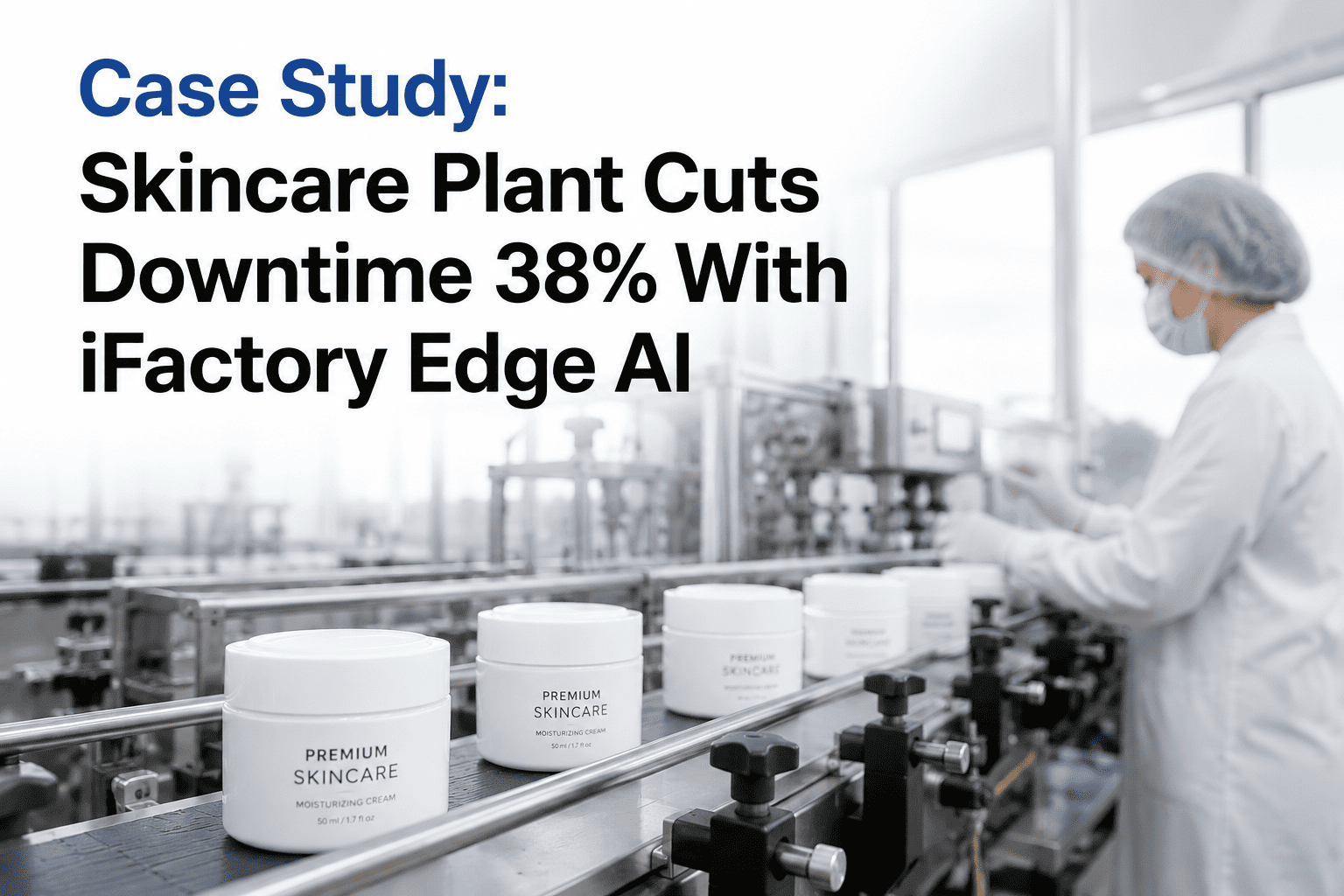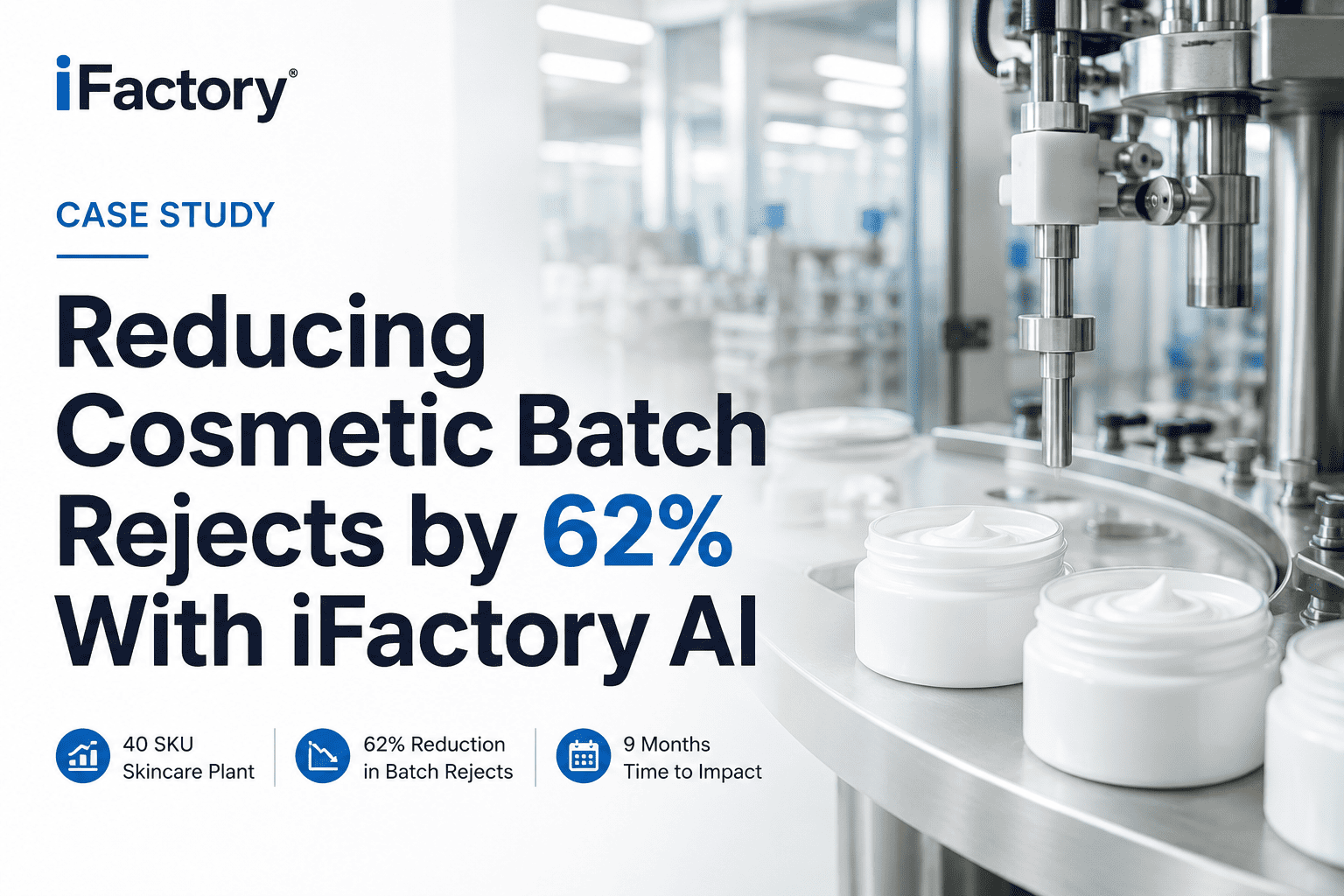
A mid-sized skincare manufacturer running 40 active SKUs was losing over $2.1 million annually to batch rejects — a figure their operations team had normalized as "industry standard." Nine months after deploying iFactory's AI Analytics Platform, that same facility cut its batch reject rate by 62%, reclaimed 18,000 lost production hours, and eliminated the root causes that had gone undetected for years. This is not a projected outcome. It is a documented operational transformation — and it begins with a decision every cosmetics plant manager faces today.
Is Your Facility Losing Revenue to Preventable Batch Rejects?
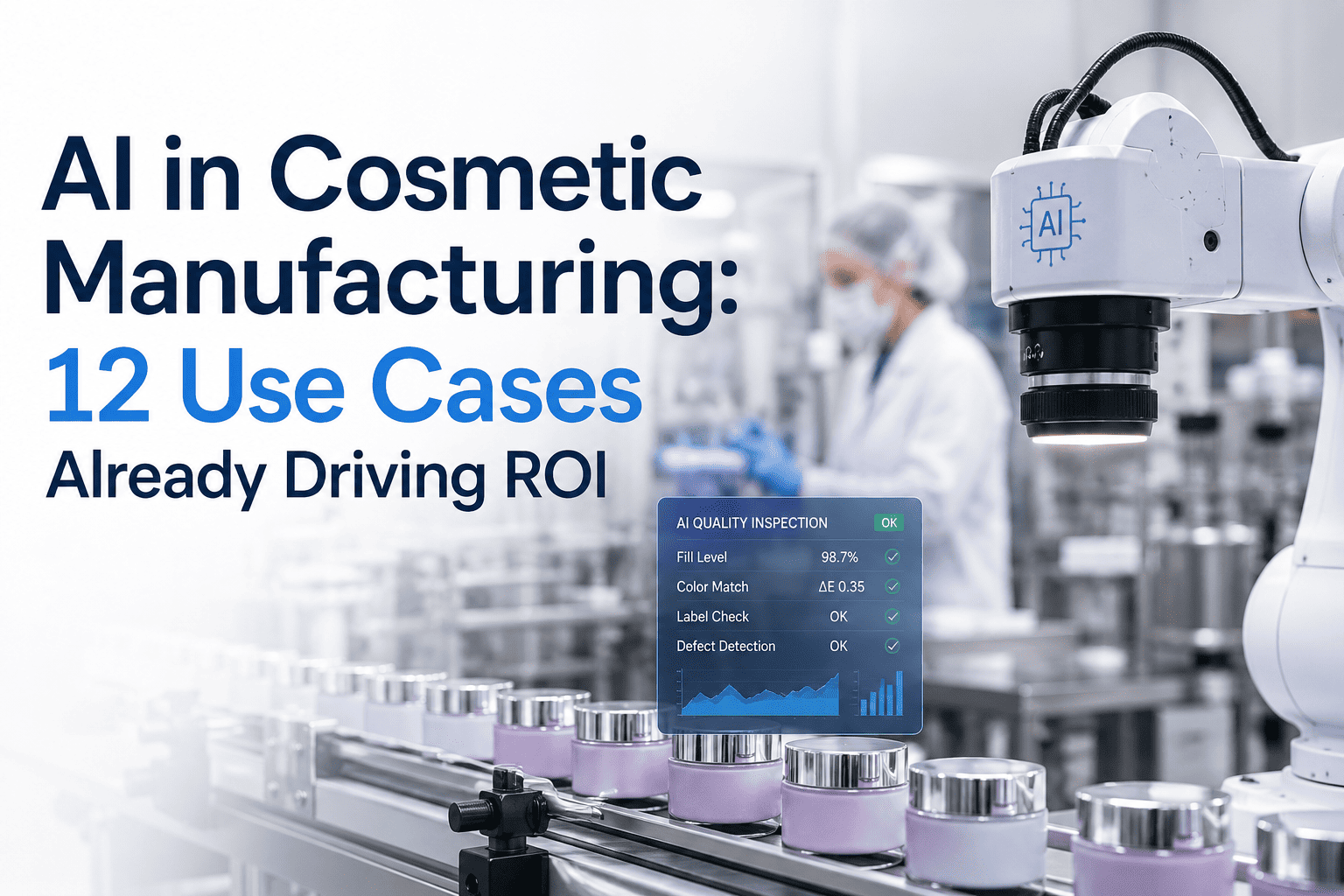
iFactory's AI Analytics Platform gives cosmetics manufacturers real-time in-process monitoring, parameter deviation alerts, and predictive batch scoring — before a single unit is rejected.
From $2.1M in Annual Reject Losses to a 62% Reduction in Nine Months
The skincare facility at the center of this case study had invested heavily in GMP compliance, staff training, and traditional SPC charting — yet batch reject rates stubbornly held above 14%. Root cause investigations were reactive, documentation was fragmented across paper logs and spreadsheets, and production supervisors were making judgment calls on in-process parameters without real-time data support. The business impact was quantifiable and compounding: rejected batches triggered raw material write-offs, rework labor costs, delayed order fulfillment, and escalating customer complaint rates that threatened two key retail partnerships.
Achieved within 9 months of AI Analytics Platform deployment across all 40 active SKUs.
Eliminated rework cycles and investigative downtime previously absorbed as fixed overhead.
Combined raw material write-offs, labor rework, and retail penalty costs eliminated.
Full platform deployment to documented financial return within a single production year.
The Operational Gap: Legacy Friction vs. AI-Optimized Excellence
The table below maps precisely where the facility's legacy quality process was generating structural loss — and how iFactory's AI Analytics Platform closed each gap systematically. Every row represents a documented operational difference observed during the 9-month deployment window.
| Quality Process Area | Legacy Friction (Old Way) | AI-Optimized Excellence (New Way) | Operational Impact |
|---|---|---|---|
| In-Process Monitoring | Manual spot-checks every 2–4 hours by line supervisors | Continuous AI sensor monitoring with real-time parameter dashboards | Deviations caught 6× faster |
| Batch Scoring | Pass/fail decision at end-of-batch QC only | Predictive batch quality score updated every 15 minutes during production | Early intervention reduced full rejects by 48% |
| Root Cause Analysis | Reactive investigations averaging 11 days post-rejection | AI-assisted RCA with pattern matching across historical batch data | RCA cycle reduced to under 48 hours |
| Parameter Alerts | No automated alerting; supervisor judgment only | Rule-based and ML-driven alerts routed to responsible operators instantly | Zero missed critical deviations in 9 months |
| Documentation | Paper batch records with 3–5 day digitization lag | Auto-generated electronic batch records, audit-ready in real time | Inspection prep time reduced by 70% |
| Supplier Correlation | No linkage between incoming raw material CoAs and batch outcomes | Automated CoA-to-batch correlation flagging high-risk material lots | 3 high-risk supplier patterns identified and corrected |
Three Dimensions of Measurable Impact Across the Production Floor
iFactory's AI Analytics Platform does not operate as a standalone quality tool — it integrates across workflow, overhead, and output dimensions simultaneously, creating compounding operational gains that manual systems structurally cannot replicate. The three-pillar impact framework below reflects the documented outcomes from the 9-month case study deployment.
Workflow Acceleration
- In-process parameter monitoring reduced deviation-to-alert lag from hours to seconds
- Predictive batch scoring enabled proactive adjustments before quality thresholds were breached
- Digital batch records eliminated 3–5 day paper-to-system transcription cycles
- AI-assisted root cause analysis compressed investigation timelines from 11 days to 48 hours
Overhead Reduction
- 18,000 annual rework and investigation hours eliminated from production calendar
- Raw material write-offs reduced by 58% through early-stage deviation interception
- Quality labor reallocated from reactive firefighting to proactive process improvement
- Retail penalty exposure eliminated after two consecutive quarters of zero non-conformances
Output and Growth
- First-pass yield rate improved from 86% to 97.3% across all 40 SKUs
- Freed production capacity used to onboard two new retail private-label programs
- Supplier qualification cycles accelerated using AI-generated material performance data
- Audit-ready documentation enabled faster response to two FDA inspection requests
How the 9-Month Deployment Unfolded: Phase-by-Phase Milestones
The facility's transformation followed a structured deployment sequence designed to deliver measurable wins at each phase while building toward full-platform integration. Each milestone below reflects a documented outcome, not a projected estimate.
Months 1–2: Baseline Audit and Platform Integration
iFactory's implementation team conducted a full production floor audit, mapping existing data sources, sensor infrastructure, and batch documentation workflows. The AI Analytics Platform was integrated with the facility's existing ERP and MES systems, establishing a unified data layer without disrupting active production schedules.
Months 3–4: Live Monitoring Activation and Operator Training
Real-time parameter monitoring went live across all 12 production lines, with AI-driven alert routing configured for each product category. Operators and supervisors completed iFactory's structured onboarding program, achieving full platform adoption within six weeks of go-live — a critical factor in the deployment's speed-to-value timeline.
Months 5–6: Predictive Model Calibration and First Measurable Results
The platform's machine learning models completed initial calibration against the facility's historical batch data, enabling predictive batch scoring with measurable accuracy. By month six, batch reject rates had declined 31% — ahead of the projected 9-month target — and the first three supplier correlation patterns had been identified and escalated to procurement.
Months 7–9: Full-Platform Optimization and ROI Documentation
Advanced analytics modules — including cross-SKU performance benchmarking and automated CAPA workflows — were activated. By month nine, the facility had achieved the documented 62% reject reduction, recovered 18,000 production hours, and submitted a formal ROI report to executive leadership demonstrating a 4.7× return on the platform investment within the first operational year.
The AI Analytics Platform Capabilities That Drove the 62% Result
The outcome was not the result of a single feature — it was the combined operation of six integrated platform capabilities, each closing a specific gap in the facility's legacy quality infrastructure. Decision-makers evaluating AI quality platforms should understand which capabilities are table stakes and which are differentiators at scale.
Real-Time Parameter Control
Continuous monitoring of viscosity, temperature, pH, and mixing parameters with configurable alert thresholds, routed instantly to the responsible operator's mobile dashboard.
Predictive Batch Scoring
ML models trained on historical batch data score every active batch every 15 minutes, flagging at-risk batches for intervention before quality limits are reached and full rejection becomes inevitable.
AI-Assisted Root Cause Analysis
Pattern-matching across batch records, equipment logs, raw material CoAs, and environmental data surfaces probable root causes within hours — replacing weeks of manual investigation.
Supplier Material Correlation
Automated linkage between incoming material CoAs and downstream batch performance identifies high-risk supplier lots before they enter production, protecting first-pass yield rates.
Electronic Batch Records
Auto-generated, 21 CFR Part 11-compliant batch records eliminate paper-based documentation lag and ensure every batch is inspection-ready from the moment production closes.
Automated CAPA Workflows
Deviation events automatically trigger structured CAPA workflows, assigning responsible owners, deadlines, and verification checkpoints — closing the loop that manual systems routinely leave open.
Replicate These Results Across Your Cosmetics Facility Portfolio
iFactory's AI Analytics Platform is purpose-built for cosmetics manufacturers managing complex SKU portfolios, multi-line production, and escalating quality standards. The same platform that delivered a 62% batch reject reduction in nine months is ready to be deployed at your facility — with implementation support from our cosmetics manufacturing specialists.
Cosmetic Batch Reject Reduction — Frequently Asked Questions
What types of cosmetic facilities benefit most from AI in-process monitoring?
Facilities with high SKU complexity, multi-line production environments, or persistent batch reject rates above 5% see the most immediate gains from AI in-process monitoring. The platform's predictive models deliver strongest performance when trained on at least 12 months of historical batch records — making established facilities ideal candidates for rapid ROI.
How long does deployment take before measurable quality improvements appear?
Most facilities see measurable deviation-alert improvements within 30–60 days of platform activation, as real-time monitoring replaces manual spot-check workflows immediately. Predictive batch scoring accuracy reaches optimal performance after 90–120 days of model calibration against live production data. The case study facility documented a 31% reject reduction by month six — ahead of the 9-month target.
Can the AI Analytics Platform integrate with our existing ERP and MES systems?
Yes — iFactory provides pre-built API connectors for leading ERP platforms including SAP, Oracle, and Microsoft Dynamics, as well as integration with major MES systems used in cosmetics manufacturing. The case study facility completed full ERP and MES integration within the first eight weeks of deployment without production schedule disruption. Book a Demo to review integration architecture for your specific stack.
What is the estimated ROI for a cosmetics facility deploying the AI Analytics Platform?
ROI varies by facility size, current reject rate, and SKU volume — but the case study facility documented a 4.7× return in the first operational year, driven by raw material write-off elimination, rework labor recovery, and retail penalty avoidance. Facilities with annual reject-related losses above $500,000 typically reach ROI-positive status within the first compliance cycle. Book a Demo to model your facility's specific ROI projection with iFactory's team.
Does the platform support GMP compliance and FDA inspection readiness?
iFactory's AI Analytics Platform is built on a GMP-compliant infrastructure aligned with ISO 22716 and 21 CFR Part 11 standards, with electronic batch records, audit-trail logging, and role-based access controls built into every workflow. The case study facility used the platform's auto-generated documentation to respond to two FDA inspection requests within the deployment window — with zero findings related to batch record integrity.
Launch Your AI Quality Pilot With iFactory Today
Cosmetics manufacturers across the U.S. and globally are using iFactory's AI Analytics Platform to eliminate batch rejects, recover production hours, and build the inspection-ready quality infrastructure their retail partners demand.