The Modernization of Cosmetics Regulation Act (MoCRA) has fundamentally reshaped what it means to operate a compliant cosmetics manufacturing facility in the United States — and with 2026 deadlines now active, non-compliance is no longer a theoretical risk but an operational emergency threatening market access, brand equity, and revenue continuity.
Is Your Cosmetics Facility MoCRA-Ready in 2026?
iFactory's Quality Management platform automates facility registration, product listing, adverse event reporting, and GMP audit trails — so your compliance program scales with your production line.
The Strategic Role of MoCRA Compliance in Cosmetics Manufacturing 2026
MoCRA, signed into law in December 2022, represents the most significant overhaul of U.S. cosmetics regulation in over 80 years — placing binding obligations on every manufacturer, packer, and distributor that sells cosmetics to American consumers. For mid-to-large cosmetics brands, the compliance burden spans facility registration, product listing with the FDA, mandatory safety substantiation, serious adverse event reporting (SAER) within 15 business days, and documented GMP programs. Failing to meet these requirements exposes your facility to FDA warning letters, mandatory recalls, and import alerts that can halt shipments overnight. Manufacturers who integrate compliance workflows into their digital quality management infrastructure — like the iFactory platform — gain a structural advantage: audit-readiness becomes a byproduct of daily operations, not a fire drill.
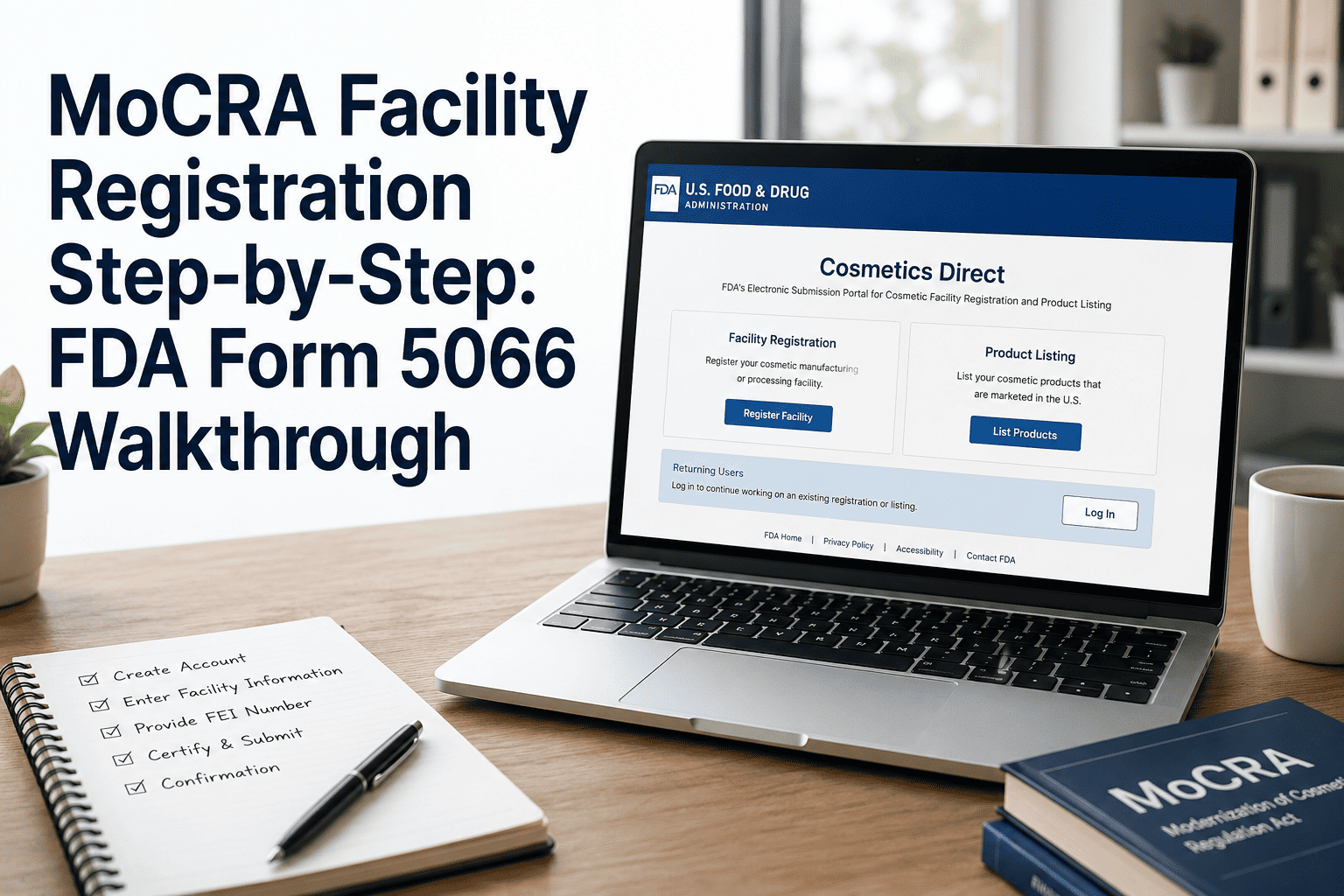
Facility Registration
Every domestic and foreign establishment that manufactures or processes cosmetics for U.S. commerce must register with the FDA biennially. Failure to register — or to update registration after changes — constitutes a prohibited act under MoCRA.
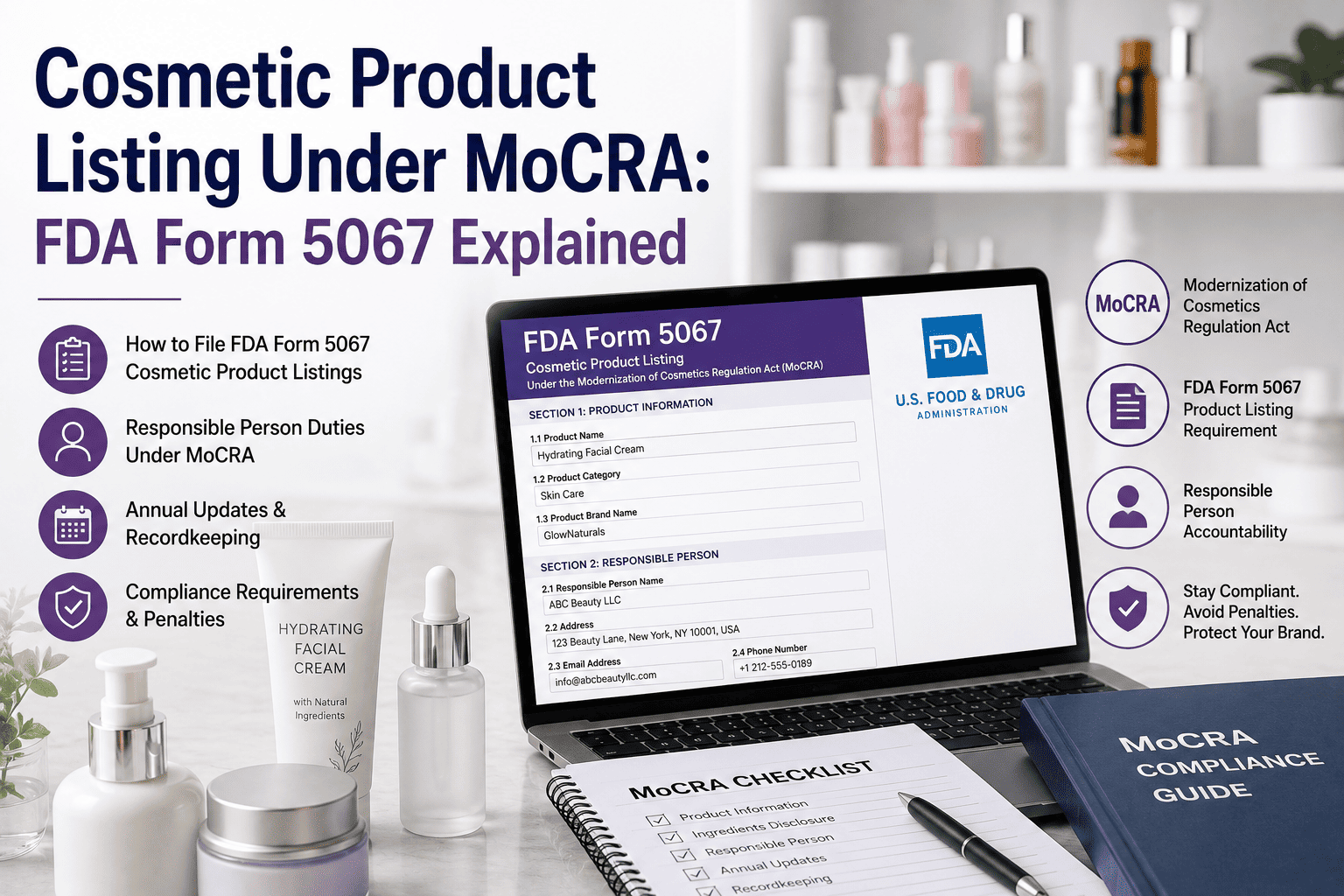
Product Listing & Labeling
Responsible persons must submit a product listing for each cosmetic marketed in the U.S., including ingredient declarations and the applicable product category. Listings must be updated annually or upon substantive reformulation.
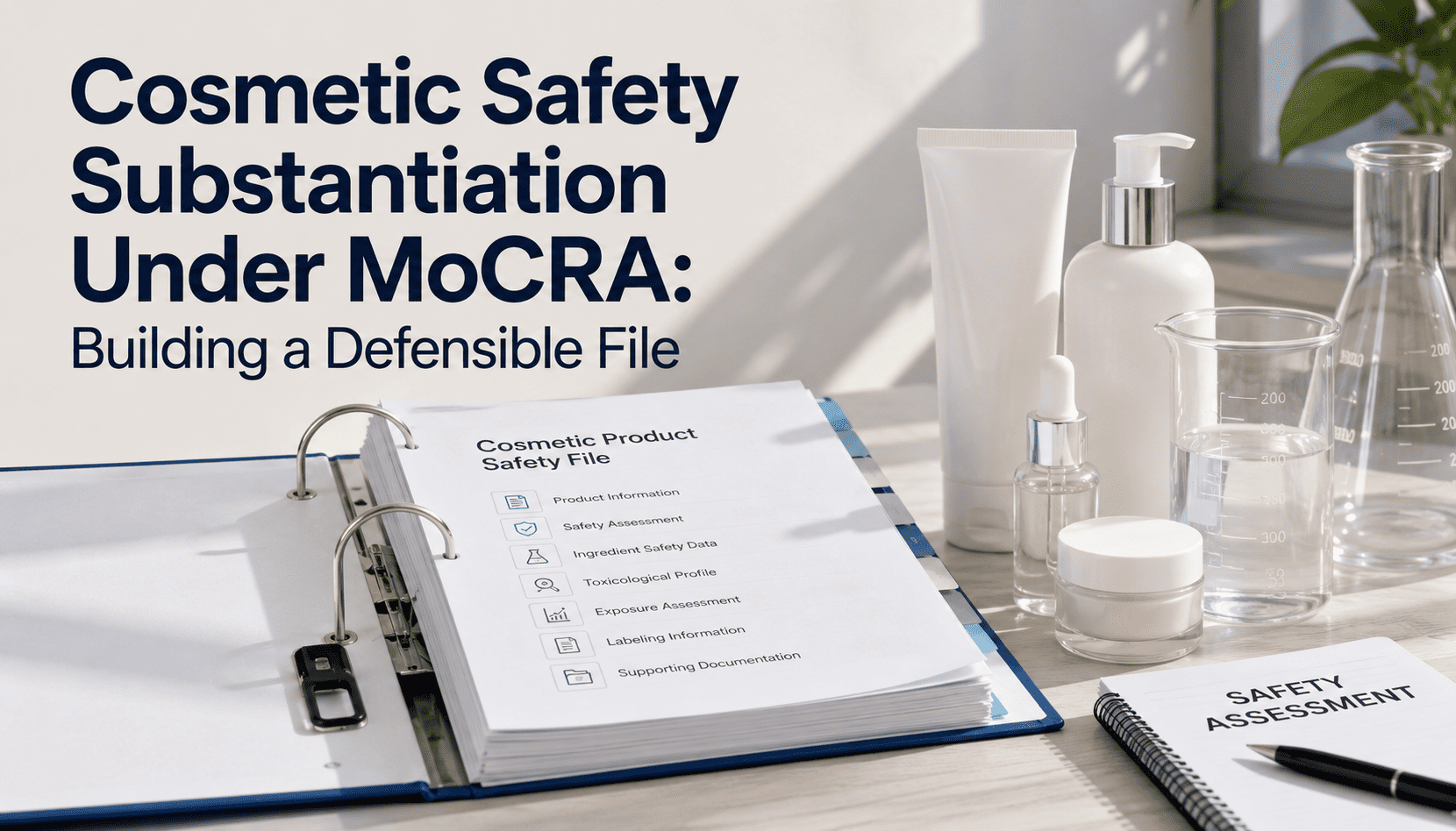
Safety Substantiation
MoCRA mandates that responsible persons maintain adequate substantiation of safety for every product — a documented evidence base that ingredients and formulations are safe under intended conditions of use.
Adverse Event Reporting
Serious adverse events linked to your cosmetics must be reported to the FDA within 15 business days of receipt. Records must be retained for six years, creating a continuous documentation obligation across every SKU.
Building a Robust MoCRA Compliance Infrastructure for Cosmetics Operations
Meeting MoCRA obligations at scale demands more than spreadsheets and manual workflows — it requires a unified data architecture that connects formulation records, batch manufacturing documentation, supplier qualification, and post-market surveillance into a single, audit-ready system. Cosmetics manufacturers operating multiple SKUs or facilities face exponential complexity in managing concurrent product listings, biennial registration renewals, and event-driven SAER workflows without a dedicated platform. Book a Demo to see how iFactory consolidates every MoCRA obligation into one compliance dashboard. The table below maps each critical platform component to its regulatory function and measurable operational impact.
| Platform Component | Primary Role | AI Integration Value | Operational Impact | Deployment Priority |
|---|---|---|---|---|
| Registration & Listing Manager | FDA facility registration and product listing submission | Automated deadline alerts and biennial renewal workflows | Zero missed registration windows; full FDA portal compliance | High |
| Adverse Event Reporting Engine | SAER intake, classification, and 15-day submission tracking | AI-assisted severity triage and case narrative generation | 100% on-time SAER submissions; six-year record retention | High |
| Safety Substantiation Vault | Centralized ingredient and formulation safety dossiers | Predictive gap analysis against FDA safety standards | Audit-ready safety files for every marketed SKU | High |
| GMP Documentation Suite | Batch records, SOPs, deviation management, CAPA | Real-time quality signal detection across production batches | Reduced audit preparation time by up to 60% | Medium |
| Supplier & Ingredient Traceability | Ingredient provenance, CoA management, supplier qualification | Automated certificate expiry and supplier risk scoring | Full supply chain transparency for FDA inspection readiness | Medium |
| ERP & MES Integration Layer | Bi-directional data sync with production and finance systems | Unified compliance KPIs surfaced in executive dashboards | Eliminated data silos; single source of compliance truth | Lower |
5-Step Roadmap to Full MoCRA Compliance for Cosmetics Manufacturers
Achieving sustainable MoCRA compliance is not a one-time project — it is an ongoing operational capability that must be designed into your manufacturing system from the ground up. Cosmetics brands that treat compliance as a continuous process rather than a periodic audit exercise dramatically reduce their regulatory risk exposure and respond faster when the FDA requests records or initiates inspections. Book a Demo to map this roadmap against your current compliance gaps. The following five-step framework provides a structured path from initial assessment to full program maturity.
MoCRA Gap Assessment & Obligation Mapping
Conduct a full inventory of all facilities, brands, and SKUs subject to MoCRA obligations, mapping each against registration status, listing completeness, and safety substantiation gaps. This baseline assessment defines your compliance deficit and prioritizes remediation actions by regulatory risk.
Facility Registration & Biennial Renewal Setup
Register all qualifying establishments with the FDA via the Voluntary Cosmetic Registration Program (VCRP) successor portal, and implement automated renewal workflows to ensure no facility falls out of registered status. Document all registered facilities with their production categories and responsible person designations.
Product Listing Submission & Ongoing Maintenance
Submit complete product listings for every cosmetic in your portfolio, including full ingredient declarations (INCI format), cosmetic category codes, and responsible person contact information. Establish a change-control process that triggers automatic listing updates upon reformulation, labeling revision, or market withdrawal.
Adverse Event Surveillance & 15-Day SAER Workflow
Deploy a structured post-market surveillance system that captures consumer complaints, healthcare provider reports, and distributor feedback, classifying each against MoCRA's serious adverse event definition. Automate the 15-business-day submission clock and six-year record retention requirement to eliminate human error from your SAER process.
GMP Program Documentation & Continuous Audit Readiness
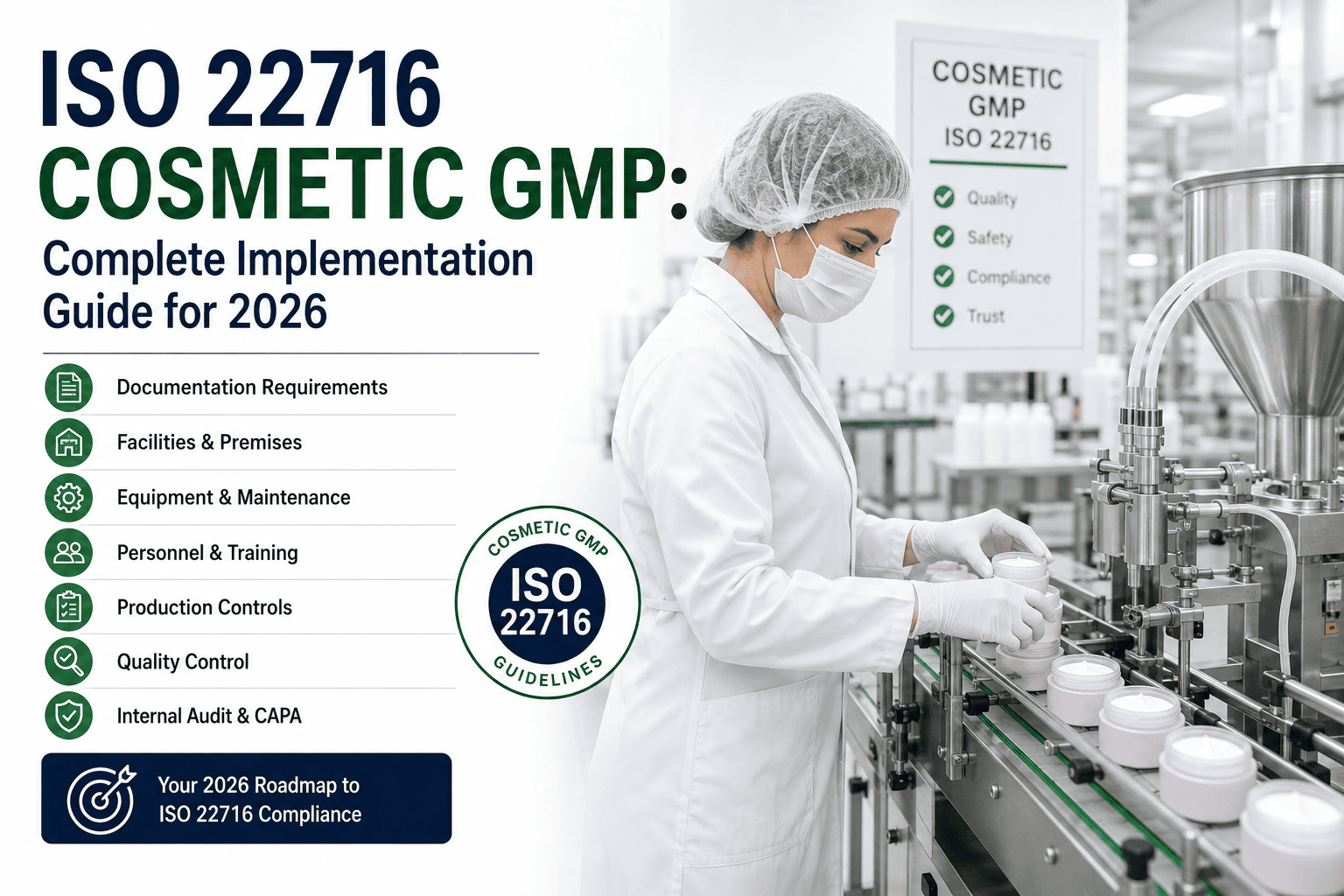
Implement a documented GMP program aligned with forthcoming FDA cosmetic GMP regulations, covering personnel, facilities, equipment, raw materials, production, laboratory controls, and distribution. Maintain living batch records and deviation logs that are immediately producible upon FDA inspection request.
Top MoCRA Compliance Challenges Facing Cosmetics Manufacturers in 2026
Despite clear regulatory timelines, the majority of cosmetics manufacturers entering 2026 carry material compliance gaps — not from negligence, but from the sheer operational complexity of retrofitting MoCRA obligations onto legacy quality management systems designed for a pre-MoCRA regulatory environment. The breadth of the law — covering registration, listing, safety, GMP, and pharmacovigilance simultaneously — creates multi-dimensional risk that no single department can manage in isolation. Brands operating high SKU counts across multiple contract manufacturers face compounding challenges in maintaining accurate, synchronized compliance records at every level of the supply chain.
Many manufacturers have submitted partial product listings or failed to update listings following reformulations, creating discrepancies between FDA records and current marketed products. These gaps directly expose the responsible person to prohibited act violations under MoCRA Section 612.
Safety substantiation obligations require more than a toxicologist's sign-off — they require a documented evidence file per product that can be produced upon FDA request. Most legacy QMS systems lack a structured safety dossier module tied to specific product formulation records.
Reliance on email inboxes and paper-based complaint logs to capture potential serious adverse events creates timing risk around the 15-business-day reporting deadline. A single missed or misclassified event can trigger an FDA enforcement inquiry.
MoCRA's GMP expectations extend to raw material qualification, yet most cosmetics manufacturers maintain supplier certificates of analysis in disconnected file systems without automated expiry tracking. Expired CoAs represent a critical GMP deficiency during FDA inspection.
Facility registrations lapse silently when renewal workflows are not automated — a risk that is amplified for brands managing contract manufacturing partners across multiple states or countries. A lapsed registration places every shipment from that facility in potential violation.
Forthcoming FDA cosmetics GMP regulations will require manufacturers to demonstrate controlled, documented production processes through complete batch manufacturing records. Many facilities currently lack the digital infrastructure to generate GMP-compliant records at the batch level.
Addressing these gaps systematically requires a purpose-built compliance platform — Book a Demo with iFactory today to receive a personalized MoCRA readiness assessment for your facility.
AI Governance & MoCRA Compliance Alignment for Cosmetics Production Systems
As AI-powered quality management tools become embedded in cosmetics manufacturing operations, regulatory bodies including the FDA are developing expectations around the validation, traceability, and transparency of algorithm-driven compliance decisions — particularly in contexts like adverse event triage, safety substantiation gap analysis, and automated GMP deviation detection. MoCRA's documentation requirements create a natural alignment between good AI governance and regulatory readiness: the same audit trails that satisfy an FDA inspector also satisfy the traceability requirements of a responsible AI deployment framework. iFactory's platform is architected with validation-first design principles, ensuring that every AI-assisted compliance action is logged with the originating data source, the model version, and the human reviewer who authorized the final determination. Book a Demo to review our validation documentation and understand how our AI governance framework maps directly to your MoCRA obligations under ISO 22716 and FDA 21 CFR Part 11 electronic records standards.
Launch Your MoCRA Compliance Program on iFactory's Quality Management Platform
Purpose-built for cosmetics manufacturers — covering registration, listing, SAER, safety substantiation, and GMP documentation in one unified system.
Scaling MoCRA Compliance Across Multi-Brand and Multi-Facility Cosmetics Portfolios
For enterprise cosmetics groups managing multiple brands, contract manufacturers, and international distribution networks, MoCRA compliance cannot be managed as a facility-by-facility initiative — it requires a centralized compliance architecture that provides real-time visibility across the entire portfolio while delegating execution to site-level quality teams. Scaling successfully means establishing a shared compliance data model where product listings, safety dossiers, and registration records are maintained in a master repository and pushed to facility-level workflows — preventing the fragmentation that causes version-control failures and regulatory exposure during multi-site FDA inspections. iFactory's multi-tenant architecture enables enterprise cosmetics groups to manage group-level MoCRA obligations with facility-specific access controls, meaning your corporate QA team sees the full portfolio view while site managers work within their own compliance queue. Book a Demo to explore our enterprise deployment model and understand how global cosmetics brands are using iFactory to maintain centralized MoCRA compliance across distributed manufacturing networks.
MoCRA Compliance for Cosmetics Manufacturers — Frequently Asked Questions
Who is the "responsible person" under MoCRA, and what are their obligations?
Under MoCRA, the responsible person is the manufacturer, packer, or distributor whose name appears on the cosmetic product label — typically the brand owner for private-label or white-label arrangements. The responsible person bears primary accountability for facility registration, product listing submission, safety substantiation maintenance, serious adverse event reporting, and GMP program implementation. Where a contract manufacturer is the label owner by agreement, the contractual designation of responsible person must be clearly documented and reflected in all FDA submissions.
What constitutes a "serious adverse event" requiring a 15-day SAER submission?
MoCRA defines a serious adverse event as one that results in death, a life-threatening experience, inpatient hospitalization, a persistent or significant disability or incapacity, a congenital anomaly or birth defect, or requires medical or surgical intervention to prevent such outcomes when associated with use of a cosmetic product. The 15-business-day clock begins upon the responsible person's receipt of information that reasonably suggests a serious adverse event has occurred — making intake triage speed and documentation accuracy critical operational priorities.
How does iFactory's platform automate product listing updates when formulations change?
iFactory's change-control module triggers a product listing review workflow automatically when a formulation record is revised in the system — flagging the affected SKU for responsible person review and generating a draft FDA listing update with the new ingredient declaration pre-populated from the formulation database. This eliminates the manual reconciliation step that creates listing-to-label discrepancies in high-SKU portfolios. Book a Demo to see the change-control workflow in action for your product catalog.
What is the estimated ROI for cosmetics manufacturers implementing a MoCRA compliance platform?
Cosmetics manufacturers using integrated compliance platforms report 40–60% reductions in audit preparation labor costs, elimination of regulatory counsel fees associated with reactive compliance remediation, and avoidance of FDA warning letter costs that typically exceed $250,000 in legal, operational, and reputational impact per incident. When factoring in the opportunity cost of an import alert — which can halt product shipments for months — the ROI of a proactive compliance infrastructure becomes measurable within the first regulatory cycle. Book a Demo to receive an ROI estimate modeled against your SKU count and facility footprint.
Does MoCRA apply to cosmetics manufactured outside the United States but sold domestically?
Yes — MoCRA applies to any cosmetic product marketed in U.S. interstate commerce, regardless of where it is manufactured. Foreign establishments that manufacture or process cosmetics for the U.S. market are subject to the same biennial facility registration requirements as domestic facilities, and the U.S.-based responsible person (importer or brand owner) retains full accountability for product listing, safety substantiation, and adverse event reporting obligations. Foreign manufacturers should also be aware that FDA now has mandatory recall authority under MoCRA, applicable globally when a cosmetic product presents a risk of serious adverse health consequences.
Can MoCRA compliance data be exported to our existing ERP and MES systems?
iFactory's integration layer supports bi-directional data exchange with leading ERP platforms including SAP, Oracle, and Microsoft Dynamics, as well as major MES systems used in cosmetics manufacturing — enabling compliance records, batch data, and quality metrics to flow between systems without manual re-entry. Product listing status, SAER case data, and registration renewal dates can be surfaced directly in your existing operational dashboards, giving quality and operations leadership a unified view of compliance posture alongside production KPIs. Book a Demo to review our API documentation and connector library for your specific ERP environment.
Launch Your MoCRA Compliance Pilot with iFactory Today
Cosmetics manufacturers across the U.S. and EU are using iFactory's Quality Management platform to meet every MoCRA deadline — without adding compliance headcount. Join them.