Singapore manufacturing and logistics operations occupy a uniquely compressed operating environment. With over 4,000 manufacturing establishments across pharmaceuticals, electronics, chemicals, and precision engineering — and Jurong Island, Tuas, and Woodlands industrial estates feeding into the world's second-busiest container port — every shipment that leaves a Singapore factory travels a short physical distance but passes through a dense chain of verification gates: quality inspection, quantity confirmation, packaging integrity checks, documentation validation, and authorised dispatch release. In an economy where 90% of manufacturing output is exported and 60% of global seaborne trade transits through Singapore Strait, a single unchecked packaging defect, a mis-counted line item, or a missing certificate can cascade into shipment rejection, return logistics cost, customer SLA penalties, and regulatory non-compliance. Traditional manual dispatch checks paper checklists, verbal handoffs, visual-only inspections cannot match the speed, precision, and traceability that Singapore's multinational manufacturers and logistics operators require. iFactory AI integrates IoT sensor telemetry, condition monitoring analytics, and AI-powered quality inspection into a single mobile-first dispatch approval platform purpose-built for Singapore's high-throughput, high-compliance delivery operations. Book a Demo to see iFactory's IoT-driven dispatch platform in your Singapore operation.
IoT Sensors and Condition Monitoring: The Foundation of Intelligent Dispatch
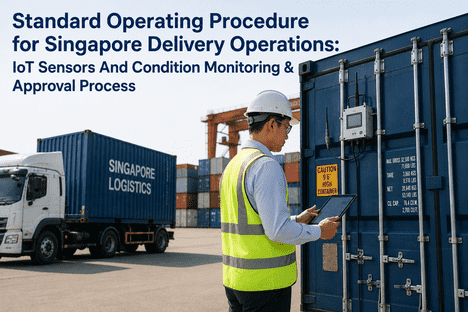
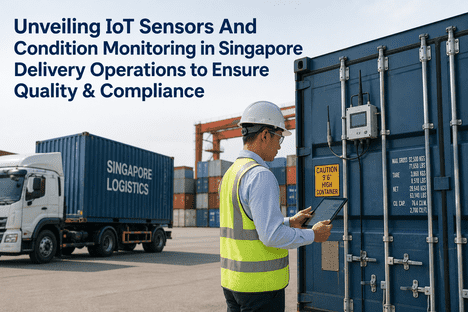
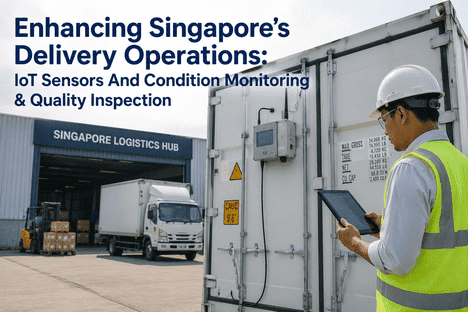
Singapore manufacturing operations generate continuous streams of sensor data — temperature and humidity from pharmaceutical cold chains, vibration and shock from precision equipment shipments, tilt and orientation from chemical container loading, and ambient condition logs from temperature-sensitive electronics. Traditionally, this data is collected for in-transit monitoring but disconnected from the dispatch approval process that gates whether a shipment leaves the dock. iFactory bridges that gap by integrating IoT sensor telemetry directly into the dispatch checklist workflow, so that condition monitoring data becomes an active gating criterion — not a post-shipment report.
When a cold-chain pharmaceutical shipment for Changi Airfreight Centre completes its staging hold, the iFactory platform reads the temperature logger data from every carton in the pallet. If any carton has experienced a temperature excursion above 8°C during staging, the quality inspection gate blocks clearance automatically. The operator sees the specific carton ID, the temperature graph, and the excursion duration — and the shipment cannot receive a clearance pass until the affected carton is quarantined and the stability impact is assessed. This real-time condition-based gating eliminates the scenario where temperature-sensitive goods are loaded, flown to Sydney or Tokyo, and rejected at destination because a staging cooler failed. Book a Demo to see IoT sensor condition monitoring integrated with dispatch gates.
The Four IoT-Enabled Dispatch Verification Gates
iFactory structures the dispatch approval process around four IoT-connected verification gates, each augmented by sensor telemetry and condition monitoring data. Every shipment must clear all four gates before a digital clearance pass is generated and the carrier handoff is authorised.
AI-Powered Visual Inspection & Condition Monitoring Integration
The quality inspection gate combines AI-powered visual inspection with IoT condition monitoring data. The operator captures carton-level images via the iFactory mobile app; the AI vision model detects surface defects, seal integrity issues, crush damage, and moisture exposure automatically. Simultaneously, IoT sensor logs — temperature, humidity, shock, tilt — from the staging area are read and evaluated against per-SKU quality specifications. Any sensor excursion or AI-detected defect blocks the gate and routes the affected item to quarantine with specific defect documentation.
IoT-Enabled Barcode & RFID Pallet Reconciliation
Manual counting is replaced by IoT-enabled barcode and RFID scanning that confirms every unit, every carton, and every pallet against the order line item. The system flags quantity mismatches in real time — over-shipments that inflight freight cost and create inventory discrepancies, and under-shipments that cause customer shortages. For pallet-level verification, RFID readers at the staging area and loading dock automatically reconcile pallet contents against the digital manifest without operator scan actions, creating an automatic quantity confirmation gate.
Sensor-Driven Packaging Condition & Load Security Validation
Packaging integrity verification is augmented by IoT sensor data from the staging and loading environment. AI camera inspection detects crushed corners, torn wrap, and unstable stack configurations on every pallet. Simultaneously, IoT tilt sensors and load cell data verify that pallet stack weight distribution and orientation meet carrier load stability guidelines. Temperature-sensitive packaging — coolers, gel packs, thermal blankets — is verified against temperature logger readouts before the shipment is authorised for loading.
Automated Documentation, Digital Sign-Off & Carrier API Handoff
The documentation gate auto-generates packing slips, tax invoices, certificates of origin, and regulatory compliance documents from order data and sensor logs. For Singapore-regulated exports — Health Sciences Authority controlled items, chemical declarations, food safety certificates — the platform validates document completeness against a per-customer compliance matrix. After all three preceding gates pass and documentation is validated, a digital clearance pass with a unique QR code is generated, and the full document packet is transmitted to the carrier's API before the driver arrives, eliminating dock-side paperwork delays.
Condition Monitoring in Singapore's Cold-Chain and Pharmaceutical Delivery Operations
Singapore is a strategic hub for pharmaceutical logistics — home to seven of the top ten global pharmaceutical companies by revenue, with facilities producing biologics, vaccines, and active pharmaceutical ingredients (APIs) that are shipped to 150+ countries via Changi Airport and Singapore port. Cold-chain integrity from factory dock to aircraft hold is non-negotiable: a 15-minute temperature excursion above 8°C during staging in Tuas can compromise an entire pallet of monoclonal antibodies valued at S$250,000–S$2,000,000.
iFactory's condition monitoring integration reads temperature logger data at every transfer point — from the packaging station, through cold-staging, to the loading dock. If a logger reading shows an excursion, the dispatch gate blocks clearance and alerts the QA team with the specific logger ID, temperature graph, and excursion duration. The affected product is quarantined with full sensor traceability before the shipment reaches the carrier — preventing the all-too-common scenario where a cold-chain failure is discovered only after the shipment arrives at a Sydney or London destination, where the cost of return, rework, and regulatory reporting exceeds the value of the goods.
How iFactory Connects IoT Sensor Data to Dispatch Approval
iFactory is the AI software intelligence layer — not a sensor hardware vendor. The platform integrates with your existing IoT sensor ecosystem: temperature/humidity data loggers (ELPRO, Testo, Sensitech), RFID readers (Impinj, Zebra), barcode scanners, weighbridge systems, dock door sensors, and carrier APIs already deployed in your Singapore facility. The Shift Logbook captures operator inspection findings, sensor readouts, packaging photos, and supervisor sign-offs alongside the automated IoT stream, creating a unified traceability record for every dispatched shipment.
IoT Data Ingestion From Sensors & Loggers
iFactory edge nodes ingest real-time telemetry from temperature data loggers, shock/vibration sensors, RFID readers, and barcode scanners across the staging and loading areas. No manual data entry required — sensor data flows directly into the dispatch checklist.
AI Condition Monitoring & Anomaly Detection
The iFactory AI engine compares live sensor readings against per-SKU and per-customer condition specifications. Temperature excursions, shock events, tilt deviations, and packaging condition defects are detected in real time and flagged with severity scores.
Mobile Inspection & Gate Status Verification
Operator uses the iFactory mobile app to complete the inspection gates. Sensor data, AI inspection results, and scan verifications are combined into a single pass/fail status per gate. Any gate failure blocks clearance pass generation and alerts the supervisor.
Digital Clearance Pass & Carrier Integration
When all four gates pass, iFactory auto-generates a digital clearance pass with embedded sensor data summary, inspection photos, and compliance documents — transmitted to the carrier's system before driver arrival for zero-wait dock handoff.
IoT-Driven Dispatch: Before and After
| Metric | Traditional Dispatch | iFactory IoT-Connected Dispatch | Improvement |
|---|---|---|---|
| Quality inspection cycle — per pallet | 8–12 min | 2–3 min | 75% faster |
| Cold-chain temperature verification | Manual logger download after loading | Real-time IoT ingestion before clearance | Excursions caught pre-dispatch |
| Quantity discrepancy rate | 2.8% | 0.2% | 93% reduction |
| Documentation error rate | 5.2% | 0.4% | 92% reduction |
| Carrier handoff time at dock | 25 min | 7 min | 72% faster |
| Proof-of-dispatch digital completeness | 58% | 99.8% | Full IoT sensor + inspection record |
"Before iFactory, we relied on operators to manually download temperature logger data at the end of each shift and reconcile it with the dispatch log on paper. If a logger showed a staging excursion, we often discovered it 6–12 hours later — after the shipment was already on the tarmac at Changi. The iFactory IoT integration changed that completely. Now, the temperature data from every logger is read automatically the moment the pallet reaches the dispatch staging area. If any logger shows an excursion, the dispatch gate blocks clearance before the carrier arrives. In the first quarter, we prevented four cold-chain incidents that would have resulted in shipment rejection at destination — each valued at over S$300,000."
Conclusion: IoT-Connected Dispatch for Singapore's Manufacturing Future
Singapore manufacturing operates at the intersection of global supply chains, regulatory rigour, and customer expectations for speed and accuracy. The manufacturers that win in this environment are those that digitise not just their production lines but their dispatch gates — connecting IoT sensor data, AI-driven quality inspection, and automated approval workflows into a single, seamless clearance process that eliminates manual handoffs and paper-based verification.
iFactory's IoT-connected dispatch platform provides that capability: real-time sensor ingestion, AI-powered condition monitoring, mobile inspection at every gate, digital clearance pass generation, and carrier API integration — all within a single platform that integrates with your existing WMS, ERP, and IoT ecosystem. Book a Demo to see how Singapore manufacturers are achieving zero-defect shipping with iFactory's IoT-driven dispatch approval platform.
Frequently Asked Questions
Does iFactory integrate with existing IoT temperature loggers and sensors already deployed in my Singapore facility?
Yes. iFactory integrates with ELPRO, Testo, Sensitech, and other major temperature/humidity data loggers via API or Bluetooth gateway. The platform also connects to RFID readers (Impinj, Zebra), barcode scanners, weighbridge systems, and dock door sensors. Sensor data flows directly into the dispatch checklist without manual download or data entry.
How does the AI-powered quality inspection work for packaging condition and product defects?
The operator captures an image of each carton or pallet using the iFactory mobile app camera. The AI vision model analyses the image for surface defects, seal integrity, crush damage, moisture exposure, and stack stability. The inspection result — pass or fail with annotated defect region — is recorded in the dispatch record alongside IoT sensor data, creating a complete digital quality record for every shipment.
Can the platform handle Singapore-specific regulatory documentation for HSA, NEA, and EnterpriseSG requirements?
Yes. iFactory's documentation module supports Singapore-specific regulatory compliance checklists including Health Sciences Authority (HSA) controlled item declarations, National Environment Agency (NEA) chemical reporting, and EnterpriseSingapore export documentation requirements. The platform validates document completeness against a per-customer and per-product compliance matrix before generating the digital clearance pass.
How long does it take to deploy iFactory's IoT-connected dispatch platform in a Singapore facility?
Standard deployments covering one factory or warehouse dispatch dock typically go live in 4–6 weeks. The deployment follows a phased approach: IoT sensor integration and WMS/ERP setup (1–2 weeks), mobile checklist configuration with per-SKU inspection and condition criteria (1–2 weeks), operator training and pilot on one dispatch line (1 week), and production go-live with all four gates enforced (1 week).