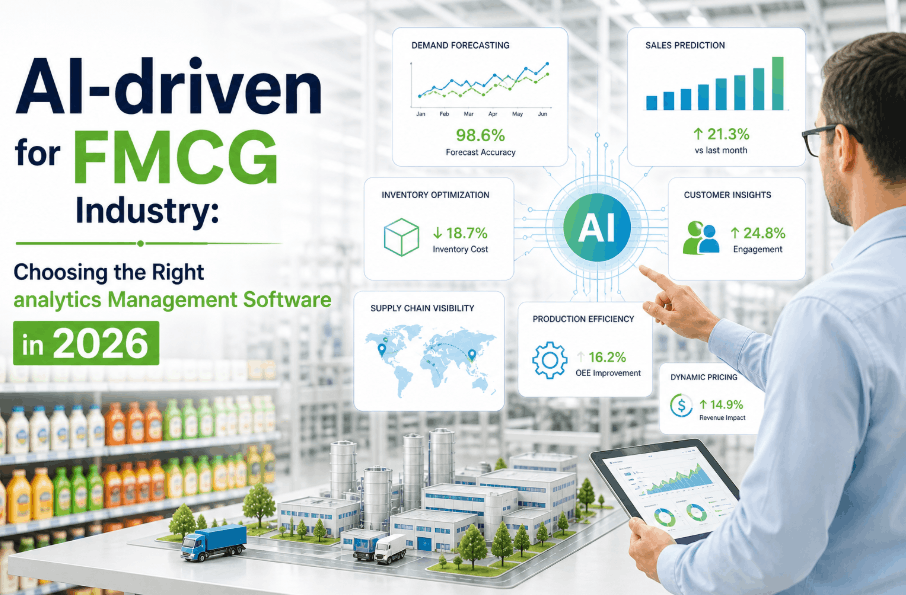
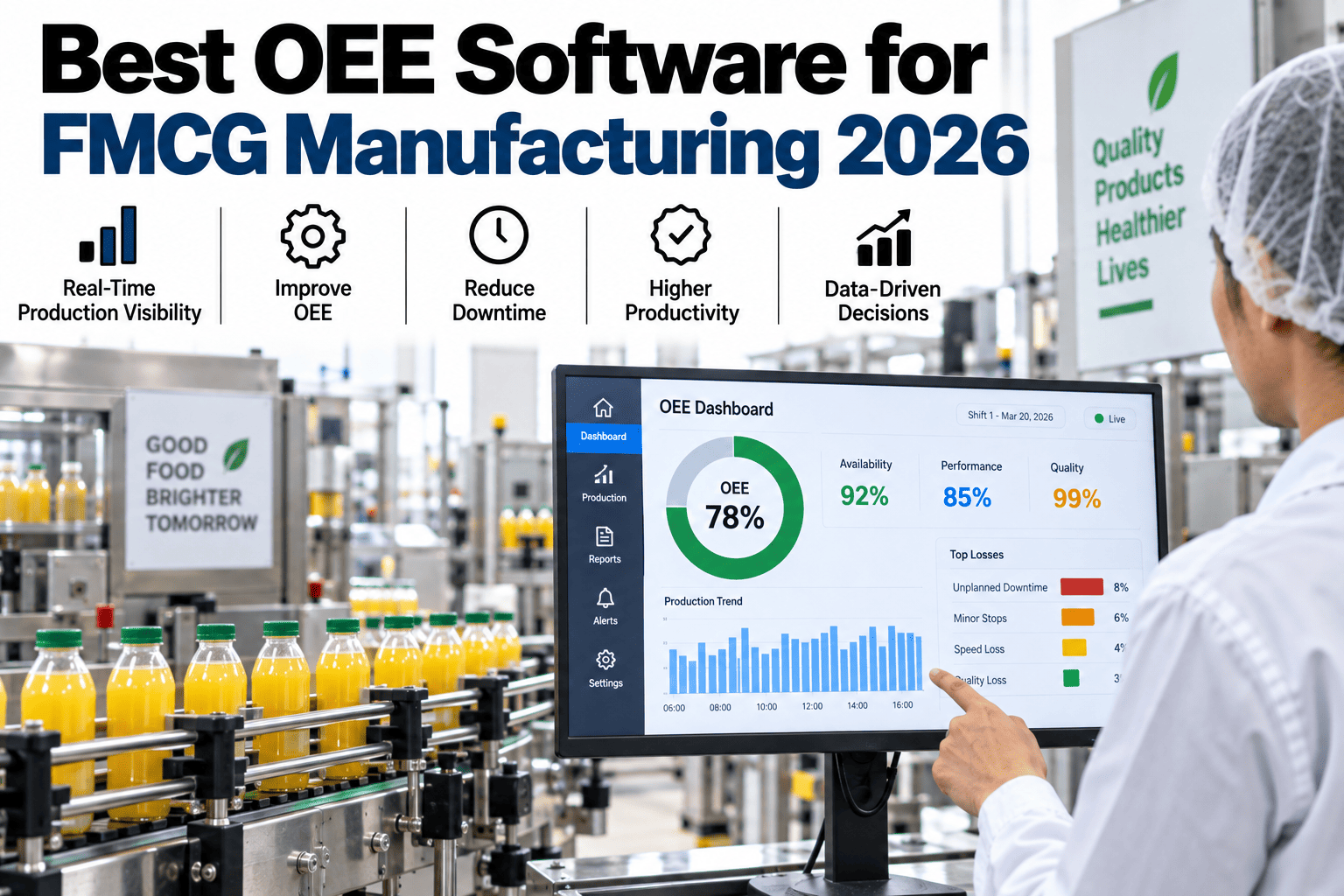
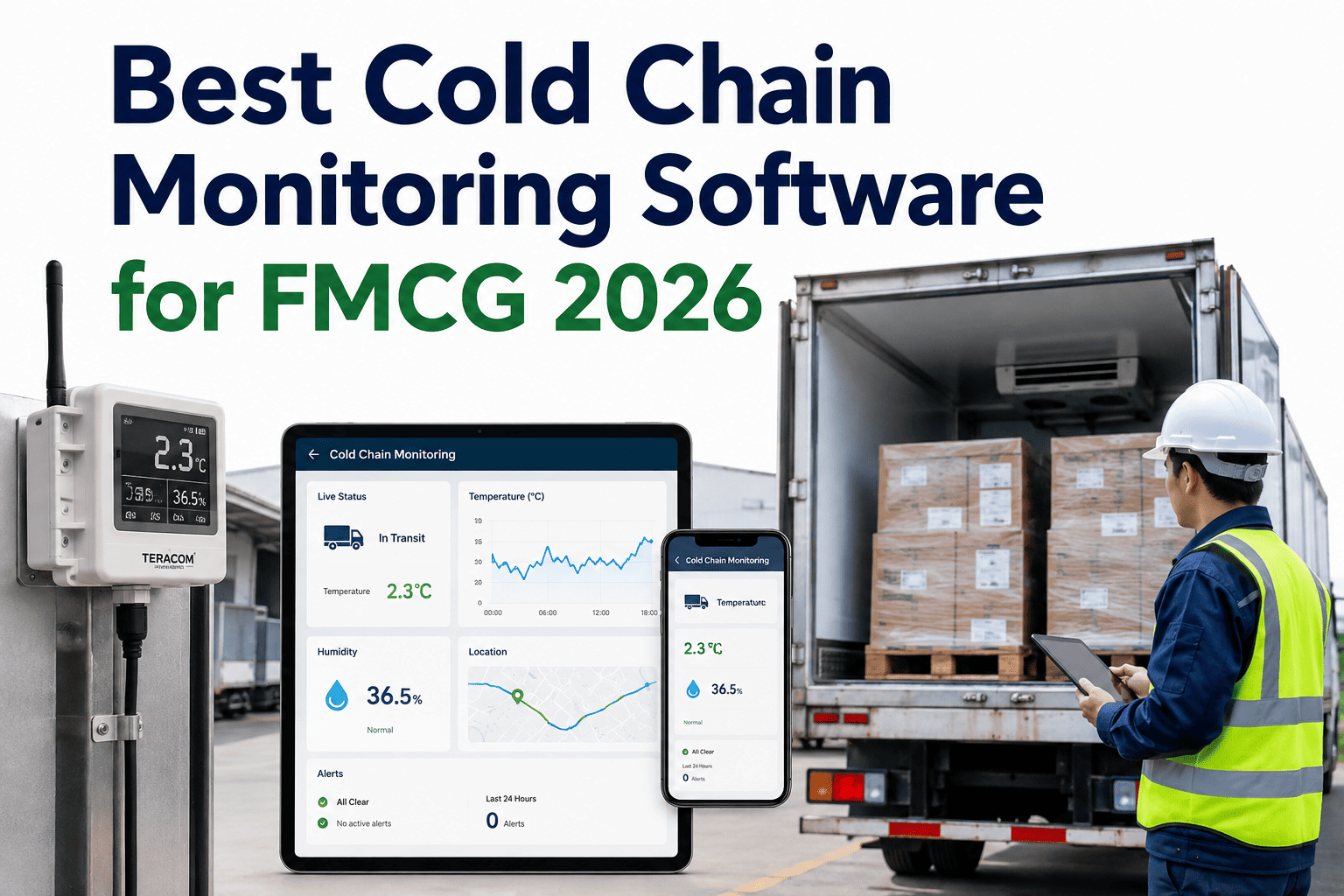
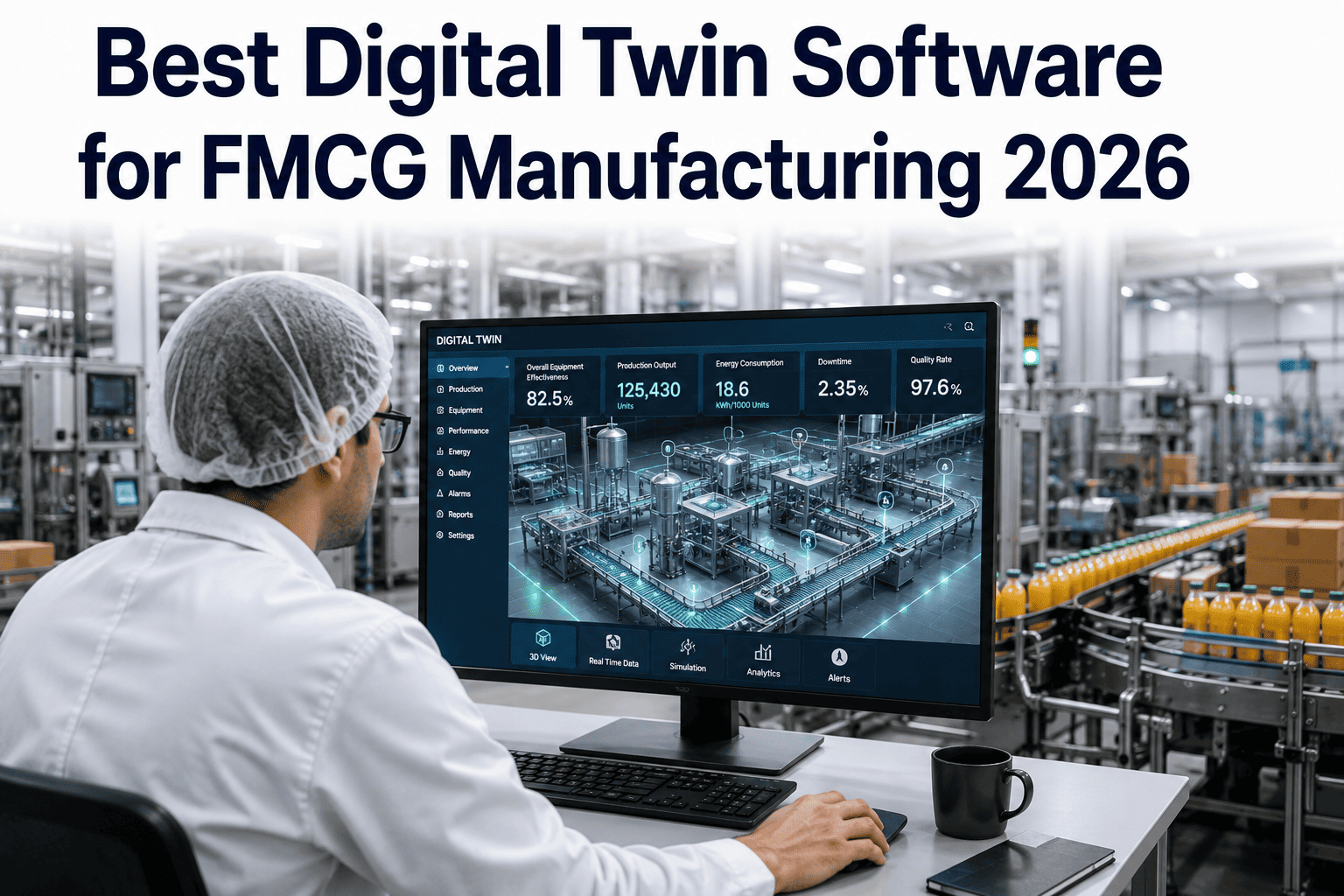
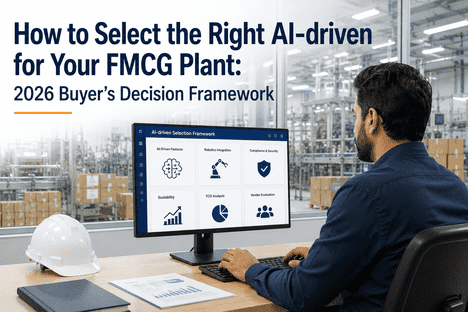
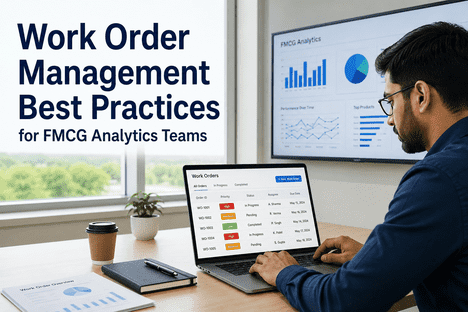
In 2026, AI-driven analytics management software has become the defining competitive advantage for FMCG manufacturers navigating volatile demand cycles, razor-thin margins, and escalating compliance requirements. From beverage processing to consumer packaged goods, the ability to deploy real-time production intelligence, AI copilot decision support, and predictive asset health monitoring is no longer an innovation initiative — it is a baseline operational requirement. This guide equips FMCG plant directors, operations leaders, and IT decision-makers with a structured framework to evaluate, compare, and select the right AI-driven platform for their production environment in 2026. To see how iFactory delivers measurable FMCG production outcomes, Book a Demo with our manufacturing intelligence team.
2026 BUYER'S GUIDE
AI-Driven Analytics Platform for FMCG Manufacturing
iFactory gives FMCG plant directors and IT leaders real-time production visibility, AI copilot decision support, robotic workflow integration, and compliance automation — purpose-engineered for food, beverage, and consumer goods manufacturing.
43%
of FMCG manufacturers report AI-driven analytics reduced unplanned downtime in 2025
$1.8T
Global FMCG market value demanding smarter AI-driven production management in 2026
29%
Average OEE improvement in FMCG plants deploying cloud AI-driven analytics platforms
8mo
Median payback period for AI-driven analytics investment in consumer goods manufacturing
What Makes AI-Driven Analytics Software Different for FMCG in 2026?
Understanding the Category Before You Shortlist Vendors
The FMCG sector operates under production conditions that generic industrial analytics platforms were not designed to handle. High-velocity SKU changeovers, temperature-sensitive processing, allergen cross-contamination risk, demand-driven scheduling volatility, and global regulatory frameworks create a data complexity that requires purpose-built AI models — not horizontal IoT dashboards with food industry configuration layers applied on top. A genuine AI-driven analytics platform for FMCG integrates machine learning-based predictive maintenance, AI copilot decision support, real-time quality deviation detection, robotic workflow integration, and mobile-first operator interfaces into a single operational intelligence framework. The market distinction matters critically: many platforms claim AI-driven FMCG capabilities in 2026 but deliver legacy rule-based alerting underneath a modern interface. Decision-makers who want to benchmark real AI capability against a live FMCG environment can Book a Demo and see iFactory's production intelligence stack in operation.
The 6 Critical Features FMCG Analytics Management Software Must Deliver
Non-Negotiable Capability Requirements for 2026 Platform Selection
Vendor demonstrations in the FMCG AI-driven space consistently lead with interface quality and report aesthetics — neither of which predicts production outcomes. The six features below represent the functional capabilities that separate analytics platforms delivering measurable FMCG performance gains from those delivering upgraded dashboards. Every vendor on your shortlist must be evaluated against each capability before a procurement decision is made.
01
AI Copilot Decision Support for Production Operators
A native AI copilot surfaces contextual recommendations directly in operator workflows — translating sensor anomalies, maintenance predictions, and quality deviations into prioritized actions. Require evidence of FMCG-specific decision models, not generic NLP chat interfaces layered onto industrial data. Platforms with genuine
AI copilot capabilities reduce operator decision latency by 30–45% in comparable deployments.
02
Robotic Workflow Integration and Automation Orchestration
AI-driven analytics for FMCG must integrate bidirectionally with robotic palletizing, automated filling lines, vision inspection systems, and collaborative robot fleets. Read-only robotic data connectivity is not integration — the platform must close the loop by triggering workflow adjustments based on AI model outputs. Robotic workflow integration is a key differentiator for FMCG facilities running lights-out production shifts.
03
Mobile-First AI-Driven Interface for Plant Floor Operators
FMCG production environments are not desktop environments. A mobile-first AI-driven platform delivers work orders, predictive alerts, and quality deviation notifications directly to handheld devices on the plant floor — reducing the time from alert generation to corrective action. Mobile AI-driven deployments in food plants consistently show 40–55% faster maintenance response compared to PC-only workflow systems.
04
Cloud AI-Driven Architecture With Edge Deployment Capability
Cloud AI-driven platforms for FMCG manufacturing must support hybrid deployment — running AI inference models at the edge when OT network segmentation or latency requirements demand it, while synchronizing data to cloud for cross-site analytics and model governance. Platforms that are cloud-only cannot serve air-gapped production environments that represent the majority of regulated FMCG facilities globally.
05
FMCG-Specific Predictive Maintenance Models
Generic predictive maintenance models trained on industrial equipment do not account for the duty cycles, washdown environments, and temperature extremes that define FMCG processing equipment. Demand documentation of model accuracy rates specifically benchmarked against food and beverage processing assets — fillers, cappers, homogenizers, pasteurizers, and packaging lines. FMCG facilities that have
deployed iFactory's predictive models report 14–60 day failure prediction windows on critical processing equipment.
06
Consumer Goods Compliance and Traceability Automation
FMCG compliance in 2026 spans FSMA 204 traceability, HACCP critical control point monitoring, BRC/SQF audit readiness, and retailer-mandated quality documentation. The platform must embed compliance workflows natively — not as a separately licensed add-on. Automated lot traceability that captures key data elements at every production stage eliminates the manual documentation burden that consumes 8–14% of quality team capacity in most FMCG facilities.
FMCG Analytics Software Comparison: 2026 Platform Landscape
How the Three Market Tiers Stack Up for Consumer Goods Manufacturing
The FMCG analytics management software market in 2026 has stratified into three distinct categories: purpose-built FMCG AI platforms, horizontal industrial IoT platforms adapted for consumer goods, and ERP-embedded analytics modules. Each category carries a fundamentally different capability profile and total cost of ownership. The comparison below maps the dimensions that matter most for FMCG operations leaders making platform decisions in 2026.
| Evaluation Dimension |
Purpose-Built FMCG AI Platform |
Horizontal Industrial IoT |
ERP Analytics Module |
| AI Copilot for Operator Decisions |
Native, FMCG-Trained |
Generic NLP Layer |
Not Available |
| Robotic Workflow Integration |
Bidirectional Native |
API-Only Read |
Not Supported |
| Mobile-First Plant Floor Interface |
Purpose-Built Mobile UX |
Responsive Web Only |
Desktop-Primary |
| FMCG Predictive Maintenance Accuracy |
Food Equipment Pre-Trained |
Generic Models |
Rule-Based Alerts |
| FSMA 204 / HACCP Compliance Automation |
Embedded Architecture |
Configuration Required |
Add-On Module |
| Cloud + Edge Hybrid Deployment |
Native Hybrid Support |
Cloud-Primary Only |
Cloud-Only SaaS |
| Time-to-First-Insight |
4–8 Weeks |
3–6 Months |
6–14 Months |
| Multi-Site FMCG Benchmarking |
Native Cross-Site Analytics |
Custom Development |
License-Dependent |
| AI-Driven ROI FMCG (3-Year TCO) |
Lowest (ROI-Adjusted) |
Medium-High |
Highest |
AI-Driven FMCG Platform Pricing: 2026 Benchmarks and TCO Guidance
Understanding Total Cost of Ownership Before Issuing an RFP
AI-driven analytics management software for FMCG in 2026 operates across three commercial models. Understanding which model aligns with your facility's risk tolerance, IT budget structure, and internal ROI accountability is as important as the headline license number. FMCG operations leaders ready to receive a transparent pricing assessment mapped to their facility size can Book a Demo with the iFactory commercial team today.
Single FMCG Site
$42K – $110K
Annual Platform License
AI copilot for operator work orders
Predictive maintenance core module
OEE analytics and loss tracking
Basic HACCP compliance documentation
Up to 120 connected asset endpoints
Multi-Site Enterprise FMCG
$160K – $400K
Annual Platform License
Full AI copilot suite with robotic integration
Cross-site FMCG benchmarking and analytics
FSMA 204 traceability automation
Advanced quality deviation detection
Mobile-first plant floor interface
Dedicated customer success engineering
Outcome-Based Pricing
$0 Upfront
Gain-Share on Documented OEE Improvement
Zero capital risk deployment model
Vendor absorbs implementation cost
Revenue share on verified savings
Typically 18–25% of documented gains
Requires 12-month production baseline
Ideal for CFO-gated FMCG capital programs
TCO Reality Check: What FMCG License Fees Don't Include
Platform license costs represent 45 to 60 percent of true first-year FMCG deployment cost. Budget separately for: IoT sensor infrastructure and edge gateway hardware ($10K–$40K per site), systems integration and data pipeline development for ERP and CMMS connectivity ($22K–$75K), operator and maintenance team training ($7K–$20K per site), and ongoing AI model maintenance and quarterly retraining services ($14K–$32K annually). Vendors presenting license-only cost comparisons without disclosing these components are systematically understating FMCG procurement cost.
FMCG AI-Driven Implementation Guide: 5 Steps to Deployment Success
A Structured Framework for FMCG Plant Directors and IT Leaders
FMCG AI-driven implementation failures are rarely caused by model inaccuracy — they are caused by integration scope underestimation, change management neglect, and procurement decisions driven by demo quality rather than production capability evidence. The five-step framework below creates a defensible evaluation process grounded in documented FMCG outcome evidence.
Step 01
Map Your FMCG Operational Pain Points to Financial Impact
Rank your top production challenges — unplanned downtime, changeover losses, quality rejects, compliance documentation burden — by annualized cost before issuing an RFP. This financial map becomes your vendor scorecard. Demo performance must be judged against your priorities, not general platform features.
Step 02
Issue a Performance-Documented RFP for FMCG Analytics Software
Require vendors to provide documented accuracy rates for FMCG-specific predictive maintenance models, integration timelines for your ERP and CMMS stack, and reference outcomes from comparable food, beverage, or consumer goods deployments. Marketing language without documented FMCG metrics is a disqualifying RFP response.
Step 03
Run a Controlled Proof-of-Concept on Your FMCG Production Data
Negotiate a 30–45 day POC using 12 months of your own sensor, CMMS, and quality system data. Establish pre-agreed accuracy benchmarks for AI copilot decision support and predictive maintenance that must be demonstrated before full deployment approval. POC results on your data predict production outcomes — generic demos do not.
Step 04
Complete Integration Architecture Validation Before Commercial Negotiation
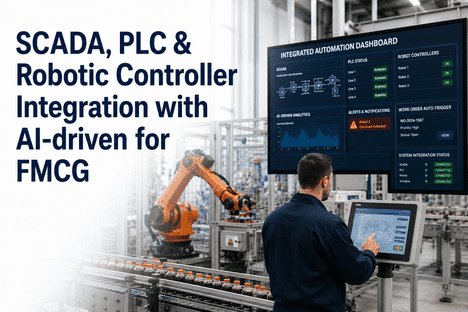
FMCG plants typically operate 5 to 9 distinct software systems across production, quality, maintenance, and finance. Complete a technical integration assessment — covering ERP, CMMS, SCADA historian, QMS, MES, and robotic control systems — before commercial negotiations begin. Integration scope discovered post-signature becomes vendor leverage.
Step 05
Negotiate Outcome-Based Contract Terms With Documented FMCG ROI Milestones
Require contractual OEE improvement targets, unplanned downtime reduction commitments, and quality reject reduction benchmarks with defined timeframes and measurement methodology. FMCG AI-driven vendors who resist outcome-based contract terms are disclosing a lack of confidence in their production-grade performance. FMCG leaders can explore outcome-based commercial structures by visiting
iFactory's demo scheduling page.
FMCG PLATFORM EVALUATION
Ready to Apply This Framework to Your FMCG Vendor Shortlist?
Our manufacturing intelligence team will walk through every capability pillar, integration requirement, and AI-driven ROI model using your FMCG facility's specific production environment — not a generic demo scenario.
Common AI-Driven FMCG Selection Mistakes in 2026
Procurement Pitfalls That Delay ROI and Derail Consumer Goods Deployments
01
Evaluating AI Copilot Interfaces Without Testing Model Accuracy
The most polished AI copilot interfaces in FMCG analytics software often run on the weakest underlying models. Evaluate what the AI recommends and how it justifies recommendations — not how the interface looks. Require documented accuracy rates on FMCG production data before any shortlisting decision.
02
Treating Robotic Integration as a Future-Phase Consideration
FMCG facilities with robotic palletizing, automated filling, or collaborative robot deployments must validate bidirectional robotic workflow integration before procurement — not after. Post-signature robotic integration scope dramatically increases implementation cost and timeline in every documented case.
03
Selecting a Desktop-First Platform for a Mobile Production Environment
FMCG production is a floor-based environment. AI-driven analytics software that delivers insights to desktop workstations rather than mobile devices on the plant floor adds latency between alert generation and corrective action — which is where the majority of downtime and quality cost resides.
04
Underestimating FMCG Change Management Requirements
Most FMCG AI-driven deployments underperform not because of technical failure but because of operator adoption failure. Platforms without role-based mobile interfaces, embedded training workflows, and change management support consistently deliver 40–60% of their modeled ROI in the first operating year.
Frequently Asked Questions: AI-Driven Analytics for FMCG in 2026
What is an AI copilot in FMCG analytics management software?
An AI copilot translates machine learning outputs — maintenance alerts, quality deviations, production anomalies — into prioritized recommendations delivered directly to operators in their workflow. Unlike passive dashboards, it actively guides action before a production impact occurs.
How does robotic workflow integration work in AI-driven FMCG platforms?
Bidirectional robotic integration means the platform reads data from robotic systems and writes control triggers back to automation controllers based on AI model outputs. This closes the loop between predictive intelligence and production adjustment without manual operator intervention.
What AI-driven ROI should FMCG manufacturers expect from analytics platform investment?
Documented FMCG deployments show 22–38% reduction in unplanned downtime, 15–29% OEE improvement, and 18–31% reduction in quality reject rates. Most facilities achieve full platform payback within 8 to 14 months.
Is cloud AI-driven software suitable for air-gapped FMCG production environments?
Cloud-only platforms are not suitable for air-gapped OT environments without security compromise. Purpose-built FMCG AI platforms support hybrid deployment — running models on-premise at the edge while syncing analytics data to cloud for cross-site benchmarking.
How long does AI-driven analytics implementation take in FMCG manufacturing?
Purpose-built FMCG platforms deliver initial predictive insights within 4 to 8 weeks of data ingestion. Full deployment including ERP, CMMS, and FSMA traceability typically completes within 12 to 22 weeks depending on facility complexity.
Can a mobile AI-driven platform replace desktop analytics systems in FMCG plants?
Mobile-first platforms serve plant floor operators with real-time alerts and work orders on handheld devices, while desktop interfaces support engineering and management analytics. The two are complementary — mobile adoption directly drives faster ROI delivery in FMCG deployments.
START YOUR EVALUATION
Get a Personalized AI-Driven Analytics Assessment for Your FMCG Facility
Our manufacturing intelligence team will map your current FMCG operational gaps against the six capability pillars in this guide, benchmark your existing systems architecture against iFactory's integration requirements, and deliver a transparent AI-driven ROI model built from comparable food, beverage, and consumer goods deployments — so your procurement decision is grounded in production evidence, not vendor promises.