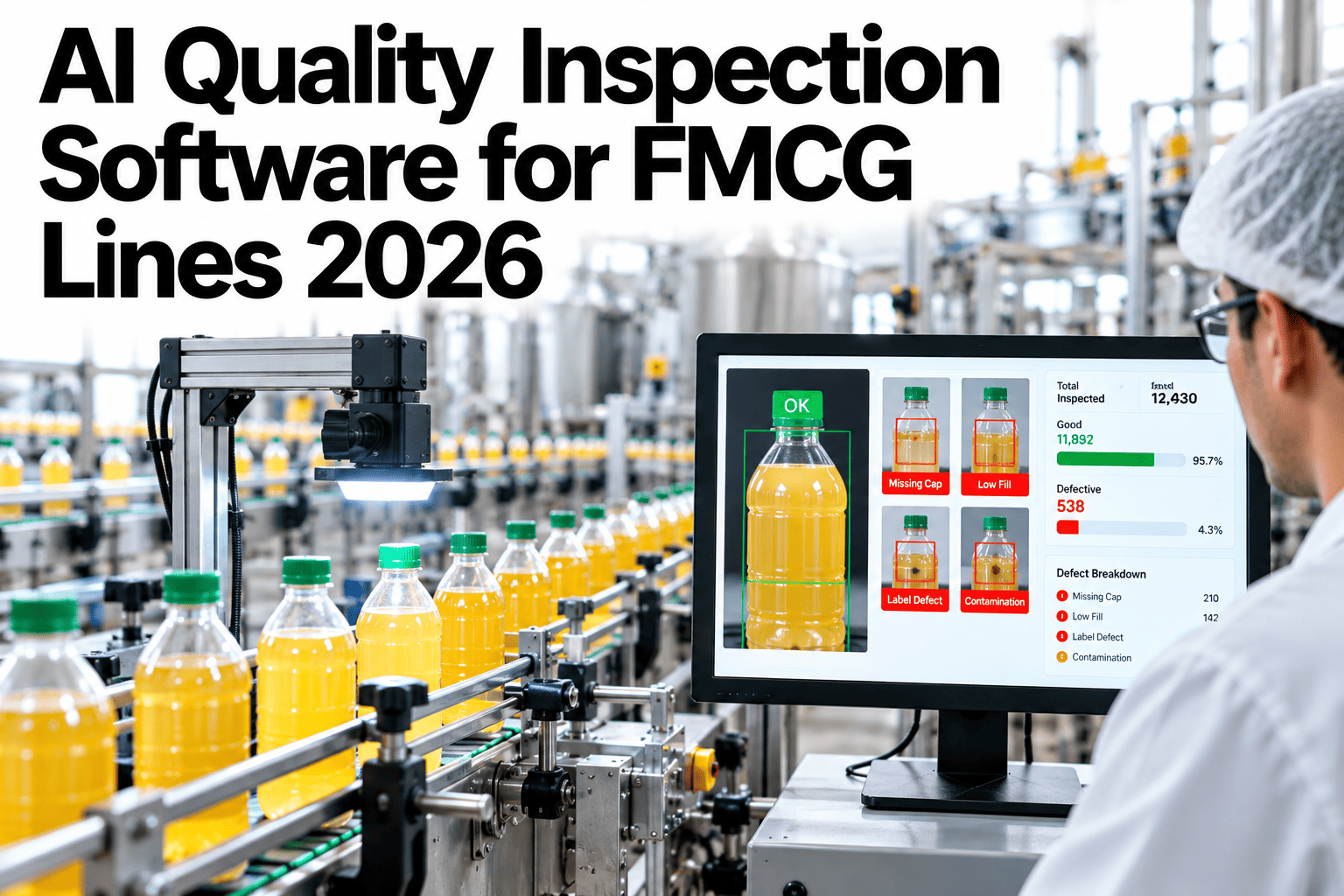
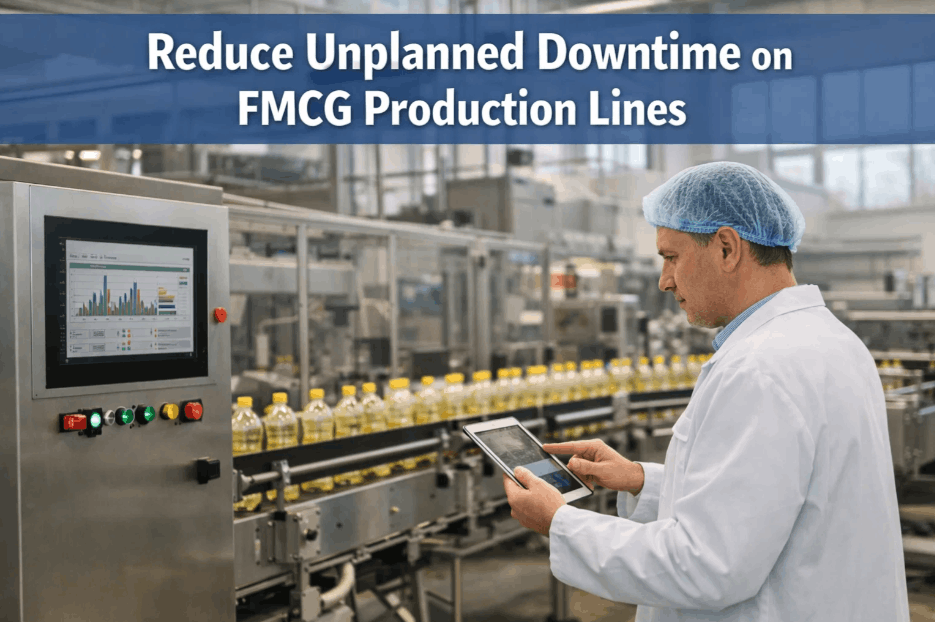
Manual sorting and spot-check inspection on high-speed FMCG lines are fundamentally incompatible with the throughput rates modern production demands a line running 600–1,200 packs per minute cannot be quality-controlled by human visual inspection at line speed. Industry data shows that FMCG lines relying primarily on end-of-line manual inspection operate at 2–5% defect escape rates, meaning 800–2,000 defective units ship to retailers every shift from a single line producing 40,000 units. Each escaped defect carries the risk of a recall costing $10–30 million in direct expenses, retailer chargebacks, and brand damage. AI-powered automated rejection systems close this gap by combining real-time vision inspection, checkweigher verification, seal integrity testing, and label authentication into a continuous quality gate that inspects every unit at full production speed achieving defect escape rates below 0.1% with zero fatigue and zero human judgment variance across every shift. Book a Demo to see iFactory's AI rejection platform deployed on your FMCG production line.
Vision-triggered diversion · Weight-based rejection · Seal integrity verification · Label authentication · All feeding into iFactory CMMS & Shift Logbook for closed-loop quality intelligence.
Why Manual Inspection Fails at Modern FMCG Line Speeds
A modern FMCG packaging line running at 800–1,200 units per minute gives a human inspector roughly 50 milliseconds per unit to verify label registration, fill level, seal integrity, barcode quality, and date code legibility — simultaneously, across an 8-hour shift, without fatigue. The task is physically impossible. Research shows that sustained human visual detection accuracy drops to 70–80% after 20 minutes of continuous monitoring, and falls to 38–50% on night shifts. Manual statistical sampling compounds the problem — when only 0.5–2% of production volume is physically inspected, entire defect clusters go undetected until they manifest as field failures. The result is systematic under-detection that produces the 2–5% defect escape rates accepted as "normal" across most FMCG operations.
Three Defect Categories AI Rejection Systems Catch That Manual Inspection Misses
How iFactory Integrates AI Rejection Intelligence Into FMCG Production Lines
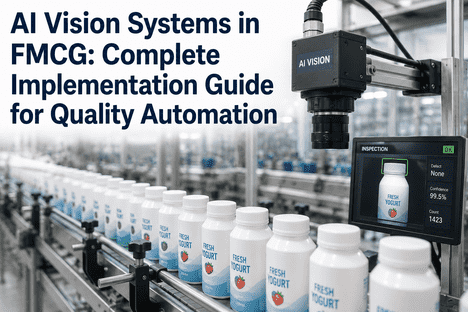
iFactory is the AI software intelligence layer — not a sensor or hardware vendor. The platform integrates with existing vision cameras (Basler, FLIR, Keyence, Cognex), checkweighers, X-ray systems, metal detectors, seal integrity testers, and reject mechanisms already deployed on your FMCG lines. The Shift Logbook captures operator quality observations, reject rate trends, and maintenance actions alongside the automated rejection stream, creating a unified data fabric for quality intelligence and equipment performance correlation.
AI Rejection System Use Cases in FMCG Production
A multi-site food manufacturer running 14 packaging lines experienced four major label-error recall events in 24 months — including a single allergen mislabeling event costing $11.4 million in direct recall response and $18 million in retailer delisting. After deploying AI vision inspection with OCR-based allergen verification, SKU mismatch detection, and automated changeover lockout, the operation eliminated wrong-SKU label escapes entirely and reduced overall packaging defect escape rates from 2.7% to 0.04%. Every label is verified against the master SKU database in under 50ms. Changeover lockout prevents line start until the AI confirms the correct label artwork is loaded.
A dairy bottling line running 800 bottles per minute was experiencing 0.8% underfill and 0.3% cap-seal failure rates that generated 2–3 consumer complaints per week and one retailer chargeback per quarter. iFactory integrated the existing checkweigher and cap inspection camera data into a unified reject decision engine. Underfill detection triggers pneumatic diversion within 40ms of the weight reading. Cap seal failures identified by vision pattern analysis are rejected before the bottle exits the inspection zone. Underfill rate dropped to 0.02%, cap-seal failures to 0.01%, and consumer complaints to zero over a 6-month post-deployment period. Reject trend data auto-generates CMMS work orders when filler nozzle or capper head drift is detected.
An FMCG packaged food facility processing 600 units per minute faced three foreign object complaints in 12 months that triggered regulatory investigation and a $2.1M recall. The site had X-ray detection installed but the reject confirmation sensor had failed silently — detected contaminants were signaled as rejected but continued down the production stream. iFactory deployed a layered detection architecture with dual confirmation: primary X-ray detection triggers pneumatic diversion, and a secondary confirmation sensor verifies physical removal. Daily pre-production challenge tests are logged as mandatory digital inspection steps in the Shift Logbook. Any confirmation failure automatically stops the line. Foreign object escapes to retail dropped to zero with full traceability documentation for BRC and FSSC 22000 audit compliance.
What iFactory Delivers for FMCG Rejection System Performance
AI vision inspection, checkweigher integration, seal integrity verification, and contaminant detection — unified into a single rejection intelligence platform with Shift Logbook traceability, CMMS workflow automation, and full BRC/SQF/FSSC 22000 audit readiness.