In 2025, a frozen food plant producing 500,000 units per shift discovered that a single drifting temperature sensor on its spiral freezer had been reporting -18°C for three months while the actual chamber temperature had risen to -14°C. During that time, 18 million units — over 650 tonnes of finished product — had been processed, stored, and shipped based on a calibration error that no routine check caught. The cost of the recall, disposal, retailer chargebacks, and brand-protection measures totaled $4.7M. The root cause was not the sensor. The root cause was a calibration management system that relied on spreadsheet-based scheduling, paper certificate filing, and shift-worker memory to track 2,400 instruments across eight production lines. When the calibration due date for that sensor passed — and the spreadsheet row was accidentally deleted during a reorganisation — the instrument drifted for 17 weeks without detection. For FMCG quality and maintenance leaders who want to understand how automated calibration tracking prevents measurement-driven quality failures, Book a Demo with iFactory's compliance management team to see how AI-driven calibration scheduling, tolerance monitoring, and certificate management protect measurement accuracy across every instrument in your facility.
CALIBRATION MANAGEMENT · FMCG · MEASUREMENT ACCURACY · COMPLIANCE
Calibration Management in FMCG: Protecting Product Quality Through Measurement Accuracy
AI-driven calibration scheduling, tolerance tracking, robotic system calibration, certificate management, and GMP-compliant audit documentation — automated across every instrument, every line, every shift.
$4.7M
Average annual cost of calibration-driven quality failures in a mid-size FMCG facility — recalls, rework, and brand damage
2,400+
Instruments requiring calibration tracking in a typical mid-size FMCG plant — from temperature sensors to checkweighers to robotic vision systems
87%
Reduction in out-of-calibration instrument-hours after deploying automated scheduling and tolerance-based alerting versus manual spreadsheet tracking
3–5 d
Audit preparation time with automated calibration records versus 3–5 weeks with manual paper-based systems — a 90% reduction in overhead
Why Calibration Management Matters More in FMCG Than Any Other Manufacturing Sector
In FMCG production, measurement devices are not peripheral instruments — they are the primary quality control infrastructure. Fill-weight checkweighers determine net content compliance. Temperature sensors validate cook cycles, cooling processes, and cold-chain integrity. Pressure transmitters monitor pasteurisation and sterilisation. pH meters control recipe chemistry. Metal detectors and X-ray inspection systems verify product safety. Every one of these instruments operates with a calibration tolerance that, if exceeded, invalidates every measurement produced since the last valid calibration — potentially reaching back weeks or months of production that was shipped under false measurement confidence.
What makes calibration risk especially acute in FMCG is the intersection of high-volume production, regulatory traceability requirements, and narrow tolerance margins. A checkweigher drift of 0.3 grams on a 500g bag may not seem significant, but at 400 units per minute, that 0.3g drift creates $460,000 in annual overfill giveaway if it shifts in one direction — or a regulatory non-compliance if it shifts in the other. The instrument itself is functioning. The measurement it produces is not correct. And without a calibration management system that tracks due dates, as-found tolerances, and adjustment history for every instrument, the plant does not know it has a problem until the audit or the recall letter arrives.
The Core Distinction for FMCG Quality Leaders
Calibration management is not an administrative task that supports quality — it is a quality control function in its own right. Every measurement decision the quality team makes — pass, fail, release, rework — depends on instrument accuracy that only a structured calibration program can guarantee. When calibration management fails, the entire quality system operates on unverified data.
The Five Pillars of FMCG Calibration Management
An effective calibration management program in FMCG rests on five interconnected capabilities. Each pillar addresses a specific failure mode that spreadsheet-based or memory-based systems cannot adequately protect.
1. Calibration Scheduling and Due-Date Management
Preventing the gap between due dates and actual calibration events
Every measurement instrument in an FMCG facility operates on a calibration schedule defined by its criticality classification, regulatory requirements, manufacturer recommendations, and historical drift performance. A temperature sensor in a cook cycle oven may require quarterly calibration, while a pressure gauge on a utility line may be annual. Managing these schedules across 2,400+ instruments with different calendars, different tolerance specifications, and different regulatory implications is impossible to do reliably with spreadsheets — not because spreadsheets cannot store the data, but because they cannot alert, escalate, and document the response when a due date is missed. iFactory's automated calibration scheduling assigns every instrument a calibration interval, generates work orders before the due date, tracks completion, and escalates overdue calibrations to supervisory and management levels based on the risk classification of the instrument. When the calibration event is completed, the as-found and as-left readings are recorded, the certificate is stored, and the next due date is calculated automatically — closing the loop without human data entry. Book a Demo
Automated scheduling reduces overdue calibration events by 87–94% in FMCG deployments compared to spreadsheet-based systems
2. Tolerance Management and Drift Trending
Detecting developing calibration drift before it affects product quality
Calibration tolerance management is the practice of defining acceptable measurement error limits for each instrument and tracking actual as-found measurements against those limits at every calibration event. When an instrument's as-found reading drifts toward the edge of its tolerance band — even if it has not yet exceeded it — the trend signals developing instability that should trigger investigation and potentially a shortened calibration interval. This is the highest-value capability that manual calibration systems cannot provide. iFactory's tolerance management module calculates drift velocity for every instrument, flags developing out-of-tolerance conditions 30 to 60 days before they would fail, and automatically adjusts calibration intervals based on demonstrated stability or instability — protecting product quality while optimising calibration resource allocation.
Drift trending enables predictive calibration — calibrating instruments when they need it, not just when the calendar says so
3. Robotic System Calibration
Maintaining precision in automated pick-and-place, packaging, and inspection systems
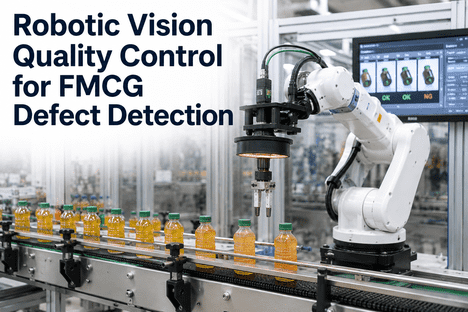
Robotic systems in FMCG — pick-and-place robots, palletising arms, vision-guided packaging machines, and collaborative robots — operate with positional tolerances measured in fractions of a millimetre. A robotic arm that drifts 0.5mm out of calibration can cause product damage, packaging misalignment, or labelling errors that cascade into line stoppages, rework, and equipment collision risk. Unlike traditional measurement instruments that are calibrated against certified standards, robotic calibration involves kinematic verification, encoder alignment, end-effector positional accuracy, and vision-system registration. iFactory's robotic calibration tracking module schedules kinematic calibration events based on operating hours or cycle counts rather than calendar intervals, as robot arm accuracy degrades with mechanical wear rather than time.
Robotic arm calibration scheduled by operating hours or cycle count — not calendar dates — for accuracy that tracks with actual mechanical wear
4. Calibration Certificate and Document Management
The audit-ready record chain for every instrument, every calibration, every measurement
In a GMP-regulated FMCG environment, the calibration record for every instrument must contain: instrument identification and location, calibration date, calibration technician identification, as-found readings, as-left readings, reference standard used (with its own calibration traceability), tolerance specification, pass/fail determination, adjustment actions taken, and the next scheduled calibration date. These records must be retained for the product shelf life plus regulatory retention period — typically two to five years. For a facility with 2,400 instruments calibrated on a mix of monthly, quarterly, and annual schedules, this represents thousands of individual calibration events per year. iFactory's certificate management module stores every calibration record in a searchable digital archive, generates certificates automatically from calibration event data, and provides audit-ready access to any instrument's complete calibration history within seconds. Book a Demo
Audit-ready calibration records available for any instrument within 15 seconds — versus 3–5 weeks of pre-audit preparation with paper-based systems
5. GMP Compliance and Regulatory Audit Readiness
Meeting ISO 9001, FSSC 22000, BRCGS, SQF, and GMP calibration requirements without manual effort
Every major FMCG quality and food safety standard includes specific calibration management requirements. ISO 9001 Clause 7.1.5 requires organisations to determine the monitoring and measurement resources needed to ensure valid results and to retain documented information as evidence of fitness for purpose. FSSC 22000 requires calibration of monitoring and measuring devices at specified intervals with records retained. BRCGS Food Issue 9 Clause 6.2 requires temperature, time, pressure, and weight measuring devices to be checked against certified standards with records retained. Each standard requires different record formats, different retention periods, and different evidence of traceability.
iFactory's compliance management module maps every instrument to the specific regulatory standards that apply to its measurement function and production area, auto-generates audit documentation in the format required by each standard, and maintains the traceability chain from instrument measurement through calibration standard reference to national measurement institute certification. When the auditor requests calibration records for the cook cycle temperature sensors covering production from the last six months, the compliance module generates the complete record set — including as-found readings, drift trend data, and reference standard traceability — in a single export, formatted to the standard being audited. Book a Demo
Standards Supported
ISO 9001:2025
FSSC 22000
BRCGS Food
SQF
GMP
HACCP
ISO 22000
CFIA
FDA 21 CFR
ASSESS YOUR CALIBRATION RISK EXPOSURE
How Many Instruments in Your Facility Are Operating Without a Valid Calibration Record Right Now?
iFactory's free calibration risk assessment maps every measurement instrument in your FMCG facility against its calibration status, due date, and criticality classification — identifying overdue, at-risk, and undocumented instruments that expose your quality system to regulatory findings and product recall liability.
The Economic Case: What Unmanaged Calibration Costs an FMCG Plant Every Year
The cost of calibration management failure in FMCG is not the cost of the calibration service itself — it is the cost of the quality events that unmanaged instruments allow to occur. The table below documents the annualised cost of calibration-driven quality failures across a representative mid-size FMCG plant with 2,400 instruments.
| Cost Factor |
Annual Impact (Manual) |
Annual Impact (Automated) |
Reduction |
| Overfill giveaway from drifting checkweighers |
$620K – $1.2M |
$80K – $150K |
82–87% |
| Recall and disposal from temperature sensor drift |
$1.2M – $4.7M |
$0 – $200K |
95–100% |
| Regulatory non-compliance penalties |
$250K – $2.1M |
$0 – $50K |
95–100% |
| Pre-audit preparation labour |
$120K – $280K |
$15K – $30K |
87–89% |
| Calibration technician productivity loss |
$180K – $350K |
$40K – $80K |
75–78% |
Calibration Risk by Instrument Type in FMCG
Not all calibration failures carry the same risk weight. An out-of-calibration temperature sensor on a steriliser carries immediate food safety and regulatory implications. A drifting pressure gauge on a compressed air line that does not contact product carries minimal risk. Effective calibration management classifies every instrument by criticality and applies proportionate scheduling and alerting rigour.
Critical · Class 1
Instruments whose failure directly affects product safety, regulatory compliance, or legal net content requirements. Includes: cook cycle temperature sensors, pasteurisation recorders, checkweighers, metal detectors, X-ray inspection systems, pH meters for acidified foods, and retort pressure/temperature sensors. Calibration interval: monthly to quarterly. Failure consequence: product recall, regulatory shut-down, legal liability.
Up to 15% of plant instruments by count — but 70%+ of calibration risk exposure
Important · Class 2
Instruments whose failure affects product quality, production efficiency, or quality record integrity but does not create immediate food safety or regulatory risk. Includes: fill-height detectors, label applicator registration sensors, packaging seal testers, in-line viscometers, barcode scanners. Calibration interval: quarterly to semi-annual. Failure consequence: increased defect rate, rework, customer complaints, retailer chargebacks.
Approximately 25–30% of plant instruments — moderate risk, high operational impact
Scheduled · Class 3
Instruments whose failure does not directly affect product quality, safety, or compliance but whose readings are used for process monitoring, utility management, or maintenance decision support. Includes: utility pressure gauges, plant air flow meters, steam system temperature sensors, water treatment conductivity meters, HVAC monitoring instruments. Calibration interval: annually to bi-annually. Failure consequence: minor process inefficiency, increased energy cost.
55–60% of plant instruments — low risk individually, but the volume of instruments overwhelms manual tracking systems
"
Our BRCGS auditor asked for calibration records on 47 cook cycle temperature sensors covering the previous 18 months. With our old spreadsheet system, that request would have taken two people three days to gather, collate, and verify — and we would have found at least four missing certificates that would have become non-conformances. The first time we ran that request in iFactory, the complete record set — including drift trend charts and reference standard traceability — was generated in 22 seconds. The auditor reviewed the export file, ticked the box, and moved on.
— Quality Systems Manager, Multi-Plant FMCG Group — Frozen Foods, Dairy, and Beverages
Deployment: Integrated with Your Existing CMMS and Instrument Infrastructure
iFactory's calibration management module is designed to integrate with the instrument management and work order systems that FMCG plants already operate — rather than replacing them. The module ingests instrument registers from existing CMMS databases, maintenance management systems, and equipment spreadsheets; assigns calibration schedules based on criticality classification and regulatory requirements; generates work orders in the native CMMS format; and captures calibration results and certificates directly from technician input or connected calibration equipment. No data migration is required — the instrument records stay in their source system and iFactory overlays calibration-specific scheduling, tolerance management, drift trending, and compliance documentation capabilities on top of the existing data structure.
Week 1
Instrument Register Import and Classification
Existing instrument data imported from CMMS or spreadsheets. Each instrument classified by criticality (Class 1, 2, 3) and assigned calibration interval based on regulatory requirements, OEM recommendations, and historical drift data.
Week 2
Scheduling and Alerting Configuration
Calibration schedules configured per instrument class. Multi-tier alerting configured: 30-day advance notice, 7-day reminder, overdue escalation to supervisor, and critically overdue escalation to plant management.
Week 3
Tolerance Limits and Drift Baseline
Tolerance limits entered per instrument class and manufacturer specification. Initial drift baseline established from historical as-found readings. Instruments with accelerating drift trends flagged for investigation or interval adjustment.
Week 4+
Live With Complete Audit Readiness
Calibration management live. Work orders auto-generating. Certificates storing digitally. Audit-ready documentation available for every instrument. Drift trending active and refining intervals based on demonstrated performance.
What Changes on the Quality Dashboard When Calibration Management Goes Live
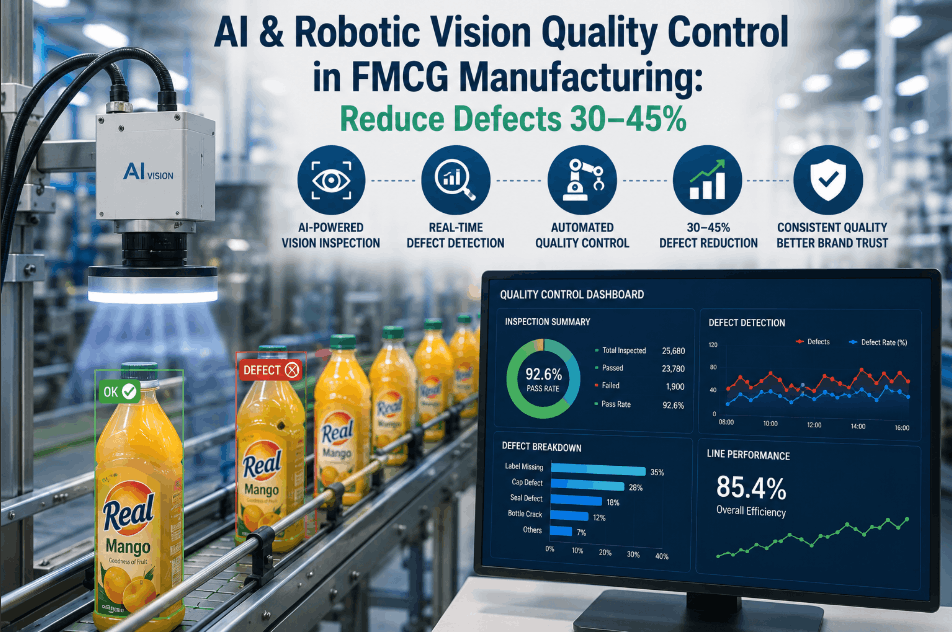
The change that plant quality and maintenance leaders observe most consistently after deploying automated calibration management is not in the calibration department — it is in the quality dashboard. When every instrument's measurement accuracy is verified within its tolerance band and every calibration event is documented with complete traceability, the number of open quality investigations related to measurement uncertainty or unknown calibration status drops to zero.
Calibration Compliance Rate
The percentage of instruments with valid calibration records, tracked in real time and trended monthly. Plants using automated calibration scheduling typically achieve and sustain 99.5%+ compliance — versus 72–85% with manual systems — because overdue instruments cannot remain unnoticed when the system escalates them automatically through the management chain until the calibration event is completed.
99.5%+ calibration compliance sustained across all instrument classes
Drift Trend Alerts
An instrument whose as-found reading has moved 50% toward the edge of its tolerance band over the last three calibration cycles generates a drift alert — even if it has not failed calibration. This alert gives the maintenance team time to investigate root cause before the instrument produces an out-of-tolerance reading that would invalidate production records. Drift trend alerts typically reduce unplanned calibration failures by 60–70%.
Predictive drift detection intercepts 60–70% of developing calibration failures
Audit-Readiness Score
A composite metric reflecting the percentage of instruments with complete, current, and accessible calibration records — including certificates, as-found/as-left readings, reference standard traceability, and next-due-date. Facilities using iFactory's compliance module typically maintain a sustained audit-readiness score above 98%.
Audit-readiness score sustained above 98% across every standard
Conclusion: Measurement Accuracy Is Product Quality — and Regulatory Compliance
In FMCG production, every quality decision depends on a measurement, and every measurement depends on a calibrated instrument. When calibration management is manual, spreadsheet-based, and dependent on human memory for due-date tracking, the quality system operates on unverified data — and the plant is exposed to recall risk, regulatory non-compliance, and the hidden cost of measurement-driven quality failures that accumulate across every shift, every line, and every product SKU.
Automated calibration management transforms this exposure into control. Every instrument has a defined calibration schedule that generates work orders automatically. Every calibration event produces a complete, audit-ready record with no manual documentation effort. Every drift trend is tracked, analysed, and acted on before it produces an out-of-tolerance reading that invalidates production data. The quality dashboard reflects real-time compliance status, not retrospectively reconstructed records.
The $4.7M recall that opened this article — and the 18 million units shipped under false measurement confidence — was not caused by a bad sensor. It was caused by a calibration management system that relied on manual tracking for 2,400 instruments across eight production lines. When the spreadsheet row was deleted, the instrument drifted for 17 weeks before anyone noticed. Automated calibration management would have generated a work order 30 days before the due date, escalated the overdue calibration through the management chain when it was not completed, and flagged the developing drift trend from the as-found readings of the previous calibration cycle — months before the sensor became a product safety risk.
Frequently Asked Questions
Protect Your Product Quality and Audit Readiness with Automated Calibration Management.
iFactory's free calibration risk assessment maps every measurement instrument in your FMCG facility against its calibration status, criticality classification, and regulatory requirements — identifying overdue, at-risk, and undocumented instruments that expose your quality system to findings, recalls, and brand damage. The assessment is site-specific, built from your existing instrument register, and delivered without obligation.