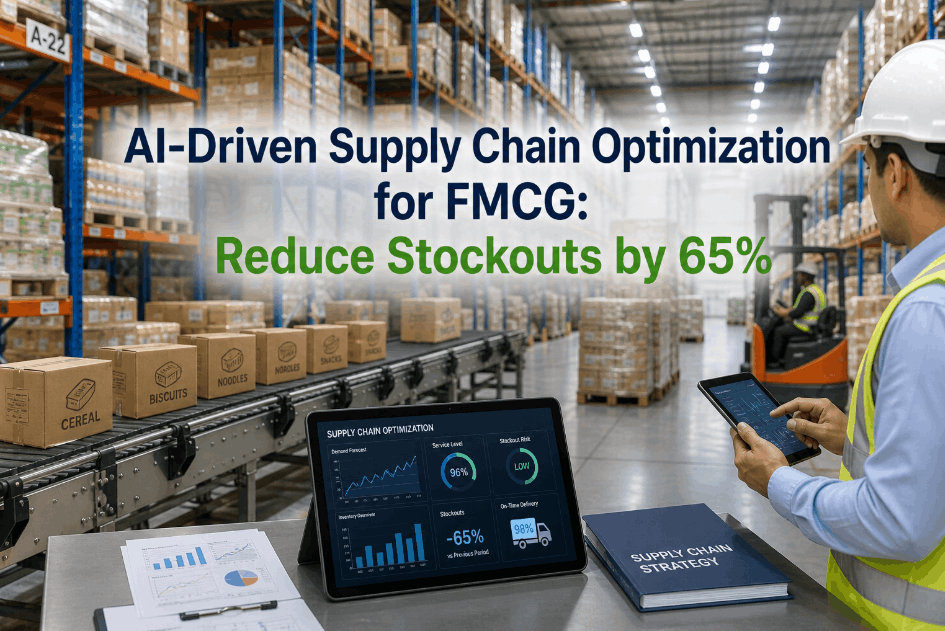
Supply chain dysfunction is quietly one of the most expensive problems inFMCG manufacturing. A product that cannot reach a retailer's shelf because of a stockout loses not just that sale — it loses market share, customer loyalty, and the margin that funds the next innovation cycle. At the same time, excess inventory sitting in warehouses ties up working capital, generates waste from expiring stock, and inflates logistics costs on products that should have never been overproduced. For decades, FMCG supply chain managers have navigated this tension with spreadsheets, intuition, and lag-heavy ERP reports. The result is an industry that still averages a 65% perfect order rate — meaning more than one in three orders has some form of error, delay, or shortage. AI-powered supply chain optimization changes this equation entirely. By analyzing demand signals, supplier performance, logistics capacity, and production constraints simultaneously, AI platforms like iFactory transform reactive supply chains into predictive, self-optimizing networks that reduce stockouts by up to 65% and cut inventory carrying costs by 20% or more.
AI-Powered Supply Chain Optimization for FMCG Companies
From demand forecasting to last-mile logistics — one AI platform connecting every link in your FMCG supply chain.
Why Traditional FMCG Supply Chains Are Breaking Down
The FMCG supply chain has always been complex — perishable goods, short product lifecycles, price-sensitive consumers, and volatile demand driven by promotions, seasonality, and competitive launches. But three forces converging in 2025 and 2026 have pushed traditional planning systems past their limits.
First, SKU proliferation has exploded — the average FMCG manufacturer now manages 3 to 5 times more SKUs than a decade ago, making manual demand planning mathematically impossible at any useful granularity. Second, consumer demand patterns have become less predictable, influenced by social media trends, on-demand delivery expectations, and post-pandemic shifts in consumption. Third, supplier and logistics networks have become more fragile, with raw material lead times and freight costs swinging by 40–60% in response to geopolitical and environmental events.
iFactory's AI supply chain platform was built specifically for this environment — multi-variable, fast-changing, and unforgiving of forecast errors. Sign up with iFactory to see how AI transforms your supply chain from reactive to predictive.
Transform Your FMCG Supply Chain with iFactory AI
Stop forecasting with spreadsheets. Start optimizing with AI that sees your entire supply network in real time.
5 Core AI Capabilities Driving FMCG Supply Chain Performance
iFactory's supply chain AI is not a single algorithm — it is a layered intelligence architecture where five specialized AI modules work together, each feeding insights into the others to build a continuously improving supply chain brain.
Multi-Variable AI Demand Forecasting
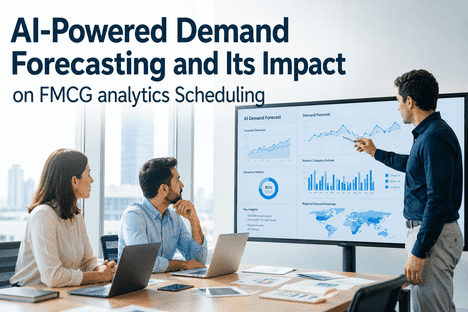
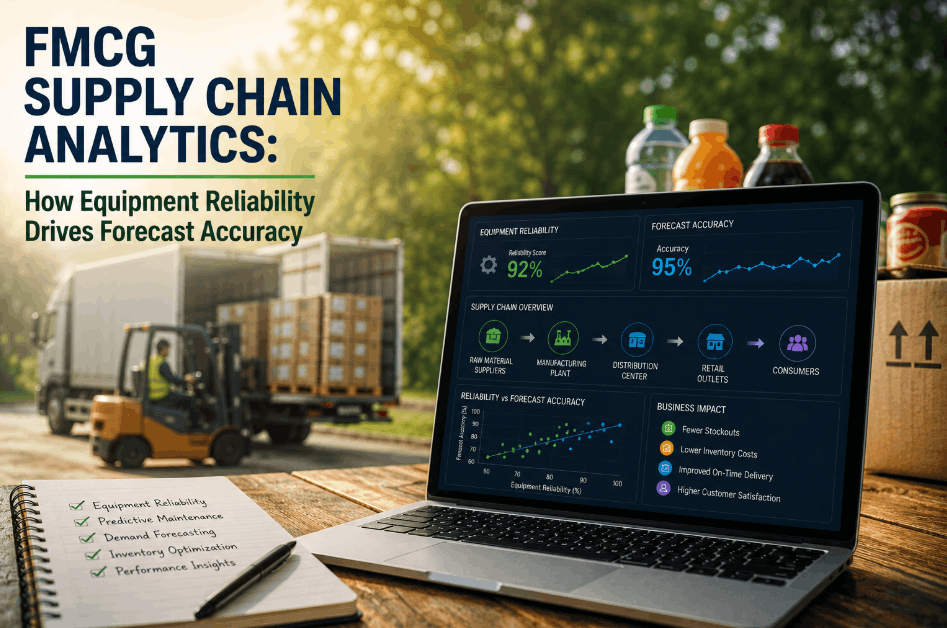
Traditional demand forecasting in FMCG relies on weighted moving averages of historical sales — a method that is inherently backward-looking and blind to the signals that actually drive demand changes. iFactory's AI demand forecasting engine ingests historical sales data alongside external demand signals: point-of-sale data from retail partners, social media trend indices, weather forecasts, promotional calendars, competitor pricing data, and macroeconomic indicators. Machine learning models trained on FMCG demand patterns integrate all of these signals to generate SKU-level demand forecasts at regional or outlet granularity, with 92–95% accuracy — a 25–35 point improvement over traditional methods. When a product goes viral on social media or a competitor announces a promotional price cut, iFactory detects the demand shift and updates supply plans within hours, not weeks. Book a demo to see iFactory demand forecasting live across a real FMCG product portfolio.
AI Inventory Optimization Across the Network
Carrying too much inventory is expensive. Carrying too little loses sales. AI inventory optimization finds the precise safety stock level for every SKU at every location — calculated dynamically based on forecast accuracy, supplier lead time variability, and service level targets. iFactory's inventory AI continuously recalculates optimal reorder points and order quantities across the entire distribution network, reducing average inventory by 18–25% while simultaneously improving product availability. For FMCG companies with hundreds of SKUs across multiple distribution centers, this represents millions of dollars in freed-up working capital. Sign up with iFactory to start optimizing your inventory levels with AI.
Supplier Risk Monitoring and AI Procurement
Supplier disruptions are the silent killer of FMCG supply chain performance. A packaging material shortage, a raw ingredient quality issue, or a logistics capacity constraint at a key supplier can propagate through the supply chain and create stockouts weeks later. iFactory's supplier risk AI continuously monitors supplier performance data — on-time delivery rates, quality rejection rates, lead time trends — alongside external risk signals including financial health indicators, weather events, and geopolitical developments. When risk is detected, AI automatically evaluates alternative sourcing options and generates procurement recommendations before the disruption reaches production. Book a demo and see supplier risk intelligence in action.
AI-Driven Production-to-Distribution Planning
The handover between production planning and distribution planning is one of the most inefficient processes in FMCG operations. Production schedules are built on one set of assumptions; distribution plans are built on another; and the gap between them generates either excess finished goods inventory or urgent order expediting. iFactory's AI bridges this gap by building an integrated production-to-distribution plan where manufacturing schedules, warehouse allocation, and replenishment orders are optimized simultaneously. The result is a supply chain where production runs are sized to actual demand, finished goods are allocated to the right distribution centers before they are even produced, and replenishment orders are automatically triggered at the optimal reorder moment.
Real-Time Supply Chain Visibility and Exception Management
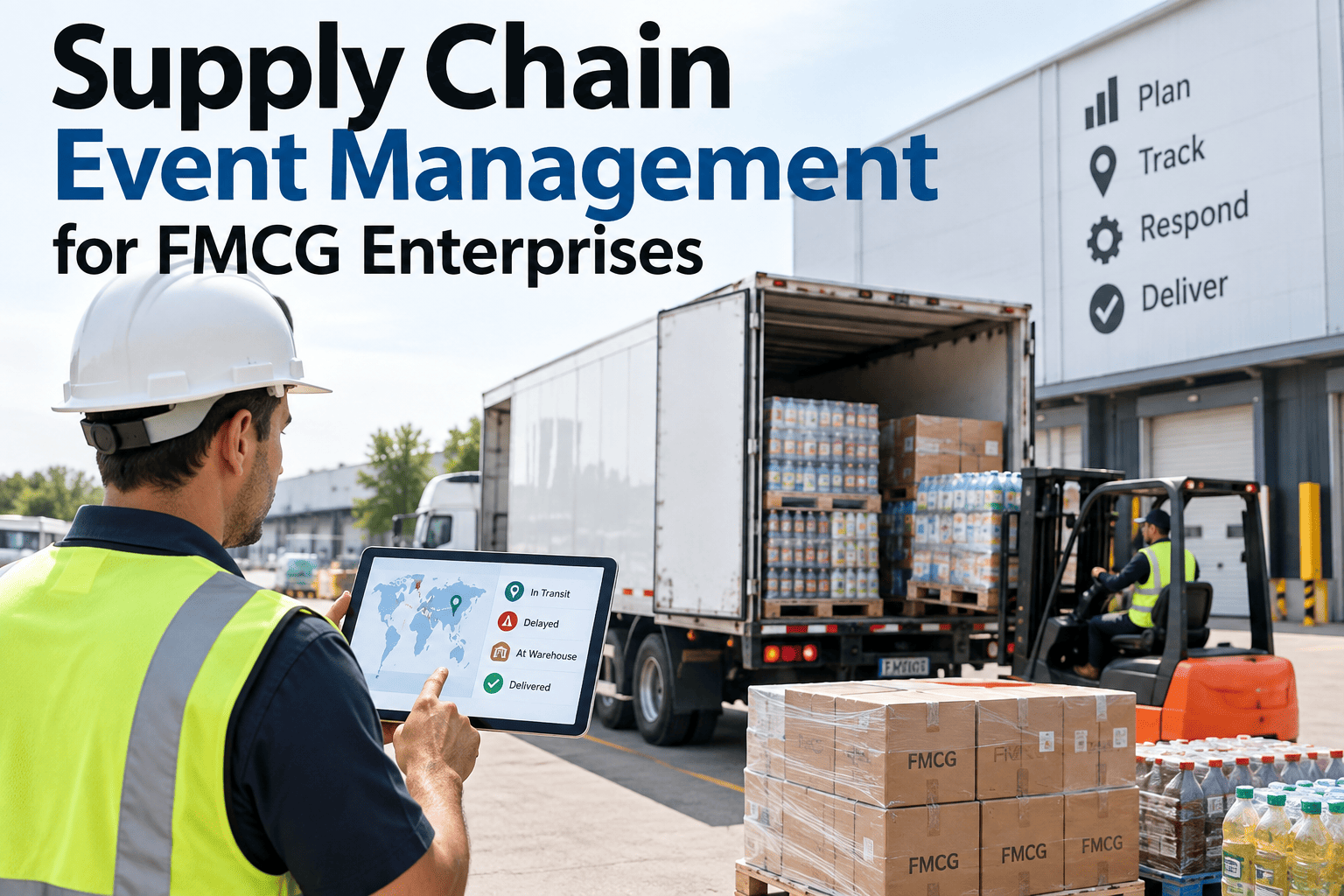
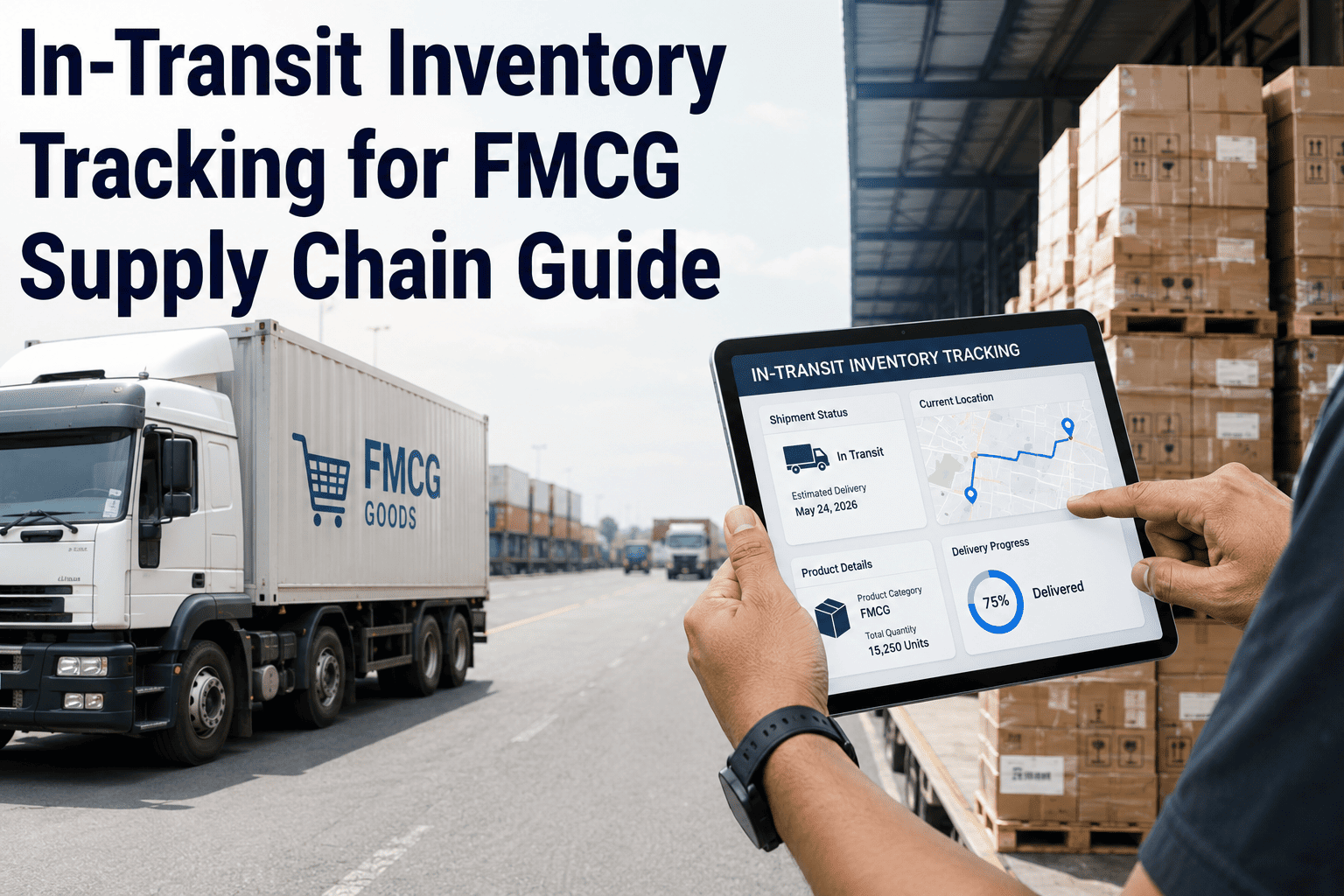
The fundamental problem with most FMCG supply chains is not a lack of data — it is a lack of the right data at the right time. ERP systems generate enormous volumes of transactional data, but by the time it is aggregated into a planning report, the window for preventive action has often closed. iFactory's real-time visibility layer integrates data from suppliers, contract manufacturers, 3PLs, distribution centers, and retail partners into a single live supply chain dashboard. AI exception management automatically flags the situations requiring human attention — a supplier shipment that will arrive too late to prevent a stockout, a distribution center with excess inventory of a slow-moving SKU, or a production batch that missed quality specifications and needs to be reallocated. Rather than managing by exception manually, supply chain teams use iFactory's AI-prioritized alert queue to focus attention where it creates the most value. Sign up with iFactory to get real-time visibility across your entire FMCG supply network.
The Business Case: What AI Supply Chain Optimization Delivers
iFactory's AI supply chain ROI compounds across multiple value streams simultaneously. Here is what a mid-size FMCG company with $200M annual revenue typically achieves.
| Value Stream | Metric Improvement | Annual Value Impact |
|---|---|---|
| Stockout Reduction | 65% fewer stockout events | $2.8M in recovered lost sales |
| Inventory Optimization | 20% reduction in inventory carrying cost | $1.6M in freed working capital |
| Procurement Efficiency | 15% reduction in expediting costs | $480K in avoided premium freight |
| Waste Reduction | 30% fewer expiry write-offs | $620K in avoided waste cost |
| Planning Labor | 40% reduction in manual planning time | $290K in productivity recovery |
| Total Annual Value | Across all value streams | $5.79M combined impact |
Figures based on iFactory customer benchmarks for FMCG manufacturers with $150–250M annual revenue. Individual results vary by baseline performance, SKU count, and supply chain complexity.
Implementation Roadmap: From Pilot to Full AI Supply Chain
Connect ERP, sales history, and POS data feeds. Deploy AI demand forecasting on your top 20% of SKUs by revenue. Establish baseline forecast accuracy metrics and validate AI forecasts against actuals in a live environment.
Extend AI forecasting to full SKU portfolio. Activate inventory optimization engine across distribution network. Integrate supplier data feeds for lead time and performance monitoring. Begin AI-generated replenishment recommendations.
Full supply chain visibility dashboard live across all nodes. AI exception management activated. Production-to-distribution integrated planning in operation. Supply chain team transitions from manual monitoring to AI-assisted decision-making.
AI models continuously improve as more data accumulates. Advanced scenario planning activated for promotional and seasonal demand events. Supply chain performance benchmarking against industry peers through iFactory's platform analytics.
Start Optimizing Your FMCG Supply Chain Today
iFactory connects to your existing ERP and logistics systems in weeks. See your first AI demand forecasts and inventory recommendations before the end of your first month.