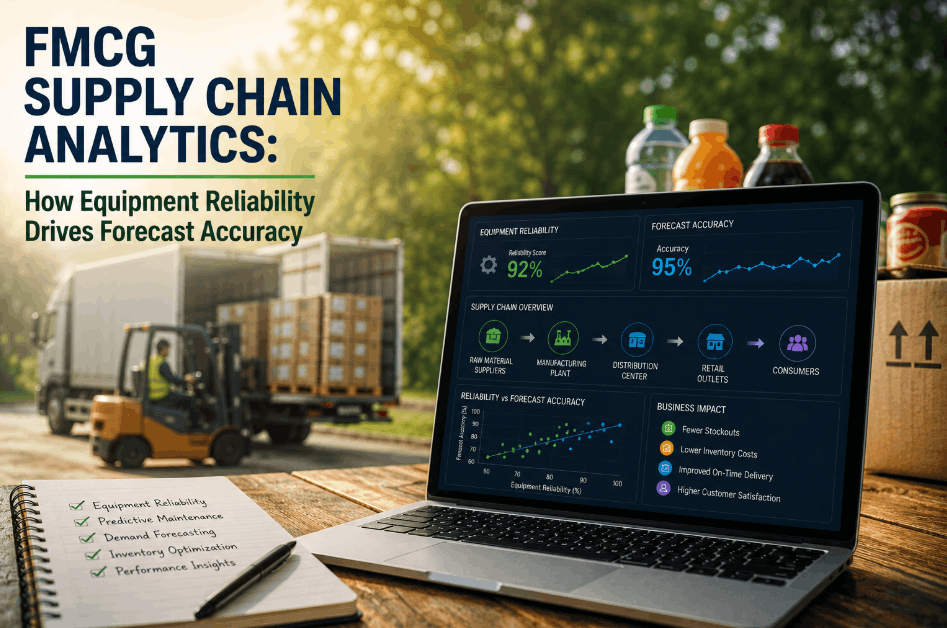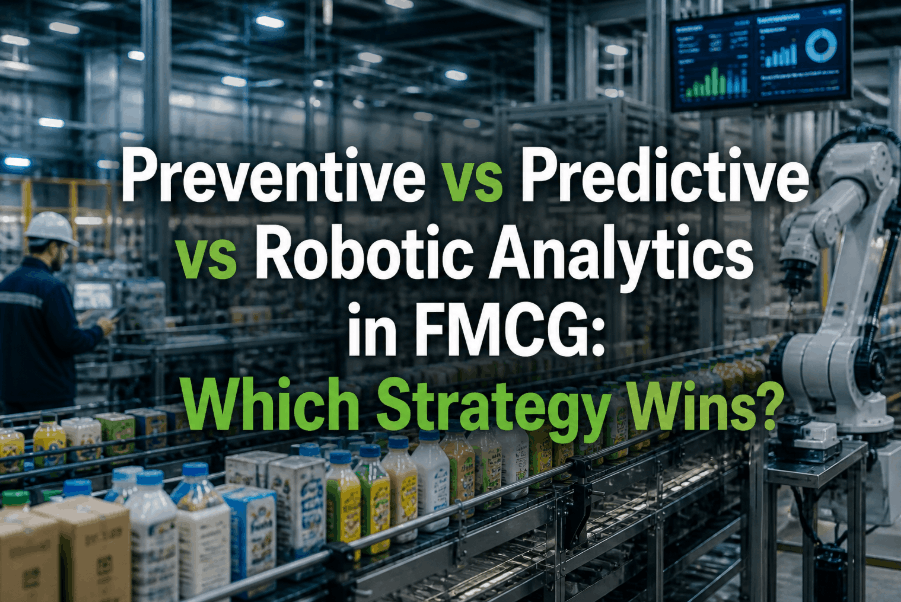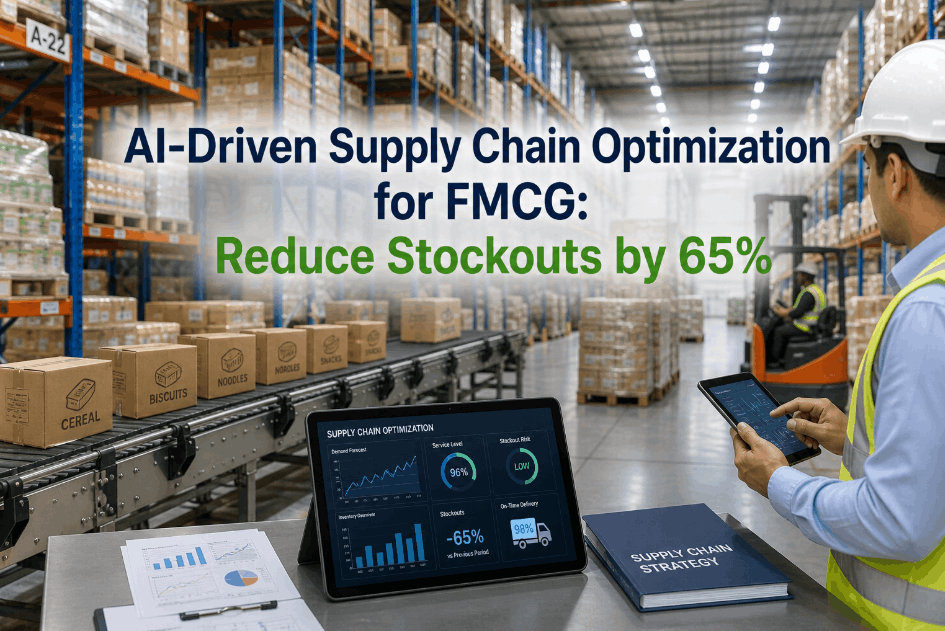
In the highly volatile fast-moving consumer goods sector, legacy logistics models are breaking down under the pressure of omnichannel fulfillment and supply chain disruptions. The cost of a stockout goes beyond lost revenue; it permanently damages retail relationships and brand loyalty. Achieving true AI supply chain FMCG maturity requires moving beyond static reorder points to predictive models. By leveraging FMCG demand forecasting AI, enterprises can anticipate market shifts before they happen. Combine this with AMR warehouse automation, and operations can reduce stockouts FMCG by an unprecedented 65%. For supply chain leaders looking to future-proof their logistics, now is the time to book a demo and see how iFactory integrates predictive analytics with physical robotics.
Stop Reactive Logistics — Automate Your FMCG Supply Chain
iFactory's supply chain analytics platform unifies AI demand prediction with autonomous warehouse execution, delivering real-time inventory visibility and reducing warehousing costs by over 10%.
Why Traditional Logistics Are Failing FMCG
The velocity of modern consumer demand outpaces human planning capabilities. When supply chain teams rely on historical sales data to manage inventory optimization AI, they are inherently looking backward. This leads to the classic bullwhip effect: overcompensating for short-term demand spikes, resulting in massive overstock of perishable goods, followed by emergency freight spend when the next trend hits. Manual forecasting simply cannot scale across thousands of SKUs in a global distribution network.
Robotic supply chain optimization fundamentally changes this dynamic. Instead of human planners adjusting spreadsheets, AI algorithms ingest millions of data points—from weather patterns to social sentiment—to generate accurate AI demand prediction. When these digital insights are paired with physical logistics robots FMCG on the warehouse floor, the entire fulfillment lifecycle becomes autonomous. Supply chain directors facing rising fulfillment costs should book a demo to evaluate their current automation readiness before peak season begins.
What AI-Driven Supply Chain Automation Actually Does
Understanding the leap from traditional ERP to intelligent supply chain automation requires examining three core pillars of modern logistics execution. This integration of software and hardware enables true agility.
FMCG Demand Forecasting AI
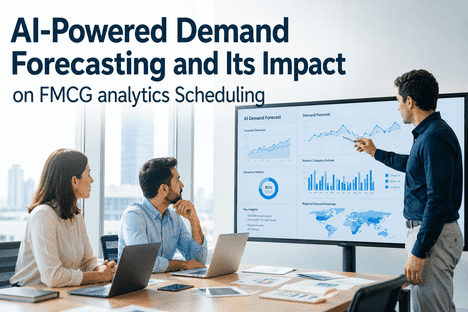
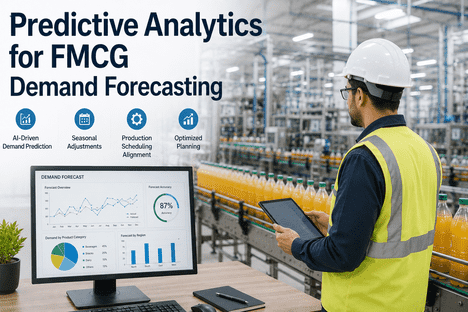
Standard forecasting relies on 30-day moving averages. AI-driven demand forecasting uses machine learning to analyze point-of-sale data, promotional calendars, and external market variables to predict exact volume requirements at the individual SKU level. This precise AI demand prediction ensures you are never caught off guard by a sudden surge in regional demand.
By feeding this intelligence directly into procurement, the system autonomously adjusts safety stock limits. Facilities wanting to audit their current forecasting accuracy can book a demo for a live data assessment against their existing distribution network.
Inventory Optimization AI and Network Balancing
Predicting demand is only half the battle; the other half is positioning the inventory correctly. AI algorithms dynamically balance stock across your entire multi-echelon distribution network. If the system detects an incoming weather event in the Northeast, it preemptively shifts critical inventory from the Midwest to regional distribution centers before the disruption occurs.
This continuous balancing dramatically aids to reduce stockouts FMCG while simultaneously lowering total enterprise carrying costs by eliminating localized hoarding.
AMR Warehouse Automation and Execution
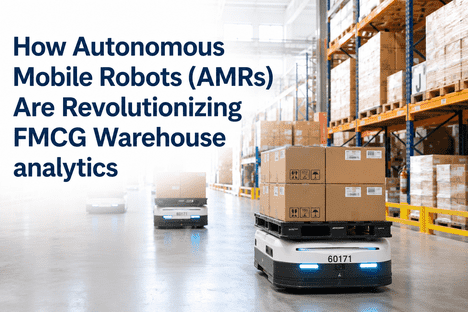
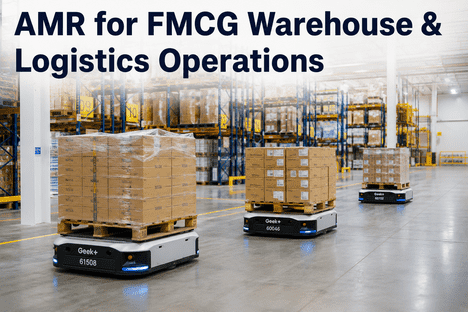
The physical execution of supply chain analytics relies on Autonomous Mobile Robots (AMRs). These autonomous warehouse robots navigate dynamic environments, transporting goods from bulk storage directly to packing stations. Unlike rigid conveyor belts, AMR fleets scale instantly with peak seasonal demand, maximizing throughput.
Deploying logistics robots FMCG requires zero massive CapEx facility redesigns. Enterprises operating multiple facilities should book a demo to see how robotic supply chain optimization functions seamlessly within legacy infrastructure.
Manual Supply Chain vs. AI-Driven Automation
The operational and financial differences between traditional spreadsheet logistics and an intelligent AI supply chain FMCG are quantifiable across every dimension of fulfillment performance.
| Logistics Dimension | Traditional Logistics | AI-Driven Supply Chain | FMCG Financial Impact |
|---|---|---|---|
| Demand Planning | Backward-looking historical averages | Real-time predictive machine learning | Massive reduction in lost sales |
| Fulfillment Execution | Manual picking and static routing | AMR warehouse automation | High warehousing cost reduction |
| Inventory Positioning | Siloed regional distribution centers | Multi-echelon network balancing | Critical reduction in cross-shipping |
| Stockout Response | Reactive emergency freight | Preemptive inventory shifting | High OpEx savings enterprise-wide |
| Data Analysis | Monthly spreadsheet reviews | Continuous supply chain analytics | Strategic competitive advantage |
| Labor Scaling | Hiring massive temporary workforces | Deploying logistics robots FMCG | High mitigation of labor shortages |
Building the Business Case for Supply Chain Automation
The ROI model for inventory optimization AI extends far beyond simply buying fewer pallets. Supply chain leadership teams that build rigorous automation ROI models account for four distinct value categories that accelerate the payback period.
Eliminate Lost Revenue from Stockouts
Every time a consumer faces an empty shelf, brand loyalty erodes. By leveraging predictive algorithms to reduce stockouts FMCG by 65%, ensuring product is always available on the retail shelf protects market share and prevents competitor brand switching.
Primary driverWarehousing Cost Reduction
Optimizing the physical footprint and utilizing autonomous warehouse robots reduces direct warehousing costs by 10%. High-density AMR storage solutions maximize vertical space and dramatically increase picking speed without expanding square footage.
Capital multiplierFreight and Logistics Optimization
When a region runs out of a top-selling SKU, brands resort to overnight shipping. Accurate AI demand prediction allows goods to move via standard freight, eliminating the heavy premium paid for emergency logistics and cross-country LTL shipments.
OpEx driverLabor Efficiency and Retention
Manual picking requires workers to walk miles every shift. Logistics robots FMCG eliminate this transit time, bringing goods directly to the packer. This focuses human labor on high-value cognitive tasks, drastically improving ergonomics and employee retention.
Efficiency valueHow to Implement Robotic Supply Chain Optimization — Phase by Phase
Logistics software deployments that fail to deliver expected ROI share a common root cause: attempting to automate broken processes. FMCG enterprises must execute a structured integration to realize supply chain automation benefits. The roadmap below reflects the sequencing that consistently produces measurable outcomes. Teams ready to begin scoping their deployment should book a demo to receive a network complexity assessment.
Data Integration and Network Cleanse
Connect ERP, WMS, and point-of-sale data into a unified data lake. Cleanse historical data to eliminate duplicate SKUs and provide the machine learning algorithms with a highly reliable, standardized baseline for accurate AI demand prediction.
Predictive Forecasting Activation
Deploy FMCG demand forecasting AI to shadow current human planning teams. Compare the AI predictions against actual sales velocity in real-time to validate algorithm accuracy before linking the data directly to procurement triggers.
AMR Fulfillment Pilot Integration
Introduce a scalable fleet of autonomous warehouse robots into a single, high-volume distribution center. Map the facility's digital twin and integrate the AMRs directly with the WMS to automate the picking and routing process.
Enterprise Network Optimization
Scale the inventory optimization AI across all regional distribution centers, enabling autonomous multi-echelon balancing. The system now seamlessly shifts stock across the enterprise network to preempt stockouts and maximize total capital efficiency.
FMCG Supply Chain Optimization — Verified Benchmarks
Average operational improvements measured within 12 months of deploying AI-driven supply chain platforms and robotic automation across global FMCG environments.
Supply Chain Optimization Use Cases — Who Benefits and How
The measurable impact of AI supply chain FMCG deployment varies by functional role. Here is how key logistics stakeholder groups experience the outcomes of an integrated analytics and automation program.
Dynamic Network Balancing
AI algorithms automatically shift inventory across the entire distribution network to preempt regional stockouts, reducing total enterprise carrying costs while maintaining high service levels.
AMR Fleet Management and Scaling
Deploying logistics robots FMCG allows managers to seamlessly double warehouse throughput during peak promotional seasons without relying on unpredictable and expensive temporary labor.
Predictive Accuracy and Modeling
Planners transition from crunching manual spreadsheet data to fine-tuning machine learning models, drastically improving forecast reliability by incorporating external demand signals.
Preemptive Freight Optimization
Advanced supply chain analytics predict exact shipping volumes, allowing coordinators to secure optimal carrier rates and consolidate LTL loads weeks in advance of the actual need.
CapEx Deferment and Facility Optimization
By increasing the capacity and efficiency of existing facilities with AMR warehouse automation, executives can successfully defer the massive capital expense of building new distribution centers.
Working Capital Recovery
Precise inventory optimization AI accurately identifies and liquidates bloated safety stock, returning millions in trapped working capital back to the enterprise balance sheet.
Evaluating AI Supply Chain Platforms — Selection Criteria
The market for supply chain automation platforms is rapidly expanding. Selecting the right system requires evaluating capabilities against FMCG's unique high-throughput requirements. Teams evaluating platforms are advised to book a demo with an analytics-first logistics provider before committing to closed-ecosystem solutions.
Native Robotics Integration
The platform must seamlessly connect its software-based supply chain analytics with physical execution hardware, like autonomous warehouse robots, to close the loop on fulfillment completely.
Real-Time Market Ingestion
Demand forecasting must pull in external variables like local weather data, social trends, and macroeconomic indicators to generate highly accurate predictions, rather than just historical ERP data.
Multi-Echelon Visibility
The system must optimize inventory levels across the entire distribution network simultaneously, enabling seamless stock balancing, rather than treating each warehouse as an isolated silo.
Scalable AMR Architectures
True AMR warehouse automation should require zero physical facility modifications (no magnetic tape, heavy tracks, or fixed cages) to allow for rapid deployment and scaling within legacy spaces.
Continuous Machine Learning
The core prediction algorithms must be self-healing and continuous, constantly comparing their forecasts against actual outcomes to improve AI demand prediction autonomously over time.
Rapid Time-to-Value
Look for platforms that can deploy highly targeted pilot programs in weeks, not years, proving measurable ROI and system stability quickly before attempting enterprise-wide expansion.
Frequently Asked Questions — AI Supply Chain FMCG
What is AI supply chain FMCG optimization?
It is the seamless integration of predictive software, such as advanced demand forecasting algorithms, with physical automation execution, like autonomous warehouse robots, to create a highly responsive, resilient, and efficient logistics network.
How does FMCG demand forecasting AI work?
It analyzes massive datasets including deep historical sales records, promotional schedules, complex weather forecasts, and social media trends to predict precise SKU-level demand long before consumer orders are even placed.
Can AMR warehouse automation work in older facilities?
Yes. Modern autonomous mobile robots use advanced LiDAR and computer vision to navigate dynamically around obstacles and people, requiring zero physical infrastructure changes or heavy modifications to existing warehouse footprints.
How does AI reduce stockouts FMCG?
By accurately predicting sudden demand spikes and autonomously repositioning inventory across regional distribution centers, AI ensures the right product is in the right location before the consumer needs it, effectively reducing stockouts by up to 65%.
What is the ROI on logistics robots FMCG?
Most FMCG enterprises achieve a complete return on investment within 12 to 18 months through profound warehousing cost reduction, radically increased fulfillment speed, and a significantly decreased reliance on expensive temporary labor during peaks.
Why is supply chain analytics critical for inventory optimization AI?
Analytics provide the foundational enterprise visibility required to safely eliminate bloated safety stock. You cannot effectively optimize what you cannot see; real-time data ensures capital isn't permanently trapped in dead inventory.
Take Control of Your FMCG Supply Chain Today
iFactory's intelligent logistics platform connects your demand predictions directly to warehouse execution — delivering automated forecasting, dynamic stock balancing, and rapid AMR fulfillment purpose-built for FMCG speed.