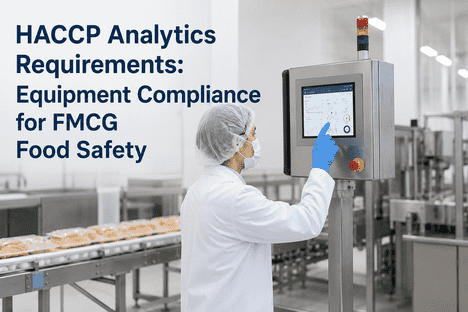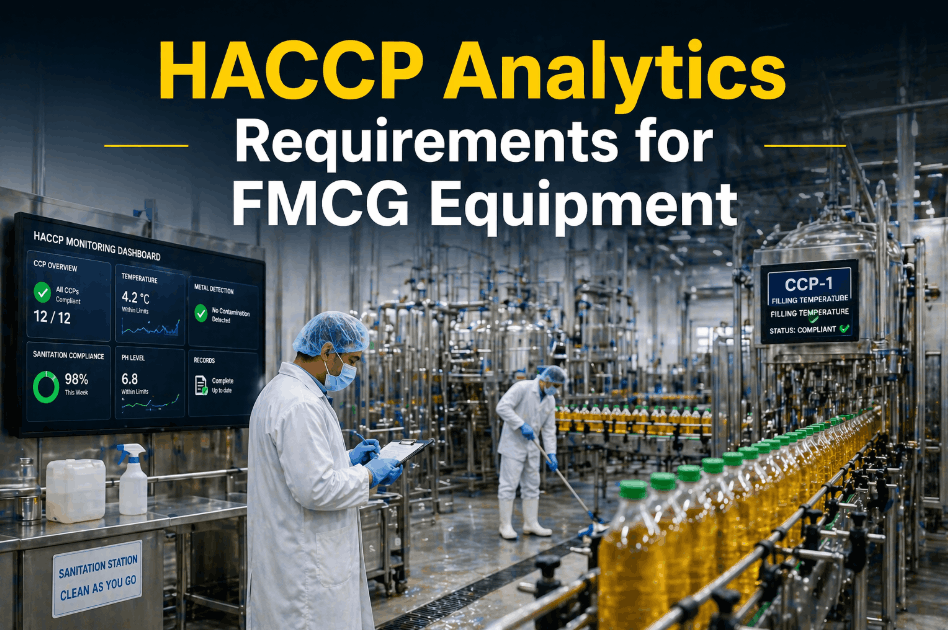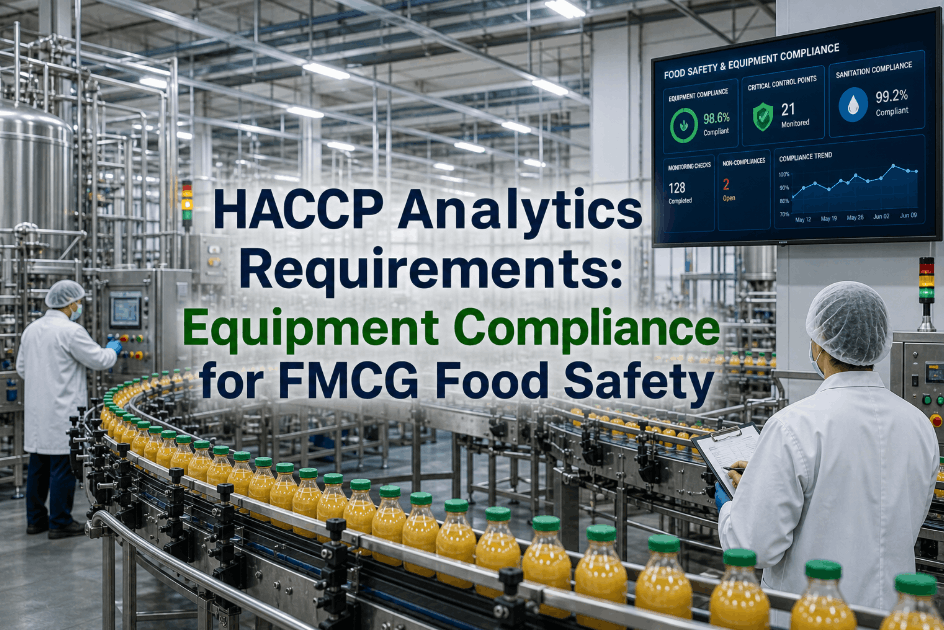
HACCP analytics requirements are reshaping how FMCG food manufacturers approach equipment compliance, critical control point documentation, and real-time food safety monitoring. In 2026, operations and quality directors can no longer rely on manual inspection logs or siloed equipment records to satisfy FSMA, GFSI, or BRC audit frameworks — integrated HACCP AI-driven analytics platforms have become the operational standard for food-grade facilities that demand audit-ready compliance at every production stage. Book a Demo to see how AI-driven compliance tracking maps to your FMCG food safety environment.
See HACCP Compliance Tracking in Action
iFactory's manufacturing intelligence platform unifies critical control point analytics, equipment compliance records, sanitation scheduling, and HACCP audit documentation into one food safety solution built for FMCG operations.
What Are HACCP Analytics Requirements for FMCG Equipment Compliance?
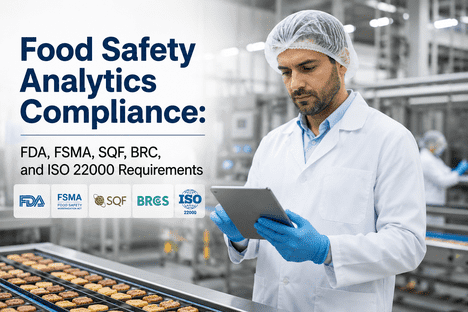
HACCP analytics requirements define the data capture, monitoring, and documentation standards that food-grade equipment must meet to satisfy Hazard Analysis and Critical Control Point plans across FMCG production environments. These requirements span five operational dimensions: critical limit monitoring at each CCP, corrective action documentation, equipment calibration records, sanitation analytics schedules, and electronic verification logs — all of which must be retrievable in a structured, timestamped format during regulatory inspections or customer quality audits. Modern HACCP AI-driven integration closes the gap between isolated equipment data and enterprise-wide food safety compliance records, ensuring no CCP event goes unlogged.
Critical Control Point Analytics: Real-Time Monitoring Standards
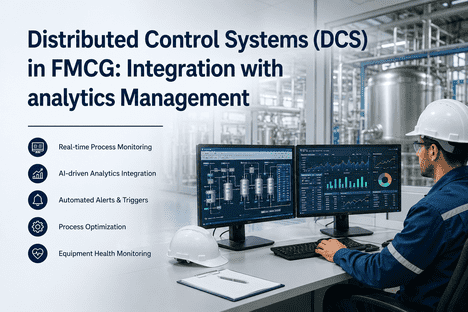
Critical control point analytics form the technical backbone of any HACCP-compliant food processing operation. Each CCP — whether a pasteurisation vessel, metal detection checkpoint, or cold storage threshold — must be equipped with instrumentation capable of continuous parameter measurement and automatic alert generation when critical limits are breached. AI-driven CCP analytics platforms aggregate sensor data from temperature loggers, flow meters, pH probes, and pressure transducers into a unified compliance dashboard, eliminating the manual recording gaps that create audit vulnerabilities. Book a Demo to see how real-time CCP analytics integrates with your existing equipment infrastructure.
Automated Critical Limit Breach Detection
HACCP AI-driven systems monitor CCP parameters against defined critical limits in real time, triggering automatic alerts and locking corrective action workflows the moment a deviation is detected. Every breach event is timestamped, assigned to the responsible operator, and linked to the affected product lot — producing the documented corrective action records that FSMA preventive controls and GFSI scheme audits require without any manual transcription.
Continuous Verification and Validation Records
HACCP food safety equipment analytics platforms automatically generate verification and validation records by comparing actual CCP performance data against HACCP plan benchmarks on a scheduled basis. These records are stored in the compliance repository with digital signatures, eliminating the manual verification logs that paper-based HACCP systems require and reducing pre-audit preparation time from days to minutes.
Cross-CCP Traceability Threading
AI-driven HACCP analytics platforms create a continuous traceability thread that links each product lot to every CCP monitoring event it passed through — from raw material intake temperature records through kill step validation to final packaging seal integrity checks. This cross-CCP traceability thread compresses recall investigation timelines from hours to seconds and satisfies the traceability documentation standards required under FSMA Section 204 and BRC Food Issue 9.
Food-Grade Robot Analytics: GMP Compliance in Automated Processing
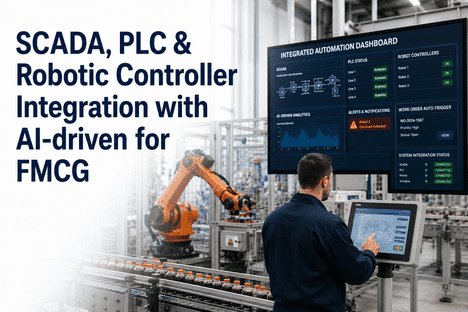
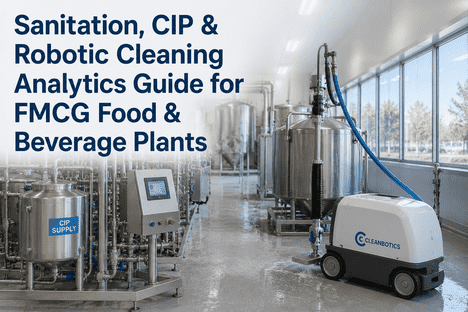
Food-grade robot analytics requirements extend HACCP compliance into automated processing cells where collaborative robots handle raw protein portioning, produce sorting, bakery product placement, and hygienic packaging operations. GMP analytics requirements for robotic systems mandate continuous monitoring of washdown cycle completion, sanitiser concentration verification, equipment surface temperature post-CIP, and robotic gripper inspection records — data that manual hygiene audits cannot capture at the frequency or consistency that FMCG food safety compliance demands. Book a Demo to see how food-grade robot analytics integrates with HACCP compliance documentation in live FMCG environments.
Robot Hygiene Compliance Logging
Automated robot hygiene compliance systems log every CIP cycle with timestamped sanitiser concentration readings, rinse water ATP test results, and equipment surface temperature confirmations. These records are stored as HACCP-linked compliance events, providing the documented sanitation evidence required for BRC, SQF, and IFS food safety scheme audits without manual record compilation.
Predictive Maintenance for CCP Equipment
AI-driven predictive maintenance analytics monitor torque signatures, cycle time trends, and positional drift in robotic cells operating at or near CCPs. Detecting early wear indicators before equipment failure prevents the uncontrolled CCP deviations that trigger costly holds, rework events, and HACCP audit findings — converting reactive equipment failures into planned maintenance windows.
Allergen Control Documentation
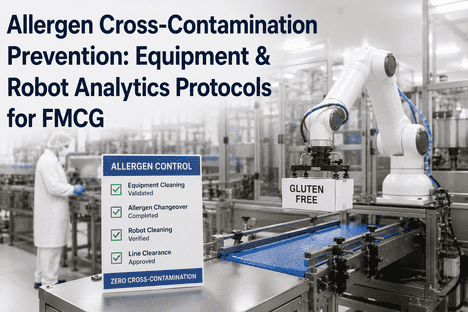
HACCP AI-driven allergen control analytics track changeover cleaning validation events for robotic cells that process allergen-containing SKUs. Automated swab testing result integration, cleaning verification timestamps, and line clearance sign-off records create the allergen control documentation trail that customer audits and FSMA preventive controls require at each production changeover.
Equipment Calibration Scheduling
Food safety equipment analytics platforms automate calibration scheduling for CCP-linked instruments — temperature probes, pH meters, checkweighers, and metal detection systems — generating calibration work orders ahead of due dates and storing calibration certificates in the HACCP documentation repository. Overdue calibration alerts prevent the compliance gaps that create audit findings and CCP monitoring invalidity records.
Sanitation Analytics Schedule: Closing the Hygiene Compliance Gap
A HACCP-compliant sanitation analytics schedule integrates cleaning frequency requirements, chemical concentration verification, equipment inspection records, and environmental monitoring results into a single traceable workflow — replacing the disconnected paper-based sanitation logs that create compliance gaps across FMCG facilities operating multiple production lines and shift patterns. AI-driven sanitation analytics platforms automatically generate cleaning schedules from production data, flag overdue sanitation events, and produce the documented evidence required for pre-operational sanitation verification under FSMA preventive controls. Book a Demo to explore how sanitation analytics scheduling integrates with your HACCP food safety program.
HACCP Audit Preparation: AI-Driven Documentation Compliance
HACCP audit preparation is where integrated food safety analytics delivers its most immediate operational value for FMCG operations directors. Traditional pre-audit preparation requires quality teams to manually compile CCP monitoring records, corrective action logs, calibration certificates, verification records, and sanitation reports from multiple disconnected systems — a process that consumes days of pre-audit time and creates document completeness gaps that auditors identify as major non-conformances. AI-driven HACCP audit preparation platforms aggregate all compliance documentation into a single structured repository with instant search, lot-level traceability, and exportable audit packs. Book a Demo to see how AI-driven audit documentation reduces HACCP pre-audit preparation time in live FMCG deployments.
| HACCP Documentation Requirement | Manual Process Gap | AI-Driven Analytics Solution | Compliance Benefit |
|---|---|---|---|
| CCP Monitoring Records | Manual transcription, shift coverage gaps | Continuous automated sensor logging with lot linkage | 100% CCP event capture, zero transcription errors |
| Corrective Action Documentation | Delayed completion, missing operator sign-off | Automatic corrective action workflow triggered on deviation | Real-time corrective action assignment and closure tracking |
| Equipment Calibration Records | Overdue calibrations, scattered certificate storage | Automated calibration scheduling with certificate repository | Calibration compliance enforced before CCP monitoring resumes |
| Sanitation Verification Logs | Paper-based, inconsistent completion across shifts | Digital sanitation workflow with chemical concentration logging | Pre-operational sanitation evidence for every production start |
| Verification and Validation Records | Periodic manual review, audit-week compilation | Continuous automated verification against HACCP plan benchmarks | Always-current verification records retrievable in seconds |
HACCP AI-Driven Integration: The Implementation Roadmap
Achieving full HACCP AI-driven integration across an FMCG food processing facility requires a phased approach that delivers audit-ready compliance improvements at each stage. Operations directors who attempt simultaneous deployment across all CCPs and equipment classes face integration complexity that delays adoption — a structured roadmap anchored to compliance priority delivers measurable results within the first 90 days.
CCP Connectivity and Data Foundation
Establish sensor data connectivity from existing CCP-linked equipment — temperature controllers, metal detectors, checkweighers, pasteurisation systems — to a unified HACCP analytics platform via OPC-UA or MQTT integration protocols. This phase creates the continuous CCP monitoring data stream that automated compliance records and AI analytics require, without interrupting production workflows. Most FMCG facilities achieve primary CCP connectivity within 60–90 days using modern integration middleware.
Automated Compliance Documentation Activation
Activate automated corrective action workflows, sanitation scheduling, and calibration management against the live CCP data stream. Quality teams begin receiving AI-generated compliance alerts with structured documentation templates — replacing manual record compilation with system-generated evidence packs that meet FSMA, BRC, and SQF documentation standards from day one of activation.
Predictive Analytics and Risk Scoring
Deploy AI-driven risk scoring models that analyse CCP performance trends, equipment calibration history, sanitation compliance rates, and environmental monitoring results to generate predictive food safety risk alerts — identifying deteriorating CCP performance before a critical limit breach occurs. This converts HACCP compliance from a reactive recording function into a proactive food safety management capability.
Full HACCP Intelligence and Continuous Improvement
At full maturity, the HACCP AI-driven platform continuously retrains on accumulated compliance data — improving CCP risk models, identifying new food safety optimisation opportunities, and generating pre-populated audit documentation packs that compress external audit preparation from days to hours. The food safety system operates as a self-improving compliance engine, with each production cycle generating data that strengthens the next cycle's hazard control performance.
Measurable ROI from HACCP Compliance Analytics Investment
For quality and operations directors building the business case for HACCP analytics investment, the ROI is grounded in documented compliance performance improvements across FMCG facilities that have deployed integrated food safety analytics platforms. These metrics represent averages across food manufacturing compliance deployments and provide a realistic baseline for financial modelling.
Frequently Asked Questions: HACCP Analytics Requirements for FMCG
What equipment compliance records does a HACCP analytics platform generate automatically?
A HACCP AI-driven analytics platform automatically generates CCP monitoring logs, corrective action records, calibration certificates with scheduling alerts, sanitation verification records, pre-operational inspection confirmations, and environmental monitoring summaries — all stored as timestamped, operator-attributed compliance events retrievable for regulatory inspection or customer audit within seconds.
How does food-grade robot analytics support HACCP compliance in FMCG processing?
Food-grade robot analytics platforms monitor washdown cycle completion, sanitiser concentration verification, surface temperature post-CIP, and robotic gripper inspection status — generating robot hygiene compliance records that satisfy GMP analytics requirements and HACCP sanitation documentation standards across allergen-sensitive and RTE production environments.
Can HACCP analytics be deployed on existing FMCG equipment without full system replacement?
Yes — most HACCP analytics deployments are retrofit implementations. OPC-UA or MQTT connectivity added to existing PLCs, inline sensor packages on current CCP equipment, and API integration with existing LIMS or ERP systems deliver full HACCP food safety analytics capability on existing capital at significantly lower cost than greenfield installations.
What is the difference between HACCP AI-driven analytics and traditional SCADA-based CCP monitoring?
Traditional SCADA systems capture CCP parameter data but store it in isolated historian databases without cross-system compliance context, automated corrective action workflows, or audit-ready documentation packaging. HACCP AI-driven analytics platforms contextualise CCP data within the compliance framework — linking every monitoring event to the HACCP plan, product lot, equipment record, and corrective action history to create a complete, auditable food safety management record.
How quickly does HACCP analytics improve audit readiness in FMCG facilities?
Most FMCG facilities see measurable improvements in audit documentation completeness within the first 30 days of HACCP analytics activation, as automated CCP logging and corrective action workflows replace manual record gaps immediately. Full audit readiness — including verified calibration compliance, complete sanitation schedules, and AI-generated audit documentation packs — is typically achieved within 90–120 days of full deployment.
Ready to Automate Your HACCP Compliance Program?
From critical control point analytics and food-grade robot compliance tracking to HACCP audit documentation and AI-driven sanitation scheduling — iFactory delivers the integrated food safety analytics platform built for FMCG operations directors who demand measurable compliance results.